


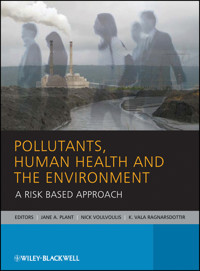
Pollutants, Human Health and the Environment E-Book
52,99 €
Mehr erfahren.
- Herausgeber: John Wiley & Sons
- Kategorie: Wissenschaft und neue Technologien
- Sprache: Englisch
Pollutants, Human Health and the Environment is a comprehensive, up-to-date overview of environmental pollutants that are of current concern to human health.
Clearly structured throughout, the main body of the book is divided by pollutant type with a chapter devoted to each group of pollutants. Each chapter follows a similar format to facilitate comparison and discussion. For each pollutant, the authors describe the sources, pathways, environmental fate and sinks as well as known toxicological effects. Importantly, the second chapter on heavy metals and other inorganic substances deals with trace element deficiencies which can have serious problems for human health. Some rocks and soils are naturally low in some trace elements and intensive agriculture over the past half century has effectively mined many trace elements reducing their levels in soils and crops. The final chapter is a discussion about the various risk assessment frameworks and regulations covering the main pollutants.
- Comprehensive, up-to-date coverage of environmental pollutants of concern to human health
- Clearly divided into pollutant type with each chapter devoted to a different pollutant group
- Clearly structured throughout with the same format for each chapter to help facilitate comparison and discussion and enable readers to prioritise chemicals of concern
- Description of the sources, pathways, environmental fate and known toxicological effect
- Includes contributions from leading researchers and edited by a team of experts in the field
Sie lesen das E-Book in den Legimi-Apps auf:
Seitenzahl: 1122
Veröffentlichungsjahr: 2012
Ähnliche




















Contents
Cover
Title Page
Copyright
Dedication
Forewords
Tribute
Professor Stanley Bowie FRS, 1917 to 2008
The Editors
Contributors
Acknowledgements
Introduction
References
Chapter 1: The scientific appraisal of hazardous substances in the environment
1.1 Introduction
1.2 Fundamental Concepts of Toxicology
1.3 Some Notions of Environmental Epidemiology
1.4 Scientific Evidence and the Precautionary Principle
1.5 Uncertainty and Controversy: The Endocrine Disruption Example
1.6 Concluding Remarks
References
Chapter 2: Regulatory systems and guidelines for the management of risk
2.1 Introduction
2.2 Current regulation on chemicals
2.3 Guideline values
2.4 Conclusions and recommendations
References
Chapter 3: Essential and beneficial trace elements
3.1 Introduction
3.2 Hazardous Properties
3.3 Sources
3.4 Environmental Pathways
3.5 Effects on Human Receptors
3.6 Risk Reduction
References
Chapter 4: Toxic trace elements
4.1 Introduction
4.2 Hazardous Properties
4.3 Sources
4.4 Environmental Pathways
4.5 Effects on Human Receptors
4.6 Risk Reduction
References
Chapter 5: Radioactivity and radioelements
5.1 Introduction
5.2 Hazardous Properties
5.3 Sources
5.4 Environmental Pathways
5.5 Bioaccessibility and Bioavailability
5.6 Risk Reduction
References
Chapter 6: Industrial chemicals
6.1 Introduction
6.2 Hazardous Properties
6.3 Sources
6.4 Environmental Pathways
6.5 Human Health
6.6 Risk Reduction and Future Trends
References
Chapter 7: Agricultural pesticides and chemical fertilisers
7.1 Introduction
7.2 Pesticides
7.3 Fertilisers
7.4 Risk Reduction for Pesticides and Chemical Fertilisers
References
Chapter 8: Pharmaceuticals and personal-care products
8.1 Introduction
8.2 Hazardous Properties
8.3 Anthropogenic Sources
8.4 Pathways and Environmental Fate
8.5 Physiological Effects
8.6 Risk Assessment, Communication and Reduction
8.7 Future Trends
References
Chapter 9: Naturally occurring oestrogens
9.1 Introduction
9.2 Hazardous Properties
9.3 Sources
9.4 Environmental Pathways
9.5 Effects on Humans
9.6 Risk Reduction
References
Chapter 10: Airborne particles
10.1 Introduction
10.2 Hazardous Properties
10.3 Sources
10.4 Global Pathways
10.5 Health Effects of Inhaled Particulate Material
10.6 Risk Reduction and Future Trends
References
Chapter 11: Engineered nanomaterials
11.1 Introduction
11.2 Useful and Hazardous Properties
11.3 Sources of NPs
11.4 Environmental Pathways
11.5 Regulation and Effects on Human Receptors
11.6 Future Trends and Risk Reduction
References
Conclusions: pollutants, risk and society
Regulation and Governance
The Future: Sustainability and Individual Responsibility
References
Index
This edition first published 2012 © 2012 by John Wiley & Sons, Ltd
Wiley-Blackwell is an imprint of John Wiley & Sons, formed by the merger of Wiley's global Scientific, Technical and Medical business with Blackwell Publishing.
Registered office: John Wiley & Sons, Ltd, The Atrium, Southern Gate, Chichester, West Sussex, PO19 8SQ, UK
Editorial offices: 9600 Garsington Road, Oxford, OX4 2DQ, UK
The Atrium, Southern Gate, Chichester, West Sussex, PO19 8SQ, UK
111 River Street, Hoboken, NJ 07030-5774, USA
For details of our global editorial offices, for customer services and for information about how to apply for permission to reuse the copyright material in this book please see our website at www.wiley.com/wiley-blackwell.
The right of the authors to be identified as the authors of this work has been asserted in accordance with the UK Copyright, Designs and Patents Act 1988.
All rights reserved. No part of this publication may be reproduced, stored in a retrieval system, or transmitted, in any form or by any means, electronic, mechanical, photocopying, recording or otherwise, except as permitted by the UK Copyright, Designs and Patents Act 1988, without the prior permission of the publisher.
Designations used by companies to distinguish their products are often claimed as trademarks. All brand names and product names used in this book are trade names, service marks, trademarks or registered trademarks of their respective owners. The publisher is not associated with any product or vendor mentioned in this book. This publication is designed to provide accurate and authoritative information in regard to the subject matter covered. It is sold on the understanding that the publisher is not engaged in rendering professional services. If professional advice or other expert assistance is required, the services of a competent professional should be sought.
Library of Congress Cataloging-in-Publication Data
Pollutants, human health, and the environment : a risk based approach / [edited by] Jane A. Plant, Nikolaos Voulvoulis, and K. Vala Ragnarsdottir.
p. cm.
Includes bibliographical references and index.
ISBN 978-0-470-74261-7 (cloth) – ISBN 978-0-470-74260-0 (pbk.)
1. Pollution–Environmental aspects. 2. Pollution–Health aspects. 3. Nature–Effect of human beings on. I. Plant, Jane A. II. Voulvoulis, Nikolaos III. Ragnarsdottir, Kristin Vala, 1954-.
TD196.C45P65 2011
363.73–dc23
2011025642
A catalogue record for this book is available from the British Library.
This book is published in the following electronic formats: ePDF 9781119950110; Wiley Online Library 9781119950127; ePub 9781119951063; Mobi 978111951070
The book is dedicated to Charlotte Rich, a PhD student and friend of many of the authors of the book, who died tragically in 2007 and Michael Gillott who died of cancer. Michael had the utmost respect for scientific research and the quest for truth. He persuaded us of the need to inform a wide audience, including health professionals, of the hazards and risks of pollutants.
Forewords
A Foreword by Lord Selborne
Over the past century a large number of man-made chemical substances have been widely dispersed into our environment, both by accident and design, raising concerns about their adverse effects on human health and the environment. There is no doubt that there has been a worrying increase in health problems that are related, at least in part, to these substances and their release from manufacturing processes, spills, inadequate handling, storage and use, and careless after-use disposal.
Over the past 30 years or so there has been a plethora of legislation at international and national levels aimed at controlling and regulating the production, use and disposal of chemicals. The introduction of the REACH (Registration, Evaluation, Authorisation and restriction of Chemicals) by the EU in 2007 has provided the innovative concept that the burden of proof is now on manufacturers to provide evidence of the safety of their products before supplying them: a practical example of the so-called precautionary principle. It also provides rules for the phasing out and substitution of the most dangerous substances already in circulation, though this, unfortunately, is likely to be a protracted process. The main objective of REACH is to improve risk management of industrial chemicals by banning their manufacture or importation into Europe.
One concern about the REACH legislation is that it will drive research and development and manufacturing involving chemicals to parts of the world where legislation is weak or non-existent. This would be highly unsatisfactory, since chemical pollution is a global issue. For example, the use of arsenical groundwater to grow crops in south-east Asia has resulted in health warnings on rice, especially warning against feeding it to babies in the USA and Europe; persistent organic pollutants such as pesticides and plasticisers, despite being used mainly at low latitudes, are accumulating in marine fish and mammals in polar and sub-polar regions; and the manufacture of pharmaceuticals in countries where environmental legislation fails to require the clean-up of waste water has the potential to increase the antibiotic resistance of pathogens.
This book provides a balanced view of the risks and benefits of several groups of substances: essential, toxic trace and radioactive elements; synthetic organic agricultural and industrial chemicals and pharmaceuticals; and particulates and nanomaterials. Most of these substances are important to modern industrialised societies but can have adverse impacts on the environment and human health. It also deals with risk reduction and the future role of chemicals in achieving sustainable development. The issue of sustainability in a world of finite resources is likely to become ever more important in considering the use of chemicals in the twenty-first century.
The book uses a risk-based approach for industrial and other chemicals. It includes a discussion of the potential use of chemicals in sustainable development and suggests that in the future there will be more emphasis on green chemistry and biomimicry, which involve learning from nature, with industry developing clean cycles of production that are built on natural processes whereby waste from one process is feed for another – the cradle-to-cradle concept.
The book includes well-researched material, with references to the latest published work. It is written in accessible English and provides an excellent introduction to anyone wishing to know more about the increasingly important subject of chemicals in the environment. The information it contains will be particularly useful to everyone affected by recent legislation including the REACH legislation.
The Earl of Selborne GBE FRS Chair of the Council of Science and Technology
A Foreword by Professor Karol Sikora
Global warming has captured the attention of the world's media, public and politicians, but although the dramatically increasing carbon footprint we are leaving is important it is not the only effect of the twenty-first century on the environment. Many diverse pollutants have the potential to cause lasting damage to our environment. Processes that may make a quick buck today could cause untold difficulties for our successors who will inherit the challenge. We have already seen an inexorable rise in cancer incidence in the world. Although an increasingly aging population is the main driver, there is no doubt that other more subtle influences are at work. The incidence of cancer acts as a litmus test for the deleterious effects of the environment and lifestyle changes on our bodies.
It was announced this year that the lifetime risk of breast cancer in the UK has gone up from 1 in 9 women to 1 in 8 women, a rate comparable to that in the USA. Rates of this and many other types of cancer have risen dramatically since reliable cancer registries were first developed in the 1950s and they are projected to continue to do so in the future – according to the World Cancer Research Fund Report, cancer rates worldwide could increase by a further 50 per cent to 15 million new cases a year by the year 2020. Rates of many other chronic diseases, from Alzheimer's disease to Parkinsonism, as well as mood disorders such as anxiety and depression are also increasing across the globe following industrialisation and development, at a time when many of the costs of health care are becoming unaffordable. It is clear that we must learn how to reduce the risks of such diseases and prevent the human and economic toll that they are taking on society worldwide.
Effective prevention requires a detailed understanding of the pathogenesis of disease and the dissection of the positive and negative drivers that influence the process. Cancer is a disease of cumulative somatic mutations leading to disruption in cellular growth control. It is not surprising that many pollutants can influence this process. By understanding the detailed factors involved in the aetiology of cancer it may be possible to devise public-health strategies to minimise the overall burden of disease. Furthermore, our increasing knowledge of the molecular mechanisms involved in the interplay of the environment and our genetic background may make it possible to personalise prevention strategies at some future point. This individualisation is far more likely to achieve wider compliance amongst the population rather than bland generic messages.
While it is widely acknowledged that the causes of many chronic conditions are multifactorial, attention is being directed increasingly to the role of chemicals in our diet and the wider environment – especially following the understanding of the important role of epigenetics in disease progression. For example, the role of endocrine-disrupting substances in hormone-dependent cancer, asbestiform particulates in mesothelioma and particulates generally in chronic lung disease has been established. It has even been suggested that chemicals found in certain plastics, as well as in cigarette smoke, may increase the risks of obesity or diabetes. It is clear that greater efforts should be made to reduce exposure and hence the risk to human health of potentially hazardous substances beyond those associated simply with smoking and alcohol consumption.
This book, Pollutants, Human Health and the Environment, equips health professionals with an up-to-date knowledge of hazardous substances to help them limit the risks to human health and prevent many chronic diseases. It explains clearly the difference between hazard and risk, and goes on to discuss groups of hazardous substances, chapter by chapter. It includes discussions of many controversial issues, including: toxic trace elements such as arsenic, cadmium and mercury; radiation and radioactive elements such as naturally occurring radon gas and other natural and artificial fission products; industrial chemicals such as benzene and trichloroethylene; pesticides and pharmaceuticals, which enter water supplies and the wider environment; and particulates, including asbestos. It also includes chapters on engineered nanomaterials, essential and beneficial trace elements such as selenium, copper and zinc, and natural oestrogens.
The book contains some striking information, for example: the numbers of people at risk of skin or bladder cancer from increased exposure to arsenic; the number of conditions for which there is evidence that selenium deficiency is a cause or a factor; the fact that the greatest exposure of US citizens to ionising radiation is from medical diagnostics and treatment and that this is 500 times the dose from the nuclear industry; the increased amount of oestrogen in our food because of changes in farming practices; our increased exposure to neurotoxic substances used as pesticides or preservatives; and the fact that mercury levels have increased by a factor of four over the last 100 years.
This book is highly recommended to all health professionals who wish to play an effective role in reducing the risk to human health of chemicals in the environment. For the sake of our children's children we all need to understand the footprint we are leaving for them. The knowledge, understanding and information in this book are the key to developing effective action plans across the globe.
Karol Sikora
Professor of Cancer Medicine, Hammersmith Hospital andDean, University of Buckingham Medical School
Tribute
Professor Stanley Bowie FRS, 1917 to 2008
Stanley Hay Umphray Bowie FRS, FRSE FEng, FIMM
Stanley Bowie was a scientist of international standing who, as Chief Geochemist, established and led the highly successful Geochemical Division of the British Geological Survey (BGS, formerly the Institute of Geological Sciences, IGS), which became a model for similar divisions in geological surveys throughout the world. He and his staff made major contributions in isotope geology, fluid-inclusion studies, trace-element geochemistry (including high-resolution geochemical mapping), ore mineralogy, economic geology and analytical chemistry. The first inductively coupled plasma mass spectrometer was developed by Alan Gray of the University of Surrey and Alan Date in the IGS with funding from the European Commission, negotiated by Stanley. Later he was involved in further instrument development, including the portable XRF analyser and the first towed seabed gamma spectrometer.
A Shetlander by birth, StanleyBowie graduated in 1941 with a first-class honours degree in geology from the University of Aberdeen where he had also studied chemistry and physics. He was awarded the Mitchell prize for the best Honours Geology student and the Senior Kilgour Research Scholarship.
In January 1942, during the Second World War, he joined the Meteorological Branch of the Royal Air Force and was commissioned flying officer a year later. He was stationed with Bomber Command in East Anglia, which was later the base for the first American B17 squadron stationed in Britain.
In 1946 he joined the Geological Survey of Great Britain (GSGB) with the Special Investigations Unit (renamed the Atomic Energy Division, AED, in 1951). This was the Unit which had been responsible for advising the British Government on the availability of uranium supplies for the Manhattan Project during thewar and subsequently provided geological information for the UK's atomic-weapons and nuclear-energy programmes. It was Britain's knowledge and ownership of uranium reserves that ensured that the country remained in the American-led nuclear club after 1945. Stanley worked on autoradiography studies of uranium and thorium minerals in thin and polished sections and, in collaboration with the Atomic Energy Research Establishment (AERE) at Harwell, began a programme of instrument development for uranium exploration that helped to develop Geiger-Müller counters for use in uranium exploration, borehole logging and aero-radiometric surveys. He also developed an index of radioactive minerals, which remained classified until 1976.
In 1955 Stanley was promoted to Chief Geologist of the AED and represented the UK at international conferences on atomic energy, helping to develop advanced radiometric instrumentation. He also developed, with Ken Taylor, a new system of opaquemineral identification based on the measurement of indentation hardness and reflectance – a major advance over previous complex systems – which gave Britain an important lead in economic geology. He used the system to investigate and document uranium deposits throughout the free world, and it remained in use by most ore mineralogists until the advent of the electron microprobe.
In 1968 he was appointed Chief Geochemist, in charge of the analytical, mineralogy and isotope-geology units as well as the field geochemistry programmes. From 1968 to 1973 he led a uranium reconnaissance programme on behalf of the UKAEA using many of the instrumental methods developed earlier in his career as well as newer geochemical methods based on the delayed-neutron method of analysis. In 1970 he was appointed by NASA as a principal investigator for returned lunar samples. His work with Peter Simpson on the ore mineralogy of these samples and with Clive Rice on the distribution of uranium using fission-track analysis made an important contribution to understanding the lunar surface.
In 1972 he obtained funding for a programme of systematic geochemical mapping of Great Britain. This programme developed, for the first time, quantitative reproducible methods for the preparation of geochemical maps of similar standing to gravity, magnetic and other geophysical maps prepared by geological surveys. Led by Dr Jane Plant, this programme became the model for geochemical databases worldwide, and many of the sampling, analytical, quality-control and quality-assurance techniques and the methods of data processing form the basis of recommendations of the IUGS/IAGC Task Group on ‘Global Geochemical Baselines’ initiated by Dr Arthur Darnley, a former colleague.
In 1975 he established and led a Royal Society Working Party on Environmental Geochemistry and Health, which included other notable scientistssuch as Professor John Webb of Imperial College, Dr Colin Mills of the Rowett Institute of Nutrition and Health and Dr Gerry Shaper of the Royal Free and University College Medical School. The Working Party was in contact with national coordinating committees in the USA and USSR, the Academies of Science of the five Scandinavian countries and individuals elsewhere. The proceedings of a Royal Society discussion meeting in 1977 entitled ‘Environmental Geochemistry and Health’ continue to be regarded as a key scene-setting volume covering geochemistry and the health of man, animals and plants. He collaborated in 1990 with Dr Cameron Bowie (not a relative) of the Somerset Health Authority in a book on radon and health and in a paper on the same topic, published in the Lancet in 1991.
In 1959 he was awarded the Silver Medal of the Royal Society of Arts. In 1963 he was elected a Fellow of the Royal Society of Edinburgh. He was elected a Fellow of the Royal Society in 1976 and in the same year he became president of the Institution of Mining and Metallurgy.
In 1984 a new platinum-group mineral was named bowieite by the United States Geological Survey in recognition of Stanley's contribution to ore mineralogy. He was visiting Professor at Strathclyde University until 1985 and visiting Professor at Imperial College from 1985 until 1989, and he served on the Commission of Ore Mineralogy of the International Mineralogical Association until 1987.
This book is a tribute to Professor Stanley Bowie FRS, honouring him as one of the pioneers of geochemistry as applied in the real world, recognising especially his role in establishing high-quality geochemical mapping, researching radioactivity and radio-elements in the Earth's crust, and applying these studies to the exploration and development of mineral resources and to the improvement of human health.
The Editors
Professor Jane Plant CBE, DSc, FRSM, FRSE, FRSA, FRGS, FIMMM, FGS, CEng, CGeol holds the Anglo American chair of Geochemistry at Imperial College London. She was formerly Chief Geochemist and later Chief Scientist of the British Geological Survey. She has been awarded seven honorary doctorates and many prizes and distinctions for her contribution to science, including the prestigious Lord Lloyd of Kilgerran Award of the Foundation of Science and Technology, the Coke Medal of the Geological Society and the Tetleman Fellowship of Yale University. She formerly chaired the Government's Advisory Committee on Hazardous Substances and was a member of the Royal Commission on Environmental Pollution 2000–2006. She is presently on the Council of the UK All Party Parliamentary and Scientific Committee and the College of Medicine and is patron of several cancer charities, including the famous Penny Brohn Centre in Bristol.
She supervises and undertakes research in environmental geochemistry with particular reference to human health. She is an international expert on environmental pollution, specialising in understanding and modelling the sources and behaviour of essential, beneficial and toxic trace elements, radioelements and radioactivity in the environment. She established the world-renowned geochemical baseline programme of the UK (G-BASE), and subsequently co-led the global geochemical baseline International Union of Geological Sciences/International Association of GeoChemistry (IUGS/IAGC) Programme with Dr David Smith of the United States Geological Survey.
Professor Plant is the author of the internationally best-selling book Your Life in Your Hands, on overcoming breast cancer, and several other books on health including ones on osteoporosis and prostate cancer. Her latest popular health book, entitled Beating Stress, Anxiety and Depression, was published in 2009 and has been described as ground-breaking. These popular health books aim to empower sufferers by making available the latest scientific information on diet and lifestyle, as well as conventional medical treatments. She has played a leading role in developing this volume in order to help to communicate to others the significant health problems caused by chemicals in the environment.
Dr Nikolaos Voulvoulis is a Reader in Environmental Technology, leader of the Environmental Quality Research theme at the Centre for Environmental Policy and Director of the world-renowned MSc in Environmental Technology at Imperial College London. He supervises and undertakes research in the area of environmental analysis and assessment for environmental quality management. This focuses on the development of methods for assessing emerging environmental contaminants and their sources, pathways and fate in the environment, with emphasis on waste and waste-water-treatment processes. He is an international expert in environmental pollution by hazardous substances such as biocides, pesticides, endocrine-disrupting chemicals and pharmaceuticals, and on the associated policy and management issues. His research activities also involve the development and application of environmental-analysis tools, multi-criteria assessment, risk management and sustainability assessment. This research aims to develop methodologies that establish the influence of different parameters of environmental quality, process performance, and indicators of effects. His research has been having an impact on environmental decision-making and policy on environmental quality, climate change and human health nationally and internationally. Through surveys, environmental monitoring, modelling, laboratory experiments and lab-scale trials, he delivers high-quality research that has been published in some of the top journals in the field.
Dr Voulvoulis engages in a number of high-profile external teaching and research activities. Through such activities, he has developed strong links with industry, regulators, research organisations and NGOs. He is a member of the Steering Group of the Global Contaminated Land Network of the Chartered Institution of Water and Environmental Management and Director of the Opal Soil Centre responsible for the National Soil and Earthworm survey. This survey was recently included as an example of a science-based education programme and data-collection method in the European Atlas of Soil Biodiversity launched by the European Commission's Joint Research Centre in September 2010 as part of the International Year of Biodiversity. In addition, he has recently been in charge of the evaluation of over 1000 environmental projects that were co-financed by the Instrument for Structural Policies Pre-Accession or Cohesion Fund by the European Commission, assessing the effectiveness of these projects and their contribution to the acquis communautaire in the field of the environment – specifically in the fields of water quality and management and waste collection and treatment.
Professor Kristín Vala Ragnarsdóttir is the Dean of Engineering and Natural Sciences at the University of Iceland. She was a Professor of Environmental Geochemistry and Environmental Sustainability at the University of Bristol, UK until 2008. Educated in Geochemistry and Petrology at the University of Iceland, Reykjavík (BSc) and Geochemistry at Northwestern University, Evanston, Illinois (MS, PhD) she changed her focus a decade ago from Earth Sciences to cross-disciplinary Sustainability Science. Her research pertains to sustainability in its widest context, including nature protection, economics, society and the wellbeing of citizens. She is currently developing a framework for the establishment of sustainable communities. Vala is also working on soil-sustainability indicators for land management and undertaking a comparative study of the relative fertility of conventionally versus organically managed land to ensure future food security. Her activities also include the establishment of a framework for a sustainable financial system and natural-resource use, and she is investigating the factors involved in complex multi-factorial disease development. Previously she studied the behaviour of pollutants in the natural environment and the link between environment and health.
Professor Ragnarsdóttir was a member of the Scientific Advisory Board for Framework 7 Environment Programme from 2006 to 2008. She has been a member of grant research panels for the EC (Brussels), NERC (UK), NSF (USA) and ESA (Netherlands). Vala is a past Director of the Geochemical Society and was a member of the Board of the European Association for Geochemistry and the Geological Society of Great Britain. She was the chair of the Schumacher Society and is a current board member of the Balaton Group. Professor Ragnarsdottir is a past Associate Editor of Geochimica Cosmochimica Acta, Chemical Geology and Geochemical Transactions. She is a current Guest Editor of Solutions.
Contributors
Louise Ander British Geological Survey, Kingsley Dunham Centre, Keyworth, Nottingham, NG12 5GG
Aldo R. Boccaccini University of Erlangen-Nuremberg, Department of Materials Science and Engineering, 91058 Erlangen, Germany
Pamela Castle Former Chair of the Environmental Law Foundation
Mark R. Cave British Geological Survey, Kingsley Dunham Centre, Keyworth, Nottingham, NG12 5GG
Ho-Sik Chon Centre for Environmental Policy, Imperial College London, Prince Consort Road, London SW7 2AZ
Alexandra Collins Centre for Environmental Policy, Imperial College London, Prince Consort Road, London SW7 2AZ
Jason Dassyne Centre for Environmental Policy, Imperial College London, Prince Consort Road, London SW7 2AZ
Edward Derbyshire Centre for Quaternary Research, Royal Holloway, University of London, Egham, Surrey, TW20 0EX
Danelle Dhaniram Centre for Environmental Policy, Imperial College London, Prince Consort Road, London SW7 2AZ
Mustafa B. A. Djamgoz Department of Life Sciences, Imperial College London, Prince Consort Road, London SW7 2AZ
Sally Donovan Centre for Environmental Policy, Imperial College London, Prince Consort Road, London SW7 2AZ
Richard M. Evans Centre for Toxicology, School of Pharmacy, University of London, 29–39 Brunswick Square, London
Claire J. Horwell Institute of Hazard, Risk and Resilience, Department of Earth Sciences, Durham University, Science Laboratories, South Road, Durham DH1 3LE
Timothy P. Jones School of Earth and Ocean Sciences, Main Building, Cardiff University, Cardiff, Wales, CF10 3YE
Qin-Tao Liu Current address: Dow Corning (China) Holding Co., Ltd.
Olwenn V. Martin Centre for Toxicology, School of Pharmacy, University of London, 29–39 Brunswick Square, London
Rebecca McKinlay Centre for Toxicology, University of London School of Pharmacy, 29–39 Brunswick Square, London
Superb K. Misra Natural History Museum, Mineralogy, London SW7 5BD
Christopher J. Oates Applied Geochemistry Solutions, 49 School Lane, Gerrards Cross, Buckinghamshire, SL9 9AZ
Dieudonné-Guy Ohandja Centre for Environmental Policy, Imperial College London, Prince Consort Road, London SW7 2AZ
Richard Owen University of Exeter Business School, Streatham Court, Rennes Drive, Exeter, EX4 4PU; European Centre for Environment and Human Health, Peninsula College of Medicine and Dentistry, Royal Cornwall Hospital, Truro, TR1 3HD
Jilang Pan Centre for Environmental Policy, Imperial College London, Prince Consort Road, London SW7 2AZ
Xiyu Phoon Centre for Environmental Policy, Imperial College London, Prince Consort Road, London SW7 2AZ
Jane A. Plant Centre for Environmental Policy and Department of Earth Science and Engineering, Imperial College London, Prince Consort Road, London SW7 2AZ
K. Vala Ragnarsdottir Faculty of Earth Sciences, School of Engineering and Natural Sciences, Askja, University of Iceland, Reykjavik 101, Iceland
Khareen Singh Centre for Environmental Policy, Imperial College London, Prince Consort Road, London SW7 2AZ
Barry Smith Intelliscience Ltd, 38A Station Rd Nottingham, NG4 3DB
Teresa D. Tetley National Heart and Lung Institute, Imperial College London, London SW3 6LY
Andrew Thorley National Heart and Lung Institute, Imperial College London, London SW3 6LY
James Treadgold Centre for Environmental Policy, Imperial College London, Prince Consort Road, London SW7 2AZ
Eugenia Valsami-Jones Natural History Museum, Mineralogy, London SW7 5BD
Nikolaos Voulvoulis Centre for Environmental Policy, Imperial College London, Prince Consort Road, London SW7 2AZ
Acknowledgements
The editors wish to thank Henry Haslam for his invaluable help in writing this book and Xiyu Phoon for acting as research assistant. They also wish to thank those who reviewed the manuscripts anonymously and made constructive, helpful suggestions which have improved the overall quality of the book. They thank colleagues at Imperial College London, especially Professor John Cosgrove, Professor Jan Gronow and Claire Hunt for their help and advice.
They acknowledge financial assistance from the charity Cancer P Prevent administered by Professor Jane Plant, Diana Patterson-Fox and Sandie Bernor on behalf of Imperial College Trust. A particularly generous financial donation was received from The Stanley Foundation Ltd.
Introduction
Jane A. Plant1*, Nikolaos VoulvoulisK2 and Vala Ragnarsdottir3
1Centre for Environmental Policy and Department of Earth Science and Engineering, Imperial College London, Prince Consort Road, London SW7 2AZ
2Centre for Environmental Policy, Imperial College London, Prince Consort Road, London SW7 2AZ
3Faculty of Earth Sciences, School of Engineering and Natural Sciences, Askja, University of Iceland, Reykjavik 101, Iceland
*Corresponding author, [email protected]
This book is concerned with current and emerging issues associated with the impact of pollutants on human health and the environment. Public concern and the media are presently focused on just one pollutant – carbon dioxide – and this has distracted attention from the wider issue of chemicals in the environment generally. Carbon dioxide has become the centre of international political and media attention because of its high levels in the atmosphere, mainly as a result of the burning of fossil fuels, and its potential to cause global climate change and acidification of the oceans – changes that could not be corrected on human timescales. However, this is just one of the many significant changes in the chemistry of the Earth System caused by the burgeoning human population and the increasing demand for material goods. The changes made to the Earth by humans are now so great that many scientists propose that a new geological period known as the Anthropocene be added to the geological column (Crutzen and Stoermer, 2000). Some people date the beginning of this period at 8000 years ago, with the start of forest clearing and settled agriculture; others date it at 1784, the date of Stevenson's steam engine, ‘The Rocket’. In this book we examine the impact that humanity has had on the chemistry of the Earth System during the Anthropocene, beginning from 8000 years ago (van Andel, 1995; Ruddiman, 2005).
There are many books dealing with aspects of environmental geochemistry: the carbon cycle, for example, or heavy metals such as lead or mercury, or the chemistry of particular environmental compartments such as soil or water. This book is different. It aims to give information on the many different groups of substances that are having an impact on the surface environment with the potential to cause harm to human health.
The contribution of chemicals to improvements in life expectancy, human health and material living standards for most people in Western-style democracies is widely acknowledged. Over the past 50 years, however, there has been mounting unease about the widespread use of synthetic chemicals and their risk to human health, including via environmental pathways (RCEP, 2003). There is also concern about the damaging effects of chemicals on the ecosystems upon which, ultimately, all life on Earth depends. Society's fears about the risks of chemicals and other hazardous substances in the environment have been propagated by the media and, in the late twentieth century, by an information-technology revolution that has globalised communication (Gardner, 2008). Hazardous substances in the environment, from carbon dioxide, radioactivity and oil pollution to arsenic and polychlorinated biphenyls (PCBs), now occupy a central place in social, economic and political debates and developments worldwide (Beck, 1986) and will probably continue to do so in the future.
Concerns about chemicals in the environment date back at least to the early 1920s, when scientists and doctors such as Sir Robert McCarrison and Sir Albert Howard in the UK and Rudolf Steiner in Austria expressed concern about the change from traditional biologically based to chemical-based agriculture. One of the pioneers of organic farming in the UK was Lady Eve Balfour, and in 1946 she helped to found the Soil Association. The first half of the twentieth century had witnessed a growing number of early warnings of the hazards and risks of chemicals (EEA, 2001), but it was the publication in 1962 of Rachel Carson's landmark book Silent Spring that is widely credited with launching the modern environmental movement (Glausiusz, 2007). The book catalysed public concern about synthetic chemicals in the environment and their unintended effects by documenting the damaging effects of pesticides, particularly on birds; it stated, for example, that DDT caused eggshell thinning, reproductive problems and death. Carson also accused the chemical industry of spreading disinformation, and public officials of accepting industry claims uncritically.
The concerns about the effects of pesticides raised by Carson have since been confirmed and extended to include a wide range of other health effects, from carcinogenicity, mutagenicity and reprotoxicity to endocrine disruption, genotoxicity, neurotoxicity and immunotoxicity. These effects have been observed in both wildlife and humans (Ecobichon and Joy, 1993; Colborn et al., 1997; Cadbury, 1998; Ecobichon, 2001; Stenersen, 2004). Carson also highlighted the broader ecological impacts of pesticides, which are increasingly recognised as a major factor affecting biodiversity and habitat loss. In the short term they can have toxic effects on directly exposed organisms, as well as causing changes in habitat and the food chain over the long term (Isenring, 2010).
In the US, Carson's work led to the establishment of the Environmental Protection Agency in December 1970 – a model which has been followed by many individual countries as well as the European Union. Such agencies have developed formal processes of risk assessment and risk-management practices, as discussed throughout this book, as well as improved regulation.
We now know that there are many other chemicals of concern besides pesticides. In 1965, Clair Patterson, the scientist who in 1956 used mass spectrometry to establish that the Earth was 4.5 billion years old, published Contaminated and Natural Lead Environments of Man, which drew attention to the increased levels of lead from industrial sources in the environment and food chain (see Chapter 4). His work led to a ban on the use of tetraethyl lead (TEL) in gasoline (petroleum) in the US in 1986 and later on the use of lead in food cans. By the late 1990s, lead levels in the blood of Americans were reported to have dropped by up to 80 per cent (CDC, 1997; HHS, 1997). Lead in petrol and food cans is now banned in most of the developed world, but manufacturers of TEL initially shifted their sales to developing countries and leaded petrol was not banned in some African countries until 2006, 20 years later than in the US.
Concern about the chronic effects of toxic trace elements other than lead on the environment and human health has also mounted. For example, according to some authorities mercury levels in the biosphere have increased by up to four times since the 1880s (Monteiro and Furness, 1997). A high proportion of mercury emissions is from the burning of fossil fuels, especially in China and India. This contaminates the oceans, bioaccumulating up the food chain as fat-soluble methylmercury to top predators such as oily fish and, ultimately, to those who eat them (Walsh et al., 2008). As a result, the Food and Drugs Administration in the US and the Food Standards Agency in the UK now recommend limiting the amount of oily fish consumed, especially by pregnant women.
One of the most dramatic poisoning events in recent years, however, has been due to another trace element, arsenic (As), as a result of the exploitation of groundwater resources in Bangladesh. It has been estimated that between 33 and 77 million people in Bangladesh, out of the total population of 125 million, are at risk of arsenicosis from drinking As-contaminated water (Smith et al., 2000). Mercury and arsenic are discussed in Chapter 4.
Meanwhile, there has been evidence for decades (Mills, 1969) that many people have diets that are lacking essential trace elements such as selenium (see Chapter 3), iodine, and lithium, deficiencies that may contribute to chronic ill health. This problem is caused, at least in part, by the development of intensive chemical agriculture. In the early nineteenth century, scientists such as Sir Humphrey Davy and J. von Liebig in Germany argued that since humus simply supplied N, P and K to plants it could be replaced by chemicals such as superphosphate. Justus van Liebig (van Liebig et al., 1841; van Liebig, 1843) defined the principles for sustainable agriculture, which is today known as ‘Liebig's law’ which is based on adding superphosphate to soils. This reductionist approach failed to recognise the other functions of humus, such as acting as a carbon sink, buffering water levels, improving soil texture and capturing conservative elements such as iodine from rainwater and sea spray and recycling essential and beneficial trace elements.
The range of environmental chemical contaminants now includes a vast range of synthetic and natural substances, from plasticisers to pharmaceuticals and industrial chemicals such as benzene and PCBs (see Chapters 6 and 7). The potentially additive or synergistic effects of such chemicals, as mixtures, or ‘chemical cocktails’, is now a major concern, as are the chronic effects of exposure, even at low or very low levels (less than parts per trillion). Moreover, some of the chemicals (such as PCBs) have been shown to be highly persistent and to have remained in the environment long after their hazardous properties have been identified and restrictions on their use put in place. Over the last few decades it has also been shown that some persistent chemicals travel great distances (EEA, 1998). Some of these chemicals, such as halogenated (chlorinated, brominated) organic chemicals, which include some pesticides and fire retardants, bioaccumulate up the food chain, so that foods such as fatty meat and dairy produce are contaminated. There is also increasing evidence of widespread chemical contamination of human tissues with synthetic chemicals, in some cases to levels higher than those known to cause adverse health effects in other species, even in remote populations of the globe (such as the Inuit of Northern Canada and Greenland and inhabitants of remote islands such as the Faroes) (Walsh et al., 2008). Chemical pollution is a global issue, crossing national boundaries.
Problems caused by chemicals can arise quite unexpectedly, despite the development of extensive toxicity testing and risk-assessment procedures based on sophisticated science and technology. Many such problems – such as the ozone-depleting action of the chlorofluorocarbons (CFCs) and the endocrine-disrupting effects of the birth-control pill released to the aquatic environment – had not been anticipated (RCEP, 2003; Jobling and Owen, 2010; EEA, 2001). The often unpredictable and uncertain nature of innovation and technology and the wider impacts of new developments (Collingridge, 1980; RCEP, 2008) are also demonstrated by the identification in 1992 of the transgenerational endocrine-disrupting properties of common chemicals, including some plasticisers, detergents, pesticide formulations and pharmaceuticals. These studies, led by the distinguished biologist Theo Colborn (TEDX, 2010), showed that such substances were being transferred from top predator females to their offspring, resulting in chemically induced alterations in sexual and functional development. The problems resulting from exposure to low doses and/or low ambient levels of endocrine-disrupting chemicals have been described in Our Stolen Future (Colborn et al., 1997) and The Feminization of Nature (Cadbury, 1996). The risks and benefits of natural oestrogens are considered in Chapter 9.
In addition to the chronic effects of chemicals, there have also been several high-profile chemical accidents such as those at Flixborough in the UK in 1974, Seveso in Italy in 1976, Bhopal in India in 1984, Toulouse in France in 2001, and at the Hertfordshire Oil Storage Terminal at Buncefield in the UK in 2005.
Concerns about pollution are not restricted to chemicals. Fears of radioactivity (see Chapter 5) date back to the bombing of Hiroshima and Nagasaki in 1945 at the end of the Second World War. Radiation has been and continues to be an emotive issue (Fisk, 1996), and psychometric studies of public perception of risk have shown that the dangers associated with radioactivity are the most dreaded and least understood hazards (Slovic, 1987).
There have been several serious nuclear accidents in the former Soviet Union, which have resulted in major explosions and/or the release of radioactive materials, with many deaths and hundreds of thousands of people evacuated. The most recent accident, at the uncontained civil nuclear reactor at Chernobyl in the Ukraine in 1986, caused severe local contamination as well as regional contamination, which continues to affect livestock farming in parts of Europe. There is concern about further explosions at the site. Outside the countries of the former Warsaw Pact and Soviet Union, however, there had been only two partial meltdowns in civil nuclear power stations until the Fukushima incident in March 2011 (see Chapter 5). The first, in the Fermi Reactor in Michigan in 1966 required the reactor to be repaired; the other, the Three Mile Island accident in Pennsylvania, led to the permanent shutdown of the reactor. The high level of safety of Western reactors, however, meant there were no deaths or serious injuries.
The Three Mile Island accident ended nuclear power development in the US for more than 30 years. The irrationality of our approach to risk (Gardner, 2008) is perhaps best illustrated by our concerns about radioactivity. For example, the average US citizen now receives approximately 50 per cent of their dose of ionising radiation from medical diagnostics compared to 0.1 per cent from the nuclear industry, and yet public concern continues to focus on nuclear energy and nuclear waste repositories.
There have been many environmentally damaging accidental oil spills, some of which were associated with considerable loss of human life. These include the Torrey Canyon disaster in 1967, the Amoco Cadiz spill in 1978 and, most recently, the BP deep-drilling rig accident in the Gulf of Mexico in 2010. In July 1988, the Piper Alpha North Sea production platform exploded, and the resulting fire destroyed the platform and killed 167 men. It has recently been revealed that more than 5 tonnes of highly toxic carcinogenic PCBs were lost in the disaster, and other oil spills have resulted in the release of toxic chemicals. These accidents highlight the dangers to the Earth's fragile ecosystems of servicing our heavily energy- and resource-dependent societies.
As well as chemicals and radiation, environmental exposure to many other substances, including particulates (see Chapter 10), is now known to cause health problems. For example, asbestiform minerals used in the construction industries are associated with lung disease including mesothelioma, a serious type of cancer. More than 3000 people a year now die in the UK as a result of inhaling asbestos dust, and one US government estimate suggests it may eventually kill 5.4 million Americans (Tang et al., 2010). Silica dust has long been known to cause silicosis and other lung diseases in miners and quarry workers. It has also been suggested that airborne particulate matter may cause between 100 000 and 300 000 deaths in Europe each year (Tainio et al., 2007). These findings have given rise to concerns about the potential effects of manufactured or engineered nanoparticles such as carbon nanotubes (see Chapter 11), one of the most important groups of emerging contaminants (Royal Society and Royal Academy of Engineering, 2004).
Looking back over the past two and a half centuries since the industrial revolution, and especially since the second world war, there has been a change in the developed world from the industrial societies of the ‘dark satanic mills’ and smogs where risks of pollution were more localised and immediately perceptible, to a globalised, risk-conscious and even risk-averse society which is no longer simply concerned with ‘making nature useful but with problems resulting from techno-economic development itself’ (Beck, 1986). Such risks are now known to be more complex and to have global impacts, although they are often hidden and undetectable through the senses (Gardner, 2008). Many of the risks may remain poorly understood, or unknown.
Over the past 50 years, the rapid development of disciplines such as toxicology, ecotoxicology and environmental chemistry have played an important role in improving our understanding of the hazards, sources, behaviour, fate and health effects of pollutants in the environment. Environmental data in these and related disciplines, including geochemical databases, on regional, national and international scales, are increasingly available in the scientific literature and beyond. These developments have been accompanied by great improvements in analytical methods, such as inductively coupled plasma (ICP) mass spectrometry for inorganic elements and isotopes, and gas chromatography for separating chemicals in complex environmental matrices with low detection limits. New disciplines have also emerged, including genomics, proteomics, metabolomics and now epigenetics, which help to explain the biological effects of hazardous substances. These fundamental scientific developments have been matched, notably through organisations such as the Organisation for Economic Co-operation and Development, by the development of standardised tests for the hazardous effects of chemicals and effluents entering the environment. Many of these issues and developments are discussed in the chapters which follow.
The book is based on a risk-analysis framework, using the source–pathway–target model of organisations such as the US Environmental Protection Agency and the European Environment Agency. This model is explained in Chapters 1 and 2. Each of the remaining chapters follows a similar format, to ensure comprehensiveness of cover and easy cross reference. The introduction to each chapter describes the relevance and discovery of the health and environmental impacts of the substances to be discussed. This is followed by sections on the known hazardous properties; the principal natural and artificial sources; the main environmental pathways and exposure routes; the effects on receptors, especially humans, with particular reference to health; and methods of risk reduction. The final chapter of the book proposes ways in which human impact on the chemistry of the Earth System can be reduced. The book as a whole provides an integrated overview of the impact of chemicals in the environment, but each of the chapters can stand alone as a complete work in its own right. Each chapter has been peer reviewed.
The book is intended for students of the environment, especially environmental geochemistry, engineering and medical geography, and also for health professionals, for whom it provides essential information for epidemiological studies and public health. One of our main aims is to engage the medical profession in the increasingly important issue of the chemical disturbance of the environment by humanity, threatening not only our own health but also that of future generations and the Earth itself.
References
Beck, U. (1986) Risk Society: towards a new modernity. Sage Publications, London, 260 pp.
Cadbury D. (1998) The Feminization of Nature. Our Future at Risk. Penguin Books, London.
CDC (1997) CDC (1997) Blood Lead Levels Keep Dropping; New Guidelines Proposed for Those Most Vulnerable. Centre for Disease Control. 20th February 1997. Available online [ http://www.cdc.gov/nchs/pressroom/97news/bldlead.htm] Accessed 1 November 2010.
Clifton, J.C. 2nd (2007) Mercury exposure and public health. Pediatric Clinician North America54, 237–69.
Colborn T., Dumanoski D., and Peterson Meyers J. (1997) Our Stolen Future. Are we Threatening our Fertility, Intelligence and Survival? Abacus Books, New York.
Collingridge, D. (1980) The Social Control of Technology. Francis Pinter (Publishers) Ltd, London, 200 pp.
Crutzen, P. J., Stoermer, E. F. (2000) The Anthropocene. Global Change Newsletter41, 17–18.
Ecobichon, D. J. (2001) Toxic effects of pesticides. In: Klaassen, C. (ed) Cassarett and Doull's Toxicology. The Basic Science of Poisons. New York, McGraw-Hill, pp. 763–810.
Ecobichon, D. J., Joy, R. M. (1993) Pesticides and Neurological Diseases, 2nd edition. Boca Raton, CRC Press.
EEA (European Environment Agency) (2001). Late Lessons from Early Warnings: the precautionary principle 1896-2000 pp. 135–143.
European Parliament (2008) Export-ban of mercury and mercury compounds from the EU by 2011. Press release. http://www.europarl.europa.eu/news/expert/infopress_page/064-29478-140-05-21-911-20080520IPR29477-19-05-2008-2008-false/default_en.htm. Accessed 4 January 2011
Fisk, D. J. (1996) Opening address on behalf of the Secretary of State for the Environment. Radiation Protection Dosimetry68, 1–2.
Gardner, D. (2008) Risk: The Science and Politics of Fear. Virgin Books, UK.
Glausiusz, J. (2007) Better Planet: Can a Maligned Pesticide Save Lives? Discover Magazine 20th November 2007.
HHS (1997) Blood Lead Levels Keep Dropping; New Guidelines Proposed for Those Most Vulnerable, 1997-02-20, http://www.hhs.gov/news/press/1997pres/970220.html. Retrieved 31 July 2007
Isenring, R. (2010) Pesticides and the loss of biodiversity. Pesticide Action Network Report.
Jobling S., Owen R. (2010) Ethinyl oestradiol: bitter pill for the precautionary principle, In: Gee, D (ed). Late Lessons from Early Warnings II, European Environment Agency.
Lindh, U., Hudecek, R., Danersund, A., Eriksson, S., Lindvall A. (2002) Removal of dental amalgam and other metal alloys supported by antioxidant therapy alleviates symptoms and improves quality of life in patients with amalgam-associated ill health. Neuroendocrinology Letters23, 459–482.
Lorscheider, F., Vimy, M. (1993) Evaluation of the safety of mercury released from dental fillings. Journal of the Federation of American Societies for Experimental Biology7, 1432–1433.
Monteiro, L.R., Furness, R.W. (1997) Accelerated increase in mercury contamination in north Atlantic mesopelagic food chains as indicated by time series of seabird feathers. Environmental Toxicology and Chemistry16, 2489–2493.
RCEP (2003) Royal Commission on Environmental Pollution, Report no 24: Chemicals in Products: Safeguarding the Environment and Human Health. Available at www.rcep.org.uk
RCEP (2008) Royal Commission on Environmental Pollution, Report no 27: Novel Materials in the Environment: The case of Nanotechnology. Available at www.rcep.org.uk
Royal Society and Royal Academy of Engineering (2004) Nanosciences and Nanotechnologies: Opportunities and Uncertainties. Available at www.nanotec.org.uk/finalReport.htm
Ruddiman W.F. (2005) Plows, Plagues, and Petroleum: How Humans Took Control of Climate. Princeton, New Jersey, Princeton University Press.
Slovic, P. (1987) Perception of risk. Science236, 280–285.
Stenersen, J. (2004) Chemical Pesticides: mode of action and toxicology. Florida, CRC Press.
Tainio, M., Tuomisto, J. T., Hänninen, O., Ruuskanen, J., Jantunen, M. J., and Pekkanen, J. (2007) Parameter and model uncertainty in a life-table model for fine particles (PM2.5): a statistical modeling study. Environmental Health6, 24.
Tang, N., Stein, J., Hsia, R.Y., Maselli, J.H., Gonzales, R. (2010) Trends and Characteristics of US Emergency Department Visits, 1997-2007. JAMA304 (6), 664–670.
TEDX (2010) The Endocrine Disruption Exchange. Available online [http://www.endocrinedisruption.org] Accessed 1 November 2010
van Andel, T. H. (1994) New Views on an Old Planet: A History of Global Change, 2nd edition. Cambridge, Cambridge University Press.
von Liebig, J., Playfair, L., Webster, J. W. (1841) Organic Chemistry and its Applications to Agriculture and Physiology. Cambridge, J. Owen Publishing House.
von Liebig, J. (1843) Familiar Letters of Chemistry and its Relation to Commerce, Physiology and Agriculture. London, J. Gardener.
Walsh, P. J., Smith, S. L., Fleming, L. E., Solo-Gabriele, H. M. and Gerwick, W. H. (2008) Oceans and Human Health. Risk and Remedies from the Seas. Elsevier.
Windham, B. (2010) The results of removal of amalgam fillings: 60,000 documented cases. DAMS International. Available from: www.flcv.com/dams. www.thenaturalrecoveryplan.com, 23pp.
Chapter 1
The Scientific Appraisal of Hazardous Substances in the Environment
Olwenn V. Martin1* and Jane A. Plant2
1Institute for the Environment, Brunel University, Kingston Lane, Uxbridge, Middlesex, UB8 3PH
2Centre for Environmental Policy and Department of Earth Science and Engineering, Imperial College London, Prince Consort Road, London SW7 2AZ
*Corresponding author, email [email protected]
1.1 Introduction
This book describes a wide range of non-living toxins that are present in the environment and are potentially harmful to human health or the environment. It covers both organic and inorganic substances, natural as well as manufactured substances. It deals mostly with substances that are hazardous because of their chemical properties, but also includes some where the hazard derives from their physical properties, for example, particulates and nanoparticles. This chapter summarises some important concepts of basic toxicology and environmental epidemiology relevant to an understanding of the possible effects of pollutants in the environment.
Lesen Sie weiter in der vollständigen Ausgabe!
Lesen Sie weiter in der vollständigen Ausgabe!
Lesen Sie weiter in der vollständigen Ausgabe!
Lesen Sie weiter in der vollständigen Ausgabe!
Lesen Sie weiter in der vollständigen Ausgabe!
Lesen Sie weiter in der vollständigen Ausgabe!
Lesen Sie weiter in der vollständigen Ausgabe!
Lesen Sie weiter in der vollständigen Ausgabe!
Lesen Sie weiter in der vollständigen Ausgabe!
Lesen Sie weiter in der vollständigen Ausgabe!
Lesen Sie weiter in der vollständigen Ausgabe!
Lesen Sie weiter in der vollständigen Ausgabe!




