


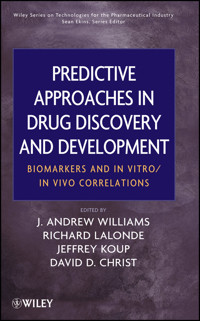
Predictive Approaches in Drug Discovery and Development E-Book
132,99 €
Mehr erfahren.
- Herausgeber: John Wiley & Sons
- Kategorie: Wissenschaft und neue Technologien
- Serie: Wiley Series on Technologies for the Pharmaceutical
- Sprache: Englisch
Practical Utility of Biomarkers in Drug Discovery and Development covers all aspects of biomarker research applied to drug discovery and development and contains state-of-the-art appraisals on the practical utility of genomic, biochemical, and protein biomarkers. Case histories and lessons from successful and unsuccessful applications of biomarkers are included along with key chapters on GLP validation, safety biomarkers and proteomics biomarkers. Regulatory agency perspectives and initiatives both in the US and internationally are also discussed.
Sie lesen das E-Book in den Legimi-Apps auf:
Seitenzahl: 730
Veröffentlichungsjahr: 2012
Ähnliche




















Table of Contents
Series Page
Title Page
Copyright
Preface
Acknowledgments
Part 1: Biomarkers in Drug Discovery
Chapter 1: The Importance of Biomarkers in Translational Medicine
1.1 Introduction
1.2 Translational Medicine and Biomarkers—Some useful Definitions
1.3 Biomarkers: The Rosetta Stone of Translational Medicine
1.4 Drug Development without Biomarkers—an Empty Experience
1.5 Biomarker Translation Success Stories
1.6 The Path Forward
References
Chapter 2: Validation of Biochemical Biomarker Assays used in Drug Discovery and Development: A Review of Challenges and Solutions
2.1 Introduction
2.2 General Considerations for Biomarker Measurements and Selection of Assay Platforms for the Quantification of Biochemical Biomarkers
2.3 Overview of Assay Validation Requirements and Challenges
2.4 Future Trends, Emerging Technologies
2.5 Conclusions
2.6 Glossary
Chapter 3: Proteomic Methods to Develop Protein Biomarkers
3.1 Protein Biomarker Discovery
3.2 Assay Development
3.3 Testing
3.4 Summary
3.5 Acknowledgments
Chapter 4: Overview of Metabolomics Basics
4.1 Introduction
4.2 Analytical Methods
4.3 Data Analysis
4.4 Examples of Applications
4.5 Final Thoughts
4.6 Acknowledgments
Part 2: Clinical Application of Biomarkers
Chapter 5: Vascular Biomarkers and Imaging Studies
5.1 Tumor Angiogenesis
5.2 Antiangiogenesis
5.3 Biomarkers in Antiangiogenic Drug Development
5.4 Tissue Markers
5.5 Blood Markers
5.6 Imaging Techniques
5.7 Summary
Chapter 6: Cardiovascular Biomarkers as Examples of Success and Failure in Predicting Safety in Humans
6.1 Introduction
6.2 The Interdependency of Nonclinical Research, Clinical Trials, and Therapeutics
6.3 Evolution of Biomarker Development
6.4 Composite Endpoints
6.5 Considerations for the use of Biomarkers: is Validation Achievable?
6.6 Regulatory Considerations
6.7 Problems Arising from the use of Unvalidated Biomarkers
6.8 Biomarkers and Drug Development Stagnation
6.9 The Future of Biomarkers: Development of Drugs for Personalized Medicine
6.10 Biomarkers in Regulatory Research
6.11 Concerted Efforts for Development of Biomarkers
6.12 Conclusion
Chapter 7: The use of Molecular Imaging for Receptor Occupancy Decision Making in Drug Development
7.1 Receptor Occupancy
7.2 Markers of Disease Progression
7.3 Drug Distribution Studies
7.4 Molecular Imaging Technology
7.5 Binding Potential
7.6 Pharmacokinetic Assumptions
7.7 Receptor Occupancy Experimental Designs in Drug Development
7.8 Healthy Volunteer Receptor Occupancy Trial Design
7.9 Patient Studies
7.10 Relationship with Pharmacodynamics
7.11 Literature Examples
7.12 Pet Modeling
7.13 Dose Versus PK
7.14 Receptor Occupancy Determination Variability
7.15 Alternative Forms of Measure of Exposure
7.16 Speed of Development of Pet Ligands
Chapter 8: Biosensors for Clinical Biomarkers
8.1 Introduction
8.2 Biosensors for Biomarkers in Oncology
8.3 Biosensors for Biomarkers in Cardiology
8.4 Biosensors for Other Clinical Biomarkers
8.5 Nucleic-Acid-Based Biosensors for Biomarkers
8.6 Conclusions
8.7 Glossary
Part 3: Regulatory Perspectives
Chapter 9: Regulatory Perspectives on Biomarker Development
9.1 Introduction to Food and Drug Administration's Critical Path Initiative as it Pertains to Biomarkers
9.2 Current Utility of Biomarkers in Drug Development
9.3 The Primary Utility of Biomarkers in Drug Development is not as Surrogate Endpoints
9.4 Examples of Biomarker uses in Regulatory Decision Making
9.5 Importance of Technology, Bioanalytical Validation, and Clinical Qualification and the Associated Challenges in Development of New Biomarkers for use in Drug Development
9.6 Taxonomy of Evidence Needed to Validate and Qualify Biomarkers as Fit-for-Purpose
9.7 Future Perspectives on Regulatory Involvement in Biomarker Development
Chapter 10: Perspectives from the European Regulatory Authorities*
10.1 Introduction
10.2 Approval of Biomarkers
10.3 Current Status of use of Biomarkers in the Licensing of Drugs
10.4 Regulatory Acceptance of Biomarkers
10.5 European Regulators Interactions with Industry: General Aspects
10.6 EMEA/CHMP/National Agencies Interactions with Industry: Specific Interactions
10.7 ICH Activities
10.8 Future Challenges
Chapter 11: Use of Biomarker in Drug Development—Japanese Perspectives*
11.1 Introduction
11.2 Differences in the Standard Dose of Drugs Between Japan and United States/European Union
11.3 Examples of Differences in Biomarker Responses among Populations
11.4 Biomarker and Drug Development
11.5 Examples of Biomarker Information in Package Inserts on Approved Drugs in Japan
11.6 Regulatory Activities Related to Pharmacogenomics (PGx)/Biomarkers in Japan
11.7 Approaches to Utilize PGx-Based Medicine in Practical Situations
11.8 Conclusions
References
Part 4: Predicting In Vivo
Chapter 12: InVitro–InVivo Correlations of Hepatic Drug Clearance
12.1 Introduction
12.2 InVitro Systems
12.3 Conducting InVitro Experiments
12.4 Applying Scaling Factors and Physiological Models
12.5 Special Aspects of Predicting Clearance InVitro
12.6 Conclusions
References
Chapter 13: The Potential of InSilico and InVitro Approaches to Predict InVivo Drug–Drug Interactions and ADMET/TOX Properties
13.1 Introduction
13.2 Predicting the Clinical Significance of Drug–Drug Interactions from InVitro Enzyme Inhibition Experiments
13.3 InSilico Models for ADME/TOX Properties
13.4 Summary
Chapter 14: InVitro–InVivo Correlations in Drug Discovery and Development: Concepts and Applications in Toxicology
14.1 Introduction
14.2 Prediction of Mechanisms of Toxicity and the Development of Counterscreens
14.3 Counterscreening Strategies and Examples
14.4 Mitochondria as a Target for Toxicity
14.5 Assays for the Prediction of Hepatotoxicity
14.6 Prediction of Potential Cardiac Ion Channel, Cardiomyopathy, and Hemodynamic Effects
14.7 Predictive Teratology
Chapter 15: Assessing the Potential for Induction of Cytochrome P450 Enzymes and Predicting the In Vivo Response
15.1 Introduction
15.2 Molecular Mechanisms of CYP Induction
15.3 Species Differences in CYP Induction
15.4 Effects of CYP Induction on Pharmacokinetics
15.5 The Effects of Time and Dose on CYP Induction
15.6 Induction of Intestinal and Hepatic CYP
15.7 InVitro and InVivo Assessment of CYP Induction
15.8 Conclusions
Index
For further information visit: the book web page http://www.openmodelica.org, the Modelica Association web page http://www.modelica.org, the authors research page http://www.ida.liu.se/labs/pelab/modelica, or home page http://www.ida.liu.se/~petfr/, or email the author at [email protected]. Certain material from the Modelica Tutorial and the Modelica Language Specification available at http://www.modelica.org has been reproduced in this book with permission from the Modelica Association under the Modelica License 2 Copyright © 1998–2011, Modelica Association, see the license conditions (including the disclaimer of warranty) at http://www.modelica.org/modelica-legal-documents/ModelicaLicense2.html. Licensed by Modelica Association under the Modelica License 2.
Modelica© is a registered trademark of the Modelica Association. MathModelica© is a registered trademark of MathCore Engineering AB. Dymola© is a registered trademark of Dassault Syst`emes. MATLAB© and Simulink© are registered trademarks of MathWorks Inc. Java is a trademark of Sun MicroSystems AB. Mathematica© is a registered trademark of Wolfram Research Inc.
Copyright © 2011 by the Institute of Electrical and Electronics Engineers, Inc.
Published by John Wiley & Sons, Inc., Hoboken, New Jersey. All rights reserved.
Published simultaneously in Canada.
No part of this publication may be reproduced, stored in a retrieval system, or transmitted in any form or by any means, electronic, mechanical, photocopying, recording, scanning, or otherwise, except as permitted under Section 107 or 108 of the 1976 United States Copyright Act, without either the prior written permission of the Publisher, or authorization through payment of the appropriate per-copy fee to the Copyright Clearance Center, Inc., 222 Rosewood Drive, Danvers, MA 01923, (978) 750-8400, fax (978) 750-4744. Requests to the Publisher for permission should be addressed to the Permissions Department, John Wiley & Sons, Inc., 111 River Street, Hoboken, NJ 07030, (201) 748-6011, fax (201) 748-6008, or online at http://www.wiley.com/go/permission.
Limit of Liability/Disclaimer of Warranty: While the publisher and author have used their best efforts in preparing this book, they make no representations or warranties with respect to the accuracy or completeness of the contents of this book and specifically disclaim any implied warranties of merchantability or fitness for a particular purpose. No warranty may be created or extended by sales representatives or written sales materials. The advice and strategies contained herein may not be suitable for your situation. You should consult with a professional where appropriate. Neither the publisher nor author shall be liable for any loss of profit or any other commercial damages, including but not limited to special, incidental, consequential, or other damages.
For general information on our other products and services or for technical support, please contact our Customer Care Department within the United States at (800) 762-2974, outside the United States at (317) 572-3993 or fax (317) 572-4002.
Wiley also publishes its books in a variety of electronic formats. Some content that appears in print may not be available in electronic formats. For more information about Wiley products, visit our web site at www.wiley.com.
Library of Congress Cataloging-in-Publication Data:
Predictive approaches in drug discovery and development : biomarkers and in vitro/in vivo correlations / edited by J. Andrew Williams . . . [et al.].
p. ; cm.–(Wiley series on technologies for the pharmaceutical industry)
Includes bibliographical references and index.
ISBN 978-0-470-17083-0 (cloth)
I. Williams, J. Andrew. II. Series: Wiley series on technologies for the pharmaceutical industry.
[DNLM: 1. Biomarkers, Pharmacological. 2. Drug Discovery. 3. Drug Evaluation, Preclinical. 4. Technology, Pharmaceutical. QV 744]
GN289.R45 2012
615.19–dc23
2011040419
Preface
In the race to discover approvable new drugs faster and with fewer resources, two key elements have emerged that can enhance the drug pipeline and accelerate development, namely, biomarkers and in vitro/in vivo correlations (IVIVCs). At the early stage of the race, identifying the concepts and practices that link in vitro data with projected in vivo performance can lead to the identification of more robust clinical candidates and the more intelligent selection of new leads. Recognizing the limitations of IVIVCs and using IVIVC appropriately are critical to new drug discovery. As clinical trials are conceived, the identification of easily measured, rugged, and reliable markers of disease and the effects drugs have on disease are critical in defining appropriate patients and demonstrating efficacy as early as possible. Biomarkers, defined as an objectively measured indicator of physiological or pathophysiological function, or an indicator of pharmacological response, are important elements in translating basic pharmacology and drug effects into clinical utility and regulatory acceptance. Because of their power, understanding and applying biomarkers is really an expectation for the new drug development paradigm. This book provides a critical compilation of the most important aspects of these two topics from an international perspective.
Everyone involved in the process of new drug discovery, development and regulation should find the concepts and examples described herein useful, both for evaluating the merits of starting programs with these tools and for making decisions based on data from these approaches. Expertise in these two areas is no longer just the province of the pharmaceutical industry and regulatory agencies, but as more academic and government programs become involved in “drug discovery,” more scientists, regardless of location, will need familiarity with these topics. The chapters in this book were written so that all scientific interests could find value; everyone from the technical staff to senior management. Many of the concepts and strategies behind developing and applying biomarkers and IVIVC are complementary, and much of this book's value is contained in these reinforcing themes.
The expert authors responsible for each chapter come from a wide background in the pharmaceutical industry, worldwide regulatory agencies, and academia. While each chapter contains a core of basic information, the chapters also contain each author's perspective and opinion. We hope you will find this important aspect of the book most valuable since it provides the context for much of the science in these rapidly evolving areas.
Acknowledgments
We are indebted to the chapter authors for their commitment, perseverance, and patience. All are excellent scientists, experts in their field, with overbooked calendars, and we sincerely appreciate the time they dedicated to their chapters. They provided great material to us, and if anything is not clear, we will take editorial responsibility. Thank you.
We would also like to acknowledge the patient guidance and unwavering support of Dr. Sean Ekins, Series Editor for the Wiley Series on Technology for the Pharmaceutical Industry. Sean is a friend and colleague, and his experience and advice throughout our editing efforts have been sustenance. On many levels, this book could not have been completed without Sean.
Jonathan Rose, Amanda Amanullah, and the staff at Wiley have been terrific. We appreciate their expertise, and patience, and the final volume is a product of their support.
J. Andrew Williams, Richard Lalonde,
Jeffrey R. Koup, and David D. Christ
San Diego, CA; Groton, CT; Vonore, TN; and Newark, DE
Part 1
BIOMARKERS IN DRUG DISCOVERY
Chapter 1
The Importance of Biomarkers in Translational Medicine
Joseph C. Fleishaker
1.1 Introduction
The new millennium was to have ushered in a bright new era of drug discovery. The unraveling of the human genome would provide a host of new therapeutic gene targets to treat debilitating diseases [1]. The rest of the “omics” (proteomics, metabonomics, and transcriptomics) would provide additional insights on these targets and methods to assess drug effects early in the development process [2, 3]. New therapeutic modalities (sRNAi, therapeutic proteins, and vaccines) would allow us to treat diseases, such as Alzheimer's disease, that up until now have eluded our best efforts. This was an engaging vision of the future.
What the new millennium has brought so far is steadily decreasing R&D productivity in the pharmaceutical industry. In 2007, only 16 new chemical entities were approved, compared to the 27 approved in 2000 by the U.S. Food and Drug Administration. The success rate for drugs in phase II proof of concept (POC) testing is at 20% or less [4]. At the same time, the cost of bringing a new medicine to the market is approaching US$1.7 billion [5]. There have also been several high profile withdrawals of products from the market for safety concerns, most notably rofecoxib (VIOXX® Tablets). This is hardly the vision conjured by mapping the human genome.
The key to addressing these issues and realizing the bright future for drug development is to assess, as early as possible, the properties (good and bad) of a potential target for intervention in a disease process and therapeutic modalities against that target. On the basis of these data, one must make a decision whether to devote resources (private or public) to the development of that particular agent. The challenge is to do this with limited resources and with less than a 100% certain answer. By making early decisions on compounds and targets, we can then assess more targets/treatments for potential benefit and devote our limited resources to those that show the most promise. Traditional drug development paradigms have relied on large and prolonged studies to make go/no go decisions on new therapeutics. For example, a definitive answer on the utility of a disease-modifying agent for rheumatoid arthritis requires the assessment of the progression of joint narrowing and erosion by radiography [6]. For Alzheimer's disease, long-term studies are necessary to establish a disease-modifying effect [7]. How then do we get an answer within 3 months (or less) in 100 patients (or less) that an investigational treatment for these treatments is likely to be of therapeutic benefit and warrant the resources necessary for continued development?
Translational medicine has been proposed as the answer to the above question, and biomarkers are critical to the successful translation of findings in pharmacological studies in animals to therapeutic benefit in humans. The purpose of this chapter is to examine the integral role that biomarkers play in translational medicine and the development of new medicines. We examine successful applications of biomarkers to speed drug development and discuss examples where the lack of biomarkers has led to repeated failure in drug development. Finally, we discuss some future directions in biomarker research that can enhance drug development.
1.2 Translational Medicine and Biomarkers—Some useful Definitions
In any discussion on biomarkers, it is important that it is clear exactly what is being discussed. For example, the question, “Is your company working on biomarkers?” can be difficult to answer. Is the questioner referring to biomarkers for use in translational medicine and early decision making during drug development? Or rather, does the question really relate to a company's development of diagnostic tests to use when a drug is approved? Thus, the various definitions of translational medicine and biomarkers should be clearly understood in order to promote advancement in these areas.
Littman et al. [8] state that “The question of how to define translational research remains unresolved and controversial.” They also provide a table (Box 1.1) that describes the areas that define translational research. The FDA Critical Path Initiative [9] describes translational research as being concerned with “moving basic discoveries from concept to clinical evaluation.” The interesting part of this definition is that it is unidirectional from test tube to animal to human. Equally important is the back translation of clinical observations that may elucidate important insights into human disease, which drive further basic research aimed at new therapies [10]
Box 1.1 : Goals and Areas Defining Translation Research
GoalsThe establishment of guidelines for drug development or for the identification and validation of clinically valid biomarkers.Experimental nonhuman and nonclinical studies conducted with the intent of developing principles for discovery of new therapeutic strategies.Clinical investigations that provide the biological foundation for the development of improved therapies.Any clinical trial initiated with the above goals.Basic science studies that define the biological effects of therapeutics in humans.Lesen Sie weiter in der vollständigen Ausgabe!
Lesen Sie weiter in der vollständigen Ausgabe!
Lesen Sie weiter in der vollständigen Ausgabe!
Lesen Sie weiter in der vollständigen Ausgabe!
Lesen Sie weiter in der vollständigen Ausgabe!
Lesen Sie weiter in der vollständigen Ausgabe!
Lesen Sie weiter in der vollständigen Ausgabe!
Lesen Sie weiter in der vollständigen Ausgabe!
Lesen Sie weiter in der vollständigen Ausgabe!
Lesen Sie weiter in der vollständigen Ausgabe!
Lesen Sie weiter in der vollständigen Ausgabe!
Lesen Sie weiter in der vollständigen Ausgabe!
Lesen Sie weiter in der vollständigen Ausgabe!
Lesen Sie weiter in der vollständigen Ausgabe!
Lesen Sie weiter in der vollständigen Ausgabe!
Lesen Sie weiter in der vollständigen Ausgabe!
Lesen Sie weiter in der vollständigen Ausgabe!
Lesen Sie weiter in der vollständigen Ausgabe!




