


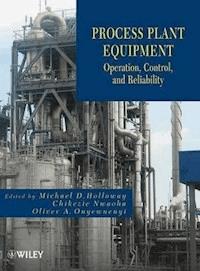
Process Plant Equipment E-Book
144,99 €
Mehr erfahren.
- Herausgeber: John Wiley & Sons
- Kategorie: Fachliteratur
- Sprache: Englisch
"Process Plant Equipment Book is another great publication from Wiley as a reference book for final year students as well as those who will work or are working in chemical production plants and refinery..." -Associate Prof. Dr. Ramli Mat, Deputy Dean (Academic), Faculty of Chemical Engineering, Universiti Teknologi Malaysia "...give[s] readers access to both fundamental information on process plant equipment and to practical ideas, best practices and experiences of highly successful engineers from around the world... The book is illustrated throughout with numerous black & white photos and diagrams and also contains case studies demonstrating how actual process plants have implemented the tools and techniques discussed in the book. An extensive list of references enables readers to explore each individual topic in greater depth..." -Stainless Steel World and Valve World, November 2012 Discover how to optimize process plant equipment, from selection to operation to troubleshooting From energy to pharmaceuticals to food, the world depends on processing plants to manufacture the products that enable people to survive and flourish. With this book as their guide, readers have the information and practical guidelines needed to select, operate, maintain, control, and troubleshoot process plant equipment so that it is efficient, cost-effective, and reliable throughout its lifetime. Following the authors' careful explanations and instructions, readers will find that they are better able to reduce downtime and unscheduled shutdowns, streamline operations, and maximize the service life of processing equipment. Process Plant Equipment: Operation, Control, and Reliability is divided into three sections: * Section One: Process Equipment Operations covers such key equipment as valves, pumps, cooling towers, conveyors, and storage tanks * Section Two: Process Plant Reliability sets forth a variety of tested and proven tools and methods to assess and ensure the reliability and mechanical integrity of process equipment, including failure analysis, Fitness-for-Service assessment, engineering economics for chemical processes, and process component function and performance criteria * Section Three: Process Measurement, Control, and Modeling examines flow meters, process control, and process modeling and simulation Throughout the book, numerous photos and diagrams illustrate the operation and control of key process equipment. There are also case studies demonstrating how actual process plants have implemented the tools and techniques discussed in the book. At the end of each chapter, an extensive list of references enables readers to explore each individual topic in greater depth. In summary, this text offers students, process engineers, and plant managers the expertise and technical support needed to streamline and optimize the operation of process plant equipment, from its initial selection to operations to troubleshooting.
Sie lesen das E-Book in den Legimi-Apps auf:
Seitenzahl: 1896
Veröffentlichungsjahr: 2012
Ähnliche




















Table of Contents
Copyright
Dedication
Title Page
Contributors
Preface
Section I: Process Equipment Operation
Chapter 1: Introduction
Chapter 2: Valves
2.1 Types of Control Valves
2.2 Control Valve Actuators
2.3 Control Valve Sizing and Selection
2.4 Common Problems of Control Valves
2.5 Diagnosing Control Valve Problems
2.6 Control Valve Reliability and Selection
2.7 Control Valve Maintenance
2.8 Control Valve Troubleshooting
Chapter 3: Pumps
3.1 Types of Pumps
3.2 Pump Applications
3.3 Pump Sizing and Selection
3.4 Pump Maintenance
3.5 Pump Troubleshooting
Chapter 4: Pipes
4.1 Types of Pipes
4.2 Pipe Selection
4.3 Pipeline Network Design and Optimization
4.4 Pipeline Failure
4.5 Pipeline Inspection and Leak Detection
4.6 Pipe Maintenance
4.7 Pipe Troubleshooting
Chapter 5: Cooling Towers
5.1 Cooling Tower Operation
5.2 Types of Cooling Towers
5.3 Common Problems of Cooling Towers
5.4 Measuring Cooling Tower Performance
5.5 Cooling Tower Maintenance
Chapter 6: Filters and Membranes
6.1 Types of Filters
6.2 Mechanisms of Filtration
6.3 Filter Selection
6.4 Particle-Size Measurement Techniques
6.5 Filter Location
6.6 Membrane Filtration
6.7 Filter Maintenance
Chapter 7: Sealing Devices
7.1 Gaskets
7.2 Compression Packings
7.3 Mechanical Seals
7.4 Expansion Joints
7.5 General Sealing Device Selection
Chapter 8: Steam Traps
8.1 Steam Trap Operation
8.2 Types of Steam Traps
8.3 Steam Trap Installation
8.4 Steam Trap Checking
8.5 Common Problems of Steam Traps
8.6 Steam Trap Selection
8.7 Steam Trap Applications
8.8 Steam Trap Sizing
8.9 Steam Trap Maintenance
Chapter 9: Process Compressors
9.1 Types of Compressors
9.2 Continuous Compression Compressors
9.3 Intermittent Compression Compressors
9.4 Centrifugal Compressors
9.5 Reciprocating Piston Compressors
9.6 Compressor Troubleshooting
Chapter 10: Conveyors
10.1 Industrial Use of Conveyors
10.2 Types of Conveyors
10.3 Conveyor Selection
10.4 Conveyor Safety
10.5 Conveyor Maintenance
10.6 Summary
Chapter 11: Storage Tanks
11.1 Types of Storage Tanks
11.2 Storage Tank Classification
11.3 Construction Materials
11.4 Common Problems of Storage Tanks
11.5 Storage Tank Maintenance
11.6 Tank Appurtenances
11.7 Storage Tank Maintenance
Chapter 12: Mixers
12.1 Mixing Concepts: Theory and Practice
12.2 Fluid Mixing
12.3 Solid Blending
12.4 Mixing High-Viscosity Materials and Pastes
12.5 Mechanical Components in Mixing Equipment
Chapter 13: Boilers
13.1 Types of Boilers
13.2 Boiler Accessories
13.3 Boiler Selection
13.4 Common Problems of Boilers
13.5 Boiler Failure Analysis and Welding Defects
13.6 Boiler Maintenance
13.7 Boiler Troubleshooting
13.8 Boiler Chemicals
13.9 Boiler Efficiency and Combustion
Section II: Process Plant Reliability
Chapter 14: Engineering economics for chemical processes
14.1 Time Value of Money
14.2 Cash Flow Analysis
14.3 Profitability Analysis
14.4 Cost Estimation and Project Evaluation
Chapter 15: Process Component Function and Performance Criteria
15.1 Material Classification
15.2 General Physical Quantities and Considerations
15.3 Material Transfer and Conveyance Equipment
15.4 Conveyors
15.5 Pumps
15.6 Valves
15.7 Pipes
15.8 Conclusions
Chapter 16: Failure Analysis and Interpretation of Components
16.1 Assessing the Situation
16.2 Failure Defined
16.3 Taking Advantage of Failure
16.4 Sources of Failure
16.5 Failure of Materials and of Machines
16.6 Types of Forces
16.7 Strength
16.8 Creep (Deformation)
16.9 Fatigue (material)
16.10 Wear
16.11 Property Changes
16.12 Temperature
16.13 Oxidation: Molecular Transitions and Chemical Influences
16.14 Deposit Formation
16.15 Factors That Affect Deposit Formation
16.16 Documenting Failure
Chapter 17: Mechanical Integrity of Process Vessels and Piping
17.1 Perspectives on Mechanical Integrity, Fitness For Service, and Condition Monitoring
17.2 Types of Flaws and Damage Mechanisms
17.3 Inspection, Characterization, and Monitoring of Flaws
17.4 Fracture Mechanics and Fitness-For-Service Assessment
17.5 Control and Prevention of Brittle Fracture
17.6 Case Histories and Examples of FFS Applications to Cracks in Process Plant Pressure Vessels
Chapter 18: Design of Pressure Vessels and Piping
18.1 Modes of Failure
18.2 Basic Stress Analysis
18.3 Design of Pressure Vessels
18.4 Design of Piping Systems
Chapter 19: Process Safety in Chemical Processes
19.1 The hazards
19.2 Hazard Analysis
19.3 Risk Analysis
19.4 Safety Ratings
19.5 Development and Design of a Safe Plant
19.6 Safety Process Operation
19.7 Safety and Reliability Analysis
19.8 Summary
19.9 Method for risk measure
19.10 Method for parameter determination
Section III: Process Measurement, Control, and Modeling
Chapter 20: Flowmeters and Measurement
20.1 Flow Measurement Techniques
20.2 Flow-Rate Meters
20.3 Common Problems of Flowmeters
20.4 Flowmeter Installation and Maintenance
20.5 Calibration and Certification
20.6 LACT and Prover Descriptions [16]
20.7 Troubleshooting LACT and Prover Systems [16]
20.8 Troubleshooting Flowmeters
Chapter 21: Process Control
21.1 Control System Components
21.2 Control System Requirements
21.3 Sensor Response
21.4 Control Algorithms
21.5 Loop tuning
21.6 Multiloop Control
21.7 Final Control Elements
21.8 Process controllers
Chapter 22: Process Modeling and Simulation
22.1 Process Modeling
22.2 Process Simulation
22.3 Process Optimization
22.4 Commercial Tools for Process Modeling, Simulation, and Optimization
22.5 Process Modeling Case Studies
22.6 Concluding Remarks
Appendix I: Methods for Measuring Process Temperature
I.1 Types of Instruments
I.2 Selection strategy
Appendix II: Airflow Troubleshooting
II.1 Common Obstacles to Proper Airflow
II.2 Troubleshooting
Appendix III: MIG Shielding Gas Control and Optimization
Appendix IV: Rupture Disk Selection
IV.1 Rupture Disk Types
IV.2 Operating a Rupture Disk
IV.3 Rupture Disk Selection Criteria
IV.4 Troubleshooting
Appendix V: Pressure Gauge Selection
V.1 Selection Criteria
V.2 Conclusions
Appendix VI: Corrosion and Its Mitigation in the Oil and Gas Industries
VI.1 Wellhead Fluids
VI.2 Corrosion and Corrosion morphology
VI.3 Corrosion in the Oil and Gas industry
VI.4 Methods to combat corrosion in the Oil and Gas industry
VI.5 Corrosion Monitoring and Management
VI.6 Conclusions
Appendix VII: Mixers
VII.1 Advances in Mixing Technology
Appendix VII: Glossary of Processing Terms
Index
Copyright © 2012 by John Wiley & Sons. All rights reserved.
Published by John Wiley & Sons, Inc., Hoboken, New Jersey
Published simultaneously in Canada
No part of this publication may be reproduced, stored in a retrieval system, or transmitted in any form or by any means, electronic, mechanical, photocopying, recording, scanning, or otherwise, except as permitted under Section 107 or 108 of the 1976 United States Copyright Act, without either the prior written permission of the Publisher, or authorization through payment of the appropriate per-copy fee to the Copyright Clearance Center, Inc., 222 Rosewood Drive, Danvers, MA 01923, 978-750-8400, fax 978-750-4470, or on the web at www.copyright.com. Requests to the Publisher for permission should be addressed to the Permissions Department, John Wiley & Sons, Inc., 111 River Street, Hoboken, NJ 07030, 201-748-6011, fax 201-748-6008, or online at http://www.wiley.com/go/permission.
Limit of Liability/Disclaimer of Warranty: While the publisher and author have used their best efforts in preparing this book, they make no representations or warranties with respect to the accuracy or completeness of the contents of this book and specifically disclaim any implied warranties of merchantability or fitness for a particular purpose. No warranty may be created or extended by sales representatives or written sales materials. The advice and strategies contained herein may not be suitable for your situation. You should consult with a professional where appropriate. Neither the publisher nor author shall be liable for any loss of profit or any other commercial damages, including but not limited to special, incidental, consequential, or other damages.
For general information on our other products and services or for technical support, please contact our Customer Care Department within the United States at 877-762-2974, outside the United States at 317-572-3993 or fax 317- 572–4002.
Wiley also publishes its books in a variety of electronic formats. Some content that appears in print may not be available in electronic formats. For more information about Wiley products, visit our web site at www.wiley.com.
Library of Congress Cataloging-in-Publication Data:
Process plant equipment : operation, control, and reliability / edited by
Michael D. Holloway, Chikezie Nwaoha, Oliver A. Onyewuenyi.
p. cm.
Includes index.
ISBN 978-1-118-02264-1 (cloth)
1. Pumping machinery–Maintenance and repair. 2. Pipelines–Maintenance and repair. 3. Valves–Maintenance and repair.
4. Compressors–Maintenance and repair. 5. Storage tanks–Maintenance and repair. 6. Mixing machinery–Maintenance and repair.
7. Boilers–Maintenance and repair. 8. Filters and filtration. I. Holloway, Michael H., 1963– II. Nwaoha, Chikezie, 1984– III.
Onyewuenyi, Oliver A., 1952–
TJ900.P725 2012
621.8–dc23
2011028229
For the memory of Denton Ward student and friend
Contributors
Preface
The nature of human beings has been to control the immediate environment for safety and comfort. Building shelter, finding food and water, and staying warm and dry are the reasons for our success. None of this would or could be possible if we did not develop a means to communicate and retain information. Consider the fact that humans do not possess great physical strength or agility compared to other animals or the ability to withstand harsh environments without the use of an extension of our bodies (clothing and shelter). We truly rely on each other's experiences to help us accommodate to what the world throws at us. This manuscript is an extension of just that—a means by which humans can share ideas and experiences in order to live our lives more comfortably. From petroleum, pharmaceuticals, and various chemicals and food products, to energy and power production, processing plants produce products essential to our survival. Without these plants we would not have the ability to get much older than our prehistoric ancestors. Developing the competence to run these plants efficiently, reliably, safely, and profitably is therefore a prime human objective.
The effort that proceeds over the next several hundred pages is nothing short of a miracle! Rarely can you get one or two people to commit to such a monumental project. This particular undertaking has herded over thirty (yes, thirty!) of the world's top academic and engineers to embark on a project that is encyclopedic in nature. Talented folks from Asia, Africa, Europe, the Middle East, South America, and North America have each put forth the effort to take on a topical chapter in order to build this work, all intended to provide readers with the information that will lead them to understand and implement best practices in process plant equipment operations, reliability, and control.
The initial idea for the book sprang from the musings of a very talented and promising young engineer, Chikezie Nwaoha. His vision to provide a comprehensive text that would enable readers to have access not only to the fundamental information concerning process plant equipment but also to practical ideas, best practices, and experiences of highly successful engineers from around the world. Nwaoha, being a smart man, decided to delegate some of the work. He broke the book into three parts. He edited the first section, Process Equipment Operations, Michael D. Holloway edited the second section, Process Plant Reliability, and the third section, Process Measurement, Control, and Modeling, was edited by Oliver A. Onyewuenyi, a world-renowned engineer.
The work incorporates the latest information, best practices, and trends. The sound foundations of engineering principles for a process facility provided in this book have solid roots from which the tree of productivity is constantly bearing fruit. If the reader chooses to put any of these ideas into practice, improvement in equipment operation, reliability, and control should be witnessed and enhanced safety, profitability, and performance will ensue. Only good things can happen.
Like any experienced bushman on the savanna knows, you can only eat an elephant one bite at a time. It is suggested that you take your time and read and digest each chapter carefully. Feel free to write in the margins, highlight passages, and quote as you see fit (but please use sound judgment concerning copyright laws!). Most important, use this work as a tool. Employed with care, information can develop into knowledge. With proper application and sound judgment, wisdom can spring forth. This work is the beginning of a very wise approach.
Chikezie Nwaoha
Michael D. Holloway
Oliver A. Onyewuenyi
Section I
PROCESS EQUIPMENT OPERATION
Chapter 1: Introduction
Michael D. Holloway
NCH Corporation, Irving, Texas
A process is an amalgamation of machines, methods, materials, and people working in concert to produce something. Generally, the end product is something tangible: fuel, food, textiles, building materials—the list is exhaustive. The end product from a process can also be intangible: a bond, software, laws. It is difficult to say where a person begins and a process ends. Human beings are dependent on processes to live, as we are dependent on water to live. The first known process was probably irrigating fields to grow crops. Many argue that this process began over 20,000 years ago, others that it was closer to 50,000 years ago. Every few years a discovery is made that puts the date back even further as well as the place of origin: Africa, Asia, the Middle East? Needless to say, humans have been trying for a very long time to reduce labor and add comfort through the systematic use of materials and machines to implement a process to achieve a desired goal. Consider the following incomplete list of materials and machines. All required a process.
Machines
Primary machines
: simple machines that rely on their own structure to complete work: lever, pulley, inclined plane, hammer
Secondary machines
: simple machines that rely on an accompanying machine: screw, wheel, axle, saw
Tertiary machines
: complex machines that require a contribution from a compliant machine: gear, valve, pump, furnace, bearing, engines, boiler
Materials
Primary materials
: material used in the unprocessed state: water, wood, pitch, clay, stone, sand, wax, bone, fiber
Secondary materials
: material developed from a combination or treatment of primary materials: leather, cement, paint, pigments, cloth, metal, glass
Tertiary materials
: materials made from chemical manipulation: alloys, polymers, semiconductors, composites
A process does not become successful without observation and communication. One of the most important devices developed for a process was the pump. The first piston pump was invented by Ctesibius of Alexandria, a Greek physicist and inventor born around 300 b.c. One of his better known engineering efforts was improvement of the water clock. A water clock keeps time by means of dripping water maintained at a constant rate. His ideas of refinement of the water clock allowed for accurate timekeeping. The accuracy of his water clock was not improved upon for 1500 years. The second invention he is noted for is the water organ, the precursor of the hydraulic pump. This was a mechanized device in which air was forced by water through organ pipes to produce sounds. At first glance one would be in error not to think of the vast number of applications such a device could have. There are hundreds of different pumps in any given process plant. The concept of conveying gas or liquids without a pump is unheard of today. This invention resulted from observation of one of his first inventions—a counterweighted mirror.
Ctesibius was born the son of a barber, and like many good sons he tried to follow in his father's footsteps. Perhaps it was a good thing that he spent more time thinking about how to improve his father's trade than in clipping bangs. He invented a device: a mirror placed at the end of a tubular pole, with a lead counterweight of the exact same weight placed at the other end that allowed the mirror to be adjusted for each customer. He noticed that when he moved the mirror, the weight bounced up and down while making a strange whistling noise. He theorized that this noise was air escaping from the tube. He tinkered with various dimensions and escape holes, which led to other observations and inventions using the power of pressure, gases, and liquids to achieve certain results. Without these musings the piston pump might never have came into being.
Pumping water for consumption, irrigation, and washing changed human society. If a stable water source was found, the water could be transported with minimal labor—all that was needed was a pump. People no longer had to move repeatedly to new areas to find food and water. They could stay put, farm, and live. In doing so, cities were established. With a high concentration of people, the odds of more improved processes increased exponentially. With the increased demand for improved comfort and greater commercial profits came a higher concentration of thinkers. Some people despise the modern city, but it must be admitted that cities are responsible for generating many of the ideas that make the rest of society flourish.
Mechanical means to move gases and fluids are essential in any process plant, but so is chemical manipulation. Perhaps the first known form of manipulating something chemically would be the cooking of food. With cooking, meats, grains, and vegetables become easier to digest and transport, and spoilage is reduced. Adding heat requires a fuel source and a means to control the thermal output. Being able to heat a substance in a controlled fashion on a larger scale introduced materials such as alloys, glass, and a whole host of chemicals. This process required furnaces and valves, among other devices. The second great feat of chemical manipulation is fermentation followed by distillation. Fermention of grains and berries has been carried out for tens of thousands of years. Humans are not the only creatures to enjoy a good “buzz.” Many animals will have a party ingesting fermented berries and fruit. The ethanol produced provides a feeling of euphoria. One cannot blame any creature for wanting to feel better, but hopefully, it doesn't get in the way of the success of a species. To be able to separate alcohol from water requires observing condensation, fashioning a controllable heat source, and qualitative analysis. Alcohol is not just for drinking; it is actually a very valuable solvent, and the principles needed to understand how to make and distill alcohol are the very reasons that humans have become so successful. Without knowledge of the principles of fermentation and distillation, our heat, shelter, clothing, transportation, medicines, food, and materials would not exist as we know them.
The most influential industry to date is petroleum refining. Distillation is the main process in petroleum refining. Pharmaceuticals, building materials, solvents, plastics, and various fuels are all a result of the controlled distillation of crude oil. All this came about from the refinement of fermented grain. In fact, it is fair to say that without fermentation, we would not have progressed much further than the Cro-Magnons. Think about that the next time you sip a beer or enjoy a glass of wine or Scotch.
The effort that unfolds over the next several hundred pages is an undertaking that convinced over thirty of the world's top academic and engineers to embark on a project that is encyclopedic in nature. Talented and practicing experts in process plant engineering from Asia, Africa, Europe, the Middle East, and North America have contributed chapters to this book: all intended to help the reader to understand and implement best practices in process plant equipment operations, reliability, and control. The book is a comprehensive text that will provide the reader with access not only to fundamental information concerning process plant equipment but also with access to practical ideas, best practices, and experiences of highly successful engineers from around the world. The book is divided into three sections: Section I, Process Plant Equipment Operations; Section II, Process Plant Reliability; and Section III, Process Measurement, Control, and Modeling. An overview of the main highlights of the various chapters follows.
Section I: Process Equipment Operation
Chapter 2: Valves This chapter provides an introductory description of control valves, their types, and selection criteria, sizing procedures, operating principles, and maintenance and troubleshooting methods. It also describes common problems suffered by control valves and their remedies. Procedures for preventive and predictive maintenance of control valves and nonintrusive methods for detection of valve stiction are also discussed briefly.
Chapter 3: Pumps Water and other liquids are the lifeblood of many industrial processes. If those fluids are the blood, the plumbing system makes up the veins and arteries, and the pump is the heart. This chapter touches briefly on several types of industrial pumps, but deals primarily with the most common type, the centrifugal pump. Most of the principles apply to other types of pumps, but regardless of the type of pump in use, the pump manufacturer's manual and recommendations should always be followed. The chapter also provides the following: general terms commonly used in the pump industry; brief information on several different types of pumps that may allow a user to identify what type of pump is either in use or needed for a particular application; basic component descriptions common to centrifugal pumps; instructions on how to read a typical pump performance curve; categories of different types of pump applications; how to size and select a pump properly, including net positive suction head calculations and considerations; proper pump maintenance; and basic pump troubleshooting guidelines.
Chapter 4: Pipes Pipelines are one of the main methods of transporting oil and gas worldwide. Historically, pipelines have been the safest means of transporting natural gas and hazardous liquids. The integrity, safety, and efficiency of a pipeline system is important and key to operators. Based on these considerations, this chapter covers mainly pipe types and pipe selection strategy, including pipe strength, toughness, weldability, and material; pipeline network design; pipe problems; pipeline inspection; and pipe maintenance.
Chapter 5: Cooling Towers Cooling towers are the most basic type of evaporative cooling equipment used primarily for process water cooling purposes in many chemical plants. Their principal task is to reject heat to the atmosphere and they are deemed a relatively inexpensive and reliable means of removing heat from water. Basically, hot water from heat exchangers or other units will be sent to a cooling tower and the water exiting the tower (which is cooler) will be sent back to the heat exchanger for cooling purposes.
Chapter 6: Filters and Membranes Filters and membranes are used in vast industrial processes for the separation of mixtures, whether of raw process media materials, reactants, intermediates, or products—comprising gases, liquids, or solutions. This chapter identifies gas and liquid filtration covering solid–liquid separations, solid–gas separations, solid–solid separations, liquid–liquid separations, and liquid–gas separations. It includes membrane technology such as microfiltration, reverse osmosis, ultrafiltration, and nanofiltration. It is a complete reference tool for all involved in filtration as well as for process personnel whose job function is filtration.
Chapter 7: Sealing Devices This chapter covers a variety of gasket types, compression packing, mechanical seals, and expansion joints. Discussed are materials of construction, principles of operation, and applications of sealing products. Wherever there are pumps, valves, pipes, and process equipment, there are sealing devices. Although relatively low in cost, sealing devices can have huge consequences if they don't work as needed or if they fail. All these devices are used in process industries and are critical to plant safety and productivity.
Chapter 8: Steam Traps A steam trap is a device attached to the lower portion of a steam-filled line or vessel which passes condensate but does not allow the escape of steam. It is also a piece of equipment that automatically controls condensate, air, and carbon dioxide removal from a piping system with minimal steam loss. Hot condensate removal is necessary to prevent water hammer, which is capable of damaging or misaligning piping instruments. Air in the steam system must be avoided, as any volume of air consumes part of the volume that the system would otherwise occupy. Apart from that, the temperature of the air–steam mixture normally falls below that of pure steam. It has been proven that air is an insulator and clings to the pipe and equipment surfaces, resulting in slow and uneven heat transfer. This chapter covers the various types and classification of steam traps and their installation, common problems, sizing, selection strategies, application, and maintenance.
Chapter 9: Process Compressors This chapter deals with compressors used in the process industry. Basic theory with practical aspects is provided in sufficient detail for the use of process industry personnel.
Chapter 10: Conveyors This chapter takes into account the types of conveyors been manufactured by modern industries to meet the current challenges encountered in conveying operations. It enumerates their usefulness, what conveyors are, industries that use them, conveyor selection and types, and safety and maintenance.
Chapter 11: Storage Tanks Storage tanks pose a complex management problem for designers and users. Because of the wide variety of liquids that must be stored, some of which are flammable, corrosive, or toxic, material selection for tanks is a critical decision. This chapter provides general guidelines that will aid in the selection of the proper type of storage to be used in a particular application. Various codes, standards, and recommended practices should be used to supplement the material provided. Manufacturers should be consulted for specific design information pertaining to a particular type of storage.
Chapter 12: Mixers Effective mixing of solids, liquids, and gases is critical in determining the quality of food, pharmaceuticals, chemicals, and related products. It is therefore essential that research and development scientists, process and project engineers, and plant operational personnel understand the mixing processes and equipment. Mixing processes may be batch or continuous and may involve materials in combination of phases such as liquid–liquid, liquid–solid, liquid–solid–gas, liquid–gas, and solid–solid (free-flowing powders and viscous pastes). An understanding of mixing mechanisms, power requirements, equipment design, operation and scale-up, and maintenance will lead to maximizing the mixing performance and enhancing business profitability.
Chapter 13: Boilers A boiler is process equipment comprising a combustion unit and boiler unit, which can convert water to steam for use in various applications. Boilers are of different types and generally work with various fittings, retrofits, and accessories. Boiler efficiency is achieved by skillful maintenance practices, including preventive and repair maintenance, in addition to use of only suitably conditioned water as feed water.
Section II: Process Plant Reliability
Chapter 14: Engineering Economics for Chemical Processes This chapter presents basic tools and methods used traditionally in engineering to assess the viability and feasibility of a project. Presented first are the tools available to represent money on a time basis. Next, the mathematical relationships frequently used to model discrete cash flow patterns are presented. The equivalence between the different discrete models is included on this section. The various indexes available to select the most profitable project between a set of alternatives are then presented. In this section, the payback period, the minimum acceptable rate of return, and the internal rate of return are introduced. An illustrative case study showing the application of these concepts is presented at the end of this section. The methods available to perform cost estimation and project evaluation are presented next, including several examples to show the application of cost estimation techniques. Companies execute engineering projects based on the revenues expected. Accordingly, they invest time and money in the process of selecting the project that would return the maximum revenues and satisfy such project constraints as environmental and government regulations. Therefore, the tools, techniques, and methods presented in this chapter would be used by engineers to assist them in the selection of the most suitable engineering project and to accurately estimate the costs associated with the project.
Chapter 15: Process Component Function and Performance Criteria This chapter explores the basic and advanced concepts of material transfer and conveyance equipment for air, steam, gases, liquids, solids, and powders. Also included are the engineering considerations for the component construction for material transfer. Each component section consists of a portion dedicated to selection specifications, reliability and cost savings, various maintenance approaches, and process development and improvement of transfer systems.
Chapter 16: Failure Analysis and Interpretation of Components This chapter highlights the fact that understanding how a component or device fails is essential in developing a scheme as to how to increase reliability and system robustness and ultimately reduce operational costs. There are essentially only four reasons for failure: the material, the methods, the machine, or the man. To identify the source of failure requires an understanding of the signs of the various sources. This chapter provides a fundamental explanation of failure by helping organize information to make the failure assessment a logical process.
Chapter 17: Mechanical Integrity of Process Vessels and Piping This chapter builds a focused and practical coverage of engineering aspects of mechanical integrity as it relates to failure prevention of pressure boundary components in process plants. Principal emphasis is placed on the primary means of achieving plant integrity, which is the prevention of structural failures and failure of pressure vessels and piping, particularly any that could have significant consequences. It provides practical concepts and applicable calculation methodologies for the fitness-for-service assessment and condition monitoring of process piping systems and pressure vessels.
Chapter 18: Design of Pressure Vessels and Piping This chapter covers the basic principles behind the design equations used in pressure vessels, and piping design codes. The design procedures for vessels and pipes are outlined. Numerical examples have been used to demonstrate some of the design procedures. This chapter is not intended to replace design codes but rather to provide an understanding of the concepts behind the codes.
Chapter 19: Process Safety in Chemical Processes In this chapter risk analysis and equipment failure are provided; process hazard analysis and safety rating are studied; safe process design, operation, and control are highlighted; and risk assessment and reliability analysis of a process plant are examined.
Section III: Process Measurement, Control, and Modeling
Chapter 20: Flowmeters and Measurement There are many different methods of measuring fluid flow, which are useful but can be very confusing. The objective of this chapter is to unravel some of the mysteries of flow technology selection and teach how different flowmeters work and when and when not to use them. This chapter covers the basics, including terminology, installation practices, flow profiles, flow disturbances, verfication techniques, flowmeter selection, and troubleshooting.
Chapter 21: Process Control Process control is used to maintain a variable in a process plant at a set point or cause it to respond to a set point change. The most common method used in process control is the PID (proportional, integral, and derivative) control algorithm. This algorithm and how it is used are discussed in this chapter.
Chapter 22: Process Modeling and Simulation This work serves as a guide and deals with the basic requirements for developing a model of a process. It covers the basic steps necessary for developing either a dynamic or steady-state model of a process. The case studies provided are made as simple as possible and make it possible for students and nonexperts to develop a simple model of a process that will help them investigate the behavior of either the entire process plant or a unit operation of interest.
As any experienced bushman on the Savannah knows, you can only eat an elephant one bite at a time. It is suggested that you take your time and read and digest each chapter carefully. Feel free to write in the margins, highlight passages, and quote as you see fit (but please use sound judgment concerning copyright laws!). Most important, use this work as a tool. Information can develop into knowledge with proper application. With proper application and sound judgment, wisdom can come forth. This work is the beginning of a very wise approach.
Chapter 2: Valves
Ali Ahammad Shoukat Choudhury
Chikezie Nwaoha
Sharad Vishwasrao
Bangladesh University of Engineering and Technology, Dhaka, Bangladesh
Control Engineering Asia, Ten Alps Communications Asia, Aladinma, Nigeria
VigilantPlant Services, Yokogawa Engineering, Asia, Singapore
Control valves are the most commonly used actuators or final control elements in process industries. They manipulate the flowing fluids to keep the variables being controlled in the desired positions. A control valve is known as the final control element because it is the element that ultimately manipulates the value of the variable in the control process. It is defined as a mechanism that alters the value of the variable being manipulated in response to the output signal from a controller, whether automatic, manual, or by direct human action. It is the element that implements the decision of the controllers. Controllers can be set in either automatic or manual mode control. A cross-sectional diagram of a typical pneumatic control valve is shown in Fig. 2.1. The purpose of the valve is to restrict the flow of process fluid through the pipe that can be seen at the very bottom of the figure. The valve plug is attached rigidly to a stem that is attached to a diaphragm in an air pressure chamber in the actuator section at the top of the valve. When compressed air is applied, the diaphragm moves up and the valve opens. The spring is compressed at the same time. The valve illustrated in Fig. 2.1 is a fail-closed type of valve because when the air pressure is reduced, the spring forces the valve to close.
Figure 2.1 Cross-sectional diagram of a pneumatic control valve.
A control valve has three basic components:
In the process industries, hundreds or even thousands of control loops are in use to produce marketable end products. Many of these valves are housed in an attractive fashion, as shown in .
Lesen Sie weiter in der vollständigen Ausgabe!
Lesen Sie weiter in der vollständigen Ausgabe!
Lesen Sie weiter in der vollständigen Ausgabe!
Lesen Sie weiter in der vollständigen Ausgabe!
Lesen Sie weiter in der vollständigen Ausgabe!
Lesen Sie weiter in der vollständigen Ausgabe!
Lesen Sie weiter in der vollständigen Ausgabe!
Lesen Sie weiter in der vollständigen Ausgabe!
Lesen Sie weiter in der vollständigen Ausgabe!
Lesen Sie weiter in der vollständigen Ausgabe!
Lesen Sie weiter in der vollständigen Ausgabe!
Lesen Sie weiter in der vollständigen Ausgabe!
Lesen Sie weiter in der vollständigen Ausgabe!
Lesen Sie weiter in der vollständigen Ausgabe!
Lesen Sie weiter in der vollständigen Ausgabe!
Lesen Sie weiter in der vollständigen Ausgabe!
Lesen Sie weiter in der vollständigen Ausgabe!
Lesen Sie weiter in der vollständigen Ausgabe!
Lesen Sie weiter in der vollständigen Ausgabe!
Lesen Sie weiter in der vollständigen Ausgabe!
Lesen Sie weiter in der vollständigen Ausgabe!
Lesen Sie weiter in der vollständigen Ausgabe!
Lesen Sie weiter in der vollständigen Ausgabe!
Lesen Sie weiter in der vollständigen Ausgabe!
Lesen Sie weiter in der vollständigen Ausgabe!
Lesen Sie weiter in der vollständigen Ausgabe!
Lesen Sie weiter in der vollständigen Ausgabe!
Lesen Sie weiter in der vollständigen Ausgabe!
Lesen Sie weiter in der vollständigen Ausgabe!
Lesen Sie weiter in der vollständigen Ausgabe!
Lesen Sie weiter in der vollständigen Ausgabe!
Lesen Sie weiter in der vollständigen Ausgabe!




