


Product Innovation Toolbox E-Book
157,99 €
Mehr erfahren.
- Herausgeber: John Wiley & Sons
- Kategorie: Fachliteratur
- Sprache: Englisch
PRODUCT INNOVATION TOOLBOX Discover how to implement consumer-centric innovation to help create new product development in this latest edition In recent years, behavioral approaches, social media listening, and other new techniques and technologies--digital techniques, augmented intelligence, machine learning, and advanced biometrics, among others--have been foregrounded in innovation research. A focus on the evolving fields of data science and neuroscience is a driving force for both researchers and the people they study. These digital and mobile technologies have enabled researchers to augment listening, observing and categorizing methods, and to adapt new techniques in attempting to better understand consumers. On the other hand, digitized mobile societies, spurred by faster and cheaper internet access, emphasize an interconnectedness that drastically alters human behaviors and creates borderless influences. Even so, the tenets and approaches to insightful deep learning for consumers and other actors, from discovery through to the launch of successful products, remains an intrinsic part of assessing the market. Product Innovation Toolbox brings together key thought leaders and seasoned consumer researchers from corporate R&D, academia, and marketing research companies to share their experiences, advanced consumer research tools and practical tips for successful and sustainable product innovation. By offering these leading-edge tools and insights, the book ensures consumer-centric innovation by linking strategy and a designed approach. The new edition focuses on the integration and connection of all data--both structured and unstructured???for deep learning and activation, rather than a differentiated qualitative--quantitative approach, reflecting the shifting relationships involved in the latest developments in the field. The second edition of Product Innovation Toolbox also includes: * Revised material for more than 70% of the manual, with 11 new and extensively updated chapters * New tools sections on digital technologies to create novel ways to stimulate and elicit insights from participants, such as Virtual Reality (VR) and Digital Augmentation * Upgraded versions of tools in each updated section, with fresh examples * New case studies created using the tools from the previous edition, including cases regarding cross-continental marketplaces and cross-cultural societies * An emphasis on tools with global applications Product Innovation Toolbox is an essential resource for product developers, marketers, and technologists.
Sie lesen das E-Book in den Legimi-Apps auf:
Seitenzahl: 1007
Veröffentlichungsjahr: 2022
Ähnliche




















Product Innovation Toolbox
A Field Guide to Consumer Understanding and Research
Second Edition
Edited by
Kannapon Lopetcharat
Nouveau Centric Co. Ltd.
Bangkok, Thailand
Dulce Paredes
Takasago International Corporation (USA)
Rockleigh, New Jersey, USA
Jacqueline H. Beckley
The Understanding & Insight Group LLC
Denville, New Jersey, USA
This second edition first published 2023© 2023 John Wiley & Sons Ltd.
Edition HistoryJohn Wiley & Sons, Inc (1e, 2012)
All rights reserved. No part of this publication may be reproduced, stored in a retrieval system, or transmitted, in any form or by any means, electronic, mechanical, photocopying, recording or otherwise, except as permitted by law. Advice on how to obtain permission to reuse material from this title is available at http://www.wiley.com/go/permissions.
The right of Kannapon Lopetcharat, Dulce Paredes and Jacqueline H. Beckley to be identified as the authors of the editorial material in this work has been asserted in accordance with law.
Registered Office(s)John Wiley & Sons, Inc., 111 River Street, Hoboken, NJ 07030, USAJohn Wiley & Sons Ltd, The Atrium, Southern Gate, Chichester, West Sussex, PO19 8SQ, UK
Editorial OfficeThe Atrium, Southern Gate, Chichester, West Sussex, PO19 8SQ, UK
For details of our global editorial offices, customer services, and more information about Wiley products visit us at www.wiley.com.
Wiley also publishes its books in a variety of electronic formats and by print‐on‐demand. Some content that appears in standard print versions of this book may not be available in other formats.
Limit of Liability/Disclaimer of WarrantyThe contents of this work are intended to further general scientific research, understanding, and discussion only and are not intended and should not be relied upon as recommending or promoting scientific method, diagnosis, or treatment by physicians for any particular patient. In view of ongoing research, equipment modifications, changes in governmental regulations, and the constant flow of information relating to the use of medicines, equipment, and devices, the reader is urged to review and evaluate the information provided in the package insert or instructions for each medicine, equipment, or device for, among other things, any changes in the instructions or indication of usage and for added warnings and precautions. While the publisher and authors have used their best efforts in preparing this work, they make no representations or warranties with respect to the accuracy or completeness of the contents of this work and specifically disclaim all warranties, including without limitation any implied warranties of merchantability or fitness for a particular purpose. No warranty may be created or extended by sales representatives, written sales materials or promotional statements for this work. The fact that an organization, website, or product is referred to in this work as a citation and/or potential source of further information does not mean that the publisher and authors endorse the information or services the organization, website, or product may provide or recommendations it may make. This work is sold with the understanding that the publisher is not engaged in rendering professional services. The advice and strategies contained herein may not be suitable for your situation. You should consult with a specialist where appropriate. Further, readers should be aware that websites listed in this work may have changed or disappeared between when this work was written and when it is read. Neither the publisher nor authors shall be liable for any loss of profit or any other commercial damages, including but not limited to special, incidental, consequential, or other damages.
Library of Congress Cataloging‐in‐Publication Data applied forHardback ISBN 9781119712848
Cover Design: WileyCover Image: Wiley
List of Contributors
Kathryn AmbrozeManager of Behavioral and Marketing Sciences, HCD ResearchFlemington, New Jersey USA
Jacqueline H. BeckleyOwner/Founder, The Understanding & Insight Group LLCDenville, New Jersey USA
Stacey CoxDirector, Consumer Insights NA Core Capabilities and Accelerators, The Kraft Heinz CompanyChicago, Illinois USA
Daniel M. Ennis, Ph.D.PresidentThe Institute for PerceptionRichmond, Virginia USA
Michele M. FoleyRetired Director, Sensory & Consumer Insights and Knowledge ManagementNestleFremont, Michigan USA
Jeff GarzaPrincipalGarza Consulting, LLCGrand Rapids, Michigan USA
Carter Green, Ph.D.Consultant, Takasago International Corporation (USA)Stony Point, New York USA
Anthony JackelDirector, Consumer Analytics, Ferrara,Chicago, Illinois USA
Melissa Jeltema, Ph.D.U&I Collaboration LLCJetersville, Virginia USA
Jennifer LewisPrincipal Research Analyst, Altria Client ServicesRichmond, Virginia USA
Kannapon Lopetcharat, Ph.D.Executive Director, Nouveau Centric Co. Ltd.Bangkok, Thailand
Paulina Morquecho‐Campos, Ph.D.Senior Analyst, Consumer Insights and Market ResearchTakasago Europe GmbHZulpich, Germany
David MoskowitzVice President Data Analytics Internal Audit,Bank of China USANew York, New York USA
Howard Moskowitz, Ph.D.Co‐Founder and Scientific Director at World Institute of Competitive Excellence, LLC (WICEINT)White Plains, New York USA
James MwaiManaging Director Consumer & Marketplace InsightsAltria Client ServicesRichmond, Virginia USA
Michelle Niedziela, Ph.D.Vice President of Research & Innovation, HCD ResearchFlemington, New Jersey USA
Dulce Paredes, Ph.D.Emeritus Global Leader, Consumer Insights and Market Research, Flavor Division, Takasago International Corporation (USA)Rockleigh, New Jersey USA
Stephanie Plunkett, Ph.D.Director of Behavioral Science, Consumer StrategyAltria Client ServicesRichmond, Virginia USA
Katherine C.S. RhodesFormerly with Takasago International Corporation (USA)Anchorage, Alaska USA
Mary SonnenGlobal Senior Product Development Manager, Happy Family Brands (Nurture Inc), Boise, Idaho USA
Alina StelickManager, Sensory Evaluation Center Cornell UniversityIthaca, New York USA
Veronica SymonDirector, Sensory and Consumer Guidance, AmericasDiageoStamford, Connecticut USA
Ratapol Teratanavat, Ph.D.Global Leader, Consumer Insights & Market Research, Takasago International Corporation (USA)Rockleigh, New Jersey USA
Jennifer VahalikGeneral Manager & Chief Research Officer, U&I Collaboration LLCRandolph, New Jersey USA
Vanessa ZuccoliDirector, Marketing & Consumer Insights and Market Research EMEATakasago Europe GmbHZulpich, Germany
Acknowledgements
First, I would like to thank Dulce and Jackie for many opportunities and their dedications to coach and mentor me throughout the years. I also want to thank my parents (Mrs. Preeya Suwankul and Mr. Somkirt Lopetcharat), Professor Mina MacDaniel, Professor Jae Park, and Dr. Siriporn Pipatsattayanuwong Chua for their support and for opening opportunities for me to study and work in the United States, where I met Dulce and Jackie. I also need to thank all my clients who gave me opportunities to hone my skills and accumulate experiences.
Kannapon Lopetcharat
Kannapon and Jackie, you are my forever innovation buddies, thank you! To my loving family, Rollie, Nathalie, and Robert Tadena, you are my daily source of joy! And deepest gratitude to Brian Buck, who empowered me to put all that was written in the first edition into practice at Takasago.
Dulce Paredes
Kannapon and Dulce, what a trio we have made. I hope that our readers will enjoy the updated book and will carry our passion for understanding people further. It has been a fun ride. I want to thank each of you for wanting to do such an awesome job to help others. I would also like to thank Leslie, my husband, for his patience with me and my “projects.” When we started this transition to a different way of thinking about how to innovate more than 20 years ago, we knew that we had to help people on the path. Technology has made it somewhat easier. In a complex world – we all have a lot to learn and stay focused on. My best wishes to all our authors and to those who will read this book and be inspired.
Jacqueline H. Beckley
Finally, we want to thank our book contributors who are all excellent practitioners and are willing to share their knowledge for future Consumer Explorers and Product Researchers. We thank our family and friends who helped provide materials and finishing touches to the book: Divina Paredes (business technology editor), Nadine Paredes, Joanna Clifton, Joanna Bantilo, Ruta Lesniauskas and Dan Diehn.
The Editors
Introduction: The View from Pixel to Picture
Kannapon Lopetcharat, Dulce Paredes, and Jacqueline H. Beckley
The editors want to thank you for deciding to read this book. Whether you read a chapter or mark up the whole book, we are thankful and delighted. And if you are buying this for a second time because you really enjoyed the first edition, thank you even more. While some of the chapters have stayed the same, we have refreshed this edition with a lot of new materials, and we hope you find the wisdom good.
Let us explain our goals:
Think of this book as a mentor:
Someone who wants to give you some help, so you don’t have to struggle with some of the issues they went through before you.
Think of this book as a cookbook:
If you like to dabble or work on your own Innovation pathway. We have asked a range of successful “Consumer Explorers” to help us craft chapters that give you tools you can put to work immediately or feel strong enough to modify as if you were adding your own herbs to an interesting recipe.
Think of this book as a coach, one you have paid a lot of money to:
So that you may have your thinking challenged because some of the authors present ideas or approaches you have not considered.
We hope through every chapter that we have done one thing well: If we embraced ideas from another person, scientist, or other professional, we have acknowledged their contribution and made sure they are receiving the credit that belongs to them. Appreciating someone else's work is great – yet recognizing how you have built upon their thinking is extremely important.
Why point #4? We have found in this field of innovation, consumer design, and product development, some people feel it is okay to not acknowledge another person's work. We strongly disagree. Just because you did not take the time to realize that your “new & cool” idea built on something someone else did, spoke about, presented, in our world of writing and journalism, there is By – before you (credited to Bill Maher, a social commentator and sometime comedian, on his HBO show in May 2021). Pay attention and give recognition – whether you improve upon the researcher's ideas, steal, and use completely, or somewhere in‐between. It is the right and important thing to do.
Since we are dealing with a field guide for understanding consumers (and people), processes to enable that understanding and the research you might want to consider, we are presenting material in a way that allows you to go to your outcomes quickly.
The three editors and 22 authors are all passionate about grounding innovation from the viewpoint of humans. To do that, we are bringing together a group of authors who have a range of thinking, some more radical or boundary testing to those who are much more classic or traditionally based. People, humans, “consumers” are having a moment. Researchers who believed that classic survey and product research would help solve most questions have come to embrace a more complicated and complex world. To get great outcomes, more and more researchers are realizing they need a much deeper understanding of how people are looking at products, why they are considering the products that they select, and also that there may be a growing or a large group, of individuals in this world, who appear to have ideas about products that behave much more differently than the norms and assumptions we have long held. We hope that the chapters we have provided for your consideration give you strategies that will go beyond the norm and enable realistic outcomes for you.
The book is laid out as a field guide that equips the reader, the consumer researcher, to become a “Consumer Explorer” (CE), an insight leader and strategic innovator who can infuse and apply deep consumer understanding throughout the product innovation process.
A CE differs from ordinary consumer researchers because, in addition to understanding consumers deeply, the CE can guide project teams to connect the dots and comprehend the big picture faster in a systematic manner. We advocate following an “Iterative Experimentation Qual‐Quant process” (IEQQR) that will enable companies to understand their product environment comprehensively through knowledge mapping exercises, hypothesis testing, consumer deep dives, clear action standards and key performance criteria, and action‐oriented results. The approaches described in the field guide will enable the CE to select and deploy appropriate and efficient consumer understanding and research tools for their current situation. They could also help guide the project team to successful innovation and new product introductions that have the opportunity of taking insight to income.
We use two visual principles to ground you on how to navigate the journey of the Consumer Explorer:
The View (What to Why)
Above and below the surface
Pixel to Picture (How you are looking at it and Who sees it first)
From pixel to picture, winners are the ones who connect the dots faster
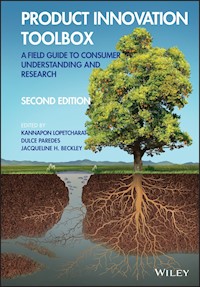
We used the image of an agricultural field with an aquifer to show that what can be seen above the surface is often nourished by what lies hidden underneath. Capturing both gives you the What and the Why. An aquifer is any underground layer of water‐bearing rock or porous geological formation from which water can move freely providing groundwater for springs and wells. When you relate the aquifer concept to research, what you see when you first scope out the innovation landscape may not always be what it seems. And to get a deeper perspective on what it all means from what is readily visible to what lies below the surface requires different tools.
Think of the Consumer Explorer taking a digital picture of the consumer and/or category landscape to identify breakthrough insights. A digital image is composed of many pixels (pixel is short for picture element; a pixel is a single point in a graphic image) that are close together so that the pixels appear connected. The number of pixels can define the quality of the image resolution, where the more pixels, the more exact the image. But also, a whole image is the sum of its parts, so the individual pixels in a picture make up what we see as the whole image. To gain a competitive edge, the CE must scope the landscape, capture the Aha! moment quicker and connect the dots faster to reveal the breakthrough insight faster than everyone else. Being well‐versed in both the pixel and the picture can make all the difference in the strategic direction of a project. Our imagery throughout is to move from pixels, or pieces of the picture, to the whole cross section of the picture to show what is underneath supporting what is readily seen and why it matters. Many legacy and conventional tools can be used to capture the overt space while you need specialized tools to probe for deeper understanding for what lies below the surface, the unknown unknowns and unspoken truths. Another skill for the CE to master is staying vigilant and flexible throughout the learning process, constantly sifting, and becoming aware of deep fakes and misinformation.
This field guide contains 17 major chapters divided in three parts that will transform a consumer researcher into a Consumer Explorer by providing a step‐by‐step guide that shows how to design an innovative consumer research program from start to finish (pixel to picture).
Part I
Preparing for your journey (Chapters 1–5) defines the foundations and definitions to anyone who is responsible to set up, practice, and direct a sustainable consumer research program.
Part II
Gearing up for your consumer journey (Chapters 6–10) contains time‐proven and cutting‐edge tools from upfront consumer research where providing direction is key when you get closer in to product launch where finetuning and precision are valued.
Mastering the topics in parts one and two arms Consumer Explorers to set the direction, prepare, and be ready for any product innovation project.
Part III
Words of the wise (Chapters 11–17) covers practical tips and steps to bring the learnings from the earlier sections to life. Seasoned Consumer Explorers share their experiences in working with cross‐functional teams and where they see future directions in building consumer‐centric business decisions.
In each chapter, we begin with a summary of what the chapter is about and wrap up with suggested discussion questions for you to think through what you just read and what it means to you, your team, and your business.
From the first edition, we predicted that emerging research trends such as blurring the lines between qualitative‐quantitative research tools, increasing use of digital technology and the rise of hybrid data will dominate the consumer research world. Ten years later, all of these are now mainstream practices. The future to understanding humans, people, and consumers is happening now as we continue to capture their shifting behaviors, mindsets, and attitudes toward products, done in context and enabled by technology. There are numerous ways to capture consumer data. The challenges for the Consumer Explorer are threefold: understand the why and not just the what; differentiate quality from volume; and convert what they capture to actionable insights that improves the status quo. We hope that this field guide helps you overcome the challenges you might face as an insight leader.
This book was originally designed to be a “how to” for individuals who want or need to get behind some of the leading approaches in new methods of understanding the consumer in today’s market environment. We expect what has been written to evolve over time with contributions from readers and practitioners such as yourself. It is up to you to follow the detailed steps or improve and create your own imprint. Please enjoy!
Part IPrepare for Your Journey
1
We're not lucky.We win because we work hard.
Roger PenskeHead of one of the most successful racing team groups for the last 40 years
What this is about
To think outside the box, one must know where the box is and where you are relative to the box. Chapter 1 honestly discusses how you can transform yourself to an “insight leader” through self‐education and on‐the‐job training and “playing” in the company sandbox. The authors share their experiences in delivering and communicating impactful research.
Chapter 1Setting the Direction: First, Know Where You Are
Howard Moskowitz and Jacqueline H. Beckley
Key learnings
Knowledge worker: what is your job? Does it matter what profession you affiliate with?
Prepare yourself to be an insight leader
Dealing with management and your clients
Two types of heroes in a corporation
Knowing your limits
How to report your data
1.1 Roles in the corporation – the dance of the knowledge worker
The great management theorist and consultant, Peter Drucker (1999), coined a term for a class of professionals in industry whose job was to understand and manipulate symbols. He called them “knowledge workers,” to distinguish them from other workers who produced things. Knowledge workers had the job to manipulate symbols and to create knowledge and manipulation of symbols. In Drucker's mind, the knowledge worker was the worker of the future, as machines augmented, and even replaced people. Today's world of computers, business intelligence, artificial intelligence, algorithms, and the utter connectivity between people and corporations makes the knowledge worker even more important than Drucker imagined.
In corporations, a special group of knowledge workers practices the job of understanding the products a company makes and at the same time the mind of the customer who uses the product. There is not one group, but rather at least three groups who share this grand responsibility of knowing the product/the user/and the product–user interface.
These groups fall into at least three classes: market, product, and sensory professionals. Of the three classes, two (market professionals and sensory professionals) have well‐defined responsibilities. The third class, the “product professional” has eluded a clear definition of who they are and what they do. Over the years, the titles have changed for some of these jobs, However, whether you are called an insight professional or a market researcher or a data analytics specialist, the tasks are the same – the source material may have changed, yet the end result is essentially the same. So we will use the traditional language of the researchers for our discussion.
The market researcher studies the market to understand market trends and to discover how the consumer (citizen, person if we want to disentangle commerce requirement from the individual) fits into that market. When it comes to products, market researchers focus on how the product and consumer come together for market benefit.
The job of the sensory professional is to understand the product, and specifically the product as perceived by and used by the consumer, generally from an analytical perspective. The consumer is merely one of several instruments used to measure the properties of the product. The sensory field has been fairly clear in its definition of “sensory” professional. It defines the job by certain analytical methods that many sensory professionals' value: descriptive analysis, discrimination testing, and product understanding through a vast array of survey research tools. All these tools tend to be heavily anchored in analytics. The consumer represents a tool much like an instrument.
The evolving job of the product researcher (sometimes called a consumer technical leader) focuses on the product and the consumer interaction with the product. The product researcher has evolved out of the confluence of the sensory researcher and the market researcher, respectively. The product researcher studies the product but within the context of the consumers' world. With the product researcher, the heavy reliance on explicit analytics is not always useful nor always required, but in many cases, a background in analytics helps one do the job. Today, this hybrid between market and sensory is becoming more prevalent as demands for understanding both explicit and implicit drivers of choice are becoming more well understood.
It is important to understand the nature of these three groups in a company that sells products or services. We focus on these three professional groups in this chapter, for one major reason, relevance. In years gone by, it was enough to label oneself a sensory professional and to focus on the evaluation of the product from the point of view of description, describing each of the facets of the product, in agonizing detail. It was also enough for the market researcher, to label themselves as just that, a market researcher. One didn't need to be technical. There were consultants and research companies that did this job, as well as the plethora of computer services, so‐called “tab‐houses,” ready to run the data and provide pretty tables. One simply needed to evaluate products in the unactionable, evaluative language of the marketer (the product tastes sweet; the product is sophisticated, and so forth).
But what about this new profession, this product researcher? Who is this person? Is the product researcher, a marketer or a scientist (sensory professional)? Neither or both?
It is all about what one knows and the world in which one feels comfortable. It is the focus of specific knowledge for these professionals that end up deciding what job the person does in a company. And it is the focus of knowledge, your knowledge, that ultimately decides what role you will play, who you really are, what is expected of you.




