


49,99 €
Mehr erfahren.
- Herausgeber: John Wiley & Sons
- Kategorie: Wissenschaft und neue Technologien
- Sprache: Englisch
Promoting the Planck Club presents rich mini histories of selected scientists whose work led to radical and transformational discoveries, their background, the prevailing scientific environment, and the conditions that allowed for their success. The text provides a broad audience of students, scientists, engineers, economists, and policymakers with ways to ensure that we take all steps to protect the flow of unpredictable scientific discoveries that are necessary for sustained levels of growth as well as ways to ensure that all steps are taken to protect the flow of unpredictable scientific discoveries.
Sie lesen das E-Book in den Legimi-Apps auf:
Seitenzahl: 464
Veröffentlichungsjahr: 2014
Ähnliche



















Table of Contents
Title page
Copyright page
Dedication
Endorsements
List of Posters
Foreword
Acknowledgments
Introduction
1: Accidents, Coincidences, and the Luck of the Draw: How Benjamin Thompson and Humphry Davy Enabled Michael Faraday to Electrify the World
2: Science, Technology, and Economic Growth: Can Their Magical Relationships Be Controlled?
3: Max Planck: A Reluctant Revolutionary with a Hunger of the Soul
4: The Golden Age of Physics
Joseph John Thomson
Ernest Rutherford
Niels Bohr
Wolfgang Ernst Pauli
Werner Heisenberg
Conclusions
5: Oswald T. Avery: A Modest Diminutive Introverted Scientific Heavyweight
6: Barbara McClintock (1902–1992): A Patient, Integrating, Maverick Interpreter of Living Systems
7: Charles Townes: A Meticulously Careful Scientific Adventurer
8: Carl Woese: A Staunch Advocate for Classical Biology
9: Peter Mitchell: A High-Minded Creative and Courageous Bioenergetics Accountant
10: Harry Kroto: An Artistic and Adventurous Chemist with a Flair for Astrophysics
11: John Mattick: A Prominent Critic of Dogma and a Pioneer of the Idea That Genomes Contain Hidden Sources of Regulation
12: Conclusions: How We Can Foster Prosperity Indefinitely
Appendix 1: Open Letter to Research Councils UK from Donald W. Braben and Others Published in Times Higher Education, November 5, 2009
Appendix 2: Global Warming: A Coherent Approach
References
Index
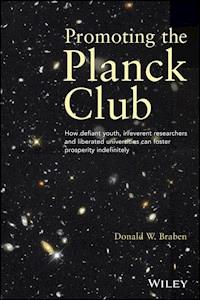
Cover Design: Wiley
Cover Photograph: Image taken from the Hubble Deep Field, a photograph of a region of sky 2.5 arc minutes across within the constellation of Ursa Major.
Credit: Robert E. Williams, the Hubble Deep Field Team and the National Aeronautics and Space Administration
Copyright © 2014 by John Wiley & Sons, Inc. All rights reserved.
Published by John Wiley & Sons, Inc., Hoboken, New Jersey.
Published simultaneously in Canada.
No part of this publication may be reproduced, stored in a retrieval system, or transmitted in any form or by any means, electronic, mechanical, photocopying, recording, scanning, or otherwise, except as permitted under Section 107 or 108 of the 1976 United States Copyright Act, without either the prior written permission of the Publisher, or authorization through payment of the appropriate per-copy fee to the Copyright Clearance Center, Inc., 222 Rosewood Drive, Danvers, MA 01923, (978) 750-8400, fax (978) 750-4470, or on the web at www.copyright.com. Requests to the Publisher for permission should be addressed to the Permissions Department, John Wiley & Sons, Inc., 111 River Street, Hoboken, NJ 07030, (201) 748-6011, fax (201) 748-6008, or online at http://www.wiley.com/go/permissions.
Limit of Liability/Disclaimer of Warranty: While the publisher and author have used their best efforts in preparing this book, they make no representations or warranties with respect to the accuracy or completeness of the contents of this book and specifically disclaim any implied warranties of merchantability or fitness for a particular purpose. No warranty may be created or extended by sales representatives or written sales materials. The advice and strategies contained herein may not be suitable for your situation. You should consult with a professional where appropriate. Neither the publisher nor author shall be liable for any loss of profit or any other commercial damages, including but not limited to special, incidental, consequential, or other damages.
For general information on our other products and services or for technical support, please contact our Customer Care Department within the United States at (800) 762-2974, outside the United States at (317) 572-3993 or fax (317) 572-4002.
Wiley also publishes its books in a variety of electronic formats. Some content that appears in print may not be available in electronic formats. For more information about Wiley products, visit our web site at www.wiley.com.
Library of Congress Cataloging-in-Publication Data:
Braben, D. W., author.
Promoting the Planck Club : how defiant youth, irreverent researchers and liberated universities can foster prosperity indefinitely / by Donald W. Braben.
pages cm
Includes bibliographical references and index.
ISBN 978-1-118-54642-0 (pbk.) 1. Scientists–Biography. 2. Science–History. 3. Discoveries in science. I. Title.
Q141.B775 2014
509.2′2–dc23
2013033554
To Bill, Margie, and Ken, and to the memory of Jean
Major breakthroughs in science invariably involve the amalgamation of a kaleidoscope of disparate research studies making the development of any rational strategies a futile exercise. There are as many ways to do outstanding science as there are outstanding scientists. Research often starts off in a specific direction but, as results, unfold new avenues open up. Discoveries that appear to arrive from “left field” litter the history of the sciences and serve as ubiquitously unheeded warnings to those who think they know how research should be carried out and what science is important. In this crucially important book, Don Braben has assembled an overwhelming case based on a plethora of historically significant scientific breakthroughs. He shows how foolhardy and, in fact, dangerous for the economy are the present research funding strategies, which focus primarily on “impact” when it is blatantly obvious that, as far as fundamental science is concerned, “impact” is impossible to assess before a fundamental advance has been made.
I only hope that the people who presently control research funding are prepared to read this book, think carefully, and heed the advice.
Harry Kroto, The Florida State University, Nobel Laureate
Don Braben's sobering book is right on the mark regarding the current disastrous path of funding of scientific research. Funding agencies are increasingly making decisions based on the proposed research's perceived impact and benefit for society. As Braben documents so well, the emphasis on short-term performance cannot lead to scientific revolutions such as Rutherford's discovery of the nucleus and Townes' invention of the laser. Scientists now eschew risky proposals, knowing that someone on a review panel will say the work is “impossible.” Even when scientists are able to secure funding, much of their time is sapped by the increased paperwork, such as frequent reports on how “benchmarks” are being achieved. If a scientist dares to spend a few years developing a novel idea, his or her funding will be lost because of the “lack of productivity.” Braben proposes an approach to turn the tide of preoccupation on short-term performance: each funding agency could set aside a small portion of its budget to fund non-peer-reviewed proposals. Braben illustrates how this could work using as a model the Venture Research Program he directed in the 1980s. One can hope that Braben's model will be widely adopted—it could change the landscape of science in future decades.
Harry L. Swinney, University of Texas at Austin, Member of the US National Academy of Sciences
Funding agencies and policy-makers should emulate Don Braben’s clear thinking, straight talking, wise values, broad learning, and acuity of insight. They might then liberate science, embolden innovation, and inspire academics in a more rational, prosperous, and interesting world.
Felipe Fernández-Armesto, University of Notre Dame, Indiana
List of Posters
Poster 1: On the Ease with Which the Future of a Fine Laboratory Can Be Jeopardized
Poster 2: Albert Einstein's Inauspicious Youth
Poster 3: Sir William Macdonald and McGill University
Poster 4: Mach, the Universe, and You
Poster 5: The UK Medical Research Council (MRC) Laboratory of Molecular Biology
Poster 6: Ecological Niches
Poster 7: James Lovelock
Poster 8: Carbon
Poster 9: Big Bangs
Poster 10: Genome Libraries
Foreword
In this provocative book, Donald Braben presents compelling data, cogent analysis, and vivid historical episodes tracing the immense economic and social impact of frontier scientific research. He focuses on revolutionary discoveries that emerged from decidedly unorthodox “outlier” work of a relatively few scientists. Those pioneers he designates as the “Planck Club.” The name is apt: Max Planck, when early in the twentieth century, confronted with experimental results inexplicable by well-established physics, reluctantly advanced an iconoclastic idea. After gestation for more than two decades, his idea gave birth to quantum mechanics, which profoundly transformed understanding of the nature of light and matter and produced a myriad of technologies.
As in two sibling studies published by Wiley (Braben 2004 and 2008), Braben himself has emulated Planck. Armed with strong evidence, Braben has forthrightly challenged the now well-established and pervasive procedures for assessing and granting support for scientific research. These policies, based on “peer review” (actually, “preview” as Braben emphasizes) have evolved over decades. Well-intended, but in many respects deeply flawed, the procedures imposed have increasingly dire consequences.
Many scientists share Braben's deep concern that prospects for support of future work of Planck Club caliber are becoming severely limited. This case was made starkly by the late Luis Alvarez, assuredly a Planck Club member. In his autobiography (Adventures of a Physicist, 1987), he wrote:
In my considered opinion, the peer review system, in which proposals rather than proposers are reviewed, is the greatest disaster to be visited upon the scientific community in this century. … I believe that U.S. science could recover from the stultifying effects of decades of misguided peer reviewing if we returned to the tried-and-true method of evaluating researchers rather than research proposals. Many people will say that my ideas are elitist, and I certainly agree. The alternative is the egalitarianism that we now practice and that I've seen nearly kill basic science in the USSR and in the People's Republic of China.
Alvarez would be still more dismayed by how US science has become further burdened by current funding policies. At top-flight research universities, many professors must seek funding from several agencies in order to maintain their research groups. That requires them to devote inordinate time to writing proposals and reports, to the detriment of their teaching, mentoring, and own creative efforts. Thereby, graduate education has been degraded. The vital need to generate grant proposals causes faculty to avoid teaching small, advanced classes and also to discourage their graduate students from taking courses not directly relevant to their research project. Serving as hired hands on a project is also a major factor in stretching out the time to obtain a PhD, since veteran students are most useful in obtaining results to justify a grant renewal. Once usually about 4 years, the median time to obtain a PhD is now 6 or 7 in most fields of science. For postdoctoral fellows, terms have likewise become prolonged. Overall, the funding system has tended to narrow the training of our young scientists, prolong apprenticeship, and inhibit changing fields.
Braben acknowledges that peer previewing of proposals will likely remain prevalent. Then it is all the more important to address problems and advocate feasible reforms. Here I want to augment his suggestions by commenting on two aspects. First, the previewing process, as now implemented, is needlessly capricious. Typically, National Science Foundation and other agencies accept grant proposals only during a “window” that is a month or so wide each year. The applicant usually is not informed of the fate of the proposal for a full year or more and is not provided with the assessments of the five or so anonymous previewers until a few weeks later. That deprives the applicant of objecting if one or more of the assessments is egregiously in error, or even resubmitting a revised proposal until the next window, another year hence.
Such a system is misnamed “peer review.” For papers submitted to scientific journals, the author can respond to objections of anonymous reviewers, so has a fair chance to persuade the editor that the paper merits publication. I suggest that funding agencies try out a similar approach. The grant applicant could be given the option to post the proposal on a web site to which only viewers registered with the funding agency are given access. The agency would post the assessment from each anonymous previewer as soon as it has been received. Then the applicant could respond to criticism and actually be a “peer” in, say, two or three exchanges with the previewers. Also, the applicant and perhaps the agency, could designate a few other scientists, not anonymous, to have access to the web site and post comments on both the proposal and the anonymous assessments.
Second, funding of university research is largely to support graduate students and postdoctoral fellows, an essential investment in producing our scientific workforce. That investment is weakened by inflation of the time to obtain a doctorate, which makes pursuit of a scientific career less attractive to many students, especially women. In my generation, young scientists usually launched their independent research careers before reaching 30; now that is rare. For scientists receiving their first grant from the National Institute of Health, the median age has reached 42. That alarming situation has led the current director of NIH to initiate an “Early Independence Program,” for exceptional students, providing funds to enable them to bypass usual postdoctoral work and pursue their own ideas.
I hope more such programs appear but urge that a much wider, radical approach is needed, which I'm convinced would markedly shorten the apprentice time and enhance its quality. Stipends in support of graduate students (and eventually postdoctoral fellows also) should be uncoupled from project grants to individual professors. The same money could be put into expanding greatly fellowships students could win for themselves, as well as into block training grants to university science departments. Winning a fellowship or obtaining a training grant profoundly influences a student's outlook and approach to research; they are certified as national resources rather than as hired hands. Also important is the freedom to choose, without concern for funding, which research group to join. That would especially benefit young faculty. In applying for the student support (as done now for more limited NIH training grants), science departments would need to shape more coherent graduate programs, designed to produce doctorates who have broader backgrounds and perspectives and who are better equipped to be architects of science rather than narrow technicians.
Donald Braben deserves gratitude from everyone concerned about wisely managing our investments in science, particularly in developing our future scientists. May a “Braben Club” arise to amplify his clarion calls!
Dudley Herschbach
Professor of Chemistry and Nobel Laureate
University of Harvard
Acknowledgments
I have enjoyed lavish support from Nick Lane and David Price in bringing this book to fruition. They have given freely of their time and energies, been unfailing in their friendships, and offered comments on the material to be discussed. I am grateful to Sir Malcolm Grant, University College London's Provost, for being the only university head to go for the Venture Research philosophy. John Allen, William Amos, Paul Broda, Terry Clark, Rod Dowler, Irene Engel, Nina Fedoroff, Desmond Fitzgerald, Nigel Franks, Pat Heslop-Harrison, Dudley Herschbach, Herbert Huppert, Jeff Kimble, Nigel Keen, Roger Kornberg, Harry Kroto, James Ladyman, Mike Land, Peter Lawrence, Chris Leaver, John Mattick, Graham Parkhouse, Beatrice Pelloni, Martyn Poliakoff, Richard Pettigrew, Doug Randall, David Ray, Martin Rees, Peter Rich, Rich Roberts, Ian Ross, Ken Seddon, Colin Self, Iain Steel, Harry Swinney and Claudio Vita-Finzi have also generously supported me in my long crusade, some of them for many years, and would, I believe, also support my recommendations. I am grateful to Michael Ashburner, Tim Atkinson, Tim Birkhead, Peter Cameron, Richard Cogdell, David Colquhoun, Robert Constanza, Steve Davies, John Dainton, Peter Edwards, John Ellis, Felipe Fernández-Armesto, Andre Geim, Ann Glover, Frank Harold, Robert Horvitz, Tim Hunt, Alec Jeffreys, Angus Macintyre, Bob May, Philip Moriarty, Kostya Novoselov, Andrew Oswald, Gerald Pollock, Gene Stanley, John Sulston, John Meurig Thomas, Gregory van der Vink, Lewis Wolpert, and Phil Woodruff for their general encouragement and support. Phil Meredith and his colleagues at UCL's Earth Sciences Department have for many years unconditionally accepted my participation in their weekly research seminars, for which I am grateful. But above all, I wish to thank my wife, Shirley, and also David and Wendy, Peter and Lisa, and Jenny and David for the consummate skill with which they have dealt with a distracted husband, father, and father-in-law in addition to their usual feedback, love, and affection.
Don Braben
January 2014
Introduction
The sciences play almost as vital a role in everyday life as the air we breathe. The water from our taps, the food we eat, our jobs, communications, travel, leisure activities, health, and unprecedented longevity all owe huge debts to science. However, such simple factual statements give no hints about the mountains of complexity that had to be overcome before any of these gains could be realized. The most important lesson to be learned is that science does not necessarily progress with the march of time. There is nothing inevitable about it; centuries may pass without any progression, and prolonged stagnation has been the usual result. Although science has led to the generally high living standards that most of the industrialized world enjoys today, the astounding discoveries underpinning them were made by a tiny number of courageous, out-of-step, visionary, determined, and passionate scientists working to their own agenda and radically challenging the status quo. Indeed, twentieth-century life was dominated by the unpredicted, revolutionary discoveries of about 500 of these pioneers. I call this seminal fellowship the “Planck Club” in honor of its first member (so to speak), Max Planck, who in Berlin on December 14, 1900, somewhat reluctantly announced that he had discovered an important new property of the universe. As I explain later, his work inspired a revolution, and nothing in science thereafter would ever be the same.
The Planck Club's uninhibited explorations eventually transformed our lives, yet many had to wait for years before the scientific community finally accepted them. Not surprisingly, it needed time to adjust to the radically new mental pictures and ways of thinking that the discoveries required even after their authenticity had been conclusively demonstrated. Old habits die hard. However, after about 1970, when most Planck-Club campaigns had either come to fruition or were within range of doing so, the considerable expansion of the academic sector and its demand for funds led to the progressive introduction of new policies for dealing with the huge funding shortfall. Astonishingly, considering that academics are noted for their individuality, the policies adopted turned out to be virtually the same everywhere. Common themes have been that research selection processes should be as free from favoritism and discrimination as possible and should aim to support the researchers who will make the most efficient use of requested resources. Such fairness-based policies have been easy to sell to the public and academics generally as they can be presented as being above suspicion and as being the best ways of allocating scarce resources. Everyone with a good idea should have the same chance of getting funded, of course, but fairness is a social concept. It can be achieved only by collective decisions. For research selection, adoption of the now ubiquitous new policies means that freedom to explore without restrictions or control has been replaced by Byzantine procedures in which funding agencies seek endorsement from a selection of an applicant's peers before they will consider their proposals—peers who, of course, are drawn from the notoriously conservative scientific community. To make matters worse, peers are usually allowed to express their opinions anonymously. My implied criticism here might be surprising, as anonymity surely means that peers can express their opinions without fear of the consequences, which of course is a laudable aim. However, scientists are also people; and, when asked to comment on the ideas of a close rival (or would-be rival), we should expect that some scientists might be unable to resist an opportunity for putting the boot in if they can get away with it. Indeed, as I argue, these well-intentioned but misguided policies are having disastrous consequences and are, in effect, unprecedented, global-scale gambles with future prosperity.
Lesen Sie weiter in der vollständigen Ausgabe!
Lesen Sie weiter in der vollständigen Ausgabe!
Lesen Sie weiter in der vollständigen Ausgabe!
Lesen Sie weiter in der vollständigen Ausgabe!
Lesen Sie weiter in der vollständigen Ausgabe!
Lesen Sie weiter in der vollständigen Ausgabe!
Lesen Sie weiter in der vollständigen Ausgabe!
Lesen Sie weiter in der vollständigen Ausgabe!
Lesen Sie weiter in der vollständigen Ausgabe!
Lesen Sie weiter in der vollständigen Ausgabe!
Lesen Sie weiter in der vollständigen Ausgabe!
Lesen Sie weiter in der vollständigen Ausgabe!
Lesen Sie weiter in der vollständigen Ausgabe!
Lesen Sie weiter in der vollständigen Ausgabe!
Lesen Sie weiter in der vollständigen Ausgabe!
Lesen Sie weiter in der vollständigen Ausgabe!




