


183,99 €
Mehr erfahren.
- Herausgeber: John Wiley & Sons
- Kategorie: Wissenschaft und neue Technologien
- Serie: The Wiley - IUBMB Series on Biochemistry and Molecular Biology
- Sprache: Englisch
Protein kinases play a critical role in cellular processes that impact overall organismal health and function. Of the kinases that collectively make up the Human Kinome, CK2 has garnered special attention because of its significant role in the generation of the human phosphoproteome. The role CK2 plays in the development of cancer and other disease has also made it of significant interest for its potential role in future therapeutics. Protein Kinase CK2 comprehensively brings together the varied work being done on this critical enzyme. Protein Kinase CK2 is logically divided into three sections. The first section reviews key molecular and structural aspects of the enzyme. The second section looks at functional aspects of CK2 and the diverse roles it plays in cellular development, function, and health. The final section focuses on CK2 and cancer, looking at the impacts of the kinase on neoplastic development and its rapidly developing role as a therapeutic agent. With contributions from the world's leading experts in the field, Protein Kinase CK2 will serve as an invaluable guide to the expanding and vibrant body of research being performed on this enzyme. This will be an essential volume for anyone working in the fields of biochemistry, protein science, signal transduction, metabolic regulation, and cancer biology and therapeutics. Editor Lorenzo A. Pinna is Professor in the Department of Biomedical Sciences at the University of Padua, Padua, Italy. Also Published in the Wiley-IUBMB Series on Biochemistry and Molecular Biology: Plant Phenolics and Human Health: Biochemistry, Nutrition, and Pharmacology Edited by Cesar G. Fraga ISBN: 978-0-470-28721-7
Sie lesen das E-Book in den Legimi-Apps auf:
Seitenzahl: 957
Veröffentlichungsjahr: 2012
Ähnliche



















Table of Contents
Cover
Title page
Copyright page
CONTRIBUTORS
PREFACE
THE WILEY-IUBMB SERIES ON BIOCHEMISTRY AND MOLECULAR BIOLOGY
Part I: Molecular and Structural Aspects
1 Structural Bases of Protein Kinase CK2 Function and Inhibition
INTRODUCTION
BASIC STRUCTURE/FUNCTION RELATIONSHIPS OF CK2
CK2 INHIBITORS
CONCLUSIONS AND OUTLOOK
ACKNOWLEDGMENTS
2 The Interactome of Protein Kinase CK2
INTRODUCTION
FROM THE OUTSIDE TO THE INSIDE: INTERACTION OF CK2 WITH MEMBRANE PROTEINS
REGULATING GENE EXPRESSION: INTERACTION OF CK2 WITH COMPONENTS OF SIGNALING CASCADES, TRANSCRIPTION FACTORS AND DNA MODIFYING ENZYMES
MASTERING NUCLEIC ACID FUNCTIONS: INTERACTION OF CK2 WITH PROTEINS OF THE REPLICATION, TRANSCRIPTION, AND TRANSLATION MACHINERY OF THE CELL
LET IT ROLL: INTERACTION OF CK2 WITH CELL CYCLE REGULATORY PROTEINS
GUARDIAN ANGELS: INTERACTION OF CK2 WITH PROTEINS THAT MAINTAIN THE CELLULAR INTEGRITY
LIVE AND LET DIE: INTERACTION OF CK2 WITH PROTEINS OF THE APOPTOTIC PATHWAY
HIGHWAYS IN THE CELL: INTERACTION OF CK2 WITH THE CYTOSKELETON AND MOTOR PROTEINS
COLLABORATING WITH THE ENEMY: INTERACTION OF CK2 WITH PROTEINS IMPLICATED IN VIRAL INFECTIONS
LAST BUT NOT LEAST: MISCELLANEOUS
CONCLUDING REMARKS
3 CK2 Contribution to the Generation of the Human Phosphoproteome
KINASES CONTRIBUTION TO THE HUMAN PHOSPHOPROTEOME
CK2 SUBSTRATE SPECIFICITY
SUBPHOSPHOPROTEOMES OF PROTEINS WITH SPECIFIC FUNCTIONS
SUBPHOSPHOPROTEOMES OF CELLULAR COMPARTMENTS
ABSOLUTE QUANTIFICATION OF YEAST PHOSPHOPROTEOME REFLECTS THE CONSTITUTIVE ACTIVITY OF CK2
CONCLUSIONS
ACKNOWLEDGMENTS
Part II: Functional Aspects
4 CK2 in Embryonic Development
CK2 IN YEAST BIOLOGY
CK2 IN INVERTEBRATE DEVELOPMENT
CK2 IN VERTEBRATE DEVELOPMENT
CK2 IN PLANT DEVELOPMENT
CK2 IN ANIMAL DEVELOPMENTAL SIGNALING PATHWAYS
DISCUSSION
OUTLOOK
ACKNOWLEDGMENTS
5 Protein Kinase CK2: At the Crossroads of Pathways Controlling Cell Proliferation and Survival
GENERAL INTRODUCTION
PROTEIN KINASE CK2
CK2 IN CANCER
INVOLVEMENT OF CK2 IN SIGNALING PATHWAYS CONTROLLING PROLIFERATION AND DEATH
CONCLUDING REMARKS
ACKNOWLEDGMENTS
6 The Role of Protein Kinase CK2 in the p53 Response
PROTEIN KINASE CK2
THE p53 NETWORK
THE INTERACTION BETWEEN p53 AND CK2
REGULATION OF p53 BY PHOSPHORYLATION OF Ser392
PROPOSED MECHANISM FOR REGULATION OF p53 PHOSPHORYLATION AT Ser392 (THE “CK2” SITE)
PHOSPHORYLATION OF p53 BY CK2 IN A PHYSIOLOGICAL CONTEXT?
A BROADER ROLE FOR CK2 IN REGULATING THE p53 NETWORK?
7 The Pivotal Role of CK2 in the Kinome-Targeting Hsp90 Chaperone Machinery
PROTEIN KINASE CK2
Hsp90: A MAJOR MOLECULAR CHAPERONE
CO-CHAPERONES THAT REGULATE Hsp90 FUNCTION
Hsp90 AND SIGNALING PROTEIN KINASES
PHOSPHORYLATION AND THE REGULATION OF Hsp90 BY CK2
PHOSPHORYLATION OF Cdc37 BY CK2
A CRUCIAL ROLE OF CK2-DEPENDENT PHOSPHORYLATION IN THE FUNCTIONAL REGULATION OF Cdc37
REGULATION OF THE Cdc37 PHOSPHORYLATION CYCLE
REGULATORY PHOSPHORYLATION OF FKBP52 BY CK2
PHOSPHORYLATION OF p23 BY CK2
TARGETING THE CK2-Cdc37-Hsp90 TRINITY FOR CANCER CHEMOTHERAPY
CONCLUSION
8 CK2: A Global Regulator of Cell Survival
CK2 AND CELL SURVIVAL: STRATEGIES, METHODS, AND TECHNIQUES FOR EXPLORING ITS ROLE
CK2 AND CELLULAR DEATH
ROLE OF CK2 IN DNA DAMAGE
ROLE OF THE INDIVIDUAL CK2 SUBUNITS IN CELL SURVIVAL
CK2 STATUS IN NON-NEOPLASTIC CELLS
CK2 ACTIVITY AND EXPRESSION IN NEOPLASIA
CK2 IN HETEROTRANSPLANTED TUMORS IN NUDE MICE
CK2 HOLOENZYME AND ITS SUBUNITS
TUMOR HYPOXIA
CONCLUSION
9 Specific Features of Plant CK2
INTRODUCTION
CK2α CATALYTIC SUBUNITS
CK2β REGULATORY SUBUNITS
CK2 HOLOENZYME
PHYSIOLOGICAL ROLE OF CK2 IN PLANTS
Part III: CK2 and Neoplasia
10 The Oncogenic Potential of CK2
INTRODUCTION
CK2 OVEREXPRESSION IN HUMAN CANCER
CK2 OVEREXPRESSION IN ANIMAL MODELS OF CANCER
ONCOGENIC ACTIVITY OF CK2 IN TRANSGENIC MICE
POTENTIAL TARGETS OF CK2 IN CANCER: Wnt, NF-κB, AND PI3-KINASE PATHWAYS
CONCLUSIONS
ACKNOWLEDGMENTS
11 Addiction of Cancer Cells to CK2: Survival at All Costs or Achilles’ Heel?
MANY SUBSTRATES, ONE MAJOR ROLE
A LATERAL PLAYER
“MORE NECESSARY” FOR SOME CELLS
TO SURVIVE AT ALL COSTS
A NOVEL ACHILLES’ HEEL OF CANCER CELLS
THE RIGHT WEAPONS
ACKNOWLEDGMENTS
12 CK2 Suppression of Apoptosis and Its Implication in Cancer Biology and Therapy
INTRODUCTION
CK2 DYNAMICS IN CELL GROWTH AND CELL DEATH
CK2 AND HALLMARKS OF CANCER
CK2 AS TARGET OF CANCER THERAPY
ACKNOWLEDGMENTS
13 Protein Kinase CK2 in Normal and Malignant Hematopoiesis
HEMATOPOIESIS AND BLOOD TUMORS: GENERAL CONCEPTS
CK2 ROLE IN MOUSE EMBRYONIC DEVELOPMENT: INSIGHTS INTO CK2 INVOLVEMENT IN BLOOD DEVELOPMENT
CK2-DIRECTED REGULATION OF HEMATOPOIESIS-ASSOCIATED MOLECULES AND SIGNAL TRANSDUCTION PATHWAYS
ROLE OF CK2 IN HEMATOLOGIC MALIGNANCIES
CK2 IN BLOOD TUMORS ARISING FROM LYMPHOCYTES
CK2 IN BLOOD TUMORS ARISING FROM MYELOID CELLS
CONCLUSIONS
14 Role of CK2 in the Control of Cell Plasticity in Breast Carcinoma Progression
INTRODUCTION
DYSREGULATION OF CK2 IN MAMMARY TUMORIGENESIS
CK2 AS A GUARDIAN OF EPITHELIAL CELL INTEGRITY
UNBALANCED EXPRESSION OF CK2 SUBUNITS IS CORRELATED WITH HYPOXIA AND EMT-RELATED MARKERS
CK2β SUBUNIT SILENCING INDUCES EMT-LIKE MORPHOLOGICAL CHANGES
GENE EXPRESSION PROFILING
CK2β SILENCING TRIGGERS Snail1 INDUCTION
OVEREXPRESSION OF SIX1 IN CK2β-DEPLETED CELLS
CONCLUSIONS
ACKNOWLEDGMENTS
15 CK2 as a Logical Target in Cancer Therapy: Potential for Combining CK2 Inhibitors with Various Classes of Cancer Therapeutic Agents
INTRODUCTION
SUPPRESSION OF APOPTOSIS
PI3K-Akt-mTOR SIGNALING
PROMOTION OF ANGIOGENESIS
Hsp90 MACHINERY
NF-κB TRANSCRIPTION
Wnt SIGNALING
EPITHELIAL-MESYNCHEMAL TRANSITION
DNA DAMAGE REPAIR
OTHER PATHWAYS
CONCLUDING REMARKS
ACKNOWLEDGMENTS
Appendix: CK2 and Its False Sisters: The Recent Solution of a Very “Cold Case”
Index
This edition first published 2013 © 2013 by John Wiley & Sons, Inc.
Wiley-Blackwell is an imprint of John Wiley & Sons, formed by the merger of Wiley’s global Scientific, Technical and Medical business with Blackwell Publishing.
Editorial offices: 2121 State Avenue, Ames, Iowa 50014-8300, USA
The Atrium, Southern Gate, Chichester, West Sussex, PO19 8SQ, UK
9600 Garsington Road, Oxford, OX4 2DQ, UK
For details of our global editorial offices, for customer services, and for information about how to apply for permission to reuse the copyright material in this book, please see our website at www.wiley.com/wiley-blackwell.
Authorization to photocopy items for internal or personal use, or the internal or personal use of specific clients, is granted by Blackwell Publishing, provided that the base fee is paid directly to the Copyright Clearance Center, 222 Rosewood Drive, Danvers, MA 01923. For those organizations that have been granted a photocopy license by CCC, a separate system of payments has been arranged. The fee codes for users of the Transactional Reporting Service are ISBN-13: 978-0-4709-6303-6/2013.
Designations used by companies to distinguish their products are often claimed as trademarks. All brand names and product names used in this book are trade names, service marks, trademarks, or registered trademarks of their respective owners. The publisher is not associated with any product or vendor mentioned in this book. This publication is designed to provide accurate and authoritative information in regard to the subject matter covered. It is sold on the understanding that the publisher is not engaged in rendering professional services. If professional advice or other expert assistance is required, the services of a competent professional should be sought.
Library of Congress Cataloging-in-Publication Data
Protein kinase CK2 / edited by Lorenzo A. Pinna.
pages cm. – (The Wiley-IUBMB series on biochemistry and molecularbiology)
Includes bibliographical references and index.
ISBN 978-0-470-96303-6 (hardback : alk. paper) 1. Protein kinase CK2.
I. Pinna, Lorenzo A.
QP606.P76P73546 2013
612′.015756–dc23
2012028574
A catalogue record for this book is available from the British Library.
Wiley also publishes its books in a variety of electronic formats. Some content that appears in print may not be available in electronic books.
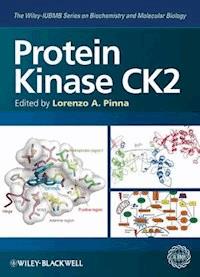
Cover image: The cover figure provides examples of CK2 peculiar properties by showing, clockwise, starting from left upper corner: the unique butterfly shape of CK2 holoenzyme, composed of two catalytic subunits bound to a dimer of the noncatalytic subunit; the CK2 catalytic subunit pharmacophore occupied by an inhibitor now in clinical trials as an anticancer drug; the convergence of CK2 with caspase pathways; the dorsal axis duplication induced by injecting Xenopus laevis embryos with CK2 mRNAs. Figures are drawn from Chapters 1, 5, and 4, respectively.
Cover design by Modern Alchemy LLC
CONTRIBUTORS
KHALIL AHMEDResearch Service, Minneapolis V.A. Health Care SystemDepartment of Laboratory Medicine and PathologyMasonic Cancer Centerand Department of UrologyDepartment of OtolaryngologyUniversity of MinnesotaMinneapolis, MN, USA
ROBERTO BATTISTUTTADepartment of Chemical SciencesUniversity of PaduaPadua, Italy
LUCA CESARODepartment of Biomedical SciencesUniversity of PaduaPadua, Italy
CLAUDE COCHETINSERM, UJF, CEA, DSV/iRTSVBiology of Cancer and InfectionGrenoble, France
ALEXANDRE DESHIEREINSERM, UJF, CEA, DSV/iRTSVBiology of Cancer and InfectionGrenoble, France
ISABEL DOMINGUEZHematology OncologyDepartment of MedicineBoston University School of MedicineBoston, MA, USA
DENIS DRYGINCylene PharmaceuticalsSan Diego, CA, USA
ODILE FILHOLINSERM, UJF, CEA, DSV/iRTSVBiology of Cancer and InfectionGrenoble, France
MICHELLE GABRIELDepartment of BiochemistrySchulich School of Medicine and DentistryThe University of Western OntarioLondon, Ontario, Canada
CLAUDIA GÖTZMedical Biochemistry and Molecular BiologyUniversity of the SaarlandHomburg, Germany
BARBARA GUERRADepartment of Biochemistry and Molecular BiologyUniversity of Southern DenmarkOdense, Denmark
OLAF-GEORG ISSINGERDepartment of Biochemistry and Molecular BiologyUniversity of Southern DenmarkOdense, Denmark
BETSY T. KRENResearch Service, Minneapolis V.A. Health Care SystemMasonic Cancer CenterDepartment of MedicineMinneapolis, MN, USA
ESTHER LANDESMAN-BOLLAGSection of Hematology-OncologyDepartment of MedicineBoston University School of Medicineand Boston Medical CenterBoston, MA, USA
TOMMASO LEGNAIOLICenter for Research in Agricultural GenomicsMolecular Genetics DepartmentParc de Recerca UABEdifici CRAG, Campus UABBellaterra (Cerdanyola del Vallés)Barcelona, Spain
DAVID W. LITCHFIELDDepartments of Biochemistry and OncologySchulich School of Medicine and DentistryThe University of Western OntarioLondon, Ontario, Canada
LAURA MACIAS ALVAREZHematology OncologyDepartment of MedicineBoston University School of MedicineBoston, MA, USA
DAVID W. MEEKDivision of Cancer ResearchMedical Research InstituteThe University of DundeeNinewells HospitalDundee, Scotland, United Kingdom
YOSHIHIKO MIYATADepartment of Cell and Developmental BiologyGraduate School of BiostudiesKyoto UniversityKyoto, Japan
MATHIAS MONTENARHMedical Biochemistry and Molecular BiologyUniversity of the SaarlandHomburg, Germany
KARSTEN NIEFINDUniversity of CologneDepartment of ChemistryInstitute of BiochemistryCologne, Germany
MONTSERRAT PAGÈSCenter for Research in Agricultural GenomicsMolecular Genetics DepartmentParc de Recerca UABEdifici CRAG, Campus UABBellaterra (Cerdanyola del Vallés)Barcelona, Spain
FRANCESCO PIAZZADepartment of MedicineHaematology and Clinical Immunology BranchUniversity of Padua School of Medicineand Venetian Institute of Molecular MedicineHaematological Malignancies UnitPadua, Italy
LORENZO A. PINNADepartment of Biomedical SciencesUniversity of PaduaPadua, Italy
JESUS REVUELTA-CERVANTESHematology OncologyDepartment of MedicineBoston University School of MedicineBoston, MA, USA
MARTA RIERACenter for Research in Agricultural GenomicsMolecular Genetics DepartmentParc de Recerca UABEdifici CRAG, Campus UABBellaterra (Cerdanyola del Vallés)Barcelona, Spain
MARIA RUZZENEDepartment of Biomedical Sciencesand Venetian Institute of Molecular MedicineUniversity of PaduaPadua, Italy
MAURO SALVIDepartment of Biomedical SciencesUniversity of PaduaPadua, Italy
DAVID C. SELDINSection of Hematology-OncologyDepartment of MedicineBoston University School of Medicineand Boston Medical CenterBoston, MA, USA
JANEEN H. TREMBLEYResearch Service, Minneapolis V.A. Health Care SystemDepartment of Laboratory Medicine and PathologyMasonic Cancer CenterMinneapolis, MN, USA
GRETCHEN M. UNGERGeneSeguesChaska, Minnesota
ISABEL CRISTINA VÉLEZ-BERMÚDEZCenter for Research in Agricultural GenomicsMolecular Genetics DepartmentParc de Recerca UABEdifici CRAG, Campus UABBellaterra (Cerdanyola del Vallés)Barcelona, Spain
JING JIANG WUResearch Service, Minneapolis V.A. Health Care SystemDepartment of Laboratory Medicine and PathologyMinneapolis, MN, USA
PREFACE
A KINASE FOR ALL SEASONS
In the twilight of his scientific life, the Nobel laureate Edwin G. Krebs became more and more attracted by protein kinase CK2. In a 1999 paper (Mol. Cell. Biochem. 191: 3–12), tellingly entitled “CK2, a protein kinase of the next millennium,” he wrote that such a title was “intended to emphasize the fact that CK2 is such a rich topic for investigation that research involving this enzyme will continue for decades to come.” This statement is one of the justifications for devoting an entire book to an individual member of the human “kinome,” a huge gene family including more than 500 enzymes.
Indeed the long history of CK2, from its early—and in some ways “premature”—discovery in 1954 to the present day, is unique and paradoxical in several respects. CK2 activity was the first example of an enzymatic phosphorylation reaction affecting a protein rather than a small metabolite, leading Eugene Kennedy to coin the term “protein (phospho) kinase” (J. Biol. Chem. 211:: 969–980, 1954). For decades, however, and at variance with other protein kinases discovered between 1955 and 1980, notably phophorylase kinase, PKA, PKG, and PKC, which were immediately recognized to participate in signal transduction pathways, the biological role of CK2 remained obscure. Indeed, its physiological targets remained entirely unknown for many years, its activity being measured in vitro with proteins that were not its physiological target, such as casein, leading to it being “misnamed” “casein kinase 2,” a historical name still hinted at by its current acronym of CK2.
The first physiological targets of CK2 were discovered in the late 1970s, causing CK2 to be independently “re-discovered” by a number of researchers working in different areas, for example as a “glycogen synthase kinase 5” (GSK-5) (Cohen P et al. Eur. J. Biochem. 124: 21–35, 1982) and a “Troponin-T kinase” (Villar-Palasi C et al. J. Biol. Chem. 256:7409–7415, 1981), as has been discussed elsewhere (Pinna LA Cell. Mol. Biol. Res. 40:391–399, 1994). Later, by a remarkable “snowballing” effect, the pleiotropy of CK2 eventually came to surpass that of any other individual protein kinase, with more than 300 substrates identified by 2003 (Meggio F and Pinna LA FASEB J. 17:349368, 2003). However, even this number is a huge underestimate of the total number of CK2 substrates that undoubtedly exist, bearing in mind that recent proteomic analyses have revealed that a large proportion of naturally occurring phosphorylation sites in proteins display the unique acidic motif C-terminal to the phosphorylated residue that is recognized specifically by CK2. This suggests that more than 20% of the entire human phosphoproteome may be generated by this individual protein kinase (see Salvi and Cesaro’s discussion in Chapter 3 of this book).
The pleiotropy of CK2 is now considered to be just one facet of this remarkable enzyme, its unique feature being its “constitutive” activity, an intriguing property whose structural basis is discussed by Niefind and Battistutta in the first chapter of this book. This is in contrast to many other protein kinases, which are silent under basal conditions and only become active in response to specific stimuli. CK2 seems to always be present in cells in an active conformation, without the need of phosphorylation events to sustain its activity. In this respect, it is therefore quite different from kinases that participate in signaling “cascades.” However, to exclude CK2 from participation in signaling pathways would be an incorrect inference, contradicted by the overwhelming evidence that CK2 impinges on many signaling pathways, but in a unique “lateral” fashion rather than a “vertical” linear manner (see Chapter 5 by Gabriel and Litchfield and Chapter 11 by Ruzzene in this book).
Constitutive activity also underlies another paradox of CK2: many oncogenes encode protein kinases endowed with inappropriate activity or a gain of function mutation. Although this might appear to exclude CK2 from being an oncogene, since no gain of function mutations have ever been reported, nonetheless CK2 is clearly implicated in many cell biology phenomena that are associated with cancer, and the expression and activity of this protein kinase is invariably high in malignant cells compared to untransformed cells. This issue is dealt with in several chapters of this book. An attractive explanation for this apparent contradiction seems to be that diverse neoplastic cells become “addicted” to abnormally high levels of CK2 to such an extent that pharmacological downregulation of CK2 can reverse the tumorigenic phenotype. There are two important consequences of this situation. Firstly, cells where CK2 is abnormally high are “predisposed” to malignant transformation, thus deserving the neologism “oncophilic” cells (Ruzzene et al. Mol. Cell. Biochem. 356: 5–10, 2011). Secondly, CK2 may represent a pharmacological target for the treatment of a wide range of neoplastic diseases. The structures and mode of binding of several inhibitors in complex with CK2 are described in the first chapter of this book, and a potent and selective CK2 inhibitor is now undergoing clinical trials for the treatment of different kinds of tumors as discussed in detail by Drygin in the last chapter of this book.
Another consequence of the constitutive activity of CK2 is that many viruses and other infectious agents have learned how to exploit its presence in the host cell for the phosphorylation of proteins that are essential to their life cycle. Therefore, CK2 also represents an attractive target for anti-infectious therapies although in contrast to cancer, where a partial downregulation of abnormally high CK2 activity may suffice, the suppression of host cell CK2 activity may have undesired consequences that still have to be evaluated. Other pathologies where an involvement of CK2 is suspected, mostly based on the scrutiny of its protein targets, are neurodegenerative syndromes, cardiovascular diseases, inflammation, and cystic fibrosis as reviewed by Guerra and Issinger (Curr Med Chem. 15:1870–86, 2008). In these cases, however, the roles of CK2 still need to be unravelled, and it is unclear whether any beneficial effects will come from downregulation or upregulation of CK2 activity.
The widespread and continuously increasing interest in CK2 in the scientific community is obvious from even a cursory scrutiny of the literature, the number of paper mentioning “CK2” in their title rising from 94 in 2000, to 159 in 2005, and 329 in 2011. This mainly reflects the increasing numbers of investigators who are inevitably coming across this kinase in the course of their studies. Although the “love affair” of most scientists with CK2 is transient, there remains a hard core group of “CK2 addicted” labs where this topic has been studied for decades, and this community of CK2 investigators meets periodically to discuss their most recent findings and to try to delineate new perspectives in the field. The first conference was held in Heidelberg, Germany, in 1994, followed by other conferences in Villard de Lans, near Grenoble, France (1997), in San Esteban, Chile (2001), in London, Ontario, Canada (2004), in Padua, Italy (2007), and in Cologne, Germany (2010). These international conferences on CK2 have been sponsored and generously supported by IUBMB. It is therefore not surprising that a book of the Wiley-IUBMB series is now devoted to CK2.
The first part of this book will deal with structural aspects underlying the unique properties of CK2, its specific susceptibility to pharmacological inhibition, and its extraordinary pleiotropy. In the second part, the fundamental role of CK2 in a wide number of biological functions will be illustrated, and the third part will be devoted to the potential roles of CK2 in malignancy, which is providing new strategies and tools to treat neoplasia.
Chapter 1 by Karsten Niefind and Roberto Battistutta provides a thorough and detailed overview of present knowledge about structural features that underlie the enigmatic mode of regulation of CK2 and its susceptibility to a wide spectrum of potent, selective, and cell permeable inhibitors that are invaluable in helping to dissect the cellular functions of this kinase, as well as to counteract its oncogenic role. This theme will be exemplified throughout the book.
Chapters 2 and 3, by Mathias Montenarh and Claudia Götz and by Mauro Salvi and Luca Cesaro, respectively, deal with the pleiotropic nature of CK2 function, by presenting an updated repertoire of its interacting partners and a proteomic analysis that supports the concept that a substantial proportion of the whole human phosphor-proteome is generated by this single kinase.
A global view of the biological role of CK2 from both an embryogenetic and phylogenetic standpoint is provided by Isabel Dominguez and collaborators in Chapter 4, where the phenotypes of CK2 deregulation in model organisms, with special reference to yeast, C. elegans, Drosophila, and mouse are described.
Chapter 5 by Michelle Gabriel and David Litchfield mainly focuses on the unusual mode of operation of CK2 in signaling pathways and on devices by which the apparent “lack of control” of CK2 can be overcome. In this connection, special reference is made to “substrate level regulation” mediated by hierarchical phosphorylation.
The next three chapters by David Meek, Yoshihiko Miyata, and Olaf-Georg Issinger and Barbara Guerra, respectively, deal with specific and relevant aspects of CK2 functionality, namely its potential role in the regulation of the tumor suppressor protein p53 (Chapter 6), its role in the Hsp90 chaperone machinery, which is essential for the survival of the “onco-kinome” (Chapter 7), and its involvement in cell survival (Chapter 8).
Chapter 9 by Montserrat Pagès and collaborators is entirely devoted to the distinctive properties of CK2 in plants, where unique structural features of the kinase may reflect roles in a variety of specialized functions.
Chapter 10 is an introduction to the implied involvement of CK2 in neoplasia, where David Seldin and Esther Landesman-Bollag summarize studies that have proved that CK2 has the capability to act as an oncogene. They also show that the overexpression of CK2 is associated with reduced survival and with invasiveness of cancer cells.
In a similar vein, albeit from a different angle, Maria Ruzzene provides evidence in Chapter 11 for a “vicious circle” whereby cells sporadically expressing abnormally high levels of CK2 are predisposed to malignancy if an oncogenic mutation occurs, leading to the selective increase of these cells, which in turn are more susceptible than “normal” cells to the cytotoxic efficacy of CK2 inhibitors.
The concept that malignant cells are more susceptible to loss of CK2 activity than normal cells is also dealt with by Khalil Ahmed and collaborators in Chapter 12, whose important message is that CK2 is deregulated in all cancers examined and that its downregulation results in potent induction of apoptosis. The authors also describe recent progress in targeting CK2 cancer cells in a specific manner, leading to eradication of the cancer.
An overview of the role of CK2 in normal and malignant hematopoiesis is presented by Francesco Piazza in Chapter 13, showing that CK2 is upregulated in a variety of acute and chronic lymphoid and myeloid malignancies and suggesting that this protein kinase could be a suitable therapeutic target in these cases.
The role of CK2 in the progression of breast carcinoma through its control of epithelial cell plasticity is the topic addressed by Claude Cochet, Alexandre Deshiere, and Odile Filhol in Chapter 14, where the authors describe an unbalanced expression of CK2 subunits in a subset of breast tumor samples providing a detailed explanation for the molecular events underlying this process.
In Chapter 15, Denis Drygin provides a thorough and stringent survey of arguments supporting the concept that CK2 is a “logical target” in cancer therapy, especially if its inhibition is combined with chemotherapeutic agents. In that chapter, the efficacy of CK2 inhibitors whose mode of action is detailed at the molecular level in Chapter 1, is highlighted by showing how the “first-in-class” CK2 inhibitors have entered clinical trials. This has demonstrated for the first time that CK2 can be safely and extensively inhibited in humans without unacceptable side effects.
Needless to say, I am enormously grateful to all of the authors for having participated in this editorial enterprise and for having provided such an excellent series of contributions.
I also wish to thank Professor Angelo Azzi, President of the IUBMB Executive Committee, Professor Willy Stalmans, Chairman of the IUBMB Publication Portfolio, and Professor William J. Whelan, Editor-in-Chief, IUBMB Life, for having given me the opportunity to crown my academic career by editing a book devoted entirely to my “favorite” enzyme, which has monopolized my attention for decades and I hope will continue to keep me busy scientifically in the future.
Special thanks also to Justin Jeffryes, Wiley’s Executive Editor, for his encouragement and continuous support, to Anna Ehler for her invaluable help in editorial matters, and to Luca Cesaro for his help in collecting and assembling the authors’ contributions and for preparing the cover figure of the book.
Lorenzo A. Pinna
THE WILEY-IUBMB SERIES ON BIOCHEMISTRY AND MOLECULAR BIOLOGY
Protein Kinase CK2
Editor: Lorenzo A. Pinna
Part I
Molecular and Structural Aspects
1
Structural Bases of Protein Kinase CK2 Function and Inhibition
KARSTEN NIEFIND1 AND ROBERTO BATTISTUTTA2
1University of Cologne, Department of Chemistry, Institute of Biochemistry, Cologne, Germany
2Department of Chemical Sciences, University of Padua, Padua, Italy
INTRODUCTION
“Protein Kinase CK2: A Challenge to Canons”
Protein kinase CK2—more precisely its catalytic subunit CK2α—is one of 518 protein kinases of the human kinome (Manning et al., 2002). Like all protein kinases, it catalyzes the transfer of the terminal phospho group of a nucleotide to a substrate protein (Figure 1.1).
Figure 1.1. Scheme of the reaction catalyzed by a eukaryotic protein kinase (EPK). The reaction is essentially irreversible under physiological conditions. The hydroxy group of the protein substrate belongs to the side chain of serine, threonine, or tyrosine. In the case of CK2, the cosubstrate can be GTP as well as ATP.
CK2 is not an “atypical” protein kinase (APK), meaning CK2α is one of those 478 human protein kinases related by significant sequence homology and is a member of the eukaryotic protein kinase (EPK) superfamily (Hanks and Hunter, 1995). Nevertheless, CK2 is “a challenge to canons” according to a commentary by Pinna (2002) in which the author emphasized some features of CK2 non-canonical within this EPK superfamily.
In fact, since its first mentioning in the literature nearly 60 years ago (Burnett and Kennedy, 1954), the particular enzymological profile of CK2 emerged in continuous comparison to the increasing list of EPKs, and during this process, a number of exceptional properties stood out. For some of them, the unconventional character was relativized with increasing knowledge about EPKs while for others it was intensified, but as a whole, they define the unorthodox nature of CK2.
Acidophilic and Pleiotropic Features
From the beginning, acidic phosphoproteins like casein or phosvitin (Rodnight and Levin, 1964) served as artificial and eponymous substrates, whereas other early EPKs like glycogen phosphorylase kinase (Krebs and Fischer, 1956) or cAMP-dependent protein kinase (CAPK) (Walsh et al., 1968) were basophilic with histones as typical in vitro substrates.
Consistently, negatively charged substrate residues around the phosphorylatable serine or threonine side chain were found to be crucial for substrate recognition by CK2 in the 1980s (Pinna et al., 1984).
In 1988, the minimal consensus sequence defining a CK2 substrate was published to be S/T-X-X-D/E (Marchiori et al., 1988). Such a small sequence motif occurs quite frequently in proteins so that the exponential growth of the number of CK2 substrate proteins to more than 300 in the last census (Meggio and Pinna, 2003) was not fully surprising. Consistently, consensus sequence analyses of the human Phospho.ELM database (Diella et al., 2004) suggested that CK2 is responsible for the generation of a substantial proportion of the human phospho-proteome (Salvi et al., 2009). Due to this broad substrate spectrum CK2 belongs to EC class 2.7.11.1 (Scheer et al., 2011) (i.e., to the non-specific serine/threonine protein phosphotransferases). A statistical analysis of the sequence regions around the phosphorylation (P + 0) site (Meggio and Pinna, 2003) confirmed the significance of the P + 3 position but additionally emphasized the P + 1 site that, if negatively charged, strongly favors CK2-catalyzed protein phosphorylation.
Dual-Cosubstrate Specificity
Although ATP is the typical cosubstrate of an EPK, Rodnight and Lavin (1964) reported already in 1964 that CK2 (which they called “phosvitin kinase”) can alternatively utilize GTP. This ability indicated structural peculiarities in the cosubstrate binding site, and in the late 1960s (Pinna et al., 1969), it was the basis for the distinction between two acidophilic “phosvitin kinases,” one of them being ATP-specific (later called “casein kinase 1” since it elutes earlier from a DEAE-anion exchange column [Hathaway and Traugh, 1979]), while the other, that is, CK2, accepts either ATP or GTP.
Lesen Sie weiter in der vollständigen Ausgabe!
Lesen Sie weiter in der vollständigen Ausgabe!
Lesen Sie weiter in der vollständigen Ausgabe!
Lesen Sie weiter in der vollständigen Ausgabe!
Lesen Sie weiter in der vollständigen Ausgabe!
Lesen Sie weiter in der vollständigen Ausgabe!
Lesen Sie weiter in der vollständigen Ausgabe!
Lesen Sie weiter in der vollständigen Ausgabe!
Lesen Sie weiter in der vollständigen Ausgabe!
Lesen Sie weiter in der vollständigen Ausgabe!
Lesen Sie weiter in der vollständigen Ausgabe!
Lesen Sie weiter in der vollständigen Ausgabe!
Lesen Sie weiter in der vollständigen Ausgabe!
Lesen Sie weiter in der vollständigen Ausgabe!
Lesen Sie weiter in der vollständigen Ausgabe!
Lesen Sie weiter in der vollständigen Ausgabe!
Lesen Sie weiter in der vollständigen Ausgabe!
Lesen Sie weiter in der vollständigen Ausgabe!




