


Psoriasis E-Book
105,99 €
Mehr erfahren.
- Herausgeber: John Wiley & Sons
- Kategorie: Fachliteratur
- Sprache: Englisch
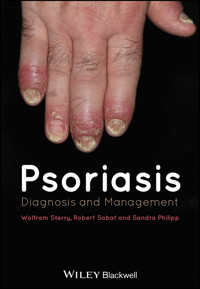
Practical and user-friendly, this is the ideal guide to the diagnosis and treatment of psoriasis, helping you navigate a logical management pathway through a complex maze of possibilities.
Psoriasis is a cruel disease that can seriously affect the sufferer’s quality and length of life. It is also highly idiosyncratic, with features that vary greatly from patient to patient; this being mirrored in the highly variable response to treatment. It is increasingly recognized that psoriasis is not a discrete disease and that many patients suffer two or three comorbid conditions that can complicate the efforts of doctors treating patients.
Psoriasis: Diagnosis and Management will provide dermatologists of all levels with a practical, well-illustrated approach to fully understanding the disease, including clear, clinical guidance to enable best-practice and effective management of patients.
In full color throughout and excellently illustrated, key highlights include:
- easily understandable description of the psoriasis pathogenesis;
- a strong emphasis on the clinical features of psoriasis;
- careful consideration of comorbid conditions as part of the psoriatic spectrum to be managed;
- coverage of both traditional and contemporary management approaches;
- plenty of diagnostic algorithms and management protocols to aid the daily practical care of patients.
Brought to you by several of the world’s leading authorities on the subject, Psoriasis: Diagnosis and Management is an essential purchase for the dermatologist.
Sie lesen das E-Book in den Legimi-Apps auf:
Seitenzahl: 494
Veröffentlichungsjahr: 2014
Ähnliche




















CONTENTS
Cover
Title page
Copyright page
List of contributors
Preface
Part I: Epidemiology and economic aspects
Chapter 1: Epidemiology and economic aspects
Epidemiology
Social and economic impact
Further reading
Chapter 2: Cost-effective psoriasis management
Health economics in a nutshell
Cost-effectiveness and cost–utility analyses in psoriasis
Further reading
Part II: Etiology and pathogenesis
Chapter 3: Microscopic skin alterations
The human skin: a multilayered, dynamic barrier to the environment
The psoriatic skin: inflammation with epidermal and vascular remodeling
Further reading
Chapter 4: Pathogenesis of psoriasis
Sensitization phase: antigen processing and presentation
Sensitization phase: generation of effector and memory T-cells
Effector phase: infiltration of immune cells into the skin
Effector phase: immune cell activation in the skin
Effector phase: tissue-cell response
Further reading
Chapter 5: Genetics of psoriasis
Further reading
Part III: Clinical features/diagnostic procedure
Chapter 6: Plaque psoriasis
Plaque psoriasis
Plaque psoriasis in special localizations
Chapter 7: Gutatte psoriasis
Further reading
Chapter 8: Erythrodermic psoriasis
Further reading
Chapter 9: Pustular psoriasis
Generalized pustular psoriasis (GPP)
Generalized pustular psoriasis of pregnancy (GPPP)/Impetigo herpetiformis (IH)
Annular psoriasis [erythema annulare centrifugum-type (EACP)]
Psoriasis vulgaris with pustulation
Palmoplantar pustular psoriasis (PPP)
Acrodermatitis continua suppurativa (Hallopeau)
Further reading
Chapter 10: Nail psoriasis
Clinical picture and pathophysiology
Diagnostic procedure
Burden of disease
Further reading
Chapter 11: Psoriatic arthritis
Epidemiology
Clinical picture
Clinical classification of PsA
Diagnostic procedures
Laboratory findings
Imaging
Prognosis
Further reading
Chapter 12: Mucosal presentation of psoriasis
Further reading
Chapter 13: Psoriasis in different life situations
Psoriasis in children
Psoriasis in pregnancy
Psoriasis in the elderly
Further reading
Part IV: Evaluation of disease severity
Chapter 14: Evaluation of disease severity—clinical scores and questionnaires
Assessment of skin involvement
Assessment of nail psoriasis
Assessment of psoriasis arthritis (PsA)
Spine assessment
Assessment of enthesitis
Assessment of dactylitis
Imaging techniques
Visual analog scale (VAS)
Quality-of-Life (QOL) Questionnaires
Further reading
Appendix
Part V: Psoriasis and associated diseases
Chapter 15: Psoriasis and associated diseases
Cardiovascular disease and metabolic syndrome
Obesity
Atherogenic dyslipidemia
Hypertension
Inflammatory bowel disease
Other inflammatory diseases
Psychosocial aspects
Depression
Nicotine use
Alcohol
Conclusion
Further reading
Part VI: Therapeutic management
Chapter 16: Therapeutic aim of psoriasis therapy
Further reading
Chapter 17: Treatment of plaque psoriasis
Topical therapy of psoriasis
Phototherapy and photochemotherapy
Classical systemic treatments
Biologics
Chapter 18: Special therapeutic aspects
Psoriasis capitis
Intertriginous psoriasis
Guttate psoriasis
Erythrodermic psoriasis
Pustular psoriasis
Nail psoriasis
Further reading
Chapter 19: Combination treatments
Why combination treatment of psoriasis?
Beneficial combinations
Contraindicated combinations and combinations for restrictive use
How to use combination treatment in practice
Further reading
Chapter 20: Optimizing adherence to treatment
Further reading
Chapter 21: Psoriasis therapy in children
Topical treatment
UV-light-therapy and systemic treatment
Further reading
Chapter 22: Therapy of psoriasis during pregnancy
Management of psoriasis in pregnancy
Treatment options during pregnancy
Management of psoriasis postpartum/breastfeeding
Further reading
Chapter 23: Recent and future developments in targeted therapy
Current and emerging biologic therapies
Oral systemic treatments in development
Future topical therapies
Personalized medicine
Conclusion
Further reading
Index
End User License Agreement
List of Tables
Chapter 01
Table 1.1 Selected estimates of the prevalence of psoriasis.
Table 1.2 Summary of main recent epidemiologic studies on risk factors for incident psoriasis.
Chapter 02
Table 2.1 Main methods of analysis in health economics.
Table 2.2 Summary aspects of recent studies on cost-effectiveness in psoriasis.
Chapter 07
Table 7.1 Drugs with known activity to induce psoriasiform skin lesions or to provoke psoriasis.
Chapter 11
Table 11.1 Classification of psoriatic arthritis.
Table 11.2 Clinical characteristics of psoriatic arthritis and rheumatoid arthritis.
Table 11.3 Laboratory and X-ray of psoriatic arthritis and rheumatoid arthritis.
Chapter 13
Table 13.1 Selected interactions of traditional systemic therapies with a focus on the elderly.
Chapter 14
Table 14.A.1 Psoriasis Area and Severity Index.
Table 14.A.2 Scores for the signs of psoriasis.
Table 14.A.3 Area score based on body surface area.
Table 14.A.4 Dermatology Life Quality Index. Each question is scored on a 4-point Likert scale: Not at all/Not relevant = 0, A little = 1, A lot = 2 and Very much = 3. Scores of individual items (0–3) are added to yield a total score (0–30); higher scores mean greater impairment of patient's QoL.
Chapter 15
Table 15.1 ATP III Criteria for metabolic syndrome.
Table 15.2 JNC 7 classifications of blood pressure (BP).
Chapter 17
Table 17.1 Comparison of corticosteroid potency classifications in the US, UK, and Germany/Nordic countries.
Table 17.2 Starting doses for UVB phototherapy.
Table 17.3 Routine therapy plan for UVB phototherapy (broad spectrum and 311 nm).
Table 17.4 Starting dosages for photochemotherapy.
Table 17.5 Routine approach to photochemotherapy.
Table 17.6 Overview of important side effects of MTX.
Table 17.7 Important contraindications/restrictions on use of MTX.
Table 17.8 Lab controls during treatment with MTX.
Table 17.9 Overview of important side effects of cyclosporine.
Table 17.10 Important contraindications/restrictions on the use of cyclosporine.
Table 17.11 Lab controls during treatment with cyclosporine.
Table 17.12 Overview of important side effects of retinoids.
Table 17.13 Important contraindications/restrictions on use of retinoids.
Table 17.14 Lab controls during treatment with retinoids.
Table 17.15 Overview of important side effects of fumaric acid esters.
Table 17.16 Lab controls during treatment with fumaric acid esters.
Table 17.17 Preferential use of classical systemic therapies.
Table 17.18 Biologics.
Table 17.19 Recommendations for monitoring patients in case of therapy with biologics, modified after the German S3 guidelines for therapy of psoriasis vulgaris and the European S3 guidelines on the systemic treatment of psoriasis vulgaris.
Chapter 19
Table 19.1 Combination of treatments in psoriasis.
Chapter 21
Table 21.1 Selected topical treatments for pediatric psoriasis.
Chapter 22
Table 22.1 Examples of mild to very potent topical corticosteroids (adapted from Chi
et al.
2011).
Chapter 23
Table 23.1 Drugs currently in development for the treatment of psoriasis.
List of Illustrations
Chapter 03
Figure 3.1 Schematic depiction of normal skin structure.
Figure 3.2 Histological pictures with nuclear staining (fluorescent dye DAPI) of (left) non-lesional and (right) lesional skin of a psoriasis patient.
Figure 3.3 Immunohistochemical CD3+ T-cell staining of (left) non-lesional and (right) lesional skin of a psoriasis patient.
Chapter 04
Figure 4.1 Phases of the psoriasis pathogenesis. The pathogenesis of psoriasis proceeds in the context of the underlying genetic predisposition and life-style-related factors. Resembling an adaptive immune reaction, the pathogenesis can be subdivided into the sensitization and the effector phase. During the sensitization phase that is triggered by primary exogenous factors, antigen-presenting cells guide the generation of specific effector and memory Th17-, Th22-, and Th1-cells in secondary lymphatic organs. The effector phase is triggered by secondary exogenous triggers, which activate skin-resident immune cells. Their release of inflammatory proteins leads to the infiltration of generated T- and other immune cells into the skin where they activate each other and tissue cells. The continuous presence of inflammatory mediators induces a regeneration-like state of the tissue cells and, eventually, the skin structure alteration characteristic for the psoriatic lesion.
Figure 4.2 Requirements for effector and memory T-cell generation. For the development of effector and memory Th-cell subsets from naïve CD4+ cell precursors, different levels of interaction with the antigen-presenting cells are necessary. Facilitated by nonspecific stabilizing interactions with the APC through adhesion molecules (e.g. ICAM1–LFA-1, LFA-3–CD2), the naïve T-cell needs three APC signals: The specificity of interaction is based on the recognition of the APC's MHC II–Ag peptide by the TCR complex. Costimulatory signals (e.g. from the DC's CD86, CD80, and CD40) ensure full activation and prevent anergy of the T-cell. Specific polarizing cytokines secreted by the APC are essential for the proliferating T-cell to obtain its effector function, that is, to become polarized into a Th1-cell, Th2-cell, Th17-cell, Th22-cell, inducible regulatory T-cell (iTreg), or type 1 regulatory T-cell (Tr1).
Figure 4.3 Leukocyte skin infiltration. The passage of leukocytes from the blood vessels into the tissue occurs in five steps: rolling, triggering, adhesion, diapedesis, and migration. Leukocyte rolling along the blood-vessel wall reduces the flow velocity of the leukocytes and is mediated by the interaction between P- and E-selectin expressed by endothelial cells and selectin ligands such as CLA expressed by leukocytes. Chemokines produced by activated endothelial cells, macrophages, and keratinocytes, and bound to glycosaminoglycans on endothelial cells, activate the immune cells via their specific chemokine receptors and induce an increased affinity of their integrins to the endothelial integrin ligands (triggering). The integrin-dependent interaction with the endothelial cells (e.g. LFA-1–ICAM-1, ICAM-2) causes the tight adhesion to the blood vessel and the rapid arrest of the immune cells in the blood flow. The passage of immune cells through the endothelial wall, called diapedesis, is also dependent on integrins such as VLA-4 and LFA-1.
Figure 4.4 Schematic depiction of the effector phase of the psoriasis pathogenesis.
Chapter 05
Figure 5.1 Genes associated with psoriasis susceptibility and potential role of their products during the psoriasis pathogenesis.
Chapter 06
Figure 6.1 Plaque psoriasis with sharply demarcated borders, covered by silvery scales.
Figure 6.2 Different appearance of psoriatic plaques. (a) Psoriatic plaque with less scaling and light red color, possibly recently triggered. (b) Chronic psoriasis plaque with brownish coloration. (c) Psoriatic plaques in skin type IV: note that inflammatory signs sign as erythema are barely visible. (d) Woronow's ring during treatment, a zone that does not stain with any external color. (e) Large silvery scales, sometimes with black dots (foci of erythrocytes).
Figure 6.3 Characteristics of the psoriatic plaque. (a) Candle-wax phenomenon. After scratching the surface of a psoriatic plaque with a wooden spade, the horny layer loses its transparency. (b) Last cuticle. After removal of the scales, one looks at the stratum spinosum, with a glossy aspect and covered with serum droplets. (c) Auspitz phenomenon. After removal of the last cuticle, the capillary loops of the stratum papillare in the upper dermis start to bleed, causing tiny blood droplets (bloody dew).
Figure 6.4 Tiny early lesions in psoriasis: pinpoint lesions.
Figure 6.5 (a) Geographic psoriasis (Denmark?) created by coalescence of psoriatic plaques. (b) Circinate psoriasis.
Figure 6.6 Rupoid psoriasis with large amount of serum embedded between the corneocytes.
Figure 6.7 Different localization of psoriatic plaques. (a) Retroauricular plaques. (b) Lesions on the extensor sites of the arms. (c) Plaque on the extensor site of the leg. (d) Involvement of the ileosacral area. (e) Periumbilical plaque. (f) Lesion in the rima ani—note the lack of scaling.
Figure 6.8 Histopathology of fully developed psoriasis, featuring hyper- and parakeratosis, acanthosis, papillomatosis, and inflammatory infiltrate.
Figure 6.9 Differential diagnosis of plaque psoriasis. (a) Seborrheic dermatitis with some overlap to psoriasis (so-called seborrhiasis). (b) Yellowish color of seborrheic dermatitis. (c) Tinea corporis resembling annular psoriasis—note the accentuated border. (d) Nummular dermatitis with papulovesicles as primary lesions at the periphery. (e) Discoid lupus erythematodes with lesions in sun-exposed areas that later will show healing with atrophy. (f) Psoriasiform lesion in overlap collagenosis. (g) Mycosis fungoides, histologically and molecular biologically proven. (h) Pityriasis rotunda.
Figure 6.10 (a) Scalp psoriasis transgressing the border between hairy and nonhairy scalp. (b) Extensive scalp involvement. (c) Hair loss in extensive psoriatic scalp involvement. (d) Chronic scalp dermatitis causing tinea amiantacea. (e) Tinea capitis in a wrestler caused by
Trichophyton tonsurans
. (f) Scalp involvement of discoid lupus erythematosus with scarring.
Figure 6.11 (a) Submammary psoriasis. (b) Psoriasis in the genital and inguinal skin as well as the abdominal fold. (c) Axillary involvement. (d) Submammary candida infection with small peripheral satellite lesions, as well as fine scaling borders. (e) Langerhans cell histiocytosis. (f) Hailey–Hailey's disease with erosions, fine fissures, and macerated epidermis.
Figure 6.12 Inverse psoriasis.
Figure 6.13 Palmoplantar psoriasis and its differential diagnosis. (a) Psoriasis of the back of hands and fingers, together with nail psoriasis. (b) Palmar psoriasis extending to the forearm. (c) Small maculopapular psoriatic lesions in the palm. (d) Maculopapular lesions in secondary syphilis. (e) Subacute hand dermatitis with small erosions having evolved from papulovesicles. (f) Tinea manuum due to
Trichophyton rubrum
infection. (g) Palmar keratoderma in pityriasis rubra pilaris with typical salmon color.
Figure 6.14 Köbner phenomenon.
Chapter 07
Figure 7.1 Guttate psoriasis in a boy. Note the pronounced involvement of the face.
Figure 7.2 Guttate psoriasis. There is less scaling here than with plaque psoriasis.
Figure 7.3 Histopathology of guttate psoriasis. All features of psoriasis are expressed but less severe than in psoriasis vulgaris.
Figure 7.4 Pityriasis rosea with typical arrangement of lesions along skin tension lines.
Figure 7.5 Secondary syphilis with maculopapular exanthema.
Chapter 08
Figure 8.1 Erythrodermic psoriasis.
Chapter 09
Figure 9.1 (a) Generalized pustular psoriasis. (b) Generalized pustular psoriasis with erosions after shedding of dried pustules.
Figure 9.2 (a) Annular psoriasis with collarette-like scales. (b) Acrodermatitis continua suppurativa, showing peri- and subungal confluent pustules on erythemateous base and almost complete destruction of the nail plate.
Figure 9.3 Typical clinical pictures of palmoplantar pustular psoriasis.
Figure 9.4 Histological picture of palmoplantar psoriasis with sterile pustules (Kogoj) as well as hyper- and parakeratosis.
Chapter 10
Figure 10.1 Schematic illustration of the different nail parts. (a) Free edge of the nail plate. (b) Hyponychium. (c) Nail plate. (d) Lunula. (e) Proximal nail fold. (f) Dorsal matrix. (g) Intermediate/ventral matrix. (h) Nail bed.
Figure 10.2 Characteristic clinical symptoms of psoriatic nail disease. (a) Pits and onycholysis. (b) Massive pitting with subungual discoloration. (c) Longitudinal ridges, pits and transversal grooves on the middle and ring fingers. (d) Nail-bed discoloration with typical “oil drops” or “salmon patches,” and discrete red spots (increased transparency by thinning of nail plate). Fine splinter hemorrhages can be detected at the free nail edge. (e) Subungual hyperkeratosis with whitish crumbling material underneath the nail plate causing distal onycholysis. (f) Complete onychodystrophy of the nail.
Figure 10.3 Differential diagnoses of psoriatic nail disease. (a) Onychomycosis. (b) Trachyonychia. (c) Lichen ruber.
Figure 10.4 Co-occurrence of psoriatic arthritis (swollen joints), skin lesions, and nail affection.
Chapter 11
Figure 11.1 Joint count: (a) tender joints; (b) swollen joints.
Figure 11.2 Typical radiological findings.
Figure 11.3 Musculoskeletal sonography for arthritis: (a) synovitis; (b) tenosynovitis; (c) erosion.
Figure 11.4 Different FOI signal patterns in psoriasis arthritis. (a) High signal activity along a finger as a sign of synovitis of the second and third finger in PsA. (b) High signal activity in the skin as a sign of plaque psoriasis. (c) High signal activity in the nail/DIP region as a sign of enthesitis.
Chapter 12
Figure 12.1 Geographic tongue.
Figure 12.2 Psoriasis of intertriginous areas and external female genitalia.
Figure 12.3 Uveitis in a psoriatic arthritis patient. Courtesy of Professor Pleyer, Dept. of Opthalmology, Charité University Medicine, Berlin
Chapter 13
Figure 13.1 Disseminated red papules and small flat plaques on the trunk (guttate psoriasis).
Figure 13.2 (a) Characteristic erythemateous psoriasis plaques around the eye. (b) Typical scaly plaques on the forehead.
Figure 13.3 Sharply demarcated red plaques in the anogenital region, typical for inverse psoriasis.
Figure 13.4 Pronounced pitting of all nails.
Chapter 14
Figure 14.A.1 Assessment of BSA and disease characteristics: legs.
Figure 14.A.2 Assessment of BSA and disease characteristics: trunk.
Chapter 19
Figure 19.1 Erythrodermic psoriasis before treatment.
Figure 19.2 Eythrodermic psoriasis after 4 weeks' treatment with cyclosporine (5 mg/kg) and calcipotriol ointment on the right-hand side.
Chapter 22
Figure 22.1 Therapeutic management of psoriasis in pregnancy.
Figure 22.2 Therapeutic options of psoriasis in pregnancy. *Washout-periods: systemic retinoids 2 years; methotrexate 3–5 months, leflunomide either 2 years or washout with colestyramine.
Guide
Cover
Table of Contents
Begin Reading
Pages
iii
iv
vii
viii
ix
1
3
4
5
7
6
8
9
10
11
12
13
14
15
16
17
19
21
22
23
24
25
26
27
28
29
30
31
32
33
34
35
36
37
38
39
40
41
42
43
44
45
46
47
48
49
50
51
52
53
54
55
57
58
59
60
61
62
63
64
65
66
67
68
69
70
71
72
73
74
75
76
77
78
79
80
81
82
83
84
85
86
87
88
89
90
91
92
93
94
95
96
97
98
99
100
101
102
103
104
105
106
107
108
109
110
111
112
113
114
115
116
117
118
119
120
121
122
123
124
125
127
129
130
131
132
133
134
135
136
137
138
139
141
143
144
145
146
147
148
149
150
151
152
153
154
155
156
157
159
161
162
163
164
165
166
167
168
169
170
171
172
173
174
175
176
177
178
179
180
181
182
183
184
185
186
187
188
189
190
191
192
193
194
195
196
197
198
199
200
201
202
203
204
205
206
207
210
208
209
211
212
213
214
215
216
217
218
219
220
221
222
223
224
225
226
227
228
229
230
231
232
233
234
235
236
237
238
239
240
241
242
243
244
245
246
247
248
249
250
251
252
253
254
255
256
257
258
259
260
261
262
263
264
265
266
267
268
269
270
271
272
273
274
275
276
Psoriasis
Diagnosis and Management
EDITED BY
Wolfram Sterry, MD, PhD
Department of Dermatology and Allergy
University Hospital Charité
Berlin, Germany
Robert Sabat, MD, PhD
Head of Psoriasis Research and Treatment Center
Department of Dermatology and Allergy/Institute of Medical Immunology
University Hospital Charité
Berlin, Germany
Sandra Philipp, MD, PhD
Psoriasis Research and Treatment Center
Department of Dermatology and Allergy/Institute of Medical Immunology
University Hospital Charité
Berlin, Germany
This edition first published 2015, © 2015 by John Wiley & Sons, Ltd.
Registered OfficeJohn Wiley & Sons, Ltd., The Atrium, Southern Gate, Chichester, West Sussex, PO19 8SQ, UK
Editorial Offices9600 Garsington Road, Oxford, OX4 2DQ, UKThe Atrium, Southern Gate, Chichester, West Sussex, PO19 8SQ, UK111 River Street, Hoboken, NJ 07030-5774, USA
For details of our global editorial offices, for customer services and for information about how to apply for permission to reuse the copyright material in this book please see our website at www.wiley.com/wiley-blackwell
The right of the author to be identified as the author of this work has been asserted in accordance with the UK Copyright, Designs and Patents Act 1988.
All rights reserved. No part of this publication may be reproduced, stored in a retrieval system, or transmitted, in any form or by any means, electronic, mechanical, photocopying, recording or otherwise, except as permitted by the UK Copyright, Designs and Patents Act 1988, without the prior permission of the publisher.
Designations used by companies to distinguish their products are often claimed as trademarks. All brand names and product names used in this book are trade names, service marks, trademarks or registered trademarks of their respective owners. The publisher is not associated with any product or vendor mentioned in this book. It is sold on the understanding that the publisher is not engaged in rendering professional services. If professional advice or other expert assistance is required, the services of a competent professional should be sought.
The contents of this work are intended to further general scientific research, understanding, and discussion only and are not intended and should not be relied upon as recommending or promoting a specific method, diagnosis, or treatment by health science practitioners for any particular patient. The publisher and the author make no representations or warranties with respect to the accuracy or completeness of the contents of this work and specifically disclaim all warranties, including without limitation any implied warranties of fitness for a particular purpose. In view of ongoing research, equipment modifications, changes in governmental regulations, and the constant flow of information relating to the use of medicines, equipment, and devices, the reader is urged to review and evaluate the information provided in the package insert or instructions for each medicine, equipment, or device for, among other things, any changes in the instructions or indication of usage and for added warnings and precautions. Readers should consult with a specialist where appropriate. The fact that an organization or Website is referred to in this work as a citation and/or a potential source of further information does not mean that the author or the publisher endorses the information the organization or Website may provide or recommendations it may make. Further, readers should be aware that Internet Websites listed in this work may have changed or disappeared between when this work was written and when it is read. No warranty may be created or extended by any promotional statements for this work. Neither the publisher nor the author shall be liable for any damages arising herefrom.
Library of Congress Cataloging-in-Publication Data
Psoriasis (Sterry) Psoriasis : diagnosis and management / [edited by] Wolfram Sterry, Robert Sabat, Sandra Philipp. p. ; cm. Includes bibliographical references and index.
ISBN 978-0-470-65736-2 (cloth)I. Sterry, Wolfram, editor. II. Sabat, Robert, editor. III. Philipp, Sandra, editor. IV. Title. [DNLM: 1. Psoriasis–diagnosis. 2. Psoriasis–therapy. WR 205] RL321 616.5′26–dc23
2014029373
A catalogue record for this book is available from the British Library.
Wiley also publishes its books in a variety of electronic formats. Some content that appears in print may not be available in electronic books.
Cover image: CharitéCover design: meadencreative.com
List of contributors
Frank Bachmann, MD, PhDDepartment of Dermatology and Allergy, University Hospital Charité, Berlin, Germany
Marina Backhaus, MD, PhDDepartment of Rheumatology and Clinical Immunology, Charité-Universitätsmedizin Berlin, Berlin, Germany
Simone Cazzaniga, MD, PhDBergamo General Hospital, Bergamo, Italy
Kenneth B. Gordon, MD, PhDProfessor of Dermatology, Northwestern University, Feinberg School of Medicine, Chicago, IL, USA
Erhard Hölzle, MD, PhDDepartment of Dermatology and Allergology, Klinikum Oldenburg, Oldenburg, Germany
Georgios Kokolakis, MD, PhDPsoriasis Research and Treatment Center, Department of Dermatology and Allergy/Institute of Medical Immunology, University Hospital Charité, Berlin, Germany
Knud Kragballe, MD, PhDDepartment of Dermatology, Arhus University Hospital, Arhus, Denmark
Peter C.M. van de Kerkhof, MD, PhDDepartment of Dermatology, Radboud University Nijmegen Medical Centre, Nijmegen, Netherlands
Alan Menter, MD, PhDDepartment of Dermatology, Baylor University Medical Center, Dallas, TX, USA
Luigi Naldi, MD, PhDBergamo General Hospital, Bergamo, Italy
Steven M. Nwe, MD, PhDDepartment of Dermatology, Northwestern University, Feinberg School of Medicine, Chicago, IL, USA
Sandra Philipp, MD, PhDPsoriasis Research and Treatment Center, Department of Dermatology and Allergy/Institute of Medical Immunology, University Hospital Charité, Berlin, Germany
Giovanna Rao, MD, PhDBergamo General Hospital, Bergamo, Italy
Caitriona Ryan, MD, PhDDepartment of Dermatology, Baylor University Medical Center, Dallas, TX, USA
Hans-Joachim Röwert-Huber, MD, PhDDepartment of Dermatology and Allergy, University Hospital Charité, Berlin, Germany
Robert Sabat, MD, PhDPsoriasis Research and Treatment Center, Department of Dermatology and Allergy/Institute of Medical Immunology, University Hospital Charité, Berlin, Germany
Wolfram Sterry, MD, PhDProfessor, Department of Dermatology and Allergy, University Hospital Charité, Berlin, Germany
Ellen Witte, PhDPsoriasis Research and Treatment Center, Department of Dermatology and Allergy/Institute of Medical Immunology, University Hospital Charité, Berlin, Germany
Kerstin Wolk, PhDPsoriasis Research and Treatment Center, Department of Dermatology and Allergy/Institute of Medical Immunology, University Hospital Charité, Berlin, Germany
Lesen Sie weiter in der vollständigen Ausgabe!
Lesen Sie weiter in der vollständigen Ausgabe!
Lesen Sie weiter in der vollständigen Ausgabe!
Lesen Sie weiter in der vollständigen Ausgabe!
Lesen Sie weiter in der vollständigen Ausgabe!
Lesen Sie weiter in der vollständigen Ausgabe!
Lesen Sie weiter in der vollständigen Ausgabe!
Lesen Sie weiter in der vollständigen Ausgabe!
Lesen Sie weiter in der vollständigen Ausgabe!
Lesen Sie weiter in der vollständigen Ausgabe!
Lesen Sie weiter in der vollständigen Ausgabe!
Lesen Sie weiter in der vollständigen Ausgabe!
Lesen Sie weiter in der vollständigen Ausgabe!
Lesen Sie weiter in der vollständigen Ausgabe!
Lesen Sie weiter in der vollständigen Ausgabe!
Lesen Sie weiter in der vollständigen Ausgabe!
Lesen Sie weiter in der vollständigen Ausgabe!
Lesen Sie weiter in der vollständigen Ausgabe!
Lesen Sie weiter in der vollständigen Ausgabe!
Lesen Sie weiter in der vollständigen Ausgabe!
Lesen Sie weiter in der vollständigen Ausgabe!
Lesen Sie weiter in der vollständigen Ausgabe!
Lesen Sie weiter in der vollständigen Ausgabe!
Lesen Sie weiter in der vollständigen Ausgabe!
Lesen Sie weiter in der vollständigen Ausgabe!
Lesen Sie weiter in der vollständigen Ausgabe!
Lesen Sie weiter in der vollständigen Ausgabe!
Lesen Sie weiter in der vollständigen Ausgabe!
Lesen Sie weiter in der vollständigen Ausgabe!
Lesen Sie weiter in der vollständigen Ausgabe!
Lesen Sie weiter in der vollständigen Ausgabe!
Lesen Sie weiter in der vollständigen Ausgabe!




