Table of Contents
Title Page
Copyright Page
Dedication
Table of Figures
List of Tables
PREFACE
Audience
Content
Features
References
THE EDITORS AND CONTRIBUTORS
Introduction
PART I - HISTORY, DEVELOPMENT, AND ORGANIZATION
CHAPTER 1 - HISTORY AND DEVELOPMENT OF PUBLIC HEALTH
What Is Public Health?
History of Public Health
Hallmarks of Public Health
Core Public Health Disciplines
Public Health Ethics
Summary
Key Terms
Review Questions
References
CHAPTER 2 - MODERN PUBLIC HEALTH SYSTEMS
Public Health’s Three Core Functions
Understanding Population
The Social-Ecological Model as a Framework for Prevention
Three Levels of Prevention
The U.S. Public Health System
Public Health Systems Globally
Summary
Key Terms
Review Questions
References
PART II - ANALYTIC TOOLS AND METHODS
CHAPTER 3 - DATA FOR PUBLIC HEALTH
How Do We Decide What to Include in Surveillance?
Universal Surveillance Systems and Activities
Survey Data
Registries
Reporting Systems
Summary
Key Terms
Review Questions
References
CHAPTER 4 - EPIDEMIOLOGY INTRODUCTION AND BASIC CONCEPTS
What Is Epidemiology?
History of Epidemiology
Types of Epidemiology
Basic Epidemiological Measures
Assessing and Interpreting Data
Epidemiology in Public Health
Summary
Key Terms
Review Questions
References
CHAPTER 5 - STUDY DESIGN
Observational Studies
Experimental Studies
Causal Inference
Summary
Key Terms
Review Questions
References
CHAPTER 6 - BIOSTATISTICS
Two Case Studies
Biases in Collecting and Analyzing Epidemiological Data
Basic Descriptive Statistical Methods
Basic Biostatistical Concepts
Using Regression Analysis to Adjust for Confounding
Revisiting the Two Case Studies
Summary
Key Terms
Review Questions
References
CHAPTER 7 - PHARMACOEPIDEMIOLOGY
What Is Pharmacoepidemiology?
History of Pharmacoepidemiology
Drug Approval and Safety Systems
Core Areas of Discovery in Pharmacoepidemiology
Methodological Challenges in Pharmacoepidemiology
Summary
Key Terms
Review Questions
References
CHAPTER 8 - INFECTIOUS DISEASE EPIDEMIOLOGY
History of Infectious Disease Epidemiology
Infectious Disease Epidemiology Methods
Vaccines and Vaccine-Preventable Diseases
Disease Eradication
Emerging and Reemerging Infectious Diseases
Summary
Key Terms
Review Questions
References
CHAPTER 9 - ENVIRONMENTAL PUBLIC HEALTH
Environmental Public Health: History and Progression
Preventing Infectious Diseases of Environmental Origin
Chronic Diseases and Environmental Health
Preventing Adverse Chemical Exposure
Preventing Excess Radiation Exposure
Summary
Key Terms
Review Questions
References
CHAPTER 10 - RISK AND EXPOSURE ASSESSMENT
Risk Assessment and Precautionary Principle
Definition of Risk
Components of a Risk Assessment
Hazard Identification
Dose-Response Assessment
Exposure Assessment
Risk Characterization
Risk Management
Risk Communication
Summary
Resources
Key Terms
Review Questions
References
PART III - BEHAVIOR AND HEALTH
CHAPTER 11 - SOCIAL AND BEHAVIORAL SCIENCES IN PUBLIC HEALTH
Setting the Stage: Hookah Smoking as a Public Health Issue
Social and Behavioral Science in Public Health
Roots of Social and Behavioral Science in Public Health
Using a Social-Ecological Framework to Understand Health Factors
Using Social and Behavioral Theories to Inform Public Health Research and Practice
Community-Level Models
Societal Level Strategies
Managing Multiple Theories
Summary
Key Terms
Review Questions
References
CHAPTER 12 - QUALITATIVE DATA AND RESEARCH METHODS IN PUBLIC HEALTH
What Is Qualitative Research?
What Are Qualitative Data?
Qualitative Traditions in Public Health
Visual Research Methods as Emerging Qualitative Research Strategies
Evaluating Qualitative Research
Summary
Key Terms
Review Questions
References
CHAPTER 13 - TUBERCULOSIS
Microbiology, Disease Types, Diagnosis, and Treatment
Epidemiology
Prevention and Control
Current Public Health Challenges to Control Tuberculosis
The Future of Tuberculosis
Summary
Key Terms
Review Questions
References
PART IV - HEALTH SERVICES AND SOCIAL DETERMINANTS
CHAPTER 14 - HEALTH POLICY AND THE U.S. HEALTH CARE SYSTEM
U.S. Health Care System
Health Policy and the Regulatory Process
Future Direction of the U.S. Health Care System
Key Terms
Review Questions
References
CHAPTER 15 - HEALTH SERVICES RESEARCH
Health Services Research
Access to Health Care
Quality of Health Care
Cost of Health Care
Information Technology
Summary
Key Terms
Review Questions
References
CHAPTER 16 - HEALTH DISPARITIES
What Are Health Disparities?
Measuring Health Disparities
Examples of Health Disparities
Social Determinants of Health Disparities
Actions to Address Health Disparities
Summary
Key Terms
Review Questions
References
PART V - FORECASTING PUBLIC HEALTH
CHAPTER 17 - FUTURE OF PUBLIC HEALTH
Can We Plan for the Future?
How Can We Think About the Future of Public Health?
Being Ready to Meet the Future: What Do We Need?
Being Ready to Meet the Future: Public Health Workforce
Being Ready to Meet the Future: Educated Citizens
Summary
Key Terms
Review Questions
References
GLOSSARY
INDEX
Table of Figures
FIGURE 1.1 Timeline of Major Developmentsin Public Health History
FIGURE 1.2 Core public health disciplines
FIGURE 2.1 Public Health Core Functions andTen Essential Services
FIGURE 2.2 Levels of Influence
FIGURE 2.3 Multiple Determinants of Health
FIGURE 3.1 Prevalence of Disability Among Women AgeSixteen to Sixty-four by County in Florida
FIGURE 3.2 Example of a Death Certificate, Orville Wright
FIGURE 3.3 A United States Standard Death Certificate
FIGURE 3.4 Lung Cancer Epidemic in the UnitedStates 1975-2006
FIGURE 3.5 Percentage of infants born preterm or low birthweight, United States 1990-2004
FIGURE 3.6 Prevalence of Adults Classified as Heavy Drinkers inthe United States, by State
FIGURE 3.7 The Youth Risk Behavior Survey, 1991-2007
FIGURE 4.1 Prevalence of Obesity (BMI ≥30) in the United States in1990, 2000, and 2008. Behavioral Risk Factor Surveillance System
FIGURE 4.2 Prevalence of Obesity (BMI ≥30) in the United Statesby Race and Ethnicity, 2006-2008. Behavioral Risk FactorSurveillance System
FIGURE 4.3 Infant Mortality Rate (death in the first year of life)per 1,000 Live Births for the United States, 1995-2005, by Raceand Ethnicity
FIGURE 4.4 Infant Mortality Rate (death in the first year of life)per 1,000 Live Births for the United States, 2000-2006
FIGURE 4.5 Crude and Age-adjusted Death Rates: United States,1960-2005
FIGURE 4.6 John Snow’s Cholera Mortality Map from an 1848Outbreak in London
FIGURE 5.1 Major Types of Study Designs within Epidemiology
FIGURE 5.2 Prevalence of Spina Bifida and Anencephaly at Birthin the United States from 1995 to 2005 and Phases of Folic AcidFortification of the Grain Supply
FIGURE 5.3 Generic Cross-sectional Study Design Showingthe Various Points in Exposure or Disease Process at whichIndividuals May Be Surveyed
FIGURE 5.4 Generic Scheme of Cohort Study Design in which AllParticipants Are Free of the Outcome at the Beginning of the Study
FIGURE 5.5 Generic Scheme of a Case-control Study Design inwhich Participants with and without the Outcome are Identified(cases and controls, respectively)
FIGURE 6.1 Histograms of Baseline CD4 Count in the Non-Zidovudine Group (Top) and in the Zidovudine Group (Bottom)
FIGURE 7.1 The Food and Drug Administration (FDA) DrugDevelopment Process
FIGURE 7.2 Causal or Not Causal Relationships in Confounding
FIGURE 8.1 Koch’s Postulates
FIGURE 8.2 Diagram of the Chain of Infection
FIGURE 8.3 Epidemic Curves Illustrating a Point Source Outbreak,a Common Source Outbreak, and a Propagated Outbreak
FIGURE 8.4 Cases of Polio before and after Introductionof the Inactivated and Live Oral Polio Vaccines,United States 1950-2007
FIGURE 8.5 Smallpox Pustules on a Child
FIGURE 8.6 Artist’s Depiction of Edward Jenner Inoculating JamesPhipps with Cowpox Virus Isolated from Sarah Nelmes’s Hand
FIGURE 8.7 Ali Maow Maalin, the Last Person to HaveNaturally Acquired Smallpox
FIGURE 8.8 A Child Receiving Oral Polio Vaccination
FIGURE 8.9 Dracunculiasis Life Cycle
FIGURE 9.1 Relationship Between Host, Environment, andInteraction in Infectious Disease
FIGURE 9.3 Estimated Rate of Emergency Department Visitswith Asthma as the First Diagnosis by Age and Year
FIGURE 9.4 Estimated Rate of Hospital Dischargeswith Asthma as the First Diagnosis by Age and Year
FIGURE 9.5 Universal Symbol of Radiation Warning
FIGURE 9.6 The Comparative Strength of Three Forms of IonizingRadiation: Alpha Particles, Beta Particles, and Gamma Rays
FIGURE 10.1 Components of Risk Assessment Considered in TheirPhysical and Social Context
FIGURE 10.2 A Simplified Schematic of the Mechanisms of UrinaryExcretion and Oxidative Metabolism of Toxicants
FIGURE 10.3 The Typical S-Shaped Curve Produced by AnimalStudies for Non-Cancer Effects
FIGURE 10.4 Typical Results of an Animal Study for Cancer Effects
FIGURE 10.5 Exposure Is Defined as the Product of Concentrationand Time at Any Given Instant
FIGURE 11.1 The Health Belief Model
FIGURE 11.2 The Theory of Planned Behavior
FIGURE 11.3 The Stages of Change Model
FIGURE 11.4 Social Networks Are a Web of Social Relationships
Figure 13.1 Chest X-Ray Showing Tuberculosis Infection
Figure 13.2 Estimated Incidence of Tuberculosis by Country, 2007
Figure 14.1 The Growth in Health Expenditures in the United States
Figure 14.2 Managed Care Versus Conventional Insurance inEmployer-Sponsored Health Plans, United States 1988-2008
FIGURE 15.1 Model of Access to Personal Health Care Services
FIGURE 15.2 Total Rates of Reimbursement for NoncapitatedMedicare per Enrollee
FIGURE 16.1 Age-Adjusted Mortality Rates Due to BreastCancer Among Women in the United States byRace/Ethnicity, 1975-2005
FIGURE 16.2 Age-Adjusted Prevalence Trends for High BloodPressure in Adults 20 Years of Age or Older in the United Statesby Race/Ethnicity, Sex, and Survey (NHANES: 1988 to 1994,1999 to 2004, and 2005 to 2006)
FIGURE 16.3 Prevalence of Obesity (Body Mass Index ≥30 kg/m)Among Adolescents in the United States by Ethnicity, UsingNational Longitudinal Survey of Adolescent Health, 1994-1996 Data
FIGURE 16.4 Relationship Between Access to Care andUse of Preventive Care and Chronic DiseaseManagement Services
List of Tables
Table 1.1 Number of Deaths and Crude Mortality Rate for LeadingCauses of Death in the United States in 1900
Table 1.2 Number of Deaths and Crude Mortality Rate for LeadingCauses of Death in the United States in 2000
Table 2.1 The Three Levels of Prevention
Table 3.1 Examples of Information Available from U.S. StandardBirth Certificates
Table 4.1 Number of Deaths and Crude and Age-adjustedMortality Rates in the United States in 1980 and 2005
Table 4.2 Alcohol Consumption and Lung Cancer DiagnosisAmong 1,000 Men Age 65 and Older
Table 4.3 Alcohol Consumption and Cigarette Smoking StatusAmong 1,000 Men Age 65 and Older
Table 5.1 Generic 2 × 2 Table for AnalyzingEpidemiological Study Data
Table 5.2 Two-by-two Tables with Data and Relative Risk (RR)Calculations for a Hypothetical Cohort Study Investigatingwhether Wearing a Seat Belt During a Crash (exposure) IsAssociated With Traumatic Brain Injury (TBI; outcome)
Table 5.3 Number of Malignant Extrathyroid Tumors AmongIndividuals Irradiated for Enlarged Thymus During Infancy andTheir Nonirradiated Siblings, Rochester Radiation Cohorts
Table 5.4 Number of Malignant Extrathyroid Tumors andPerson-years at Risk for Individuals Irradiated for EnlargedThymus During Infancy and Their Nonirradiated Siblings,Rochester Radiation Cohorts
Table 5.5 Exposure Data for Male Controls in a Case-control Studyof Artificial Sweetener Use and Urinary Tract Cancer,Detroit, Michigan, 1978
Table 5.6 Generic Example of a 2 × 2 Table and Formula forOdds Ratio (OR)
Table 5.7 Hypothetical Case-control Study of MaternalIllicit Drug Use and Birth Defects Showing the Effect ofDifferential Misclassification Caused by Recall Bias on theOdds Ratio (OR) Estimate
Table 5.8 Necessary Sample Sizes for a Given Effect SizeMeasuring the Relationship between Hypothetical ContaminantX and Spina Bifida Using Various Study Designs*
Table 5.9 Criteria for Assessing Causal Inference in ObservationalEpidemiological Studies
Table 5.10 Risk of Benign Thyroid Adenomas (Tumors) After X-rayIrradiation for Enlarged Thymus Gland at Birth
Table 6.1 Descriptive Statistics for the TOHP Follow-up Study
Table 6.2 Analytic 2 × 2 Table for TOHP Follow-up Study
Table 6.3 Sensitivity Analysis in Terms of Descriptive Statistics forthe TOHP Follow-up Study
Table 7.1 Case-control Study Results Comparing the Riskfor Myocardial Infarction or Sudden Cardiac Deathin Patients Exposed to Rofecoxib or Ibuprofento Remote Use of Pain Medications
Table 9.1 Examples of Environmental Exposure andAdverse Health Effects
Table 9.2 Examples of MCLs for Selected Contaminants on theNational Primary Drinking Water Regulations (NPDWR) List
Table 11.1 Social-Ecological Levels and Their Targets of Change,Focus of Change, and Strategies
Table 11.2 Ten Strategies Used to Change Behavior
Table 11.3 The Stages of Change: Definitions and Strategies
Table 11.4 Stages of Communications Campaign Development,Implementation, and Evaluation
Table 14.1 Key Elements of Medicare and Medicaid
Table 14.2 Competing Interests in the Health Policy Process
Table 15.1 Selected Access Measures from Healthy People 2010
Table 15.2 Institute of Medicine (IOM) Priority Research Areas
Table 15.3 Health Information Technology (HIT) Applications
Table 17.1 Millennium Project: Where Is HumanityWinning and Losing?
Copyright © 2010 by John Wiley & Sons, Inc. All rights reserved.
Published by Jossey-Bass
A Wiley Imprint
989 Market Street, San Francisco, CA 94103-1741—www.josseybass.com
No part of this publication may be reproduced, stored in a retrieval system, or transmitted in any form or by any means, electronic, mechanical, photocopying, recording, scanning, or otherwise, except as permitted under Section 107 or 108 of the 1976 United States Copyright Act, without either the prior written permission of the publisher, or authorization through payment of the appropriate per-copy fee to the Copyright Clearance Center, Inc., 222 Rosewood Drive, Danvers, MA 01923, 978-750-8400, fax 978-646-8600, or on the Web at www.copyright.com. Requests to the publisher for permission should be addressed to the Permissions Department, John Wiley & Sons, Inc., 111 River Street, Hoboken, NJ 07030, 201-748-6011, fax 201-748-6008, or online at www.wiley.com/go/permissions.
Readers should be aware that Internet Web sites offered as citations and/or sources for further information may have changed or disappeared between the time this was written and when it is read.
Limit of Liability/Disclaimer of Warranty: While the publisher and author have used their best efforts in preparing this book, they make no representations or warranties with respect to the accuracy or completeness of the contents of this book and specifically disclaim any implied warranties of merchantability or fitness for a particular purpose. No warranty may be created or extended by sales representatives or written sales materials. The advice and strategies contained herein may not be suitable for your situation. You should consult with a professional where appropriate. Neither the publisher nor author shall be liable for any loss of profit or any other commercial damages, including but not limited to special, incidental, consequential, or other damages.
Jossey-Bass books and products are available through most bookstores. To contact Jossey-Bass directly call our Customer Care Department within the U.S. at 800-956-7739, outside the U.S. at 317-572-3986, or fax 317-572-4002.
Jossey-Bass also publishes its books in a variety of electronic formats. Some content that appears in print may not be available in electronic books.
Library of Congress Cataloging-in-Publication Data
Public health foundations : concepts and practices / [edited by] Elena Andresen, Erin DeFries Bouldin. p. cm. Includes bibliographical references and index.
ISBN 978-0-470-44587-7 (pbk.); ISBN 9780470890165 (ebk.); ISBN 9780470890172 (ebk.); ISBN 9780470890189 (ebk.)
1. Public health-United States. I. Andresen, Elena. II. Bouldin, Erin DeFries. RA445.P834 2010 362.10973-dc22 2010036301
PB Printing
To my husband.EMA
To my husband, mom, and dad.EDB
PREFACE
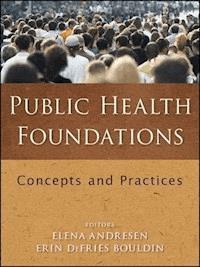
PUBLIC HEALTH is all around us. It is in the air we breathe, the water we drink, the homes we live in, and the behaviors in which we engage. It includes our health care systems and the agencies and services that protect our health and environment. Public health is a vital yet often overlooked component of modern life; most of us do not think about it as part of our daily lives. It may only receive public attention when a crisis occurs or when the public health system falters or fails. It may become an important personal focus when we need a specialized service, when we don’t have access to a private clinic, or when we face a neighborhood environmental concern. Public health encompasses a broad range of activities and functions, but among its most important are promoting and preserving the health of populations through prevention. Prevention has several meanings or levels, as we discuss in the ensuing chapters, giving public health a breadth of purview uncommon to many disciplines. To address this breadth, the field of public health includes professionals from many backgrounds, including not only medicine and health professions but also sociology, microbiology, engineering, planning and development, marketing, and others. Public health even includes nonprofessionals; the entire public is part of the field because public health’s activities and its funding are largely determined by the will and the needs of the people. This focus on populations and on the public is reflected in the cover photo for this textbook.
Audience
In recent years, multiple public health- and education-related organizations have highlighted the need to create an educated citizen as part of general undergraduate training. In 2003, the Institute of Medicine called for the educated citizen to have a basic grounding in public health and for all undergraduate students to have access to a public health education[1]. The Association of American Colleges and Universities (AAC&U) began The Educated Citizen and Public Health initiative to help integrate public health into the liberal arts education programs offered at colleges and universities across the United States[2]. Partly as a result of this movement, undergraduate public health courses are becoming more common throughout the United States and elsewhere. This book is designed to meet the needs of undergraduate instructors teaching introductory public health courses, including upper-division undergraduate courses.
This book is designed to be flexible and accommodate a variety of introductory public health courses. For a course targeting freshman or sophomore students, an instructor may choose to cover only the basics of each discipline, leaving aside the more in-depth chapters on study design, qualitative methods, and risk assessment, for example. Likewise, instructors could choose to cover the material in a different sequence than that presented here, using section headings as guides for similar content areas. The book is laid out in such a way that it follows the ten essential public health services[3], but other configurations would work equally well.
Content
In this book, we outline the history of public health, tracing the field from its roots in sanitation to its early endeavors to assure a basic level of education and services to all people. We then explore its more modern effort at quantifying health and intervening to improve the health of disadvantaged groups. Today, public health often is divided into five core disciplines: epidemiology, biostatistics, environmental health, social and behavioral sciences, and health policy and management. We have a chapter devoted to each of these broad subspecialties and also delve deeper into how public health is structured. We discuss quantitative and qualitative study designs, including a special look at pharmacoepidemiology, infectious diseases and tuberculosis, and risk management and communication. We end with a projection of where public health is likely to go in the rest of the twenty-first century as we face new challenges and continue to address ancient issues.
Features
• Learning Objectives Each chapter begins with a set of learning objectives to help students organize the material.
• Introduction Following the learning objectives, each chapter provides an overview of the content to prepare students for the information to come and to link it to previous chapters.
• Public Health Connections Throughout the text, more detailed explanations and case studies content of interest appear in text boxes. These features not only link to the chapter’s content but also connect students to the practicality of the field of public health.
• Summary A summary closes each chapter, providing a recap for students and emphasizing key content and themes.
• Key Terms An indexed list of key terms is available in each chapter to bring students’ attention to important concepts introduced and also to assist them in locating these topics within the text.
• Review Questions Each chapter’s review questions encourage students to apply new concepts to practical applications or to recall specific details of a model or concept.
• References Resources used to construct each chapter are cited at the end of each chapter and provide a valuable link to both students and instructors looking for more information on a topic.
• Glossary Brief definitions of all key terms used in the text are included as an appendix to facilitate students’ learning.
An overall goal of the textbook is to encourage the development of practical interpretation and problem-solving skills. In everyday life we must make decisions about what behaviors to engage in, what substances we are willing to ingest or inhale, and how to apply statistics and data about the relationship between various exposures and health outcomes. This book provides a framework through which to consider these decisions as well as a basic toolkit for synthesizing information and delivering it to others.
References
1. Institute of Medicine. Who Will Keep the Public Healthy? Washington, D.C.: National Academies Press; 2003.
2. Association of American Colleges and Universities (AAC&U). The Educated Citizen and Public Health initiative Web page. Available at: www.aacu.org/public_health/index.cfm. Accessed March 10, 2010.
3. Public Health in America. Mission statement. Available at: www.health.gov/phfunctions/public.htm. Accessed March 10, 2010.
THE EDITORS AND CONTRIBUTORS
Elena M. Andresen, PhD, is a professor in the Department of Epidemiology and Biostatistics at the University of Florida’s College of Public Heath and Health Professions. Dr. Andresen received her PhD in epidemiology from the University of Washington, Seattle. She also trained in health services research and was a pre-doctoral Health Services Research and Development fellow at the Seattle VA Medical Center. Dr. Andresen has taught Introduction to Public Health and Public Health Concepts together with Erin DeFries Bouldin, MPH, to undergraduates at the University of Florida since 2006. In addition, she has many years of graduate teaching experience, including epidemiology methods courses and disability epidemiology courses, both in the United States and abroad. Her training and research interests include chronic disease epidemiology among older adults, disability epidemiology, and outcomes research in rehabilitation and disability.
Erin DeFries Bouldin, MPH, is a lecturer in the Department of Epidemiology and Biostatistics at the University of Florida’s College of Public Heath and Health Professions. She received her MPH in epidemiology from the University of Florida, Gainesville. Ms. Bouldin has taught Introduction to Public Health and Public Health Concepts together with Elena Andresen, PhD, to undergraduates at the University of Florida since 2006. Ms. Bouldin’s training and research interests include nutrition and maternal and child health, and her current work focuses on the health impacts of caregiving and improving the health and quality of life of Floridians with disabilities through the Florida Office on Disability and Health.
David Ashkin, MD, is the medical director and co-principal investigator of the Southeastern National Tuberculosis Center (SNTC), medical executive director at the A.G. Holley TB Hospital in Lantana, Florida, and Florida State TB health officer for the Florida Department of Health.
Alan Becker, PhD, MPH, is an assistant professor of environmental and occupational health at Florida A&M University, College of Pharmacy and Pharmaceutical Sciences, Institute of Public Health.
Lori Bilello, MBA, MHS, is a doctoral student in the Department of Health Services Research, Management and Policy at the University of Florida’s College of Public Health and Health Professions.
Babette A. Brumback, PhD, is an associate professor in the Department of Epidemiology and Biostatistics at the University of Florida’s College of Public Health and Health Professions.
Lisa R. Chacko, MPH, is a medical student in the School of Medicine at the University of Pennsylvania.
Sara A. Chacko, MPH, is a doctoral candidate in the Department of Epidemiology at the University of California Los Angeles.
Lisa Conti, DVM, MPH, DACVPM, CEHP, is the director of the Division of Environmental Health at the Florida Department of Health.
Barbara A. Curbow, PhD, is professor and chair of the Department of Behavioral Science and Community Health at the University of Florida’s College of Public Health and Health Professions.
Amy B. Dailey, PhD, MPH, is an assistant professor in the Department of Epidemiology and Biostatistics at the University of Florida’s College of Public Health and Health Professions.
Kendra Goff, PhD, is a toxicologist in the Division of Environmental Health at the Florida Department of Health.
Allyson G. Hall, PhD, MBA/MHS, is an associate professor in the Department of Health Services Research, Management and Policy at the University of Florida’s College of Public Health and Health Professions.
Stephanie L. Hanson, PhD, ABPP (Rp), is the executive associate dean of the College of Public Health and Health Professions at the University of Florida.
Vito Ilacqua, PhD, is a research assistant professor in the Department of Environmental and Global Health at the University of Florida’s College of Public Health and Health Professions.
JoAnne Julien, MD, is the deputy TB health officer for the Florida Department of Health, medical consultant for the Southeastern National Tuberculosis Center, and an adjunct assistant professor in the Division of Pulmonary, Critical Care and Sleep Medicine at the University of Florida.
Greg Kearney, DrPH, MPH, RS, is an epidemiologist in the National Center for Environmental Health at the Centers for Disease Control and Prevention.
Michael Lauzardo, MD, MSc, is the director of the Southeastern National Tuberculosis Center, deputy TB health officer for the Florida Department of Health, and chief of the Division of Mycobacteriology at the University of Florida.
Ellen D. S. López, MPH, PhD, is an assistant professor in the Department of Psychology and the Center for Alaska Native Health Research at the University of Alaska Fairbanks.
Cindy Prins, PhD, MPH, CIC, is an infection control practitioner at Shands Hospital at the University of Florida.
Sharleen Simpson, PhD, ARNP, is an associate professor in the Department of Women’s, Children’s, and Family Nursing at the University of Florida’s College of Nursing.
Sandra Whitehead, MPA, is an environmental health planner in the Division of Environmental Health at the Florida Department of Health.
Almut G. Winterstein, PhD, is an associate professor and director FDA/ CDER Graduate Training Program in the Department of Pharmaceutical Outcomes and Policy at the University of Florida’s College of Pharmacy.
Mary Ellen Young, PhD, CRC/R, is a clinical associate professor in the Department of Behavioral Science and Community Health at the University of Florida’s College of Public Health and Health Professions.
INTRODUCTION
PUBLIC HEALTH became a college discipline at the University of Florida in 2003 under the direction of the dean of the College of Public Health and Health Professions, Dr. Robert (Bob) Frank. The college was established in 1958 as the College of Health Related Services and included occupational therapy, physical therapy, and medical technology. Today, the mission of the College of Public Health and Health Professions is to preserve, promote, and improve the health and well-being of populations, communities, and individuals. It is a unique environment in which faculty and students work across a variety of levels of prevention and research, from preventing hearing loss to improving function after a spinal cord injury and from basic science research to population level interventions. The college has a number of graduate programs, including a master of public health degree, and a large bachelor of health science degree program. To raise awareness about the new discipline in the college, Dean Frank suggested that an undergraduate level public health course be implemented and offered to both the bachelor of health science students and other undergraduates across campus. We were excited by this proposal and agreed to teach Introduction to Public Health (PHC2100) to a group of thirty students in the fall of 2006.
In the summer of 2008, Andy Pasternack, senior editor at Jossey-Bass, contacted us. He had seen our course syllabus for Introduction to Public Health and wondered if we were interested in writing a textbook for the course. By that time, we had reworked the class to be an upper-level undergraduate course called Public Health Concepts (PHC4101). We had not, however, found a textbook that suited the course and were excited at the idea of crafting our own. We could not have imagined the journey on which we were embarking, but we are grateful to Andy for his vision and his request. We hope this textbook will serve the needs of many other undergraduate public health instructors who, like us, have found it challenging to identify a single textbook that covers the basics of public health, including methodology and topics of current interest. Our Public Health Concepts course is now required for all bachelor of health science students in our college, and the yearly enrollment in the class is nearly three hundred students. This book is the result of the assistance of many of our colleagues, some of whom have visited our course over the years and contributed their expertise to make the class, and now this book, a success. This book’s production would not have been possible without the support, direction, and keen editorial skills of Seth Schwartz, Sandra Kiselica, Gary Kliewer, and Jane Loftus. We are also grateful to Robert E. Aronson, University of North Carolina at Greensboro; Yaw A. Nsiah, Eastern Connecticut State University; and Ashley C. Wells, University of Georgia, who served as reviewers for many of the chapters in this book.
Elena Andresen Erin DeFries Bouldin
PART I
HISTORY, DEVELOPMENT, AND ORGANIZATION
CHAPTER 1
HISTORY AND DEVELOPMENT OF PUBLIC HEALTH
Erin D. Bouldin, MPH
LEARNING OBJECTIVES
• Define health and public health.
• Describe major historical milestones in the development of public health and identify major figures such as John Graunt, John Snow, and Lemuel Shattuck.
• Compare and contrast endemic, epidemic, and pandemic diseases.
• Identify and describe the three hallmarks of public health: philosophy of social justice, focus on prevention, and focus on populations.
• List and distinguish the five core public health disciplines.
• Understand ethics and be aware of situations in public health in which ethical concerns arise.
Public health is all around us. It is the air we breathe, the water we drink, the places we work. Public health is a broad discipline, encompassing professionals from various backgrounds: anthropology, sociology, economics, health behavior, biology, and statistics, to name a few. Perhaps because of its amorphous and expansive nature, public health is not well understood by the American public[1]. Although its functions touch our everyday lives, public health is not always identified as the source of the benefits it provides. In the absence of large-scale national or global health threats, the public may become complacent about the need for sustaining public health activities, even though it is a field that is always working to improve lives and health.
In this chapter, we will describe public health, beginning with a definition of health. We will discuss public health’s mission and its core functions, which will provide a foundation for the rest of this book. We will trace public health’s development over the centuries, identifying some of the major historical figures who advanced the field. We will also cover three hallmarks of public health: a philosophy of social justice, a focus on populations, and a focus on prevention. Finally, we will introduce you to some ethical considerations in public health.
What Is Public Health?
So what is public health? Let us first consider what we mean by health. The World Health Organization (WHO) defines as “a state of complete physical, mental, and social well-being and not merely the absence of disease or infirmity.” This holistic view of health, incorporating body, mind, and community, is one consistent with the concept of public health, and it will be used as the definition of health in this text. has been defined in different ways. In 1920, Charles Edward Amory Winslow said it is “the science and art of preventing disease, prolonging life, and promoting health and efficiency through organized community effort … to ensure everyone a standard of living adequate for the maintenance of health … .” In 1958, Geoffrey Vickers said public health consists of “successive re-defining of the unacceptable”. Both of these definitions highlight the role played by members of the community in improving health and in defining what is socially and publicly acceptable. Thus public health seeks to improve or maintain the health of a population, but does so according to the values and norms of its people.
Lesen Sie weiter in der vollständigen Ausgabe!
Lesen Sie weiter in der vollständigen Ausgabe!
Lesen Sie weiter in der vollständigen Ausgabe!
Lesen Sie weiter in der vollständigen Ausgabe!
Lesen Sie weiter in der vollständigen Ausgabe!
Lesen Sie weiter in der vollständigen Ausgabe!
Lesen Sie weiter in der vollständigen Ausgabe!
Lesen Sie weiter in der vollständigen Ausgabe!
Lesen Sie weiter in der vollständigen Ausgabe!
Lesen Sie weiter in der vollständigen Ausgabe!
Lesen Sie weiter in der vollständigen Ausgabe!
Lesen Sie weiter in der vollständigen Ausgabe!
Lesen Sie weiter in der vollständigen Ausgabe!
Lesen Sie weiter in der vollständigen Ausgabe!
Lesen Sie weiter in der vollständigen Ausgabe!
Lesen Sie weiter in der vollständigen Ausgabe!
Lesen Sie weiter in der vollständigen Ausgabe!
Lesen Sie weiter in der vollständigen Ausgabe!
Lesen Sie weiter in der vollständigen Ausgabe!
Lesen Sie weiter in der vollständigen Ausgabe!
Lesen Sie weiter in der vollständigen Ausgabe!
Lesen Sie weiter in der vollständigen Ausgabe!