


Erhalten Sie Zugang zu diesem und mehr als 300000 Büchern ab EUR 5,99 monatlich.
- Herausgeber: SBE Edições e Produções
- Kategorie: Religion und Spiritualität
- Sprache: Englisch
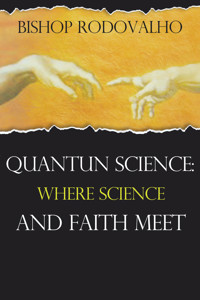
This book teaches how to think about science in a unified fashion and its connection with spirituality. Bishop Robson Rodovalho shows how faith and the intangible intermingle and complement each other to become one thing in the end. "Based on the poetic premise: Nature makes no miracles, it makes revelations of Carlos Drummond de Andrade, and Rodovalho 'reveals in this book that besides the chemical connection with the Earth and with the atomic universe, we have a connection with God, the complete ... the supernatural.
Sie lesen das E-Book in den Legimi-Apps auf:
Seitenzahl: 316
Veröffentlichungsjahr: 2020
Das E-Book (TTS) können Sie hören im Abo „Legimi Premium” in Legimi-Apps auf:
Ähnliche


















© 2013 by Robson Lemos Rodovalho
Director: Ana Lia Clerot
Editorial Coordination: Fernanda Araújo
Text preparation: Beatriz Sarlo
Layout design: Washington Macêdo
Cover Designer: Gilvando Maciel
Translation into English: Daniel Martins Alves
Address: QMSW 04 Lote 07/08 Sudoeste
CIP-BRASIL. CATALOGING-IN-PUBLICATION NATIONAL UNION OF BOOK PUBLISHERS , RJ
Rodovalho, Bishop
Quantum Physics: where science and faith meet/ Bishop Rodovalho – Rio de Janeiro: Sara Brasil Editora, 2013.
ISBN 978-85-64536-89-0
1. Religion 2. Faith 3. Spirituality 4. Quantum physics I. Title.
13-0365.
CDD: 215
Indexes for systematic cataloging
1. Religion and science
2013
CONTENTS
Foreword I
Foreword II
Foreword III
Introduction – Quantum physics and god
Acknowledgment
PART I
Chapter I – The evolution of science
Chapter II – The arrogance and hubris of the church
The Church in the last century
Chapter III – Spirituality and quantum physics
The evolution of quantum physics
Quantum Physics contributions to a view of the spiritual world
Scientific postulates and spiritual parallels
Postulates of Quantum Physics
The Higgs Boson
I. Quantum Physics Principles
1. Uncertainty principle
2. “Wave-Particle” duality property
3. Induced choice property
4. Entanglement property or quantum property of non-locality of distant elements
5. Superposition Property
6. Principle of delayed choice or double-slit
PART II
Chapter IV – Worldviews by scientists
1. Francis Collins
2. Stephen Hawking
3. Michio Kaku
4. Danah Zohar
5. Amit Goswami
6. Gregg Braden
7. Masaru Emoto
8. Herb Gruning
9. David Bohm
10. Paul Davies
11. Lawrence Krauss
12. Antônio Delson C. de Jesus
13. Frank J. Tipler
Chapter V – And what About Creationism?
Types of creationism
Unanswered questions
Gaps
The problem of origins
The question of morphology
The Fossils issue
The dating issue
The law of entropy
Gerald L. Schroeder
Nephilim
Chapter VI – Conclusions
First Conclusion
Second Conclusion
Third Conclusion
Fourth Conclusion
Fifth Conclusion
Sixth Conclusion
Seventh Conclusion
Eighth Conclusion
Ninth Conclusion
Tenth Conclusion
Profiles of scientists
1. Francis Collins
2. Stephen Hawking
3. Michio Kaku
4. Danah Zohar
5. Amit Goswami
6. Gregg Braden
7. Masaru Emoto
8. Herb Gruning
9. David Bohm
10. Paul Davies
11. Lawrence Krauss
References
FOREWORD I
The first commitment of living beings is to the preservation of the species. It is like water: no matter how many hurdles are created, it finds a way out and proceeds on its way. The human being is no exception to this rule, and what is more: it is not only committed to the preservation but also to the evolution of its species. Moreover, this process inevitably relies on education, the chain link binding together the knowledge of generations. This chain will only be strong if the evolution (improvement) of the proposals for understanding the inner workings of the Universe follows its natural course. Blessed are those who place this duty to the human species above their vanities, even when facing the risk of having their personal hard-won prestige shaken. Blissful are those fearless warriors who understand their smallness in face of nature, since it is itself the greatest of miracles.
None of the proposals of physics (be it classical, quantum or relativistic) have provided the final answer, “the single equation of the universe.” However, in all of them there is a “sparkle” or part of the absolute truth. Moreover, these small fragments can be used to explain what has been believed possible to occur as a result of faith. And thus
begins the solution to the controversy: “Despise faith, as it is not based on any rational argument;” “Despise spirituality, as it cannot be detected,” “Despise science because it fails to explain an experienced phenomenon.” Take the case of the walls of Jericho as an example: it was not the trumpets, but rather the wave resonance phenomenon, sound wave in this instance, which put down the walls.
I believe there is a mistake in thinking that a phenomenon can occur outside of the laws of nature, as a momentary exception. Nature is itself the greatest of miracles, its rules are inevitably followed, without exception, such is its perfection. What happens is we do not know all the laws. On the other hand, it makes sense to believe that if we do not detect something, it does not exist. Be reminded that what we believed to be the absolute truth has proven limited to specific conditions. We can mention several of these: classical physics is limited to inertial (non-accelerated) observers, low speeds, and big dimensions; quantum physics is operationally limited to small dimensions and an electron and a proton; and relativity, where we have the restricted and the general one, to name the fundamental pillars of physics alone. In my view, it is arrogance we have to leave behind – I am the sole and privileged spokesperson and have a mandate from God or I do not believe in God, for I am a being superior to all, omniscient, omnipotent, omnipresent, i.e. I am God Himself. It is not by believing in God, faith and spirituality that we will become Newton, Kepler, Galileo and Einstein. It is not in discrediting God that we will become a Karl Marx (concerned with the tragedies and the right to equality of human beings due to the accumulation of wealth by a few); or an Oscar Niemeyer, who believed that “life is but a breath” and that we should not waste it on petty attitudes, so that even in disbelief he had the humility to build the most beautiful temple of worship to God. “Strange are the paths that lead us to the Lord.”
I apologize if the ingrained habit of teaching led me to try to make more explainable what we can summarize with the quotes:
“There are more things between heaven and earth than are dreamt of in your vain philosophy.”Hamlet, by William Shakespeare.
“I maintain that the cosmic religious feeling is the strongest and noblest motive to scientific research.”Albert Einstein.
“Miracles do not happen in contradiction to nature, but only in contradiction to what is known to us of nature.”St. Augustine.
A work such as the proposed by Professor Bishop Robson Rodovalho is worthy of all praise, because, above anything else, he carries the fundamental mission of instigating reflection, an indispensable element in the search for truth, since questions are the Aristotelian dynamo of answers.
I appreciate the opportunity of – in forewording this work – being able to convey the conclusions that life graciously allowed me to achieve and thus contribute to instigate the journey towards the Divine View of the Universe, which will quench our hunger and thirst for understanding, with no fog, the miracle called nature. I believe that when this does occur, the understanding will be sealed, it will become clear that faith is nothing more than the guide, the essential instinct to any hunter, even when the game is science and knowledge, the source of the explanations that we have for so long dreamed of.
May the strength, energy, and especially peace be with you.
Clodoaldo Rodrigues Master in Relativity, Ph.D. in Solid State Physics (interaction between electromagnetic radiation and nanostructures), Universidade de Brasilia-UnB
FOREWORD II
The book Science and Faith: Where Science and Religion Meet is an essentially new work in Brazilian literature because it presents a distinct discussion on the understanding of the Universe, starting from a convergence of scientific truths and based on postulates, experiments of quantum mechanics and their consequences in relation to spirituality.
Humanity arrives at the doorstep of this century having achieved a considerable scientific and technological progress and with the hopes that it can live peacefully and carelessly with respect to questions of the human spirit. However, history has shown that this is not entirely true, as in matters of spirituality intense conflicts remain within man for which classical Western science cannot provide a satisfactory answer.
It can be said that the prestige of science is incontrovertible; nevertheless, there still exists the need for a more complete and deep reflection on the human being as a being that orbits around the worlds of phenomenology, not only natural, but also supernatural. In this environment, faith arises, involving the whole human being, as it is an existential certainty, in virtue of not only reason and feelings, but also proven by the testimony of life. Faith and spirituality, as well as scientific truths, are key elements required for a more accurate reflection on human existence, the universe and their purposes.
In this work, the author, as a visionary, masterfully and with persuasive arguments, finds the path of “riding along” between faith and science in an innovative proposal. Throughout the text is presented the evolution of science in parallel with the loss of its mechanistic paradigm, in the search to understand challenging phenomena governed by modern physics.
A responsible and honest critique of the role of the Church over the course of history is made with respect to the sins committed by it against the teachings of Jesus Christ and against the development of science for centuries. Spirituality is viewed as derived from certain postulates and experiments of modern physics, particularly quantum mechanics, whose results point out to a demystification of classic scientific materialism.
This work presents several contributions from renowned scientists by discussing their experiments, results and interpretations in favor of a spiritual (holistic) view of the Universe. Many intriguing interpretations are discussed, leading to questionings about the virtuality of reality, for instance, and about the need for an intelligent and conscious observer as a condition of existence to reality. Important inferences also arise about spirituality and what defines it.
Quantum physics: where science and faith meet shows the interpretations of major scientific schools on the properties of quantum mechanics and their consequences to the more complete extrasensory reality that incorporates spirituality and the Universe.
In the end, it is concluded that the transcendental thought is an intrinsic part of life and the nature of man and the Universe. In addition to that, so that there is a more precise understanding of the reality of the Universe, it is necessary to include faith and spirituality as essential components. Thence the lack of a theory capable of explaining the complexity of the Universe due to the classic frontiers of scientific and theological uncertainties.
Thus, the author of this book gives a genuine contribution to the discussion on spirituality and faith, starting from a scientific interpretation on the parallel spiritual world, with which man can interact and thus better understand the purpose of its existence and of the universe. As a physicist and a Christian, Robson Rodovalho finds harmony and convergence between the languages of faith and science, with an aim to awaken the full capacity of perception of the existence of man.
It is an honor for me to foreword this work, which I believe is the first of a series of an important sequel on this subject to bring significant changes in the way of seeing life through the eyes of science and faith. Possibly, you may not be the same person after reading this book. I hope that it will be so.
Bishop Robson Rodovalho argues that true science can go hand in hand with genuine faith and spirituality. And so do I.
Dr. Antônio Delson C. de Jesus State University of Feira de Santana – UEFS
FOREWORD III
In our youth we learned that it is good and praiseworthy to believe in God. As our years go on and we learn more about our magnificent and beautiful universe, we must go beyond belief in God and reach the level of knowing that there is God active in our lives.
There are many paths to knowing God. A miracle might occur in a person’s life and produce a burst of belief. But as the Bible so often testifies, miracles rarely have a long lasting effect for belief in God. On Mount Carmel, Elijah prayed and God brought down fire from the heavens to consume his sacrifices. In doing so Elijah defeated the pagan Baal priests. The people saw this miracle and shout The Lord is God; the Lord is God. It was 100 percent belief in God and in the power of God. The people then vanquish and even kill the Baal priests. The evil pagan queen of Israel at that time, Jezebel, learns that her Baal priests have been killed and sends a message to Elijah: At this time tomorrow you to will be vanquished or killed. Why tomorrow? Why not do it today? Jezebel knows human nature. She realizes that by tomorrow the miracle of today will be seen or rationalized as some natural event. It wasn’t God. It was just chance summer lightning that just happened at that time and people will return to worshipping Baal. Elijah also knows human nature and realizes Jezebel is correct and runs for his life.
The Biblical message here is that belief in God based on emotional experiences, even though originally they may have seemed miraculous, when confronted by skeptical arguments, that belief often fails. In his extraordinary book, Quantum Science: where Science and Faith meet, Bishop Rodovalho urges us to go beyond belief in God and to reach the level of knowing there is God.
Almost 900 years ago, the greatest of the Hebrew theologian philosophers Moses Maimonides wrote that is not enough to believe in God. You must know there is God and the surest way of discovering God (in Hebrew Ma’adah Elo’koot) is by the study of nature (in Hebrew ma’a’dah teva). In Quantum Science: where Science and Faith meet, Bishop Rodovalho gives us the tools to reach that level of knowing God. Those tools are the tools of science that let us discover the hand of God active in nature.
With the scientific knowledge of almost a millennium ago, Maimonides insisted that we can see God’s actions in nature. How much more so in our time with today’s knowledge. The extraordinary discoveries of modern science make God’s work blazingly clear. We see this in the scientific study the vast cosmos. As stated Psalm 19: “The heavens proclaim the glory of God; the sky declares His handiwork.” We see this also in the quantum physics of the minute sub-atomic world. As noble prize winner quantum biologist George Wald wrote: mind is the matrix upon which the entire universe rests. This is essentially that which John wrote: In the beginning was the logos, that is the logic, the mind. The foundation for that statement by John was written approximately 1000 years earlier when King Solomon wrote in Proverbs (Proverbs 8:12, 22): “God made me – wisdom- as the beginning of His way; the first of His works of old.”
Faith based on knowledge not only withstands the arguments of skeptics. Faith based on knowledge defeats those argument which skeptics bring. The knowledge we seek is in the details. As Nobel Laureate Werner Heisenberg, the first scientist to be awarded the Noble Prize for work in quantum physics wrote: “The first swallow from the cup of the natural sciences makes atheists, but at the bottom of a cup [that is in the details] God is waiting.”
Thank you Bishop Rodovalho for bringing knowledge of those wonders of nature and the workings of those wonders of nature to so many persons.
Gerald Schroeder
The theme of science and faith has always been historically a theme for debate and controversy. However, Robson Rodovalho brought a great solution to this debate by using a perfect combination, his experience as a scientist and physicist and his faith and spiritual experiences. This is a must read for everyone.
Pepe Ramnath, PhD
Dove Environmental Labs, Miami, Florida
Quantum physics: where science and faith meet is a visionary work of divine revelation by the Professor and Bishop Robson Rodovalho. By reading it, we can understand with clarity the fine line that exists between science, faith and spirituality. What we have been hearing in various religions across the world has been scientifically proven, and for more than 2000 years has been clearly explained by the Word of our God. Quantum physics reveals a world quite different from what we see in our day-to-day, a world that does not rely on our common sense, but which paradoxically finds deep resonance in our spirituality.
Pedro Pinto Vasco Entrepreneur and consultant, researcher and professor of Biochemistry and Food Chemistry at the University of Aveiro (Portugal).
INTRODUCTION
Quantum Physics and God
I would like to propose an exercise in imagination. Think of a place where life is unlike anything you can possibly know. A place like in the story of Alice in Wonderland. Can you imagine such a place, in which a person could be in “two places” at the same time? Where would you travel to? Before reaching your destination, you would have the possibility of choosing another path, leaving from the same starting point you were? In this “place” you could go back in time and amend wrong decisions that you may have made.
Wouldn’t that be amazing?
Can you imagine a place where all plants and living beings are programmed to become a perfect adult matrix, letting you know where it is headed for and what potential it will achieve?
In our Universe, the growth of living beings occurs through determined genetic potential. We know from reference who our forebears are and therefore how far we can go by projecting ourselves on them. However, as living beings are normally the result of genetic crossings, even if the parent is shorter, the child may achieve a taller stature in consequence of the matrilineal descent. Whereas in this imaginary “wonderland”, the reality is different: the genetic field is projected in front of you, letting you know how far you can grow and what is the maximum potential you can achieve. This characteristic, of course, facilitates the development and even the correction of possible imperfections that we could bear.
Can you imagine a country without negative news, without the poison of gossip and jealousy? Can you even imagine a world where people are not exposed to the bad news that lead to depression and destruction? This is because they are aware that this negative energy is harmful not only to “the other”, but also to themselves - and eventually to the Universe as a whole. One must be aware that all emotions produce consequences, for better or worse. And this is why sounds, images and news have to be filtered. Experiments with human DNA have shown that, even when tens of miles away from their donor, people react and change just as their donor would when exposed to similar emotions.
Think as well of a world without this negative energy, without this emotional pollution. A place where nature responds intrinsically and directly to the words, acts and actions of living beings; consequently, a place where this nature acts, reacts and interacts with the living being as an extension of itself.
You may be wondering by now that we are talking about fiction – or that the idealization of this place refers to the lost Garden of Eden. The greatest discovery you will make in the following pages of this book is that this “place” is closer than you think: it is the unperceivable universe around us, silently.
A universe that interacts with us in a peaceful and patient way, waiting for humanity to realize its existence and true scale. This “place” is nothing more, nothing less than the world invisible to our eyes, the emptiness that surrounds us or the world of apparent “nothing.” The world that hosts us, in which we inhabit and from which we obtain our energy and strength.
In the following pages, you will watch the unfolding of all the arguments that have been mentioned here; and you will be able to confirm that they are all true.
We live in a world divided into at least three realities: the world wherein we coexist, which is the dimension of life and human existence; the macrocosmic world, which is the world of galaxies, planets and large dimensions; and also the microscopic, atomic and subatomic world, of small and infinitesimal dimensions that combined contribute to the formation of the other worlds mentioned.
Reality is not just what we see, grope, feel or in which we live. It is much bigger, more complex and mysterious than we can imagine or perceive with our sight or through devices.
In the search for answers about the origin of life and the date of its creation, quantum physics recently managed to penetrate this world of microcosm and macrocosm, through experiments and advanced equipment. Science seeks to know why we are here and where we are headed for and that incessant search has guided most of the scientific studies and therefore their findings. This quest is the central point from which resulted many theories, which eventually contributed to the highest level of quality of life in human history.
Dear reader, you will be able to have a glimpse of a world that may have never been imagined to exist.
People who believe in “faith and spirituality” will perceive that the study presented here is a complement and an acknowledgment of the reality in which they believe and have lived with for long – but which so far has been solely based on spiritual subjectivism and hypotheses rather than scientific knowledge. For those who are “of science” and who are coming to these conclusions only now, these discoveries have brought new insight and even a “heavy blow” to their scientific and materialistic “certainties”. This is so because science has been faced with the possible existence of a kind of reality it was not prepared to handle and that greatly extrapolates the materialistic determinism that has thus far taken roots in our civilization.
As you read each chapter and each of the essays and experiments that follow, you will plunge into an unimaginable world. You will find out as well that life, with all its beauty and complexity, goes beyond ordinary man’s common sense imagination. And you will realize that much of what we used to think of as fiction is arguably just the tip of a large iceberg – of hitherto unseen and unperceivable realities, though real and active, which silently assist us and accompany us.
You will unveil the whole journey and trajectory of faith and spirituality and science and how they have developed in recent decades.
Dear reader, our desire is that you have a glimpse of a world much larger, more mysterious and wonderful than you could have imagined up until now. Note that in silence and stillness the universe accompanies and watches us over. Discover that it is alive and active and has the intrinsic ability of relating to and reacting with the nature that nestles in its bosom.
To me as a Christian, who tread in the world of faith and who had the privilege of studying physics, it is amazing to realize the magnitude of these two worlds. The world of science, based on experiments and scientific assertions, and the world of faith and spirituality, based on an entirely ancient wisdom and undeniable contribution to humanity.
In this book, you will have the chance to realize that the two proposals converge, align, add up and do not compete or annul one another.
The aim of this book is to show that true and real science can go hand in hand with true faith and spirituality. They do not conflict except in the arrogance of their most exalted defenders.
I believe that in the search for answers to the big questions of our existence, we must open ourselves to new knowledge and research, for humbleness precedes wisdom, and wisdom precedes knowledge. There is no knowledge without research, and no research without curiosity. Humbleness is the mother of curiosity. It is the ability to consider that the knowledge and understanding currently in stock is important but not enough to add new chapters to our history and humanity. Thanks to ongoing research, we have come thus far. Our desire is that we are able to move forward as there is much to be discovered and there is much yet to be achieved.
I have been thinking of this book for a long time, because I saw the need for an organized and systematic compendium where we could reflect on science and its evolution. This trajectory comprises from before Plato and the early philosophers who worked on the atomic theory (such as Leucippus and Democritus) to more recent physicists, who unfolded the theories of quantum physics and cosmology in the search for a theory that could explain the mystery of life and the universe.
My wish is that you, my friend, can penetrate this wonderful world of recent discoveries of quantum physics and see that it is not misaligned from the proposition of faith and spirituality. On the contrary, they add up and explain one another. In a few moments, they will be speaking the same truth, only in different languages. May we have the ability to discern such languages, to hear such claims, interpret them and understand them.
This book contains quotes from various scientists about God, faith, spirituality, mysticism, and even the interpretation of biblical texts and other religious themes – quotes that do not necessarily reflect the opinion of the author. As this is primarily a scientific book, all approaches shall be seen as scientific, theological or biblical positions from their respective authors. All the more so because, as a Christian theologian, my theological position is well distanced from almost all experts quoted here.
The positions of scientists such as Amit Goswami – Hindu physicist who was a tenured professor of theoretical physics for over three decades at the University of Oregon and even believed in reincarnation. Or the positions of Danah Zohar and others, without any religious position, who gave relevant contributions to the spiritualization of science. However, when quoting or approaching them, we need to have the scientific obligation of separating their religious positions from the scientific postulates they defend – just as we used to do when faced with competent professors and scientists whose religious positions differed from ours in our academic years.
All names researched and included here somehow contributed to overcome the barrier of materialistic science in the search for the spiritualization of existence without prejudice. This is what is most important in this entire essay.
It is interesting how we are accustomed to hear only the voices of a material world, which is usually “outside of us.” It is a world of “things”, of deserts of meaning and purpose. However, we must also learn to listen to the voice of our hearts, and, best of all, harmonize it with our reason.
There is a fantastic exhortation in the book of Job, chapter 12, verses 7-9, which say: “Ask the beasts, and they shall teach thee; and the fowls of the air, and they shall tell thee: Or speak to the earth, and it shall teach thee: and the fishes of the sea shall declare unto thee.”
The above verses of the Holy Scripture reinforces what the Psalm 19:1 says: “The heavens declare the glory of God, and the sky proclaims the work of his hands.” In other words, nature does have much to teach us.
As I wrote in my book A Energia da Vida (Sara Brasil Edições, 2012), early in life I learned to listen to the sound of silence, in the months of solitude spent toiling with nature in my father’s farm. Every year, I spent my school vacations in a farm environment. There I learned to watch the Southern Cross, and the Three Marias, stars that spread across the sky. I realized from the buzzing of the cicadas that rains were being announced and were anticipated by the whole nature. And I also learned to follow the migration of thousands of birds that crossed the skies, fleeing from the onset of winter every year.
This all happened even before I had a supernatural experience that affected my life and brought me to a realization beyond materiality. In it, the majesty and magnificence of the universe achieved a grandeur in its voice and its ability to teach us solemnly.
After a period of conflict in my life, caused by family problems, such as my father’s distancing and drinking problems etc., I finally went to a spiritual retreat, where, after a ministration, sitting by the fire in the loneliness of night, something “supernatural” involved me.
For hours and hours, I was immersed in that environment, where I heard a voice from another world, and I knew it was the voice of Jesus Christ, and this led me to the absolute certainty that there is a world beyond the material life that surrounds us.
Years later, I discovered, in the words of Paul Davies, professor of Natural Philosophy in the Australian Centre for Astrobiology at the University of Macquirie in Sydney, doctor from the University of London and author of the book The mind of God (Simon & Schuster UK, 1992), that “almost all scientists nurture a respect on the verge of reverence for the mystery of this amazing Universe” - starting with the manifest world of nature next to us, surrounding us like a blanket of energy and photons trespassing us incessantly.
In fact, this life is so stressful and so immersed in every day’s problems that it ends up dragging us like a torrent, and we try to survive. However, this life is more fleeting and subtle than it seems.
In the struggle for survival, we establish some certainties – such as, for instance, “every day the sun will rise”, “the sky is always blue on clear days”, “the sun will always be available to emit its rays and heat.” However, such absolute assumptions may not hold all that omnipotence imagined by us; when examined from the scientific standpoint, all these undeniable realities do not prove to be all that real.
The blue sky, for example, is just a perception of sunlight refraction in our eyes. The diffusion of light is due to the particles forming the air. Each color forming the sunlight will spread according to its wavelength. Blue has a shorter length and this causes it to be more visible. In the late afternoon, sunlight falls obliquely and forces the rays to take a longer path. This fact selects the red light, which has a longer length, and causes the blue to completely disappear – the blue light undergoes a diffusion 9.38 times larger than the red one. Our eyes perceive the result of it through refraction.
The Sun does not rise: it is our planet that actually revolves around its axis and thus allows life to develop here, “hitchhiking” on this energy released by the Sun.
It is fascinating to be able to live and exist. It is the greatest and most beautiful of all human experiences. To simply exist!
We can have a glimpse of this whole dimension, so omnipotent and yet so elusive – in the same way as this reality designed for us, human and intelligent beings, although so fragile and dependent on biological reactions, such as oxygen to breathe, water to drink and food to be nourished. It is curious how small, animalistic and dependent on these biologically accurate circuits we are, and at the same time we can “travel” in our minds and intelligence, beyond any limit and surpass the barriers of both the microcosm of subatomic particles and the macrocosmic world of planets and galaxies.
We build our lives through this reality of an “eternal present”, which superimposes yesterday and tomorrow.
The sliding of our days, running like the waters of a stream, is but a flimsy mantle. A slight breeze that blends into our memory.
Unravelling this reality, understanding it and harmonizing ourselves in its bosom is one of the biggest challenges that we have in this life’s journey.
And this book is an attempt to penetrate this subtle and elusive world of subjectivity.
It is a proposal of glimpsing beyond the veil of materiality that surrounds us every day and at every moment. It is an effort so that we can take this imaginary trip, beyond our physical and palpable limits, treading into the world of spirituality.
It is an invitation for the reader to travel in history and to be able to learn ideas, thoughts, concepts and evolution of both the history of science and the Church and religiosity.
I hope that, without any prejudice, may we envision both this wonderful and invisible world and its lessons for our lives and our existence in this visible place.
Have a good reading!
Robson Rodovalho
ACKNOWLEDGMENTS
I wish to express my thanks to my wife for bearing with me and staying by my side for hours and hours as I wrote this book.
My thanks also go to the professors Delson of Jesus and Paulo Afonso for collaborating by reading the text and contributing with their scientific assessments.
Finally, I would like to thank all the friends and collaborators who joined forces to spread this view that science and faith can walk hand in hand.
PART I
CHAPTER I
The Evolution of Science
By analyzing the past, we see that both science and faith and spirituality have had their great moments in history. They have gone through periods where their postulates ruled the minds of an entire generation, condemning those who were not aligned with their thoughts to contempt, ostracism and even persecution.
Science has evolved systematically since the atomic model of Leucippus and Democritus, who admitted atoms moving in the void. This idea had a bright future, because today we know through quantum field theory that the “void” is the most important thing as it is the essential state of the field that gives rise to particles when excited.
Professor Mario Schenberg (1914-1994), a physicist, former professor of USP (University of Sao Paulo) and author of Pensando Física (Ediouro, 2001) explains that this concept was not well accepted among Greek philosophers: “The model of Leucippus and Democritus was an idea extremely contrary to Greek thinking, which was not favorable to the void.” For him, this concept of emptiness was closer to Indian thought than that of Greece. For the Hindu thinking, the void corresponded to God, because it was in the void that things moved. The atomic theory of Leucippus and Democritus became essential to the development of physics in the XVII century and eventually influenced Isaac Newton.
Newton was also influenced by Empedocles, other important Greek philosopher in his time. He formulated new ideas, such as the theory of the four elements: earth, water, air and fire. Between these elements, there were two forms of interaction, which he called “love and hate”. This idea of interaction between love and hate originated in Egypt and became very important in the history of science. According to some historians, Newton started from this model and interpreted “Love as an attractive force” and “hatred as a repelling force.” Consequently, this concept of love and hatred led Newton to think of the forces of “attraction” and “repulsion”. The attractive force would not necessarily be gravitation; there could be other attractive forces. However, Newton realized that he would not be able to make a theory of gases, for example, allowing only attractive forces between gases’ atoms; there should also be a repelling force. Today we know that the electrical forces are of a repelling and attractive nature.
Newton also drew from the so-called Emerald Tablet, a very ancient text of Hermetic philosophy, attributed to Hermes Trismegistus. Newton, who was a physicist, mathematician, alchemist, astronomer, theologian, and perhaps a mage – in addition to being a member of the Rosy Cross and the “Illuminati” – was influenced by hermetic intuitions as much as today’s physics still is.
The Copernican model was also an idea of great importance in his studies. In it, the heliocentric model – planets orbiting around the Sun – demanded a review of the laws governing the fall of bodies, a fact that led Newton to formulate the law of universal gravitation, a model that had already been exposed by Aristarchus of Samos, a famous Greek philosopher connected to the School of Pythagoras. The Pythagorean philosophers believed that the Sun should be in the center because it was the most important star, and it can never be in a peripheral position, rotating around the Earth. In his view, it is the Earth and the other planets that should revolve around the sun.
Plato in his time already admitted that an essential element could be transformed into others. These elements were connected, according to him or the Pythagorean School, to regular and convex polyhedrons. The existence of five regular and convex polyhedrons was known to Theaetetus. One of such polyhedrons appeared to be in a unique position, the dodecahedron. It has pentagonal faces while others have triangular faces, and the cube has square faces. According to some historians, the tetrahedron, cube, and dodecahedron were previously known to Theaetetus – who would discover the octahedron and icosahedron, i.e. two of the five elements.
More recently, Heisenberg and Ivanenkon showed through Heisenberg’s uncertainty principle what had already been introduced by the dialogues of Plato. It is interesting to note that both Heisenberg and Ivanenkon made this same observation simultaneously and independently, that there was a basic indeterminacy in the fundamentals of nature, such as Plato had envisaged.




