


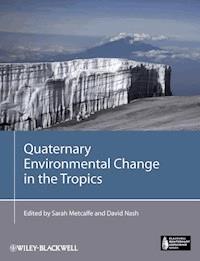
Quaternary Environmental Change in the Tropics E-Book
73,99 €
Mehr erfahren.
- Herausgeber: John Wiley & Sons
- Kategorie: Wissenschaft und neue Technologien
- Serie: Blackwell Quaternary Geoscience Series
- Sprache: Englisch
The global climate changes that led to the expansion and contraction of high latitude ice sheets during the Quaternary period were associated with equally dramatic changes in tropical environments. These included shifts in vegetation zones, changes in the hydrology and ecology of lakes and rivers, and fluctuations in the size of mountain glaciers and sandy deserts. Until recently it was thought that such changes were triggered by fluctuations in the distribution of polar ice cover. Now there is increasing recognition that the tropics themselves have acted as drivers of global climate change over a range of timescales.
The aim of Quaternary Environmental Change in the Tropics is to provide a synthesis of the changes that occurred in tropical terrestrial and marine systems during the Pleistocene and Holocene, complementing data-derived reconstructions with output from state-of-the-art climate models. It is targeted at final-year undergraduate students and research specialists, but will provide an introduction to tropical Quaternary research for a variety of other readers.Sie lesen das E-Book in den Legimi-Apps auf:
Seitenzahl: 1096
Veröffentlichungsjahr: 2012
Ähnliche




















Table of Contents
Cover
Title page
Copyright page
List of contributors
Preface
Acknowledgements
I: Global contexts
CHAPTER 1 Introduction
1.1 Why the tropics matter
1.2 Development of ideas
1.3 Establishment of the tropical climate system
1.4 Drivers of tropical environmental change
1.5 The tropics as drivers of change
1.6 Extra-tropical forcing
1.7 Organisation of the volume
Acknowledgements
CHAPTER 2 Contemporary climate and circulation of the tropics
2.1 Introduction
2.2 Diurnal and local processes
2.3 Planetary context
2.4 Regional circulation systems
2.5 Climatic variability
2.6 Concluding remarks
II: Regional environmental change
CHAPTER 3 Tropical oceans
3.1 Tropical oceans in the global climate system
3.2 Reconstructing past ocean conditions
3.3 Tropical oceans throughout the Quaternary
3.4 The past 20 000 years
3.5 Outlook
CHAPTER 4 Africa
4.1 Introduction
4.2 Potential climate forcing factors
4.3 Mediterranean North Africa
4.4 The Sahara and the Sahel
4.5 Equatorial Africa
4.6 Southern Africa
4.7 Synthesis
4.8 Directions for future research
CHAPTER 5 India, Arabia and adjacent regions
5.1 Introduction
5.2 Quaternary of India and Tibet
5.3 Quaternary of the Arabian Sea and Bay of Bengal
5.4 Quaternary of Arabia and the Middle East
5.5 Conclusions
Acknowledgements
CHAPTER 6 China and Southeast Asia
6.1 The South and Southeast Asian region as a component of the Earth system
6.2 Setting the stage for the Quaternary: environmental context and controls
6.3 Regional syntheses
6.4 The Asian tropics during the Quaternary: driver of planetary change?
CHAPTER 7 Australia and the southwest Pacific
7.1 Introduction
7.2 Northeastern Australia
7.3 Northern Australia
7.4 Northwestern Australia
7.5 Western Australia
7.6 Central Australia
7.7 Southwest Pacific Islands
7.8 General discussion and conclusions
Acknowledgements
CHAPTER 8 Latin America and the Caribbean
8.1 Introduction
8.2 Precursor to the Quaternary
8.3 Climate mechanisms
8.4 Long term climate forcings and cycles
8.5 Records of climate change
8.6 Other climate forcings
8.7 El Niño records
8.8 Climate and societies
8.9 Conclusions
Acknowledgements
III: Global syntheses
CHAPTER 9 Modelling of tropical environments during the Quaternary
9.1 Introduction
9.2 Tropical climate in the Holocene: response to orbital forcing
9.3 Tropical climate at the LGM: the roles of GHGs and ice sheet forcing
9.4 Tropical climate variability
9.5 Summary and further discussion
CHAPTER 10 Historical environmental change in the tropics
10.1 Introduction
10.2 Climate change and society in the tropics in the last 1000 years
10.3 Exploring anthropogenic impacts in the tropics
10.4 Recent and future environmental changes in the ‘vulnerable’ tropics
CHAPTER 11 Past environmental changes, future environmental challenges
11.1 Patterns of tropical environmental change
11.2 Forcings
11.3 Future change in the tropics
11.4 The tropics as drivers of change
11.5 Conclusions
Index
This edition first published 2012 © 2012 by John Wiley & Sons, Ltd
Blackwell Publishing was acquired by John Wiley & Sons in February 2007. Blackwell’s publishing program has been merged with Wiley’s global Scientific, Technical and Medical business to form Wiley-Blackwell.
Registered office: John Wiley & Sons, Ltd, The Atrium, Southern Gate, Chichester, West Sussex, PO19 8SQ, UK
Editorial offices: 9600 Garsington Road, Oxford, OX4 2DQ, UK
The Atrium, Southern Gate, Chichester, West Sussex, PO19 8SQ, UK
111 River Street, Hoboken, NJ 07030-5774, USA
For details of our global editorial offices, for customer services and for information about how to apply for permission to reuse the copyright material in this book please see our website at www.wiley.com/wiley-blackwell.
The right of the author to be identified as the author of this work has been asserted in accordance with the UK Copyright, Designs and Patents Act 1988.
All rights reserved. No part of this publication may be reproduced, stored in a retrieval system, or transmitted, in any form or by any means, electronic, mechanical, photocopying, recording or otherwise, except as permitted by the UK Copyright, Designs and Patents Act 1988, without the prior permission of the publisher.
Designations used by companies to distinguish their products are often claimed as trademarks. All brand names and product names used in this book are trade names, service marks, trademarks or registered trademarks of their respective owners. The publisher is not associated with any product or vendor mentioned in this book. This publication is designed to provide accurate and authoritative information in regard to the subject matter covered. It is sold on the understanding that the publisher is not engaged in rendering professional services. If professional advice or other expert assistance is required, the services of a competent professional should be sought.
Library of Congress Cataloging-in-Publication Data
Quaternary environmental change in the tropics / edited by Sarah E. Metcalfe and David J. Nash.
p. cm.
Includes bibliographical references and index.
ISBN 978-1-118-34325-8 (cloth)
1. Paleoclimatology–Tropics. 2. Paleoclimatology–Quaternary. 3. Tropics–Climate. I. Metcalfe, S. E. (Sarah E.) II. Nash, David J.
QC884.5.T73Q38 2012
551.6913–dc23
2012010714
A catalogue record for this book is available from the British Library.
Wiley also publishes its books in a variety of electronic formats. Some content that appears in print may not be available in electronic books.
Cover image: View of the rapidly retreating tropical glacier on Uhuru Peak, Mount Kilimanjaro, Tanzania. In the background Mount Montemero, near Arusha. © iStockphoto.com/Avatar.
Cover design: www.designdeluxe.com
List of Contributors
Nilesh BhattDepartment of Geology, M.S. University of Baroda, Vadodara 390 002, India. Email: [email protected].
Pascale BraconnotIPSL/LSCE, Laboratoire Mixte CEA-CNRS-UVSQ, Orme des Merisiers bat 712, 91191 Gif-sur-Yvette CEDEX, France. Email: [email protected].
Mark B. BushBiological Sciences Department, Florida Institute of Technology, 150 W. University Blvd, Melbourne, Florida FL 32901, USA. Email: [email protected].
Georgina H. EndfieldSchool of Geography, University of Nottingham, Nottingham NG7 2RD, United Kingdom. Email: [email protected].
Ken W. GlennieSchool of Geosciences, University of Aberdeen, Aberdeen AB24 3UE, United Kingdom. Email: [email protected].
Stefan HastenrathDepartment of Atmospheric and Oceanic Sciences, University of Wisconsin-Madison, 1225 W. Dayton Street, Madison, Wisconsin WI 53706, USA. Email: [email protected].
Peter KershawCentre for Palynology and Palaeoecology, School of Geography and Environmental Science, Monash University, Melbourne, Victoria 3800, Australia. Email: [email protected].
Zhengyu LiuCenter for Climatic Research and Department of Atmospheric and Oceanic Sciences, University of Wisconsin-Madison, 1225 W. Dayton Street, Madison, Wisconsin WI 53706, USA. Email: [email protected].
Robert B. MarksDepartment of History, Whittier College, 13406 E. Philadelphia Street, Whittier, CA 90608, USA. Email: [email protected].
Michael E. MeadowsDepartment of Environmental and Geographical Science, University of Cape Town, Private Bag X01, Rondebosch 7701, South Africa. Email: [email protected].
Ute MerkelMARUM, Center for Marine Environmental Sciences, University of Bremen, Bremen, Germany. Email: [email protected].
Sarah E. MetcalfeSchool of Geography, University of Nottingham, Nottingham NG7 2RD, United Kingdom. Email: [email protected].
David J. NashSchool of Environment and Technology, University of Brighton, Lewes Road, Brighton BN2 4GJ, United Kingdom.andSchool of Geography, Archaeology, Environmental Studies, University of the Witwatersrand, Private Bag 3, Johannesburg 2050, South Africa. Email: [email protected].
Dan PennySchool of Geosciences, University of Sydney, Sydney, NSW 2006, Australia. Email: [email protected].
Matthias PrangeMARUM, Center for Marine Environmental Sciences, University of Bremen, Bremen, Germany. Email: [email protected].
Ashok K. SinghviGeosciences Division, Physical Research Laboratory, Navarangpura, Ahmedabad 380 009, India. Email: [email protected].
Pradeep SrivastavaWadia Institute of Himalayan Geology, GMS Road, Dehradun 248 001, India. Email: [email protected].
Silke StephDepartment of Geosciences, University of Bremen, 28334 Bremen, Germany. Email: [email protected].
Jan-Berend W. StuutNIOZ Royal Netherlands Institute for Sea Research, Den Burg, the Netherlands.andMARUM, Center for Marine Environmental Sciences, University of Bremen, Bremen, Germany. Email: [email protected].
Sander van der KaarsSchool of Geography and Environmental Science, Monash University, Melbourne, Victoria 3800, Australia. Email: [email protected].
Preface
The global climate changes that led to the expansion and contraction of polar ice sheets over the past 2.58 million years were associated with equally dramatic changes in tropical and subtropical terrestrial and marine environments. Changes in global temperature, fluctuations in sea level and alterations of the position of the major oceanic and atmospheric circulation systems led to shifts in continental vegetation zones, changes in the hydrology and ecology of tropical lake and drainage systems, and the expansion and contraction of tropical mountain glaciers and sandy deserts. Until recently, it was thought that such changes were largely a response to fluctuations in the distribution of high latitude ice cover. However, there is increasing recognition that the tropics have acted as drivers of global climate change over a range of timescales. This is in part due to their importance in terms of solar radiation receipt and the resulting energetics of the global circulation, but also because of the role tropical oceans and ecosystems play in regulating greenhouse gases and the global hydrological cycle.
Despite the significance of the tropics for global climate change debates, there has not been a volume that attempts to synthesise understanding of how tropical environments as a whole have changed over the past 2.6 million years. The overall aim of Quaternary Environmental Change in the Tropics is to fill this gap and provide a readable synthesis of the large (and growing) literature on the climatic and broader environmental shifts that occurred in tropical terrestrial and marine systems during the Pleistocene and Holocene. It is mainly targeted at final-year undergraduates and research specialists, but will we hope provide an introduction to tropical Quaternary research for a variety of other readers. Inevitably, as with any edited volume, the authors have tackled their individual chapters in different ways, reflecting their own areas of specialism and the key research questions that need to be addressed in different tropical regions. However, we hope that this book can provide a basic framework for future regional and global assessments of tropical Quaternary environments.
The idea of producing this book originated purely by chance when we met at a business meeting at the Royal Geographical Society in London in 2006. We had both had many years of experience of working on the Quaternary of tropical and subtropical regions – SEM in the neotropics (especially Mexico) and DJN in various parts of southern Africa. We both taught specialist courses on tropical Quaternary environments in our respective institutions. We had both had separate conversations with commissioning editors bemoaning the lack of books specifically concerning the Quaternary of tropical regions, but had both resisted all suggestions that we should individually write such a book. However, over afternoon tea in Lowther Lodge, we (with hindsight, foolishly) agreed that it might not be so bad to put together an edited volume on the subject. Five years later, and with the considerable goodwill of all of the authors involved, you are reading the end product.
Sarah E. MetcalfeDavid J. Nash
Acknowledgements
In addition to the editors, who reviewed all the individual chapters, numerous external referees, selected for their expertise in specific aspects of tropical Quaternary environments, provided constructive and conscientious reviews of manuscripts. These included: Rodolfo Acuna-Soto, UNAM, Mexico; Philip Barker, Lancaster University, UK; Paul Bishop, University of Glasgow, UK; Sarah Davies, University of Aberystwyth, UK; Sherilyn Fritz, University of Nebraska, USA; Paul Hesse, Macquarie University, Australia; Dominic Kniveton, University of Sussex, UK; Glenn McGregor, University of Auckland, New Zealand; Sharon Nicholson, Florida State University, USA; Bette Otto-Bleisner, NCAR, USA; Adrian Parker, Oxford Brookes University, UK; Chris Turney, University of New South Wales, Australia; Frank Shillington, University of Cape Town, South Africa; David Thomas, University of Oxford, UK. We would also like to thank those anonymous reviewers who provided helpful comments on our original proposal – thank you whoever you were!
The majority of the photographs and line diagrams within this volume are the authors’ own. We are, however, indebted to a number of publishers for their permission to either reproduce or adapt figures used in this book. These are credited within the figure captions.
Finally, our thanks go to all the authors for persevering with us during the production of this volume, and to Ian Francis and Kelvin Matthews at Wiley-Blackwell Publishing for their encouragement, endless patience and assistance during the long, painful gestation period leading to the publication of Quaternary Environmental Change in the Tropics.
Sarah E. MetcalfeDavid J. Nash
IGlobal Contexts
CHAPTER 1
Introduction
Sarah E. Metcalfe and David J. Nash
1.1 Why the Tropics Matter
1.1.1 Defining the Tropics
In its strictest sense, the term ‘tropics’ refers to those parts of the world that lie between the Tropic of Cancer (23.4378 °N) and the Tropic of Capricorn (23.4378 °S). These latitudinal boundaries mark, respectively, the most northerly and southerly position at which the Sun may appear directly overhead at its zenith. Indeed, the word ‘tropical’ comes from the Greek tropikos, meaning ‘turn’, since the tropics of Cancer and Capricorn mark the latitudes at which the Sun appears to turn in its annual motion across the sky. Unfortunately, the outer boundary of the tropics sensu lato cannot be defined in such rigid astronomical terms. Certainly latitude is a major factor determining the distribution of tropical climatic zones, through its control on solar radiation receipt (Fig. 1.1), but regions with distinctive climatological, physical or biological characteristics are not easily delimited by linear boundaries.
Fig. 1.1 Solar radiation received at the Earth’s surface assuming an atmospheric transmission coefficient of 0.60
(after McGregor and Nieuwolt (1998) Tropical Climatology, John Wiley & Sons Ltd.).
The tropics include a diverse range of environments and climates (see Chapter 2). Rather than being uniformly hot and wet, the area between the tropics of Cancer and Capricorn encompasses some of the wettest regions on Earth (e.g. the rainforests of western Amazon and central Congo basins) as well as some of the driest (e.g. the Atacama Desert of northern Chile and Peru). The one feature common to all tropical climates is a relatively limited seasonal fluctuation in insolation and temperature. Instead, differences in the quantity and temporal distribution of available moisture account for regional and seasonal variability (Savage et al., 1982).
Authors such as Reading et al. (1995) have provided useful overviews of the various attempts to define the climates of the tropics. Some of the most widely used classifications are based directly upon meteorological parameters such as rainfall and temperature. The classic Köppen–Geiger system (Fig. 1.2), for example, centres on the concept that natural vegetation is the best expression of climate, with climate zone boundaries positioned with vegetation distribution in mind. The Köppen–Geiger scheme combines average annual and monthly temperatures and precipitation, and the seasonality of precipitation. Köppen (1936) defined tropical climates as those exhibiting a constant high temperature (at sea level and low elevations), with all 12 months of the year having average temperatures of 18 °C or higher. This classification excludes cooler highland regions (defined as areas above 900 m elevation), which comprise around 25% of the total land area within the tropics (Reading et al., 1995). These regions still receive high amounts of solar radiation and do not have a pronounced winter season, but temperatures may be sufficiently depressed to affect biological activity. Rainfall levels and the seasonal distribution of precipitation are then used to subdivide tropical climates into tropical rainforest (Af), tropical monsoon (Am), and tropical savanna climates (Aw). Köppen (1936) includes a range of other climate types within the tropics sensu stricto, including tropical and subtropical steppe (BSh), tropical desert (BWh) and humid subtropical climates (Cfa, Cwa). Some highland areas within the tropics also exhibit a temperate climate with dry winters (Cwb).
Fig. 1.2 The Köppen–Geiger climate classification system updated with CRU TS 2.1 temperature and VASClimO v1.1 precipitation data for 1951 to 2000
(after Kottek et al., 2006).
Working from an agricultural perspective, Jackson (1989) split the tropics into three zones (Humid, Wet and Dry, and Dry) according to the level and seasonal distribution of rainfall (Fig. 1.3). This classification recognises the importance of seasonality for agricultural productivity, and is less focused on natural vegetation zones than the Köppen–Geiger scheme. Other attempts to classify climates within the tropics are based around hydro-meteorology, with climate types defined according to the balance of precipitation inputs and evapotranspiration outputs. Garnier (1958), for example, differentiated humid tropical climates according to the number of months in which actual evapotranspiration equals potential evapotranspiration. The ratio of precipitation to potential evapotranspiration has also been used by Middleton et al. (1997), drawing upon Thornthwaite (1948) and Meigs (1953), to define an aridity index for categorising dry tropical climates.
Fig. 1.3 Classification of the tropics based on the seasonal distribution of rainfall
(after Jackson (1989) Climate, water and agriculture in the tropics, Longman; Reading et al. (1995) Humid tropical environments, John Wiley & Sons Ltd.)
In this volume, the astronomical definition of the tropics is used to broadly demarcate the geographical scope of each of the substantive chapters. However, recognising that climate boundaries are fuzzy and mobile in the present day and that climate zones shifted by many degrees of latitude during the various glacials and stadials that characterise the Quaternary Period, coverage in many chapters extends polewards north and south of 23.4378° into the subtropics where appropriate. The Quaternary Period is defined here as encompassing the last 2.58 million years of the Earth’s history (Gibbard et al., 2010), the timescale ratified by the Executive Committee of the International Union of Geological Sciences in June 2009.
1.1.2 Importance of the Tropics
In comparison with the mid latitude regions of Europe and North America, our understanding of Quaternary palaeoenvironments in the tropics is, at best, patchy for some areas and extremely poor to non-existent in others. As a result, any attempt to expand our understanding of past environmental conditions in low latitude regions is likely to be a valuable contribution to knowledge. However, more significantly, understanding tropical palaeoenvironments may also be key to establishing the drivers of environmental change. As discussed in section 1.5 of this chapter, the last 10–15 years have seen an increasing recognition of the significance of tropical regions in climate forcing (e.g. Kerr, 2001; Broecker, 2003). The tropical oceans and atmosphere play an important contemporary role in redistributing incoming solar radiation and would have been instrumental in transmitting past variations in radiation receipt to other parts of the Earth system. Tropical oceans and landmasses also act as sources and sinks of greenhouse gases, with, for example, tropical forests acting as contemporary CO sinks (Cox et al., 2000) and tropical oceans (IPCC, 2007) and major river and wetland systems such as the Amazon (Richey et al., 2002) outgassing CO to the atmosphere. The decay of vegetation within tropical wetlands is a major source of contemporary biogenic CH (Loulergue et al., 2008). Indeed, much of the variation in CH concentration recorded in the Antarctic Vostok ice core coincides with fluctuations in the size and extent of tropical lakes and wetlands (cf. Raynaud et al., 1988; Chappellaz et al., 1990; Brook et al., 2000). Tropical forest ecosystems and soils are known to act as important contemporary sources for atmospheric NO, with NO emissions typically increasing during wet season conditions and falling during drier periods. Data from the Antarctic EPICA Dome C ice coring site suggest that biospheric changes in the low latitudes may have been instrumental in controlling emissions of NO on glacial–interglacial timescales (Schilt et al., 2010). The precise mechanism through which this process operated is unknown, but deep water changes in the North Atlantic, and associated Dansgaard–Oeschger (D–O) events, may have had an influence on atmospheric NO levels, either through indirect changes in low latitude ecosystems and soils or by a direct change in marine NO production (Schmittner and Galbraith, 2008).
Lesen Sie weiter in der vollständigen Ausgabe!
Lesen Sie weiter in der vollständigen Ausgabe!
Lesen Sie weiter in der vollständigen Ausgabe!
Lesen Sie weiter in der vollständigen Ausgabe!
Lesen Sie weiter in der vollständigen Ausgabe!
Lesen Sie weiter in der vollständigen Ausgabe!
Lesen Sie weiter in der vollständigen Ausgabe!
Lesen Sie weiter in der vollständigen Ausgabe!
Lesen Sie weiter in der vollständigen Ausgabe!
Lesen Sie weiter in der vollständigen Ausgabe!
Lesen Sie weiter in der vollständigen Ausgabe!
Lesen Sie weiter in der vollständigen Ausgabe!
Lesen Sie weiter in der vollständigen Ausgabe!




