


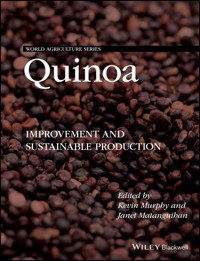
Quinoa E-Book
176,99 €
Mehr erfahren.
- Herausgeber: John Wiley & Sons
- Kategorie: Fachliteratur
- Serie: World Agriculture Series
- Sprache: Englisch
Quinoa is an ancient grain that has grown in popularity in recent years. It has been known as a good source of both protein and fiber. As the demand for quinoa increases a comprehensive and up-to-date reference on the biology and production of the crop is essential. Quinoa: Improvement and Sustainable Production brings together authors from around the world to provide a complete assessment of the current state of global quinoa research and production. Topics covered include quinoa history and culture, genomics and breeding, agronomy, nutrition, marketing, and end-uses. The book focuses in particular on the emerging role of quinoa in providing increased food security to smallholder farmers and communities throughout the world. Quinoa will interest quinoa researchers, producers, crop scientists, agronomists, and plant geneticists, as well as advanced students working with this important grain.
Sie lesen das E-Book in den Legimi-Apps auf:
Seitenzahl: 688
Veröffentlichungsjahr: 2015
Ähnliche




















Table of Contents
Cover
Title Page
Copyright
List of Contributors
Preface
Chapter 1: Quinoa: An Incan Crop to Face Global Changes in Agriculture
INTRODUCTION
A BRIEF HISTORY OF QUINOA CULTIVATION
NUTRITIONAL VALUE OF QUINOA SEED
BOTANICAL AND GENETIC CHARACTERISTICS OF THE QUINOA PLANT
QUINOA AND ENVIRONMENTAL STRESSES: DROUGHT AND SALINITY
CONCLUSION
REFERENCES
Chapter 2: History of Quinoa: Its Origin, Domestication, Diversification, and Cultivation with Particular Reference to the Chilean Context
QUINOA ORIGINS IN THE CENTRAL ANDES
ANCIENT EXPANSION TO SOUTHERN LATITUDES IN CHILE
REINTRODUCTION OF QUINOA IN ARID CHILE AFTER LOCAL EXTINCTION
FINAL REMARKS
REFERENCES
Chapter 3: Agroecological and Agronomic Cultural Practices of Quinoa in South America
INTRODUCTION
ANDEAN DOMESTICATION
BOTANICAL AND TAXONOMICAL DESCRIPTION
GENETIC BACKGROUND AND RESEARCH ON QUINOA GENETICS
ECOLOGY AND PHYTOGEOGRAPHY
CULTIVATION AND AGRONOMIC PRACTICES IN SOUTH AMERICA
QUINOA PRODUCTION
CLIMATE
CULTIVATION
REFERENCES
Chapter 4: Trends in Quinoa Yield over the Southern Bolivian Altiplano: Lessons from Climate and Land-Use Projections
SUMMARY
INTRODUCTION
MATERIALS AND METHODS
RESULTS
DISCUSSION
ACKNOWLEDGMENTS
REFERENCES
Chapter 5: The Potential of Using Natural Enemies and Chemical Compounds in Quinoa for Biological Control of Insect Pests
INTRODUCTION
INSECTS IN QUINOA
POTENTIAL OF BIOLOGICAL CONTROL IN QUINOA
POTENTIAL FOR ECOLOGICAL MANAGEMENT OF QUINOA
REFERENCES
Chapter 6: Quinoa Breeding
HISTORY—DOMESTICATION PROCESS
COLLECTION OF GENETIC RESOURCES
GOALS AND METHODS OF QUINOA BREEDING
QUINOA BREEDING METHODS
CONCLUSION
REFERENCES
Chapter 7: Quinoa Cytogenetics, Molecular Genetics, and Diversity
INTRODUCTION
CYTOGENETICS AND GENOME STRUCTURE OF
Chenopodium quinoa
CROSSABILITY OF QUINOA AND ALLIED TETRAPLOID TAXA
DNA SEQUENCE EVIDENCE FOR QUINOA'S GENOMIC ORIGINS
QUINOA GENETIC MARKERS AND LINKAGE MAPS
QUINOA DIVERSITY
SUMMARY
REFERENCES
Chapter 8: Ex Situ Conservation of Quinoa: The Bolivian Experience
INTRODUCTION
CENTERS OF ORIGIN AND DIVERSITY OF QUINOA
GEOGRAPHICAL DISTRIBUTION OF QUINOA
GENEBANKS OF THE ANDEAN REGION
BOLIVIAN COLLECTION OF QUINOA GERMPLASM
STEPS FOR
EX SITU
MANAGEMENT AND CONSERVATION OF QUINOA
CONCLUSIONS
REFERENCES
Chapter 9: Quinoa Breeding in Africa: History, Goals, and Progress
INTRODUCTION
GOALS OF QUINOA BREEDING IN AFRICA
CHALLENGES AND CONSIDERATIONS FOR FUTURE RESEARCH
CONCLUSION
REFERENCES
Chapter 10: Quinoa Cultivation for Temperate North America: Considerations and Areas for Investigation
INTRODUCTION
TOLERANCE TO ABIOTIC STRESSES
PRODUCTION ASPECTS
CHALLENGES TO QUINOA PRODUCTION
ALTERNATIVE USES OF QUINOA
CONCLUSION
ACKNOWLEDGMENTS
REFERENCES
Chapter 11: Nutritional Properties of Quinoa
INTRODUCTION
PROTEIN
CARBOHYDRATES
LIPIDS
VITAMINS
MINERALS
ANTI-NUTRITIONAL FACTORS OF QUINOA
BIOACTIVE COMPOUNDS
SUMMARY
REFERENCES
Chapter 12: Quinoa's Calling
INTRODUCTION
A SNAPSHOT OF THE ECONOMICS OF A SMALLHOLDER FARMER IN BOLIVIA AND THE INTERNATIONAL MARKET
THE QUINOA MARKET: SUPPLY AND DEMAND
CURRENT PRODUCTION PRACTICES, INCREASED ACREAGE, AND THOUGHTS ON SUSTAINABILITY
LIVING WELL, REVERSED MIGRATION, AND CULTURAL IDENTITY
OPPORTUNITIES FOR THE BOLIVIAN FARMER
Index
End User License Agreement
Pages
ix
x
xi
xii
xiii
1
2
3
4
5
6
7
8
9
10
11
12
13
14
15
16
17
18
19
20
21
22
23
24
25
26
27
28
29
30
31
32
33
34
35
36
37
38
39
40
41
42
43
44
45
47
48
49
50
51
52
53
54
55
56
57
58
59
60
61
62
63
64
65
66
67
68
69
70
71
72
73
74
75
76
77
78
79
80
81
82
83
84
85
86
87
88
89
90
91
92
93
94
95
96
97
98
99
100
101
102
103
104
105
106
107
109
110
111
112
113
114
115
116
117
118
119
120
121
122
123
125
126
127
128
129
130
131
132
133
134
135
136
137
138
139
140
141
142
143
144
145
146
147
148
149
150
151
152
153
154
155
156
157
158
159
160
161
162
163
164
165
166
167
168
169
170
171
173
174
175
176
177
178
179
180
181
182
183
184
185
186
187
188
189
190
191
192
193
194
195
196
197
198
199
200
201
202
203
204
205
206
207
208
209
210
211
212
213
214
215
216
217
218
219
220
221
222
223
224
225
226
227
228
229
230
231
232
233
234
235
Guide
Cover
Table of Contents
Preface
Begin Reading
List of Illustrations
Chapter 1: Quinoa: An Incan Crop to Face Global Changes in Agriculture
Figure 1.1 Development and growth responses of different organs (expressed as fresh weights) of
C. quinoa
cv. CICA grown at different NaCl concentrations. The dotted line marks the C
50
value. Each column represents the mean value of three replicates and the bars represent standard deviations. Columns with the same letter are not significantly different at
P
≤ 0.05, Duncan test. (R) root, (S) stem, (Al) adult leaf, (Jl) juvenile leaf, and (In) inflorescence.
Figure 1.2 Representative SEM micrographs of the juvenile leaf surface showing the various stages of bladder hairs development. BH, bladder hair and EC, epidermal cells.
Figure 1.3 Light response curves of
C. quinoa
, CICA cultivar, at different NaCl concentrations. Values are the mean of three independent measurements.
Chapter 2: History of Quinoa: Its Origin, Domestication, Diversification, and Cultivation with Particular Reference to the Chilean Context
Figure 2.1 Position of Chile in South America (right upper corner) where a long Atacama Desert (a) isolates the country from southern Peru and Bolivia. Quinoa is cultivated in places as the eastern Altiplano (b) at 4,000 m high (“salares” ecotypes), in the center (c) and south (d) of the country (“coastal” ecotypes) at sea level or piedmont (1,000 masl).
Chapter 3: Agroecological and Agronomic Cultural Practices of Quinoa in South America
Figure 3.1 (a–c) Examples of quinoa plants in farmer's field showing the vast diversity of colors and the forms of panicles (Province of Omasuyos, bordered to the south and west by Lake Titicaca, Bolivia) (Del Castillo and Winkel, IRD—CLIFA, 2002–2008).
Figure 3.2 (a–c) Close-up view of quinoa grains (Del Castillo and Winkel, IRD—CLIFA, 2002–2008).
Figure 3.3 (a,b) Frost damage in quinoa (−5°C at 60 days after sowing).
Figure 3.4 Quinoa after hail damage (Del Castillo and Winkel, IRD—CLIFA, 2002–2008).
Figure 3.5 (a) Traditional quinoa farming with little soil surface opening and large spaces between plants (SUMAMAD-UMSA team). (b) Mechanized fields (Winkel 2013 ©IRD).
Figure 3.6 (a) Relationship between water use efficiency (WUE) and pre- and postanthesis evapotranspiration rate. (b) Relationship among WUE, yield, and (full and deficit) irrigation requirements. (Source: Geerts et al. 2008b).
Figure 3.7 Two methods of manual harvesting of quinoa: (a,b) pulling out the plants and leaving them in stacks on the field to dry; (c) plants are piled above ground and left to dry (Del Castillo and Winkel, IRD—CLIFA, 2002–2008).
Chapter 4: Trends in Quinoa Yield over the Southern Bolivian Altiplano: Lessons from Climate and Land-Use Projections
Figure 4.1 Drought evolution from 1901 to 2009 on different timescales as assessed by the SPEIs. The series represents the evolution of the SPEIs with time-windows of 3, 6, and 24 months. Dry periods display negative SPEI values and humid ones have positive SPEI values. The dotted lines at SPEI = 1 show the threshold value defining a moderate drought.
Figure 4.2 Seasonal course of the daily relative soil water content averaged over the second time-slice (1981–2000). The grey area shows the standard error.
Figure 4.3 Seasonal time courses of the daily relative soil water content averaged over each of the four time-slices from 1961 to 2100.
Figure 4.4 Seasonal time course of the daily unpredictability index calculated over four time-slices from 1961 to 2100.
Figure 4.5 Interannual variability of the quinoa yield index [0–1] at plot scale across the four time-slices 1961–1980, 1981–2000, 2046–2065, and 2081–2100. Red lines show the trends in each time-slice.
Figure 4.6 Scenarios of land use and land cover changes used in our simulations. (a) The drastic land use change in the
pampa
land unit with projected crop cover reaching 50% of the suitable area at the 2040 horizon. (b) The change in the crop area aggregated for the whole study area, showing a sharp increase in the
pampas
, a moderate increase in the
faldas
, and a slight decline in the
cerros
. (c) Decline in the percent area devoted to pasture in the different land units.
Figure 4.7 Time course of the quinoa yield index at landscape scale across the four time-slices 1961–1980, 1981–2000, 2046–2065, and 2081–2100. Values corresponding to
falda
and
pampa
(grey circles) are pooled and displayed separately from those corresponding to
cerro
(white circles). The trends (red line and red dotted line) have been calculated with spline curves.
Chapter 5: The Potential of Using Natural Enemies and Chemical Compounds in Quinoa for Biological Control of Insect Pests
Figure 5.1 Phytophagous insects associated with quinoa in the Neotropical region. (a) Lepidoptera, larvae feeding on quinoa leaf; (b)
Leptoglossus
sp. in quinoa leaf; (c,d)
Oiketicus kirbyi
, neotenic larvae coming out of bag or basket; (e)
O. kirbyi
bag or basket in quinoa branch; (f) adult
Eurysacca
sp.; (g)
Eurysacca
sp. larvae feeding on quinoa leaf; (h) Pyralidae, larvae; (i)
Nezara viridula
, adult in quinoa panicle; and (j) adult
Epicauta adspersa
in quinoa leaf.
Figure 5.3 Coleoptera species in quinoa crops. (a) Carabidae; (b)
Ancistrosoma vittigerum
; and (C)
Astylus atromaculatus
.
Figure 5.2 Entomophagous insect on quinoa in Amaicha del Valle. (a) Parasitoid
Copidosoma
sp. adult; (b)
Copidosoma
sp. parasitism in
Eurysacca
larvae; (c)
Eurysacca
damaged pupa; (d) parasitoid Ichneumonidae; (e) unidentified parasitoid; (f–l) predator insects; (f)
Eriopis connexa
, immature stage; (g)
Chrysoperla argentina
, adult; (h)
C. externa
, immature stage; (i)
C. externa
, adult; (j)
C. argentina
, preying on
Spodoptera frugiperda
(Lepidoptera) eggs; (k)
C. argentina
, immature stage preying on aphids; and (l)
C. externa
, immature stage preying on aphids.
Figure 5.4 Plant–insect biochemical interactions, with plant chemical responses after attack of phytophagous insects. (a) Function of inducible or constitutive secondary metabolites (SMs) such as phenolics, terpenes, and alkaloids; (b) plant rapid response related to damage, jasmonic acid signal, and herbivory-associated molecular patterns (HAMP); (c) plant slow response, herbivore-induced plant volatiles (HIPVs), monoterpenes act as signals to other plants and entomophagous insects.
Figure 5.5
Chrysoperla
species associated with quinoa in Amaicha del Valle, Tucuman, Argentina. The population dynamics of
Chrysoperla externa
Hagen (light grey bar) and
Chrysoperla argentina
González Olazo-Reguilón (dark bar) species for two periods (from November 2008 to March 2010). A: eggs; B: larvae; C: adult.
Chapter 7: Quinoa Cytogenetics, Molecular Genetics, and Diversity
Figure 7.1 Metaphase plates of
Chenopodium quinoa
(a) after C-banding and (b) stained with CMA
3
. Localization of (c)
Arabidopsis
-type telomere repeat and (d) clone 12-13P on metaphase chromosomes of quinoa. Scale bar = 5 µm.
Figure 7.2 Example of SNP assays using the KASPar™ genotyping chemistry on the Fluidigm access array in the quinoa RIL mapping population. (a) The genotyping across the 96.96 IFC chip (96 DNA samples on the vertical, 96 SNP assays on the horizontal). (b) Individual SNP loci in a Cartesian graph. A no template control (NTC) and a synthetic heterozygote are identified (
See color insert for representation of this figure
.).
Chapter 8: Ex Situ Conservation of Quinoa: The Bolivian Experience
Figure 8.1 Profile distribution of the five major quinoa ecotypes in the Andean Region.
Figure 8.2 Geographic distribution of quinoa in the Andean Region. (
See color insert for representation of this figure
.)
Figure 8.3 Number of accessions and genebanks conserving quinoa germplasm in the Andean countries.
Figure 8.4 Geographical distribution of the Bolivian quinoa germplasm collection.
Figure 8.5 Quinoa Growth habit: (a) simple; (b) branched to the lower third; (c) branched to the second third; and (d) branched with undifferentiated main panicle.
Figure 8.6 Panicle shape: (a) glomerulated; (b) intermediate; and (c) amaranth-form.
Figure 8.7 Quinoa grain shapes: (a) lenticular; (b) cylindrical; (c) ellipsoidal; and (d) conical.
Figure 8.8 Variation in protein content of 555 quinoa germplasm accessions.
Figure 8.9 Germination behavior in four groups of cultivated quinoa and two groups of wild quinoa. Q-1, Q-2, Q-3 and Q-4 are the cultivated quinoa groups, while QS-1 and QS-2 are the wild quinoa groups.
Chapter 9: Quinoa Breeding in Africa: History, Goals, and Progress
Figure 9.1 Map of Malawi showing temperature variation across the country and these mainly influenced by mountains and low-lying areas that characterize the country.
Figure 9.2 Yield (kg/ha) of 11 quinoa genotypes and cultivars grown under irrigation from July to October 2012 at the Bunda and Bembeke sites in Malawi.
Chapter 10: Quinoa Cultivation for Temperate North America: Considerations and Areas for Investigation
Figure 10.1 Preharvest sprouting.
Chapter 11: Nutritional Properties of Quinoa
Figure 11.1 (a) Spongy tissue of quinoa cotyledon and (b) endosperm cell showing protein bodies (PBs) with globoid crystal (black arrow) (Prego et al. 1998).
Figure 11.2 Quinoa seed structure. PE, pericarp; SC, seed coat; C, cotyledons; SA, shoot apex; H, hypocotyl–radicle axis; R, radicle; F, funicle; EN, endosperm; P, perisperm. (Prego et al. 1998).
Figure 11.3 Refractive electron image (REI) and element mapping of a quinoa seed (P, perisperm; PC, pericarp; C, cotyledon; R, radicle; H, hypocotyl–radicle axis) (Konishi et al. 2004).
Chapter 12: Quinoa's Calling
Figure 12.1 Shelf at a Whole Foods Store in California shows quinoa prices ranging from $5.50 to $9.00/lb.
Figure 12.2 Land considered suitable for cultivation and pasture in the Altiplano.
Figure 12.4 US quinoa imports in MT per year, organic versus nonorganic. (
See color insert for representation of this figure
.)
Figure 12.7 Bolivian organic quinoa prices per MT price at port of origin.
Figure 12.10 Quinoa exports per country in MT per year.
Figure 12.5 Close-up of white quinoa seeds.
Figure 12.6 Multiple quinoa varieties are planted and harvested in the same fields.
Figure 12.8 Production per country per year in metric tons (MT).
Figure 12.9 Quinoa production, consumption, and exports in MT per year from main producing countries.
Figure 12.11 Raúl Vera Copa, President of APQC, an association of 200 producing family farms in Bolivia.
Figure 12.13 Farm-gate (unprocessed) quinoa prices in Bolivia in $/lb.
Figure 12.12 Unpaved roads leading to quinoa fields.
Figure 12.14 Efigenia Encinas with her lamb.
Figure 12.15 Replanted quinoa in a field where earlier plantings had been eaten by rabbits.
Figure 12.16 Quinoa emerging before first rains.
Figure 12.17 Quinoa field prepared with tractors.
Figure 12.18 Typical quinoa farmer family in the Potosí region of Bolivia.
List of Tables
Chapter 1: Quinoa: An Incan Crop to Face Global Changes in Agriculture
Table 1.1 Protein content (g/100 g DW) of quinoa seeds cultivated in two agroecological sites (Patacamaya, 3,600 masl and Encalilla, 2,000 masl)
Table 1.2 Carbon isotope composition δ
13
C of 10 varieties of quinoa
Table 1.3 Effect of elevated water salinity on the net photosynthesis rate (
P
N
), transpiration rate (
E
), Stomatal conductance (
C
s
), ratio of the internal to the external CO
2
concentration (
C
i
/
C
a
), and photosynthetic water use efficiency (PWUE) of
C. quinoa
cv. CICA. All of these values are at the light saturation point of photosynthesis
Table 1.4 Calculated photosynthetic efficiency (
Φ
c
), dark respiration (
D
r
), light compensation point (
L
c
), and light saturation point (
L
s
) of
C. quinoa
cv. CICA plants grown under various NaCl salinities
Chapter 3: Agroecological and Agronomic Cultural Practices of Quinoa in South America
Table 3.1 Different ecotypes of quinoa, their local names, and their property or principal use
Table 3.2 Phenological stages of quinoa
Chapter 4: Trends in Quinoa Yield over the Southern Bolivian Altiplano: Lessons from Climate and Land-Use Projections
Table 4.1 Summary of results obtained by analyzing the Standardized Precipitation Evapotranspiration Index (SPEI) with three time-windows of 3, 6, and 24 months
Table 4.2 Changes over three time-slices from 1981 to 2100 in yearly averages ±SD of minimal
t
n
, maximal
t
x
air temperatures, and drought duration DD with soil water storage lower than the wilting point, relative to the control period (1961–1980) retained as baseline
Table 4.3 Changes of the mean yield index at plot scale YI
plot
and its standard deviation over different time-slices from 1961 to 2100
Chapter 5: The Potential of Using Natural Enemies and Chemical Compounds in Quinoa for Biological Control of Insect Pests
Table 5.1 Insect species associated with quinoa crops
Table 5.2 Beneficial insect species (parasitoids and predators) associated with quinoa crops in the Andes
Chapter 6: Quinoa Breeding
Table 6.1 Variation in morphological characters of quinoa (
Chenopodium quinoa
Willd.) described in germplasm from diverse origins
Table 6.2 Agronomical variation and quality characters of quinoa (
Chenopodium quinoa
Willd.) described in germplasm from diverse origins
Chapter 8: Ex Situ Conservation of Quinoa: The Bolivian Experience
Table 8.1 Origin and Number of Accessions in the Quinoa Germplasm Collection Preserved in the INIAF Genebank, Bolivia
Table 8.2 Initial Seed Moisture Content and Final Moisture Content in 14 Accessions of Quinoa Exposed to 20°C for a Period of 24.5 h
Table 8.3 Nutritional and Agro-Food Characteristics and Statistical Parameters for 555 Germplasm Accessions of Quinoa from Bolivia
Table 8.4 Quinoa Germplasm Information Documented in the Manual and Electronic Systems
Table 8.5 Quinoa Accessions Evaluated Using Participatory Techniques Throughout Six Farming Years (2002–2008) and the Participating Communities
Table 8.6 Number of Communities, Courses and Participants in Training Events on New Ways of Preparing Quinoa Food Products (2005–2008)
Table 8.7 Bolivian quinoa varieties obtained through breeding
Table 8.8 Promotion and Dissemination of Quinoa Germplasm Through Urban and Rural Fairs and Mass Media
Table 8.9 Conferences, Lectures, and Talks on the Quinoa Germplasm Collection Held at Schools, Colleges, Universities, Institutions, and for Farmers
Chapter 9: Quinoa Breeding in Africa: History, Goals, and Progress
Table 9.1 Prevalence of undernourishment in selected African countries and in comparison with world overall levels (FAO 2012a)
Table 9.2 Quinoa varieties introduced in Malawi in 2012 for testing and their background information
Table 9.3 An extract of the mean performance of 24 cultivars of quinoa in Nairobi, Kenya, evaluated under the 1999 international quinoa trials
Chapter 11: Nutritional Properties of Quinoa
Table 11.1 Chemical Composition of Quinoa and Cereals (Jancurová et al. 2009)
Table 11.2 Protein Content in Quinoa Seed Fraction (Ando et al. 2002)
Table 11.3 Amino Acids of Quinoa, Soy, Casein, and Wheat (mg/g)
Table 11.4 Essential Amino Acid of Quinoa Protein and FAO/WHO Suggested Requirement (mg/g protein)
Table 11.5 Subgroups of Protein from Quinoa, Maize, Rice, and Wheat (% Total Protein) (Koziol 1992)
Table 11.6 Granule Size of Starch from Quinoa and Other Cereals (Lindeboom et al. 2004)
Table 11.7 Quinoa Starch Characteristics (Ando et al. 2002)
Table 11.8 Sugar Content of Quinoa Flour (mg/100 g sample) (Ogungbenle 2003)
Table 11.9 Properties of Quinoa Lipids (%) (Ogungbenle 2003)
Table 11.10 Fatty Acid Composition of Quinoa (100% Dry Basis) (Ando et al. 2002)
Table 11.11 Comparison of Percent Fatty Acid from Quinoa and Oil from Other Crops
Table 11.12 Vitamin Content in Quinoa, Wheat, Rice, and Barley (mg/100 g)
Table 11.13 Mineral Content of Quinoa Grain Fraction (mg/mg%) (Ando et al. 2002)
Table 11.14 Chemical Structure of the Aglycones in Quinoa (Kuljanabhagavad and Wink 2009)
Table 11.15 Phenolic Acid Content in Quinoa and Other Cereals (µg/g wb)
Chapter 12: Quinoa's Calling
Table 12.1 Production costs, based on actual results from production of Jacha Inti suppliers of organic quinoa grown in the southern Altiplano region of Bolivia
Table 12.2 US quinoa imports in metric tons per year and US imports as a percentage of total world production
Table 12.3 Evolution of hectares farmed, quinoa production costs, and earnings for Bolivian farmers
Quinoa
Improvement and Sustainable Production
Edited by
Kevin Murphy and Janet Matanguihan
Copyright © 2015 by Wiley-Blackwell. All rights reserved
Published by John Wiley & Sons, Inc., Hoboken, New Jersey
Published simultaneously in Canada
No part of this publication may be reproduced, stored in a retrieval system, or transmitted in any form or by any means, electronic, mechanical, photocopying, recording, scanning, or otherwise, except as permitted under Section 107 or 108 of the 1976 United States Copyright Act, without either the prior written permission of the Publisher, or authorization through payment of the appropriate per-copy fee to the Copyright Clearance Center, Inc., 222 Rosewood Drive, Danvers, MA 01923, (978) 750-8400, fax (978) 750-4470, or on the web at www.copyright.com. Requests to the Publisher for permission should be addressed to the Permissions Department, John Wiley & Sons, Inc., 111 River Street, Hoboken, NJ 07030, (201) 748-6011, fax (201) 748-6008, or online at http://www.wiley.com/go/permission.
Limit of Liability/Disclaimer of Warranty: While the publisher and author have used their best efforts in preparing this book, they make no representations or warranties with respect to the accuracy or completeness of the contents of this book and specifically disclaim any implied warranties of merchantability or fitness for a particular purpose. No warranty may be created or extended by sales representatives or written sales materials. The advice and strategies contained herein may not be suitable for your situation. You should consult with a professional where appropriate. Neither the publisher nor author shall be liable for any loss of profit or any other commercial damages, including but not limited to special, incidental, consequential, or other damages.
For general information on our other products and services or for technical support, please contact our Customer Care Department within the United States at (800) 762-2974, outside the United States at (317) 572-3993 or fax (317) 572-4002.
Wiley also publishes its books in a variety of electronic formats. Some content that appears in print may not be available in electronic formats. For more information about Wiley products, visit our web site at www.wiley.com.
Library of Congress Cataloging-in-Publication Data:
Quinoa : improvement and sustainable production / edited by Kevin Murphy and Glafera Janet Matanguihan.
pages cm
Includes bibliographical references and index.
ISBN 978-1-118-62805-8 (cloth)
1. Quinoa. 2. Crop improvement. 3. Sustainable agriculture. I. Murphy, Kevin (Kevin Matthew), 1972- editor. II. Matanguihan, Glafera Janet, editor.
SB177.Q55Q56 2015
664'.7–dc23
2015006917
List of Contributors
Sergio Núñez de Arco
Andean Naturals, Inc., Foster City, CA, USA
Didier Bazile
UPR47, GREEN, Centre de Coopération Internationale en Recherche Agronomique pour le Développement Campus International de Baillarguet Montpellier, France
Carmen Del Castillo
Faculty of Agronomy Universidad Mayor de San Andres La Paz, Bolivia
Bruno Condori
Consultative Group on International Agricultural Research – International Potato Center, La Paz, Bolivia
Sayed S.S. Eisa
Agricultural Botany Department, Faculty of Agriculture, Ain Shams University, Cairo, Egypt
Francisco F. Fuentes
Facultad de Agronomía e Ingeniería Forestal, Pontificia Universidad Católica de Chile, Casilla 306–22, Santiago, Chile
Magali Garcia
Faculty of Agronomy, Universidad Mayor de San Andres La Paz, Bolivia
Juan Antonio González
Instituto de Ecologia – Area de Botánica Fundación Miguel Lillo Tucumán Tucumán, Argentina
Veronica Guwela
International Crops Research Institute for the Semi-Arid Tropics, Lilongwe, Malawi
Sayed Abd Elmonim Sayed Hussin
Agricultural Botany Department, Faculty of Agriculture, Ain Shams University Cairo, Egypt
Eric N. Jellen
Plant and Wildlife Sciences Brigham Young University Provo, UT, USA
Bozena Kolano
Department of Plant Anatomy and Cytology University of Silesia, Poland
Moses F.A. Maliro
Department of Crop and Soil Sciences, Bunda College Campus, Lilongwe University of Agriculture and Natural Resources Lilongwe, Malawi
Enrique A. Martínez
Centro de Estudios Avanzados en Zonas Áridas La Serena and Facultad de Ciencias del Mar Universidad Católica del Norte Coquimbo, Chile
Janet B. Matanguihan
Department of Crop and Soil Sciences Washington State University Pullman, WA, USA
Peter J. Maughan
Plant and Wildlife Sciences Brigham Young University Provo, UT, USA
Florent Mouillot
IRD, UMR 5175 CEFE Montpellier, France
Kevin M. Murphy
Department of Crop and Soil Sciences Washington State University Pullman, WA, USA
Luz Gomez-Pando
Universidad Nacional Agraria La Molina Agronomy Faculty Lima, Peru
Adam J. Peterson
Department of Crop and Soil Sciences Washington State University Pullman, WA, USA
Milton Pinto
PROINPA Foundation 538 Americo Vespucio St., P.O. Box 1078, La Paz, Bolivia
Griselda Podazza
Instituto de Ecología, Fundación Miguel Lillo Tucumán, Argentina
Fernando Eduardo Prado
Facultad de Ciencias Naturales e IML Fisiología Vegetal Tucumán, Argentina
Serge Rambal
CNRS, UMR 5175 CEFE Montpellier, France
Departamento de Biologia Universidade Federal de Lavras Lavras, MG, Brazil
Jean-Pierre Ratte
CNRS, UMR 5175 CEFE Montpellier, France
Carmen Reguilón
Instituto de Entomología, Fundación Miguel Lillo Tucumán, Argentina
Wilfredo Rojas
PROINPA Foundation Av. Elias Meneces km 4 El Paso, Cochabamba, Bolivia
Mariana Valoy
Instituto de Ecología, Fundación Miguel Lillo Tucumán, Argentina
Thierry Winkel
IRD, UMR 5175 CEFE Montpellier, France
Geyang Wu
School of Food Science Washington State University Pullman, WA, USA
Preface
The seeds of this book took root in the summer of 2010, during the first year of our multilocation quinoa trials across three major climatic regions of Washington State. We began growing and evaluating quinoa thanks to generous funding from the Organic Farming Research Foundation, and growers around the state looked on with keen interest. In that first year we tested 44 varieties of quinoa sourced from almost as many diverse geographical locations and we were mildly surprised when only 12 of these actually produced seed in our northern latitude. That first year we were introduced to many of the ongoing challenges we continue to face 5 years later, including susceptibility to preharvest sprouting and downy mildew, photoperiod insensitivity, pollen sterilization resulting from high summer temperatures with little to no rainfall or supplemental irrigation, and the negative effects of aphid and lygus predation. We quickly realized that if quinoa were to become a successfully grown crop in the Pacific Northwest region of the United States, it would require a concerted effort of a transdisciplinary cadre of scientists with a range of expertise, a forward-thinking and risk-taking group of innovative farmers, and a strong supporting cast of distributors, processors, and consumers. From that first year, with only one junior faculty and one undergraduate research intern collaborating with three farmers, the quinoa group at Washington State University has grown into diverse team of over 10 faculty and 10 graduate students, each addressing a key component of quinoa breeding, agronomy, sociology, entomology, or food science. This book is intended to lay the groundwork for the latest quinoa research worldwide and to assist faculty and students new to the crop to gain a foothold of understanding into quinoa genomics and breeding, global agronomy and production, and marketing.
In August 2013, Washington State University hosted the International Quinoa Research Symposium (IQRS). One hundred and sixty enthusiastic participants from 24 countries descended on Pullman, Washington and shared knowledge, questions, obstacles, observations, and ideas on the path forward during an intense, vibrant and thought-provoking 3 days of talks, field visits, poster sessions, and quinoa vodka infused social exploration. Many of the co-authors of the various chapters in this book were attendees and/or presenters at the IQRS, and the symposium provided a safe forum for the open discussion of ideas that have found their way into the chapters of this book. Symposium attendees who have contributed to this book include Didier Bazille, Juan Antonio Gonzalez, Luz Gomez Pando, Rick Jellen, Moses Maliro, Enrique Martinez (in absentia), Jeff Maughan, Sergio Núñez de Arco, Adam Peterson, Wilfredo Rojas, Geyang Wu, and co-editors Janet Matanguihan and Kevin Murphy.
Keynote speakers at the IQRS included Sven-Erik Jacobsen, renowned quinoa researcher from University of Copenhagen, Tania Santivanez from the United Nations Food and Agriculture Organization, and John McCamant, a long-time quinoa farmer and researcher from White Mountain Farms in Colorado, USA. Other esteemed presenters not mentioned included Daniel Bertero from the University of Buenos Aires, Argentina, Morgan Gardner of Washington State University, Frank Morton of Wild Garden Seeds in Oregon, and Hassan Munir of the University of Agriculture Faisalabad, Pakistan, as well as numerous poster presentations. Finally, the highlight of the symposium for many attendees was the eloquent thoughts delivered by a group of five Bolivian farmers, who traveled to the United States for the first time to join in the international discussion on the many social and political aspects of quinoa cultivation.
This book reflects the many presentations and discussions that took place at the IQRS, and is intended to provide the reader with a comprehensive base knowledge of the current body of knowledge of the ever-expanding, global scientific research of quinoa. In Chapter 1, Gonzalez et al. provide a solid overview of quinoa as an Incan crop, primarily in Peru and Bolivia, now facing a diversity of global challenges. Chapter 2 follows up on this introduction by discussing the origin, domestication, diversification, and cultivation of quinoa from a Chilean perspective.
Chapter 3 by Garcia et al. encapsulates many of the wide-ranging agronomic and agroecological cultural practices of quinoa throughout the major growing regions of South America as a whole. This broad chapter provides a botanical and taxonomical description of quinoa, ecology and phytogeography of quinoa, and many tangible production practices across a wide range of climates, soils, and growing conditions that can be emulated in nontraditional growing regions around the world. Rambal et al. follow this with a description of the historical trends in quinoa yield in the southern Bolivian altiplano, including important lessons from climate and land-use projections in Chapter 4. Valoy et al. then discuss in Chapter 5 the potential of using natural enemies and chemical compounds in quinoa for biological control of pests. This chapter follows up on the agroecological themes discussed in Chapter 3, and compiles and elucidates a vast array of knowledge gained through previous research in this realm of quinoa science, and provides the thoughtful reader many potential ideas for new research in this direction.
In Chapter 6, Peruvian plant breeder Gomez-Pando describes the historical and modern context of quinoa breeding in the Andean regions. Beginning with the effect of farmer selection on seed color, dormancy, seed size and seed coat thickness, salt and drought tolerance, and adaptation to multiple and countless microclimates, Gomez-Pando then moves on to highlight the rise of modern quinoa breeding in the 1960s, the collection of quinoa genetic resources and in situ conservation, and the goals and methodology employed by current quinoa breeders.
Matanguihan et al. follow this with an in-depth discussion on the cytogenetics, genomic structure, and diversity of quinoa in Chapter 7. Information on close genetic relatives of Chenopodium quinoa are discussed, along with DNA-based molecular genetic tools and linkage maps which can facilitate and accelerate the transfer of exotic genes into C. quinoa. Also included in Chapter 7 is a review of phenotypic and genetic diversity studies which show that the genetic variability of quinoa has a spatial structure and distribution. The congruence between genetic differentiation and ecogeography suggests that quinoa all over the southern Andes may be undergoing similar processes of genetic differentiation. Not surprisingly, human activities, specifically seed exchange routes, have significantly affected the genetic structure of quinoa.
In Chapter 8, Rojas and Pinto discuss the ex-situ conservation of quinoa genetic resources from a Bolivian perspective. According to Rojas and Pinto, the Bolivian quinoa germplasm collection has the greatest diversity in the world, and this diversity represents the cultural importance of quinoa in Bolivian customs, indigenous consumption, and production. Chapter 8 also provides insight into the center of origin and diversity of quinoa, the geographical distribution of quinoa, and steps needed for the ex situ management and conservation of quinoa.
Chapters 9 and 10 discuss quinoa cultivation n two continents, Africa and North America, that are considered nontraditional quinoa production environments. In Chapter 9, Maliro and Guwela describe the necessity of stabilizing food security and alleviating malnutrition in Africa, and the potential for quinoa as a novel crop to make a positive contribution to these efforts. The goals of quinoa breeding in Africa and information from recent quinoa trials in Malawi and Kenya are discussed in an effort to address the challenges and considerations for future quinoa research in Africa. Key among these considerations is the acceptability of quinoa into African diets. In Chapter 10, Peterson and Murphy discuss quinoa introduction to the United States as a crop approximately 30 years ago, and the key breeding, research, and production events in the time period after its introduction. Recent research at Washington State University is highlighted in this chapter.
In Chapter 11, Wu describes the nutritional properties of quinoa that have played an important role in bringing the crop to worldwide attention. Finally, in a refreshing departure from the scientific writing in the previous chapters, Nuñez de Arco provides an insider's view into the marketing of quinoa in Chapter 12. Of particular interest are the personal descriptions and snapshots of the lives of smallholder farmers, of which an estimated 35,000 produce quinoa in Bolivia, who discuss their philosophy of marketing quinoa under the current fluctuations in the supply and demand of this increasingly popular crop.
This book is a reflection of the increasing importance of quinoa in the global market. The roster of contributors—from South America, Europe, Africa and North America—also reflects the expansion of quinoa from its origins to new production areas in the world. It was a pleasure to work with colleagues from countries who have grown quinoa for centuries, and with colleagues from countries which are growing quinoa for the first time. We are indebted to these authors for their willingness to share their expertise and for their cooperation in the process of shaping this book. It is our hope that this book will contribute to quinoa knowledge to benefit growers, students, researchers, and professionals from universities and institutes involved in the improvement of quinoa and its sustainable production.
Kevin M. Murphy
Janet B. Matanguihan
Chapter 1Quinoa: An Incan Crop to Face Global Changes in Agriculture
Juan Antonio González1, Sayed S. S. Eisa2, Sayed A. E. S. Hussin2 and Fernando Eduardo Prado3
1Instituto de Ecologia – Area de Botánica, Fundación Miguel Lillo,Tucumán, Argentina
2Agricultural Botany Department, Faculty of Agriculture, Ain Shams University (ASU), Cairo, Egypt
3Facultad de Ciencias Naturales e IML, Fisiología Vegetal, Miguel Lillo 205, 4000, Tucumán,, Argentina
INTRODUCTION
Environmental changes have always occurred in the past but in the last decades these have escalated to critical levels, presenting environmental risk to people, especially in terms of food supply, as it affects crop yield, production, and quality. Rapid population growth leads to increase in demand for land and thus to accelerated degradation and destruction of the environment (Alexandratos 2005; IPCC 2007). Probably the most important change driven by human activity is the increasing accumulation of greenhouse gases such as carbon dioxide (CO2), among others (Wallington et al. 2004; Montzka et al. 2011). Greenhouse gases can absorb and emit infrared radiation, and thus a global earth warming occurs, otherwise known as the greenhouse effect. Many scientists agree that even a small increase in the global temperature would lead to significant climate and weather changes, affecting cloud cover, precipitation, wind patterns, the frequency and severity of storms, and the duration of seasons (Solomon et al. 2009). This scenario will lead to scarce natural resources and the reduction of food production.
Lesen Sie weiter in der vollständigen Ausgabe!
Lesen Sie weiter in der vollständigen Ausgabe!
Lesen Sie weiter in der vollständigen Ausgabe!
Lesen Sie weiter in der vollständigen Ausgabe!
Lesen Sie weiter in der vollständigen Ausgabe!
Lesen Sie weiter in der vollständigen Ausgabe!
Lesen Sie weiter in der vollständigen Ausgabe!
Lesen Sie weiter in der vollständigen Ausgabe!
Lesen Sie weiter in der vollständigen Ausgabe!
Lesen Sie weiter in der vollständigen Ausgabe!
Lesen Sie weiter in der vollständigen Ausgabe!
Lesen Sie weiter in der vollständigen Ausgabe!
Lesen Sie weiter in der vollständigen Ausgabe!




