


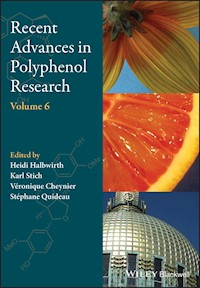
Recent Advances in Polyphenol Research, Volume 6 E-Book
189,99 €
Mehr erfahren.
- Herausgeber: John Wiley & Sons
- Kategorie: Wissenschaft und neue Technologien
- Sprache: Englisch
Plant polyphenols are secondary metabolites that constitute one of the most common and widespread groups of natural products. They are crucial constituents of a large and diverse range of biological functions and processes, and provide many benefits to both plants and humans. Many polyphenols, from their structurally simplest representatives to their oligo/polymeric versions, are notably known as phytoestrogens, plant pigments, potent antioxidants, and protein interacting agents.
This sixth volume of the highly regarded Recent Advances in Polyphenol Research series is edited by Heidi Halbwirth, Karl Stich, Véronique Cheynier and Stéphane Quideau, and is a continuance of the series’ tradition of compiling a cornucopia of cutting-edge chapters, written by some of the leading experts in their respective fields of polyphenol sciences. Highlighted herein are some of the most recent and pertinent developments in polyphenol research, covering such major areas as:
- Chemistry and physicochemistry
- Biosynthesis, genetics & metabolic engineering
- Roles in plants and ecosystems
- Food, nutrition & health
- Applied polyphenols
This book is a distillation of the most current information, and as such, will surely prove an invaluable source for chemists, biochemists, plant scientists, pharmacognosists and pharmacologists, biologists, ecologists, food scientists and nutritionists.
Sie lesen das E-Book in den Legimi-Apps auf:
Seitenzahl: 748
Veröffentlichungsjahr: 2019
Ähnliche




















Table of Contents
Cover
Contributors
Preface
Acknowledgements
1 The Lignans: A Family of Biologically Active Polyphenolic Secondary Metabolites
1.1 Introduction
1.2 Biosynthesis of Lignans
1.3 Synthetic Approaches to Lignans and Derivatives
1.4 Conclusion
References
2 Anthocyanin Accumulation is Controlled by Layers of Repression
2.1 Introduction
2.2 MYBs and bHLHs Directly Activate Anthocyanin Production
2.3 Exciting Phenotypes in Horticulture are often Caused by Variations in the Expression of Key MYBs
2.4 Is There a Cost to the Plant of Overaccumulation of Anthocyanins?
2.5 Controlling Anthocyanin Levels
2.6 The MYB Activator is Degraded at Night
2.7 MYB Activator Competes with MYB Repressors
2.8 miRNA‐Targeted Degradation of MYB Transcript
2.9 Turnover of Anthocyanin Vacuolar Content by Peroxidases
2.10 Summary
References
3 The Subtleties of Subcellular Distribution: Pointing the Way to Underexplored Functions for Flavonoid Enzymes and EndProducts
3.1 Multienzyme Complexes and Metabolic Networks
3.2 New Insights from Global Surveys of Protein Interactions
3.3 The Flavonoid Metabolon
3.4 Subcellular Distribution of Flavonoid Enzymes and Evidence for Alternative Metabolons
3.5 Posttranslational Modifications – An Underexplored Area of Flavonoid Metabolism
3.6 Why Do We Need to Know?
3.7 Future Prospects
References
4 Transcriptional and Metabolite Profiling Analyses Uncover Novel Genes Essential for Polyphenol Accumulation
4.1 Introduction
4.2 Transcriptional and Metabolite Profiling Analyses in Strawberry Fruit
4.3 Characterization of Peroxidase 27
4.4 Competition of the Lignin and Flavonoid/Anthocyanin Pathways as Demonstrated by the Activity of Peroxidase 27
4.5 Candidate Genes Putatively Correlated with Phenolics Accumulation in Strawberry Fruit
4.6 Acylphloroglucinol Biosynthesis in Strawberry Fruit
4.7 Glucosylation of Acylphloroglucinols
4.8 Conclusion
References
5 Dietary (Poly)Phenols and Vascular Health
5.1 Introduction
5.2 Vascular Health: A Prerequisite to Prevent Cardiometabolic Diseases and Cognitive Decline
5.3 Diet and Vascular Health
5.4 (Poly)Phenols: A Major Family of Dietary Plant Bioactive Compounds
5.5 Fate of (Poly)Phenols in the Body and Biological Activities
5.6 Nutritional Effects of Flavonoids in Protecting Cardiovascular Health
5.7 Limitation of Knowledge and Strategy for Research
5.8 Findings from Translational Research on Citrus Flavanones and Vascular Health
5.9 Conclusion
References
6 Cellular‐Specific Detection of Polyphenolic Compounds by NMR‐and MS‐Based Techniques: Application to the Representative Polycyclic Aromatics of Members of the Hypericaceae, the Musaceae and the Haemodoraceae
6.1 Introduction
6.2 The Plant Genus
Hypericum
6.3 Phenylphenalenones: Plant Secondary Metabolites of the Haemodoraceae
6.4 Phenalenone‐Type Phytoalexins
6.5 Laser Microdissection and Cryogenic NMR as a Combined Tool for Cell Type‐Specific Metabolite Profiling
6.6 Matrix‐free UV Laser Desorption/Ionization (LDI) at the Single‐Cell Level: Distribution of Secondary Metabolites of
Hypericum
Species
6.7 LDI‐MSI‐Based Detection of Phenalenone‐Type Phytoalexins in a Banana–Nematode Interaction
6.8 LDI‐FT‐ICR‐MSI Reveals the Occurrence of Phenylphenalenones in Red Paracytic Stomata
6.9 Conclusion
6.10 Acknowledgements
References
7 Metabolomics Strategies for the Dereplication of Polyphenols and Other Metabolites in Complex Natural Extracts
7.1 Introduction
7.2 Metabolite Profiling and Metabolomics
7.3 Metabolite Annotation and Dereplication
7.4 Targeted Isolation of Original Polyphenols
7.5 Conclusion
References
8 Polyphenols from Plant Roots: An Expanding Biological Frontier
8.1 Introduction
8.2 Polyphenols in Roots versus Shoots: Not More, Not Less, But Often Different
8.3 Allelochemical Functions of Root Polyphenols
8.4 Physiological Functions of Root Polyphenols in Plants
8.5 Biotechnologies to Produce Root Polyphenols
8.6 Conclusion
References
9 Biosynthesis of Polyphenols in Recombinant Micro‐organisms: A Path to Sustainability
9.1 Introduction
9.2 Flavonoids
9.3 Stilbenes
9.4 Coumarins
9.5 Conclusion
References
10 Revisiting Wine Polyphenols Chemistry in Relation to Their Sensory Characteristics
10.1 Introduction
10.2 Astringency of Polyphenols
10.3 Bitter Taste of Polyphenols
10.4 Red Wine Colour
10.5 Conclusion
References
11 Advances in Bio‐based Thermosetting Polymers
11.1 Introduction
11.2 Industrial Sources of Polyphenols
11.3 Principles of Thermoset Production
11.4 Relationships between Structure and Reactivity of Polyphenols
11.5 Thermosets from Industrial Lignins and Tannins
11.6 Depolymerization of Lignins and Tannins to Produce Phenolic Building Blocks and their Glycidylether Derivatives
11.7 Development of Dimethyloxirane Monophenols and Bisphenols as Thermosetting Building Blocks
11.8 Conclusion
References
12 Understanding the Misunderstood: Products and Mechanisms of the Degradation of Curcumin
12.1 Introduction
12.2 Degradation of Curcumin – A Historical and Personal Perspective
12.3 The Degradation is an Autoxidation
12.4 Novel Products of the Degradation/Autoxidation of Curcumin
12.5 Transformation of Curcumin to Bicyclopentadione
12.6 A Proposed Mechanism for the Autoxidation of Curcumin
12.7 Microbial Degradation of Curcumin
12.8 Conclusion
References
13 How to Model a Metabolon: Theoretical Strategies
13.1 Introduction
13.2 Localization
13.3 Existing Structures
13.4 Three‐Dimensional Structures of Enzymes: Homology Modelling
13.5 Modes of Access to Active Sites: Randomly Accelerated Molecular Dynamics
13.6 Protein–Protein Association: Protein–Protein Docking
13.7 Substrate Channelling and Molecular Dynamics
13.8 Metabolon
13.9 Conclusion
References
Index
End User License Agreement
List of Tables
Chapter 1
Table 1.1 Synthetic oxidative couplings of coniferyl alcohol.
Chapter 3
Table 3.1 Flavonoid enzymes reported to exhibit nuclear localization.
Chapter 8
Table 8.1 Biological targets affected by root polyphenols and plant physiolog...
Chapter 9
Table 9.1 Biosynthesis of certain polyphenols in recombinant micro‐organisms.
Chapter 10
Table 10.1 Maximum half effective concentration (EC
50
, μM) for activation of ...
Chapter 11
Table 11.1 Characteristics of industrial lignins.
List of Illustrations
Chapter 1
Figure 1.1 Selected biologically active lignan natural products.
Figure 1.2 Structural classes of lignans.
Scheme 1.1 Biosynthesis of (+)‐pinoresinol.
Scheme 1.2 (a) Main coupling pathways for oxidative coupling of coniferyl alc...
Figure 1.3 Crystal structure of dirigent protein from
Pisum sativum
.
Scheme 1.3 Biosynthetic pathway for conversion of pinoresinol to podophylloto...
Scheme 1.4 Synthesis of dibenzylbutanes
31
–
32
.
Scheme 1.5 Synthesis of 2,5‐diaryltetrahydrofurans
33
–
34
and aryldihydronapht...
Scheme 1.6 Synthesis of (+)‐yangambin (
45
), (+)‐sesamin (
46
) and (+)‐eudesmin...
Scheme 1.7 Reaction pathways in the divergent synthesis of 2,5‐diaryltetrahyd...
Scheme 1.8 Synthesis of (+)‐galbelgin (
55
).
Scheme 1.9 Synthesis of (−)‐cyclogalgravin (
58
), (−)‐pycnanthulignene B (
60
),...
Scheme 1.10 Synthesis of (±)‐tanegool (
66
) and (±)‐pinoresinol (
5
).
Scheme 1.11 General methods for the synthesis of dibenzylbutyrolactones.
Scheme 1.12 Synthesis of (±)‐yatein (
27
).
Scheme 1.13 Synthesis of (±)‐5′‐methoxyyatein (
77
).
Scheme 1.14 Synthesis of (−)‐7′‐(
S
)‐hydroxyarctigenin (
85
).
Scheme 1.15 Synthesis of (−)‐bursehernin (
92
).
Scheme 1.16 Synthesis of (−)‐hinokinin (
98
).
Scheme 1.17 Synthesis of (−)‐podophyllotoxin (
1
).
Scheme 1.18 Synthesis of chimensin (
110
) and taiwanin C (
111
).
Scheme 1.19 Synthesis of justicidin B (
115
).
Scheme 1.20 Synthesis of (+)‐podophyllotoxin (
1
).
Scheme 1.21 Synthesis of (−)‐sacidumlignan B (
129
) and sacidumlignan A (
130
)....
Scheme 1.22 Synthesis of (±)‐cyclogalgravin (
58
) and aryltetralins
136
–
142
.
Scheme 1.23 Synthesis of aryldihydronaphthalenes
56
,
60
and aryltetralins
138
Scheme 1.24 Initial Garratt–Braverman studies for synthesis of arylnaphthalen...
Scheme 1.25 Synthesis of taiwanin C (
111
) and justicidin E (
172
).
Scheme 1.26 Synthesis of arylnaphthalenes
115
,
175–177
.
Scheme 1.27 Synthesis of justicidin E (
172
), taiwanin C (
111
), and daurinol (
Scheme 1.28 Synthesis of arylnaphthalene lignans
111
,
115
,
184–185
.
Scheme 1.29 Synthesis of justicidin E (
173
), helioxanthin (
188
) and retrojust...
Scheme 1.30 Synthesis of justicidin E (
172
), taiwanin C (
111
) and retrojustic...
Scheme 1.31 Synthesis of (+)‐galbulin (
136
).
Scheme 1.32 Synthesis of diphyllin (
208
), justicidin A (
209
) and taiwanin E (
Scheme 1.33 General methods for the synthesis of 2,5‐diaryltetrahydrofurans. ...
Scheme 1.34 Synthesis of (+)‐veraguensin (
221
).
Scheme 1.35 Synthesis of (+)‐galbelgin (
55
).
Scheme 1.36 Synthesis of (+)‐beilschmin A (
238
).
Scheme 1.37 Synthesis of (−)‐virgatusin (
243
) and (+)‐urinaligran (
244
).
Scheme 1.38 Synthesis of (+)‐virgatusin (
243
).
Scheme 1.39 Synthesis of (+)‐sylvone (
256
).
Scheme 1.40 Synthesis of (+)‐magnolone (
265
).
Scheme 1.41 Synthesis of 2‐aryl‐4‐benzyltetrahydrofurans
273
–
276
.
Scheme 1.42 Synthesis of (−)‐magnofargesin (
287
).
Scheme 1.43 Synthesis of (+)‐yangambin (
45
).
Scheme 1.44 Synthesis of (−)‐wodeshial (
301
).
Scheme 1.45 Synthesis of furofurans
309–314
.
Scheme 1.46 Synthesis of furofurans
46
,
322
–
325
.
Scheme 1.47 Synthesis of (−)‐wuweizisu (
335
).
Scheme 1.48 Synthesis of (+)‐isoschizandrin (
344
).
Scheme 1.49 Synthesis of dibenzocyclooctadiene lignans
353
–
360
.
Scheme 1.50 Synthesis of (−)‐steganone (
369
).
Scheme 1.51 Synthesis of (−)‐isoschizandrin (
344
).
Scheme 1.52 Synthesis of (±)‐deoxyschizandrin (
390
).
Chapter 2
Figure 2.1 MYB transcription factors are regulated at the level of expression...
Chapter 3
Figure 3.1 Early model of organization of phenylpropanoid metabolism at the e...
Figure 3.2 Model of the soybean isoflavonoid metabolon. Tandem cytochrome P45...
Figure 3.3 Flavonoid enzyme interactions. Summary of interactions observed to...
Figure 3.4 Molecular mass variants of CHI. Two forms are observed for the nat...
Chapter 4
Figure 4.1 Analysis of phenolic compounds in strawberry fruits and calculatio...
Figure 4.2 Hierarchical clustering analysis of the metabolite levels. Rows ar...
Figure 4.3 The anthocyanin and lignin pathways compete for common substrates....
Figure 4.4 Metabolite profiling analysis, structural formula of acylphloroglu...
Figure 4.5 Reduced levels of APGs in both transient and stable
CHS
‐silenced f...
Figure 4.6 Downregulation of
UGT71K3
. (a) Fruit phenotypes and (b) effect of
Figure 4.7 APG biosynthesis pathway in strawberry. CHS, chalcone synthase; Co...
Chapter 5
Figure 5.1 Pivotal role of vascular function in human health.
Figure 5.2 Diversity of dietary (poly)phenols.
Figure 5.3 Fate of dietary (poly)phenols in the body: native forms are not th...
Figure 5.4 Biological properties of (poly)phenols of interest for human healt...
Figure 5.5 Clinical evidence of the role of flavanones in the beneficial effe...
Figure 5.6 Nutrigenomic effects induced by the consumption of orange juice an...
Figure 5.7 Impact of a dietary supplementation of naringin in a murine model ...
Figure 5.8 Exposure to plasma metabolites of naringenin reduced the adhesion ...
Chapter 6
Figure 6.1 Chemical structures of secondary metabolites of the genus
Hypericu
...
Figure 6.2 Structural formula of haemocorin and the six (theoretical) basic s...
Figure 6.3 General structures of the phenylphenalenone‐type compounds.
Figure 6.4 pH‐caused transformations of anthocyanidins and phenylphenalenone‐...
Figure 6.5 Different PKS pathways, closely related to the biosynthesis of phe...
Figure 6.6 Comparison of a sequence of the biosynthesis of stilbenes, chalcon...
Figure 6.7 Proposed hypothetical sequence of the biosynthesis of the phenylph...
Figure 6.8 Microscopic images (magnification 400×) of a single SC of
D. pilla
...
Figure 6.9 Detection of hypericin (
m
/
z
503) and pseudo‐hypericin (
m
/
z
519) in...
Figure 6.10 LDI‐MSI detection of hypericin (
m
/
z
503) and pseudo‐hypericin (
m
/
Figure 6.11 Negative ion mode LDI‐MSI of the lesions of Ykm5. (a) Optical ima...
Figure 6.12 Positive ion mode LDI‐MSI of R.
similis
after motility bioassay w...
Figure 6.13 Negative ion mode LDI‐FT‐ICR‐MSI of red pseudo‐stem material of
M
...
Figure 6.14 Structures of phenylphenalenone‐type phytoanticipins (6–9). (6) A...
Chapter 7
Figure 7.1 Metabolite profiling obtained for a
Ginkgo biloba
standardized ext...
Figure 7.2 UHPLC‐HRMS analysis of a
Ginkgo biloba
extract. (a) Total ion curr...
Figure 7.3 Dereplication workflow based on molecular formula determination an...
Figure 7.4 Example of application of a retention time prediction tool for der...
Figure 7.5 Ion mobility infusion analysis of the crude extract of
Ginkgo bilo
...
Figure 7.6 Differences in fragmentation patterns between two types of MS‐MS i...
Figure 7.7 Molecular networking of the MeOH extract of the leaves of
Ginkgo b
...
Figure 7.8 Molecular network of a cluster of prenylated stilbene derivatives ...
Figure 7.9 Metabolite profiling of the hydroethanolic extract of the roots of...
Figure 7.10 Structures of the unusual polyphenols identified in the hydroalco...
Chapter 8
Figure 8.1 Relative concentration of secondary metabolites in roots versus le...
Figure 8.2 Structure of polyphenol families frequently found in roots. (a) Fl...
Figure 8.3 Root polyphenol distribution through microscopy and MALDI imaging....
Figure 8.4 Schematic overview of the rhizospheric interactions mediated by po...
Figure 8.5 Examples of root cultures for the production of natural compounds....
Figure 8.6 Production of root natural compounds (here tropane alkaloids) (h, ...
Figure 8.7 Root systems obtained with soilless grown plants. (a) Overview of ...
Chapter 9
Figure 9.1 Detailed biosynthetic steps for flavonoids. 3GT, uridine, flavanon...
Figure 9.2 Central metabolic pathways connecting malonyl‐CoA with the plant f...
Figure 9.3 Engineered biosynthetic pathways for the methylated resveratrol an...
Figure 9.4 Types of coumarins found in higher plants.
Figure 9.5 Biosynthesis pathway of simple coumarins (umbelliferone, esculetin...
Chapter 10
Figure 10.1 Structures of
Vitis vinifera
anthocyanins.
Figure 10.2 Structures of flavanol monomers and a general structure of conden...
Figure 10.3 Schema of the interaction between condensed tannins and proteins....
Figure 10.4 Interaction between protein and polyphenols acting as a cross‐lin...
Figure 10.5 Network of the equilibrium forms of anthocyanins in an acidic to ...
Figure 10.6 Anthocyanin‐derived pigments found in wines.
Figure 10.7 Schemes of formation of bluish pyranoanthocyanin compounds in win...
Chapter 11
Figure 11.1 Typical constitutive units in lignins and condensed tannins. Typi...
Figure 11.2 Thermoset synthesis: typical functional groups of the two compone...
Figure 11.3 Lignin modifications to improve its reactivity.
Figure 11.4 Comparative reactivity of lignins and condensed tannins.
Figure 11.5 Alkoxylation of polyphenol polymers to improve their solubility i...
Figure 11.6 Glycidylation products of gallotannins from Tara pod extract.
Figure 11.7 Schematic depolymerization of condensed tannins showing the main ...
Figure 11.8 Examples of conversion pathways of furylated (epi)catechin into p...
Figure 11.9 Biobased epoxy resin made from a grape seed tannin extract.
Figure 11.10 Examples of phenolic structures obtained by lignin depolymerisat...
Figure 11.11 Synthesis of di‐methyloxirane derivatives from vanillin derivati...
Figure 11.12 Synthesis of di‐methyloxirane derivative from dihydroeugenol.
Figure 11.13 Conversion pathways of eugenol, isoeugenol and 4‐vinyl guaiacol ...
Figure 11.14 Epoxidation of the allylated derivatives of gallic acid and vani...
Figure 11.15 Examples of bis‐ or trisphenols obtained by the coupling of lign...
Figure 11.16 Coupling reactions of ethyl‐dihydroferulate ester and vanillin. ...
Figure 11.17 Laccase oxidative coupling of vanillin and sinapyl alcohol.
Figure 11.18 Cross‐metathesis‐assisted coupling of glycidylated 4‐vinyl guaia...
Figure 11.19 Synthesis of epoxidized bis‐ and trisphenols from eugenol.
Chapter 12
Figure 12.1 Products of the photo‐induced degradation of curcumin.
Figure 12.2 Proposed formation of cleavage products in the photo‐induced and ...
Figure 12.3 Structure of (2
Z
,5
E
)
‐
2
‐
hydroxy
‐
6
‐
(4
‐
...
Figure 12.4 Structures of the main bicyclopentadione degradation product and ...
Figure 12.5 Structures of arachidonic acid, the cyclo‐oxygenase products PGG
2
Figure 12.6 The ‘sequential proton‐loss electron transfer’ mechanism leads to...
Figure 12.7 Products of the dimerization of curcumin and the reaction with li...
Figure 12.8 RP‐HPLC analysis with radiodetection of an autoxidation reaction ...
Figure 12.9 Degradation products of curcumin. The numbers correspond to the p...
Figure 12.10 The labelling strategy used to determine the origin of the oxyge...
Figure 12.11 Proposed mechanism for the exchange of oxygen in the transformat...
Figure 12.12 Demethoxy‐ and bisdemethoxy‐curcumin and their major oxidation p...
Figure 12.13 Proposed mechanism for the autoxidation of curcumin.
Source:
Gor...
Figure 12.14 Structures of a curcumin cyclopentadione endoperoxide (a suggest...
Figure 12.15 Suggested intramolecular [2 + 2] cycloaddition of a synthetic cu...
Figure 12.16 Products of the microbial degradation of curcumin, and structure...
Figure 12.17 Proposed mechanism for cleavage of curcumin via dioxetane interm...
Chapter 13
Figure 13.1 Partial scheme from the biosynthetic pathway of flavonoids. Enzym...
Figure 13.2 Homology modelling refers to protocols where a 3D structure of an...
Figure 13.3 Ingress and egress route characterization towards or from an enzy...
Figure 13.4 Protein–protein complex reconstruction. (a) On a grid surrounding...
Figure 13.5 Substrate channelling event observed in a DFR‐LAR complex. (a) Pa...
Figure 13.6 First model of a three‐enzyme metabolon involved in flavonoid bio...
Guide
Cover
Table of Contents
Begin Reading
Pages
ii
iii
iv
v
xiii
xiv
xv
xvii
xviii
xix
xxi
1
2
3
4
5
6
7
8
9
10
11
12
13
14
15
16
17
18
19
20
21
22
23
24
25
26
27
28
29
30
31
32
33
34
35
36
37
38
39
40
41
42
43
44
45
46
47
48
49
50
51
52
53
54
55
56
57
58
59
60
61
62
63
64
65
66
67
68
69
70
71
72
73
74
75
76
77
78
79
80
81
82
83
84
85
86
87
89
90
91
92
93
94
95
96
97
98
99
100
101
102
103
104
105
106
107
109
110
111
112
113
114
115
116
117
118
119
120
121
122
123
124
125
126
127
128
129
130
131
132
133
134
135
136
137
138
139
140
141
142
143
144
145
146
147
148
149
150
151
152
153
154
155
156
157
158
159
160
161
162
163
164
165
166
167
168
169
170
171
172
173
174
175
176
177
178
179
180
181
183
184
185
186
187
188
189
190
191
192
193
194
195
196
197
198
199
200
201
202
203
204
205
207
208
209
210
211
212
213
214
215
216
217
218
219
220
221
222
223
224
225
226
227
228
229
230
231
232
233
234
235
236
237
238
239
240
241
242
243
244
245
246
247
248
249
250
251
252
253
254
255
256
257
258
259
260
261
262
263
264
265
266
267
268
269
270
271
272
273
274
275
276
277
278
279
280
281
282
283
284
285
286
287
288
289
290
291
292
293
294
295
296
297
298
299
300
301
302
303
304
305
306
307
308
309
310
311
312
313
314
315
316
317
318
319
320
321
322
323
324
325
326
327
328
329
330
331
332
333
334
335
336
337
338
339
340
341
342
343
344
345
346
347
348
349
350
351
352
353
354
355
356
357
358
359
360
361
363
364
365
366
367
368
369
370
371
372
373
374
375
376
377
378
379
380
381
382
383
384
385
387
388
389
390
391
392
393
394
395
396
397
398
399
400
401
402
403
404
Recent Advances in Polyphenol Research
A series for researchers and graduate students whose work is related to plant phenolics and polyphenols, as well as for individuals representing governments and industries with interest in this field. Each volume in this biennial series focuses on several important research topics in plant phenols and polyphenols, including chemistry, biosynthesis, metabolic engineering, ecology, physiology, food, nutrition and health.
Volume 6 Editors:
Heidi Halbwirth, Karl Stich, Véronique Cheynier and Stéphane Quideau
Series Editor‐in‐Chief:
Stéphane Quideau (University of Bordeaux, France)
Series Editorial Board:
Oyvind Andersen (University of Bergen, Norway)
Luc Bidel (INRA, Montpellier, France)
Véronique Cheynier (INRA, Montpellier, France)
Catherine Chèze (University of Bordeaux, France)
Gilles Comte (University of Lyon, France)
Fouad Daayf (University of Manitoba, Winnipeg, Canada)
Olivier Dangles (University of Avignon, France)
Kevin Davies (Plant & Food Research, Palmerston North, New Zealand)
Maria Teresa Escribano‐Bailon (University of Salamanca, Spain)
Ann E. Hagerman (Miami University, Oxford, Ohio, USA)
Amy Howell (Rutgers University, Chatsworth, New Jersey, USA)
Victor de Freitas (University of Porto, Portugal)
Johanna Lampe (Fred Hutchinson Cancer Research Center, Seattle, Washington, USA)
Vincenzo Lattanzio (University of Foggia, Italy)
Virginie Leplanquais (LVMH Research, Christian Dior, France)
Stephan Martens (Fondazione Edmund Mach, IASMA, San Michele all'Adige, Italy)
Nuno Mateus (University of Porto, Portugal)
Annalisa Romani (University of Florence, Italy)
Erika Salas (Autonomous University of Chihuahua, Mexico)
Pascale Sarni‐Manchado (INRA, Montpellier, France)
Celestino Santos‐Buelga (University of Salamanca, Spain)
Kathy Schwinn (Plant & Food Research, Palmerston North, New Zealand)
David Vauzour (University of East Anglia, Norwich, UK)
Kristiina Wähälä (University of Helsinki, Finland)
Kumi Yoshida (Nagoya University, Japan)
Recent Advances in Polyphenol Research
Volume 6
Edited by
Heidi Halbwirth
Associate Professor, Phytochemistry & Plant BochemistryInstitute of Chemical, Environmental and Bioscience EngineeringTechnische Universität Wien, Vienna, Austria
Karl Stich
Professor, Plant BiochemistryInstitute of Chemical, Environmental and Bioscience EngineeringTechnische Universität Wien, Vienna, Austria
Véronique Cheynier
Research Director, Plant and Food ChemistrySciences pour l’Œnologie, Université de Montpellier, INRA, Montpellier SupAgro, Montpellier, France
Stéphane Quideau
Professor, Organic and Bioorganic ChemistryInstitut des Sciences Moléculaires, CNRS‐UMR 5255University of Bordeaux, France
This edition first published 2019© 2019 John Wiley & Sons Ltd
All rights reserved. No part of this publication may be reproduced, stored in a retrieval system, or transmitted, in any form or by any means, electronic, mechanical, photocopying, recording or otherwise, except as permitted by law. Advice on how to obtain permission to reuse material from this title is available at http://www.wiley.com/go/permissions.
The right of Heidi Halbwirth, Karl Stich, Véronique Cheynier, and Stéphane Quideau to be identified as the Editors of the editorial material in this work has been asserted in accordance with law.
Registered Office(s)John Wiley & Sons, Inc., 111 River Street, Hoboken, NJ 07030, USAJohn Wiley & Sons Ltd, The Atrium, Southern Gate, Chichester, West Sussex, PO19 8SQ, UK
Editorial OfficeThe Atrium, Southern Gate, Chichester, West Sussex, PO19 8SQ, UK
For details of our global editorial offices, customer services, and more information about Wiley products visit us at www.wiley.com.
Wiley also publishes its books in a variety of electronic formats and by print‐on‐demand. Some content that appears in standard print versions of this book may not be available in other formats.
Limit of Liability/Disclaimer of WarrantyWhile the publisher and authors have used their best efforts in preparing this work, they make no representations or warranties with respect to the accuracy or completeness of the contents of this work and specifically disclaim all warranties, including without limitation any implied warranties of merchantability or fitness for a particular purpose. No warranty may be created or extended by sales representatives, written sales materials or promotional statements for this work. The fact that an organization, website, or product is referred to in this work as a citation and/or potential source of further information does not mean that the publisher and authors endorse the information or services the organization, website, or product may provide or recommendations it may make. This work is sold with the understanding that the publisher is not engaged in rendering professional services. The advice and strategies contained herein may not be suitable for your situation. You should consult with a specialist where appropriate. Further, readers should be aware that websites listed in this work may have changed or disappeared between when this work was written and when it is read. Neither the publisher nor authors shall be liable for any loss of profit or any other commercial damages, including but not limited to special, incidental, consequential, or other damages.
Library of Congress Cataloging‐in‐Publication data applied for
ISBN: 9781119427933
Cover Design: Heidi HalbwirthCover Images: Courtesy of Heidi Halbwirth
This sixth volume of Recent Advances in Polyphenol Research is dedicated to the memory of Ragai Ibrahim, Emeritus Professor of Biology at the University of Concordia, Montreal, Canada, who passed away on 19th November 2017, aged 88. Dr Ibrahim was an active member of Groupe Polyphénols since 1980, the organizer of the XIVth International Conference on Polyphenols in St Catharines, Ontario, Canada in 1988, and a role model for many scientists in the field, both within Groupe Polyphenols and beyond. He was internationally renowned for his cutting‐edge research on the structure and biosynthetic pathways of flavonoids. His research group has been instrumental in the description of sulfated and prenylated flavonoid derivatives, the discovery of novel enzymes involved in their biosynthesis, and the study of their distribution and role in plants. His generous donation made possible the Ragai Ibrahim Prize, which has been since 2012, awarded every two years to an active graduate student or postdoctoral fellow who has co‐authored during his/her doctoral studies a particularly relevant original scientific article.
Further, the editors also wish to memorialize in this volume the life and work of Takua Okuda, Professor of Pharmacognosy and Phytochemistry at the Okayama University, Japan, who sadly passed away on 31st December 2016, aged 89. Professor Okuda was a world‐renowned expert in the structural characterization of bioactive plant polyphenols, in particular the most structurally complex polyphenols of the ellagitannin classes. The contributions of his research team over several decades have constituted major milestones in the acquisition of sound knowledge on these unique and fascinating natural products. Among his many awards and recognitions are the 2004 Tannin Award and the 2014 Groupe Polyphénols Medal.
Finally, the editors would like this volume to serve in remembrance of Werner Heller, who passed away on 18th March 2018, aged 72. Werner Heller was a key researcher in the plant biochemistry laboratory of Professor Grisebach at the University of Freiburg, Germany, and as such contributed significantly to the elucidation of many key reactions of the flavonoid pathway. He was internationally recognized for his series of reviews on the advances in research into flavonoid biosynthesis, which he wrote together with Gert Forkmann, and for his studies on the effects of UV‐B radiation on secondary metabolites in plants.
In memoriam
Contributors
Anna K.F. AlbertsonDepartment of Chemistry, McGill University, Montreal, Québec, Canada
Andrew C. AllanPlant & Food Research, University of Auckland, Auckland, New Zealand
Pierre‐Marie AllardBioactive Natural Products Unit, School of Pharmaceutical Sciences, University of Geneva, Geneva, Switzerland
Serge AntonczakInstitute of Chemistry of Nice, University of Nice‐Sophia Antipolis, Nice, France
Chahinez AoufSPO SPIRAL, INRA Montpellier SupAgro, UMR 1083, Montpellier, France
Nicolas Barber‐ChamouxDepartment of Cardiology, INSERM, UMR 766, Clermont‐Ferrand University Hospital, Clermont‐Ferrand, France
Guillaume BillerachSPO SPIRAL, INRA Montpellier SupAgro, UMR 1083, Montpellier, France
Frédéric BourgaudPlant Advanced Technologies, Vandoeuvre, France
Sonam ChouhanNatural Product Laboratory, Division of Biochemistry, Faculty of Basic Sciences, Sher‐e‐Kashmir University of Agricultural Sciences and Technology of Jammu, Jammu, India
Victor de FreitasFaculty of Science, University of Porto, Porto, Portugal
Julien DiharceInstitute of Organic and Analytical Chemistry, University of Orléans, Orléans, France
Eric DubreucqSPO SPIRAL, INRA Montpellier SupAgro, UMR 1083, Montpellier, France
Léonor DuriotPlant Advanced Technologies, Vandoeuvre, France
Richard V. EspleyPlant & Food Research, University of Auckland, Auckland, New Zealand
Hélène FulcrandSPO SPIRAL, INRA Montpellier SupAgro, UMR 1083, Montpellier, France
Carole GaviraPlant Advanced Technologies, Vandoeuvre, France
Sanjay GuleriaNatural Product Laboratory, Division of Biochemistry, Faculty of Basic Sciences, Sher‐e‐Kashmir University of Agricultural Sciences and Technology of Jammu, Jammu, India
Alain HehnAgronomy and Environment Laboratory, INRA, University of Lorraine, Vandoeuvre, France
Dirk HölscherMax Planck Institute for Chemical Ecology, Jena; University of Kassel, Witzenhausen, Germany
Mattheos A.G. KoffasDepartment of Chemical and Biological Engineering, Center for Biotechnology and Interdisciplinary Studies, Rensselaer Polytechnic Institute, Troy, USA
Miwa KuboFaculty of Pharmaceutical Sciences, Tokushima Bunri University, Tokushima, Japan
Romain LarbatAgronomy and Environment Laboratory, INRA, University of Lorraine, Vandoeuvre, France
Jean‐Philip LumbDepartment of Chemistry, McGill University, Montreal, Québec, Canada
Benoit MignardPlant Advanced Technologies, Vandoeuvre, France
Dragan MilenkovicHuman Nutrition Unit, INRA, UMR 1019, University of Clermont Auvergne, Clermont‐Ferrand, France
Laurent‐Emmanuel Monfoulet Human Nutrition Unit, INRA, UMR 1019, University of Clermont Auvergne, Clermont‐Ferrand, France
Christine MorandHuman Nutrition Unit, INRA, UMR 1019, University of Clermont Auvergne, Clermont‐Ferrand, France
Ryosuke MunakataAgronomy and Environment Laboratory, INRA, University of Lorraine, Vandoeuvre, France
Alexandre OlryAgronomy and Environment Laboratory, INRA, University of Lorraine, Vandoeuvre, France
Emerson Ferreira QueirozBioactive Natural Products Unit, School of Pharmaceutical Sciences, University of Geneva, Geneva, Switzerland
Ludwig RingBiotechnology of Natural Products, Technical University Munich, Freising, Germany
Laurent RouméasSPO SPIRAL, INRA Montpellier SupAgro, UMR 1083, Montpellier, France
Claus SchneiderDepartment of Pharmacology, Vanderbilt University, Nashville, USA
Wilfried SchwabBiotechnology of Natural Products, Technical University Munich, Freising, Germany
Kathy E. SchwinnPlant & Food Research, Palmerston North, New Zealand
Kanika SharmaNatural Product Laboratory, Division of Biochemistry, Faculty of Basic Sciences, Sher‐e‐Kashmir University of Agricultural Sciences and Technology of Jammu, Jammu, India
Chuankui SongBiotechnology of Natural Products, Technical University Munich, Freising, Germany
Brenda S.J. WinkelDepartment of Biological Sciences, Virginia Tech, Blacksburg, USA
Jean‐Luc WolfenderBioactive Natural Products Unit, School of Pharmaceutical Sciences, University of Geneva, Geneva, Switzerland
Jian ZhaDepartment of Chemical and Biological Engineering, Center for Biotechnology and Interdisciplinary Studies, Rensselaer Polytechnic Institute, Troy, USA
Preface
Polyphenols are secondary metabolites that are widely distributed in the plant kingdom and characterized by a large diversity of chemical structures. As supported by the international academic society Groupe Polyphénols, which organizes the biennial International Conference on Polyphenols (ICP), the term polyphenol should be exclusively used for plant secondary metabolites derived from the phenylpropanoid and/or polyketide pathway(s), featuring more than one phenolic ring and being devoid of any nitrogen‐based functional group (www.groupepolyphenols.com/the‐society/why‐bother‐with‐polyphenols). Several thousand structures have been isolated and characterized from plants so far, ranging from quite simple phenolic molecules to highly polymerized compounds with molecular weights of more than 30 000 Da. As a result of the huge diversity of structures, polyphenols possess diverse physicochemical properties. Over the years, scientists from all over the world have been fascinated by these molecules, trying to shed light on their chemistry, properties and physiological relevance in plants, humans and ecosystems. In addition, there is increasing interest in the valorization of polyphenols obtained as natural by‐products from, for example, the lignocellulose industry or agroindustrial waste streams for use as bioactive substances in dietary supplements and functional food, additives in food and cosmetic products to mediate antioxidant activity, natural coloration or flavours, and as raw materials for emerging products such as multifunctional polymer coatings or antibacterial packaging.
The book series Recent Advances in Polyphenol Research started in 2008 upon the occasion of the 24th ICP in Salamanca, Spain. The content of the first volume was mostly based on review articles written by plenary lecturers of the previous ICP, which had taken place in Winnipeg, Canada. Since then, this flagship publication of the Groupe Polyphénols has been released every two years to provide the reader with authoritative updates on various topics of polyphenol research written by ICP plenary lecturers and invited expert contributors.
This sixth volume of the series presents chapters representing a distillation of the topics covered during the 28th ICP, which was organized and hosted by the Technische Universität Wien in July 2016 in Vienna, Austria. This beautiful setting is represented on the cover by a photo of the dome of the stunning Art Nouveau church by Otto Wagner in Vienna. Participants were given a chance to visit this church in person during one of the social events organized during the conference.
Five main topics of the polyphenol sciences were selected for the scientific programme of this memorable ICP 2016 edition.
Chemistry and Physicochemistry
, covering structures, reactivity, organic synthesis, molecular modelling, fundamental aspects, chemical analysis, spectroscopy, molecular associations, and interactions of polyphenols.
Biosynthesis, Genetics and Metabolic Engineering
, covering molecular biology, genetics, enzymology, gene expression and regulation, trafficking, biotechnology, horticultural science, and molecular breeding related to polyphenols.
Roles in Plants and Ecosystems
, covering plant growth and development, biotic and abiotic stress, resistance, ecophysiology, sustainable development, valorization, plant environmental system, forest chemistry, and lignin and lignan.
Food, Nutrition and Health
, covering food ingredients, nutrient components, functional food, mode of action, bio‐availability and metabolism, food processing, influence on food and beverage properties, cosmetics, antioxidant activity of polyphenols.
Applied Polyphenolics
, covering new findings on sources of isolated and standardized polyphenolic fractions and novel epigenetic polyphenol mechanisms, as well as industrial implementations of newly gleaned knowledge on polyphenols.
The 13 chapters of this volume highlight advances in our understanding of (i) polyphenol biosynthesis with a focus on (sub)cellular distribution and organization of the pathways, novel genes and transcription factors, (ii) bioactive and dietary compounds with a focus on health and taste, (iii) innovative sources of polyphenol compounds and their characterization and (iv) emerging products such as thermosetting polymers.
The conference was attended by 272 scientists from 40 countries, with 209 paper contributions, comprising 55 oral communications and 154 poster presentations.
The sixth volume of Recent Advances in Polyphenol Research contains chapters from 13 invited conference speakers and expert contributors. The support and assistance of the Groupe Polyphénols, the BachBERRY group, several Austrian academic associations and foundations, notably the Technische Universität Wien, the City of Vienna and the Vienna Convention Bureau, and several private sponsors are gratefully acknowledged, as the great success of the 28th International Conference on Polyphenols would not have been possible without their contributions. As a final note, the editors would also like to deeply thank all of the plenary, communication and poster presenters for the quality of their contributions, from basic science to more applied fields, and all of the attendees.
Heidi HalbwirthKarl StichVéronique CheynierStéphane Quideau
Acknowledgements
The editors wish to thank all the members of the Groupe Polyphénols Board Committee (2016–2018) for their guidance and assistance throughout this project.
Groupe Polyphénols Board 2016–2018
Dr Luc BidelDr Catherine ChèzeProfessor Victor de FreitasProfessor M. Teresa EscribanoProfessor Kazuhiko FukushimaDr Sylvain GuyotProfessor Ann E. HagermanProfessor Heidi HalbwirthProfessor Amy HowellDr Stefan MartensDr Fulvio MattiviProfessor Stéphane QuideauProfessor Jess ReedDr Erika SalasProfessor Kathy SchwinnDr David VauzourProfessor Kristiina Wähälä
1The Lignans: A Family of Biologically Active Polyphenolic Secondary Metabolites
Anna K.F. Albertson and Jean‐Philip Lumb
Department of Chemistry, McGill University, Montreal, Québec, Canada
1.1 Introduction
Nature has long served as an important source of therapeutics, and lignans represent a large class of pharmacologically active compounds (Cunha et al. 2012). This family of molecules demonstrates a wide range of biological activities, which plants use as a front‐line chemical defence against pathogens (Figure 1.1). Additionally, the anticancer, antimiotic, antiangiogenesis and antiviral properties possessed by lignans have made them appealing drug candidates, as well as starting points for drug discovery. Lignans currently employed for healthcare include (−)‐podophyllotoxin (1), a treatment for warts, and its derivatives (−)‐etoposide (2) and (−)‐teniposide (3), two potent chemotherapeutic agents (Liu et al. 2007). Other members of this class with promising biological activities include (+)‐gomisin J (4) and (+)‐pinoresinol (5). Due to the established benefits of the lignans, both their biosynthesis and synthetic strategies to access them have been areas of extensive research.
Figure 1.1 Selected biologically active lignan natural products.
In addition to their varied biological activities, lignans comprise a vast array of structurally distinct skeletons (Figure 1.2), including 6‐ and 8‐membered carbocycles (6, 7), linear dibenzylbutanes (8), and diversely oxidized tetrahydrofurans (9–11). Remarkably, their biosynthesis originates from a regio‐ and stereoselective, oxidative coupling of relatively simple monolignols (propenyl phenols) (12), to form the key 8–8 bond that serves to characterize all lignan natural products. Subsequent transformations, including cyclization and oxidation of the parent scaffold, convert the initially formed dimer to various family members, imparting unique functionalities. While this blueprint has served as a key source of inspiration for decades of biomimetic synthetic approaches to the lignans, issues of selectivity in the oxidative coupling have led researchers to alternative, target‐oriented routes, which are often specific for an individual structural class. In this review, we summarize these recent efforts from 2009 to 2016, and provide an overview of contemporary research efforts interrogating the lignans. Previous reviews on this subject cover 2000–2004 (Saleem et al. 2005), 2005–2008 (Pan et al. 2009), and 2009–2015 (Teponno et al. 2016).
Figure 1.2 Structural classes of lignans.
1.2 Biosynthesis of Lignans
Due to their biological activity and fundamental importance to plant biology, significant efforts have been made to elucidate lignan biosynthesis (Suzuki and Umezawa 2007; Umezawa 2009; Petersen et al. 2010). Lignans originate from cinnamic acids, which are themselves biosynthesized from phenylalanine (Scheme 1.1). The shikimate pathway, which produces several aromatic amino acids including phenylalanine (16), is preceded by the synthesis of shikimic acid (15) from phosphoenolpyruvate (13) and erythrose‐4‐phosphate (14). The conversion of phenylalanine to cinnamic acid (17) is carried out by phenylalanine ammonia‐lyase (PAL). Substitution of the aromatic ring is performed by cinnamate hydroxylases (C4H and C3H), to access coumaric acid (18) and caffeic acid (19). The methyl ether found in ferulic acid (20) is installed by caffeic acid O‐methyltransferase (CAOMT). Several additional steps convert the carboxylic acid to the primary alcohol, affording coniferyl alcohol (21). This propenyl phenol undergoes an oxidative coupling, the first step in the biosynthesis of pinoresinol (5). The oxidative coupling has been extensively investigated (Hapiot et al. 1994; Gavin and Huai‐Bing 1997; Halls et al. 2004; Pickel et al. 2010), and involves a unique mechanism, starting with a one‐electron oxidation of the phenol, believed to be carried out by a laccase. Two phenoxyl radicals (22) are then proposed to combine in the presence of a dirigent protein to form a bis‐para‐quinone methide (23), which undergoes subsequent cyclization to provide the furofuran 5.
Scheme 1.1 Biosynthesis of (+)‐pinoresinol.
Several dirigent proteins have been isolated, including those that are selective for either enantiomer of pinoresinol. They display a unique ability to control the regio‐ and stereoselectivity of phenoxyl C–C coupling, despite not having any oxidative activity themselves. This has led to a biosynthetic proposal that requires an exogenous oxidant, followed by diffusion of the phenoxyl radicals into the dirigent protein’s active site. In their absence, the oxidative coupling of coniferyl alcohol leads to a complex mixture (Scheme 1.2), from which pinoresinol is isolated in only trace quantities. The first crystal structure of such proteins was obtained from a pea plant, Pisum sativum (Figure 1.3), affording (+)‐pinoresinol (Kim et al. 2015). While it was not co‐crystallized with the substrate, several aspects of the protein are consistent with the proposed biosynthesis. A trimer structure was determined, which was observed to have six conserved residues in the proposed active site with other proteins that produce (+)‐pinoresinol. These include arginine and aspartic acid residues that are on opposite sides of the pocket but are sufficiently close to co‐ordinate to the phenolic and primary hydroxylic oxygens of the oxidized substrate. However, since several loops surrounding the potential binding cavity were not resolved in the structure, alternative modes of substrate binding and coupling could not be confirmed.
Scheme 1.2 (a) Main coupling pathways for oxidative coupling of coniferyl alcohol. (b) Atom labelling of coniferyl alcohol. (c) Calculated spin density for atoms contributing most to coniferyl radical. (d) Conversion of radical‐coupled products to neolignans.
Figure 1.3 Crystal structure of dirigent protein from Pisum sativum.
While the exact mechanistic steps involved in the dimerization have not been conclusively determined, it is now accepted that the dirigent protein is critical for controlling selectivity during the oxidative coupling. This is readily apparent from numerous studies on the free radical coupling of monolignols (Table 1.1). In the presence of various oxidants, coniferyl alcohol rarely forms pinoresinol but instead affords dimers arising from radical coupling at carbon 8 with carbon 5 and oxygen 4 (Scheme 1.2a and b), along with extensive polymerization and decomposition. Attempts at directly mimicking the biosynthetic pathway by employing laccases (Wan et al. 2007; Lu and Miyakoshi 2012) (Table 1.1, entries 1–4) and peroxidases (Chioccara et al. 1993; Mitsuhashi et al. 2008; Matsutomo et al. 2013) (entries 5–7) afford mixtures that vary significantly depending on the specific enzyme used, as well as the method of isolation and purification of the oxidase. Due to the sensitivity of the enzymes, temperature and pH play a large role in the product distribution. More traditional synthetic oxidants, such as peroxides (Dellagreca et al. 2008) (entry 8) and metal salts (Brežný and Alföldi 1982; Vermes et al. 1991; Kasahara et al. 2006; Lancefield and Westwood 2015) (entries 9–12), have been utilized and suffer from similar challenges with regioselectivity and decomposition.
Table 1.1 Synthetic oxidative couplings of coniferyl alcohol.
Entry
Reagents
Solvent
Time (h)
Temperature (°C)
X
A : B : C (% yield
a
)
(1)
Laccase (crude
Rhus vernicifera)
Acetone/H
2
O
24
rt
OH
8 : 38 : 26
(2)
Laccase (purified
Rhus vernicifera)
Acetone/H
2
O
24
rt
OH
24 : 31 : 11
(3)
Laccase (crude
Rhus vernicifera)
Acetone/H
2
O
24
30
OH
19 : 43 : 10
(4)
Laccase (crude
Rhus vernicifera)
on ZrCI
4
Acetone/H
2
O
24
30
OH
18 : 35 : 9
(5)
Horseradish peroxidase/H
2
O
2
Acetone/H
2
O
2
rt
—
4 : 22 : 0
(6)
Horseradish peroxidase/H
2
O
2
aq. phosphate buffer (pH 6)
5
rt
OH
0 : 0 : 2
(7)
Horseradish peroxidase/H
2
O
2
MeOH/H
2
O/aq. phosphate buffer (pH 3)
1
20
OMe
10 : 36 : 20
(8)
(tBuO)
2
(2.1 eq)/hv
CH
3
CN
14
rt
—
10 : 30 : 0
(9)
FeCl
3
•6H
2
O (0.9 eq)
Acetone/H
2
O
3
rt
—
40 : 0 : 0
(10)
FeCl
3
•6H
2
O (1.1 eq)
Acetone/H
2
O
1
rt
OH
20 : 22 : 30
(11)
FeCl
3
•6H
2
O (2.6 eq)
Acetone/H
2
O
0.2
rt
—
0 : 20 : 0
(12)
CuSO
4
(5 eq)/air
MeOH/H
2
O
20
25
—
12 : 29 : 0
a Yields based on theoretical yield of 50%.
These issues of selectivity result from delocalization of the phenoxyl radical, which places partial spin density at carbons 1, 3, 5, 8 and oxygen 4 (Scheme 1.2c) (Sangha et al. 2012). Although the calculated spin density at carbons 1 and 3 is higher than at other carbons, steric factors and the inability to restore aromaticity make coupling at these positions unlikely. Calculated enthalpic values show that 8–O–4, 8–8, and 8–5 dimers are 5–20 kcal mol−1 more stable than the 5–O–4, 5–5, and 8–1 dimers. The 8–5 and 8–O–4 linkages allow for rearomatization by nucleophilic attack of the para‐quinone methide (Scheme 1.2d). Intramolecular cyclization by the phenol in the 8–5 dimer and an external nucleophilic attack on the 8–O–4 dimer provide the core structures of the neolignan class of molecules. The 8–O–4 linkage is the most thermodynamically favourable, which is consistent with experimental studies. Additionally, this coupling is the predominant interunit linkage observed in lignin, the plant polymer synthesized from the oxidation of monolignols. The ability of plants to form other linkages in both the polymer and the lignans is thus likely to result from factors controlling the orientation of the radicals during coupling. Without the dirigent protein to position the phenoxyl radicals appropriately, controlling selectivity remains a significant challenge.
The C–C linkage adjoining two units of coniferyl alcohol is conserved in all the lignan natural products, with subsequent transformations of this core structure leading to downstream derivatives (Scheme 1.3). These steps have been carefully studied for the biosynthesis of (+) or (−)‐podophyllotoxin (1), which begins from (+) or (−)‐pinoresinol (5) by reduction to the benzylfuran lariciresinol (24), followed by further reduction to secoisolariciresinol (25) (Suzuki and Umezawa 2007). A dehydrogenase is proposed to convert the diol into the corresponding lactone, matairesinol (26). Several additional steps, which are supported by enzymatic studies, lead to the formation of yatein (27). Recently, the dioxygenase responsible for transforming yatein into deoxypodophyllotoxin (28) was isolated (Lau and Sattely 2015). Hydroxylation of the aryltetralin affords podophyllotoxin (1).
Scheme 1.3 Biosynthetic pathway for conversion of pinoresinol to podophyllotoxin.
1.3 Synthetic Approaches to Lignans and Derivatives
Due to the challenges in the direct biomimicry of lignan natural products, alternative synthetic routes to this class of molecules have been developed. The efficiency of the biosynthetic pathway has been exploited by limiting the sites of coupling in the oxidation of propenyl phenols. Bio‐inspired approaches have also been explored that access a key intermediate that provides access to several lignan structural cores. However, the majority of synthetic strategies have relied on targeting a specific skeletal class, and so are not transferable to other types of lignans. Conceptually, the pathways for different structural classes often follow similar approaches in terms of the order of creating the central core and installing the aromatic rings. However, since they are synthetically different transformations, this review will separate the works described herein by the singular class of lignans being accessed.
1.3.1 Biomimetic and Bio‐Inspired Approaches
The regioselectivity issues associated with the oxidative coupling of the monolignols have led to the development of substrates that limit the sites of dimerization and subsequent transformations. A tert‐butyl blocking group at the 5 position of ethyl ferulate (29) is one such example (Scheme 1.4) (Hou et al. 2006; Wang et al. 2006). This eliminates any possibility of coupling at this site, while the steric bulk adjacent to the phenolic oxygen prevents the 8–O–4 dimerization that is often the major product of oxidation of propenyl phenols. Use of the ethyl ester of ferulic acid inhibits any intramolecular cyclization that would quench the para‐quinone methides formed in the oxidation. Alternatively, a proton‐transfer from C8 to restore aromaticity, facilitated by the alkaline reaction conditions, affords the diene 30. Hydrogenation and removal of the blocking group gives a mixture of diastereomers of the dibenzylbutane class of lignans.
Scheme 1.4 Synthesis of dibenzylbutanes 31–32.
With this work as a starting point, the same ethyl ferulate substrate was employed to synthesize other lignan cores under similar oxidative conditions (Scheme 1.5) (Li et al. 2014b). By utilizing iron(III) chloride as the oxidant, which generates HCl over the course of the reaction, 30 cannot be formed. Instead, with H2O serving as an external nucleophile, the 2,5‐diaryltetrahydrofurans 33 and 34 can be obtained. Treatment of this intermediate with acid afforded aryldihydronaphthalene 35, as opposed to the desired 36, due to the steric bulk of the tert‐butyl group. By using the same diene intermediate 30 as Hou, the arylnaphthalene 38 could be obtained by removal of the tert‐butyl group and Lewis acid‐catalysed cyclization. Saponification and amidation provided the natural product (±)‐canabisin D (41).
Scheme 1.5 Synthesis of 2,5‐diaryltetrahydrofurans 33–34 and aryldihydronaphthalenes 35, 38–39, 41.
Electrochemical approaches for the oxidative coupling of monolignols have also been developed, providing a greener synthetic pathway to these dimers. Proline derivatives of cinnamic acids, such as 42, served as precursors to bislactone 43 via dimerization in the presence of a platinum electrode (Scheme 1.6) (Mori et al. 2016). Reduction afforded the linear tetraol 44, which underwent spontaneous cyclization upon selective mesylation of the primary alcohols, to give (+)‐yangambin (45) in high enantiomeric excess. Similar synthetic routes provided access to other furofuran natural products, including (+)‐sesamin (46) and (+)‐eudesmin (47).
Scheme 1.6 Synthesis of (+)‐yangambin (45), (+)‐sesamin (46) and (+)‐eudesmin (47).
While syntheses that target a specific lignan class have proven to be very efficient and diversifiable for their intended target, few strategies have demonstrated suitably flexible access to natural products of more than one lignan family, as is the case in lignan biosynthesis itself. While mimicking the proposed biosynthesis continues to suffer from issues of regio‐ and chemoselectivity, it has nevertheless served as a source of inspiration to convert a single starting material into multiple lignan natural targets. A bio‐inspired method utilizing a 1,4‐diarylbutane‐1,4‐diol intermediate was developed to access the 2,5‐di‐aryl‐THF and aryltetralin classes (Scheme 1.7) (Barker and Rye 2009). Treatment of the mono‐protected diol with methanesulfonyl chloride and triethylamine allows for the formation of the para‐quinone methide intermediate. Depending on the protecting group on the remaining alcohol, two pathways can occur. A MOM group can be cleaved under the reaction conditions, leading to a 5‐exo‐trig cyclization and providing the 2,5‐diaryltetrahydrofuran class of lignans. However, the TBS protecting group is more stable to the conditions, forcing a 6‐exo‐trig carbocyclization, driven by the oxygen‐bearing substituent in the meta‐position. Upon elimination of the corresponding silanol, an aryldihydronaphthalene is obtained.
Scheme 1.7 Reaction pathways in the divergent synthesis of 2,5‐diaryltetrahydrofurans and aryldihydronaphthalenes.
The asymmetrical synthesis of the key dibenzylbutane intermediate began with accessing chiral amide 49 from (S)‐α‐methylbenzylamine (48) over six steps (Scheme 1.8) (Rye and Barker 2011). Addition of the desired aryl lithium species installed the first aromatic ring, providing ketone 51. A series of straightforward manipulations that included reduction of the ketone, protection of the alcohol and oxidation of the terminal alkene to the aldehyde set the stage for the addition of a second aryl group to provide 54. Mesylation of the resulting benzylic alcohol led to an in situ cyclization, providing the tetrahydrofuran lignan (+)‐galbelgin (55).
Scheme 1.8 Synthesis of (+)‐galbelgin (55).
To access the aryldihydronaphthalenes, alcohol 52 was silylated and similar oxidation conditions of the alkene 56 gave aldehyde 57 (Scheme 1.9). This intermediate was then arylated with different aryl halides and treatment of the resulting dibenzylbutanes with MsCl afforded (−)‐cyclogalgravin (58) and (−)‐pycnanthulignene B (60). Similar transformations were carried out, followed by deprotection of the MOM group, to provide (−)‐pycnanthulignene A (62).
Scheme 1.9 Synthesis of (−)‐cyclogalgravin (58), (−)‐pycnanthulignene B (60), and (−)‐pycnanthulignene A (62).
A method inspired by lignan biosynthesis that exploits the versatility of the bis‐para‐quinone methide as a divergent intermediate from which to access all the lignan classes has also been developed (Scheme 1.10) (Albertson and Lumb 2015). As an alternative to the oxidative coupling, a photochemical [2+2]‐cycloaddition was employed to form the key carbon–carbon bond. The solid‐state photochemical transformation of the para‐nitrophenol ester of ferulic acid (20) afforded a single diastereomer of the corresponding cyclobutane, which was subsequently reduced to the diol (63). This intermediate underwent oxidative ring opening with iron(III) chloride to provide (±)‐tanegool (66), a natural product previously isolated (Macías et al. 2004) but not synthesized. The oxidation is presumed to go through a similar para‐quinone methide intermediate (64) as the one proposed in the biosynthetic pathway to pinoresinol (23). However, due to the stereochemistry of the cyclobutane, only one tetrahydrofuran ring can form, to avoid a trans‐fused 5,5 ring system. The use of H2O as a solvent also provides a nucleophile to quench the second para‐quinone methide (66). With this proof of concept, an epimeric cyclobutane (67) was synthesized and under identical oxidation conditions, (±)‐pinoresinol (5) was obtained.
Scheme 1.10 Synthesis of (±)‐tanegool (66) and (±)‐pinoresinol (5).
1.3.2 Dibenzylbutyrolactones
Approaches to the dibenzylbutyrolactone lignans have long been available, and hinge on two general routes (Scheme 1.11). Capitalizing on the facile nature of α‐alkylation of the lactone has focused on methods for accessing the β‐substituted benzyl‐butyrolactone. A particular advantage of this approach is the ability to readily access differentially substituted aryl substituents. Alternatively, work has also been done on the formation of the dibenzylbutane core via methods beyond oxidative coupling, followed by conversion to the lactone.
Scheme 1.11 General methods for the synthesis of dibenzylbutyrolactones.
By harnessing the inherent enolate chemistry available in this class of natural products, a racemic synthesis of (±)‐yatein (27) was developed (Scheme 1.12) (Trazzi et al. 2010). The method began with a Morita–Baylis–Hillman coupling to provide 69, following silyl protection, which is subsequently elaborated to lactone 71 by reduction of the ester, hydrolysis of the nitrile and in situ cyclization. Desilylation and dehydroxylation then provided lactone 72, which is diastereoselectively alkylated with benzyl bromide 73 to complete the synthesis of (±)‐yatein (27).
Scheme 1.12 Synthesis of (±)‐yatein (27).
An approach for the synthesis of (±)‐5′‐methoxyyatein (77) proceeded in a similar manner (Scheme 1.13) (Amancha et al. 2010). Cyano ester 74 was synthesized in five steps, setting the stage for a tandem L‐proline catalysed Knoevenagel condensation/hydrogenation, to afford a mixture of inseparable racemic diastereomers of cyano lactone 75. Diastereoselective benzylation of the mixture with 73, with the expected approach of the electrophile from the sterically less hindered face, and reductive decyanation then provided the natural product.
Scheme 1.13 Synthesis of (±)‐5′‐methoxyyatein (77).
An enantioselective synthesis of this class of lignans utilizing this general approach has also been demonstrated (Scheme 1.14) (Hajra et al. 2013). By employing chiral oxazolidinone 78, the first aldol reaction could be conducted with high levels of diastereocontrol, providing a convenient means to set the stereochemistry of the first benzyl group. Silylation and saponification afforded carboxylic acid 82, which was selectively reduced to alcohol 83. Cyclization to the corresponding lactone, and selective benzylation and desilylation then provided (−)‐7′‐(S)‐hydroxyarctigenin (85).
Scheme 1.14 Synthesis of (−)‐7′‐(S)‐hydroxyarctigenin (85).
Chiral catalysts have also been employed to form the benzylbutyrolactone core enantioselectively. For example, merging photoredox and organocatalysis affected an asymmetrical α‐alkylation of aldehyde 86 (Scheme 1.15) (Welin et al. 2015). Subsequent reduction of the aldehyde and lactonization provided the butyrolactone 90, which was subsequently converted into (−)‐bursehernin (92) by diastereoselective alkylation with 91.
Scheme 1.15 Synthesis of (−)‐bursehernin (92).
An alternative approach to the dibenzylbutyrolactone class of lignans relies on formation of the dibenzylbutane backbone, followed by installation of the lactone. This strategy was utilized in the enantioselective synthesis of (−)‐hinokinin (98) (Scheme 1.16) (Zhou et al. 2015). The first stereoselective conjugate addition was followed by a cascade anion‐oxidative hydroxylation and oxygen anion cyclization, to install butyrolactonimidate 96. Removal of the chiral sulfinyl moiety and Krapcho decarboxylation afforded lactone 97, which was converted to the natural product through a series of straightforward synthetic manipulations.
Scheme 1.16 Synthesis of (−)‐hinokinin (98).
1.3.3 Arylnaphthalenes and Aryltetralins
Synthetic strategies directed towards the six‐membered carbocyclic cores of arylnaphthalene and aryltetralin lignans have been extensively developed (Sellars and Steel 2007). One of the most common approaches has been to introduce the decalin unit early in the synthesis, and then append the second aryl ring in a later stage. This approach was elegantly employed in the asymmetrical synthesis of (−)‐podophyllotoxin (1) (Scheme 1.17) (Ting and Maimone 2014). Treatment of cyclobutanol 99 with strong base afforded the corresponding ortho‐quino‐dimethane, which was trapped in situ by a Diels–Alder cycloaddition with enamide 100. Subsequent reduction of the ester and protection of the resulting diol as a cyclic acetal afforded tetrahydronaphthalene 102, which underwent diastereoselective C–H arylation. This introduces the cis relationship between the carbonyl at C1 and the aryl substituent at C2 found in podophyllotoxin, which is notoriously difficult to install (Yu et al. 2017). Deprotection of the acetal and subsequent lactonization then completed the total synthesis.
Scheme 1.17 Synthesis of (−)‐podophyllotoxin (1).
The synthesis of the arylnaphthalenes chimensin (110) and taiwanin C (111) was approached in a similar manner (Scheme 1.18) (He et al. 2014). The naphthalene core was formed first by the Blaise reaction between aryl nitrile 106 and the zinc enolate of 107 to afford 108, which underwent a 6‐π electrocyclization to install the naphthalene lactone. Conversion of the aniline to the iodide set the stage for a Suzuki coupling to install the aryl substituents of chimensin (110) and taiwanin C (111).
Scheme 1.18 Synthesis of chimensin (110) and taiwanin C (111).
The synthesis of the naphthalene lactone of justicidin B (115) in a two‐step route from malonic diester 112 has also been developed (Scheme 1.19) (Hayat et al. 2015). Upon treatment with base, a Knoevenagel condensation provided butenolide 113, which was further cyclized to 114 at elevated temperatures. Conversion of the resulting naphthol to the triflate, followed by Suzuki coupling, installed the final aryl substituent and completed the synthesis of justicidin B (115).
Scheme 1.19 Synthesis of justicidin B (115).
A complementary approach to the aryltetralins involves the preparation of a linear precursor, possessing the necessary complement of substituents, followed by a late‐stage cyclization to install the six‐membered carbocycle of the aryltetralin or aryldihydronaphthalene lignans. For example, a one‐pot cascade composed of a conjugate addition/allylation reaction was developed for this class of compounds (Scheme 1.20) (Wu et al. 2009). The chiral oxazolidine 116 served to control the relative stereochemistry of the conjugate addition, as well as the allylation, via lithium enolate 118. Oxidative cleavage of the double bond, followed by an L‐proline‐mediated aldol cyclization, closed the six‐membered ring of the aryltetralin, before a series of straightforward steps completed the total synthesis of (+)‐podophyllotoxin (1).
Scheme 1.20 Synthesis of (+)‐podophyllotoxin (1).
In a synthesis of the sacidumlignans, the six‐membered carbocycle of the aryltetralin core was constructed from tertiary alcohol 124 (Scheme 1.21) (Rout and Ramana 2012). Oxidative cleavage of the double bond, followed by lactonization and oxidation, provided diaryl‐lactone 125, whose α‐alkylation with methyl triflate proceeded with high diastereoselectivity. Reduction of the lactone and selective deoxygenation of the tertiary alcohol provided primary alcohol 127. Oxidation to the aldehyde allowed for an acid‐catalysed intramolecular Friedel–Crafts cyclization to afford 128. Deprotection then provided (−)‐sacidumlignan B (129), whereas a one‐pot oxidation deprotection sequence afforded sacidumlignan A (130).
Scheme 1.21 Synthesis of (−)‐sacidumlignan B (129) and sacidumlignan A (130).
A similar approach to this class of lignans began with an Ueno‐Stork cyclization of primary alkyl bromide 131 to provide diaryl‐tetrahydrofuran 132 (Scheme 1.22) (Peng et al. 2013). Subsequent oxidative cyclization afforded the lactone and α‐methylation proceeded with high levels of diastereocontrol to give 133. Reduction of the lactone generated the linear diol 134




