


8,49 €
Mehr erfahren.
- Herausgeber: Titan Books
- Kategorie: Fantasy und Science-Fiction
- Sprache: Englisch
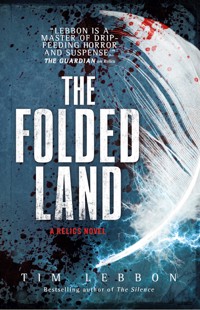
"Tim Lebbon's Relics opens a darkly beautiful glimpse into another world, one lurking in the shadows." James Rollins, New York Times bestseller In the dark underbelly of our world, there's a black market in arcane things—living and dead. Angela Gough has been pulled into this world, making her a criminal on the run. In London she encountered the Kin—satyrs and centaurs, Nephilim and wraiths, they are hunted and slaughtered for their body parts. Fleeing back to the United States, Angela discovers that the Kin are everywhere, and they are tired of being prey. When her niece Sammi is struck by lightning, she is drawn toward the mysterious Folded Land, and its powerful and deadly ruler. Helped by her lover Vince, caught in the midst of a Kin uprising, Angela must locate Sammi before the girl is lost forever.
Das E-Book können Sie in Legimi-Apps oder einer beliebigen App lesen, die das folgende Format unterstützen:
Veröffentlichungsjahr: 2018
Ähnliche



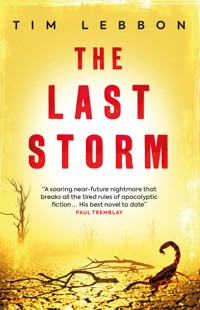
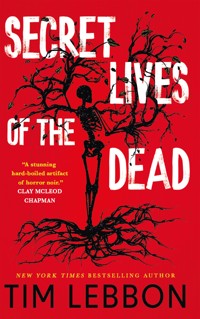
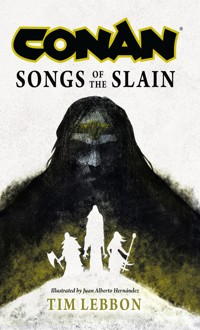


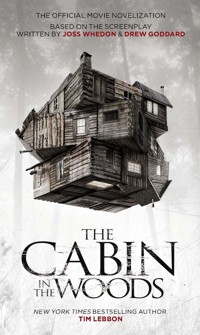



CONTENTS
Cover
ALSO AVAILABLE FROM TIM LEBBON AND TITAN BOOKS
Title Page
Copyright
Dedication
1
2
3
4
5
6
7
8
9
10
11
12
13
14
15
16
17
18
19
20
21
22
23
24
25
26
27
28
29
30
31
32
33
34
35
36
37
38
39
40
Acknowledgements
About the Author
ALSO AVAILABLE FROM TIM LEBBON AND TITAN BOOKS
ColdbrookThe Silence
THE RELICS TRILOGYRelicsThe Folded LandThe Edge (forthcoming)
Alien: Out of the Shadows
THE RAGE WARPredator: IncursionAlien: InvasionAlien vs. Predator: Armageddon
The Cabin in the WoodsKong: Skull Island
THE FOLDED LAND
Print edition ISBN: 9781785650314
Electronic edition ISBN: 9781785650345
Published by Titan Books
A division of Titan Publishing Group Ltd
144 Southwark St, London SE1 0UP
First edition: March 2018
2 4 6 8 10 9 7 5 3 1
This is a work of fiction. Names, places and incidents are either products of the author’s imagination or used fictitiously. Any resemblance to actual persons, living or dead (except for satirical purposes), is entirely coincidental.
Copyright © 2018 by Tim Lebbon. All Rights Reserved.
No part of this publication may be reproduced, stored in a retrieval system, or transmitted, in any form or by any means without the prior written permission of the publisher, nor be otherwise circulated in any form of binding or cover other than that in which it is published and without a similar condition being imposed on the subsequent purchaser.
A CIP catalogue record for this title is available from the British Library.
Did you enjoy this book?
We love to hear from our readers. Please email us at [email protected] or write to us at Reader Feedback at the above address.
To receive advance information, news, competitions, and exclusive offers online, please sign up for the Titan newsletter on our websitewww.titanbooks.com
This one is for my yearly walking buddy,the magnificent Guy Adams
1
There were three men running toward him. He stood his ground as they dashed past, and ignored their panicked, shouted warnings, swapping a glance with one of them. There was sheer horror in the man’s eyes.
Gregor smiled. He’d come to the right place.
He walked on toward the source of their terror. It was a direction he was used to taking. When there was fear amongst people, that was where he often found what he was searching for. Sometimes those frightened people thought of him as a kind of savior, that he had come to rescue them from things with teeth and claws, and faces unlike their own. He did nothing to disabuse them of the notion.
They ran, he arrived, and the monsters went away.
Gregor had been watching the illegal logging camp for seventeen days, hiding out in the jungle, circling by day and hunkering down at night. He grabbed ten minutes of sleep here and there, but most of the time forced himself to remain awake. He’d been watching for signs, and didn’t want to miss anything.
The settlement was large. During the day it often took him ten hours to complete a full circuit of the rough camp and the logging operations that spread out from its heart. Down ravines, up steep hills, always alert for movement and careful not to be seen, he enjoyed the physical challenge. He liked pushing himself. The pain was cathartic. Nothing good came to those who did not strive.
The Amazon jungle was sweltering. Even the regular afternoon downpour was warm, but at least the water swilled a little of the stale sweat and dirt from his clothes, and he caught some in his hat to drink. He ate acai and figs from hanging branches, and sometimes he plucked grubs and spiders from damp, dark places in the bark of giant trees. The loggers would be destroying their habitats soon enough. At least he was putting their succulent, crunchy bodies to good use.
With his time here almost over, he felt a flush of satisfaction. It had been wise to wait and watch. The landscape felt right, the surroundings and location perfect, his information had been correct. He’d known that given time the loggers would uncover what he sought.
In the distance he heard mewling in the naked sunlight.
Gregor broke into a jog. In any normal jungle, moving at such speed would have been impossible, but this place was dying. He vaulted felled trees, climbed onto pale fleshy stumps, leapt off and kicked through thigh-high piles of chopped branches and lank vines. Skirting around a massive stack of stripped trunks, he almost ran into two more men who were running away. One of them skidded to a stop and grabbed Gregor’s arms, opening his mouth to shout a warning, snot running from his nose, sweat washing dirt and sawdust into his wide, terrified eyes.
The man saw something in Gregor’s expression that gave him pause, and the warning remained unvoiced. Pushing away, Gregor ran on, turning his head slightly from side to side, sniffing the air.
A machine idled nearby, sitting at the end of a trail of deep ruts in the jungle floor. Its caterpillar tracks had churned harsh wounds into the ground. Its heavy clasping claws held a tree horizontally, ready to drag it through a macerator that would chew off limbs, bark, and thick side branches, processing it for future use. It was a mechanical version of Gregor himself, albeit larger and far clumsier.
Gregor grinned at this comparison. It pleased him, and he laughed as he ran past.
A flock of birds took flight, startled by the sound.
He stopped at the edge of a large hole. It had once been home to the roots of a massive tree, now tumbled ready to be chopped. The upended root ball formed a tall wall to his left, and crawling blind things still scampered for shelter.
In the hole, the pale thing also tried to crawl back into dank shadows. Tropical sunlight hit its slick skin. Steam rose from its body. It looked up at Gregor. Perhaps it smiled, or grimaced, and the faint whisper might have been an attempted growl to see him away.
Gregor jumped into the hole and landed several feet away from the naked beast. It was the size of a small child, thin and weak-looking, despite its long limbs that seemed to flex and curl around it. It pulsed and moved as if unused to such exposure.
“You’re not afraid of me,” the creature said, the words sounding unfamiliar in its mouth. It must have been a long time since it had felt the need to speak.
“Should I be?” Gregor asked. He pulled a long curved knife from a sheath on his belt. It was razor sharp on its outer edge, the inner blade serrated for sawing through bone. Though well-used, it was still keen and clean. Gregor knew how to look after the tools of his trade.
The creature hissed, but the sound turned into a low, pained sigh.
“Poor leshy,” Gregor said, kneeling in the mud. “How long have you lain here?”
“Too long to remember,” the leshy said, eyeing the blade. It was a tree spirit of this jungle, and it had used the living weight of this giant kapok tree to hide itself away. It might have been there for five hundred years.
Gregor reached out, not with the knife but with his free hand. He touched the creature’s slick brow and whispered words of comfort. Its heavy eyes drifted shut and it purred, twisting itself against his hand.
“Please don’t hurt me,” it said, and although its language was one that no human should know, Gregor understood.
“Tell me where you came from,” Gregor said.
“I’ve been here for…”
“Not here. Before here.”
The leshy opened its eyes again, onto a whole new world. Gregor saw a shred of understanding there now. He would have to be careful. This creature was weak, pitiful, but appearances could be deceptive.
“North,” the leshy said. “There were too many of us there. I came here to be on my own.”
“So sad,” Gregor said.
“Have you come to save me?”
“Yes,” Gregor said. “Yes, I have.”
The leshy blinked and its limbs curled in on themselves.
Gregor lashed out with his knife and sliced the creature’s throat. Its eyes snapped wide. He saw its surprise, but behind the surprise there was something else. Perhaps it was relief.
He cut again, reversing the knife and pressing down, sawing until the leshy’s head parted from its body. Above and around him a heavy sigh passed through the canopies of those trees that were still standing, but Gregor did not let such a thing distract him from his task.
He dug in deep and cut out the dying creature’s heart. As he held it up, sunlight touching where it never should caused the dripping organ to shrivel and cauterize.
A nearby tree began to shed its heavy leaves. Further away, several other trees collapsed with a grief-stricken roar.
“You’re saved,” Gregor said. He pocketed the heart, climbed from the hole, and started walking north.
* * *
Half an hour later he came across two of the men he’d seen fleeing. They were huddled in the cab of a truck, doors and windows closed despite the humidity and heat of the midday sun. They were smoking, their frightened faces hazy behind a miasma of fumes.
As Gregor passed by, one of them wound down his window, just a few inches.
“It’s gone?” he asked.
“Gone.” Gregor did not stop walking.
“What was it?” the man called after him.
“Amazing,” Gregor said, and he walked on, looking forward to leaving that awful fucking place.
2
When storms blew and raged, Sammi remembered her mother.
Mom had always enjoyed storms, and used to sit watching thunder and lightning from Sammi’s bedroom window seat, holding her daughter’s hand and telling her there was no reason to be afraid. Sammi once read about a football team being struck by lightning in Brazil. Six of them had died.
“You’ve got more chance of being eaten by a crocodile,” her mother would say.
“Here in Massachusetts?”
“Precisely.”
In truth, Sammi had never been afraid of lightning. The power and strength of those superheated bolts fascinated her. Hurrying along the street toward their riverside holiday home, Sammi kept away from the gutters. The storm drains weren’t that large here, but they were still big enough for a snapping snout to poke through.
It was a ridiculous thought, she knew, but it reminded her of her mom. That was another thing she’d said.
“You’ve got a vivid imagination, Sammi. It’s richer than most. Sometimes it might make you afraid, but that’s a small price to pay for knowing the world.” At the time Sammi had been too young to ask exactly what she meant, and later there were other things to talk about, but now she often wished she had. She’d never mentioned it to her dad. It was a private memory.
She was beginning to wish she’d come on the bike, as her dad had suggested. He’d already had a couple of beers, so couldn’t drive, and when Sammi had developed a sudden craving for Dunkin’ Donuts, and his face lit up at the idea of one of their coffees, the skies had just been overcast. If she’d taken the bike, she would have had trouble carrying the bag in one hand and steering with the other. And it was only a mile’s walk.
Then the skies opened, rain hammered down, and sizzling arcs of lightning clashed in the clouds above her. She huddled the paper bag to her chest to prevent it from getting soaked and falling apart. It contained four donuts and two steaming hot coffees in a cardboard holder. She wasn’t dressed for the weather, and she passed a few other people who’d been caught out by the sudden downpour, wearing shorts and tee shirts and dashing here and there. She swapped amused glances with some of them. One teenaged boy about her age smiled shyly. An older woman frowned, appearing confused at the storm.
It had come from nowhere.
Sammi didn’t mind. She wasn’t afraid of thunder and lightning, because her mother had told her not to be. Trying to know the world honored her memory. So did not being scared of the storm.
Besides, the rain was warm on her skin, the smell of a summer downpour sweet, and she still had six more glorious days on Cape Cod.
“Hey, Sammi, hope the donuts are worth it!” Mrs. S. called from her front porch. Sammi smiled and waved back, still trying to shelter the bag with her body. Mrs. S. was a huge, round woman who seemed to spend morning, noon, and night sitting on her porch, watching the world go by and swigging soda from a glass the size of a fishbowl.
Sammi had never known her as anything other than Mrs. S., and Dad claimed not to know her real name. They only came to the Cape Cod house two or three times each year, and their interactions with their large neighbor rarely went beyond a wave and a comment about the weather. That Mrs. S. knew their names didn’t faze them. She was a permanent resident, and the sort of person Sammi’s mother had called a sponge, sitting out there and soaking up information whether offered openly or not.
Sammi felt like a sponge. She was soaked through, and would have to change before dinner. At the entrance to the winding road that led down to the inlet’s edge, she felt the bag beginning to split. She hugged it close, both hands folded beneath it to hold in the contents.
Another great crack of thunder smashed across the sky, lightning flashing immediately overhead, so powerful that she felt it thud against her chest. Sammi paused, looking up and around. Rivulets of water ran across the lane and the normally dusty surface was dark and soaked, muddy puddles growing here and there. The river would be flowing faster in the morning, and heavy with sediment. Pity. She’d been hoping for an early morning swim.
It didn’t matter, really, because she and her dad would take a day trip, instead. The trouble was, everywhere they went across the Cape reminded them of her mother.
The house was owned by her mother’s side of the family. A couple of times they’d all come here together, crowding into bedrooms and enjoying a big family get-together.
Then her Aunt Angela went to Britain, and…
Sammi had never believed any of the stories about Angela and her boyfriend. Neither did her dad. Sometimes the news reminded them, but she and Dad no longer talked about the couple.
“Too painful,” he said. Too many lies, Sammi thought. There was a pause button pressed in her life, one branch blocked, and something inside told her that one day, it would be unpaused, and the truth would play out.
Despite that, the house was bursting at the seams with fond memories, the scene of many of her first real recollections. They’d taken regular vacations there every year since she had been born fourteen years before, and she could scroll through the times in that house like a flip-book of images showing her growing up. Barbecues in the garden, playing softball on the lawn, jumping from the dock into the inlet, paddling the inflatable kayak that had somehow lasted nine summers and the abuse of family members and friends. Watching TV in the warm, humid evenings, sitting in her favorite wicker chair while her parents shared the sofa and a bottle of wine, or sat out on the patio, the warm murmur of their voices a comfort behind cartoon chaos or Disney frolics.
Sitting in the window seat with her mother, watching lightning dance across the ocean horizon to the south.
Her mother had died six months earlier, in a car accident. This was their first time here without her, and the house seemed larger than before, harder to fill. She knew that her dad was still struggling. He’d aged years over the past few months, and he was quieter now, more prone to long periods of silence staring at nothing.
Sammi knew what he was looking at.
Splashing through puddles, she was no longer concerned about how wet her tennis shoes became, and giggled at the memories of doing this as a child. There must have been a last time she’d ever jumped into a puddle and thought it fun. The next time she’d walked around them, not wanting to get her new jeans wet, or conscious that her parents would roll their eyes, more concerned with the laundry they’d have to do than the enjoyment she was having. She supposed these last times doing childish things were a part of growing up, and it was sad that they happened and drifted by unnoticed. If she noticed when they came, she would relish every one.
She passed a couple of houses on her left and right, each in its own generous yard with an entrance lane, fencing, and trees and hedges planted to identify the garden boundaries. These were also holiday homes, and she’d never got to know the people staying there.
Lightning flashed again. Thunder cracked. She wondered where it struck, and whether another tree had just died.
As she neared the driveway to the house she saw her father huddled under an umbrella and waiting for her on the porch. He waved and moved out toward her, smiling broadly. She smiled back. There was something about an unexpected, unforecast storm like this that was exciting, and she was pleased to see he shared her pleasure.
She passed their parked car, and when they were within hailing distance she heard him shout. “You better not have spilled my—”
Something changed. The moment froze. For an instant quicker than a blink Sammi was aware of her surroundings with a stark, utter clarity. Her father partway across the garden toward her, one foot raised, mouth open mid-sentence. The house behind him, lights casting shadows across several windows, paint flaking from wooden siding, rose trellis heavy with summer blooms. Rain hanging in the air like glass shards, catching light from the house and reflections from elsewhere. If I look closely enough I’ll see myself in every raindrop, she thought.
A sharp, loud crack split the world. A bright flash, bright as the sun, blinded her. Something struck her so hard that she felt shifted aside.
All became darkness.
* * *
“I feel fine, Dad. Really. A bit fuzzy in the head, like I’m drunk.”
“And what would you know about being drunk, young lady?”
Sammi grinned and looked aside. She knew when she could play her dad and when she couldn’t, and this was one of those times she could. “You might have died,” he’d said when they were in the ambulance, and the terror in his eyes had made her cry. The terror, and the deep loss that resided there, despite the fact that she was still breathing.
“Last Christmas,” Sammi said. “Remember when Chris and Lennie came over for the evening? I was in my room with Jenn.”
Her dad frowned, half-smiling. No, he couldn’t remember, she realized, and she felt a pang of guilt, because sometimes he told her he could hardly recall any good times with her mother at all. It was something to do with the way he was processing the grief. Every memory was in there, he said, but the shock of her death had put a buffer around them. Like bubble-wrap.
Making him try to remember felt cruel.
“I snuck downstairs,” Sammi said. “Mom was laughing, Lennie was all embarrassed, ’cos you and Chris were talking over each other about some holiday you’d been on when the hotel staff caught you all skinny-dipping in the pool past midnight.”
“Shhh!” he said, looking around the emergency room as if afraid someone would hear. She saw how pleased he actually was, because now he was remembering that evening, and that was a good thing.
“Yeah, Sally was laughing,” he said, nodding slowly.
“Well… I poured Jenn and me a glass of punch in the kitchen and crept back upstairs with them.”
“You little sneak! You stole two glasses of punch?”
“No, Dad,” Sammi said. She paused for effect. “I stole six.” She started laughing, then trailed off when it hurt her head.
“So is this the famous young lady who got struck by lightning?” A doctor entered the treatment cubicle. He might have been the tallest man she’d ever seen, with dreadlocks down to the small of his back and hands the size of footballs. His voice, high and soft, didn’t match his appearance, and though he looked stressed, his eyes smiled.
“That’s me!” she said. “Do I have superpowers now?”
The doctor picked up her charts, flipped through a few pages, and raised his eyebrows.
“Well, it says here you can travel through time and move things with your mind.”
She shrugged, trying for nonchalant.
“Mind if I look you over?” he asked. “It’s not every day I treat a time traveler.”
“How do you know?” Sammi asked.
“Touché.” The doctor shone a little flashlight into her eyes, took her pulse and blood pressure, listened to her heart. Her dad watched quietly, letting the man do his job, but Sammi could see he was itching to ask a million questions.
“Yep, you’re fine,” the doctor said at last. “Very slight burns on your right shoulder, no worse than a sunburn. A few singed hairs on your neck.”
“I do not have a hairy neck!”
“Not anymore you don’t.”
“And my new tats, of course.”
“Yeah, they’re quite something.” Sammi turned her arm slowly as the three of them stared at the patterns on her left shoulder and down her arm, around her bicep and tricep and finishing just below her elbow. They were a light brown and golden color. Her dad had said they looked like a satellite photo of a river delta. She thought they resembled the delicate fronds of a big leaf with sunlight shining through it.
“They look like sheet lightning in the clouds,” the doctor said, and the similarity struck Sammi so hard that she wondered why she hadn’t seen it before.
Of course they do! she thought. It’s the bolt that hit me, echoing on my skin.
“Will they stay?” she asked. It was sort of cool, but she was also worried that the freak accident might have scarred her for life.
“They’ll fade over time,” he said. “Few days, maybe a week or two. You should probably take pictures.”
“Way ahead of you,” Sammi said.
“They’re burst capillaries,” the doctor continued. “At least, that’s what all the research says. Microscopic damage to lots of really tiny veins.”
“That sounds bad,” her dad said.
“No worse than bruising,” the doctor said. “Just in much nicer patterns.”
“So she’s really okay?”
“Right as rain.”
“But she was struck by lightning!”
The doctor’s face broke into a smile at last. “And that’s very cool. She’s got a great story to tell her friends.”
“But…” Her dad shook his head. “The electricity. Her heart.”
“This isn’t something I’ve ever seen before,” the doctor admitted, sitting on the edge of the bed. “So I did a quick bit of research. Usually, people who get electric shocks from a wire or socket become injured or even die because it’s a sustained dose. A second, two seconds or more, long enough to damage cells and induce organ failure. With a lightning strike, it’s over in a millionth of a second. The charge usually travels across the surface of the body, not through, especially in this case when she was soaked to the skin. There’s a case of a guy in Florida being struck while playing volleyball, getting up afterward, finishing his game.”
Sammi concentrated on a pen in the doctor’s top pocket. She focused, trying to make it lift out and drop to the floor. It didn’t work. She was disappointed.
Silly sausage, a voice said. She blinked, startled. It had sounded just like her mother, whispering to her from the past.
“But Sammi passed out,” her father said.
“It’s like being punched,” the doctor said. “Hard. By a grizzly. That’s where the fuzzy head comes from. Trust me, the scans all came out clear. No bleeds, no internal scarring. Heart trace is fine.”
“So I’m free to go?”
“Free to go.” The doctor held out his big hand for a high-five. She didn’t leave him hanging.
“Thanks,” her dad said. “Thanks so much.” His voice broke a little, and so did Sammi’s heart. For a while he’d been afraid that he had lost her, too.
“Don’t mention it,” the doctor said. He turned and left the cubicle, heading to someone more needy.
“So,” Sammi said. “Now that I’m a superhero, can we get take-out on the way home?”
“It’s eleven in the morning.”
“Don’t care. I’m starving. Besides, I can time travel, so I’ll make it dinner time.”
He grinned. “Chinese?”
“Chinese.”
They left the hospital together, and he held her hand. He hadn’t done that for some time. She was too old, really. She squeezed back.
* * *
Pulling up outside the house, Sammi felt strange. Last time she’d been here she hadn’t come home properly—the lightning bolt had seen to that. She scanned the graveled parking area and lawn, looking for scorch marks. There was nothing. He must have picked up the spilled coffee, too, and she mourned the lost donuts.
“You okay, honey?” her dad asked.
“Yeah, Dad, I’m good. Kind of tired.”
“Still hungry?”
She nodded. It felt strange. Like coming home to a place so safe and familiar, and returning somewhere after a long time away. The familiarity held a deep nostalgia that someone her age should hardly recognize. “You’ve got an old head on your shoulders,” her mom used to say, and Sammi sometimes imagined herself with gray hair and strange, knowing eyes.
“I’m just going out on the dock for a little bit,” she said. “It’s a nice day, and some sun will make me feel better.”
“You’re sure?” That look of uncertainty. He asked her questions like that a lot nowadays. You’re sure? Do you really think so? Are you certain you want to do that? It had something to do with grief and the uncertainties he felt about her mother dying. In some ways he was being overprotective, making sure that every action Sammi took was a safe one. It was as if he couldn’t bear to have her to grieve on her own. They often spent time together, walking or sitting on the sofa and talking about Mom, looking through photos or old videos, crying and laughing and struggling to move on in their own individual ways.
But sometimes it became cloying.
Sometimes, Sammi just wanted to be on her own.
“I’m sure,” she said, smiling. “It’s one of those moments.” They both had moments that they talked about. Unremarkable memories of her mother, his wife, sitting somewhere and telling a joke, planting a rose bush, pointing at a flock of birds sheeting back and forth across the estuary. They might be years old, random recollections of lost times that meant so much. Every one of them was special.
“Right,” he said, smiling, nodding. “They’re important. Every moment is important.” He paused, and then added, “I’ll put the food in the oven to keep it warm.”
“I won’t be that long, Dad,” she said. “Ten minutes.”
“Okay. Still want to go kayaking this afternoon?”
“Absolutely! I’ll race you.”
“You’ll lose.” He always said that, and until lately he’d been right. Last summer, though, Sammi started beating him in their races. She remembered her mother laughing as they’d both splashed and sweated their way past the spot where she sat in a boat, Sammi edging ahead by half a length and lifting her paddle skyward in triumph. She’d been so pleased that she hadn’t stopped mentioning it for the rest of the day. That long-ago, hot and perfect day.
While her father carried their early take-out to the house, Sammi crossed the lawn toward the dock. Though the sky was a searing blue and the midday sun beat down, the lawn was still damp from the previous day’s surprise downpour. Water soaked through her shoes and into her socks. It was a nice feeling, cool and calming. She stepped onto the dock and kicked off her shoes, pulled off the socks, and enjoyed the feeling of warm wood on the soles of her feet.
She walked to the end of the dock and felt as if she should continue onward. As if there was somewhere else to go. As if there was more to see. This was her favorite place in the whole wide world, but something inside seemed to be urging her elsewhere. Across the wide inlet she could see a dozen houses sitting close to the water, boats docked beside some, flags flying from poles, a few people just visible in gardens, heat haze making ghosts out of them. Several boats chugged up and down the river. A group of kayakers paddled past. She felt an unaccountable need to keep walking, because this wasn’t where she needed to be.
Sammi’s heart hammered in her chest, and as she turned to go back to the house a splinter slid into her skin just beneath her big toe.
Ow!
Silly sausage! a voice said just over her shoulder, and she spun around. Her mother’s pet name for her, spoken in a voice so like her mother’s and yet with a weird lilt, like the distorted echo of someone impersonating her almost perfectly.
“Mom?” Sammi asked.
A shadow passed across the sun and she looked up. Clouds were forming, wispy, darkening. Her skin prickled all across her body. The hairs on her arm stood on end. She looked back toward the house. Her father stood outside the open patio door, smiling and waving her over so that they could share lunch. He and the house were a million miles away.
A sharp, loud crack split the world.
3
Sammi knew that she wasn’t dreaming, but every step felt light, every moment loaded with remarkable potential. Each time she blinked she expected the world to have changed, and in a way it did. One moment to the next presented a whole new existence, although each world contained constants—her father’s love, her own grief, her mother’s unending, unbearable absence.
Lesen Sie weiter in der vollständigen Ausgabe!
Lesen Sie weiter in der vollständigen Ausgabe!
Lesen Sie weiter in der vollständigen Ausgabe!
Lesen Sie weiter in der vollständigen Ausgabe!
Lesen Sie weiter in der vollständigen Ausgabe!
Lesen Sie weiter in der vollständigen Ausgabe!
Lesen Sie weiter in der vollständigen Ausgabe!
Lesen Sie weiter in der vollständigen Ausgabe!
Lesen Sie weiter in der vollständigen Ausgabe!
Lesen Sie weiter in der vollständigen Ausgabe!
Lesen Sie weiter in der vollständigen Ausgabe!
Lesen Sie weiter in der vollständigen Ausgabe!
Lesen Sie weiter in der vollständigen Ausgabe!
Lesen Sie weiter in der vollständigen Ausgabe!
Lesen Sie weiter in der vollständigen Ausgabe!
Lesen Sie weiter in der vollständigen Ausgabe!
Lesen Sie weiter in der vollständigen Ausgabe!
Lesen Sie weiter in der vollständigen Ausgabe!
Lesen Sie weiter in der vollständigen Ausgabe!
Lesen Sie weiter in der vollständigen Ausgabe!
Lesen Sie weiter in der vollständigen Ausgabe!
Lesen Sie weiter in der vollständigen Ausgabe!
Lesen Sie weiter in der vollständigen Ausgabe!
Lesen Sie weiter in der vollständigen Ausgabe!
Lesen Sie weiter in der vollständigen Ausgabe!
Lesen Sie weiter in der vollständigen Ausgabe!
Lesen Sie weiter in der vollständigen Ausgabe!
Lesen Sie weiter in der vollständigen Ausgabe!
Lesen Sie weiter in der vollständigen Ausgabe!
Lesen Sie weiter in der vollständigen Ausgabe!
Lesen Sie weiter in der vollständigen Ausgabe!
Lesen Sie weiter in der vollständigen Ausgabe!
Lesen Sie weiter in der vollständigen Ausgabe!
Lesen Sie weiter in der vollständigen Ausgabe!
Lesen Sie weiter in der vollständigen Ausgabe!
Lesen Sie weiter in der vollständigen Ausgabe!
Lesen Sie weiter in der vollständigen Ausgabe!
Lesen Sie weiter in der vollständigen Ausgabe!
Lesen Sie weiter in der vollständigen Ausgabe!




