


8,49 €
Mehr erfahren.
- Herausgeber: Titan Books
- Kategorie: Fantasy und Science-Fiction
- Sprache: Englisch
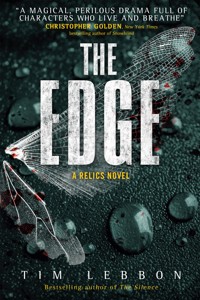
"Lebbon is a master of drip-feeding horror and suspense" - The Guardian on Relics A gripping dark fantasy from the author of The Silence, now a major film on Netflix. There exists a secret and highly illegal trade in mythological creatures and their artifacts. Certain individuals pay fortunes for a sliver of a satyr's hoof, a gryphon's claw, a basilisk's scale, or an angel's wing. Embroiled in the hidden world of the Relics, creatures known as the Kin, Angela Gough is now on the run in the United States. Forty years ago the town of Longford was the site of a deadly disease outbreak that wiped out the entire population. The infection was contained, the town isolated, and the valley in which it sits flooded and turned into a reservoir. The truth—that the outbreak was intentional, and not every resident of Longford died—disappeared beneath the waves. Now the town is revealed again. The Kin have an interest in the ruins, and soon the fairy Grace and the Nephilim leader Mallian are also drawn to them. The infection has risen from beneath silent waters, and this forgotten town becomes the focus of the looming battle between humankind and the Kin.
Das E-Book können Sie in Legimi-Apps oder einer beliebigen App lesen, die das folgende Format unterstützen:
Veröffentlichungsjahr: 2019
Ähnliche





CONTENTS
Cover
Also Available from Tim Lebbon and Titan Books
Title Page
Copyright
Dedication
Part One: Bone
1
2
3
4
5
6
7
8
9
10
11
12
13
14
15
16
17
18
19
Part Two: Ascent
20
21
22
23
24
25
26
27
28
29
30
31
32
33
Acknowledgements
About the Author
A RELICS NOVEL
ALSO AVAILABLE FROM TIM LEBBON AND TITAN BOOKS:
Coldbrook
The Silence
THE RELICS TRILOGY
Relics
The Folded Land
The Edge
Alien: Out of the Shadows
THE RAGE WAR
Predator: Incursion
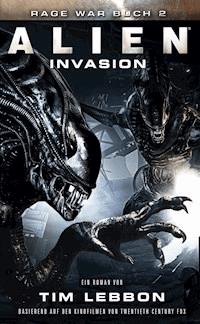
Alien: Invasion
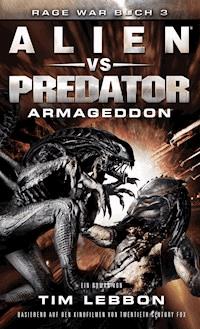
Alien vs. Predator: Armageddon
The Cabin in the Woods
Kong: Skull Island
Firefly: Generations
A RELICS NOVEL
TIM LEBBON
TITAN BOOKS
THE EDGE
Print edition ISBN: 9781785650321
Electronic edition ISBN: 9781785650352
Published by Titan Books
A division of Titan Publishing Group Ltd
144 Southwark St, London SE1 0UP
www.titanbooks.com
First edition: June 2019
2 4 6 8 10 9 7 5 3 1
This is a work of fiction. Names, places and incidents are either products of the author’s imagination or used fictitiously. Any resemblance to actual persons, living or dead (except for satirical purposes), is entirely coincidental.
Copyright © 2019 by Tim Lebbon. All Rights Reserved.
No part of this publication may be reproduced, stored in a retrieval system, or transmitted, in any form or by any means without the prior written permission of the publisher, nor be otherwise circulated in any form of binding or cover other than that in which it is published and without a similar condition being imposed on the subsequent purchaser.
A CIP catalogue record for this title is available from the British Library.
Did you enjoy this book?
We love to hear from our readers. Please email us at [email protected] or write to us at Reader Feedback at the above address.
To receive advance information, news, competitions, and exclusive offers online, please sign up for the Titan newsletter on our website
www.titanbooks.com
This one is dedicated to my good friendsOlaf and Yuka Buchheim
PART ONE
BONE
1
“Do you trust me?”
The kid doesn’t know. He respects the creature before him. He fears it, is fascinated by it, loves it, and sometimes even finds it intimidating, especially on those evenings when it descends from the caves outside town, moving through shadows like a shadow itself to come and visit his mother. The creature’s name is Mohserran, and it is his father. He knows that it troubles his mom as well, but he also realises that there’s something else between the two of them, something grown-up and mysterious. Even though he’s only eleven years old, he understands love.
But trust? He’s not so sure about that.
Especially now, with all the blood.
“It doesn’t matter,” the creature says. The boy has never seen it like this, or heard it sounding so flustered and panicked. It’s only rarely that he has seen Mohserran without his mother also being there, and some of those memories are magical. Now, though, the fact that he doesn’t know where she is frightens him. He might be growing up, but a kid his age still wants his mother, especially when something strange is happening. Something bad.
The kid has felt sick for a couple of days. He’s vomited everything up, and still dry heaves. He’s slept and woken, and confused the two. He’s sweating even though the night is cool. And he has thoughts that are unfamiliar and frightening, about blood and broken bones, torn flesh and teeth clogged with meat. He has wandered back and forth through the town, hardly knowing where he is, or sometimes even who he is.
“Where’s Mom?”
There are strange noises coming from the surrounding darkness. From one direction something is banging again and again, like a door being slammed over and over. From elsewhere he can hear pained shouts, like someone trying to cry past a blocked throat. From further away, a scream.
Overhead, a gentle whoop-whoop noise drifts back and forth over the town, the echoes heavy in his chest. A shadow blots out the stars, moonlight glimmering from dark metal. The boy has seen helicopters before, but never without an accompanying roar. He’s finding it difficult to ally the sights and sounds. Confusion twists all of his senses. He wonders if he is still asleep. He blinks and sees teeth again, and his jaw aches with a dreadful need.
“You must listen to me,” the creature says. It has taken the boy out into the garden, down past the small pond to that uncertain area where garden ends and countryside begins. There are no fences here in Longford, no distinct breaks between civilisation and wilderness. The boy has grown up with that, and he understands it is an aspect of this place that his mother treasures. She says she likes the sense of the wild.
She likes Mohserran, too. This wild thing. That doesn’t stop him being afraid. Even more so now, because its eyes are wider than usual, dripping a strange yellow substance that is luminous in the moonlight, almost afire. Blood is splashed across its skin and fur, and trapped between its teeth he can see dark blots of what might be meat. It’s like looking at himself in a future mirror.
“But I want Mom.”
“Boy, listen to me. It’s important. It’s...” The creature growls and spits, shaking its head like a wet dog. It looks confused, glancing around, clamping its jaws on a shadow. Shaking, fighting against something the boy cannot see or understand, it takes a few slow, deep breaths to compose itself. It stands still for long, long seconds before speaking again. “Something very bad is happening.”
The boy knows. It’s obvious, from the whoop-whooping above the town, and the lights he can now see moving up on the surrounding hills, like distant fireflies with malevolent purpose. He knows from the way he feels—the violent things he imagines, the deep, sick hunger gnawing at his belly—and what he’s seen other people in the town doing. Maggie Parks was down by the river, choking creatures and throwing them in. They might have been kittens, or puppies. Albert Roy, the post office manager, was sitting beneath a tree on the town square, carefully threading sharp sticks through the loose skin covering his old thighs. Mrs Carter was naked in her garden, walking in tight circles around a pile of red clothes or meat on the ground.
“I’m scared.”
“And you should be scared. Scared will keep you safe. Afraid keeps your senses sharp.” The creature talks as if it knows scared and afraid. The boy would never have believed that Mohserran was afraid of anything. Not with those teeth, those claws.
“Where’s Mom?”
It avoids the question and says, “I won’t let you...” It growls and slams the flat of its big, clawed hand against its head. Its eyes roll, spilling speckles of yellow fire like glitter, then refocus on the boy. It seems he is their only focus. Everything else is a blur. “I won’t let you fall. I can’t look after you for much longer, not with the change, and not now that... now that I have to fight.”
“Fight?”
Mohserran does not elaborate. The kid thinks it’s because there is so little time.
Something is changing. The world is moving, with shifting lights and a vibration through the ground. There’s a strange smell on the air, a sweet burning taint like popcorn popping or apple pie warming in the oven. He hears what might be a scream, but when it comes again he realises it’s more like a roar from a human mouth. It sounds so unnatural. It sounds mad.
“There isn’t long,” Mohserran says. “Trust me. I’ll save you. Because I love you.”
The kid blinks in the night and the creature comes close.
Teeth and blood and torn skin and flesh and the taste in my mouth and the storm in my head—
Mohserran holds his face between its hands and the boy feels the tackiness of blood. He isn’t sure whether it’s from his father’s strange hands or his own face, but now it’s on both.
“Now get ready to run, and hide, and don’t stop running and hiding until you’re out of the valley. Never stop.” Mad and covered in blood, still Mohserran looks sad as it holds the boy’s cheeks with its soft, downy hands, vicious claws withdrawn, and brings his face close. It whispers, “Hold this breath all the way.” It presses its mouth to the boy’s and exhales.
He feels himself expand, his senses brightening and sharpening, and his knowledge of the mortal danger all around becomes clearer and more focused. I’m only eleven years old and this shouldn’t be happening to me, he thinks, and it is a very grown-up thought followed by one so childlike: It’s not fair.
Mohserran falls to its knees, one hand clawing into the ground, the other waving at him to go.
The boy holds the breath he has been given and runs.
* * *
He does what Mohserran told him. Impossible though it is, he holds his breath all the way up the hillside and out of the valley. He’s come this way a hundred times before, sometimes with his mother, occasionally with his father, more often with his friends Jake and Emily, lunch packed in their rucksacks ready to be eaten when they reach the hilltop. Sometimes they are explorers, sometimes soldiers, sometimes astronauts landing on a strange planet and charting each footstep for the very first time. Always, they are adventurers.
As he reaches the top of the slope he wonders where Jake and Emily are now.
He gasps out his held breath—he has been running and climbing for half an hour, at least—and he feels a wrench at letting it go. He understands that it is something exotic and mysterious, but he is a child whose mind is open to such things. He has never known anything different. When he draws in a fresh chestful of air, it tastes of heathers and darkness. It is tainted by the fear that his whole life is about to change.
His mind is now clear of those images of blood and violence. He feels empty.
Still unsure if he is out of danger, he hunkers down beside a pile of rocks and turns to look back into the valley below. He has to rest. More than that, he has to know what is happening.
Like how I can hold my breath for half an hour even when it wasn’t really my breath.
That was Mohserran’s last breath. He understands that, at least. And his father gave it to him so that he could survive, and everything he does from now on will be to honour that gift and to treasure that sacrifice.
Down in the valley an uneven ring of lights surrounds Longford, far out from the town’s furthest extremes. It’s made of vehicle lights and larger, stationary lamps that all shine inwards, illuminating the town’s perimeter. He’s too far away to make out these lamps, but he guesses they’re big barrel-sized apparatus mounted on the backs of trucks, similar to the one they use on TV to send the bat signal into the sky. There are no bat signals here.
He starts to shiver, and not from the cold, because he’s warm and sweating from his rapid climb up the hillside. He’s shaking because he is afraid. He can’t remember ever feeling so alone, and what he can see in the valley reminds him of things he’s seen on TV, movies about aliens and the army, monsters and men with guns coming to blow them away. The kid understands the distinction between truth and make-believe well enough, even though a small part of him—perhaps one informed by his experience of television and comics—understands that something about his life might well be regarded as make-believe by most other people.
Caught within the circle of lights, the air above the town appears heavy with something he can’t quite make out. It’s like mist—although the air is light and dry—rolling and pulsing, moving above and through the town like a living, breathing thing. He can’t see where it’s coming from. He doesn’t know what it is.
This is why he told me to hold my breath.
He thinks of the strange noises he heard in the town, and wonders whether there are still shouts, roars and screams in Longford now. He guesses he won’t hear from this distance.
He’s not too far away to hear the first crackle of gunfire.
* * *
By the time dawn arrives the boy is cold and damp. The horrible thoughts of blood have been purged from his mind, but he knows with a shattering certainty that he cannot go back home. Home is safety and love and warmth, Longford is now just a place.
He has seen people wearing special suits and breathing apparatus sweeping the hillsides with strange gadgets, walking in lines and flushing out any living thing ahead of them. He only avoids detection because he knows these hillsides well, and he hides in an old hollow oak.
From high in the tree he sees a fox in the distance, climbing up out of the valley. It has blood around its mouth and is growling, hissing, head darting left and right as if looking for something to kill. It does not look afraid. It looks vicious.
He sees deer and squirrels and rabbits shot as they’re frightened out of hiding ahead of the lines of people. Not every person carries a gun, but most of them do. They bag up the creatures’ corpses, tie the bags and then bag them again. Then they leave them out in the open, attaching a small balloon filled with helium which floats a couple of metres above the ground. So they can find and collect them later, he thinks. He used to like balloons.
A scurrying thing runs close by the entrance to the hollow tree. He hears its ragged breathing accompanied by a series of pained grunts, and when he glances down from a crack high in the tree he locks eyes with a Labrador puppy. He thinks it might be Lucas, the Thompsons’ dog, but it looks different. Muddy, wet, there is also blood spattered around its nose and across its face. He worries that the dog has been injured, but then he sees its eyes.
This is no longer the friendly family pet he stroked a few days ago. They said they’d named him after the Star Wars guy. The boy said they should have called him Chewie. His mother laughed.
Lucas growls and runs at him, and he only just ducks back inside the tree before the dog strikes the opening, scrabbling with oversized puppy paws, growling and spitting as it does its best to get at him.
The boy climbs quickly back up inside the tree. He’s done this before, but never with a mad dog trying to bite him. He wants to shout and cry, but a strong part of him he never realised was there takes control, guiding his hands and feet as he heaves himself up and away from the sick puppy. It’s inside the tree now, but he’s beyond its reach. It cannot climb.
He sits high up for what seems like hours while the dog growls and leaps beneath him. Calling its name does nothing. He even tries “Chewie”. There’s no sign of recognition, no indication at all that the puppy knows its own name or knows him. Teeth are its only response.
Later, as the sun climbs high, the puppy tires of trying to reach him and leaves. Later still he hears a bark and a single gunshot.
He curls up inside the tree, wishing he had food and water. He wants to cry but will not allow himself the tears. He thinks that once they begin they will not end, because all his fears are backing up inside.
Around noon he looks out from high in the tree to see what is happening back down in the town. He can no longer hear gunshots. A calm has settled over the buildings. The strange mist has gone, burnt away by the sun, and now sunlight glints from a tall fence being erected in a rough circle way outside the town’s outer boundary. He hears drills and hammers, and several helicopters drift in from down the valley, heavy platforms laden with building materials swinging beneath them. These are normal helicopters with loud rotors, not the stealthy things he heard over the town last night.
Back inside the oak he remembers Jake and Emily, and how they once climbed this tree together.
* * *
He doesn’t know where to go, so he stays close to the only place he has ever known.
A day and a night have passed. The boy spent the night in the tree, and next day he stole some food from a big army truck he found beside a forest track with no one inside. He’s seen several army vehicles, and soldiers wander the hillsides looking threatening and important. None of them have seen him.
He has a talent for not being seen. Sometimes his mother said he could flit by the corner of her eye all day long. She told him he was sleek. She said it like it was a special word, a big word, and he always believed there was much more behind it still waiting to be told.
She will not tell him now. He’s pretty sure she is dead, along with his father Mohserran and the rest of Longford. That is a truth he keeps to one side and views from the corner of his eye, because if he allowed it in close it would break him, and he would no longer be sleek, and they would find him and do the same to him.
None of the soldiers goes down into the valley. The only people going into and back out of the valley are the people in the silvery suits, the ones building the fence. He guesses they’re soldiers too, but they’re different. Occasionally he still hears a lonely gunshot.
On the fourth day after fleeing Longford and home, he doesn’t hear any more shooting at all.
* * *
The boy moves around the valley. He pretends he’s carried with the breeze, drifting from bushes to trees to rocky outcroppings, hiding in their shadows when soldiers are nearby. He’s afraid and alone and confused about what has happened and is still happening, but he is also determined not to be caught. Mohserran didn’t give him his last breath just for that to happen.
Sleek, he scavenges food. There are several new camps high up on the hillsides where soldiers live, and the only ones he avoids are the couple with dogs. The others he orbits until he sees an opportunity to slip in, steal food and clothing, and move out again. No one sees him. He is the wind, the whisper of a secret, an errant sunbeam. He likes the feel of moving through the landscape without being seen, and he likes even more the occasional turn of a soldier’s head as he or she glimpses something from the corner of their eye. It gives him a sense of comfort, in a situation where comfort is lacking.
I’m only a little boy, he thinks. I shouldn’t be out here on my own.
The noises from the valley have changed. A mile downriver from Longford there are lots of big machines, diggers and bulldozers and lorries streaming up and down the valley dumping piles of boulders and mud. The piles are growing, meeting, and from high on the hillside he can see soldiers scrambling like ants on a giant nest. Over time—days, maybe weeks, he soon loses track—the surfaces of the piles smooth out, and the undulations between them start to level.
The river’s flow has stopped. The boy finds that strange, and sad. It’s as if the blood has ceased flowing through the heart of Longford.
* * *
With nowhere else to go he remains in the valley. Somewhere deep inside, he realises that a small part of him still hopes that this will end and he’ll be able to return home. Logic tells him there’s no truth in that, as does everything he has seen and heard. But at heart he is still just a little lost boy.
Against all instincts, he decides to go back down to the town one more time.
He has been living in the hollowed oak tree. He’s made quite a home of it, with a comfortable bed of old coats in the base and a convenient look-out perch higher up inside. He has a collection of stolen clothing and food, and he has eased back on his thieving in case it is noticed. He dresses in an oversized camouflage jacket, tying it close to his body with belts, and starts back down into the valley early one morning. As dawn sets the eastern hillsides aflame, he mounts a small rise close to the town and looks down upon his old home.
It is the same, but different. He recognises buildings and streets, the church close to the town square and the park on the far side, beyond which is the house where he has lived all his life. He cannot see the house because it’s hidden behind the park’s trees, and in a way he is pleased. He thinks that if he saw the pale pink walls and white window surrounds he might lose himself, run, get caught.
Get shot, he thinks.
In the days or weeks since he escaped Longford, he has not seen a single human being who is not a soldier.
And that is why the familiar town is also so different—because there is no one there. The streets are deserted and silent. No dogs or cats wander the pavements and gardens. A few screen doors hang open, a couple banging in the gentle morning breeze, and scraps of litter roll lazily along the main street. He has never seen Longford so silent.
The tall fence around the town makes it impossible to approach any closer. There are cameras topping the fence posts. They are aimed both into the town and away from it—the fence keeps him out, but perhaps it is also erected to keep something in.
With the sun behind him, the boy makes his way back up into the hills. The similarity with Mohserran and the two other creatures that call this place their home is obvious—they, too, would leave the town at sunrise and go back to their domain in the hills. Not everyone in Longford knew of their existence. Not everyone who knew welcomed it.
Perhaps he is tired, or grief is blurring his vision, but he does not see the soldier until he almost trips over her. She is sitting by a tree, and when she sees him she lets out a small cry of surprise, and then a grunt of fear. She kicks backwards and away from him, bringing her gun up and aiming it at his face.
She is the same height as him, slightly built, and her camouflage gear is grubby and stained, her face streaked with sweat and dirt. She looks very tired.
Very scared.
“No,” the boy says. It is the first word he has uttered since fleeing Longford.
“Who are you? Stay there. Don’t move.” She quickly gathers herself and is now in charge, her weapon aimed unwaveringly at his chest.
“What’s happening?” the boy asks. I have to get away, he thinks. I have to be sleek. He does not trust this soldier one bit. She’s alone, and flustered, but she’s one of them. For all he knows this gun might have shot his mother.
“Let me see your tongue,” she says. “Stick it out. All the way.”
The boy does so. She squints, looks close, then nods. He closes his mouth.
“What’s your name?”
“Robert Bonham,” he mutters. He looks left and right, past the tree she’s got her back to. He’s afraid that others will be close by, and he remembers the shooting he heard, the lines of silver-clad people driving all the living things before them. The bloodied fox. Lucas the mad puppy.
“Eh? Speak up.”
He mutters his name again. This part of being sleek, of being unknown and unseen, is almost instinctive. The soldier frowns and turns her head, leaning in closer.
“Eh? Bone? That your name? Bone?”
Bone, the boy thinks, and then he runs. He dashes towards the soldier and then steps left, sleeking past and darting behind the tree, up the slope, jigging left and right and waiting every moment for the bullet that will take him down.
There is no bullet. There is no gunshot.
With his new name intact, Bone escapes.
* * *
Three days later something else changes. The river, running almost dry for the past few weeks, surges back into the valley with a roar. Its path is now blocked by the massive construction that has been worked on day and night, and when it strikes the structure damming the valley it boils and churns, white water turning dark with mud, dark as blood. From his vantage point high in the hollow oak tree, the boy can see ant-like figures scurrying around both ends of the dam, watching as the river flows, flows, and rises.
He stays there for another three days. When the water rises enough to start flooding the streets of Longford, he turns his back on that place and finally walks away. He crests the ridge above the wide valley that was his home, and even as the drowning town drops out of sight behind him Bone will not allow himself to cry.
* * *
Life becomes complex and dangerous, as does Bone.
The first time he returns to the valley is nineteen years after he left. He knows what he will find because he has followed the story of Longford, both the faked public version and the more elusive truth. He is surprised to discover the old oak is still there. He cannot fit inside now, but he shines a torch into the hollow, amazed at how small it seems. There’s nothing to reveal that he once made this place his home.
He climbs the outside of the tree instead, and perches on a branch close to the crack in the trunk from which he watched, afraid and alone, all those years ago.
Bone sits and watches for quite some time. It’s very peaceful in the valley, as if it has always been this way. Much like him, the reservoir presents a calm surface, hiding the potential for endless chaos beneath.
The next time he returns, another twenty years into the future, that chaos will rise.
2
She flows across this land that she has made her home.
The creature she seeks is down near the valley floor, bathing in a pool and treating its wounds. She has met this one three times since closing the Fold—she no longer acknowledges their names, because now they are simply prey. When it senses her approach it will know what is to come, and she hopes that it will panic and flee, darting away across the landscape seeking somewhere to hide, even though it knows there is nowhere. She hopes, but she is not sure. Even now some of the Kin she brought here are becoming passive in the face of their eternal fate. It isn’t what she sought. A fairy needs stimulation, not wan compliance. She craves the hunt.
Grace’s new home is not what she intended.
Because of them, she thinks. They’re the reason. They taint the air.
She runs down a steep grassed slope, leaping over rocks and vaulting a low stone wall one of the others has been building. When she arrives at the pool the bathing creature turns its head, and she is upon it before it can splash its way to the water’s edge.
Grace drives it beneath the surface, following it down through the weedy water, pressing it to the pond’s bed and then closing her mouth around its shoulder.
The creature squeals in bubbles. Grace bites and twists. A chunk of Kin flesh warms her mouth, blood mixing with dirty water to pour down her throat, and she lets the creature go and surfaces with her raw prize clamped between her teeth.
Sitting beside the pond, Grace chews and watches the creature drag itself onto the opposite bank. It casts a glance across at her, both angry and scared. Then it stands and staggers away into the trees, seeking somewhere dark and quiet to let its wound heal once more.
Never somewhere secret, though. This is her Fold, and she knows every inch of the place. There are no secrets here.
Perhaps that is one of its failings.
She enjoys the sunlight on her skin and her mind wanders, as is its wont, to other skies and more distant times...
The ancient and vast woodlands of Europe, where she and her kind lived for millennia and their interaction with the humans of the time was a source of enjoyment and competition. They were gods or demons, friends or enemies, and sometimes all of those things at the same time. They saw respect and fear in human eyes, and in the monuments built to them they witnessed the base need of humanity to believe in something greater than itself, no matter whether that thing was good or evil. They played on this, and preyed on it. It was a time of plenty. An era of joy.
There are too many humans now. The gods and demons they pander to are too ethereal.
Grace chews and swallows, feeling the strength and heat from the meat coursing through her ancient body and invigorating her senses. After finishing her meal and picking scraps from between her teeth with long nails she walks along the valley floor, knowing where she is heading but in no rush to get there. Something draws her to the Nephilim. She will never speak with him. She could kill him, but he is not a Kin she brought here by choice, and to do so would be to admit that she made mistakes. Besides, she likes him where he is. He sought to command and control her. She enjoys turning the tables on the fool.
She remembers Mallian from the Time, a young creature, as impetuous then as now. They are all still young to her, like children, playthings, hers to control... she wishes... she thinks she might have...
The fairy sighs deeply and takes hold of her mind. It drifts so much now, old thing that it is. Sometimes it wanders so far that she worries she might never drag it back. On occasion she fears that much of it has already escaped the gravity of her being, and that the mind she has left is a congregation of random memories, thought shards, and glimpses of things she once knew. She feels herself slipping away. This place is an attempt to hold onto everything she has left, keep herself together. But it is not perfect.
Summiting a small rise, she looks down on one of the reasons for its imperfections.
Mallian the Nephilim is on the valley floor, arms and legs held fast as they have been since the moment she cast him down. Some time has passed since that confrontation, but Grace does not know how long, nor does she care. The passage of time no longer holds much meaning for her.
He is thin and gaunt, his once-strong body withered. She has never eaten of him. She did not bring him here, and to take a bite of his treacherous flesh would be to honour him too much. Better to see him trapped down there, suffering in the knowledge that everything he dreamt of has come to nothing.
Elsewhere in the Fold, not too far from here, the human lives in a cave. Sometimes he feeds the Nephilim, and Grace finds amusement in the strange bond that has grown between the two of them. She lets them have that.
She could kill them both, but their blood would taint the soil. For now she is happy to ignore them most of the time. They are no threat to her.
Nothing is a threat to her. Her mind is too great...
My mind is in shards.
She is too strong, too sure of her own strength and future...
I’m weaker than I have ever been.
She has everything she wants in here with her...
Except her. I saw fairy in her.
The memory of the girl is the one aspect of the world beyond the Fold that refuses to let go. Grace is miles and universes away from the world, but the scent of the girl’s flesh, the look in her eye, forms a bridge between her old world and this Folded Land. If Grace could break the bridge, she would.
If she could bring the girl here, nurture her fairy blood, and make her an eternal companion... that would be better.
That would make her already long life, and the eternity still to come, complete.
3
Each morning Angela would wake from a nightmare. She rarely remembered them—that was a blessing, at least—but her sheets were always tangled, her skin damp and hot with nervous perspiration, and sometimes her throat was sore, her eyes stinging, as if she had been shouting and crying in her sleep. If that were the case, Sammi never commented. Sammi was a good kid.
Today was the same. She was used to the sense of rising from somewhere deep and dark, and feeling only mild relief at waking into the real world. The grimness of her nightmares, their dark echoes, accompanied her into the day. It felt so unfair having her mood determined by bad dreams. Plenty about her life felt unfair.
Angela sat on the edge of her narrow wooden cot, rested her elbows on her knees, and looked down at the floor. She was all too familiar with the joints, cracks and knots in the floorboards. Sometimes she looked at the dark lines of the joins and wondered what lay beneath them. The truth was, it was simply the crawlspace beneath the cabin, too narrow for her to enter, home to insects and spiders and perhaps snakes. Nowadays she spent a lot of time looking at familiar objects and spaces—fallen trees, turns in forest paths, dark crevasses in piles of rocks—and wondering what might be beyond.
These were the creatures and places that gave her nightmares and haunted her waking hours.
“Sammi!” she shouted. She knew her niece would be awake and out of bed. She usually saw in the dawn, and sometimes she was already gone from the small cabin when Angela rose. She tried not to feel concerned when this happened. Sammi needed to explore and exist in a world that was anything but safe. Keeping her constrained and wrapped in cotton wool would benefit neither of them.
“Coffee’s already on!” Sammi replied from beyond the door.
Angela smiled. She rubbed her face, trying to wipe away the dregs of her nightmares. Although she recalled nothing of her dreams, they dragged her down. Old memories circled her. She could feel the stare of the Kin on the back of her neck. She could almost taste Vince on her lips, and feel the ghost of his hand in hers.
He had been gone for two years, but she would never forget his taste or touch. He was as known to her now as he ever had been, as if her sleep renewed her memories of him and made them fresh again. If the price of that was a gloom hanging over the beginning of each day, it was a price she was happy to pay.
“Lovely day, sunny and cool,” Sammi said when Angela walked into the living room. She sat down on a tatty sofa and took the steaming mug Sammi offered, closing her eyes and sighing as she breathed in the coffee, groaning in delight when she took the first taste. For someone who did not like hot drinks, the girl sure made a good cup of Joe.
“I’m going for a walk up to the waterfalls,” Sammi said.
“Don’t forget we’re looking at Lord of the Flies again later.”
“Aww, Angela.” There it was. The teenage drawl. And Angela loved it. It was a normality she had despaired Sammi ever finding.
“It’s a great book!”
“It’s boring!”
“How can you possibly find it boring?”
Sammi was smirking a little as she turned away and went back into the kitchen, and Angela almost called her on it. She knew she was being played. Sammi was the brightest girl she had ever known, and sometimes Angela felt it was her doing the learning and Sammi the teaching.
“Want some scrambled eggs?” Sammi asked.
“Sure. I’ll fetch some eggs.”
“I’ll get them. You’re old.” Sammi darted from the kitchen and through the front door before Angela could respond and disappeared around the side of the cabin.




