


Renaissance Drama E-Book
37,99 €
Mehr erfahren.
- Herausgeber: John Wiley & Sons
- Kategorie: Geisteswissenschaft
- Serie: Blackwell Anthologies
- Sprache: Englisch
RENAISSANCE DRAMA
Experience the best and most noteworthy works of Renaissance drama
This Third Edition of Renaissance Drama: An Anthology of Plays and Entertainments is the latest installment of a groundbreaking collection of non-Shakespearean Renaissance drama. Covering not only the popular drama of the period, Renaissance Drama includes masques, Lord Mayor shows, royal performances, and the popular mystery plays of the time. The selections fairly represent the variety and quality of Renaissance drama and they include works of scholarly and literary interest.
Each work included in this edition comes with an insightful and illuminating introduction that places the piece in its historical and cultural context, with accompanying text explaining the significance of each piece and the ways in which it interacts with other works.
New to this edition are:
- The famous entertainment for Elizabeth at Kenilworth
- George Peele’s remarkably inventive The Old Wives’ Tale
- The oft-forgotten history of Thomas of Woodstock, predecessor to Shakespeare’s Richard II
- John Lyly’s Gallathea, a work which explores gender and love, written for the Children’s Company at Saint Paul’s
- Ben Johnson’s Volpone and the controversial Epicoene
Perfect for scholars, teachers, and readers of the English Renaissance, Renaissance Drama: An Anthology of Plays and Entertainments belongs on the bookshelves of anyone with even a passing interest in the drama of its time.
Sie lesen das E-Book in den Legimi-Apps auf:
Seitenzahl: 4055
Veröffentlichungsjahr: 2022
Ähnliche




















Table of Contents
Cover
Series Page
Title Page
Copyright Page
Dedication Page
Acknowledgments
A Note on the Texts
Preface to the Third Edition
Introduction
Brief Lives
Chronology
Maps
The Noble Triumphant Coronation of Queen Anne, Wife unto the most noble king Henry the VIII
FURTHER READING
The Noble Triumphant Coronation of Queen Anne, Wife unto the most noble king Henry the VIII
The Queen’s Majesty’s Passage
FURTHER READING
The Queen’s Majesty’s Passage through the City of London to Westminster the Day before Her Coronation
The Princely Pleasures at the Court at Kenilworth
FURTHER READING
A brief rehearsal, or rather a true copy of as much as was presented before her majesty at Kenilworth, during her last abode there, as followeth
The Lady of May
FURTHER READING
[The Lady of May]
The Spanish Tragedy
FURTHER READING
The Spanish Tragedy
Gallathea
FURTHER READING
The Prologue
The Tragical History of Thomas of Woodstock
Introduction
FURTHER READING
Dramatis Personae
The Tragical History of D. Faustus
FURTHER READING
The Tragical History of D. Faustus
Arden of Faversham
FURTHER READING
The Tragedy of Master Arden of Faversham
The Troublesome Reign and Lamentable Death of Edward the Second
FURTHER READING
The Troublesome Reign and Lamentable Death of Edward the Second
The Old Wives’ Tale
FURTHER READING
CAST OF CHARACTERS
THE OLD WIVES’ TALE
The Tragedy of Antony
FURTHER READING
The Tragedy of Antony
The Shoemakers’ Holiday
FURTHER READING
The Shoemakers’ Holiday
THE PROLOGUE
The Malcontent
FURTHER READING
The Malcontent
The Induction
Prologue
The Malcontent
The Triumphs of Re-United Britannia
FURTHER READING
The Triumphs of Re-United Britannia
The Lion and the Camel
The Chariot: Pheme riding before it
Neptune on the Lion 500
Neptune
A Woman Killed with Kindness
FURTHER READING
A Woman Killed with Kindness
THE PROLOGUE
THE EPILOGUE
The Knight of the Burning Pestle
The Knight of the Burning Pestle
EPILOGUE
Volpone or The Fox
THE EPISTLE
THE PERSONS OF THE COMEDY
The Argument
Prologue
Further Reading
THE FOX
EPILOGUE
The Masque of Queens
Further Reading
The Masque of Queens
Epiocene, or the Silent Woman
FURTHER READING
The Persons of the Play
EPICOENE, or the Silent Woman
PROLOGUE
ANOTHER
EPICOENE
A Chaste Maid in Cheapside
FURTHER READING
A Chaste Maid in Cheapside
The Tragedy of Mariam
FURTHER READING
To Diana’s Earthly Deputress and my worthy sister, Mistress Elizabeth Cary
The Names of the Speakers
The Argument
The Duchess of Malfi
FURTHER READING
The Duchess of Malfi
[Commendatory Verses]
The Actors’ Names
The Barriers
Further Reading
The Barriers
The Witch of Edmonton
Further Reading
The Witch of Edmonton
The Changeling
Further Reading
The Changeling
’Tis Pity She’s a Whore
Further Reading
’Tis Pity She’s a Whore
The Convent of Pleasure
Further Reading
The Convent of Pleasure
Index of Titles
End User License Agreement
Guide
Cover
Series Page
Title Page
Copyright Page
Dedication Page
Acknowledgments
A Note on the Texts
Preface to the Third Edition
Table of Contents
Begin Reading
Index of Titles
WILEY END USER LICENSE AGREEMENT
Pages
ii
iii
iv
v
viii
ix
x
1
2
3
4
5
6
7
8
9
10
11
12
13
14
15
16
17
18
19
20
21
22
23
24
25
26
27
28
29
30
31
32
33
34
35
36
37
38
39
40
41
42
43
44
45
46
47
48
49
50
51
52
53
54
55
56
57
58
59
60
61
62
63
64
65
66
67
68
69
70
71
72
73
74
75
76
77
78
79
80
81
82
83
84
85
86
87
88
89
90
91
92
93
94
95
96
97
98
99
100
101
102
103
104
105
106
107
108
109
110
111
112
113
114
115
116
117
118
119
120
121
122
123
124
125
126
127
128
129
130
131
132
133
134
135
136
137
138
139
140
141
142
143
144
145
146
147
148
149
150
151
152
153
154
155
156
157
158
159
160
161
162
163
164
165
166
167
168
169
170
171
172
173
174
175
176
177
178
179
180
181
182
183
184
185
186
187
188
189
190
191
192
193
194
195
196
197
198
199
200
201
202
203
204
205
206
207
208
209
210
211
212
213
214
215
216
217
218
219
220
221
222
223
224
225
226
227
228
229
230
231
232
233
234
235
236
237
238
239
240
241
242
243
244
245
246
247
248
249
250
251
252
253
254
255
256
257
258
259
260
261
262
263
264
265
266
267
268
269
270
271
272
273
274
275
276
277
278
279
280
281
282
283
284
285
286
287
288
289
290
291
292
293
294
295
296
297
298
299
300
301
302
303
304
305
306
307
308
309
310
311
312
313
314
315
316
317
318
319
320
321
322
323
324
325
326
327
328
329
330
331
332
333
334
335
336
337
338
339
340
341
342
343
344
345
346
347
348
349
350
351
352
353
354
355
356
357
358
359
360
361
362
363
364
365
366
367
368
369
370
371
372
373
374
375
376
377
378
379
380
381
382
383
384
385
386
387
388
389
390
391
392
393
394
395
396
397
398
399
400
401
402
403
404
405
406
407
408
409
410
411
412
413
414
415
416
417
418
419
420
421
422
423
424
425
426
427
428
429
430
431
432
433
434
435
436
437
438
439
440
441
442
443
444
445
446
447
448
449
450
451
452
453
454
455
456
457
458
459
460
461
462
463
464
465
466
467
468
469
470
471
472
473
474
475
476
477
478
479
480
481
482
483
484
485
486
487
488
489
490
491
492
493
494
495
496
497
498
499
500
501
502
503
504
505
506
507
508
509
510
511
512
513
514
515
516
517
518
519
520
521
522
523
524
525
526
527
528
529
530
531
532
533
534
535
536
537
538
539
540
541
542
543
544
545
546
547
548
549
550
551
552
553
554
555
556
557
558
559
560
561
562
563
564
565
566
567
568
569
570
571
572
573
574
575
576
577
578
579
580
581
582
583
584
585
586
587
588
589
590
591
592
593
594
595
596
597
598
599
600
601
602
603
604
605
606
607
608
609
610
611
612
613
614
615
616
617
618
619
620
621
622
623
624
625
626
627
628
629
630
631
632
633
634
635
636
637
638
639
640
641
642
643
644
645
646
647
648
649
650
651
652
653
654
655
656
657
658
659
660
661
662
663
664
665
666
667
668
669
670
671
672
673
674
675
676
677
678
679
680
681
682
683
684
685
686
687
688
689
690
691
692
693
694
695
696
697
698
699
700
701
702
703
704
705
706
707
708
709
710
711
712
713
714
715
716
717
718
719
720
721
722
723
724
725
726
727
728
729
730
731
732
733
734
735
736
737
738
739
740
741
742
743
744
745
746
747
748
749
750
751
752
753
754
755
756
757
758
759
760
761
762
763
764
765
766
767
768
769
770
771
772
773
774
775
776
777
778
779
780
781
782
783
784
785
786
787
788
789
790
791
792
793
794
795
796
797
798
799
800
801
802
803
804
805
806
807
808
809
810
811
812
813
814
815
816
817
818
819
820
821
822
823
824
825
826
827
828
829
830
831
832
833
834
835
836
837
838
839
840
841
842
843
844
845
846
847
848
849
850
851
852
853
854
855
856
857
858
859
860
861
862
863
864
865
866
867
868
869
870
871
872
873
874
875
876
877
878
879
880
881
882
883
884
885
886
887
888
889
890
891
892
893
894
895
896
897
898
899
900
901
902
903
904
905
906
907
908
909
910
911
912
913
914
915
916
917
918
919
920
921
922
923
924
925
926
927
928
929
930
931
932
933
934
935
936
937
938
939
940
941
942
943
944
945
946
947
948
949
950
951
952
953
954
955
956
957
958
959
960
961
962
963
964
965
966
967
968
969
970
971
972
973
974
975
976
977
978
979
980
981
982
983
984
985
986
987
988
989
990
991
992
993
994
995
996
997
998
999
1000
1001
1002
1003
1004
1005
1006
1007
1008
1009
1010
1011
1012
1013
1014
1015
1016
1017
1018
1019
1020
1021
1022
1023
1024
1025
1026
1027
1028
1029
1030
1031
1032
1033
1034
1035
1036
1037
1038
1039
1040
1041
1042
1043
1044
1045
1046
1047
1048
1049
1050
1051
1052
1053
1054
1055
1056
1057
1058
1059
1060
1061
1062
1063
1064
1065
1066
1067
1068
1069
1070
1071
1072
1073
1074
1075
1076
1077
1078
1079
1080
1081
1082
1083
1084
1085
1086
1087
1088
1089
1090
1091
1092
1093
1094
1095
1096
1097
1098
1099
1100
1101
1102
1103
1104
1105
1106
1107
1108
1109
1110
1111
1112
1113
1114
1115
1116
1117
1118
1119
1120
1121
1122
1123
1124
1125
1126
1127
1128
1129
1130
1131
1132
1133
1134
1135
1136
1137
1138
1139
1140
1141
1142
1143
1144
1145
1146
1147
1148
1149
1150
1151
1152
1153
1154
1155
1156
1157
1158
Blackwell Anthologies
Editorial Advisers
Rosemary Ashton, University of London; Gillian Beer, University of Cambridge; Gordon Campbell, University of Leicester; Terry Castle, Stanford University; Margaret Ann Doody, Vanderbilt University; Richard Gray, University of Essex; Joseph Harris, Harvard University; Karen L. Kilcup, University of North Carolina, Greensboro; Jerome J. McGann, University of Virginia; David Norbrook, University of Oxford; Tom Paulin, University of Oxford; Michael Payne, Bucknell University; Elaine Showalter, Princeton University; John Sutherland, University of London; Jonathan Wordsworth, University of Oxford.
Blackwell Anthologies are a series of extensive and comprehensive volumes designed to address the numerous issues raised by recent debates regarding the literary canon, value, text, context, gender, genre, and period. While providing the reader with key canonical writings in their entirety, the series is also ambitious in its coverage of hitherto marginalized texts, and flexible in the overall variety of its approaches to periods and movements. Each volume has been thoroughly researched to meet the current needs of teachers and students.
Old and Middle English c.890–c.1400: An Anthology.Second editionedited by Elaine Treharne
Medieval Drama: An Anthologyedited by Greg Walker
Chaucer to Spenser: An Anthology of English Writing 1375–1575edited by Derek Pearsall
Renaissance Drama: An Anthology of Plays and Entertainments. Third editionedited by Arthur F. Kinney and David A. Katz
Renaissance Literature: An Anthologyedited by Michael Payne and John Hunter
British Literature 1640–1789: An Anthology. Second editionedited by Robert DeMaria, Jr
Restoration Drama: An Anthologyedited by David Womersley
American Gothic: An Anthology 1787–1916edited by Charles L. Crow
The Literatures of Colonial America: An Anthologyedited by Susan Castillo and Ivy T. Schweitzer
Romanticism: An Anthology. Third editionedited by Duncan Wu
Nineteenth-Century American Women Writers: An Anthologyedited by Karen L. Kilcup
Nineteenth-Century American Women Poets: An Anthologyedited by Paula Bernat Bennett
Native American Women’s Writing: An Anthology of Works c.1800–1924edited by Karen L. Kilcup
Children’s Literature: An Anthology 1801–1902edited by Peter Hunt
Victorian Women Poets: An Anthologyedited by Angela Leighton and Margaret Reynolds
The Victorians: An Anthology of Poetry and Poeticsedited by Valentine Cunningham
Modernism: An Anthologyedited by Lawrence Rainey
Renaissance Drama
An Anthology of Plays and Entertainments
THIRD EDITION
EDITED BY ARTHUR F. KINNEY† AND DAVID A. KATZ
This third edition first published 2022© 2022 John Wiley & Sons Ltd
Edition HistoryBlackwell Publishing Ltd (1e, 2000; 2e, 2005)
All rights reserved. No part of this publication may be reproduced, stored in a retrieval system, or transmitted, in any form or by any means, electronic, mechanical, photocopying, recording or otherwise, except as permitted by law. Advice on how to obtain permission to reuse material from this title is available at http://www.wiley.com/go/permissions.
The right of Arthur F. Kinney and David A. Katz to be identified as the authors of the editorial material in this work has been asserted in accordance with law.
Registered OfficesJohn Wiley & Sons, Inc., 111 River Street, Hoboken, NJ 07030, USAJohn Wiley & Sons Ltd, The Atrium, Southern Gate, Chichester, West Sussex, PO19 8SQ, UK
Editorial OfficeThe Atrium, Southern Gate, Chichester, West Sussex, PO19 8SQ, UK
For details of our global editorial offices, customer services, and more information about Wiley products visit us at www.wiley.com.
Wiley also publishes its books in a variety of electronic formats and by print‐on‐demand. Some content that appears in standard print versions of this book may not be available in other formats.
Limit of Liability/Disclaimer of WarrantyWhile the publisher and authors have used their best efforts in preparing this work, they make no representations or warranties with respect to the accuracy or completeness of the contents of this work and specifically disclaim all warranties, including without limitation any implied warranties of merchantability or fitness for a particular purpose. No warranty may be created or extended by sales representatives, written sales materials or promotional statements for this work. The fact that an organization, website, or product is referred to in this work as a citation and/or potential source of further information does not mean that the publisher and authors endorse the information or services the organization, website, or product may provide or recommendations it may make. This work is sold with the understanding that the publisher is not engaged in rendering professional services. The advice and strategies contained herein may not be suitable for your situation. You should consult with a specialist where appropriate. Further, readers should be aware that websites listed in this work may have changed or disappeared between when this work was written and when it is read. Neither the publisher nor authors shall be liable for any loss of profit or any other commercial damages, including but not limited to special, incidental, consequential, or other damages.
Library of Congress Cataloging‐in‐Publication Data applied for
Paperback: 9781118823972
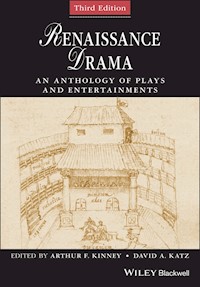
Cover Design: WileyCover Image: 1596 image of Swan Theater, Utrecht University Library
For the past, present, and future scholars, teachers, and readers at the Kinney Center for Interdisciplinary Renaissance Studies, Amherst
Acknowledgments
Years ago, Andrew McNeillie, Blackwell editor, agreed that plays could be conceived as cultural records of their time, and so Renaissance Drama: An Anthology of Plays and Entertainments was born. Andrew’s wisdom led to an anthology that included masques and royal entertainments centering on issues of court and society shared by some of the plays, eventuating in a new consideration of well-established texts, as well as helping to redefine theater and performance in the English Renaissance.
In the original spirit of the project, while preserving the medieval roots of the Golden Age of drama in an online supplement, the present volume seeks to expand the chronological range of plays into the Caroline period and to better represent the early contributions to theater made by women. These and other changes reflect the commentary and reception provided to us by teachers and students who used the previous editions; we are especially grateful to those who responded to an early survey sent by our publisher. We are also thankful to Nathanial Leonard and Jennifer Low for their thoughtful discussions about play selection. The staff and readers of the Massachusetts Center for Interdisciplinary Renaissance studies, particularly Jeff Goodhind, Ellen Carroll‐McLane, and Sharanya Sridhar, have been helpful since the first edition and continue to be a source of support. We are also grateful to the staff at Wiley.
Publisher’s Note
Sadly, Arthur Kinney passed away on the 25th of December 2021, when this anthology was already in production. While the majority of the proofreading was undertaken by Arthur himself, we have, with the help of expert proofreaders, done our best to complete the remaining editorial work. We ask for your understanding should any errors remain.
We hope that this anthology will be a testament to Arthur’s lifelong dedication to Renaissance Studies.
A Note on the Texts
The texts of all the plays and entertainments in this anthology have been newly edited and modernized from the earliest extant manuscripts or quartos and any substantive changes are listed with the Textual Variants for each work. The single exception is Sir Philip Sidney’s Lady of May, where the copytext is the first extant publication of the work in the 1598 edition of Sidney’s Arcadia.
Preface to the Third Edition
The third edition of Renaissance Drama: An Anthology of Plays and Entertainments, like its predecessors, contains all the material of the second edition by relegating some works to an attached digital supplement. Nothing has been lost, but this decision provides space for access new works under our still groundbreaking conception of Renaissance English theater, a scope that includes popular drama, masques, Lord Mayor shows, royal performances, and the highly popular mystery plays of the period extant through their performance in the Elizabethan, Jacobean, and Caroline periods. New to this collection are the famous entertainment for Elizabeth I at Kenilworth; George Peele’s remarkably inventive Old Wives’ Tale; the history, too often forgotten, of Thomas of Woodstock, predecessor to Shakespeare’s Richard II; John Lyly’s gender‐bending Gallathea, written for the Children’s Company at Saint Paul’s; Ben Johnson’s masterpiece Volpone and his most controversial play, Epicoene; the probing closet play by Elizabeth Cary, The Tragedy of Miriam; and Margaret Cavendis’s Convent of Pleasure. These works provide artistic and commercial forms of theater in England’s theatrical meridian that give insight into the period’s thought through leading examples of its art.
Introduction
The great age of the English Renaissance was the great age of English drama. Roughly within the span of Shakespeare’s lifetime, fifteen public and private theaters were built and opened in England where none at all had flourished before. John Brayne built the Red Lion in Whitechapel in 1569; nine years later, his brother-in-law, James Burbage, built the Theatre in Shoreditch, just northeast of the city walls of London; and a year after that, the Curtain was constructed nearby. They were large amphitheaters, roofless so that the sun shone in, and they had the capacity to hold up to 3,000 spectators. A rival center of dramatic activity sprang up in Southwark, south of the Thames and once more outside the city walls to escape the jurisdiction of London authorities who feared crowds, riots, and epidemics of plague. The Rose was built in 1587, the Swan in 1595, the Globe in 1599, and the Hope in 1614. Meantime, north of the Thames, but still outside the city, the Fortune was built in 1600, the Boar’s Head in 1601, and the Red Bull in 1604; inside the city there were courtyards of inns and Blackfriars, Whitefriars, and even St. Paul’s. By 1620, the traveler Fynes Moryson noted, “The City of London . . . hath four or five companies of players with their peculiar theatres capable of many thousands, wherein they all play every day in the week except Sunday. . . there be in my opinion more plays in London than in all the world I have seen.” There was suddenly a “fashion of play-making,” Thomas Middleton notes in the preface to his and Dekker’s play The Roaring Girl (1611); indeed, as early as 1604 no one in London was more than two miles away from a major playhouse. Great poetry had become big business. Nor did that go unacknowledged. “The Theater is your poet’s Royal Exchange,” Thomas Dekker writes in The Gull’s Hornbook (1609), “upon which their Muses – that are now turned to merchants – meeting, barter away that light commodity of words.”
But Renaissance England had always been fundamentally theatrical – from Henry VIII’s remarkable staging of the Field of the Cloth of Gold to Thomas More’s dramatic execution for failing to recognize Henry as the Supreme Head of the Church; from Queen Anne Boleyn’s coronation progress through the streets of London from the Tower to Westminster, already pregnant with the Princess Elizabeth, to the identical progress of her daughter as Elizabeth I, charting the same route with theatrical pageants of her own to honor her mother, whose reign had been so short-lived. Theater not only meant drama, it meant spectacle, as with Henry VIII; religious commentary, as with John Heywood; and political and social commentary, as with Queen Anne and Queen Elizabeth. Indeed, all of these dimensions come together in the execution of the Earl of Essex.
On February 25, 1601 – not coincidentally on Ash Wednesday, the beginning of Christian Lent, a period of forbearance and reconsecration – Robert Devereux, the Earl of Essex, was the fifth person under the Tudors to be beheaded publicly on the green in the Tower of London for treason. Once the favorite courtier and loyal servant of Elizabeth I, he was accused of leading his men in a bold, brash attempt to depose her. For several days before his public execution he was said to be hysterical with remorse and terror. If so, his steady composure on that fatal day came as a dramatic change. Eyewitnesses testified that he mounted the scaffold calmly and steadily, and once on the platform he swept off his black hat – the color of melancholy and the sign of repentance – and bowed to the peers of the realm who had gathered to see his end. He confessed his past sins, lamented his wasted youth, and prayed for forgiveness from God. With a speech that would long be remembered, he talked of his special regret for the rebellion and prayed for the Queen’s welfare. Then, pausing dramatically while a clergyman prompted him, he went on to forgive his enemies, to pray against the fear of death, and to ask God to uphold the realm. He said the Lord’s Prayer. He absolved his executioner, recited the Creed, and then began disrobing. He removed his outer garments, including the black cloak that signified mourning; he passed from the public dress of the condemned to the private dress of a man alone before God. He was now seen in a long-sleeved scarlet waistcoat, the rich red color symbolizing the bloody death that faced him but also the martyrdom he wished his death to become. Then he lay down, put his head on the executioner’s block, and – commending his spirit to the Lord – gave the axeman the cue to strike. The Christian knight who had served his lady the Queen with such magnanimity, devotion, and obedience was transformed into a Christian servant of the Lord now reconciled to his Maker.
It is difficult to discern just how much of this scripted spectacle performed before a limited audience dramatized a man’s conflict with guilt and how much was simply convention – on February 18, 1587, for example, the rebellious Mary, Queen of Scots, had been executed in much the same way at Fotheringhay Castle. Both were moments of extravagant theater before an audience for which life and theater, history and art, were often interchangeable. Shakespeare’s plays make repeated use of this fact: the mechanicals’ show before the Athenian Duke Theseus and his court in A Midsummer Night’s Dream, the pageant of the Nine Worthies staged in Love’s Labors Lost, the wedding masque in The Tempest, the revival of Hermione in The Winter’s Tale, and even the whole play of Kate and Petruchio put on for Christopher Sly in The Taming of the Shrew all demonstrate how art might grow out of life, life might turn into art, or art might mock or transform human existence. “All the world’s a stage, And all the men and women merely players,” Jaques says in As You Like It – the word merely then meaning entirely – and he goes on to describe all the stages of man’s life as stock theatrical characters with stock dramatic behavior. Everything is contained here – from the praise of Henry V by Shakespeare’s Chorus to the poor players left to strut an hour on the stage of Macbeth’s imagination. All of life, seen as representational, was also seen as enactment.
But if all the world was a stage in the English Renaissance, it follows that the stage might be the world. Surely this was so at the Globe playhouse, where a round building representing the world contained a stage in which the trapdoor represented hell while the actors spoke their lines in earthly settings beneath a roof painted to look like the heavens. Plays of the period, moreover, grew out of earlier village plays sponsored by the church and the guilds in which local folk enacted their own world history with biblical texts from Genesis to Revelation, from the dawn of creation to the Last Judgment; here ordinary men might become Adam or Moses or Christ or Judas for a day and ordinary women could play Eve or Noah’s wife, the Virgin Mary or Mary Magdalene. Alongside plays of all sorts in the Renaissance in England, there were other public spectacles and entertainments, such as mummings, interludes, pageants, processionals, and masquers revels. These too followed scripts, usually implicit, often condensed, but essentially narrative when they unfolded, presenting life’s moments of celebration and conflict. So theatrical beheadings – usually reserved for nobility – and hangings for offenders of other stations or rank or of no rank at all were essentially performative, as were the lesser punishments of scolds and witches carried in carts to the jeers of spectators, or cuckolds asked to ride backwards through the streets, or, in an equally theatrical if more static way, those condemned to the stocks or to whipping posts. The rule of state might be dramatized through the orations of town heralds reading royal proclamations; the word of God might be made dramatic by the delivery and gestures of preachers in their indoor and their outdoor pulpits. The grammar school curriculum taught ancient texts through performance and through the hypothetical reconstruction of ancient persons, as well as focusing on rhetoric taught by orations and dialogues that might later be imported into the drama directly. At London’s Inns of Court, law students turned mock trials into serious theater or comic mockery. Indeed, Renaissance England was a world that measured time, welcomed ambassadors, and installed royal and local officials with plays, disguisings, and mummings as well as even more spectacular juggling, fencing, and the setting off of fireworks. The theatrical culture that inspired Renaissance plays and entertainments gave them its substance, and drama responded by not only representing but interrogating that culture. No performance was simply make-believe, and no performance was innocent of truth. They were, indeed, inherently analogous to the life they portrayed and inherently a comment on it.
The recorded coronation procession of Queen Elizabeth through the streets of London in 1559 is a case in point. The shows along the procession were designed to celebrate the new monarch and to entertain the broadest possible populace as they lined the streets, but these shows also had their political purposes. At the Conduit in Fleet Street, for example, the obligatory welcome of Elizabeth reinstated the sovereign as Deborah and her role as rex iustus, a queen of law and even-handed justice. The pageant, moreover, points out that she was not only the heir to the throne but, more importantly, God’s judge and agent. At the Great Conduit a second pageant cast her in a different role. There eight children invoking the beatitudes from Protestant scripture recast her as a holy virgin full of grace, their bearer of grace. She is blessed because she is sanctioned by the Word, but it is the Word of Tyndale and Coverdale, Calvin and Luther; it is not the Word of her Catholic sister and predecessor, Mary. Such shows, intended to guide and propagandize, were designed and financed by Londoners, especially merchant members of the guilds, but this procession was followed in later years by similar shows in royal visits to Cambridge in 1564 and to Oxford in 1566; to cities like Bristol in 1574; and to the homes of nobility such as the visit to the Earl of Leicester’s new residence at Kenilworth in 1575. While such journeys and entertainments were costly and occasional, there were annual celebrations on the Queen’s Accession Day, November 17, from 1570 onwards, a mixture of tournament and masque with the Queen’s own Office of Revels providing costumes and scenery.
Such plays and entertainments might be not only instructive but also deliberately distracting. Armigal Waad, clerk to the Privy Council under Edward VI, described “The Distresses of the Commonwealth” at the time of Elizabeth’s coronation procession: “The Queen poor. The realm exhausted. The nobility poor and decayed. Want of good captains and soldiers. The people out of order. Justice not executed. All things dear [costly]. The French King bestriding the realm.” Slowly, Spain, too, was becoming a threat to Elizabeth’s sovereignty, aligning itself with the Catholic nobility of Scotland, Ireland, and northern England in allegiance to the imprisoned Mary Stuart. “Seldom shall you see any of my country men above eighteen or twenty years old to go without a dagger at the least at his back or by his side,” William Harrison records: “Our nobility wear commonly swords or rapiers with their daggers as doth every common servingman.”
In part, then, Elizabeth I was defending her claim to absolute power and to the divinity of her rule through a drama of state self-consciously displayed in her pageantry, processions, and progresses among the towns and villages as well as in the great houses of the counties surrounding London and her palace at Whitehall. When her people wished to stabilize the realm by urging the Queen to marry and create a new line of succession to the throne, she temporized while performing – perhaps seriously at first – an abortive courtship with the French Duke of Anjou. When the Privy Council urged her to execute Mary, Queen of Scots, who seemed an indestructible magnet for dissidents and rebels of all kinds, Elizabeth undertook the role of a beleaguered ruler, unable to dictate the death of a fellow sovereign. When the Invincible Armada of Spain threatened the invasion of England in 1588, she put on the armor of a soldier and visited the military camp at Tilbury. Wearing a white gown and a silver breastplate, she inspired her army by proclaiming that “I know I have the body of a weak and feeble woman, but I have the heart and stomach of a king, and of England too.” While events conspired to permit such performances – she was never wholly in control – she had a genius for public appearance reinforced by those who witnessed the events. Even as she contracted a network of spies abroad and a system of surveillance within her own borders, she herself publicly appeared stoutly in control. “We princes,” she proposed, “are set on stages in the sight and view of all the world.” The French ambassador agreed. “She is a Princess,” he remarked, “who can act any part she pleases.”
Acts of political theater might not only reestablish the role of supreme ruler, relax tension, moderate opposition, and stem attack from rebellion; in a peculiarly inverse way, theater also played to the unstable, the transparent, and the ever-changing sense of life where, as in a play, nothing is ever fully predictable and roles are often subject to change. Drama came to resemble as well as portray the condition of English life in the Renaissance; it seems symbolic now that Queen’s College, Cambridge, putting up its first scaffolding for plays when Elizabeth took office, began to use it annually for the next ninety years and that other Cambridge colleges followed suit. The sense of instability in national life was further emphasized by the Protestant religion that Elizabeth championed in 1559. With the increasing use of the Geneva Bible that preached Calvin’s doctrine of the elect and the reprobate, Puritans were quick to uphold the sanctity of each individual conscience even when a person’s moral sense might conflict with that of the government: no longer needing a priest as mediator, they believed that their spiritual well-being depended on their own process of scriptural reading, prayer, and self-scrutiny, leading to self-reliance and even a kind of sanctity and outspokenness. Parliamentarians like the Puritan Peter Wentworth in the House of Commons were, by the 1580s, openly criticizing royal practices. Some radical Puritans separated from the Church of England – joined by the monarch to the state by its use of state sermons or homilies – and formed independent congregations.
Others began satiric attacks on the Elizabethan bishops under the pseudonym of Martin Marprelate. In 1590 nine ministers, headed by the Presbyterian Thomas Cartwright, were summoned before the royal Court of High Commission; when they refused to take an oath of allegiance, all of them save Cartwright were deprived of their benefices. In May 1591 they were brought before Star Chamber, charged with refusing the oath and thereby seditiously denying the royal supremacy, but the final trial was consistently postponed. By 1597 Commons had turned from religious to economic matters, protesting royal monopolies, which were seen as unequal and unfair taxation of the poorer ranks of society; and in this instance, in 1601, the Queen herself apologized for any harm she had done even to the least of her subjects. “I do assure you there is no prince that loveth his subjects better.” When in September of 1599 Essex, returning precipitously and unannounced from Ireland, entered her privy chamber, he found her wrinkled, scared, toothless, and nearly bald without her wig. Aging, she took to more elaborate uses of costumes and cosmetics – the very stuff of theater.
The troubled years of Elizabeth’s reign were not immediately settled by her successor, who inherited her military debts, amounting to £350,000. People objected to the claim to the throne of James VI of Scotland and James I of England because he was an alien and the son of the proclaimed traitor Mary, Queen of Scots. His candidacy was contested by his first cousin Arbella Stuart, great-great-granddaughter to Henry VIII and English by birth; by Lord Beauchamp, the son of Catherine Grey by a doubtful marriage; and by the Earl of Derby. James’s politics were also unsettling. He set as an early goal a claim to absolute authority and, by the fact of his twin titles of king, his practice of imperialism; he urged that England be united with Scotland as “Great Britain.” All these practices raised concerns about possible infringement of English laws and liberties. He remarked to Parliament in 1604, the second year of his reign, “What God hath conjoined then, let no man separate. I am the husband, and all of the whole isle is my lawful wife; I am the head and it is my body; I am the shepherd and it is my flock.”
James’s personal and political aspirations were aided by a liberal bestowal of titles – he established new nobility and hundreds of new knights – in order to forge his own political base, but this attempt at stabilization led to intrigue, jealousy, and bitter or cynical competition for places at the new court. His style of life was luxurious, self-indulgent, and costly, a striking contrast to Elizabeth’s parsimony. “It is a horror to me,” he remarked to his Principal Secretary, Robert Cecil, “to think of the height of my place, the greatness of my debts, and the smallness of my means.” His generosity was especially apparent with his male favorites – the Duke of Somerset, Robert Carr, and the Duke of Buckingham, George Villiers – with whom he had romantic interests. “God so love me,” he once wrote Buckingham, “as I desire only to live in the world for your sake, and that I had rather live banished in any part of the earth with you than live a sorrowful widow’s life without you.”
Such personal gratification also sought outlet in court spectacles. James had advocated and even sponsored drama in Edinburgh when he was King of Scotland in the 1590s; he took Shakespeare’s company under his patronage as the King’s Men shortly after he arrived in England. His wife, Queen Anne, shared a love of court entertainments with him, especially the masques that elaborated on simple scripts with music and dance. Indeed, the notorious personal indulgences of James now – and perhaps even then – overshadowed his shrewdness at governance and his ability to handle both peace with foreign countries (he managed a lasting treaty with Spain) and toleration at home (factionalism arising in connection with Essex’s death in the last years of Elizabeth’s reign continued to smolder with his friends’ opposition to Cecil).
The same order and discipline that government required, especially in light of continuing resistance, was true of social practices as well. The all-pervasive system of social inequality reinforced by a hierarchy of status and a distinction of social functions is recorded in 1577 in William Harrison’s description of England at the close of Raphael Holinshed’s chronicle history. According to Harrison, there were four “degrees” of people. Highest were “gentlemen,” including titular nobility, knights, and squires, who are characterized as “those whom their race and blood or at least their virtues do make noble and known.” Next down the social scale were citizens and burgesses, who because of their occupation possessed freedom of the city in which they practiced their trades. Third were country yeomen, either freeholders of land to the value of forty shillings or farmers to gentlemen. At the bottom of the ladder were commoners: day laborers, poor husbandmen, artificers, and servants, or those who had “neither voice nor authority in the commonwealth, but are to be ruled and not to rule other.” Each class was marked by income, residence, diet, and dress, as shown graphically in the sumptuary legislation of 1597 (reproduced on pp. 5–6).
By the seventeenth century, preachers were frequently condemning those who failed to follow the dictates of such sumptuary laws, pointing to men who wore elaborate ruffs and embroidery and women who wore male doublets and broad-brimmed hats. Such practices were reinforced by boys dressed as women in the all-male acting companies, for such cross-dressing blurred the boundaries of biology and resulted in the kind of transvestism that Gaveston seems to desire in Marlowe’s Edward II.
Social order was further reinforced by the custom of endogamy, marrying within social ranks. Status and prestige could change within social rank by the accumulation of power or wealth. A successful merchant might be elected to office and become in time an alderman or mayor of a city; a clergyman might rise from small to larger parishes and even, on occasion, to the bishopric; successful lawyers could progress from local benches to offices of state. Status, that is, could change, but not rank: bloodlines – not wealth – caused and secured stations in life. Like the royal bloodlines that established a lineage of rule in England, society dictated its own perpetuation of order although with some family lines dying out, new ones infrequently emerged. As with national events, social events could also hold out possibilities of change and opportunities for the ambitious. Such a system, even as it proclaimed and fostered order, could also breed discontent and even at times outright denial. The very regimentation of such life could encourage evasion or plot exceptions so that fathers might make marriage arrangements for their children based more on property and status than on devotion.
The culture attempted to police such exceptions by advocating that each household was “a small commonwealth” or “a little church”; according to William Vaughan, “Every man’s a king in his own house.” To ensure the family structure, English common law practiced primogeniture; when a marriage failed to produce a son, as it did in about 40 percent of marriages, property went to the daughter rather than to brothers, nephews, or male cousins. In those instances where the father died before the eldest son came of age, the property was often left temporarily in the hands of his wife as a protection, giving to the family the same sort of absolute rule and continuation that marked government in the country at large. Families were as patriarchal as descent was patrilineal. A good wife was one who was essentially submissive to her husband, a person patient, sweet, loving, modest, obedient, and largely silent. A bad wife was one who was unruly, quarrelsome, inconstant, foolish, or extravagant. Perpetuating the paradox whereby royalty rules what was termed a common-wealth, husbands strove to establish partnerships with their wives. William Whately writes in 1623 that husband and wife were complementary, the wife being a “subordinate,” a “deputy” or “associate.” William Perkins saw husband and wife as “yokefellows.” Lady Margaret Hoby writes in her diary of an exemplary marriage. She and her husband regularly set aside time to talk and walk together. They discussed business together, attended religious services together, and attended each other whenever one of them was ill. He read aloud to her at night and they exchanged letters frequently when they were apart. Those lower in rank were encouraged to spend as much time together as their larger workloads might allow.
As a public institution, marriage did not mean privacy. Every room was shared; servants lived in. Small private rooms or closets and occasionally large galleries might allow an occasional moment of privacy or refuge, but generally isolation and seclusion within the house as well as outside it were unknown. The internal affairs of families were also of knowledge and interest to the neighborhood, to the parish, to the village, even to the state. A priest in Kent is recorded to have received a woman when naked in his bed and when he put out his candle “very suspiciously,” half the parish was assembling to witness the event. In another instance, a man in Faversham saw his neighbor spying on a man and woman meeting in the churchyard but when he approached them he cried, “Shall I suffer the arrant whore to undo the husband?” Government surveillance thus resonated on local and personal levels. Nor were these isolated cases. Petitions of villagers of Yardley to the Worcestershire justices in 1617 complained of a neighboring householder who beat his wife; at the Ely assizes in 1652, neighbors condemned one John Barnes, who kicked and beat his wife when drunk “Out of a hasty choleric humor” so badly that she died of her injuries. Such unruly or unwarranted behavior was also punished by a kind of street theater in which cuckolds or unruly marriage partners were given “rough ridings” – “skimmingtons” and “charivaris” – through village and city streets, exposing their private failings to public mockery. Such attempts to regulate and regularize marriage practices, however, may well have resulted from a society that refused to tolerate divorce. While ecclesiastical courts had the power to nullify marriage that was unconsummated or legally invalid, separation on grounds of adultery, apostasy, or cruelty was generally denied, and an actual divorce took an Act of Parliament. The other side of regulation and tradition was repression.
Life could not only be difficult; it could also be fragile. Life expectancy, for example, was then much lower than today; the average life expectancy was thirty or forty years. At the same time, infant mortality rates were high: in the parish records of London, only half the children born survived until the age of fifteen among poorer members of a parish, and those of higher status often did not fare much better. Births and deaths were household affairs; there were no hospitals except a handful in London for charity, for the incurable, or for the insane. There were no antiseptics or anesthetics, and there was little understanding of disease, of the thousand natural shocks that Hamlet says man is heir to. Epidemics were little understood, if at all, and repeated outbreaks of bubonic plague, sudden and sweeping, could eliminate large segments of a town’s population. “The dreadfulness,” writes Thomas Dekker, “is unutterable.”
As a stay against such mortality, married couples conceived children early and often. Statistics from villages in Cambridgeshire, Surrey, Sussex, and Lancashire show that over one-third of all brides bore their first child within the first year of marriage, while between two-thirds and four-fifths did so within two years. Other demographic studies show that across England, one-third of all deaths (34.4 percent) were of children under ten. Grief was assuaged by large families or by time. The Elizabethan Marquis of Winchester notes that “the love of the mother is so strong, though the child be dead and laid in the grave, yet always she hath him quick in her heart.” Fathers suffered too. Nehemiah Wallington, a London furniture maker, also recorded the death of his three-year-old daughter: “Says she to me, father I go abroad tomorrow and buy you a plum pie.” Childbirth was also frequent because, given the need to provide second households at marriage, many people needed to save money and married relatively late, between the ages of twenty-five and thirty in the cases of both men and women. Conversely, bastardy was a growing social problem, increasing by 50 percent in the reign of Elizabeth to a total of 4.5 percent of the birthrate by 1603 and causing a related rise in infanticide. Abortions were more frequently resorted to. In 1560 a defamation case in Yorkshire revealed a woman drinking white lavender and reeve to terminate pregnancy; in 1600 Alice Bradley told the Colchester authorities that the father offered her some powders for a posset to prevent the birth of their child. By 1600, too, networks of brothels were rapidly spreading through the suburbs of London. Despair (as well as madness and idiocy) also gave way to suicide. The King’s Bench ruled on sixty-one suicides between 1500 and 1509, but this number escalated to 801 in 1590–99, 894 in 1600–09, and 976 in 1610–19. Just as loveless marriages that trapped the partners gave rise to Arden of Faversham and A Woman Killed with Kindness, shrewishness was not lost on Thomas Dekker, bastardy on Thomas Middleton, prostitution on Ben Jonson, nor the terror of child mortality and suicide on John Webster.
The fears and dangers of mortality were also addressed by religious thought and practice. Sensing clearly the power and centrality of religion, Elizabeth and James attempted to regulate church life by regulating the church. They encouraged the Protestant faith established first in the reign of Edward VI and took every opportunity to curtail any practices of a Catholic church that challenged the Established Church of Edward and Elizabeth. Catholic rituals and images were seen as pagan or sacrilegious and always subversive. While the Queen was thought to keep a Catholic crucifix in her own private chambers, she ordered that the royal arms replace the crucifixes and rood crosses in all her parish churches. London visitors in 1599 purged St. Paul’s Cathedral of all its images and altars, and ordered the clergy to get rid of all priestly vestments except surplices; rood crosses and the rood-loft were taken from the cathedral and two great bonfires in Cheapside burned “all the roods and Maries and Johns and many other of the church goods.” “The Queen did fish for men’s souls,” remarked Christopher Hatton, “and had so sweet a bait, that no one could escape her network.”
Nevertheless, enforced conformity was difficult and sometimes impossible to establish or sustain. Some hardened Catholics still served Rome, but a great many more were “Church papists,” those of all ranks who attended Protestant services yet could still think and act like unreformed Catholics and could quickly revert if a national situation allowed or advocated it. And there were other unsettling conditions. Trained ministers for the Established Church, replacing Catholic priests, were hard to come by. In 1576 some 14 percent of church livings in Lincolnshire were still vacant; even as late as 1610, thirty out of eighty-five chapelries in Lancashire were unfilled. Nor were clergy always sufficiently educated in the new religion. Of 396 clergy tested by the archdeaconries of Lincoln and Stow in 1576, only 123 were found adequate, while in the archdeaconry of Leicester in that year only twelve of ninety-three clergy were found “sufficient” in their knowledge of scripture. At the same time, individual Puritans, persuaded by Calvinism that they were among the elect, were in their own ways subversive. One of them in Bury St. Edmunds, critical of the Queen, inscribed below the royal arms words from Revelation: “Because thou art lukewarm, and neither cold nor hot, I will spew thee out of my mouth”; he was hanged for treason.
Still, Puritan resistance flourished. In 1603, on his way to Westminster to be crowned King of England, James was presented with a petition signed by one thousand ministers requesting him to eliminate traces of Catholics still evident. They had cause. In Lancashire in 1590, evidence was uncovered of the use of rosary beads, of Catholic sacraments, of wakes, and of genuflection, all banned by the state-supported church. Their use was encouraged by some sixty-six Catholic priests, part of the 452 who immigrated to England in the reign of Elizabeth despite the fact that her government executed 131 priests and 60 lay Catholics between 1581 and 1603. Others suffered financial loss. The Catholic Sir Thomas Tresham was fined a total of £8,000 between 1581 and 1605, and many Catholic families were ruined financially. Others were brutally invaded and searched. The priest John Gerard records one such search at Braddocks, Essex, where pursuivants broke down the doors, locked up the mistress and her daughters, lifted tiles, knocked down the walls of “suspicious-looking places,” stripped off plaster, and forced confessions, which amounted to treason against the state. Henry, the brother of the poet John Donne, was arrested for harboring a priest in London, imprisoned, and died in Newgate Prison of the plague. Religion, like so much else, became grounds for regulation and repression. Matters of belief were matters both of personal salvation and state governance – just as Essex demonstrated as he prepared to die in 1601.
In the course of the troubled and troubling sixteenth and seventeenth centuries in England, the population of the country doubled: London itself grew from a population of 50,000 to 60,000 in the 1520s, to 200,000 by 1600, and again to 400,000 by 1650. Part of this growth was due to the increased land market caused by the massive amounts of property passing into private and state holdings with the dissolution of the monasteries in the 1540s, much as Thomas Arden finds new wealth by accruing lands once held by Faversham Abbey. At the beginning of the Tudor age, the church had owned nearly a quarter of the country; by the end of Elizabeth’s reign nearly all of that property was owned by successful merchants, manufacturers, and investors. The rate of sales and turnovers was sizeable; by 1640 nearly half of the gentility owning land had acquired it since the beginning of the sixteenth century. The yeomanry was, in fact, especially well placed. Farming or overseeing increasingly substantial acreage, they were either freeholders immune from rent increases or tenant farmers whose holdings were sufficient to insure large crops that, combined with low labor costs, meant insulation even from poor harvests. In some places, such as the Midlands, arable land was enclosed for pasturage, reducing labor costs even farther. Wealth became more and more conspicuous, in fact, with the advent of new country houses – Hardwick Hall at £70,000 and Audley End at £80,000 were the most spectacular – as the new expression of power and taste at the turn of the century; but the smaller manor houses of gentry and the houses of yeomen were a part of this “great rebuilding.”




