


Restoration Ecology E-Book
60,99 €
Mehr erfahren.
- Herausgeber: John Wiley & Sons
- Kategorie: Wissenschaft und neue Technologien
- Sprache: Englisch
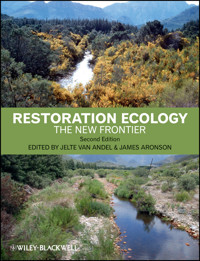
Enlarged, enhanced and internationalized edition of the first restoration ecology textbook to be published, with foreword by Dr. Steven Whisnant of Texas A&M University and Chair of the Society of Ecological Restoration.
Since 2006, when the first edition of this book appeared, major advances have taken place in restoration science and in the practice of ecological restoration. Both are now accepted as key components of the increasingly urgent search for sustainability at global, national, and community levels – hence the phrase 'New Frontier' in the title. While the first edition focused on ecosystems and landscapes in Europe, this new edition covers biomes and contexts all over the world. Several new chapters deal with broad issues such as biological invasions, climate change, and agricultural land abandonment as they relate to restoration science and ecological restoration. Case studies are included from Australia, North America, and the tropics.
This is an accessible textbook for senior undergraduate and graduate level students, and early career scientists. The book also provides a solid scientific background for managers, volunteers, and mid-career professionals involved in the practice of ecological restoration.
Review of the first edition:
"I suspect that this volume will find its way onto the shelves of many restoration researchers and practitioners and will be used as a key text in graduate courses, where it will help fill a large void. My own copy is already heavily bookmarked, and will be a constant source of research ideas and lecture material." (Environmental Conservation)
Companion Website:
A companion website with downloadable figures is available at www.wiley.com/go/vanandel/restorationecology
Sie lesen das E-Book in den Legimi-Apps auf:
Seitenzahl: 1065
Veröffentlichungsjahr: 2012
Ähnliche




















Table of Contents
Cover
Dedication
Title page
Copyright page
Epilogue
Contributors
Foreword
Preface
ACKNOWLEDGEMENTS
Part 1: Setting the Scene
EDITORS’ INTRODUCTION
Chapter 1: Getting Started
1.1 INTRODUCTION
1.2 VIEWS ON STEADY STATES AND DISTURBANCE
1.3 VIEWS ON NATURE AND NATURE CONSERVATION
1.4 VIEWS ON RESTORATION
Chapter 2: Unifying Concepts
2.1 INTRODUCTION
2.2 INTER- AND TRANSDISCIPLINARITY
2.3 LANDSCAPES
2.4 ECOSYSTEMS
2.5 BIODIVERSITY
2.6 CHALLENGES
Chapter 3: Environmental Management and Restoration in a Changing Climate
3.1 INTRODUCTION
3.2 THE UNCERTAINTY CASCADE: WHAT WE KNOW AND WHAT WE DON’T KNOW
3.3 NOVEL ECOSYSTEMS
3.4 ECOSYSTEM INTERVENTIONS
3.5 PERSPECTIVES
Chapter 4: Planning and Implementing Successful Landscape-Scale Restoration
4.1 INTRODUCTION
4.2 A RESTORATION PLANNING APPROACH
4.3 CONCLUDING REMARKS
Part 2: Ecological Foundations
EDITORS’ INTRODUCTION
Chapter 5: Landscape Ecology
5.1 INTRODUCTION
5.2 CONCEPTS: THE LANDSCAPE AS A SPATIAL MATRIX
5.3 FLOWS BETWEEN LANDSCAPE ELEMENTS
5.4 LANDSCAPE ALTERATION
5.5 LANDSCAPE-SCALE RESTORATION
APPENDIX: REFERENCES TO WEBSITES
Chapter 6: Ecology of Ecosystems and Biotic Communities
6.1 INTRODUCTION
6.2 ECOSYSTEMS
6.3 BIOTIC COMMUNITIES
6.4 COMPLEXITY IN BIOTIC COMMUNITIES
6.5 RESTORATION OF ECOSYSTEMS: A FEW RECOMMENDATIONS
ACKNOWLEDGEMENT
Chapter 7: Populations: Ecology and Genetics
7.1 INTRODUCTION
7.2 LOCAL POPULATIONS
7.3 METAPOPULATIONS
7.4 SPECIES INTERACTIONS AFFECTED BY HABITAT FRAGMENTATION
7.5 FROM CONSERVATION TO RESTORATION: PERSPECTIVES
Chapter 8: Reintroductions: Learning from Successes and Failures
8.1 REINTRODUCTION OF SPECIES AND RESTORATION ECOLOGY
8.2 SOURCE POPULATIONS
8.3 FOUNDING NUMBERS, DIVERSITY AND POPULATION STRUCTURE
8.4 THE REINTRODUCTION SITE
8.5 REINTRODUCTION TECHNIQUES
8.6 ECOSYSTEM EFFECTS OF REINTRODUCTION ATTEMPTS
8.7 SOCIETAL ASPECTS AND CONCERNS
8.8 PERSPECTIVES
Part 3: Experiences and Lessons, Biome by Biome
EDITORS’ INTRODUCTION
Chapter 9: Restoration of Tropical Forests
9.1 INTRODUCTION
9.2 FACTORS AFFECTING THE RATE OF NATURAL RECOVERY
9.3 SELECTING A RESTORATION STRATEGY
9.4 STRATEGIES FOR ACTIVELY REINTRODUCING PLANT SPECIES
9.5 PAYING FOR TROPICAL RESTORATION
9.6 PERSPECTIVES
ACKNOWLEDGEMENTS
Chapter 10: Restoration of Arid and Semi-Arid Lands
10.1 INTRODUCTION
10.2 CAUSES OF DESERTIFICATION
10.3 THE RESTORATION RESEARCH CHALLENGE
10.4 THE MANAGEMENT CHALLENGE
10.5 PERSPECTIVES
Chapter 11: Restoration of Mediterranean-Type Woodlands and Shrublands
11.1 INTRODUCTION
11.2 RESTORATION OF MEDITERRANEAN-TYPE WOODLANDS AND SHRUBLANDS
11.3 PERSPECTIVES
ACKNOWLEDGEMENTS
Chapter 12: Restoration of Temperate Forests: An European Approach
12.1 INTRODUCTION
12.2 A BRIEF HISTORY: TEMPERATE FORESTS AND HUMAN IMPACT
12.3 STEPS TOWARDS FOREST RESTORATION: BETWEEN PRIMEVAL FOREST AND STERILE SUBSTRATE
12.4 PERSPECTIVES
Chapter 13: Restoring Temperate Forests: A North American Perspective
13.1 INTRODUCTION
13.2 INFLUENCES OF HUMAN SETTLEMENT
13.3 CONSERVATION AND RESTORATION POLICIES
13.4 PERSPECTIVES
Chapter 14: Restoration of Dry Grasslands and Heathlands
14.1 INTRODUCTION: CHARACTERISTICS OF DRY GRASSLANDS AND HEATHLANDS
14.2 THREATS
14.3 CONSTRAINTS FOR RESTORATION
14.4 RESTORATION AFTER INTENSIFICATION OR ABANDONMENT
14.5 PERSPECTIVES
Chapter 15: Restoration of Arctic–Alpine Ecosystems
15.1 INTRODUCTION
15.2 THREATS AND DISTURBANCES
15.3 RESTORATION TARGETS AND LIMITATIONS
15.4 RESTORATION APPROACHES
15.5 PERSPECTIVES
APPENDIX: WEBSITES
Chapter 16: Restoration of Mires
16.1 INTRODUCTION
16.2 UNDISTURBED MIRE SYSTEMS
16.3 CAUSES OF DISTURBANCE OF NATURAL MIRES
16.4 RESTORATION APPROACHES, SUCCESSES AND FAILURES
16.5 PERSPECTIVES
ACKNOWLEDGEMENTS
Chapter 17: Restoration of Rivers and Floodplains
17.1 INTRODUCTION
17.2 HISTORICAL CONTEXT TO EUROPEAN RIVERS
17.3 CURRENT DISTURBANCES AND THREATS
17.4 RIVER AND FLOODPLAIN RESTORATION
17.5 PERSPECTIVES
ACKNOWLEDGEMENTS
APPENDIX: WEBSITES
Chapter 18: Restoration of Freshwater Lakes
18.1 INTRODUCTION
18.2 DISTURBANCE FACTORS AFFECTING LAKES
18.3 LAKE RESTORATION MEASURES
18.4 PERSPECTIVES
ACKNOWLEDGEMENTS
Chapter 19: Restoration of Salt Marshes
19.1 INTRODUCTION: THE HISTORICAL CONTEXT
19.2 CHARACTERISTICS OF SALT MARSHES
19.3 THREATS AND DISTURBANCES
19.4 RESTORATION OF SEMINATURAL SALT MARSHES
19.5 PERSPECTIVES
Part 4: Restoring to the Future
EDITORS’ INTRODUCTION
Chapter 20: Biological Invasions, Resilience and Restoration
20.1 INTRODUCTION
20.2 HOW DO INVASIVE ALIEN PLANTS IMPACT ECOSYSTEMS?
20.3 RESTORATION AFTER ALIEN INVASION – SUCCESS AND FAILURE
20.4 INCORPORATING THRESHOLDS IN DECISION MAKING FOR ECOLOGICAL RESTORATION
20.5 TOWARDS A DECISION-MAKING FRAMEWORK FOR THE MANAGEMENT AND RESTORATION OF INVADED ECOSYSTEMS
20.6 PERSPECTIVES
ACKNOWLEDGEMENTS
Chapter 21: Shifting Baselines: Dynamics of Evolution and Community Change in a Changing World
21.1 INTRODUCTION: ANTICIPATING THE FUTURE
21.2 LOCAL PROCESSES: ADAPTATION AND SELECTION
21.3 LOCAL PROCESSES: SPECIES REORDERING AND TURNOVER
21.4 REGIONAL PROCESSES: GENE FLOW AND DISPERSAL
21.5 MAINTAINING BIODIVERSITY
21.6 PERSPECTIVES
Chapter 22: Restoration Ecology and the Path to Sustainability
22.1 INTRODUCTION
22.2 RESTORATION ECOLOGY REVISITED
22.3 SUSTAINABILITY SCIENCE
22.4 EPILOGUE
ACKNOWLEDGEMENTS
Glossary
References
Restoration Ecology Author Index
Restoration Ecology Subject Index
Color Plates
To
Heleen and Arieke
Thibaud and Perrine
This edition first published 2012 © by Blackwell Publishing Ltd.
Blackwell Publishing was acquired by John Wiley & Sons in February 2007. Blackwell’s publishing program has been merged with Wiley’s global Scientific, Technical and Medical business to form Wiley-Blackwell.
Registered office: John Wiley & Sons, Ltd, The Atrium, Southern Gate, Chichester, West Sussex, PO19 8SQ, UK
Editorial offices: 9600 Garsington Road, Oxford, OX4 2DQ, UK
The Atrium, Southern Gate, Chichester, West Sussex, PO19 8SQ, UK
111 River Street, Hoboken, NJ 07030-5774, USA
For details of our global editorial offices, for customer services and for information about how to apply for permission to reuse the copyright material in this book please see our website at www.wiley.com/wiley-blackwell.
The right of the author to be identified as the author of this work has been asserted in accordance with the UK Copyright, Designs and Patents Act 1988.
All rights reserved. No part of this publication may be reproduced, stored in a retrieval system, or transmitted, in any form or by any means, electronic, mechanical, photocopying, recording or otherwise, except as permitted by the UK Copyright, Designs and Patents Act 1988, without the prior permission of the publisher.
Designations used by companies to distinguish their products are often claimed as trademarks. All brand names and product names used in this book are trade names, service marks, trademarks or registered trademarks of their respective owners. The publisher is not associated with any product or vendor mentioned in this book. This publication is designed to provide accurate and authoritative information in regard to the subject matter covered. It is sold on the understanding that the publisher is not engaged in rendering professional services. If professional advice or other expert assistance is required, the services of a competent professional should be sought.
Library of Congress Cataloging-in-Publication Data
Restoration ecology : the new frontier / edited by Jelte van Andel and James Aronson ; with the assistance of Christelle Fontaine and Berengere Merlot. – 2nd ed.
p. cm.
Includes bibliographical references and index.
ISBN 978-1-4443-3635-1 (cloth) – ISBN 978-1-4443-3636-8 (pbk.)
ISBN 978-1-1182-2314-7 (epdf) – ISBN 978-1-1182-2315-4 (epub) – ISBN 978-1-1182-2312-3 (mobi)
1. Restoration ecology. I. Andel, J. van. II. Aronson, James, 1953-
QH541.15.R45R517 2012
639.9–dc23
2011046030
A catalogue record for this book is available from the British Library.
Wiley also publishes its books in a variety of electronic formats. Some content that appears in print may not be available in electronic books.
Ongoing restoration along the Wemmershoek River in the Western Cape, South Africa. (Photographs: D.M. Richardson)
Top (1985). Invasive Australian wattles (Acacia longifolia and A. mearnsii) and cluster pine (Pinus pinaster), from the Mediterranean region, dominate the landscape.
Bottom (2011). Following clearing of invasive trees by the government-funded Working for Water Programme natural regeneration of native plants has helped bring the ecosystem to a healthy condition and water once again flows in the streams. Remaining non-native trees on the left are Casuarinas that serve as a windbreak for fruit orchards.
From the Foreword to this book by Professor Steven Whisenant, Texas A&M University and Chair of the Society for Ecological Restoration.
“This newly revised and fully updated edition should be on the shelf of every restoration ecologist. Not a ‘how-to’ book, but a fine overview of many of the conceptual and interdisciplinary issues involved.”Truman Young, University of California at Davis
The editors of Restoration Ecology provide a prompt and adequate response to the challenge of our era: to reconcile the link between humanity and nature. Jelte van Andel and James Aronson broaden their work to include New Frontiers and a global perspective in the second edition, supporting a paradigm shift in decision making which is unavoidable if we are to cope with the global environmental crisis. The reader is convinced that ecological restoration is vital to maintain biodiversity and their services, the basis of our life. This fundamental book will certainly contribute to the global effort of restoring 15% of degraded land by 2020, as expressed in the Aichi Biodiversity Targets. It offers clear concepts and practical knowledge at the level of biomes to train scientists and practitioners and to provide knowledge to bridge the gap in the science–policy interface. I recommend the book to use in restoration planning, for the training of students and in science communication.”Katalin Török, Centre for Ecological Research, Hungary and
SER Europe Board member
Contributors
EDITH B. ALLEN,University of California, Department of Botany and Plant Sciences and Center for Conservation Biology, Batchelor Hall 2129, Riverside, CA 92521-0124, USA. [[email protected]]
DEAN APOSTOL,Singing Salads Farm, 23850 SE Borges Road, Damascus, OR 97089, USA. [[email protected]]
JAMES ARONSON,Centre National de la Recherche Scientifique (CNRS–U.M.R. 5175), Centre d’Écologie Fonctionnelle et Évolutive (CEFE), 1919 route de Mende, 34293 Montpellier Cedex 5, France. [[email protected]]
DAVID A. BAINBRIDGE,Restoration consultant, 8850 Capcano Road, San Diego, CA 92126, USA. [[email protected]]
JAN P. BAKKER,University of Groningen, Community and Conservation Ecology Group, P.O. Box 11103, 9700 CC Groningen, the Netherlands. [[email protected]]
RENÉE M. BEKKER,University of Groningen, Community and Conservation Ecology, P.O. Box 11103, 9700 CC Groningen, the Netherlands; and National Authority for Data concerning Nature, Catharijnesingel 64, 3502 JA Utrecht, the Netherlands. [[email protected]]
ARJEN BIERE,Netherlands Institute of Ecology (NIOO-KNAW), Department of Terrestrial Ecology, P.O. Box 50, 6700 AB Wageningen, the Netherlands. [[email protected]]
JORDI CORTINA,University of Alicante, Department of Ecology, Apartado de Correos 99, 03080 Alicante, Spain. [[email protected]]
L. MIGUEL DIONISIO PIRES,Deltares, P.O. Box 177, 2600 MH Delft, the Netherlands. [[email protected]]
ANTON FISCHER,Technische Universität München, Department of Ecology and Ecosystem Management, Centre of Life and Food Sciences, Hans-Carl-von-Carlowitz-Platz 2, D-85354 Freising, Germany. [[email protected]]
HOLGER FISCHER,Technical University Dresden, Institute of Silviculture and Forest Protection, P.O. Box 1117, D-01737 Tharandt, Germany. [[email protected]]
CHRISTELLE FONTAINE,Centre National de la Recherche Scientifique (CNRS–U.M.R. 5175), Centre d’Écologie Fonctionnelle et Évolutive (CEFE), 1919 route de Mende, 34293 Montpellier Cedex 5, France. [[email protected]]
MIRIJAM GAERTNER,Stellenbosch University, Centre for Invasion Biology, Natural Sciences Building, Private Bag X1, Matieland 7602, South Africa. [[email protected]]
ANDREW B. GILL,Environmental Science & Technology Department, Cranfield University, College Road, Cranfield, Bedfordshire, MK43 0AL, United Kingdom. [[email protected]]
AB P. GROOTJANS,University of Groningen, Center for Energy and Environmental Studies, Nijenborgh 4, 9747 AG Groningen, the Netherlands; and Radboud University Nijmegen, Institute of Water and Wetland Research (IWWR), P.O. Box 9010, 6500 GL Nijmegen, the Netherlands. [[email protected]]
RAMESH D. GULATI,Netherlands Institute of Ecology (NIOO-KNAW), Department of Aquatic Ecology, P.O. Box 50, 6700 AB Wageningen, the Netherlands. [[email protected]]
JULIO R. GUTIERREZ,Centro de Estudios Avanzados en Zonas Aridas, Instituto de Ecologia y Biodiversidad, Departamento de Biologia, Universidad de La Serena, Casilla 599, La Serena, Chile. [[email protected]]
DI HAMMOND,The River Restoration Centre, Silsoe Campus, Silsoe, Bedfordshire MK45 4DT, United Kingdom. [[email protected]]
RICHARD J. HOBBS,University of Western Australia, Ecosystem Restoration and Intervention Ecology Research Group, School of Plant Biology, 35 Stirling Highway, Crawley WA 6009, Australia. [[email protected]]
KAREN D. HOLL,University of California, Environmental Studies Department, Santa Cruz, CA 95064, USA. [[email protected]]
PATRICIA M. HOLMES,Environmental Resource Management Department, City of Cape Town, P.O. Box 11, Berkley Road, Maitland 7404, South Africa. [[email protected]]
MARTIN JANES,The River Restoration Centre, Silsoe Campus, Silsoe, Bedfordshire MK45 4DT, United Kingdom. [[email protected]]
HANS JOOSTEN,Ernst Moritz Arndt University of Greifswald, Institute of Botany and Landscape Ecology, Grimmer Strasse 88, 17489 Greifswald, Germany. [[email protected]]
BERNHARD KRAUTZER,Federal Research and Education Centre, Raumberg-Gumpenstein, 8952 Irdning, Austria. [[email protected]]
ELIZABETH LEGER,University of Nevada, Natural Resources and Environmental Science Department, 1664 N. Virginia Street, Reno, NV 89557, USA. [[email protected]]
JOHN A. LUDWIG,Commonwealth Scientific and Industrial Research Organization, Ecosystem Sciences, P.O. Box 780, Atherton, Qld 4883, Australia. [[email protected]]
JENNY MANT,The River Restoration Centre, Silsoe Campus, Silsoe, Bedfordshire MK45 4DT, United Kingdom. [[email protected]]
ROB H. MARRS,University of Liverpool, School of Environmental Sciences, Nicholson Building, Liverpool L69 3GP, United Kingdom. [[email protected]]
BERENGERE MERLOT,Centre National de la Recherche Scientifique (CNRS–U.M.R. 5175), Centre d’Écologie Fonctionnelle et Évolutive (CEFE), 1919 route de Mende, 34293 Montpellier Cedex 5, France. [[email protected]]
LADISLAV MIKO,European Commission, DG Health and Consumers (SANCO), rue Breydel 4, Brussels, Belgium. [[email protected]]
JULI G. PAUSAS,Centro de Investigaciones sobre Desertificación (CIDE-CSIC), IVIA Campus, Ctra. Nàquera Km. 4.5, 46113 Montcada, Valencia, Spain. [[email protected]]
DAVID M. RICHARDSON,Stellenbosch University, Centre for Invasion Biology, Natural Sciences Building, Private Bag X1, Mateland 7602, South Africa. [[email protected]]
AYN J. SHLISKY,USDA Forest Service Pacific Northwest Region, Resource Planning and Monitoring, 333 SW First Ave., Portland, OR 97204 USA. [[email protected]]
ALFONS J.P. SMOLDERS,Radboud University Nijmegen, Institute for Water and Wetland Research (IWWR), P.O. Box 9010, 6500 GL Nijmegen, the Netherlands. [[email protected]]
KATHARINE SUDING,University of California, Department of Environmental Science, Policy and Management, 137 Mulford Hall #3114, Berkeley, CA 94720, USA. [[email protected]]
DAVID J. TONGWAY,CSIRO, Sustainable Ecosystem Sciences, GPO Box 1700, Canberra 2601, ACT, Australia. [[email protected]]
CHRISTIAN UHLIG,Bioforsk, Norwegian Institute for Agriculture and Environmental Research, Division of Arctic Agriculture and Land Use, P.O. Box 2284, 9269 Tromsø, Norway. [[email protected]]
V. RAMÓN VALLEJO,Centro de Estudios Ambientales del Mediterráneo (CEAM), C/ Charles R. Darwin 14, Parc Tecnologic, 46980 Paterna, Valencia, Spain. [[email protected]]
JELTE VAN ANDEL,University of Groningen, Community and Conservation Ecology Group, P.O. Box 11103, 9700 CC Groningen, the Netherlands. [[email protected]]
JOHAN VAN DE KOPPEL,Netherlands Institute of Ecology (NIOO-KNAW), Spatial Ecology Department, P.O. Box 140, 4400 AC Yerseke, the Netherlands. [[email protected]]
RUDY VAN DIGGELEN,University of Antwerp, Ecosystems Management Group, Department of Biology, Universiteitsplein 1-C, B-2610 Wilrijk, Belgium. [[email protected]]
ELLEN VAN DONK,Netherlands Institute of Ecology (NIOO-KNAW), Department of Aquatic Ecology, P.O. Box 50, 6700 AB Wageningen, the Netherlands. [[email protected]]
SIPKE E. VAN WIEREN,Wageningen University, Resource Ecology Group, Bornsesteeg 69, 6708 PD Wageningen, the Netherlands. [[email protected]]
HELMUT WITTMANN,Institute for Ecology, Johann-Herbst-Strasse 23, A-5026 Elsbethen/Salzburg, Austria. [[email protected]]
Foreword
By some estimates, nearly two-thirds of all ecosystems have been degraded by human activities. This depletion of our global ‘natural capital trust fund’ makes it less likely we can sustain current levels of ecosystem services. Ecosystem degradation that diminishes biological diversity or alters nutrient and hydrologic processes has serious impacts that can no longer be ignored. Direct economic losses to agriculture, livestock production, forestry, and recreation are well-known consequences of ecosystem degradation. Less understood, yet equally important, are the implications for food security and poverty. Providing for future human populations, currently over seven billion and rising toward nine billion by 2050, will be increasingly difficult. You probably wouldn’t be reading this if you weren’t troubled by these trends and committed to improving our collective future.
The practice of ecological restoration is a proactive approach to addressing the real-world challenges of ecosystem degradation. Our ultimate goal is to understand ecosystem functioning and apply science-based practices that solve these significant environmental problems. It is increasingly clear that ecosystem degradation has social, economic, and biophysical causes that interact at multiple spatial and temporal scales. Thus, effective restoration strategies must address this complexity in ways that vary considerably with each unique set of circumstances. This has proven to be a significant and ongoing challenge for the evolving discipline of restoration ecology. Fortunately, I believe the book you hold in your hands will be a seminal contribution toward those lofty goals.
For this second edition of Restoration Ecology: The New Frontier, editors Jelte van Andel and James Aronson have organized a world-class group of authors to create the most comprehensive restoration ecology textbook currently available. Significantly, the book begins by developing a robust conceptual framework linking ecosystem damage to the primary causes of degradation and potential restoration strategies. Subsequent chapters provide numerous ecosystem-specific examples selected to illustrate and reinforce those concepts and provide a framework for future endeavors. I found these chapters to be both interesting as individual case studies and effective at illustrating the book’s conceptual framework. The book concludes with discussions of uncertainties associated with climatic, evolutionary, and community processes and how to incorporate those ideas into sustainable restoration strategies. I believe Restoration Ecology: The New Frontier is a substantial contribution to the science of restoration ecology and will contribute to our ability to create an improved future.
Steven G. Whisenant
College Station, Texas
January 2012
Professor and Head of the Department of Ecosystem Science and Management at Texas A&M University; and
Chair of the Society for Ecological Restoration
Preface
At the turn of the twenty-first century, some 15 years ago, conservation biology and restoration ecology were clearly identified by some as vital ‘hopes for the future’ (Dobson et al. 1997). E.O. Wilson (1998) went further: given the current state of affairs, he said, a forward-looking, global society committed to a better future would devote much energy and resources, throughout this century, to restoration. But why, ‘all of a sudden’, do thoughtful scientists like Wilson, and many others, urge society to devote a century to ecological restoration?
Throughout human history, that is for the last hundred thousand years or so, people have explored and exploited natural resources to meet their needs for food, fresh water, timber, fibre, medicines and fuel. While recognizing that this has contributed to substantial gains in human well-being, over the millennia, the rapidly increasing ‘ecological footprint’ of humans, during the last two centuries in particular, has resulted in a substantial and largely irreversible loss in the diversity of life, the resilience of ecosystems and the quality of our own collective habitat on this Earth. Some say we are moving towards a precipice. Unquestionably, we have set off the first human-caused extinction crisis in the history of the planet; we have also set off climate change processes the consequences of which we cannot predict let alone control.
One hundred and ten years ago, we were one billion. Now the situation is radically different: we have a population of seven billion, adding another billion every 12 years or so, and about a fifth of humankind is consuming far more resources per capita than anyone but kings and queens had ever dreamt of before. Conclusion: we need a new modus operandi if we wish to move away from the precipice. We now have to work hard, and together, to ‘restore towards the future’, to borrow a phrase from the Society for Ecological Restoration (SER), which is the major international nongovernmental organization (NGO) in this field since 1987. We also need to shift paradigms and move towards sustainability. And justice. In short, towards a sustainable and desirable future for our children and grandchildren
By the last quarter of the twentieth century CE1, many could see that traditional nature protection and management techniques, aimed at stopping further degradation of threatened ecosystems and landscapes, and preserving what was still more or less intact in set-asides or ‘protected’ areas, were no longer going to be enough. Whether the primary goal of conservationists was to safeguard perspectives for well-functioning, evolving ‘nature’, including biodiversity in all its forms, and to insure what is currently called the flow of ecosystem goods and services to people, restoration of degraded ecosystems was going to be necessary as well. An important trailblazer in this area was the late Anthony Bradshaw, who initiated research in the United Kingdom to learn how to reconstruct ecosystems on what he called derelict lands, left behind at the end after closure of mining sites (Bradshaw 1983).
Today, ecological restoration is a fast-growing and increasingly important component in the business, politics and applications of biodiversity conservation, ecosystem management, societal adaptation to climate change and legislated mitigation for ecological and environmental damage related to economic development. Restoration ecology as a science has come a long way too: as part of a dynamic feedback loop, the practice of ecological restoration calls for, and stimulates, ongoing development of concepts and theories, as well as short- and long-term field studies and experimentation providing scientific validation and underpinning for the practice. At the same time, it is providing much insight into the fundamental questions of biology and ecology at all levels of resolution, from landscapes and ecosystems to communities and populations. In other words, restoration ecology, at 30, is truly coming of age, in dozens of countries around the world. Scientists from different disciplines, along with engineers, technicians and other professionals, not to mention the thousands of amateurs and volunteers engaged in restoration, should all embrace the challenge to explore, test and, where appropriate, apply the theories, models and concepts coming from ecology, even though many of them were not conceived or developed in view of direct applications to restoration. Not all restoration practitioners may recognize the need for this, so let us explain why we say that.
In our approach towards restoration ecology, we consider a few elements essential. First of all, understanding of ecosystem structure and functioning is the central level of interest, even in cases where the reintegration of a disrupted landscape, or the rescue of biodiversity, is the main goal of a restoration project. For effective, long-lasting ecological restoration of an ecosystem, the first condition is to have as much knowledge as possible about its historic development, including human use and management, as well as misuse and mismanagement. The second condition is to analyse the causes of degradation and of current threats by applying scientific tools. The latter requires an interest both in fundamental ecological theories and models and in exploring their applicability. Techniques and approaches from the social sciences may be necessary as well, depending on the context. Last but not least, restoration ecology is intrinsically transdisciplinary, and has a huge role to play in the further development of both inter- and transdisciplinarity. Indeed, the reconstruction of earlier existing ‘nature’ or ecosystems, or the development of ‘new nature’, cannot be realized in isolation from societal and political will and impact. These elements are reflected in the structuring and the contents of this book.
In the first of four chapters in Part 1, which is intended to set the scene for all that follows, we briefly consider the historic situation of terrestrial and aquatic ecosystems in today’s changing world. Next, we discuss key concepts in current restoration ecology, emphasizing the hot topics as seen from inter- and transdisciplinary perspectives. We have done our utmost to be consistent in the core concepts, and the terminology used throughout, and all general terms that appear in two or more chapters are defined in the detailed and original glossary provided near the back of the book. In the chapter texts, we have marked certain words in places where they can be useful to help the readers find their way to textbooks and scientific journals. All words and terms printed in italics appear in the index; terms in bold are defined in the glossary and included in the index.
In view of future requirements for the development of restoration ecology, the third, invited, chapter in Part 1 is devoted to implications for ecological restoration of climate change and other global changes, one of the most intriguing and complex problems we must cope with. And finally, in the last chapter of this part, planning and implementing successful restoration are discussed by two distinguished veterans in this field.
In the four interrelated chapters of Part 2, the basics of ecology and genetics are discussed in search of concepts and theories – at the levels of landscapes, ecosystems, communities and populations – that can or could be made applicable to ecological restoration in general, or some specific situations. Particular attention is paid to the problems and prospects related to the reinforcement and reintroduction of populations of animals or plants within a restoration context.
We then move on to Part 3, where the reader will find 11 chapters by invited sets of distinguished authors who discuss the problems and perspectives of ecological restoration as they have experienced them personally across a broad range of ecosystems and biomes. We here use the classic biome-by-biome approach to help readers quickly find the specific settings they are most interested in, and compare the barriers and options existing between biomes. These specialists and recognized experts in the science and the practice of ecological restoration provide a solid scientific background to evaluate the consequences of different human interventions and management measures aiming at restoration in a very wide range of biophysical and bioclimatic contexts. All the chapters in this part follow a similar approach, which should help students and other general readers get the most from them. In each of them, the authors discuss what we can learn from restoration successes and failures in the past.
In the fourth and final part of the book, the concepts and approaches mentioned in the first part are recalled, and the reader is invited to reflect upon the consequences, and help identify the perspectives, for ecological restoration in the coming years. How to cope with uncertainties, for example, is a key question. Particular attention is paid to evolutionary and community dynamics related to dramatic changes in the environmental conditions, and to coping with associated invasions of alien species. The ultimate goal of ecological restoration is to achieve sustainable, resilient and interconnected ecosystems, and socio-ecological systems, providing goods and services to humans and habitat and well-being for nonhuman creatures as well.
The present book is an enlarged, enhanced and updated edition of the first university-level textbook to have appeared on restoration ecology in any language (van Andel & Aronson 2006). While working on the updates of those chapters that appeared in the first edition of this book, six short years ago, we discovered how much new information has become available. Not only have new results from long-term field experiments become available, but also these results have given rise to new insights, and slowly shifting paradigms. The notion of ‘restoring to the future’ is a good example.
As before, the book is designed for senior undergraduate- and graduate-level courses in all disciplines related to fundamental and applied ecology, environmental studies, conservation and development. We think it will be useful especially in Europe, North America, Australia and New Zealand, but have in mind also students, researchers, teachers and others in the tropics and developing countries as well. It should provide a solid scientific background for managers and professionals involved in protected area, park or nature reserve management where restoration is being practised or contemplated, as well as practitioners of ecological restoration in governmental and nongovernmental organizations. Ecological restoration is one of the best bridges available to reconcile the seemingly opposing imperatives of nature conservation and economic development. As such, it constitutes one of the key components of the increasingly urgent search for sustainability — hence the use of ‘New Frontier’ in the title of the book. We hope that readers will find that this volume is helpful in their efforts to pave the way towards the future. Today’s students, after all, are tomorrow’s decision makers.
ACKNOWLEDGEMENTS
The editors are indebted to the team of enthusiastic chapter authors, all international experts in their fields, who bring to this book a huge amount of knowledge and expertise, while agreeing to respect a certain format and basic terminology. We are also very grateful to dozens of colleagues who reviewed manuscripts of chapters in this book, and who are acknowledged by the various authors. A special song of appreciation goes to Christelle Fontaine and Bérengère Merlot for their careful coordination and fine-tuning of all our editorial work. They contributed in particular through the verification and quality assessment for bibliographic references, figures, photos, and tables, and handled obtaining the reproduction permissions for the figures borrowed from other publications.
As for the first edition, in 2006, we dedicate this book to our children, those cherished and respected representatives of the upcoming generation who will inherit this beautiful, beleaguered and precious planet, and must shoulder the task of working for sustainability, environmental ethics and social justice in the twenty-first century CE.
Jelte van Andel and James Aronson
Groningen and Montpellier, January 2012
NOTE
1. The abbreviation CE refers to Common Era, a secular alternative to AD, while BCE stands for Before Common Era, substituting for BC. We will use these abbreviations throughout the book.
Part 1: Setting the Scene
EDITORS’ INTRODUCTION
Rather than being just concerned and conservative about remains of ‘wild nature’, ecological restoration requires a dynamic, adaptive approach to problem solving and resource management, especially in this era of rapid and irreversible change in climate, land use and species assemblages. Indeed, evolutionary and environmental dynamics, such as invasions of species outside their recent biographical ranges, and anthropogenic climate change, can no longer be denied or ignored, as was often the case when ecological restoration was associated solely with nature conservation concerns. However, as we think about potential future developments in ecological restoration, we must respect the historic roots of our human societies, and the relationship between them and nonhuman nature as well. Evolution of species has been a natural phenomenon throughout the history of life on Earth, but the direction and speed for some species have been strongly influenced by human activities, such as plant and animal breeding, and also indirectly affected by our growing impact on global, regional and local environments. Similarly, climate change has been a natural phenomenon since the very beginning of the Earth’s existence, but the recent rate of change is recognized by all experts as being largely due to human impact. This is one of the main reasons why humanity must accept responsibility for its actions, and include nature management in the decision-making process of planning towards a sustainable and desirable future – especially as we climb from the current 7 billion people to an estimated 9–10 billion in the next 25 years.
Not only does nature alter in response to changes in environmental conditions, but also human societies change and adapt to new conditions. Wilderness, earlier considered as areas to be exploited for human well-being, is nowadays valued as near-natural ecosystems to be cherished and protected. Similarly, what was earlier considered as ‘wastelands’ may now be called seminatural ecosystems; if financing is provided, even derelict and devastated post-mining areas may effectively be revegetated, rehabilitated and ‘recycled’ into the mainstream of society. However, for ecological restoration to be successful, a firm agreement is required between all the stakeholders. Opportunities have to be valued in terms of scientific validation, societal needs and available budgets for execution and monitoring.
We start our book by giving a brief overview of changing points of view on nature and on the goals of nature management, along with changes in the human society (Chapter 1). In brief, this implies a change from human dependence on nature towards nature’s dependence on human management. In Chapter 2, we present some of the key concepts in the field of restoration ecology where for example we explain how to distinguish between the reintegration of disrupted and dysfunctional landscapes, the restoration of degraded ecosystems, and the rescue of biodiversity through the reinforcement or reintroduction of species populations. We also discuss such concepts as stability, the functional role of biodiversity, reference systems and how stocks of natural capital allow the flow of ecosystem services. However, we note that despite recent progress huge uncertainties and unknowns remain in our field.
In Chapter 3, our colleague Richard Hobbs pays explicit attention to this problem, helping the reader focus on the challenge of coping with ongoing changes in climate even as we set about the restoration of degraded ecosystems in the context of highly modified landscapes. Indeed, an intriguing and important question is to what extent historical knowledge and perspective can continue to be applicable if we are restoring now ‘towards the future’, as we put it in the preface. Finally, David Tongway and John Ludwig describe an approach to landscape-scale restoration that emphasizes the need for understanding how ecosystem processes are affected by disturbances, causing landscapes to be dysfunctional (Chapter 4). This knowledge can then be used by practitioners to set achievable goals, and to design and implement restoration technologies to achieve their goals.
In summary, this first part of our book sets the scene for all that follows. Rather than giving a complete overview, we aim at highlighting topics that we consider to be necessary elements for the reader who will here discover the rapidly growing, and evolving, field of restoration ecology; we hope it will give you an appetite to carry on reading the book and at least some of the references cited and, above all, to start thinking about concepts and strategies for differing biophysical and sociocultural contexts where ecological restoration is needed.
Chapter 1
Getting Started
Jelte van Andel and James Aronson
1.1 INTRODUCTION
Increasing and unrelenting human impact on the biosphere – in particular since the industrial revolution began in the late eighteenth century – has brought us to the threshold of what Paul Crutzen dubbed the ‘Anthropocene Era’, that is an unprecedented geological era in which humans dominate all ecosystems and the global environment as a whole. However, the widespread recognition of the need to regulate the human ‘footprint’ dates back only a few decades, in most parts of the world. Pioneer nature conservation organizations began to be formed over a century ago, it is true, in western and central Europe in particular – including the German Nature and Biodiversity Conservation Union, founded in 1899, and the Dutch organization known as Natuurmonumenten that was founded by an elementary school teacher in Amsterdam in 1905. Today, there are literally thousands of conservation NGOs around the world, and gradually, over the past 50 years, they have found increasing support from the public and the scientific community. Although started as recently as the 1960s, ‘in response to the devastation of our natural habitats’, the network of Wildlife Trusts in the United Kingdom now has more than 800 000 members. This is just one example among many, and ecological restoration – under many different names – is gaining an increasing share of attention in conservation activities all around the world, and in international treaties as well.
In this introductory chapter, we start using the terminology related to the subject without defining the terms; the definitions will be given and discussed in the next chapter. Throughout the book we draw the reader’s attention to the Glossary in this book by marking terms in bold.
Restoration ecology is the field of study and experimentation that provides the scientific background and underpinnings for practical ecological restoration, rooted in the early developments and visionary work of a few individuals and programmes in the nineteenth and twentieth centuries. It has grown to a respectable ‘size’ and volume only in the last few decades, since Bradshaw’s (1983) pioneering work, but as mentioned already, is now gaining momentum and attention as never before. Restoration ecology has also begun to command much more attention from scientists in the last 25–30 years, especially since the Society for Ecological Restoration has got underway in the late 1980s. Twelve years ago, ecologist Truman Young suggested that ‘restoration ecology is the future of conservation biology’ (Young 2000). By that he surely meant that in today’s crowded, much-transformed world, conservation – in the sense of preservation or setting-aside – will not be adequate to meet the goals of conservation – and sustainability. Instead, restoration of damage will be required on both scores. In terms of the sciences, at any rate, a clear convergence between the three fields is taking place, conservation biology, restoration ecology and the overarching, inter- and transdisciplinary field of that is barely a decade old. Why include the latter in this introductory chapter? Because ecological restoration does not only aim at the repair of degenerated ecosystems, including their structure and functioning and their biodiversity. For ecological restoration to be effective, we must consider not only the biophysical context, but also the socio-economic and political matrix in which a restoration project must be planned, financed and carried out. That is why there is a clear need for a broader interdisciplinarity, and as well, which means forging interprofessional partnerships and coalitions, as well as good communication and indeed collaboration with nonprofessional stakeholders and neighbours. Jackson . (1995) portrayed ecological restoration as having four main components to consider – ecological, social, cultural and economic (see Figure ). In the last few years, however, it is also becoming clear that political and legislative components are needed as well (Aronson 2010) and will also be an important part of restoration in coming years.
Lesen Sie weiter in der vollständigen Ausgabe!
Lesen Sie weiter in der vollständigen Ausgabe!
Lesen Sie weiter in der vollständigen Ausgabe!
Lesen Sie weiter in der vollständigen Ausgabe!
Lesen Sie weiter in der vollständigen Ausgabe!
Lesen Sie weiter in der vollständigen Ausgabe!
Lesen Sie weiter in der vollständigen Ausgabe!
Lesen Sie weiter in der vollständigen Ausgabe!
Lesen Sie weiter in der vollständigen Ausgabe!
Lesen Sie weiter in der vollständigen Ausgabe!
Lesen Sie weiter in der vollständigen Ausgabe!
Lesen Sie weiter in der vollständigen Ausgabe!
Lesen Sie weiter in der vollständigen Ausgabe!
Lesen Sie weiter in der vollständigen Ausgabe!
Lesen Sie weiter in der vollständigen Ausgabe!
Lesen Sie weiter in der vollständigen Ausgabe!
Lesen Sie weiter in der vollständigen Ausgabe!
Lesen Sie weiter in der vollständigen Ausgabe!
Lesen Sie weiter in der vollständigen Ausgabe!
Lesen Sie weiter in der vollständigen Ausgabe!
Lesen Sie weiter in der vollständigen Ausgabe!
Lesen Sie weiter in der vollständigen Ausgabe!
Lesen Sie weiter in der vollständigen Ausgabe!
Lesen Sie weiter in der vollständigen Ausgabe!
Lesen Sie weiter in der vollständigen Ausgabe!
Lesen Sie weiter in der vollständigen Ausgabe!
Lesen Sie weiter in der vollständigen Ausgabe!
Lesen Sie weiter in der vollständigen Ausgabe!
Lesen Sie weiter in der vollständigen Ausgabe!




