


Ribosome-inactivating Proteins E-Book
127,99 €
Mehr erfahren.
- Herausgeber: John Wiley & Sons
- Kategorie: Wissenschaft und neue Technologien
- Sprache: Englisch
This important reference provides up-to-date information on all aspects of ribosome-inactivating proteins (RIPs). Including a list of all known RIPs, their distribution in nature, structure, genetics and chemical and immunological properties, this reference covers mechanisms of action, including the enzymatic activity on various polynucleotide substrates; the interaction with, and entry into cells; the toxicity to animals, including the pathology of poisoning; and the immunomodulatory and allergenic activity. The book further emphasizes the use of immunotoxins and other conjugates in clinical trials for the therapy of cancer and intractable pain.
Sie lesen das E-Book in den Legimi-Apps auf:
Seitenzahl: 805
Veröffentlichungsjahr: 2014
Ähnliche




















CONTENTS
Cover
Title page
Copyright page
Contributors
Preface
1 Introduction and History
Introduction
Identification and Distribution in Nature
Mechanism of Action
Effects on Cells and Animals
Role in Nature
Practical Applications
Bioweapons
Future Challenges
References
2 Occurrence and Taxonomical Distribution of Ribosome-inactivating Proteins Belonging to the Ricin/Shiga Toxin Superfamily
Introduction
How to Investigate the Distribution of Proteins with an N-glycosidase Domain?
Conclusions
Acknowledgments
References
3 Ribosome-inactivating Proteinsfrom Phytolaccaceae
Introduction
References
4 Ribosome-inactivating Proteins in Caryophyllaceae, Cucurbitaceae, and Euphorbiaceae
Introduction
Caryophyllaceae RIPs
Cucurbitaceae RIPs
Euphorbiaceae RIPs
Type 1 RIPs from other families
Algal RIPs
Fungal RIPs
Crystal structures of RIPs
Production of recombinant RIPs
Immunoreactivity of RIPs
Other Activities of Ribosome-inactivating Proteins
Conclusion
References
5 Non-toxic Type 2 Ribosome-inactivating Proteins
Introduction
Family Sambuceae
Type 2 RIPs from Other families
Uses of nontoxic type 2 RIPs
Concluding remarks
Acknowledgment
References
6 The Intracellular Journey of Type 2 Ribosome-inactivating Proteins
Introduction
Cell Surface Events
Endosome to TGN Sorting
From the Golgi to the ER
Reductive Separation and Destabilization of the Holotoxin Subunits
Dislocation Across the ER Membrane
Cytosolic Post-dislocation Events that Restore Catalytic Activity
Concluding Remarks
Acknowledgements
References
7 Shiga Toxins
Introduction
Purification of Shiga Toxins
Structure and Mechanism of Action of Shiga Toxins
Role of Shiga Toxins in the Pathogenesis of HUS
The 2011 German STEC Outbreak
References
8 The Structure and Action of Ribosome-inactivating Proteins
Introduction
Acknowledgments
References
9 Updated Model of the Molecular Evolution of RIP Genes
Introduction
Important Issues to be Considered in View of the Evolution of RIP Genes
Dissecting RIP Genes and RIP Gene Families by in silico Analysis of Genome and Transcriptome Data
New Insights in the Overall Phylogeny of Plant RIPs
An Updated Model of the Molecular Evolution of the Plant RIP Gene Family
What is the Evolutionary Link Between Plant and Non-Plant RIPs?
Conclusions
References
10 Enzymology of the Ribosome-inactivating Proteins
Introduction
Ricin as RNA N-glycosidase
Role of SRL in Ribosomes
Ribosomal RNA Apurinic Site-specific Lyase – Intrinsic Stability of the Ribosomes
Action of RIPs on DNA
References
11 A Long Journey to the Cytosol
Introduction
Tridimensional Structures and Catalytic Active Residues
Direct Binding of Type 1 RIPs to Mammalian Cell Membranes
Possible Intracellular Sorting/Delivery Routes Established for RIPs by Biochemical Methods
Identification of Endocytotic Compartments Containing RIPs During Intracellular Delivery
Binding of Targeted Type 1 RIPs to Cellular Membranes Through Selective Carrier Molecules
The Effect of Known Potentiating Agents in the Intracellular Delivery of Toxins and their Relationship with Intracellular Delivery Paths
Photochemical Internalization (PCI) of Toxins
Conclusions and Perspectives
References
12 Ribosome-inactivating Proteins
Introduction
Mechanisms of Cell Death
References
13 Antiviral and Antifungal Properties of RIPs
Introduction
Antiviral Activity of RIPs
Antifungal Activities of RIPs
Summary and Future Directions
References
14 Insecticidal and Antifungal Activities of Ribosome-inactivating Proteins
Introduction
Plant Insecticidal and Antifungal Proteins
RIPs
Concluding Remarks
References
15 Immunology of RIPs and their Immunotoxins
Introduction
Immunology of RIPs
Effects of RIPs on the Immune System and its Mechanisms
RIPs in Allergy
Manipulation of RIPs to Reduce Immunogenicity
Use of Antibodies to Explore the Structure and Function of RIPs
Immunology of Antibody-RIP Immunotoxins
Acknowledgments
References
16 Ribosome-inactivating Proteins in Cancer Treatment
Introduction
Ex Vivo Use
Ricin
Pharmaceutical Industry Interest
Problems and Solutions
Clinical Trials
Renewed Interest
References
Appendix
17 Nervous System Research with RIP Conjugates
Introduction
Research Study 1
Research Study 2
Research Study 3
Conclusion
References
18 Embryotoxic and Abortifacient Activities of Ribosome-inactivating Proteins
Introduction
Angiosperm RIPs
Mushroom RIPs
Conclusion
References
19 The Potential for Misuse of Ribosome-inactivating Proteins
Introduction
References
Supplemental Images
Index
End User License Agreement
List of Tables
Chapter 02
Table 2.1 Detailed overview of the documented taxonomic distribution of the different types of RIPs within the Magnoliids and Monocot divisions of the Angiosperms (flowering plants). Taxa are ordered according to the dendrogram shown in Figure 2.3.
Table 2.2 Detailed overview of the documented taxonomic distribution of the different types of RIPs within the Eudicotyledons of the Angiosperms (flowering plants). Taxa are ordered according to the dendrogram shown in Figure 2.3.
Table 2.3 Overview of documented domain architectures of RIP genes.d
Table 2.4 Summary of the occurrence and domain architecture of RIP genes in Bacteria.
Chapter 03
Table 3.1 Amino acid composition and physicochemical properties of RIPs from Phytolaccaceae. All computations have been performed by using sequences retrieved from the UniProtKB database (see Table 3.2) by means of the ProtParam tool available online at www.expasy.org.
73
E2800.1%1cm values were calculated assuming all pairs of Cys residues form cystines. PAP-R sequence was not included sharing 100% identity with PAP-I.
Table 3.2 List of RIPs from Phytolaccaceae for which complete sequence data are available. The UniProtKB has been used as reference database. nd, not determined; DB, database; PDB, Protein Data Bank.
Table 3.3 Effects of RIPs from Phytolaccaceae on protein synthesis assayed on a cell-free system.
Table 3.4 RIPs from Phytolaccaceae inhibiting infection by plant and animal viruses.
Chapter 04
Table 4.1 Summary of RIPs mentioned in this article.
Chapter 05
Table 5.1 Non-toxic type 2 RIPs.
Chapter 08
Table 8.1 Kinetic parameters of RTA mutants.
Table 8.2 RIP structures.
Table 8.3 Ligands observed bound to RIP N-glycosidases.
Chapter 09
Table 9.1 Overview of documented domain architectures of RIP genes and genes derived thereof by a domain deletion.*
Chapter 14
Table 14.1 Entomotoxic activity of RIPs.
Chapter 18
Table 18.1
Ribosome-inactivating proteins with embryotoxic and/or abortifacient activity.
List of Illustrations
Chapter 02
Figure 2.1 Schematic overview of the presence/absence of RIP genes in the currently completed plant genomes. The dendrogram reflects only the overall phylogeny of the species listed. The presence or absence of RIP genes is indicated. *denotes preliminary results.
Figure 2.2 Schematic overview of the domain architectures identified in plant RIP genes.
Figure 2.3 Schematic overview of the documented occurrence of (expressed) RIP genes within the major taxa of Angiosperms. The dendrogram (based on APG III) reflects only the overall phylogeny of the taxa listed.
Figure 2.4 Schematic overview of the documented occurrence of (expressed) RIP genes within the major taxa of Viridiplantae. The dendrogram reflects only the overall phylogeny of the taxa listed (based on Palmer et al.).
15
(1) Refers to Gnetum gnemon, containing two [AB] RIPs. (2) refers to Cinnamomum camphora, containing three [AB] RIPs. (3) For details on the occurrence of RIP genes in Eudicots and Monocots, we refer to Figure 2.3.
Figure 2.5 Schematic overview of the domain architectures identified in bacterial RIP genes.
Figure 2.6 Schematic overview of the domain architectures identified in fungal RIP genes.
Figure 2.7 Schematic overview of the domain architectures identified in insect RIP genes.
Chapter 03
Figure 3.1 Multiple alignment of RIPs from Phytolaccaceae reported in Table 3.2. Sequences were aligned by using the ClustalW algorithm. Identical residues (*), conserved substitutions (:) and semi-conserved substitutions (.) are reported. The four cysteinyl (in bold) and the two tryptophanyl (in white) residues are shaded. The amino acid residues involved in the formation of the catalytic site (i.e., Glu189, Arg192, Trp223, and Ser227 numbering according to the consensus sequence) and Tyr78 and Tyr132 of the binding site are indicated by arrows. PAP-R and PAP-S1 sequences were not included in the alignment sharing a percentage of identity above 98% with PAP-I and PAP-S.
Figure 3.2 Representation of the active site of RIPs from Phytolaccaceae. The cleft containing the fingerprint of the highly conserved catalytic amino acid residues (numbering according the consensus sequence of Figure 3.1) involved in the adenine cleavage is schematically reported.
Figure 3.3 (a) Identity/similarity matrix of sequences reported in Table 3.2 obtained by using the BoxShade tool available on-line at http://www.ch.embnet.org/. (b) Phylogenetic tree of RIPs from Phytolaccaceae. The neighbor-joining clustering method was used with Poisson corrected distances. PAP-R and PAP-S1 sequences were not included in the alignment sharing a percentage of identity above 98% with PAP-I and PAP-S.
Figure 3.4 Three-dimensional structures of RIPs from Phytolaccaceae available in Protein Data Bank (PDB). (a) Superimposition of the following structures: PD-L
1-2
(PDB code, 3H5K), PD-L
3-4
(PDB code, 2Z4U), PAP-S1aci (PDB code, 2Q8W), PAP-S (PDB code 1GIK), PAP-I (PDB code, 1PAF), PAP-II (PDB code, 1LLN), and PAP-alpha (PDB code, 1APA). (b) Representative ribbon structure of PAP-I. N-terminal and C-terminal domains are colored in yellow and blue, respectively.
Chapter 04
Figure 4.1 3D structure of ribosome-inactivating proteins (RIPs). In pictures, the yellow arrows are showing the secondary structures of beta-sheet, the green arrows are showing the secondary structures of alpha-helix. The Protein Data Bank IDs (PDB IDs) are quoted after the names of all RIPs. All pictures are generated by Cn3D.
Chapter 05
Figure 5.1 Transformation of precursors into native proteins both type 2 RIPs and related lectins from Sambucus. L: leader peptide; A: A chain; B: B chain; C: connecting peptide.
Figure 5.2 Effects of the intraperitoneal administration of 5 mg/kg body weight of ebulin f to Swiss mice. (a) A detail of the small intestine mucosa; (b) a detail of the crypts of the large intestine. Staining was carried out with hematoxilin-eosin. Arrows indicate cells with morphological stages of apoptosis. Scale bar: 20 µm.
Figure 5.3 Outline scheme of the intracellular pathways followed by ricin, nigrin, and ebulin.
Figure 5.4 Electron microscopy of the bottom of a small intestine crypt in a nigrin b treated mouse. The preparation was performed with samples of tissue from Swiss mice after 16 h of intravenous administration of 16 mg/kg of nigrin b. The remains of apopototic cells (big arrow) coexist with less affected Paneth cells (small arrow). Scale bar: 4 µm.
Chapter 06
Figure 6.1 Crystal structures (above) and cartoon representations (below) of the A-B toxin ricin (left) compared with the A-B toxin abrin, underlining the similarity in structure (middle) and with the A-B5 toxin Shiga (STx) toxin. Crystal structures (PDB codes 2AAI,
96
1ABR,
97
1S5E,
98
respectively) were viewed in RasMol and are shown from the side with the receptor-binding surfaces of the B chains (green) facing downwards. Arrowheads in the cartoons show the site of proteolytic cleavage that is required for activation of STx, separating the A chain (red) into A1 and A2 products which remain in close association, held by both non-covalent interactions and by a disulfide bond linking the two (orange). The A1 chains dislocate from the ER, leaving the A2 portion associated with the pentameric B ring. The A and B chains of ricin and abrin are held together by hydrophobic interactions and a disulfide bond.
Figure 6.2 Trafficking schemes. Ricin and STx bind their respective receptors at the plasma membrane and after internalization by endocytosis, traffic via early endosomes, the TGN and the Golgi stack to the ER, where the toxic polypeptides (A or A1 chains) are processed by ER chaperones (gray-blue) resulting in reductive separation from the holotoxin and maintenance of solubility prior to dislocation and recovery of activity in the cytosol. Despite the common stages in trafficking, and a common docking mechanism at the TGN for ricin and STx, the routes taken by these toxins are otherwise idiosyncratic.
Figure 6.3 RTA and SLTxA1 expressed exogenously in the yeast ER lumen dislocon utilize components of the Hrd1p complex selectively. Strong requirements for membrane-associated members of the complex are indicated by a hard outline: intermediate requirements by a dashed outline. Dislocation of RTA requires the core components of the Hrd1p–Hrd3p dislocon, but not the Hrd1p E3 ubiquitin ligase activity encoded by its RING-H2 domain (H2). Extraction from the dislocon requires the Rpt4p subunit of the proteasome cap. For STxA1, the RING-H2 domain is required for extraction of both the bulk population by ERAD-enabled Cdc48 complexes that is destroyed by the proteasome, and also for the population that recovers activity in the cytosol, even though this latter appears to be a ubiquitin-independent process.
Figure 6.4 Post-dislocation scrutiny by a chaperone/co-chaperone network determines the cytosolic fate of RTA. Non-native dislocated RTA is recognized by Hsp40 and Hsc70 and from this chaperone-bound state, routes lead to activation (folding) and inactivation. HIP (the Hsc70-interacting protein) stabilizes the Hsc70:RTA interaction. Release of RTA from this complex by BAG family guanine nucleotide exchange factors can take place in the vicinity of the proteasome (via the interlaced ubiquitin-like domain of BAG-1) or away from the proteasome (via BAG-2), suggesting that inactivation may occur by proteasomal degradation of RTA. Transfer of RTA from Hsc70 to Hsp90 via the Hsc70–Hsp90 operating protein HOP leads to CHIP-mediated ubiquitylation (Ub) of RTA and subsequent inactivation.
Chapter 07
Figure 7.1 Detailed structure of Stx1 depicted as ribbon diagram. Reproduced with permission
15
with modifications. The fracture between A1 and A2 is due to proteolysis.
Figure 7.2 Schematic structure of the A/B interactions in Stxs.
Figure 7.3 Enzymatic activity of Stxs on ribosomal RNA and nuclear DNA.
Figure 7.4 Time-course of STEC infections in humans and role of Stxs in the related diseases.
Chapter 08
Figure 8.1 The structure of ricin. The A chain, RTA, is colored blue and the B chain, RTB, is red. The disulfide bond linking the two is shown in yellow. Key ligands are shown as bonded molecules with carbon atoms colored cyan. FMP binds to, and marks the RTA active site. The two galactoside-binding sites of RTB are marked by lactose models. RTB glycosylation sites are marked by unlabeled sugar structures.
Figure 8.2 Structural elements of RTB. (a) A backbone drawing of domain 1 of RTB, viewed down the pseudo three-fold operator relating subdomains α, β, and γ. The central hydrophobic core contains conserved non-polar side chains shown as sticks; each subdomain contributes a Trp labeled W1α, W1β, and W1γ respectively. The galactose-binding site in domain 1 resides in subdomain γ and is indicated by the Lac-1γ. (b) The galactose-binding domain, 1γ, is shown. The non-polar face of galactose binds to W57. Specific hydrogen bonds are made between the sugar alcohols and RTB side chains D22 and N46. The view is roughly perpendicular to the domain pseudo three-fold, and the main anchoring W49 is shown.
Figure 8.3 FMP binding to RTA. This stereogram shows details of the mode of binding of the substrate analog FMP to the specificity pocket of the enzyme. The purine ring slips into a pocket defined by the side chains of tyrosines 80 and 123. Specific hydrogen bonds are formed, and shown as dashed lines.
Figure 8.4 Schematic of the RTA binding site. (a) Details of adenine binding to the active site are shown. (b) The binding of the pterin-based inhibitor family is shown. The inhibitor makes more and stronger (shorter) hydrogen bonds than does the natural substrate.
Figure 8.5 The extended active site of RTA. This surface representation highlights the size of the RTA active site; the inhibitor PTA is shown as a bonded structure. The specificity pocket, evolved to bind adenine, is marked by an S. A second pocket, known to accommodate guanine, is marked by a B; this is a target for drug design pendants. Another region that might accommodate drug pendant is marked by a C. L labels a linker region which must be spanned by inhibitors that have pendants binding S and either B or C pockets.
Figure 8.6 Binding of a polynucleotide to RTA. This stereogram shows part of the complex observed by Schramm and co-workers between RTA and a constrained substrate analog. It shows adenine in the S site and guanine in the B site.
Figure 8.7 Secondary structural elements of the RIP RTA. (a) RTA is shown with helices labeled from A to H (N terminal to C terminal) and β strands labeled 1–8. The side chains of active site residues and bound FMP are also shown. (b) Structure-based sequence alignment of RTA and StxA. The sequence numbers and secondary structural elements of RTA are shown on top. The secondary structural elements of StxA are shown at the bottom. The conserved active site residues are highlighted with black. A conserved Trp residue is shown highlighted in gray.
Chapter 09
Figure 9.1 Documented domain deletion events that illustrate the conversion of an [AB] chimer into an [A
ΔB
] and [
ΔA
B] gene.
Figure 9.2 Documented domain deletion events that illustrate the conversion of an [AX] chimer into an [A
ΔX
] and [
ΔA
X] gene.
Figure 9.3 Schematic representation of the RIP genes found in completed plant genomes.
Figure 9.4 Phylogenetic tree of the rice RIP gene family. Genes are indicated by their relative position on the chromosomes. Dendrogram was rendered using Mega5.
7
Figure 9.5 Schematic representation of the outlines of the molecular evolution of the RIP gene family in plants, fungi, insects, and bacteria.
Figure 9.6 Schematic overview of the phylogeny, domain architecture and taxonomic distribution of the bacterial RIP genes. Dendrogram was rendered using CLUSTALW.7
Chapter 10
Figure 10.1 Sites of action of α-sarcin and RIPs in rat and E. coli ribosomes. Bold nucleotides with solid line marks in the sarcin–ricin loop.
Figure 10.2 Electrophoretic patterns of rat ribosomal RNAs treated with the toxins. (a) A gel detecting the slight difference in the mobilities of unmodified and ricin-treated 28S rRNA. (b) A gel showing the upward shift of the band of the 550-nt fragment that is generated during isolation of ribosomes. (c). A gel showing that aniline treatment of the ricin-treated 28S rRNA gives the Endo’s fragment with a similar mobility to that produced by α-sarcin.
Figure 10.3 Ricin as N-glycosidase specific for A4324 of 28S rRNA. (a) Patterns of the ricin-treated and -untreated rRNA 550-nucleotide fragment in RNA sequencing gels. “C” and “R” at the bottom indicate the untreated control sample and the ricin-treated sample, respectively. “A,” “G,” “A/U,” and “U/C” indicate that the samples were partially digested with the specific RNases that cleave RNAs at the indicated nucleoside(s). “T
2
” indicates the samples digested by RNase T
2
. “OH” means the sample hydrolyzed by incubating it with an alkali, sodium carbonate. “mOH” means mild alkaline treatment. (b) A thin layer plate separating the base from the ricin-treated ribosomes. An arrowhead indicates the spot of adenine showing an almost stoichiometric release from the rRNA. Hyp, hypoxanthine; Xan, xanthine.
Figure 10.4 The crystal structure of a 29mer RNA mimicking the SRL of rat 28S rRNA. The crystal structure of the SRL oligonucleotide from Protein Data Bank (PDB ID: 430D) drawn with Swiss-PdbViewer. Light green spheres represent magnesium atoms. The green ribbon traces the sugar-phosphate backbone. The arrow in the ribbon shows the direction of the backbone from 5′ to 3′. The A4324 ricin site is at the top of the figure.
Figure 10.5 Reactions catalyzed by RIP and RALyase. RALyase catalyzes a β-elimination reaction producing a 5′-phosphate end of the 3′ fragment (α-fragment) of the 28S rRNA and an α-hydroxy-α,β-unsaturated aldehyde end of the 5′-fragment.
Chapter 11
Figure 11.1 Amino acid sequence aligment of several type 1 plant RIPs. Catalytic residues are evidenced in boxes.
Figure 11.2 3D-structures of type 1 RIPs superimposed to Ricin A chain (RTA). (a) Color codes: RTA grey; Saporin green; Dianthin cyan; Gelonin magenta; Luffin yellow; Momordin light orange; Pap blue. (b) Residues shown inside the catalytic site are numbered following Saporin sequence.
Figure 11.3 Intracellular pathways of RIPs (from de Virgilio M, Lombardi A, Caliandro R, Fabbrini MS. Ribosome-inactivating proteins: from plant defense to tumor attack. Toxins. 2010;2: 2699–2737).
Chapter 13
Figure 13.1 Antiviral mechanisms of RIPs. Virus (hexagon) entry into the cell causes release of RIP (triangle) into the cell cytoplasm. (a) The RIP may depurinate (star) the viral RNA (blue) and inhibit subsequent viral protein synthesis. Lack of viral proteins would decrease virus production. (b) The RIP may depurinate rRNA and inhibit cellular mRNA translation (pink). Resulting cell death would limit virus proliferation. (c) rRNA depurination activates JNK, leading to transcriptional increase of genes that promote either cell survival or death, depending on the level of cellular damage. (d) The RIP may increase the synthesis of defense proteins in a SA or PR protein related manner, independent of rRNA depurination.
Chapter 14
Figure 14.1 Entomotoxic effects of the type 1 RIPs gelonin and PAP-S in a lepidopteran larva. Lesions produced in Anticarsia gemmatalis larva fed for 6 days on artificial diets containing 220 µg/mL of gelonin (left) or PAP-S (right).
Chapter 15
Figure 15.1 Opposing effects of RIPs on immune cells.
Chapter 17
Figure 17.1 Brightfield digital micrograph of a transverse section through the lumbar spinal cord showing SNB motoneurons after unilateral injection of CTB–SAP into the right half of the target musculature. The rectangle indicates area of depleted SNB motoneurons. Scale bar in upper left = 100 µm.
Figure 17.2 (a) Darkfield digital micrograph of a transverse section through the lumbar spinal cord showing retrogradely-labeled SNB motoneurons. Note: only the left half of the nucleus has been labeled. (b) Dendritic lengths of SNB motoneurons of normal males and CTB–SAP-injected animals that were either untreated (SAP), or treated with testosterone (SAP + T). Selective depletion of SNB motoneurons induces dendritic atrophy in surviving motoneurons, and treatment with testosterone attenuates this induced atrophy. Bar heights represent means ± SEM. * indicates significantly different from normal males.
Figure 17.3 Progressive deterioration of breathing following injections of SP–SAP into the preBötC of adult behaving rat. Top to bottom: Control: breathing pattern of diaphragm, principal inspiratory muscle in mammals (diaphragmatic electromyogram: DIA
EMG
) before SP–SAP injections; 6 and 10 days later. Abbreviations: W: wakefulness; NREM: non-rapid eye movement sleep; REM: rapid eye movement sleep (From Ref. 50).
Chapter 18
Figure 18.1 Lateral views of fetuses on embryonic Day 17.5 after the pregnant mice were treated with (a) phosphate-buffered saline or (b) trichosanthin at a dose of 7.5 mg/kg body weight on Day 8.0 of pregnancy. (a) Normal fetus; (b) abnormal fetus with exencephaly, which was found in a pregnant mouse treated with trichosanthin. Bar = 2 mm. Adapted from Ng TB, Shaw PC, Chan WY. Importance of the Glu 160 and Glu 189 residues to the various biological activities of the ribosome inactivating protein trichosanthin. Life Sci. 1996;58:2439–2446.
Figure 18.2 (a) A scanning electron micrograph showing a lateral view of a control embryo 24 h in whole embryo culture. (b) A scanning electron micrograph showing an experimental embryo treated with 200 µg/ml trichosanthin for 24 h in vitro. Note the abnormal body axis, the open cranial neural tube (*) and the absence of forelimb buds. The embryo also shows a reduced axial length. CS, cardiac swelling; FL, forelimb bud; MB, midbrain; BA, branchial arches; S, somite. Bar = 200 µm. Adapted from Ng TB, Shaw PC, Chan WY. Importance of the Glu 160 and Glu 189 residues to the various biological activities of the ribosome inactivating protein trichosanthin. Life Sci. 1996;58:2439–2446.
Guide
Cover
Table of Contents
Begin Reading
Pages
iii
ii
1
2
3
4
5
6
7
8
9
10
11
12
13
14
15
16
17
18
19
20
21
22
23
24
25
26
27
28
29
30
31
32
33
34
35
36
37
38
39
40
41
42
43
44
45
46
47
48
49
50
51
52
53
54
55
56
57
58
59
60
61
62
63
64
65
66
67
68
69
70
71
72
73
74
75
76
77
78
79
80
81
82
83
84
85
86
87
88
89
90
91
92
93
94
95
96
97
98
99
100
101
102
103
104
105
106
107
108
109
110
111
112
113
114
115
116
117
118
119
120
121
122
123
124
125
126
127
128
129
130
131
132
133
134
135
136
137
138
139
140
141
142
143
144
145
146
147
148
149
150
151
152
153
154
155
156
157
158
159
160
161
162
163
164
165
166
167
168
169
170
171
172
173
174
175
176
177
178
179
180
181
182
183
184
185
186
187
188
189
190
191
192
193
194
195
196
197
198
199
200
201
202
203
204
205
206
207
208
209
210
211
212
213
214
215
216
217
218
219
220
221
222
223
224
225
226
227
228
229
230
231
232
233
234
235
236
237
238
239
240
241
242
243
244
245
246
247
248
249
250
251
252
253
254
255
256
257
258
259
260
261
262
263
264
265
266
267
268
269
270
271
272
273
274
275
276
277
278
279
280
281
282
283
284
285
286
Ribosome-inactivating Proteins
Ricin and Related Proteins
Edited by
Fiorenzo Stirpe
Dipartimento di Medicina Specialistica, Diagnostica e Sperimentale
Alma Mater Studiorum Università di Bologna
Bologna, Italy
Douglas A. Lappi
Advanced Targeting Systems, Inc.
San Diego, California, USA
This edition first published 2014 © 2014 by John Wiley & Sons, Inc.
Editorial Offices1606 Golden Aspen Drive, Suites 103 and 104, Ames, Iowa 50010, USAThe Atrium, Southern Gate, Chichester, West Sussex, PO19 8SQ, UK9600 Garsington Road, Oxford, OX4 2DQ, UK
For details of our global editorial offices, for customer services and for information about how to apply for permission to reuse the copyright material in this book please see our website at www.wiley.com/wiley-blackwell.
Authorization to photocopy items for internal or personal use, or the internal or personal use of specific clients, is granted by Blackwell Publishing, provided that the base fee is paid directly to the Copyright Clearance Center, 222 Rosewood Drive, Danvers, MA 01923. For those organizations that have been granted a photocopy license by CCC, a separate system of payments has been arranged. The fee codes for users of the Transactional Reporting Service are ISBN-13: 978-0-8138-2083-5/2014.
Designations used by companies to distinguish their products are often claimed as trademarks. All brand names and product names used in this book are trade names, service marks, trademarks or registered trademarks of their respective owners. The publisher is not associated with any product or vendor mentioned in this book.
Limit of Liability/Disclaimer of Warranty: While the publisher and author(s) have used their best efforts in preparing this book, they make no representations or warranties with respect to the accuracy or completeness of the contents of this book and specifically disclaim any implied warranties of merchantability or fitness for a particular purpose. It is sold on the understanding that the publisher is not engaged in rendering professional services and neither the publisher nor the author shall be liable for damages arising herefrom. If professional advice or other expert assistance is required, the services of a competent professional should be sought.
Manuscript no. 14-068-B from the Kansas Agricultural Experiment Station, Manhattan.
Library of Congress Cataloging-in-Publication Data
Ribosome-inactivating proteins: biology and applications / edited by Fiorenzo Stirpe, Douglas A. Lappi.pages cmIncludes bibliographical references and index.
ISBN 978-1-118-12565-6 (hardback)1. P roteins–Synthesis. 2. R ibosomes–Structure. I . Stirpe, Fiorenzo, editor of compilation. II . L appi, Douglas A., editor of compilation.QP551.R522 2014571.6′58–dc23
2014002677
A catalogue record for this book is available from the British Library.
Wiley also publishes its books in a variety of electronic formats. Some content that appears in print may not be available in electronic books.
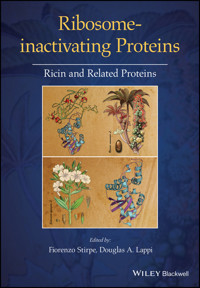
Cover image: Upper RH illustration: Ricinus communis L: Koehler’s Medizinal-Pflanzen (1887)Lower RH illustration: Saponaria officinalis L: English Botany, or Coloured Figures of British Plants, 3th ed. [J.E. Sowerby et al], vol. 3 (1864)Upper LH and lower RH illustrations: designed by Dr. Valeria Severino (Seconda Università degli Studi di Napoli)Cover design by Soephian Zainal
Contributors
Maurizio Brigotti
Dipartimento di Medicina Specialistica, Diagnostica e Sperimentale
Alma Mater Studiorum Università di Bologna
Bologna, Italy
Célia Regina Carlini
Centro de Biotecnologia–UFRGS
Universidade Federal do Rio Grande do Sul
Porto Alegre, Brazil
Angela Chambery
Department of Environmental, Biological and Pharmaceutical Sciences and Technologies
Second University of Naples
Caserta, Italy
Wood Yee Chan
School of Biomedical Sciences
Faculty of Medicine
The Chinese University of Hong Kong
Hong Kong, China
Marco Colombatti
Department of Pathology and Diagnostics
University of Verona
Verona, Italy
Antimo Di Maro
Department of Environmental, Biological and Pharmaceutical Sciences and Technologies
Second University of Naples
Caserta, Italy
Yaeta Endo
Cell-Free Science and Technology Research Center
Ehime University
Ehime, Japan;
Center for Molecular Biology of RNA
University of California, Santa Cruz
Santa Cruz, California, USA
Maria Serena Fabbrini
Ministry of Instruction, University and Research (MIUR)
Monza, Italy
Jack Feldman
Systems Neurobiology Laboratory
University of California, Los Angeles
Los Angeles, California, USA
Giulio Fracasso
Department of Pathology and Diagnostics
University of Verona
Verona, Italy
Manuel José Gayoso
Departamento de Farmacología, Biologíca
Celular e Histología
Facultad de Medicina
Universidad de Valladolid
Valladolid, Spain
Tomás Girbés
Nutrición y Bromatologia
Facultad de Medicina and Centro de Investigación en Nutrición, Alimentacióny Dietética
CINAD-Parque Científico Universidad de Valladolid
Valladolid, Spain
Gareth D. Griffiths
Cellular Toxicity Team
Biology and Biomedical Sciences
Defence Science & Technology Laboratory (DSTL)
Porton Down
Salisbury, UK
Katalin A. Hudak
Department of Biology
York University
Toronto, Ontario, Canada
Rodolfo Ippoliti
Department of Life, Health and Environmental Sciences
University of L'Aquila
L'Aquila, Italy
Pilar Jiménez
Nutrición y Bromatologia
Facultad de Medicina and Centro de Investigación en Nutrición, Alimentacióny Dietética
CINAD-Parque Científico Universidad de Valladolid
Valladolid, Spain
Gabriela Krivdova
Department of Biology
York University
Toronto, Ontario, Canada
Douglas A. Lappi
Advanced Targeting Systems, Inc.
San Diego, California, USA
J. Michael Lord
School of Life Sciences
University of Warwick
Coventry, UK
Jill McGaughy
Department of Psychology
University of New Hampshire
Durham, New Hampshire, USA
Arthur F. Monzingo
Institute for Cellular and Molecular Biology
University of Texas at Austin
Austin, Texas, USA
Kira C. M. Neller
Department of Biology
York University
Toronto, Ontario, Canada
Tzi Bun Ng
School of Biomedical Sciences
Faculty of Medicine
The Chinese University of Hong Kong
Hong Kong, China
Augusto Parente
Department of Environmental, Biological and Pharmaceutical Sciences and Technologies
Second University of Naples
Caserta, Italy
Bijal A. Parikh
Department of Pathology and Immunology
Washington University School of Medicine
St. Louis, Missouri, USA
Willy J. Peumans
Aalst. Belgium
Jon D. Robertus
Department of Molecular Biosciences
Institute for Cellular and Molecular Biology
University of Texas at Austin
Austin, Texas, USA
Rosita Russo
Department of Environmental, Biological and Pharmaceutical Sciences and Technologies
Second University of Naples
Caserta, Italy
Dale Sengelaub
Department of Psychological and Brain Sciences, and Program in Neuroscience
Indiana University
Bloomington, Indiana, USA
Valeria Severino
Department of Environmental, Biological and Pharmaceutical Sciences and Technologies
Second University of Naples
Caserta, Italy
Chenjing Shang
Laboratory of Biochemistry and Glycobiology
Department of Molecular Biotechnology
Ghent University
Ghent, Belgium
Robert A. Spooner
School of Life Sciences
University of Warwick
Coventry, UK
Fiorenzo Stirpe
Dipartimento di Medicina Specialistica, Diagnostica e Sperimentale
Alma Mater Studiorum Università di Bologna
Bologna, Italy
Els J. M. Van Damme
Laboratory of Biochemistry and Glycobiology
Department of Molecular Biotechnology
Ghent University
Ghent, Belgium
Lúcia Rosane Bertholdo Vargas
Instituto de Biotecnologia
Universidade de Caxias do Sul
Caxias do Sul, Brazil
Jack Ho Wong
School of Biomedical Sciences
Faculty of Medicine
The Chinese University of Hong Kong
Hong Kong, China
Preface
Ribosome-inactivating proteins (RIPs) are a class of proteins that range from a few proteins known for more than a century, to a large number identified in the last few years. Some of them are potent toxins.
An abundant literature has appeared on the subject, with thousands of articles, reviews, and books. Research on RIPs has been stimulated not only for the sake of knowledge, but also for their potential applications, at first in medicine and subsequently in agriculture, some of which now seem to be close to use. In spite of this significant amount of research, a lot remains to be learned. Many questions remain unanswered, and new ones are posed by results obtained. To mention just one example, the role of RIPs in nature is still unclear.
These, in part unexpected, developments led us to plan a book on these proteins. We were fortunate enough to obtain the collaboration of some of the best experts on the various aspects of RIPs, who have well described the research on these proteins. They had absolute freedom, not only in reviewing the literature, but also in expressing their views and making new proposals, even when these were different from the opinions of other authors and, at times, even the editors. This, we hope, makes the book not only informative, but also a stimulus for further research.
The book is organized in 19 chapters, each assigned to relevant experts. It starts with an introduction summarizing the research that led from ricin to a new class of proteins and their possible practical applications, followed by a description of the occurrence and distribution of RIPs in nature, based on a modern original search on the genome of these proteins and their presence in the available genomes of plants and animals.
Almost all the type 1 RIPs are described, divided by plant families of origin – namely Phytolaccaceae, Caryophyllaceae, Cucurbitaceae, and Euphorbiaceae – followed by the non-toxic type 2 RIPs and the Shiga and Shiga-like toxins.
The properties of RIPs are extensively described, beginning with their structures, which are compared and related to their enzymatic activity and to the action of inhibitors. This is followed by the evolution of RIP genes. The true toxins enter cells by the clever and insidious use of a cell-binding protein; their traverse into the cell and to their target is a tale of incredible evolutionary prowess. Even RIPs with no cell-binding chain apparently enter cells for antiviral activity. The enzymatic action, the entry into cells, and the intracellular destination of RIPs are fully described. The pathological damage caused by toxic RIPs is also well discussed.
The antiviral, antifungal, embryotoxic, and abortifacient properties of RIPs lead to possible applications of these proteins in agriculture and in medicine, as they are or linked to antibodies or other carriers, with limitations due to their immunological properties which are well described and discussed.
RIPs conjugated to targeting proteins, such as antibodies that recognize cancer cell surface markers, have held promise over the years as miraculous anticancer agents if they could just be targeted specifically to the cancer cells and nothing else. The adventures and difficulties in developing a proper drug in which the marvels of modern science can be used is the subject of Chapter 16. This topic has been worked on for 40 years now and can, and should, be the subject of a completely separate book. The use of this same idea has been transferred to neuroscience research, described in Chapter 17, as scientists have begun the work on the Brain Activity Map project.
Finally, fears over the possible uses of toxic RIPs for criminal purposes and as biological weapons for warfare and terroristic attacks are summarized in Chapter 19 from a realistic viewpoint.
We are grateful to all our authors for having accepted our proposal and our comments on their work. These authors are leaders in their fields and have contributed their results, in several cases, for many years in the best peer-reviewed scientific publications. We, the editors, are proud that they have joined us in describing the many fascinating facets of ribosome-inactivating proteins. We also thank Wiley for their help in all aspects of this effort, including a most important aspect: publishing. We especially thank Denise Higgins for organizing and formatting all the chapters so that they all made sense. This was no small task and, without her help, this book would never have made it to the publishers. All of us, authors and editors, are tremendously grateful for her dedication.
1Introduction and History
Fiorenzo Stirpe
Dipartimento di Medicina Specialistica, Università di Bologna, Italy
Introduction
The history of RIPs, especially the toxic ones, has been well reviewed recently.1 This present chapter will summarize the research steps that in the last 40 years have led to significant advancements in the knowledge of these proteins, of their mechanism of action, and of their possible practical applications in medicine and in agriculture.
Ribosome-inactivating proteins (RIPs), initially discovered in higher plants, have been the subject of numerous studies (reviews by Van Damme, Nielsen, Hartley, Girbés, Stirpe, Ng, and Puri). More than 50 RIPs have been identified and purified, but it has become clear that they can, in some circumstances, be expressed in many plants and other organisms in which they have not been detected because of assay sensitivity or other reasons. Thus, they must have an important function to justify their persistence throughout the evolution of proteins, which are an expensive material to make. Furthermore, it is becoming more and more apparent that important uses of RIPs can be envisaged.
Lesen Sie weiter in der vollständigen Ausgabe!
Lesen Sie weiter in der vollständigen Ausgabe!
Lesen Sie weiter in der vollständigen Ausgabe!
Lesen Sie weiter in der vollständigen Ausgabe!
Lesen Sie weiter in der vollständigen Ausgabe!
Lesen Sie weiter in der vollständigen Ausgabe!
Lesen Sie weiter in der vollständigen Ausgabe!
Lesen Sie weiter in der vollständigen Ausgabe!
Lesen Sie weiter in der vollständigen Ausgabe!
Lesen Sie weiter in der vollständigen Ausgabe!
Lesen Sie weiter in der vollständigen Ausgabe!
Lesen Sie weiter in der vollständigen Ausgabe!
Lesen Sie weiter in der vollständigen Ausgabe!
Lesen Sie weiter in der vollständigen Ausgabe!
Lesen Sie weiter in der vollständigen Ausgabe!
Lesen Sie weiter in der vollständigen Ausgabe!
Lesen Sie weiter in der vollständigen Ausgabe!
Lesen Sie weiter in der vollständigen Ausgabe!
Lesen Sie weiter in der vollständigen Ausgabe!
Lesen Sie weiter in der vollständigen Ausgabe!
Lesen Sie weiter in der vollständigen Ausgabe!




