


3,99 €
Mehr erfahren.
- Herausgeber: Frouse Books
- Kategorie: Fantasy und Science-Fiction
- Sprache: Englisch
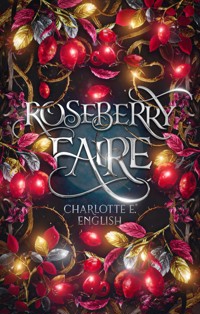
From the author of Faerie Fruit and Bessie Bell and the Goblin King comes a cosy, fairycore tale about family, belonging, and finding your heart’s desire.
Far from anywhere we know, once in the bluest of moons, a grand and marvellous market comes to the sunlit Rosewood: the Roseberry Faire. It’s a place of marvels you’ve never heard of; wonders you’d never think to dream. You might find your heart’s dearest wish – or something you never knew you needed.
Under the gold-limned boughs of the Roseberry Tree, folk gather from far and wide. Summerthorn, an avid collector, come out from her quiet home under ruined Wyld Court and taken to the road. The ouphe Od of the Inglewood, searching for a way back to the golden days of his youth. Wort and the tatter-steed Ragamuff, travellers and raconteurs; and Agatha Storm, strangest of all, from far and far away.
This is a lyrical tale of wishes and dreams; of quiet joys and heart’s easing at the end of a long day. It’s a tale of sunny adventure, good eating, and the kindnesses of strangers. Above all, it’s a tale of finding yourself, finding your folk, and what it means to be home.
Contains: found family, animal companions, neurodivergent rep, and magical hats! Marvellous cakes! Fairy folk and folklore! And all of Charlotte E. English’s trademark quirky, beguiling charm.
Das E-Book können Sie in Legimi-Apps oder einer beliebigen App lesen, die das folgende Format unterstützen:
Seitenzahl: 183
Veröffentlichungsjahr: 2024
Ähnliche














Roseberry Faire
Charlotte E. English
Roseberry Faire
by Charlotte E. English
Copyright © 2024 by Charlotte E. English
Cover design by MiblArt. Interior Art by Holly Dunn
All characters and events in this book are fictitious. Any resemblance to real persons, living or dead, is purely coincidental.
All rights reserved.
No portion of this book may be reproduced, distributed, or transmitted in any form or by any means, including photocopying, recording, or other electronic or mechanical methods, without written permission from the publisher or author, except as permitted by EU copyright law.
Ebook ISBN: 9789492824776
Paperback ISBN: 9789492824783
Hardback ISBN: 9789492824790
Contents
PART ONE: THE FOLK
1
No winter-loving creature, this ouphe. They called her Summerthorn, for though the frost curled her toes in her boots the colour of violets, and the snow turned her pale as the moon, came the sun and she blossomed like a daffodil, and the roses came out in her cheeks.
She was prickly, too, like the tips of holly leaves. Sharp were her nose and her fingers and her chin; sharp were her eyes and her tongue, too, for she missed nothing, and never suffered fools. She lived in a bower of ivy under a mossy stone bridge, the stream it had once spanned long since drained away. The villagers of Wyld Court built it, long ago, but their cottages now lie in tumbled ruins, and a rambling woodland covers them. Only Summerthorn is left.
She has a garden plot, fragrant with herbs: thyme and frilled parsley, glossy bayleaf, blue bergamot, and pennyroyal. Long purple tubers twist through the damp earth there, topped with amber-coloured fronds; Summerthorn tends them carefully, harvests them sparingly, in the cold seasons. She dines on wild berries, when she can get them, and honey from the woodland hives, and she always has earth under her fingernails, and in her hair.
She lives alone, not being fond of other folk. Still, a deer path wanders through the old ash trees, and passes over the Wyld Court bridge. It brings a visitor, sometimes.
Summerthorn was planting beans on the west side of her bower, lost in thought, and half asleep. She was but lately emerged from her caverns under the earth, a dark womb lit with fungi like a carpet of daisies. She’d pull succulent roots out of the earth overhead and eat them raw; they’d sustain, but couldn’t please, not all the winterlong. Beans she wanted, and beans she would have, crisp and fresh in their long pods; she had sprout powders to feed them with, and pure lake water, they would flourish soon enough. A fledgling sun warmed the pallor out of her skin, her dagged skirts caught up in swags, out of the way of her feet; she was whistling. When the clamour started up, she didn’t hear it, not at first.
Hooves came a-clattering over the Wyldwood Bridge: a well-shod little animal with bells on its bridles. Someone came along with it, calling: ‘Hoy, Thornling! Wake, and come out!’
Summerthorn knew the voice, and the hoofbeats, too. This pleased her about as much as the tubers did, though interest stirred, faintly; ‘Hoy,’ she groused, and set down her rusting trowel. ‘Think you to find me still slug-a-bed, Wort? I’m awake.’
‘Then, faith, you’ll like my news,’ answered Wort cheerily. ‘And the contents of Ragamuff’s saddle bags, too.’ Wort was no ouphe like Summerthorn, those were gone from the Wyld. He was dwarfish, shorter than the Thorn, and prettier, though his butter-yellow locks and cornflower eyes did nothing for him with her: she scowled.
‘Don’t tarry, then, if you must disturb,’ she told him, hefting her trug; it was filled with sprouted beans. ‘The planting waits for no one, as you know.’
Wort swung down from Ragamuff’s back, and produced a tuber for the tatter-steed, a purple one. Welcome to it, and gladly, Thorn could have offered twenty more—but not the sprouts. ‘What will you have first?’ said Wort, as Ragamuff crunched. ‘The news, or something else?’
Summerthorn eyed him. Pleased as punch with himself, he was: suspicious. ‘Have you spices?’
‘Not a bit.’
‘Apples or pins?’
‘Nary a one.’
‘Shoe leather or chestnut pies?’
‘I don’t.’
‘Then I’m not interested.’
‘The news, at least?’ offered Wort, faintly pleading.
‘Shall I care for it?’ asked Summerthorn, brushing knots out of her eyes: it wanted cutting, the tangled hedge of her hair.
‘You shall!’ Wort said it grandly, as though he’d brought her a pot full of gold.
‘And what must I give you for it?’
Wort had tickled her interest: his eyes brightened. ‘A fresh pod, with the beans still in it.’
Summerthorn glanced at her muddied trug, overflowing with greenling sprouts. ‘Done.’
Ragamuff ambled away, bridle jingling: there were shoots to be had elsewhere. Wort let the steed be, saddle-bags forgotten. ‘It’s the Faire,’ he said at once. ‘It’s coming.’
Summerthorn dropped her trug; sproutlings scattered. ‘That nugget’s worth more than beans, if it’s true,’ she said. ‘You should have haggled.’
‘It is true,’ he answered, injured. ‘I had it from Od of Inglewood, not a sennight past.’
‘Od said it?’
‘Aye.’
Summerthorn scrambled after her sprouts, and didn’t answer, not at once. ‘And what do you think I’m to do about it, then?’ she said, having collected her beans and her thoughts, both.
Wort’s flower face shone with surprise, maybe glee. ‘There hasn’t been a Faire in... oh, ever so many ages! You are like to go, aren’t you?’
‘To trade or to buy?’
‘Both, of course.’ Wort smiled.
Aye, there was his reason. He’d got a good, sprouting bean out of the business already, one of her best. He thought to get a go at her treasures, too, later.
He might, at that. ‘We’ve to find it first,’ she pointed out.
That sobered him. ‘Good Thornling, I had hopes you might help with that.’
‘What makes you think I can?’
‘If anyone can, it must be you.’ He didn’t say why, and she didn’t need to ask. They both knew what lay in the earth under their feet.
She would not take him down there with her, however much he wheedled. Went against the grain. No one went below but Summerthorn, if she could help it.
She went down herself, though, leaving Wort feeding tender shoots of something to Ragamuff, and picking stones out of the tatter-steed’s hooves. They’d come a long road, he’d said, clear across the country from Ingstone, and the Inglewood, and before that, Allingore. He wouldn’t have come half so far, if he’d had any better prospect.
Her narrow staircase down had tiles set into the steps, coloured in turquoise and the green of sage leaves. She’d dug them out of the remains of Wyld Court, one of the grander houses. There had been glass in those windows, once; she’d saved some of that, too.
Her feet clattered softly on those smooth tiles as she ventured down, the light from her wisp-lantern glinting off walls laced with amethyst and jade. She passed straight through the first of her earth-scented store-rooms without pausing; its narrow shelves housed the lesser treasures, pulled from the tumbled shells of Wyld Court’s slumbering dwellings. Shallow dishes and fragile goblets, wrought from tinted and painted pottery and glass, and painstakingly pieced back together; brooches and rings and necklaces of burnished copper and gold, set with beryl like drops of sunlight; slippers and scarves and sashes, silken and half-mouldered, covered in embroidery.
She lingered a while in her second store-room, opening out from the first with a carven arch to join them; not because it held what she sought, merely for the pleasure of it. Her wisp-light set a thousand motes to glittering, it was like being tucked into a bottle full of stars. The walls rose over her head, alcoves carved into them in spiralling rows, stuffed with beauties. She had jars made of blue sea glass, with the ocean caught into them, green waters tossing with their own frothing tides. She had a chest of carven bone, with a rainstorm inside it, smelling of thunder; an oak tree the size of her own hand spun from sea-coral, and pearls; a topaz glass hare that woke from time to time, and tore in circles around the cavern, lithe and fleet as a living creature.
These and a hundred more had she, tucked away in the deep of the earth; she passed them by, went soft-footed into a third chamber, its curving earthen walls thick with iridescent fungi. The alcoves here stood empty, for the most part, awaiting the rarest of treasures. A nook in the centre of the stone floor bore a covered copper pot, like a cauldron: Summerthorn removed the lid.
Something shot out in a flicker of roseate gold, and was instantly caught in the ouphe’s quick fingers. A leaf the colour of roses, veined with gold, and thrumming with vibrant life; it warmed Summerthorn’s fingers, sent a jolt of something like joy spinning through her.
She carried it to her face and took a long breath, received a lungful of rose-garden and sun-baked grass, and the fresh, sharp scent of the air after a summertime storm.
Wort sat waiting when she came back into the air and the light, a hunk of bread in his hand; he was chewing. He forgot his meal when he saw the glitter in her fingers, and the bread tumbled down, where Ragamuff snatched it.
‘You’ve got it?’ breathed he, with such surprise in the words as to bring a glower to Summerthorn’s face.
‘What did you come for if you didn’t think I’d have the way?’ She waved the leaf at him; it caught the sun, and glimmered in twelve shades of gold. ‘Here it is.’
Wort held out his hand for it, but Summerthorn snatched it out of his reach. ‘Oh no. I’ll not have you walking off with it.’ She had stuffed a patched leather bag with a cornucopia of things, and she hefted it now, threw it onto her back. ‘I’m going,’ she informed a crestfallen Wort. ‘You can come with me, if you’re quick.’
Wort was already on his feet; he was after Ragamuff in a trice, fetching the tatter-steed from a circle of frilled clover. ‘Come along, Rag,’ he wheedled, bribing the beast with a fresh wedge of cottage loaf. ‘We’re going to the Faire!’
Ragamuff had caught the scent of the leaf in Summerthorn’s hand: his white ears flicked and pointed skyward, and he came after it at a trot.
Summerthorn danced past him, wreathed in a fragrant wind. When she opened her hand, the last leaf of the Roseberry Tree whirled away in it, tumbling in scented spirals, flashing golden in the sun.
‘After it!’ crowed Summerthorn, with a whoop. ‘Don’t tarry! It won’t wait!’
So saying, she kicked up her booted heels and gave chase, running as fleet-footed as a hare over the Wyld Court Bridge and back into the world. The thunder of Ragamuff’s hooves came after, Wort’s high voice raised in a cry of half-feral joy.
2
Many leagues away in the Inglewood, an ouphe called Odgrove was also taking to the road. This was the self-same Od whose news of the Faire had set Wort wending his way down to Wyld Court, and Summerthorn, though he didn’t know that he had done it. He had dreams, sometimes, as most folk do, but Od’s shimmered with colour and shone with truth. He had dreamed of the Roseberry Tree, vast and ancient, its roots wound deep into the earth of a wood so wily, few could find it. It was in full and vibrant leaf, when he saw it, an auroral, shimmering haze in all a rose-garden’s hues, and Od had known at once: the Faire was coming.
When, he couldn’t say, nor where, the Rosewood being a slippery sort of place, hard to pin down. But he knew he would go in search of it, and he’d said so.
A being of great age himself, Odgrove was older than Summerthorn, and felt it. His old bones groaned in protest as he donned his tramping boots, with the cloth stuffed into the soles to save his blisters. His bags were lighter than hers, for he hadn’t the might to heft them over hill and over dale; nor had he a tatter-steed to aid him, like Wort. He wasn’t daunted, or not much; he had a doughty spirit, honed over ages long and thorny, and it had served him well before.
The Inglewood had a village in it, where Odgrove was the elder. It wasn’t ruined, like Wyld Court, but thriving, though Od was by far the eldest of its residents, and the only ouphe. Still, when he closed the blue-painted door of his rambling old cottage and stepped into the road, none went with him.
‘Roseberry Faire!’ the Inglers had scoffed. ‘A tale for children and old wives. Give over, Od.’
They’d talked of it after, of course, merry with mirth, and this is how the news had reached Wort’s ears, a little later.
Od didn’t mind solitude, in the general way of things. He might have liked a bright young thing to go along his way to the Faire, someone to keep his spirits up with chatter, and perhaps carry the bags. But he could manage without, and he did, getting as far as the borders of the Inglewood by nightfall. It was cold, yet, in the blue eventide; summer would be a while in coming. Od had a long scarf wrapped around his wizened throat, a thick and unlovely thing knitted in too many colours. He could spread it out like a blanket, and wrap himself in it, and it would keep the cold out, near enough.
He had little thought of where to go, for his dream had not told him. He only knew that he must be going, on his way to somewhere; his feet would find the way, or something else. He had a hopeful spirit, Od.
He tramped a long way into the Inglewood, on that first day, humming a succession of walking songs he hadn’t thought of in many a year. Despite the cloth, his feet had sprouted a few sore spots apiece by the time the light sank out of the sky; he was out of the habit of tramping, that was the trouble.
He got a fire going, somehow, though most of the wood-fall thereabouts was dampish and soft; they’d had rain aplenty. His old fingers remembered their old way with twiggery, though, and coaxed a spark into it. He’d gathered a crop of crisp leaves, dark and green, and a stray handful of berries; he ate this fresh repast with a hunk of brown bread, thick with seeds, from his pack, and sat watching the crackling fire, and thinking.
Roseberry Faire. He’d attended before, back when his bones were young and sturdy and the lines hadn’t yet graven themselves into the contours of his face. Just the once, but the memory glimmered still in his mind, vibrant, fresh as though it had all happened yesterday. The Roseberry Tree towered over all, a mighty behemoth of growth, gold and pearly and rose-coloured, old as the land itself. Ouphes and hoblets and spriggans had gambolled along its gnarled old boughs, hurling roseberries at each other, their laughter like flurries of bright, silver bells all ringing together. Beneath, Od had lingered near to another good blaze, its flames gold and leaping, swapping tales and fables with folks he’d never seen since.
‘Excuse me,’ said somebody, not out of his memory; this was a voice from the here-and-now, not the past. Od looked up. ‘Terribly sorry,’ the person went on, ‘but may I possibly share your fire? I haven’t been able to get anything going myself. The wood is far too wet.’
It was a very tall person speaking, much taller than Od, and everything about them was strange to him. The language, to begin with: he understood it, but it cost him some trouble to do so, for the words were oddly shaped, came rolling off the speaker’s tongue with a cadence he didn’t know.
Then, their appearance: besides improbable tallness, a sturdy, stout figure, a well-grown tree-trunk of a being, doubtless strong. Grey hair tied up in a thick knot, and grey eyes, too, keen and sharp, though the manner that went along with them was meek.
Garments peculiar. A thick skirt, forest-green and round as a bell, the hems cropped ankle-high. A heavy coat over it, waxed and black, rain-streaked; had it been raining? Od hadn’t noticed.
A hat, black wool, with three corners to it.
Od roused himself from his memories and his scrutiny, mustering his manners. ‘Of course you may,’ he said politely, in his own words, shaped as he liked; the skirted person comprehended, for a smile came into the weathered face, relief in it.
‘Thank you,’ came the reply, with a grateful sigh, and a pack, waxed like the coat, swung down and thudded into the fern-leaves. ‘A long march today, and no mistake! I don’t know how I had the strength for it, but I did.’
Od waited while his guest took a seat upon a fallen branch, a stout one. His quick mind whirred. He had never seen such a person before, nor heard of one, either—except at the Faire, long ago. They didn’t live around here, such folk, not in any land Od knew. They came from farther away than that, much farther.
‘You’re going to the Faire,’ he guessed.
‘I am! How did you know?’
Od fished another hunk of seed-bread out of his pack, and offered it. ‘It’s the times,’ he explained. ‘You see strange folk about, when the Faire comes.’
His guest accepted the bread, and exchanged it for something else: Od found a quantity of greased paper pressed into his hands, and inside it, a cake sticky with honey.
‘Am I strange, then?’ came the good-natured answer, around a mouthful of seeds. ‘I suppose I must be, to you.’
‘And I, to you,’ Od said, smiling at the thought.
A nod. ‘I’m not so strange as all that, when you come to know me. Which you may, at that. I am called Agatha Storm, if you’d like to know.’
‘I am called Odgrove of Inglewood,’ he answered. ‘Od, that is.’
Agatha Storm gave him a smile, and a tip of the three-cornered hat. ‘A pleasure, Od. Are you going to the Faire?’
He nodded, his mouth too full of honeyed crumbs for talking.
‘Then perhaps our road lies together, for now.’
Od swallowed cake, thickly. He hadn’t planned on having so strange a companion for this journey of his, and wasn’t sure that he wanted one. But to refuse must be churlish, and besides that, the cake was very good. ‘Aye,’ he agreed, wiping honey off his fingers with a fern leaf. ‘Perhaps it might.’
The next day dawned inclement. Od, gone to sleep wrapped up in his scarf, and tucked into the lee of a fallen tree, woke with cold rain dripping off the mouldered oak-bark that sheltered him, washing his face with an echo of winter’s chill.
‘Opf,’ he sneezed, and unwound himself, sighing.
Agatha Storm fared worse, what with her being so much bigger than he. There was no nook under a fallen half-trunk to keep her even half dry; he got up to find her crouched under a hat with a brim wider than she was, and scowling.
‘I had hoped it wouldn’t rain,’ she said.
‘No rain? In the springtime?’ Od sought damply for something to do for her, something that might help; she looked miserable. He found nothing. There was no arguing with spring rain.
Agatha sighed, and straightened to the full height of her long legginess. ‘When I pictured the road to the Faire, I thought—well, I saw it all sun-drenched, with flowers by the way-sides, and sparrows singing in the hedgerows as I walked. But it isn’t going to be like that, is it?’
‘Sometimes,’ said Od. ‘Not always. It’s no use expecting everything to be easy. No quicker way to dishearten yourself, that.’ He put his own hat on, an unlovely, brimless thing knitted lumpily, but it was warm.
He’d aggravated Agatha, he supposed, for she began to stomp as she collected the scattered sundries of her possessions. ‘I’ve made myself sound like a fool,’ she huffed, shaking rain from her hat in a spray of cold water. ‘But I’m not a fool, I think.’
‘Some would say we are both fools,’ said Od. ‘Off into the rain in search of a Faire that’s lost itself. Perhaps we are.’
‘Not fools,’ said Agatha. ‘Just hopeful.’
She didn’t say what it was she was hoping to find at Roseberry Faire; neither did Od. There’d be time enough for that later on, maybe, if their road lay together long enough for confidences.
They tramped determinedly all the day through, and it was well they were so brim-full of hope, for the rain persisted, grew, if anything, colder. Od took up singing, somewhere halfway through, to while away the miles. An hour or two later, Agatha joined him. Melodic as a brace of crows, the both of them, but Od enjoyed it: it had been long, since he’d exercised his voice and his memory with music.
‘Now,’ Agatha said at length, when they had marched themselves sodden and weary and the light was seeping out of the sky, ‘I don’t know how it may be with you, Od of Inglewood, but you’re travelling with a crone, and we are not made to sleep cold and soaked under the stars, night after night. I’ll wake up crumpled like a sheet of paper, and stiff as a stone—if I don’t wake up stone dead.’




