


139,99 €
Mehr erfahren.
- Herausgeber: John Wiley & Sons
- Kategorie: Wissenschaft und neue Technologien
- Sprache: Englisch
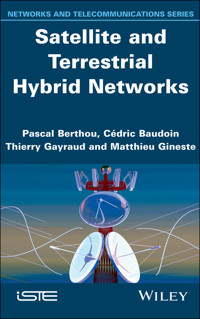
This book offers the reader the keys for a successful understanding, integration and usage of satellite systems in addition to next generation terrestrial networks. The DVB-S2/RCS system is used to illustrate the integration challenges. The presentation uses a system approach, i.e. it tackles the terrestrial and satellite telecommunication systems’ complexity with a high level approach, focusing on the systems’ components and on their interactions. Several scenarios present the different paths that can be followed for the integration of satellite systems in terrestrial networks. Quality of Service management techniques in terrestrial and satellite systems and the solutions to help them to interoperate are provided. Inter-system mobility solutions and performance problems are then addressed. The solutions proposed in this book have been developed within the framework of European and French funded research projects and tested with simulated or real testbeds.
Sie lesen das E-Book in den Legimi-Apps auf:
Seitenzahl: 345
Veröffentlichungsjahr: 2015
Ähnliche



















Table of Contents
Cover
Title
Copyright
Acknowledgments
Foreword
List of Acronyms
Introduction
1: Satellite and Terrestrial Hybrid Networks
1.1. Designing satellite and terrestrial hybrid networks
1.2. Hybrid scenarios
1.3. Case study: loose coupling integration
1.4. Conclusion
2: Quality of Service on Nextgeneration Terrestrial Networks
2.1. IETF approach
2.2. ITU-NGN approach
2.3. Conclusion
3: Quality of Service in DVB-S/RCS Satellite Networks
3.1. Bi-directional satellite access systems
3.2. The DVB-S standard and the IP support
3.3. The DVB-S2 standard
3.4. The DVB-RCS standard
3.5. DVB-RCS2
3.6. QoS architecture in DVB-S/RCS satellite access networks
3.7. Conclusion
4: Integration of Satellites Into IMS QoS Architecture
4.1. IMS architecture
4.2. IMS QoS architecture
4.3. IMS QoS signaling
4.4. Inclusion of IMS QoS in the satellite segment
4.5. Toward a unified next-generation network (NGN) QoS architecture
4.6. SATSIX project
4.7. Conclusion
5: Inter-System Mobility
5.1. Introduction
5.2. The taxonomy of mobility
5.3. Protocols for mobility management
5.4. Implementation of mobility solutions in hybrid systems
5.5. SIP for mobility management and QoS for interactive applications
5.6. Evaluation of mobility solutions in a simulated DVB-S2/RCS architecture
5.7. Conclusion
6: The Transport Layer in Hybrid Networks
6.1. Introduction
6.2. Performance enhancing proxies
6.3. TCP evolutions
6.4. TCP performance in a geostationary network
6.5. TCP in a hybrid context
6.6. General conclusion
Conclusion
Bibliography
Index
End User License Agreement
List of Table
3: Quality of Service in Dvb-S/Rcs Satellite Networks
Table 3.1. Reasonable performance of a deployed DVB-RCS network
4: Integration of Satellites Into IMS QoS Architecture
Table 4.1. List and meaning of COPS messages
Table 4.2. List of messages defined in the DIAMETER protocol
Table 4.3. Suitability of IMS QoS procedures in a satellite context
5: Inter-System Mobility
Table 5.1. Evaluations regarding Mobile IPv6
Table 5.2. Evaluations regarding HMIPv6
Table 5.3. Evaluations regarding FMIPv6 in predictive mode
Table 5.4. Evaluations regarding FMIPv6 in reactive mode
Table 5.5. Evaluations regarding SIP mobility
6: The Transport Layer in Hybrid Networks
Table 6.1. Combination of different TCP versions (heterogeneous client/server)
Table 6.2. Impact of the MBB handover on TCP
List of Illustrations
1: Satellite and Terrestrial Hybrid Networks
Figure 1.1. Trends with 4G/NGN
Figure 1.2. Tight coupling architecture
Figure 1.3. LTE protocol stacks (User Plan – 3GPP standard documents)
Figure 1.4. LTE gateway architecture
Figure 1.5. LTE/satellite loose coupling integration
Figure 1.6. Heterogeneous hybrid architecture for mobile nodes
Figure 1.7. Heterogeneous hybrid architecture for mobile networks
Figure 1.8. Network coverage in the mobility scenario
2: Quality of Service on Nextgeneration Terrestrial Networks
Figure 2.1. Reservation of resources by RSVP protocol for an Intserv class stream
Figure 2.2. Overview of the DiffServ network
Figure 2.3. Logical structure of the classifier and traffic conditioners
Figure 2.4. Example of an MPLS domain
Figure 2.5. MPLS field
Figure 2.6. Diagram showing users, service providers and the SLAs negotiated
Figure 2.7. Basic SIP session
Figure 2.8. Initialization of an SIP session integrating the quality of service reservation as per [CAM 02]
Figure 2.9. Signaling protocol architecture
Figure 2.10. Signaling via heterogeneous NSLP applications
Figure 2.11. Traditional NSIS signaling processing
Figure 2.12. Flow chart of PCIM architecture
Figure 2.13. Policy control architecture
Figure 2.14. Various access networks to be integrated into NGNs by ITU (copyright ITU)
Figure 2.15. General architecture of NGNs according to ITU
3: Quality of Service in Dvb-S/Rcs Satellite Networks
Figure 3.1. Basic bi-directional satellite access infrastructure
Figure 3.2. Inter-ST communication with transparent and regenerative satellites
Figure 3.3. Regenerative multi-spots bi-directional satellite
Figure 3.4. MPEG2-TS multiplexing
Figure 3.5. Format of a MPEG2-TS packet
Figure 3.6. DVB protocol stack
Figure 3.7. Encapsulation of an IP datagram using MPE
Figure 3.8. ULE encapsulation
Figure 3.9. Set of ModCods available in DVB-S2 (source ETSI)
Figure 3.10. SNR and ModCod vs. time to noise
Figure 3.11. Diagram of IP encapsulation over DVB-S2 by GSE (source ETSI)
Figure 3.12. Composition of a DVB-RCS Superframe
Figure 3.13. DVB-S/RCS Protocol Architecture in the Data Plan
Figure 3.14. Protocol stack for RCS signaling on the forward channel
Figure 3.15. QoS architecture DVB-RCS SatLabs (source SatLabs)
Figure 3.16. The QoS groups supported by the STM SatLink 1000
Figure 3.17. QoS in the edge router and the gateway
Figure 3.18. BSM architecture
Figure 3.19. Overview of the BSM QoS architecture
Figure 3.20. Application and QoS framework
Figure 3.21. General approach to QoS architectures
Figure 3.22. Functional QoS architecture
Figure 3.23. BSM QoS architecture
4: Integration of Satellites Into IMS QoS Architecture
Figure 4.1. Simplified IMS reference architecture
Figure 4.2. IMS architecture
Figure 4.3. IMS UMTS QoS architecture
Figure 4.4. Example of an opening of an IMS session
Figure 4.5. PDP context in a GPRS UMTS network
Figure 4.6. Opening procedure of an IMS session in an xDSL network (source node side)
Figure 4.7. Opening procedure of an IMS session in an xDSL network (destination node side)
Figure 4.8. QoS resource authorization procedure in the source PDF
Figure 4.9. QoS resource authorization procedure in the destination PDF
Figure 4.10. Resource reservation procedure with a local service policy
Figure 4.11. Procedure for the approval of commitments of authorized resources
Figure 4.12. Procedure of revoking authorization initiated by a mobile or network node
Figure 4.13. Indication of PDP context deletion
Figure 4.14. Authorization procedure for the modification of the PDP context
Figure 4.15. Indication procedure for the modification of the PDP context
Figure 4.16. IMS architecture – satellite – transparent integration
Figure 4.17. IMS architecture – satellite – integrated star approach
Figure 4.18. IMS architecture – satellite – integrated mesh approach
Figure 4.19. IMS satellite architecture in scenario 1
Figure 4.20. General implementation of QoS fo transparent integration
Figure 4.21. General implementation of QoS with C2P at the level of the NCC for transparent integration
Figure 4.22. General implementation of the QoS with C2P at the level of the ST for transparent integration
Figure 4.23. IMS satellite architecture in scenario 2
Figure 4.24. General implementation of QoS for the star integration
Figure 4.25. IMS satellite architecture in scenario 3
Figure 4.26. General implementation of QoS for mesh integration
Figure 4.27. General implementation of QoS for meshed integration with C2P
Figure 4.28. Access-oriented SATSIX architecture (mesh case)
Figure 4.29. SATSIX IP-oriented architecture (star case)
Figure 4.30. BSM QoS architecture
5: Inter-System Mobility
Figure 5.1. Example of personal mobility
Figure 5.2. IETF mobility terminology
Figure 5.3. Implementation of the bidirectional tunnel in the Mobile IPv6 a) direct communication, b) binding update with the HA and c) communication in bidirectional tunnel mode
Figure 5.4. Routing optimization procedure in Mobile IPv6: a) procedure for the return routability test; b) binding update with the CN and c) direct communication with specific routing options
Figure 5.5. FMIPv6 architecture
Figure 5.6. FMIPv6 in predictive mode
Figure 5.7. FMIPv6 in reactive mode
Figure 5.8. HMIPv6 architecture
Figure 5.9. Mobility management by HMIPv6
Figure 5.10. PMIPv6 architecture
Figure 5.11. Entry of an MN in a PMIPv6 domain and hand-over procedure
Figure 5.12. SIP management of nomadic mobility
Figure 5.13. SIP management by continuous mobility
Figure 5.14. Registrations initiated by the MN
Figure 5.15. Registrations initiated by the home SIP proxy
Figure 5.16. Registrations initiated by the local SIP proxy
Figure 5.17. Solution chosen for the SIP reregistration of an MN
Figure 5.18. Reinitiation of SIP session according to [RFC 3312]
Figure 5.19. Solution chosen for the reinitiation of the SIP session
Figure 5.20. The main types of movement in a satellite system
Figure 5.21. Interruption times registered by the MN as a receiver
Figure 5.22. Interruption time registered by the MN as emitter
6: The Transport Layer in Hybrid Networks
Figure 6.1. General view of I-PEP [ETS 09d]
Figure 6.2. Basic I-PEP components [ETS 09d]
Figure 6.3. I-PEP protocol integration scenarios [ETS 09d]
Figure 6.4. Request/reply delay of a ping over a real satellite connection – OURSES platform
Figure 6.5. Sequence number, transfer rate and RTT over a 512 Kbps connection. For a color version of the figure, see www.iste.co.uk/berthou/networks.zip
Figure 6.6. Sequence number and the use of bandwidth over a 2 Mbps connection. For a color version of the figure, see www.iste.co.uk/berthou/networks.zip
Figure 6.7. Evolution in sequence numbers, transfer rates and RTTs during a handover. For a color version of the figure, see www.iste.co.uk/berthou/networks.zip
Guide
Cover
Table of Contents
Begin Reading
Pages
cover
contents
iii
iv
ix
x
xi
xii
xiii
xiv
xv
xvi
xvii
xviii
xix
xx
xxi
xiii
xxiv
xxv
xxvi
1
2
3
4
5
6
7
8
9
10
11
12
13
15
16
17
18
19
20
21
22
23
24
25
26
27
28
29
30
31
32
33
34
35
36
37
38
39
40
41
42
43
44
45
46
47
48
49
50
51
53
54
55
56
57
58
59
60
61
62
63
64
65
66
67
68
69
70
71
72
73
74
75
76
77
78
79
80
81
82
83
84
85
86
87
88
89
90
91
92
93
94
95
96
97
98
99
100
101
102
103
104
105
106
107
108
109
110
111
112
113
114
115
116
117
118
119
120
121
122
123
124
125
126
127
128
129
130
131
132
133
134
135
136
137
138
139
140
141
142
143
144
145
146
147
148
149
150
151
152
153
154
155
156
157
158
159
160
161
162
163
164
165
166
167
168
169
170
171
172
173
174
175
176
177
178
179
180
181
182
183
184
185
187
188
189
190
191
192
193
194
195
196
197
198
199
200
201
202
203
204
205
206
207
208
209
210
211
212
213
214
215
216
217
218
219
220
221
223
224
225
226
227
228
229
230
231
232
233
234
235
237
238
239
240
241
242
Satellite and Terrestrial Hybrid Networks
Pascal Berthou
Cédric Baudoin
Thierry Gayraud
Matthieu Gineste
Michel Diaz
First published 2015 in Great Britain and the United States by ISTE Ltd and John Wiley & Sons, Inc.
Apart from any fair dealing for the purposes of research or private study, or criticism or review, as permitted under the Copyright, Designs and Patents Act 1988, this publication may only be reproduced, stored or transmitted, in any form or by any means, with the prior permission in writing of the publishers, or in the case of reprographic reproduction in accordance with the terms and licenses issued by the CLA. Enquiries concerning reproduction outside these terms should be sent to the publishers at the undermentioned address:
ISTE Ltd27-37 St George’s RoadLondon SW19 4EUUK
www.iste.co.uk
John Wiley & Sons, Inc.111 River StreetHoboken, NJ 07030USA
www.wiley.com
© ISTE Ltd 2015
The rights of Pascal Berthou, Michel Diaz, Thierry Gayraud and Cédric Baudoin to be identified as the authors of this work have been asserted by them in accordance with the Copyright, Designs and Patents Act 1988.
Library of Congress Control Number: 2015944962
British Library Cataloguing-in-Publication DataA CIP record for this book is available from the British LibraryISBN 978-1-84821-541-2
Lesen Sie weiter in der vollständigen Ausgabe!
Lesen Sie weiter in der vollständigen Ausgabe!
Lesen Sie weiter in der vollständigen Ausgabe!
Lesen Sie weiter in der vollständigen Ausgabe!
Lesen Sie weiter in der vollständigen Ausgabe!
Lesen Sie weiter in der vollständigen Ausgabe!
Lesen Sie weiter in der vollständigen Ausgabe!
Lesen Sie weiter in der vollständigen Ausgabe!
Lesen Sie weiter in der vollständigen Ausgabe!
Lesen Sie weiter in der vollständigen Ausgabe!
Lesen Sie weiter in der vollständigen Ausgabe!
Lesen Sie weiter in der vollständigen Ausgabe!
Lesen Sie weiter in der vollständigen Ausgabe!
Lesen Sie weiter in der vollständigen Ausgabe!
Lesen Sie weiter in der vollständigen Ausgabe!




