


Erhalten Sie Zugang zu diesem und mehr als 300000 Büchern ab EUR 5,99 monatlich.
- Herausgeber: IMO publishing house
- Kategorie: Bildung
- Sprache: Englisch
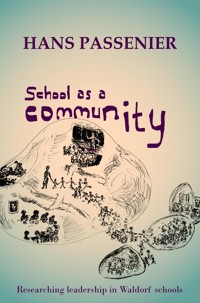
In search of leadership in Waldorf schools. Leadership in Waldorf schools has a specific history. Whereas 40 years ago it was hardly allowed to formally exist because it represented power and hierarchy, now it is commonplace to have a headmaster, rector or director. In this book, Hans Passenier examines the development of leadership and organisation in Waldorf schools. He starts at the origins and finds principles that can help develop school organisations and their leadership in the future. In four parts, he unfolds the foundations, the tools to develop leadership and organisations and finally describes exercises to support that development as a school community. His thesis is that education is about children being diverse, having different abilities. Also that the educator should not be a carpenter, but a gardener. The image of the school as an organism is guiding, in which the school community is a place for the inner development of each individual in that school community. The horizontal and vertical dimensions guide the view of both leadership and organisational design.
Sie lesen das E-Book in den Legimi-Apps auf:
Seitenzahl: 233
Veröffentlichungsjahr: 2024
Das E-Book (TTS) können Sie hören im Abo „Legimi Premium” in Legimi-Apps auf:
Ähnliche









School as a community
School as a community
Researching leadership in Waldorf schools
Hans Passenier
This is an English translation of a book published in Dutch by publishing house Christofoor in 2022.
The desire of Christofoor to start producing a series on education was in line with the desire of Hans Passenier to produce several publications reflecting the experience gained from its work as a consultant for Waldorf schools. The growth of schools and the need for Waldorf education invited to publish. The backgrounds and experiences could be thus shared.
Passenier,Hans
Original publication: Ontwikkelingvaneenschoolorganisatie; De drie doeldomeinen in het onderwijs en hun relatie met de dimensies/ Hans Passenier – Zeist: Christofoor
ISBN9789060389577
Author: Hans Passenier
Cover design: David Passenier
Illustrations: David Passenier
ISBN: 9789403719344
Translation: Hans Passenier with the help of Deepl
Editor: Hans Passenier with the help of Chatgpt
© 2024 IMO Publishing house
Foreword
In 2022, we initiated a European project exploring leadership in Waldorf schools across eight European countries. Prior to this, 'Ontwikkeling van een schoolorganisatie' had been published. As it resonated with the leadership development challenges in Waldorf schools, this book underwent translation into English.
Since 1983, I have immersed myself in the organisational and leadership aspects of Waldorf schools. I critically reflected on my experiences with the organisation of Waldorf education, particularly focusing on innovation within school communities. In my roles as an interim school leader and later as a consultant, I encountered organisational questions linked to the origins of Waldorf schools. Occasionally, my personal disappointments with the methods of organising and leading became the motivation for my investigations.
At one juncture, I observed significant adaptations in schools aligning with the organisational norms prevailing across all educational institutions in the Netherlands. It was during this period that a rector posed the intriguing question: 'Is the organisation of Waldorf schools suitable for the education we aspire to provide?' This query served as the catalyst for writing this book.
Bernard Lievegoed, a psychiatrist, educator, professor, organisation expert, and anthroposophist, inspired a group of anthroposophists in 1963 to establish the Dutch Pedagogical Institute for Business (NPI). The anthroposophical perspective on organisational development originated there. Adriaan Bekman, who worked at the NPI, subsequently founded the Institute for Human and Organisational Development (Instituut voor Mens- en Organisatie ontwikkeling: IMO) in 2005.
During the twenty-fifth-anniversary commemoration of Bernard Lievegoed's death, I met Klaas IJkema and Lisanne Bekman, both IMO consultants in the Netherlands at the time. They questioned why Waldorf schools had never sought guidance from IMO in their organisational development. This prompted us to collaborate, conducting research to understand the dynamics within the schools. We organised several conferences relating the origins and history of Waldorf education to the contemporary situation of Waldorf schools worldwide in the twenty-first century. In October 2022, we initiated an Erasmusplus project focused on Waldorf leadership development.
Waldorf education, practised globally in a limited capacity for over a century, prompted our curiosity about the driving forces behind its initiation and the trajectory for further developing the underlying educational concept over the next hundred years.
While penning this book, my ideas on the development of school organisations crystallised further, encompassing both primary and secondary schools. Despite their differences, the principles of organisation and leadership are applicable to both. Even when establishing Waldorf departments in existing schools with different backgrounds, I have successfully applied the insights in this book.
The overarching question was: How can we contemporarily organise Waldorf education to align with the principles, building blocks, and sources of inspiration of the Waldorf school, and how can we further develop these principles?
Ultimately, this book is intended for all teachers and leaders striving for an appropriate and effective organisation for education within their institutions, whether rooted in anthroposophy or not. If you identify as a leader in an educational process and feel part of a community dedicated to supporting students in their development, you will find guidance in this book.
Given that this book targets school leaders and teachers (male/female) in both primary and secondary education, when I use the term 'teacher,' I am referring to both primary school teachers and secondary school teachers. Readers may interpret the terms as they find suitable. Additionally, for 'child,' one may also read 'young person.'
In Part 1, I describe the impulse from which Waldorf education emerged. In Part 2, I explore the elements that can shape a (future) school organisation to align with the education we aim to provide. In Part 3, the focus shifts to the practical application of those elements. How can we incorporate the building blocks from Part 2 to design the organisation in a way that acts as a field of practice and provides the foundation for the education we want to offer in the future? In Part 4, I describe corresponding exercises that can be deployed for the development of a learning organisation, for the school as a community, and for the personal development of all individuals within that organisation.
Part 1 The evolution of Waldorf schools
This section delves into the driving forces and historical developments that have shaped Waldorf school education thus far. It explores the foundational values that underpin Waldorf education and identifies crucial elements for the ongoing evolution of Waldorf school organisation. What principles and values have contributed to the formation of this educational approach, and what key factors are instrumental in guiding the continued development of Waldorf schools' organisational structures?
1Reason
2The historical context
Rudolf Steiner was asked at one point to assist in the establishment of a new school for the children of workers at the Waldorf-Astoria cigarette factory. World War I played a significant role in this.
2.1Rudolf Steiner's ideas
The German philosopher and educator Rudolf Steiner initiated the anthroposophical movement in 1913. Even when he emigrated to Switzerland in 1914 after the outbreak of World War I, he remained connected to Germany in discussions on a new social system.
Steiner had been concerned with social issues for some time; in 1905, he first formulated his 'principal social law'.1 This principle emphasises a significant value: when working, one should focus on the well-being of others. Social well-being grows when this communal focus extends to several people in the community.
In 1917, Steiner published the book "Von Seelenrätseln," where he took the divine trinity as the starting point for his vision of mankind. In it, he recognised the tripartite nature of what he called man's physical, soul, and spiritual body. His main concern was to develop awareness of how to relate to this reality in human-organised reality and society. In Waldorf pedagogy, for example, this would be expressed as the use of "head, heart, and hands." In his lectures, Steiner often referred to the triad.
This tripartite concept is crucial not only in Waldorf pedagogy but also in biodynamic agriculture, anthroposophical health care, and curative education. Steiner always referred to the whole, which he divided into three parts.
He developed a socio-political view of society in which a division into three parts, a "trinity," guided: the free spiritual life, the life of justice based on solidarity, and the serviceable economic life. These spheres of life should be autonomous in Steiner's view. If labour is placed in the economic life, it is degraded to a commodity (Lehrs, 1938), an observation that remains relevant today. In our society, labour is intricately linked to income and economic life. Although it's challenging to imagine otherwise, an increasing number of people are questioning whether this is desirable, as seen in the discussion on basic income.
Steiner saw an opportunity for a new social order. His proposal, the 'social or societal triad,' was a middle ground between the ideas of Woodrow Wilson (self-determination for peoples) and those of Lenin (collectivism and the dictatorship of the proletariat). A group of people emerged who united around Steiner's ideas and took initiatives to implement these ideas in the politics of the time.
Emil Molt (1876-1936), the owner of the Waldorf-Astoria cigarette factory in Stuttgart, embraced the idea of the social triad of society. He organised a cooperative of companies (Der Kommende Tag) on this basis. Additionally, he wanted the children of his workers to receive education that would support these principles and help them apply them in practice. Thanks to Emil Molt's entrepreneurship, the idea could become a reality in just a few months - from April to September 1919, when the first Waldorf School opened its doors. This is the origin of Waldorf education: the "social question" (see below) and the desire for a dignified existence for all.
2.2Emil Molt's deeds
A book by Sophia Murphy (2019), Emil Molt's granddaughter, provides a detailed account of the origins of the first Waldorf school. She emphasizes that World War I and the social problems of the time motivated Emil Molt to establish the Waldorf School.
Emil Molt (1876-1936), the youthful owner of the Waldorf-Astoria cigarette factory, was not only concerned with the quality of the product manufactured there but also with the welfare of the factory's employees. He perceived the war as an expression of a significant social issue, referred to by Rudolf Steiner as "die soziale Frage."
During this period, there was widespread inequality across Europe, and socialism was gaining prominence. Economic considerations were becoming increasingly important, and workers' movements were asserting their independence. In the West, capitalism continued to evolve, while in the East, communism was emerging. Capitalism, socialism, and communism all sought to shape the direction of social reform.
Following the blame placed on Germany for World War I, Rudolf Steiner made concerted efforts to initiate discussions about alternative social solutions. Emil Molt, who played a crucial role in the Anthroposophical Society, supported Steiner and became part of the 'social threefold movement.' Molt also contributed financially and played a role in the realisation of the (first) Goetheanum, a building intended to serve as the international centre for anthroposophy, hosting regular courses and conferences.
As an ambassador of the social threefold movement, Molt aimed to set an example in his own company. He acted as the entrepreneur, the 'capitalist' in the sense of ensuring that capital was available to realise initiatives. Molt, with a background in the production and trade of tobacco, emerges from Murphy's book as a man dedicated to his employees, viewing money not as an end but as a means to support initiatives.
The firstGoetheanum
In late 1918, a revolutionary atmosphere gripped Stuttgart. Emil Molt offered his services as a government adviser, contributing to the establishment of an industrial credit union to create opportunities for entrepreneurs post-war. Additionally, he facilitated food procurement from Switzerland to address the population's food shortage. Molt organised meetings to introduce the ideas of the social triad into political circles.
The Waldorf-Astoria factory became the first to establish a workers' council, responding to the demands of protesters for greater representation. These councils, a government requirement, aimed to bridge the gap between management and workers, fostering increased cooperation and commitment. This aligns with Emil Molt's belief in the direct involvement of employees in the labour process. He advocated for companies to cooperatively join, shifting ownership away from individual entrepreneurs.
As his employees gradually returned from the war, Molt sought to fulfil his promise to reintegrate them into the labour process. Many returned, albeit wounded and demoralized. Facing an excessive workforce, Molt decided to reduce working hours to half-days to ensure that everyone had employment. To ease the transition back to normal life and recognizing the workers' ample free time, Molt organized an educational program.
In late 1918 or early 1919, the idea of a separate school for workers' children struck Molt. This revelation occurred after a worker shared the challenges his son faced in affording education. Emil Molt understood that pervasive inequality hindered social progress.2 He discussed the concept of a school for workers' children with his enthusiastic wife but kept it otherwise confidential (Murphy, 2019).
2.3From concept to school in use
In late 1918, Herbert Hahn was appointed to design the educational program for the workers of the Waldorf-Astoria factory, known as the Arbeiters Bildungsschule. He consulted with Rudolf Steiner on educational matters. The program, conducted during working hours to maximize participation, included cultural history and foreign language classes taught by Hahn. Workers exchanged visits to learn from each other, with Emil Molt teaching about tobacco growing and Steiner providing instruction in general subjects.
Emil Molt also offered recreational opportunities for his employees and published a bimonthly company newspaper, the Waldorf Nachrichten. Alongside Steiner, Hermann Hesse, a school friend of Emil Molt, and other anthroposophically inspired writers contributed to the newspaper. Anthroposophists, including Molt, formed a group around the Council for Culture in Stuttgart, leading to social reform plans. This collaboration resulted in a pamphlet, followed by Rudolf Steiner's book, "Die Kernpunkte der sozialen Frage," which gained significant traction, capturing the interest of factory workers.
In April 1919, after Steiner delivered a lecture on the social triad in Stuttgart, Emil Molt requested a similar lecture for his 800 employees. Discussions with the workers' council explored the integration of the triad into the factory. During this meeting, Molt first introduced his idea for a school. Steiner responded positively and assumed supervision of the forthcoming school.
From then until its launch in September 1919, developments progressed rapidly: teachers were recruited (Herbert Hahn became a French teacher), a building was purchased, and a curriculum was developed. Permission from the Minister of Culture was obtained to establish an independent school, without excessive interference from the government or business, giving rise to the term 'free' school in the Netherlands. On 21 August, as the first Goetheanum in Dornach neared completion, Steiner delivered the opening speech for the new school, marking the commencement of what Waldorf teachers now refer to as the “Allgemeine Menschenkunde” course.
Throughout 1919 and into 1920, numerous initiatives were launched, and optimism prevailed regarding the development of both the social triad and the school. However, in January 1921, Adolf Hitler published an article describing the social triad as 'a Jewish method of destroying the normal state of mind of people,' leading to dramatic events in the ensuing years until Steiner's death on 30 March 1925.
After Steiner's death, Emil Molt continued to support the school, considered the seed of the worldwide Waldorf school movement. He passed away in 1936, two years before the Nazis forced the school's closure in 1938. Following World War II, Waldorf schools experienced a resurgence, developing in Germany, the Netherlands, and other countries from 1945 onward.
2.4Principles of the organisation
What intrigues me is how the initial school was organised and the founders' underlying ideas. Nowhere is a specific structure outlined. Can intentions be gleaned from various sources?
On the evening of 20th August 1919, future teachers and invited guests convened at Landhausstrasse in Stuttgart. The teachers' course was scheduled to commence the following morning. Emil Molt and Karl Stockmeyer maintained notes, later compiled by Erich Gabert. Steiner proposed several suggestions that remain relevant today:
1. As teachers, we must be willing to compromise.
2. We should be acquainted with our ideals and possess the flexibility to adapt to situations that may deviate from our ideals.
3. The school should be organised either democratically or managerially.
Refer to Appendix 1 for a more extensive overview of Steiner's statements on this and subsequent occasions. It's crucial to contextualise these statements within the time they were made. Rawson (2021) provides an insightful overview of the statements and historical context, to which I gladly refer.
Although Steiner himself assumed the role of headmaster of the inaugural Waldorf School, he also expressed opinions advocating for an alternative model of school leadership. In a teachers' meeting in 1920, he discussed his position, distinguishing between an outward and inward perspective (see Appendix 1). The intention was for everyone in the Teachers' College to independently engage with matters and explore possibilities in the pedagogical realm. Steiner acknowledged that this research was challenging but essential for individual developmental paths.
He emphasised the need to distinguish between elements necessary for an exoteric organisation—what society demands—and those required internally. This separation underscored the distinction between an internally experienced (esoteric) reality and an externally required (exoteric) reality.
Steiner's statements reflect his desired teaching approach. Decisions were made at the behest of others, but he took them, striving to reach decisions in harmony with each person. This leadership style, evident in Waldorf schools today, can at times be perceived as obstructive or conflict-avoidant.
2.5Self-government?
At a parents' evening at the Waldorf School in 1921, Steiner explained to parents why the school was organised as it was (Rawson, 2021).
He asserted that teachers should be immersed in the spiritual world, free from hindrance by 'someone higher,' and not acting as mere officials. The declaration that the school should be self-governing is noteworthy. Despite being a headmaster himself, making decisions about matters such as staff hiring and firing, this aligns with Steiner's overall philosophy. It mirrors Steiner's internal struggle, initially avoiding leadership in the Anthroposophical Society but later assuming the role in the last phase of his life. Ideally, he preferred initiatives to be driven by individuals.
The crux of the statements made at that parents' evening seems to emphasise that teachers must always draw from the living spiritual source and resist being led by external powers, finding direction from that source.
When the teachers of the first school sought guidance on organising their college, Steiner suggested it should be 'not democratic but republican.' Presumably, Steiner viewed 'democratic' in terms of a parliamentary system were citizens delegate responsibilities to representatives. In contrast, 'republican' likely conveyed the idea that the management of common affairs was a collective responsibility.
These statements were not extensively elaborated upon, consistent with Steiner's approach of supporting and initiating initiatives, emphasising that individuals should shape these initiatives further. This meant that the initial school, in its inception and development, had to discover a suitable organisational form through experimentation and trial-and-error.
Subsequently, there was considerable debate on this matter. Hans Peter van Maanen (1990) discussed the republican way of working as a sub-part of the tripartite relationship between aristocracy and democracy, aiming to foster a free mental life. Despite this debate, it seems the discussion has not produced practical solutions.
Recent years' practices have formed the basis for my search for an appropriate organisation. When I began as a Waldorf School teacher in 1983, the concept of 'teacher self-governance' was frequently discussed. Steiner's intention was clear: to grant teachers as much initiative and responsibility as possible. However, the acknowledgment remains that Steiner himself functioned as a headmaster in an exoteric sense. The distinction between esoteric and exoteric offers a guiding principle: outward leadership should adapt to societal requirements, be willed and accepted from within, and, most importantly, allow space for individual research.
2.6Leadership development
As its founder, Emil Molt always remained closely involved in the organisation of the school. His only son, later director of Weleda in America, was one of the students. Molt's involvement in the administration was at one point felt to be a nuisance. As early as May 1920, Steiner received a memorandum from the Teachers' College recommending changes in the organisation of the school and in the position of Emil Molt. The bottom line was that the teachers, as representatives of the spiritual domain - which in the trinity should be separate from the social and economic domain - did not want to be seen as employees employed by the cigarette factory. Moreover, Molt was not a teacher and therefore should not attend the teachers' meeting. After all, he represented the economic domain. We can imagine what a bummer this was for Emil Molt. He was not allowed to attend the meetings for a long time but was accepted back into them after several years.
The sequence of events shows Rudolf Steiner's development in leadership. After the fire at the first Goetheanum in December 1922, the disorder in the anthroposophical movement, the bankruptcy of the publishing house and the failure of the inclusion of the social triad in social development, he took an important initiative in 1923. He himself became president of the Anthroposophical Society. In his book "Besturen in antroposofische organisaties" (2005), Adriaan Bekman gives a personal analysis of the problems. He outlines how Steiner proved unable to realise the capacity to steer in those organisations. Nor did he succeed in gaining a foothold in the scientific world. Actually, says Bekman, at the end of his life, Steiner was looking at creations of his own that had disappeared or been destroyed and showed himself to be a leader at the 1923 Christmas gathering. Didn't that go completely against his belief that people should take responsibility and feel involved themselves? Bekman sees five principles of policy with Steiner:
1. Personal responsibility of leaders for the process,
2. Decentralisation,
3. Governance as a stimulus for initiatives, not as a supervisor,
4. Simple and transparent (financial) systems,
5. Openness.
Furthermore, Steiner seems to have formulated the following core values:
1. Power of initiative,
2. Adaptations with the ideal in mind,
3. Interests in the world.
Emil Molt's contribution to the founding and functioning of the Freie Waldorfschule was in line with his approach in the cigarette factory. His leadership style can be briefly described as idealistic, entrepreneurial with a heart for people and belief in a collective force. He showed servant and coaching leadership and initiative power to realise new realities. With Steiner, we see an esoteric content that arose from a scientific interest, through which shines the idea that man as a spiritual being is the solution to the great social and societal issues. Can we derive answers from this to the issues of today's schools?
3Educational vision determines organisation
My starting point is that the education you provide and the human image that underpins it determine the organisational form. After all, this is an abstract image of the community that offers education - a community that does not have a natural origin, like a family, but is an organised association of people who biographically seek each other out to provide education. Education and its impact on children's development should guide the organisation and the way it is led. After all, it is these children who will later shape the new social order in their working lives.
3.1Education free from economic influence
Martha Nussbaum (2011) argues that we are amid a silent crisis of enormous proportions with dire consequences. She is not referring to the 2008 financial crisis but to the latent crisis in education, citing the loss of classes in the arts, non-exact subjects, and humanities. Nussbaum emphasizes the significance of Socratic dialogues, music, the fine arts, theatre, and dance. These art forms were applied in the teaching experiment of Rabindranath Tagore, winner of the Nobel Prize for Literature in 1913 and a leading educational innovator in India. He articulated the crisis of his time thus:
"We seem to forget what it means when thoughts blossom from the soul and connect person and world in a rich and subtle and complicated way; what it means to approach another as a being with a soul rather than as a useful tool or a hindrance in achieving our plans; what it means to speak as one who possesses a soul to someone else whom we consider to be as deep and complex as ourselves."
This danger is currently substantiated by, for example, the elimination of the study of Dutch at some universities in the Netherlands. Apparently, secondary school students are no longer prepared for the importance of the subject of Dutch as a contribution to the development of the souls of people who shape life in our society. The importance of a school subject is expressed in an exam. Dutch is a compulsory subject, but that does not recognise its true importance. On the contrary: as argued in my book "Waarden in het onderwijs" (2020), such an exam is a danger if it is one-sidedly about grades and assessments and not about appreciating the true purpose of the subject or the learning process. Nussbaum argues that education today is focused on economic growth.
In 1917, Rudolf Steiner also saw the danger of the domination of economics. He argued for the economic, social, and spiritual domains to be clearly distinguished, and not to make the mistake of allowing economics to gain too much influence over the spiritual domain. This also includes education. If we make a corporeal comparison, it is as if the metabolism is working too much in the nervous-sensory system, giving you headaches and making you sick: the areas pervade each other too much and are out of balance. Too much influence of the economy on education then leads to education that produces passive, uncritical citizens, resulting in a sick society.
In 2011, Nussbaum advocated valuing the humanities as an important part of a true democracy. A century after Steiner, she too warns against this economic influence. Waldorf education is characterised by the values of 'freedom, equality and fraternity', which we hold dear.
Art plays a major role in this. The arts tap into an ability to think outside the box, which is a prerequisite for critical thinking. Artistic education, even in science subjects and not just art subjects, is education that asks pupils to use their imagination and dare to think outside the box. For economic life, this is a danger, because it is geared towards production, obedience, and efficiency to maximize returns. Nussbaum shows that from economic thinking, there is a tendency not to value the arts and even see them as enemies. The value systems that have to do with a holistic view, with freedom and creativity, with sharing and equality, are essential for education. So those values are also important in organisation and leadership.
3.2Gardening, not carpentry
In an article in The Correspondent (Berger and Caselli, 2020), Alison Gopnik says that the prevailing parenting ideal in our time is shaped by the notion that through upbringing, one can mold children. 'This parenting ideal is detrimental for both parents and children, but it is not irrational from an economic standpoint,' argues Gopnik. She advocates for a different approach to parenting and teaching, asserting that young children become frustrated because they are restricted from engaging their brains in the way that benefits them most: exploring the world in a wandering, varied, and inquisitive manner that is ultimately useful.
This aligns with the educational philosophy of Waldorf schools, where it is referred to not as parenting but as the art of education. Human development does not involve adhering to a pattern, a pre-designed plan, or educational methods and logical curricula. Instead, education should focus on embracing the diversity of children's abilities.
Gopnik highlights the importance of 'shared incubation,' where children develop through encounters with various people. Another characteristic is that the educator should be seen as a gardener rather than a carpenter. The role is not about making pupils, but about nurturing and being attentive to the growth and development observed. Gert Biesta, an educator and professor of 'Public Education,' expresses this more pointedly in ‘De terugkeer van het lesgeven’ (2018): the central task of teaching and education is to awaken a desire in another human being to maturely engage with the world, that is, to become a subject.
The values in Waldorf education have multiple sources dating back some 100 years. Similar values are also found in contemporary educational innovations, such as those proposed by Gopnik, Biesta, and Rob Martens, former scientific director of the NIVOZ foundation and professor of Educational Sciences. In ‘We moeten spelen’, Martens discusses play elements in education and turns his focus to art, stating, 'It is certain that all forms of art adhere to the defining rules of play.'
With this educational perspective, we aim to establish an organisational framework that embodies the qualities of gardeners and play facilitators—individuals who awaken in children the desire to maturely navigate the world. These individuals leverage their unique qualities, sometimes grappling with uncertainty, and translating intuitive ideas into actionable plans.
4Growth and quality of education
The initial school where I worked comprised two temporary buildings housing around 250 students. It was affectionately dubbed 'The crazy little school' - an institution for free-spirited students. Upon my arrival, one of the makeshift buildings had recently succumbed to fire. The chemistry classroom, along with its cabinet and all the teaching materials for chemistry, was also lost to the flames. I pondered whether this scenario would define my career: starting anew amidst the ashes of the school, having to construct something entirely on my own.
As it turned out, the situation was not as daunting as anticipated. While I did embark on a journey of exploration, I received significant assistance. Despite the abrupt and uncertain start, I became familiar with the people, the students, and the school. In this initial phase of my professional life, I grappled with the essence of Waldorf education, delving into its content, backgrounds, materials, people, and structures.
4.1A shared view of growth
I pondered the small size of the school. If you offer high-quality education as a means of enabling young people to shape the world, wouldn't growth be a logical consequence? It seemed crucial to extend this educational opportunity to more students. Indeed, in the subsequent years, the school experienced continuous growth, expanding from 250 to around 850 pupils.
Ideal and reality sometimes diverged, adding complexity to our pursuit of the best education and school. This challenge fostered significant dedication among my colleagues and me. Our commitment extended not only to the students but also to the underlying principles.
There was a firm belief that art should be an integral part of education. Consequently, I incorporated play and artistry into my chemistry classes. I grappled with the interplay between art and science, and organised conferences in the 1990s on this intriguing dynamic. Crafting an artistic lesson, I discovered, necessitates thorough preparation coupled with the ability to improvise in the moment, associating freely and responding to the unfolding situation.




