


Scotland After the Virus E-Book
14,39 €
Mehr erfahren.
- Herausgeber: Luath Press
- Kategorie: Sachliteratur, Reportagen, Biografien
- Sprache: Englisch
The covid pandemic poses huge challenges for Scotland – but also a unique opportunity to rethink who we are as a country, where we are heading, and how to restructure our economy, culture, politics and relationships in addressing the deep disparities the virus has exposed. Bringing together the unique voices of some of our best creative writers, poets and commentators, this book makes a significant contribution to rethinking our future. It explores what 'after the virus' could look like, and how it might be possible. Here are the hopeful voices we need for a time of both uncertainty and exploration.
Das E-Book können Sie in Legimi-Apps oder einer beliebigen App lesen, die das folgende Format unterstützen:
Seitenzahl: 489
Veröffentlichungsjahr: 2020
Ähnliche




















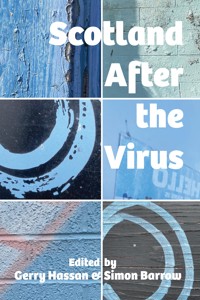
THE IMAGE ONthe cover was created by artist and weaver James Donald as a creative and charitable response to the lockdown associated withCOVID-19 (Corona Virus Disease 2019).
James created ‘mood boards’ out of textures, patterns and shapes photographed during regular walks (ones which followed the guidance of the Scottish Government, naturally). Each walk adopted a colour theme. The colours were recorded on the artist’s mobile phone and then curated in a grid of nine images which, combined in particular ways, seemed to illustrate the theme best.
Finished compositions were then posted out on James’s PickOne web account (www.pickone.co.uk/nhs-fundraiser.html). The 16 most favoured pieces were turned into 14.8cm square postcards. These art cards come in a matt finish, and form a limited edition of 100 each. They are numbered, given a hand written title, and supplemented with additional information on the reverse.
Proceeds from the sale of these cards go toNHSScotland. The aim is to support health and wellbeing, to show how the restrictions in our lives can generate creativity and to share the joy of art during a time of difficulty and pain for many. James’s wee dog Domino also helped out during the walks that produced these images and ideas!
Further information on James Donald’s work can be found here:www.pickone.co.uk
Scotland After the Virusis a gift of a book – from brilliant writers – with reflections and insights that give us genuine hope that a better world can come from this wretched pandemic, but only if we recalibrate our priorities and recognise our common humanity.
BARONESS HELENA KENNEDY
This book is a timely and welcome tonic for the dark times we are living through. If we are to find any light through this, then it will emerge from the writers and thinkers who examine and articulate where we have been, where we are now and ideas and thoughts on where we are headed. The great collection of different voices in this book will help us navigate all of that as well as making us think and smile.
ELAINE C SMITH, actor and campaigner
What binds our nation is not birth but love. InScotland After the Virusthere are many voices which show many different interpretations of love of place, people and the connections which make us who we are.
IAN HAMILTON, QCand author
In the dark times, we need sparks of light like this to show the way forward to a brighter future.
VAL MCDERMID, author
Scotland After the Viruscontains a powerful array of voices and stories in these unsettling times. They cover the full range of emotions, from love to loss and the search for meaning. It's a timely ray of hope for all of us.
STUART COSGROVE, writer and broadcaster
This impressive range of voices and genres indicates that coronavirus has affected us all in many different ways. The future for post-COVIDScotland will be a better one if we listen with open minds and speak to one another with compassion and care.
JAMES ROBERTSON, author
In this book the power of the written word gives us hope, inspiration and ambition at just the right time. So many at the start ofCOVID-19 dreamed of living a better life, of truly becoming a civilized and just society. This diverse range of voices beautifully show us that another world is possible, another Scotland is possible.
AAMER ANWAR, lawyer and former rector, University of Glasgow
First published2020
ISBN: 978-1-91002215-3
Typeset by Carrie Hutchison.
The authors’ right to be identified as authors of this work under the Copyright, Designs and Patents Act1988has been asserted.
© The contributors, 2020
Scotland After the Virus
Edited by
GERRY HASSANandSIMON BARROW
Contents
Acknowledgements
Introduction:A Nation and World Changed: Imagining Scotland After the Virus-Gerry Hassan & Simon Barrow
Section One – Stories of Our Times
Chapter1:Droplets-Kirstin Innes
Chapter2:Wynning-Julie Bertagna
Chapter3:Invisible Cities-Thomas Clark
Chapter4:We Are the Lucky Ones-Catherine Simpson
Chapter5:Blue Reflectin-Anna Stewart
Chapter6:Cardinal Dreams-Lisa Williams
Chapter7:Table Service Only-Alan Bissett
Chapter8:Grief-Marjorie Lotfi Gill
Chapter9:Rewilding-Sally Gales
Section Two – Politics and Money
Chapter10:Sleeping Beauty Awaits the Resurrected Streets-Janette Ayachi
Chapter11:People and Politics: Reshaping How We Debate, Discuss and Listen-Michael Gray
Chapter12:Leadership, Learning and Knowledge: Lessons from COVID-19-James Mitchell
Chapter13:How a Small Country Might Just Be Able to Lead a Big Change-Katherine Trebeck
Chapter14:Breaking with Growth: Creating an Economy of Life-Bronagh Gallagher and Mike Small
Section Three – Public Spaces
Chapter15:Hairdresser-Cheryl Follon
Chapter16:Futures in Common: Democratic Life Beyond the Crisis-Oliver Escobar
Chapter17:Lessons in Civics: What Do We Do About the Rise and Fall of Civil Society in Scotland?-Gerry Hassan
Chapter18:How Parks Got Our Attention-Willie Sullivan
Section Four – Relational Scotland: Care, Life and Wellbeing
Chapter19:The New Old Age-Hugh McMillan
Chapter20:Towards a Caring Economy-Angela O’Hagan
Chapter21:Death in the Time ofCOVID-19-Dani Garavelli
Chapter22:A Fable for Today-Kapka Kassabova
Chapter23:Casting Long Shadows:Children and Young People and the Importance of Trust in aCOVID-19World-Suzanne Zeedyk
Chapter24:Mental Health, Wellbeing and thePsychological Challenge ofCOVID-19-Catherine Shea
Section Five – Justice, Equality and Belief
Chapter25:New Abnormal-Stephen Watt
Chapter26:Changing Scottish Justice Will Take Courage and Cooperation-Hannah Graham
Chapter27:There is No Race Problem:Theorising the Absence of Racial and Ethnic Disparity Data in Scotland AfterCOVID-19-Tommy J Curry
Chapter28:Spirituality: Nurturing Life Before, WithinBeyondCOVID-19-Alison Phipps, Alastair Mcintosh & Simon Barrow
Section Six – Art, Culture, Sport and Media
Chapter29:Sìth Sealach/Transitory Peace-Anne C Frater/Anna C Frater
Chapter30:Changing Landscape for the Media-Claire Sawers
Chapter31:COVID-19: Accelerating the (Un)Social Media Landscape-Jennifer Jones
Chapter32:‘Abandon All Hope, Ye Who Enter Here’:From Hell to Creative Scotland Form Filling–A Short Journey -Flavia D’Avila
Chapter33:Scottish Football in the Wake Pandemic: Do or Die?-Paul Goodwin and Simon Barrow
Section Seven – Ideas Scotland: The Power of the Past and the Future
Chapter34:Zero Traces of Cringe2.0-Christie Williamson
Chapter35:Scotland as Ark, Scotland as Lab-Pat Kane
Chapter36:High Noon for an Imperfect Union: The Search for a ‘Settled Will’-Henry McLeish
Chapter37:Sure Foundations: The Constitutional Basis of Scottish Statehood-W. Elliot Bulmer
Chapter38:The Changing Risks of Independence-Marco G Biagi
Chapter39:Scotland, Brexit and Europe: Challenges Ahead-Kirsty Hughes
Chapter40:From Downton Abbey to the Blitz Spirit: Living with the Ghosting of Britain-Gerry Hassan and Patrick Wright
Afterword:What Could It Mean to Flourish ‘After the Virus’?-Simon Barrow and Gerry Hassan
Contributors
Acknowledgements
THIS BOOK AIMSto understand the Scotland of recent times, the world of disruption underCOVID-19 and the related crises created and magnified by it; and to map our future choices and directions when we eventually emerge from the pandemic.
This project is deliberately different from others that we have undertaken. It combines a breadth of perspectives in a range of formats to address a wide tapestry and palette of human emotions, intelligence and imagination in relation to the unprecedented times we have seen unfold in 2020 that may be with us for some time.
A book like this is a collective effort. First and foremost, we would like to thank the stellar range of contributors who gave their time, insights and expertise. We often asked the impossible in terms of briefs, and in each and every case were met with encouragement, positivity and engagement. The wider context of this book – theCOVID-19 crisis – has magnified this experience and made it even more stimulating and supportive where we have as editors and contributors become a living community trying to make sense of the times we are in the midst of.
Many others aided the creation of this book with numerous assists, advice and recommendations. These include James Robertson on the opening section of short stories, alongside Zoe Strachan and Colin Herd of Glasgow University Creative Writing. Also generous in time and recommendations was Asif Khan of the Scottish Poetry Library in suggestions for poetry contributions. In related commissions, Malcolm Dickson of Street Level Photoworks, Richard Walker of theSunday Nationaland Joyce McMillan were enormously supportive of the entire project.
A whole range of other people gave of their time and insights to aid this book come to fruition. These include Danny Dorling, Peter Taylor-Gooby, Jim McCormick, Cathy McCulloch, Willie Storrar, Ian Fraser, Angela Haggerty, Douglas Fraser, Isabel Fraser, Alex Bell, Verene Nicolas, Ben Jackson, Lesley Orr, Jordan Tchilingirian, Shona Tchilingirian, Devi Sridhar (for her important public health analyses), Lisa Clark, Ian Dommett, Paul Martin and Lindsay Paterson. We would also like to take this opportunity to thank the patience, fortitude and acute observations of our partners Rosie Ilett and Carla J Roth.
A major debt of gratitude is owed to Gerry’s partner, Rosie, who – as with all of his publications and writings – read and proofed the entire text up to near-final sign-off. The book and its contents are sharper, more focused and better argued for having the benefit of Rosie’s professional editing skills and overall insights. A particular note should be made of the conversation with Patrick Wright which benefited from her informed and subtle editing.
The very existence of this book with so many creative voices, talents and perspectives in this book has also been aided by the encouragement and support of Creative Scotland and in particular we would like to acknowledge the advice of Alan Bett – as well as other members of staff and advisers.
Many thanks to James Donald for the cover image which continues our tradition of striking, original covers. Finally and critically, we would like to thank the magnificent people who make up Luath Press – Gavin MacDougall, Carrie Hutchison, Lauren Grieve, Daniel Miele and Jennie Renton. They are passionate about books, ideas and writers, and it has been a pleasure and privilege to work with them. We want to record our gratitude for their support, and pay tribute to the wider contribution that Gavin and the Luath team have made to the public life of Scotland in recent years. Our country would be a less vibrant, dynamic and interesting place without their efforts – and this should be widely acknowledged and honoured.
Gerry Hassan
Simon Barrow
Introduction
A Nation and World Changed: Imagining Scotland After the Virus
Gerry Hassan and Simon Barrow
THE WORLD IN2020 was once the subject of far-reaching predictions: an imagined future typically filled with progress, possibilities and the contribution of new technologies that would transform what it was to be human.
The world that arrived in 2020 has proved to be very different and not one many would have predicted. It is a place whereCOVID-19 has caused global death and illness and dramatic changes to our lives. Alongside this massive disruption to how societies are run, there’s economic dislocation, cultural dislocation, psychological uncertainty and massive social readjustment too.
All of this is true of Scotland and theUK. The former is the subject of this book, examining how Scotland has been affected and changed by the pandemic and how we might come out of this experience changed as individuals, and as part of the wider communities to which we belong or affiliate. It looks in different ways at how we each see the world, organise ourselves and think about our future. This introduction looks at the broader picture of how Scotland has changed, the nature of theUK, the future post-COVID-19 and the personal experiences of those who have contributed to this book.
As co-editors, we are conscious of our own different experiences of a tumultuous year with the pandemic. This has been, on a very human level, one with a range of heightened emotions, hopes, fears and anxieties. We experienced all of this living in Scotland – and this book is one small contribution to trying to make some sense of what we have lived through, as well as offering some glimmer of hope, reprieve and relief. To this end, we have commissioned an array of talented writers, many well-known and well-regarded, others emerging and newer, to share their insights in a variety of forms: fiction, poetry, non-fiction and a cover which emerged particularly out of living with lockdown.
Scotland, theUKand the Global Context
These have been difficult and stressful times – with doubts about the nature of the economy, jobs, prosperity and how people will manage post-furlough, particularly as theUKGovernment winds down the support schemes it unveiled at the beginning of the pandemic. The scale of economic and social disruption we have witnessed raises huge questions about the character of our society and its long-term direction.
One huge question concerns the role of government and public intervention. All across the world, governments have at least temporarily reversed the fiscal belt-tightening adopted recently, and have created economic support packages unprecedented in peacetime. Ones which, in many ways, fly in the face of free market capitalism. All of this comes barely a decade after the global banking crash.
TheUKGovernment appears to have done something of an about-turn in reversing – to a degree – the previous ten years of austerity. As a result of cutbacks, public services (not least theNHS, education, social care, public health and local government) were not in a healthy or well-resourced place as they faced the unexpected and unprecedented challenge ofCOVID-19. Of the four countries of theUK, this was more so for England, but it has also been true for Scotland, Wales and Northern Ireland, where Westminster-led cuts have had a significant impact.
That said, Scotland, despite largely being required to follow theUKlead, has been able to chart a slightly different path onCOVID-19. Nicola Sturgeon has shown more conscientious leadership than herUKcounterpart, grasping the detail and putting science, evidence and independent expertise at the heart of government advice. The actual scale of divergence between Scotland and England in terms of deaths per head from the virus has been small. Up to the end of September 2020, England had the highest excess deaths per head in Europe during the pandemic and Scotland the third highest – a bleak reality. TheUKhas once again become known as ‘the sick man of Europe’.
Yet Scotland has increasingly felt like a different place in terms of response toCOVID-19, and this feeling builds on an already gathering sense of revulsion at the direction ofUKpolitics and actions ofUKGovernments in recent years. This does give the impression of being a significant and potentially long-lasting change in how Scots see themselves and their future, but only time will tell.
One critical area central to the post-COVID-19 future is the nature of the economy – in Scotland, theUKand internationally. The nature and viability of work, employment and countless businesses (many once hugely successful), along with high streets and physical retail, is now a major concern. It raises questions both about the future of city and town centres, and also the adequacy of planning, taxation and regulation, particularly in relation to online shopping and corporate behemoths such as Amazon. The connection (or lack of it) between urban and rural local economies is also in the spotlight again.
One consequence of the pandemic crisis is that the public discourse which has framed the past 40 years (economic, social, cultural and political) is now even more open to challenge and reformation. The economic model of recent decades – free market capitalism, corporate power, anti-social individualism, validation of grotesque levels of wealth and inequality alongside parsimonious state attitudes to welfare and public spending – has become even more discredited.
This has huge implications for the planet and future of humanity. It also has major consequences for theUKand Scotland, with theUKover those decades being one of the leading advocates for a deregulated, unconstrained corporate capitalism – both domestically, in international forums and globally. Brexit is both an expression of, and catalyst for, pushing further in this direction.
The contest over the future state of the economy and society involves proponents and defenders of a view of the planet which is unsustainable economically, socially and environmentally. Such people will not simply concede that they are wrong and give up power. The capitalist leviathan built in recent times will not budge unless forced to do so by alternative forces. In theUKwe can already see that theUKGovernment, while prepared to consider a bigger, more proactive state for survival purposes, is already pushing to further weaken regulations and planning in favour of big business, and to ride roughshod over local government in England. The ‘small state’ conservative will see this as a setback. What they are pushing for instead is a ‘client state’ – one that offers support for corporate interests, and sufficient (but increasingly conditional) social protection to retain electoral support.
Scotland has the potential for a different path here – something which is explored in this book. It is a path which includes but goes way beyond politics. It includes how we see ourselves, how we understand our mutual responsibilities to each other and how we express our connectedness and shared values. This, after all, is a core part of what is to be human. But in recent times these have sometimes seemed like revolutionary principles in the age of crony corporate capitalism where McKinsey can charge theUKGovernment £19,000 per day for management consultancy to advise civil servants.
The coming storm afterCOVID-19 will have unimaginable ramifications. It will accelerate pressures on public services, such as theNHSand education. It will raise questions about affordability and sustainability in right-wing think tank circles – and in the Dominic Cummings-shaped ‘Vote Leave’ faction influencing Number 10 Downing Street. In England, the cover of the crisis will be used to remove the independence of public health experts and to bring them under the control of a centralised model to avoid talking about realities like health and social inequalities. Already we have seen health and education bodies punished for mistakes in handling the pandemic which were clearly the fault of theUKGovernment.
This will have a human cost across theUKand knock-on effects in Scotland, especially affecting those most vulnerable and disadvantaged, not least disabled people. Think of the loss of life in care homes fromCOVID-19 and the stress, worry and anxieties thousands have been put through – whether residents, their families or staff. It raises so many questions. How do we, in an ageing society, nake available appropriate support to those elderly citizens who have to go into care? Who should run and own care homes, and are private equity firms really suited to the task? How do we economically support the legion of unpaid carers, recognising their vital role? Moreover, how do we strengthen the inter-generational social compact meant to connect the young to the old – and which has been left to wither in theUK?
What Does This Crisis Say About the Nature of theUK?
Central to thesediscussions is the nature of theUKand Scotland’s place in it. This book is being published months before the May 2021 Scottish Parliament elections – one which will mark 22 years of devolution for Scotland, alongside Wales. In this time the dominantUKpolitical class has often considered devolution as a box ticked ‘done’, or has just forgotten about it. To Westminster and Whitehall, devolution has always been about pesky, complaining far-flung places, and never about the political centre and its problematic take of the entireUK.
This points to more serious and degenerative views of theUKand the nature of the power that lies at its heart. First, we have the view that devolution is not ‘big boy’ politics, and that the Scottish Parliament’s wishes can be over-ridden, all connected to an absolutist sovereignty. This has been expressed by broadcaster and commentator Andrew Neil talking about Holyrood: ‘It can be easily over-ruled by Westminster. Westminster is sovereign. Holyrood is devolved. Power devolved is power that can be superseded’ (Neil, 2020).
Second, such absolutist sovereignty has a long lineage in the English political tradition. It is what Bernard Crick called ‘the English ideology’, which lost theUKthe American colonies in 1775–76 and Ireland in 1921 through its refusal to compromise (Crick, 2008). Long thought dead, this absolutism resurrected itself under Thatcherism, and has reached an unapologetic full throttle in right-wing support for Brexit, and inTheDaily TelegraphandTheSpectator’sworldviews. It is the grotesque thinking behind theUKInternal Market Bill which proposes to drive a horse and cart through theUKGovernment’s Brexit Withdrawal Agreement, undermine the Good Friday Agreement and break international law. Crick believed that the wholeUKedifice was held together by smoke and mirrors, and thought that ‘Our rulers have ended up believing their own rhetoric, and therein often lies ruin and disaster’ (Crick, 1990).
Third, and more seriously, it needs to be recognised that none of this is some arcane debate about abstract principles. Rather such a narrow, doctrinaire version of sovereignty has become directly linked to the imposition of a nakedly right-wing agenda, celebrating so-called ‘winners, success and talent’. Related to this, it views those who struggle or need compassion and support as ‘losers’ and less than fully human. In many respects, this is a British version of what Naomi Klein has called ‘disaster capitalism’ – which has been practised much more brutally in Chile and Argentina in the 1970s (Klein, 2007). But that understates the uniquely British-English homegrown nature of this revolution – which has then been, in typical ‘British exceptionalist’ style, trumpeted around the world as the future.
This brings us to how Scotland sits in the strange hybrid that is the currentUK. Scotland post-1707 has more or less enjoyed a privileged status in the union. As a nation it was never conquered or assimilated in the way that Wales was, and that was attempted in Ireland. Twenty plus years of the Scottish Parliament have built on this, showing capacity and resourcefulness, plus the need for further work and some honest conversations about where we fall short.
A major factor in the continuing journey of Scottish self-government is the relationship between the Scottish economy andUKeconomy – the latter fixated on the growth powerhouse of London and the south-east, and interests of the City and finance capitalism. Whatever Scotland’s constitutional status, the dynamics of the rest of theUKeconomy and economic policy will be a major factor in the decisions we make here; London operating as virtually a city state in economic terms is a significant part of that.
Take the nature of theUKeconomy. The World Inequality Database has calculated that the ratio of wealth in relation to income in theUKis 605 per cent in the direction of wealth to income. That is the highest it has been since 1913 – having nearly doubled in the last 40 years, rising from 337 per cent in 1977 (World Inequality Database, 2020). This reflects the scale of investment in theUKin terms of assets, shares, property, offshore holdings and the ‘hidden economy’ – something increasingly disconnected from the real economy most people work in. It is difficult to be able fully to measure the figures for Scotland, but one estimate of the Scottish income to wealth ratio is, in the words of Professor Danny Dorling of Oxford University, that ‘the Scottish figure is likely to be similar to theUKfigure, possibly slightly lower’ (Dorling, 2020a).
Secondly, a large portion of the independence debate has become fixated on the degree of fiscal transfer from theUK. This leads to heated debates about Barnett (the formula which works out the Westminster annual block to Scotland, Wales and Northern Ireland) and the reliability or otherwise of Government Expenditure and Revenue Scotland (GERS) figures, particularly for the purposes of making estimates about an independent Scotland – for whichGERSseems ill-suited by design. Germane to this debate is the economically unbalanced nature of theUK. It is the most unequal country in Western Europe. Similarly, when fiscal transfers to Scotland from the centre are discussed, every part of theUKis a beneficiary of transfers from the political centre apart from London, the south-east and east of England. The reason for this is the greater degree to which the greater south-east concentrates wealth and power and crowds out the potential for other areas to blossom – notably, many English regions.
Much attention is paid to the fiscal transfer per year from Westminster to Scotland, which is estimated at £1,941 per head (see Scottish Government, 2020). This is offered as proof of the ‘union dividend’, and is held by some to demonstrate that any independent Scotland would have to make savage cuts to its budget to ‘balance the books’. What this perspective wilfully misses is the difficulties of disaggregating large parts ofUKpublic spending and locating them at the level of devolved nations and regions. It also underlines that the union has never been a static entity, but always changing. Relevant here are ten years of Tory austerity and cuts, beginning with George Osborne’s aim to reduce the state and public spending back to 1930s levels. This has resulted in savage cuts across theUK– from 44.5 per cent ofGDPin 2010 to 38.3 per cent in 2020 pre-COVID-19 – the difference between the two – 6.2 per cent ofGDP. This has had a commensurate effect on public spending in Scotland which has not risen to the degree it could have (Dorling, 2020b).
Any ‘union cutback’ does not mean that Scotland, along with Wales and Northern Ireland, do not gain from Barnett consequences. But the important point here is that they have also been affected by UK-wide decisions and cuts, which has impacted on public spending in Scotland, due to the choices of Westminster. What the above underlines is that financial decisions and flows cannot be seen in isolation, or assessed in one direction, but have to be seen in the round. This indicates that while Scotland gains from Westminster, it is also affected by Westminster decisions and priorities being made for us. Ones over which we have very little say, given thatMPs elected from Scotland are hugely outnumbered.
Future Scotland and Lessons From ‘Past Futures’
The scale of crisis and the degree of upheaval thatCOVID-19 has produced calls for the most fundamental rethink of everything we know about public life, politics and society. If we go back to the harsh economic climate of the 1930s, and the domestic ‘people’s war’ of Britain in the Second World War, there was an array of ambitious, far-reaching plans in Scotland for reconstruction and recovery, which played a major role in the foundations of post-war society.
The scale of ambition these embodied, building popular support and achieving change, offers some pointers for negotiating the crises of the present. Hence such publications asPlan for Scotland(Burns, 1937),Scotland 1938(Allan, 1938) andThe Future ofScotland(Bowie, 1939); then, during the war,The Real Rulers of Scotland(Burns, 1940),The New Scotland(Maclean, 1942) and numerous publications from the Scottish Convention of the 1940s – such asThe Culture of the Scot(Power, 1943). These were informed by concepts of modernity, progress and belief in the power of the state – alongside a determination not to repeat the past failures which had led to economic depression and war.
Several of these publications demonstrate impressive quality and content, still evident decades later.The Real Rulers of Scotlanditemises who has economic power.The Culture of the Scotcalls for a new age of Enlightenment, and a Scottish Broadcasting Corporation capable of nurturing culture and talent (see Finlay, 2004). The most comprehensive plan isThe New Scotland, from 1942, with its 17 chapters offering a kind of Scottish mini-Beveridge, but actually going much further – with proposals for economic planning, cooperation, democratising banking, worker and trade union rights and more.
There are similarities between then and now, and also obvious differences. Scotland after the virus needs a similar ambition, analysis and determination. We have to be clear that there can be no return to the old ways, to the society pre-COVID-19 which gave sustenance to a rotten economic and social order – one that reduces workers and successful businesses to being pawns of finance capital and which seems incapable of thinking long-term.
The New Scotlandmade the case for economic planning, a crusade to end privilege and vested interests, and the extension of democracy – including a Parliament. But it also goes further, arguing that:
The mere setting up of a bourgeois Parliament at Edinburgh without sturdy local self-government to control it will simply make new jobs for Edinburgh lawyers and Glasgow business men – and the real people of Scotland will have as little liberty and self-government as at present (Burns, 1942).
This vision of Scotland was one of greater democracy and self-government, not just a Parliament. It had roots in the early days of Labour, Keir Hardie and the Independent Labour Party. It drew from anti-state traditions, but was conceived at a critical junction where it would soon be subsumed in statism. This was an approach which was to dominate Labour and Scottish politics well into the 1970s. With it came a transformative agenda which remade Scotland – lifting working-class people out of poverty, using education as a liberator, improving health and life expectancy, clearing away the old slums and introducing hydro-electric power to the Highlands. This Labour Scotland of progress and modernity lasted from 1945 to 1974 – and a lynchpin of it was that the Labour Party had emphatically turned its back on its earlier traditions of supporting a Parliament, anti-statism and community organisation. Eventually this shift from redistributing power to using it for (rather than with) the people came back to undermine Labour and some of the achievements of this era. These became perceived as paternalist and bureaucratic, opening the way for the Thatcherite critique of ‘dependency Scotland’.
Scotland’s Parliament was re-established under the conditions of devolution in 1999. It was in part a product of Scottish autonomy and distinctiveness, and in part a reaction to the onslaught of Thatcherism. It has since become a central pillar of political life, reflecting our priorities and values, yet it is still unclear whether it is an end in itself or a means to a greater end. Is it about power accruing in this institution, or does it mean using its prestige to aid the further dispersal of power to communities and regions?
These questions pose a larger one about the unfulfilled promise and possibility of the earlier tradition of self-government, expressed inThe New Scotlandof 1942. It is this which politics turned its back on after 1945. This earlier vision was one of dispersed popular power, aiming to avoid politicians becoming ‘a privileged ruling class’, and instead having a Parliament which
would act not so much as the sovereign assembly dictating its will to the people (for this is English Constitutional Law, and the immemorial Scottish one which recognises the People, and not the King in Parliament, as Sovereign)
but rather ‘as a central co-ordinating bond linking the Sovereign self-governing People’ (Burns, 1942).
Post-COVID-19, this terrain will surely become a major issue again. Where do we want power to sit? What should be the role of Parliament and national politicians? How do we aid greater autonomy and decentralisation throughout society? How can we nurture a different vision of the economy to that of the prevailing (and failed) orthodoxy of recent times? There is already one possible future on the table – the direction taken by theUKGovernment of further diluting regulations and planning in England, contributing to the creation of what John Harris has called ‘unplaces’ which offer the prospect of being a ‘hyper-individualised future… with no sense of place, no dependable local news, no spaces to gather’ and no ‘kind of collective self-help’ (Harris, 2020).
Here is the future we need to avoid. But while England offers a desolate landscape, lacking popular agency, we should not be blind to our shortcomings here. Scotland’s traditions and practices of local government and decentralism have been atrophying for decades, and the arrival of the Scottish Parliament and Government has further accelerated the tendency toward centralisation. Post-COVID-19, one possible future for Scotland and elsewhere, driven by pressures on public spending, would be further to concentrate political power, and to say that these crises forced us to erode local democracy even more, along with the powers of public agencies. In some respects, this could even be seen as re-treading the road from 1945, when we should rather have had the confidence to embrace the missionary zeal with which people went about improving society, instead of embracing the same old top-down approach.
TheCOVID-19 Life Stories in This Book
This book contains fiction, poetry and non-fiction. It is not just about politics, but about many areas of human life. It concerns the powers of the human imagination and the human spirit. It is also about the people in these pages who gave their time and energies in the midst of lockdown and a pandemic. All of the 40 plus contributors were invited – after they had completed their contributions – to reflect on howCOVID-19 had affected them, their families and friends, and to consider what wider impact the pandemic and lockdown was having. We asked for such accounts anonymously, in order to paint a snapshot that showed the general picture. None of our contributors had been diagnosed with the virus, although many fell ill and had worries and anxieties that it might beCOVID-19.
These contributions offered a picture which combines bleakness, adaptability and finding new experiences in something none of us expected. At first, the pandemic and lockdown seemingly changed everything and challenged what most of us thought about ourselves and the world. One contributor said: ‘The pandemic felt like the earth cracking open at my feet. Normality disappeared one week [in] March.’
An obvious strand was the hit that many people took in income, with work opportunities and monies drying up – particularly for younger freelancers. One writer stated: ‘I lost a fair amount of work throughout the pandemic, but I found the social isolation by far the hardest aspect.’ A related theme was the changing world of work, retreat from the office and home as a place of work. This challenged the identities of many people – one person wrote of the artists and musicians they know: ‘Their wee light and identity [is] rubbing away. People used to [the] limelight and being loved – [their] identity created by what we do.’
Another put it: ‘The biggest challenges were psychological and relational: dealing with lockdown, juggling home-working with home-schooling, trying to manage everyday tasks while keeping safe.’ Connected to this has been families living more closely together than in past years, with resultant pressures. This was something in which some found an upside:
We found lockdown a very intense bonding experience. My three boys have become much closer and we did more as a family than we had done for years.
But there was a downside for others: ‘When a neighbour turned threatening and violent, it became unsafe even to venture into the garden. Social breakdown was on our doorstep.’
This has divided families, with people not being able to see family members they love dearly. That can be acute, with one person worrying about his ‘91-year-old mother in hospital, and severe visiting limitations’. There were the shared experiences of missing friends, including what happens when a friend dies. One contributor recalled hearing of a suicide:
During lockdown restrictions, hearing the news of the death of someone my age having taken their own life meant people couldn’t go to his funeral. Though living in the same city, a group of us shared memories, photos, stories, played songs and sang over a Zoom call.
They signed off their thoughts by saying: ‘Watching people in need of a hug and not being able to give it’ is one of the hardest things imaginable.’
There was the wider sense of feeling cut off, isolated and an absence during lockdown of shared communal moments. There was sadness about this, but also some sense that it allowed for other ways of looking at life. It forced change in long-established behaviours too:
The lockdown, if not the virus, has significantly impacted my reading life. Two or three text streams disappeared overnight – borrowing libraries (and The Mitchell Library).
The opportunity to halt or move away from the incessant rush that was life pre-COVID-19 was for some a sort of liberation:
COVIDcompletely changed my view of normal. Pre-lockdown I was constantly chasing new experiences and checking off boxes on my to-do list. I didn’t stop to appreciate the experiences and moments I was having.
Connected to this, there was a changing relationship with the environment – from feeling the lack of rush and noise right through to the cleaner air and the slower, more deliberate pace of activities, such as walking and going to public parks. One person talked powerfully of ‘a kind of cycling between rest and reprieve – the freshness of the unpolluted air, time to sit in the garden, time to explore new skills.’
Big political decisions impacted people, including the insensitive, inhumane policies of theUKGovernment on asylum seekers which has been felt acutely, especially in Glasgow. Someone involved in trying to mitigate and challenge this stated:
The Home Office decanted asylum seekers in the city into hotel accommodation at 30 minutes notice… and I ended up deeply engaged in the co-ordination and advocacy around what was an unfolding humanitarian disaster.
Another view from someone who has chosen to come to theUKfor work was: ‘As a migrant, there were days when I felt the weight of closed borders on my shoulders.’
The long-term impact ofCOVID-19 will be felt for years, and one writer thought about this internationally:
I keep thinking about people in other countries too, in years to come, what will be the knock-on effect of coronavirus? This situation reminds me of the 2008 financial crash, in the way that a big world event affected people so personally, and how people were confused by it and encouraged to feel like it was their own fault.
Finally, in the immediate future, theUKand global economy will inevitably see an upsurge in unemployment, business closures and greater inequality and hardship. One voice referenced on this the words of the Bard stating: ‘Robert Burns captured fear of the future in his poem, “To a Mouse”.’ They cited the following (emphasis added):
Still thou are blest, compared wi’ me!Thepresentonly toucheth thee:But Och! Ibackwardcast my e’e,On prospects drear!An’forward, tho’ I cannasee,Iguessan’fear!
Across the range of these observations forged in the midst of a pandemic, there were similarities as well as some noticeable differences. In a book with a majority of women contributors, women writers were markedly more fulsome in their reflections. Men, in general, were more focused on the practicalities of what was happening in work and home. There was also a definite difference in response by age. Older writers – and those with homes and assets – felt that they could fall back on these, with many stating how ‘lucky’ they were in that respect. But some of the perspectives offered by people in their 20s and 30s unsurprisingly showed more worry and anxiety.
The House of Scotland
This is a very human book, borne out of experiences up and down our land, and across the world. None of us know in detail what the near-future will hold – whether a vaccine will be found, and whether national and local lockdowns will be unique to the spring and summer of 2020, or will instead become a recurring feature that permanently alters how we live. But we have already been changed in ways we do not yet fully comprehend, and as one of the voices above suggested, the long-term effects will take years to pan out and understand.
We cannot go back to the old ‘normal’, people feel. But, on the other hand, the ‘new normal’ is an oxymoron which makes little sense right now. And isn’t it a bit rich that many of those who glibly parrot these phrases, and especially those want to put the economy ahead of health, are the same ones who have continually told us that the status quo is not an option and that we have to embrace change? The conservatism of recent times, which has turned the lives of millions upside down, ripped up the social contract in theUKand elsewhere, and celebrated irresponsible capitalism, has shown itself to be particularly lacking when times get hard – such as the 2008 crash or 2020COVID-19 crash. These ideologies do not have the capacity to address fundamental and permanent change. Instead they end up resting on old orthodoxies concerned much more with preserving power, order and privilege for the governing and owning classes.
All of this will be felt at a very human level over the coming years. It would be beneficial if the handling of public affairs and matters of state could show the degree of humanity, empathy and insight evident in the contributors to this volume. We need to be able to have public conversations and debates worthy of the tasks we have to face. There will always be noise and point-scoring in our politics, but more than ever there has to be substance and generosity behind such characteristics – something we explore further in the afterword.
There can be no standing still. But we should see part of this task as one of remaking Scotland as a home that aspires to look after all of its citizens. As GreenMSPAndy Wightman said of modern Scotland a couple of years back:
We are like a house that hasn’t been lived in for a long time. You go in, and you can see familiar things, but nothing really works, and you know the water needs [to be] sorted out and switched on again, and there is a lot of dust around (Hassan, 2016).
Scotland’s journey in the near future needs to be one of continual learning, maturity and self-discovery – what Irish writer Fintan O’Toole called ‘the art of growing up’. This will involve confronting some unpalatable truths about our society and acting upon them (Hassan, 2014). That will be up to us. We will have to learn and relearn every day how we do this, and recognise that we do indeed – if we work together and overcome some of our divisions – have the power to make Scotland post-COVID-19 a place we are proud to call our collective home.
References
Allan, JR, 1938,Scotland 1938: Twenty-Five Impressions, Edinburgh, Oliver and Boyd.
Bowie, JA, 1939,The Future of Scotland: A Survey of the Present Position with some Proposals for Future Policy, Edinburgh, W & R Chambers.
Burns, T, 1937,Plan for Scotland, Glasgow, A MacLaren & Sons and London Scots Self-Government Committee.
Burns, T, 1940,The Real Rulers of Scotland, Glasgow, Civic Press and London Scots Self-Government Committee.
Crick, B, 1990, ‘On Devolution, Decentralism and the Constitution, reprinted in Crick, B,Political Thoughts and Polemics,Edinburgh, Edinburgh University Press, 104–25.
Crick, B, 2008, ‘In conversation’,Changin’ Scotland weekend, The Ceilidh Place, Ullapool, 15 March.
Dorling, D, 2020a, ‘Personal communication to authors’, 19 August.
Dorling, D, 2020b, ‘Personal communication to authors’, 31 August.
Finlay, R, 2004,Modern Scotland 1914–2000, London, Profile Books.
Harris, J, 2020, ‘No news, no shared space, no voice – the Tories are creating a cookie-cutter Britain’,The Guardian, 16 August, accessed at:www.theguardian.com/commentisfree/2020/aug/16/news-britain-covid-local-communities-tories
Hassan, G, 2014,Caledonian Dreaming: The Quest for a Different Scotland, Edinburgh, Luath Press.
Hassan, G, 2016,Scotland the Bold: How Our Nation Has Changed and Why There is No Going Back, Glasgow, Freight Books.
Klein, N, 2007,The Shock Doctrine: The Rise of Disaster Capitalism, London, Allen Lane.
Maclean, N (ed.), 1942,The New Scotland: 17 Chapters on Reconstruction, Glasgow, Civic Press and London Scots Self-Government Committee.
Neil, A, 20 August 2020, accessed at:www.twitter.com/afneil/status/1296513956954152962
Power, W, 1943,The Culture of the Scot: Its Past and Future, Glasgow, Scottish Convention.
Scottish Government (2020),Government Expenditure and Revenue Scotland (GERS) 2019–2020, accessed at:www.gov.scot/publications/government-expenditure-revenue-scotland-gers-2019-20/
World Inequality Database, 2020, ‘United Kingdom’, accessed at:www.wid.world/country/united-kingdom/
Section One
Stories of Our Times
Chapter 1
Droplets
Kirstin Innes
THERE IS NOTHING
no that’s not it. There are too too many too many things
tiny things, many of them
little
bits
of
lists
that nip away at the bits of her brain that she’d intended to use for better
Back when all – this – had begun, it had seemed like the best way to survive it was to imagine the experience as a crucible, a forge maybe, where all the bits that were wrong, cruel, broken could be burned away. There were hopes, those hopes were announced and agreed with, all over the internet. When all this was over* society was going to emerge
(*a thing everyone all said a lot at first,when this is all over; talking with the same mouth about how everything and nothing would change.)
emerge from this leaner, bruised but resilient, a white-hot new thing that gleamed and was fit for purpose
was that the baby
and it – oh, everybody meant well. There were great intentions. Within three days they had a set up a local volunteer network, had posted info in the windows of the shops on the High Street – if you need us, we’re here. She felt herself made new with the work. Weird, isn’t it, she’d said to Debbie, who coordinated the volunteers in what they’d decided was Zone 4, it took being stuck in the house most of the time to really make me feel connected to the community again. One of the terrifyingly organised mums on the primary school council had sourced compost in bulk, distributed it throughout the village. Doorstep drop-offs. Tap-door-run. The dirt stuck under her children’s fingernails as they pushed tiny sprouting tatties, khaki balls, into the depths of the bags she’d lined up along the one sunny wall of their wee bit of garden. The baby had been fascinated by the feel of it, rubbed it into his hair; she’d gone to scold him and ended up laughing instead because what did it matter? Who would see? Maybe they would grow up green-fingered, her children, freed by a change in circumstances from plastic-wrapped supermarket potatoes. When the first bits of green began to sprout her daughter had thought it was a miracle, named each tiny plant after a different favourite cartoon character, made a video to send to the friends she couldn’t play with.
All these beginnings. All these ideas. It was terrifying but the possibility of it; well,fundamentally changing society should be terrifying. That’s the point we’re trying to make – hang on; I’ll elaborate later –
–arms outstretched at the top of the stairs to her and a wordless keening
back to bed. Back to bed sweetheart. Sssh-sssh. Mummy cuddle. Sssh. There. She drew leisurely hearts on his back with a finger, readying herself for the long wait until his slightly curdled milk-breath slowed. The arm sandwiched between his heavy head and the flat little pillow began to tingle. It’s not working this, still stuffing him with bottles throughout the night, just to stop him from screaming and waking his sister, he’s getting too old really
and the relief as she took out her phone and her thumb pulled the screen down and down and in it came because she needed to check, keep checking, because the world changed every time she hit refresh now, got worse and worse and she needed to know, STAY ALERT to it.
over two-thirds of people who have recovered from the virus report heart conditions, study says
the spike of outrage and anger, a mashing of buttons that weren’t even there, just points under sensitive glass, pull down again and on to the next one. Angry people jumping on fragments without context, spinning them into a mob, a resignation, a lack of resignation and a shrug, a scroll, a pull-down-and-refresh-and-on-to-the-next
emoji flags
like pitchforks–
– face buried in the crook of her elbow he shuddered out a sigh, raised his bum in the air and farted happily in his sleep; she had to drop the phone to muffle the laugh
in the desert, wind blowing his hair, the President of the United States thumped a bible from the kids’ bedroom rug
she might as well just sleep here again
Hope you don’t mind me getting in touch like this! I work for an organisation trying to connect community organisers, to help put the scaffolding down for a new and positive future. You’ve been recommended to us – by several sources actually! – as exactly the sort of person who we need to help us rebuild our post-virus society–
– no, no, it’s your sister’s turn. Okay. Okay petal, how about we choose something you can both watch together. Hey Duggee. It’s not really for babies, though, is it? This one? No petal, please. Just pick one. Okay. Let’s just let Mummy oh are you alright darling, did you have a wee fall, oh, bumped your head. You’re fine. You’re fine. Okay, Mummy’s just going to drink her coffee now –
– doorbell (hooking the elastic round her ears): a woman from up the road, dropping off stuff for the foodbank. Ach, I just thought I’d drop them in. I just thought there’s someone who’d get the use out of them and that lassie who’s doing the foodbank will know better than me. More pasta, tins of tomatoes and peaches, teabags, a sliced loaf.
Experience of working with community groups and social enterprises. Background in care. Furlough pay so didn’t need, couldn’t be paid – could she help them and she’d said yes, of course; ended up taking charge while everyone else in the meeting in their sealed boxes had looked away from their webcams, tried to deflect.
Just had a loaf dropped off. Out of date tomorrow – anyone know a service user who
–please baby I just need to do this one wee thing could you WATCH THAT CUP! I’ve got hot coffee here look, could you both just sit down. On your bottoms. Please just watch the programme. Watch the fu
let’s just watch the programme okay? Mummy’s just going to get more coffee now.
fingernail marks in the flesh of her palm–
might want it today?
Kitchen. When had she stopped cooking? When was it. Dinners of beans and chips. Fishfingers every third day for variety. Somewhere around the second month? The third?
STAY ALERT the smoothed-out Health Minister, all his parts ironed by his mammy, opened his mouth as her thumb brushed his face and said that controlling the virus was responsibility of the individual
screams of laughter funnelled through the open window OHMIGOD I HATE YOU GET OFF ME YA TOTAL MINGER from the empty carpark across the street where a snakepit of teenage bodies smoked weed all day and probably fucked while their parents stayed locked at home. They’d started early this morning, maybe hadn’t gone to bed yet.
AAAA
AAAA
YOU’VE GOT THE RONA NOW
AAAA
GET OFF ME STOP TOUCHING ME FUCK YOUSE IM GOING HOME –
– and there it was again. The bone-deep ache. Her joints too heavy to let her think. She put jammy toast crusts in her mouth, washed them down with cold, cold coffee how long had she been in here
Hi Frances,
Thanks so much for thinking of me. I’d love to be involved and find out more – shall we get a chat at some point this week? When sui
–DID YOU JUST HIT HIM? WELL, WHY’S HE CRYING? DID YOU BITE HER?
28 new cases from one pub
they were out of toilet roll and running low on binbags, she needed to remember that.
9am. New notification from the school app.
🔔🔔🔔🔔Good Morning!! It’s time to start another day!!!
– oh jesus fucking god, handwriting again. Her daughter making fists around the pencil, unable to get the grip, throwing it away in frustration, both of them screaming at each other. A wee high electrical pitch, ticking through her brain. The baby, plonked down in front of Teletubbies, had removed his nappy and pissed a drippy trail across the carpet.
Donna was the first to reply:Use bicarb of soda. It works on the mattresses when they wet those too. Gets the smell out like nothing else.
hair care advert (how did they know she had curly hair, those worms inside her phone?)
that guy who used to be on the telly taking selfies of his angry face, a grim maskless etching shot from the chin up, in the aisles of Asda, Tesco, Aldi. Just to prove he could–
– why does the baby’s pee smell like that, anyway? She hadn’t been getting him drinking enough water, maybe. She filled a bottle from the tap, Elsa’s doll-perfect face scratched and peeling off it, took it through to him. He threw it onto the carpet by the pee stain and laughed.
he was thirteen. Thirteen, and he died alone, without his mother, surrounded by strangers in plastic alien face screens. He’d had asthma
no
someone had started a fan account for the gold chain round the thick neck of the actor playing an Irish teenager in that new sexy programme
Everyone had put rainbows in their windows at the start, a tiny gesture of support for each other, their felt pen stripes fading in the sunlight as the weeks ticked on. When was it decided that they should take them down? About the same time as they stopped clapping for the keyworkers? She’d found the ones her kids had done under the sofa, dust, hair and nail clippings stuck to the old Sellotape around the edges.
ts you? Evenings are usually better for me, after the kids are down, but could try and do Zoom over a naptime? I’ll stick the big one in front of Fro
oh just FUCKING STOP IT STOP IT LEAVE EACH OTHER ALONE
the Chancellor has announced that there will be no extension to the furlough scheme
that pretty boy who did the exercises on YouTube, his big blank living room, how sweaty it must smell
crowded English beaches, people squeezing up their pink flesh against each other.
saltire-draped blockades across the motorway, three old men trying to close a border
the chaotic weightiness of this big unwieldy world squeezing her; she imagined it cracking rib, flattening organ, gasped for breath. She reached behind herself. Fuck, still no bog roll. Thump, thump, thump as one of the children demanded entry, demanded her. WHY DID YOU LOCK THE DOOOOOOR? MUMMMMEEEEE! I NEED TO TELL YOU SOMETHING URGENTLY
Right, so. It’s about – what it’s about is putting a structure in place now. Setting down markers, a scaffolding for a new society that we can build on when all this is over. The trouble is that this new society, it requires a – just a minute love – it requires us, those of us who care, to do that work on behalf of ourselves and of the people who haven’t – please, Mummy’s working – sorry, I’ve got a thirsty five year old here; I’m just going to get her a drink then I’ll be right back – I’ll just put myself on mute, you all carry on.
protests on the news, people scorched with righteous anger and nothing left to lose seizing their moment to burn it all down and she shrank away, scrolled on where she once would have rejoiced
only a shiver at how close they stood
Their potato plants grew too high, struggling up the pebbledash to reach the sunshine, the stalks browning, falling over, breaking one after another and she didn’t do anything to help them.
left the shopping at your door doll receipts in the bag no rush lol xxx
the yoghurts and pre-packaged toddler snacks she couldn’t get to the supermarket to buy, not on the bus with a toddler and an asthmatic child, the driver’s hacking cough; the only things the baby would eat some days. Good neighbours. Good neighbours. Another shopping bag tucked behind the door, she’d only just noticed. That foodbank drop off from last week. Tins. Pasta. The loaf of bread turned blue, wasted and eating itself inside the plastic bag. Her phone. The message to the volunteer group still hovering there in drafts. She sank onto the doormat, bristles through her leggings, wet face wet hands as the waste of it overwhelmed her; the person who could have eaten it and went hungry; her own stupid fucking uselessness.
SUBJECT: Post-furlough redundancies
a statue of a murderer toppled into a harbour
due to unavoidable circumstances
a white man made a cast iron statue of a
beyond our control
black woman with her fist raised




