


8,49 €
Mehr erfahren.
- Herausgeber: Allen & Unwin
- Kategorie: Gesellschafts- und Liebesromane
- Sprache: Englisch
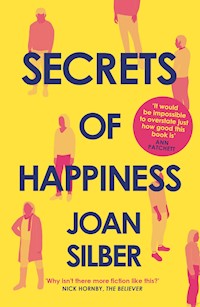
One of O: The Oprah Magazine's Most Anticipated Books of 2021 One of Publishers Weekly's Top 10 picks for Spring 2021 Ethan, a young lawyer in New York, learns that his father has long kept a second family - a wife and two kids living in Queens. In the aftermath of this revelation, Ethan's mother spends a year travelling abroad, returning much changed, just as her now ex-husband falls ill. Across town, Ethan's half brothers are caught in their own complicated journeys: one brother's penchant for minor delinquency has escalated and the other must travel to Bangkok to bail him out, while the bargains their mother struck about love and money continue to shape all their lives. As Ethan finds himself caught in a love triangle of his own, the interwoven fates of these two households elegantly unfurl to touch many other figures, revealing secret currents of empathy and loyalty, the bounty of improvised families and the paradoxical ties that weave through life's rich contours. With a generous and humane spirit, Secrets of Happiness elucidates the ways people marshal the resources at hand in an effort to find joy.
Das E-Book können Sie in Legimi-Apps oder einer beliebigen App lesen, die das folgende Format unterstützen:
Veröffentlichungsjahr: 2021
Ähnliche



















SecretsofHappiness
ALSO BY JOAN SILBER
FICTION
Improvement
Fools
The Size of the World
Ideas of Heaven
Household Words
Lucky Us
In My Other Life
In the City
NONFICTION
The Art of Time in Fiction
SecretsofHappiness
Joan Silber
This is a work of fiction. Names, characters, places and incidents are products of the author’s imagination and are used fictitiously. Any resemblance to actual events, locales, or persons, living or dead, is entirely coincidental.
First published in Great Britain in 2021 by Allen & Unwin First published in the United States in 2021 by Counterpoint
Copyright © 2021 by Joan Silber
The moral right of Joan Silber to be identified as the author of this work has been asserted by her in accordance with the Copyright, Designs and Patents Act of 1988.
All rights reserved. No part of this book may be reproduced or transmitted in any form or by any means, electronic or mechanical, including photocopying, recording or by any information storage and retrieval system, without prior permission in writing from the publisher.
Every effort has been made to trace or contact all copyright holders. The publishers will be pleased to make good any omissions or rectify any mistakes brought to their attention at the earliest opportunity.
Allen & Unwin
c/o Atlantic Books
Ormond House
26–27 Boswell Street
London WC1N 3JZ
Phone: 020 7269 1610
Fax: 020 7430 0916
Email: [email protected]
Web: www.allenandunwin.com/uk
A CIP catalogue record for this book is available from the British Library.
Internal design by Wah-Ming Chang
Hardback ISBN 978 1 91163 008 1
Trade paperback ISBN 978 1 91163 089 0
E-Book ISBN 978 1 76063 727 9
Printed in
10 9 8 7 6 5 4 3 2 1
For Diane Churchill
SecretsofHappiness
1 / Ethan
MY FATHER WAS ON THE ROAD A LOT WHEN I WAS growing up, off to parts of Asia to oversee the cheap manufacture of ladies’ garments. You couldn’t stay still, he said, in today’s business world. “Ever ask him about the local babes?” one of my friends wanted to know. “You should go with him next time, Ethan.” He was just being a smart-ass—we were fifteen-year-old boys at the time, obnoxious whenever we could be.
My father complained about too much time away from home—he missed us, he missed New York—and always came back with great presents. My mother and my sister got silk scarves and pearl necklaces. As a first grader I had a kung fu T-shirt from Hong Kong and as a teen I had crazy pop tapes from Thailand. Mike, my friend, tried to get me to gamble away my tapes to him in a card game.
In fact, I had a crush on Mike, a skinny loudmouth guy who was actually quite brainy and who had similar tastes in music. He was not my first crush, but I was still keeping those things to myself. It was the late 1980s, which were not as free as people like to remember. I lived in a world of heated imaginings, a long inner movie with a cast of highly appreciative lovers culled from real life, rock ’n’ roll, TV, anything. It was a happier world, of course, than any I ever really entered. I wasn’t out till my first year of college.
In high school everybody liked to hang around our apartment. It was homey and messy, with sprawling rooms, very Upper West Side, and big for Manhattan. My mother left us alone—she taught school all day, she didn’t need to see kids every minute—and then she’d burst forth at dinner, taking an interest, asking my friends the very questions they wanted to answer. Mike told her he believed in reincarnation, which I didn’t even know. And my mother loved parties. When my father came home from a trip, she’d get all my friends to sing some goofy version of “Love Shack,” she’d have sparklers flaming away in a platter of pasta. “Where am I?” my father said. “Is this the right house?” He kept his arm around my mother’s waist, beamed at all of us. My sister had to tell him every single thing she’d done in school. “Home is the sailor,” my mother said, “home from sea. And the hunter home from the hill.”
My mother was always hoping to get to travel with him—maybe in the summer, when she was off from teaching?—but he avoided going when it was so hot over there. Over the years his destinations shifted, as American outsourcing shifted, in what he still called the rag trade. First, when I was little, it was Hong Kong and then it seemed to be Thailand and Malaysia and Indonesia, and later China and Bangladesh. “Every country is different,” he said. My sister used to ask him about the languages—he could say hello and thank you in Cantonese; Thai; Bahasa Malaysia, which was almost the same as Bahasa Indonesia; Mandarin, and Bangla. “Only hello and thank you? That’s all?” my sister said.
“Also delicious and very good,” he said. “People speak English, they have to. They know we’re idiots.”
Sometimes he took us to a favorite Thai restaurant in Queens, out in Elmhurst, where he traded a few phrases with the hostess, who always gave us a good table. The food was vastly better than any namby-pamby Thai food in Manhattan and we bragged about it to our friends.
My mother always meant to learn more about the textiles, which she was a big fan of, from getting all those scarves. And all the religions! Buddhists, Taoists, Communists, Muslims. “Asia is fascinating,” my father said, happy capitalist exploiter that he was. When his company merged with a bigger outfit, he bragged about making more money, but it was all the same to us.
I waited till he was home, during spring vacation of my freshman year, to break the news to both of them that my new love interest was someone named Robert. They were okay about it, pretty much. Well, my mother was better. And I swore to her I always, always took precautions. My father said, “I have to revise everything I know.”
“Not everything,” I said.
Robert and I later had jokes about the radical changes my father might see in me—acute skin pallor from lack of sleep, cheerful expression from lots of sex, tighter pants from being so sexy. But Robert liked my parents when he met them. I brought him back from Yale at the end of the semester, just for a quick visit. My mom made a perfect roast chicken and got him explaining his paper on Thoreau. What he said about them was, “They’re so lively. A lot of people’s parents seem depressed to me but not yours.”
How romantic I was in those days. I remembered things Robert said as if they were words to a book I was learning by heart. I might have had all his passing phrases tattooed on my skin, I went over them so often (I didn’t yet mind repetition). Of course, I had my own intricate opinions about the world, and we had long, elating discussions; we hardly knew what we meant and we went on in great obscure delight. We were really very well-matched—who knew?—and it was clearer to me every day that this new life I had was my best life. Robert had more experience but he too was swept away. We studied at the same table in the library; we ate at chairs across from each other in the dining hall. Kevin, one of our friends, said, “You’re so codependent, it’s cute.”
People like Kevin were the problem. There was a fad, after a while, of making fun of our devotion—“here come the lovebirds”—and under these quips I looked bad, the puppy-dog lover. Robert was better at making snarky remarks back—“I feel so sorry for my little single friends”—while I blanched and practically sniffled. I wasn’t used to anything. These were gay men attacking me, how could this be? “They’re kidding,” Robert said. “Ever hear of humor?”
Weren’t we meant to band together, knowing what we knew all too well about the virus that wanted to kill us? I was more used to the dread than I’d once been (now that there was no turning back), but was I wrong to think of all of us as warriors together? “Hey, that’s what armies are like,” Robert said.
All the same, we lasted a full year and a half as a couple, a fairly long time at that stage of life, and we weren’t even that angry when we ended it. But we kept running into each other every time we walked across campus, and sometimes the sight of him stabbed me to the core. My mother said, “Assume a virtue if you have it not. Act cool, that’s all.” She was a great help to me at this time, in her way.
I always thought my mother must be an outstanding teacher. You’d set out on a basic, simple path and she’d lead you to dizzying heights so you thought you’d gotten there of your own accord. All the years she taught eighth-grade English at a middle school in the Bronx did not make her hate rereading The Old Man and the Sea or The Autobiography of Miss Jane Pittman or A Tale of Two Cities or Langston Hughes or Emily Dickinson. When I was little, she used to read me Hughes’s “Hold fast to dreams,” and I’d recite the lines to my much more sophisticated self when I was older and having a hard time.
Men gave me trouble. Over and over. My sister, Allyson, said, “Men give everyone trouble. They’re no good.”
I did see a future of recurrent doom. I was in my last year of law school then at NYU—people say they have no time to date in law school, but I’d managed to charm my way into any number of disastrous relationships. People abandoned me, they insulted me, they borrowed money, they disappointed me by being stupid. And none of it was carefree fun. My father gave me lectures on avoiding the virus at all costs—I was careful, wasn’t I? We lived under a shadow in those days, everyone’s forgotten already. My meanest boyfriend died three years after I knew him.
My sister, who became beautiful once she grew into her nose and teeth, was also bad at picking partners. A freeloading actor, a braggadocio journalist, a chef who turned out to be married. I thought it was a family curse (people with worse parents than mine did fine, what was the problem?) until she turned up one Thanksgiving with Blake, a college friend now turned boyfriend, just finishing his residency in pediatrics, who was forthright and modest and dryly hilarious and seemed to dote on her. They were married at the Cloisters; I didn’t even know you could do that. My mother, very festive in a flashy brocade tunic my father had brought from somewhere, kept saying, “This is what makes a mother happy.” We all got plastered, of course, and over the hors d’oeuvres table I had a riotous discussion with some dude about how they got the pimientos in the olives. His name was Tony and he wasn’t bad-looking either.
I fell in love at my sister’s wedding. What could be sillier than that? He was a lawyer too, it turned out, and he was the most like me of anyone I’d dated since Robert the freshman. Like me if I were less anxious and more handsome. We tried to pace ourselves and we’d been together almost a year before we looked for an apartment.
We had just moved in together and were still arranging the furniture this way and that, seeking the perfection we knew was ours, in a happy sort of dither, when I got the phone call from my sister. “It’s about Dad, and you’re not going to believe this.”
I was thinking, If it’s cancer, Blake will know who he should see, but it wasn’t that. My mother had come home from school to find a legal notice slid under the door, informing my father that he was named in a paternity petition. The petitioner had a long multisyllabic name my sister couldn’t remember and there were two male children she was making claims for, aged fifteen and seventeen. Fifteen and seventeen! They resided in Woodside, New York.
“Holy fuck,” I said.
“Mom thought maybe it was a mistake,” Allyson said. “You know, they got the name wrong. But it’s not a mistake.”
My father had a whole other family. The suit said so and my father said so too, once he had to say something. He explained that the woman was from Thailand, he’d brought her over and given her and the kids (both born here) a good life, but for some people nothing was ever enough. He was very sorry a certain individual was being this way and that my mother had to go through this.
My mother kept saying, “I feel crazy.” She’d been married to the man for thirty-two years. “I just feel crazy,” she said, then and later. She did have the presence of mind to tell him he had to move out immediately and she got him to believe her. “Married thirty-two years,” she said. To anyone who would listen.
My sister thought my mother should have known. How could she not have? “Why are you blaming the victim?” I said. My sister the bride—she must’ve wanted to see my mother as much more shockingly dumb than she would ever be.
We all had to think differently about my father, who had lived for so many years with his secret. He must have liked the power of it (he liked power). Guess what I know and you don’t. The woman, he let us know, was the hostess at the Thai restaurant we liked in Queens. I didn’t even really remember what she looked like, I’d been too focused on the barbecued chicken with sticky rice, but what a thing to do to her.
My father, who acted much put upon by all the fuss, rented a furnished studio apartment in the West Fifties that was like a hotel room. He apparently wasn’t in any hurry to move in with his other family—well, the woman was suing him, wasn’t she? “Women always want money,” he told me, when I went to visit him. “You’re lucky you’re not involved with women.”
“Mom was never a gold-digger,” I said. He had given me a glass of bourbon and we were sitting around his rented glass coffee table.
“I don’t say anything against your mom,” he said. There was a pause, while we both thought of what she had to say against him, as loudly as she could. My husband buried me in bullshit and laughed about it.
“Can I ask you for some legal advice?” he said.
“You cannot,” I said. There was no end to my father’s nerve.
I was thinking about Treasure Island, my favorite book during preadolescence, which had no females in it, just males of all classes running after silver and gold. But my father was really saying that money had to do with sex. Not for direct payment, he wouldn’t mean that, but for showing off, for shining bright, for expecting and taking more—that was what it was good for. My father never stopped carrying himself as a man with a full wallet. And where had it gotten him? We were still finding out.
My boyfriend Tony was concerned about my mother. She was staying home every night, sleeping through the weekends, not answering phone calls, looking like hell. “My marriage was an illusion,” she kept saying. “For thirty-two years.” Tony thought it was important that we take her to dinner every week. He’d notice what she wore—“just some old thing,” she’d say, only half joking—and then he’d talk about something he just read, and he could get her going, comparing writers, dishing the bad ones, sounding like herself. “Maybe I should retire,” she said. “I always dreamed of having nothing to do but read.” She was only fifty-six and we both thought this was a terrible idea. No matter how much cash she got in the divorce settlement.
“What else did you dream of, Abby?” Tony said.
Was he her therapist? But she liked the question. “My esteemed husband, Gil, got to do all the traveling,” she said. “I always wanted to travel. Well, we know why he never took me.”
“You should go,” Tony said. “No time like the present.”
She took it to heart, this bit of free advice. However, instead of the Louvre and the Prado or Stratford-upon-Avon and the Cotswolds, she wanted to go to Asia—well, she’d been hearing about it for years. She really thought she’d go see Thailand—everyone said it was such a beautiful country. What? Thailand? How could she be so weirdly unoriginal, so blatantly ironic? “Well, I’m not going to Bangkok, where your father always went,” she said. “I’d go to the north, to Chiang Mai. You don’t even know where that is, do you?” I didn’t.
She thought she’d probably go for a year. Even Tony said, “A year? What will you do?”
“Teach English,” my mother said. “I’ve signed up for it already.”
My sister thought our mom was acting like some student backpacker. “Every dropout gives English lessons.” Meanwhile, my mother went about subletting the big apartment for a fat monthly fee. “Someone else is going to live in our house!” my sister said. My mother said someone we didn’t know had been living in it for years, meaning our father.
“It’s so interesting what travel does,” Tony said. “Look how much courage she suddenly has to go off into the unknown.”
“She’s not there yet,” I said, but I was impressed by the way my mother was now taking charge of her fate. She bought a rain jacket and walking sandals; she got vaccines for hepatitis and pills for malaria. She read Lonely Planet Thailand and Fodor’s; she listened to Pimsleur Thai. “Do you know the language has five tones?” she told me. I thought my mother had found a way not to be bitter.
She sent an email to say she’d arrived safely—writing you from a very nice cybercafe with delicious snacks—and then we didn’t hear from her for two weeks. Her next notes were brief. Lots of rain in September, water never hurt anyone. Students not used to speaking up but I am nagging them. Trying not to mind rain on walks. Miss our dinners very much.
“She must be lonely,” Tony said. The other teachers were young, she said, and none of them were (by her standards) big readers. I wondered if she had anyone to lament to about her rotten husband, Gil. Or maybe her coworkers were fleeing her laments.
But then something changed, as it does with travelers. The messages had bits of bragging in them, words in Thai, signs of familiarity with local whatnot. “Hard work but time is going by,” my mother said. “Of course, we’re on a different clock here. I don’t think I can explain.”
Tony mentioned going to visit her over New Year’s (Chiang Mai was so fun-loving it celebrated three different new year’s, including ours), but I had to admit, I didn’t want to spend my vacation time with my mother. “She’s becoming her other self,” I said. “She doesn’t need us.” Tony gave me a look of high disapproval. Well, it wasn’t his mother.
Her messages, though few and far between, had brighter particulars now. She was apparently hanging out with the couple who ran the school and she had Thai friends too. My sister wondered if maybe she was seeing a guy, that was why she was forgetting us, but I didn’t think so. Neither did Tony. There’s a smug triumph that always seeps into the tone of a love-struck person’s correspondence and my mother’s didn’t sound like that. She was happy from other things—the fabric she found at the night market, the celebration at the temple on the mountain, and the trek in the forest she and her friends did one weekend, where they saw caves and waterfalls.
None of us wasted time worrying about my father. If he minded being on his own, if he minded paying out money to two different women, neither of whom took care of him, it was his own fucking fault. When I spoke to him, he complained of how much harder it was to do business in China. My sympathy on the topic was thin.
My sister said, “I think he’s dyeing his hair. Isn’t that ridiculous?”
“How young could he look?” I said. “He’s sixty-two.” In truth he was still a very decent-looking man.
My sister was the one who got called by a nurse at Roosevelt Hospital, after my father couldn’t get up from the table at his favorite diner and the waiter tried to help him and it turned out he’d had a stroke. Allyson was weepy when she phoned me. How bad was it? Bad enough. “His speech is slurred but you can understand him. He’s very confused,” she said. “He thinks he’s in Beijing. We should call Mom, we have to get her home.”
By the time we got hold of my mother, the prognosis for my father was somewhat better. He’d stay for more tests, he’d be put on a whole regimen of drugs, and with proper rest at home most of his symptoms would lift. “He’s not in pain?” my mother said. Her voice was shaking.
“No, and I don’t think he’s in any immediate danger,” I said. I wanted to soothe her as well as I could.
“He’s not dying,” she said, softly.
I went on about what a good hospital it was. My sister’s husband thought highly of the doctors. And my father could have a health care aide at home if he needed it, but maybe he wouldn’t even need it. Really, the doctors were very optimistic. “You can stay with me and Tony when you come back,” I said. “I know the tenants are at your place.”
“I’m not coming back,” my mother said. “Thank you for letting me know.”
I’d never known my mother to be heartless, so what was her heart doing now? “What makes you think he’d be glad to see me?” she said. I was phoning from my office this time, very early in the morning; it was still dark outside the windows.
“It’s so obvious he misses you,” I said. “He never wanted you to leave, you know that. That wasn’t what he had in mind at all.”
She laughed at this. “No, it wasn’t. He just wanted everything at once. In Thailand the monks say greed is one of the three poisons in life.”
“Do they?” I said. I was sort of stuck for an argument. Who could defend greed? Though people did and were paid well for it.
“There was a big full-moon festival last night,” my mother said. “Lots of people walking round the temples.”
“If he gets sicker, do you think she’ll come home?” my sister said.
“What makes you think I know?” I said. “And try not to jinx him by saying that.”
Our mother had now become a mystery to us. Just when we’d gotten used to our father. She never got a cell phone that worked in Thailand, so we had to arrange to call her at designated times at her school office, to further remind us how far away she was. But she did take it upon herself to phone my father. “Gil, you’re such a pill,” she said to him (my father told us later). “You have to get better, you’re no good at being sick.”
My father went for it. “I was always a crappy patient. They wanted to charge me double at the hospital for driving them nuts.”
“Try to rest, for Christ’s sake,” my mother said. He swore he would, just because she asked.
“Very short phone call,” my father told us. “Not using up too many nickels.”
My sister was hoping that the catastrophe of his stroke was going to bring our parents together again. Did people’s children always want that? I wasn’t sure I did.
“She’s doing so well now,” Tony said. “It’s inspiring, don’t you think?”
I admired her too, but I didn’t know that I wanted to be inspired by any stellar methods of getting through a terrible breakup. I wanted to live the rest of my life without having to know this; I hoped to be coupled forever. I watched my mother anyway—how well she was doing without what we expected her to need, how much less she was at the mercy of all of us—and I saw that I was storing away the details for a rainy day or whatever.
My mother came back from Thailand at the end of August, after her full year away. Tony and I picked her up at the airport. She was dressed like the proverbial backpacker my sister said she was, in sandals and jeans, beads around her neck. She’d gotten a good settlement in the divorce, but you never would’ve known. “Hello, you two!” she said, throwing her arms around both of us at once. “I’m so glad to see you!”
It was hot as blazes in the parking lot and we apologized for the long walk to our car. “Heat doesn’t kill you,” she said. “People complain about nothing.” She was the mom of my youth, but Tony had hardly ever seen her like this before.
The tenants had paid for a thorough cleaning, and when we got her to the apartment, the rooms were like a stage set. “I forgot all this,” she said, as we were walking through the door.
“That’s because it looks so clean,” I said.
“What a big apartment,” she said, as if she really had forgotten.
She didn’t want to have dinner with us that night, though we’d booked a table at an expensive Tuscan place she always liked. “You need their panzanella,” Tony said.
“I need empty time now,” she said.
My mom and Tony were never quite on the same footing again. They were still very fond, but she was more opinionated now, less eager to be directed, and she had a new disdain for trendy eateries with well-dressed crowds. She went back to her old job, which she seemed to like fine, but she did keep saying the kids were so different. “Different how?” I said.
“They have so much to say,” she said. “They argue with me. It’s not bad.”
She and my father had no contact with each other, as far as any of us knew. He was back on the road again, bringing home bolts of silk and handcrafted clay pots from his visits to Dhaka. (Did we know it was the capital of Bangladesh? Now we did.) He had theories about the new China, if we wanted to listen. Very complicated business climate. My sister said, “He’s so boring now. Was he always this boring?”
“Mom did more of the talking. We didn’t even see him that much.”
“He’s like some unbearable old guy you meet at a party who can only talk about himself and doesn’t even notice that you’re not listening.”
“I bet he’s the same as ever,” I said. “Kids don’t have a real view of their parents.”
“He’s worse,” she said. “I really think he is.”
Meanwhile my mother was talking about wanting to go to Iceland to see the northern lights. You had to go in winter and you could miss them if the weather wasn’t right. But wouldn’t it be great to see those colors?
“Look what you started her on,” I said to Tony. “Now she thinks the world is her oyster.”
“She’s the Merry Widow,” Tony said. “Freed by singlehood.” It was hard to think of my mother in one of those lace-up brassieres Merry Widows always wore. “Maybe she’ll come back with a Norseman,” Tony said.
I didn’t think so, but it had already been proven several times over that I didn’t know anything.




