


35,99 €
Mehr erfahren.
- Herausgeber: John Wiley & Sons
- Kategorie: Wissenschaft und neue Technologien
- Serie: The Geological Field Guide Series
- Sprache: Englisch
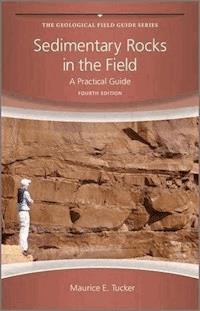
This fourth edition builds on the success of previous editions and for the first time is produced in full colour throughout with improved photos and diagrams. It retains its popular pocket size and is an essential buy for all students working in the field. The text shows how sedimentary rocks are tackled in the field and has been written for all those with a geological background. It describes how the features of sedimentary rocks can be recorded in the field particularly through the construction of graphic logs. In succeeding chapters the various sedimentary rock types, textures and structures are discussed and shown how they can be described and measured in the field. There are expanded sections on trace fossils and volcaniclastics along with updated reference list. Finally a concluding section deals briefly with facies identification and points the ways towards facies interpretations, and the identification of sequences and cycles. Key Features: * Full colour throughout with improved photos, figures and diagrams in a modern layout. * Complete revision and update of best selling textbook which is part of the highly successful Field Guide series. * Expanded sections on trace fossils and volcaniclastics along with updated reference list. * Handy pocket size with laminated cover. * Includes supplementary website with downloadable logging sheets for fieldwork activities.
Sie lesen das E-Book in den Legimi-Apps auf:
Seitenzahl: 314
Veröffentlichungsjahr: 2011
Ähnliche



















Contents
Preface
Acknowledgements
1 INTRODUCTION
1.1 Tools of the Trade
1.2 Other Tools for the Field
1.3 Use of GPS (Global Positioning System) in Sedimentary Studies
1.4 Safety in the Field and General Guidance for Fieldwork
2 FIELD TECHNIQUES
2.1 What to Look For
2.2 The Approach
2.3 Field Notes
2.4 Graphic Logs
2.5 The Logging of Cores
2.6 Lithofacies Codes
2.7 Collecting Specimens
2.8 Presentation of Results
2.9 The Way-Up of Sedimentary Strata
2.10 Stratigraphic Practice
3 SEDIMENTARY ROCK TYPES
3.1 Principal Lithological Groups
3.2 Sandstones
3.3 Conglomerates and Breccias
3.4 Mudrocks
3.5 Limestones
3.6 Evaporites
3.7 Ironstones
3.8 Cherts
3.9 Phosphate Deposits (Phosphorites)
3.10 Organic-Rich Deposits
3.11 Volcaniclastic Deposits
4 SEDIMENTARY ROCK TEXTURE
4.1 Introduction
4.2 Sediment Grain-Size and Sorting
4.3 Grain Morphology
4.4 Sediment Fabric
4.5 Textural Maturity
4.6 Texture of Conglomerates and Breccias
4.7 Induration and Degree of Weathering
4.8 Colour of Sedimentary Rocks
5 SEDIMENTARY STRUCTURES AND GEOMETRY OF SEDIMENTARY DEPOSITS
5.1 Introduction
5.2 Erosional Structures
5.3 Depositional Structures
5.4 Depositional Structures of Limestones (Including Dolomites)
5.5 Post-Depositional Sedimentary Structures
5.6 Biogenic Sedimentary Structures
5.7 The Geometry of Sedimentary Deposits and Lateral Facies Changes
6 FOSSILS IN THE FIELD
6.1 Introduction
6.2 Fossil Distribution and Occurrence
6.3 Fossil Associations and Diversity
6.4 Skeletal Preservation (Taphonomy) and Diagenesis
7 PALAEOCURRENT ANALYSIS
7.1 Introduction
7.2 Palaeocurrent Measurements
7.3 Structures for Palaeocurrent Measurement
7.4 Presentation of Results and Calculation of Vector Means
7.5 Interpretation of the Palaeocurrent Pattern
8 WHAT NEXT? FACIES IDENTIFICATION AND SEQUENCE ANALYSIS
8.1 Introduction
8.2 Facies Analysis
8.3 Facies, Facies Models and Depositional Environments
8.4 Cycle Stratigraphy and Sequence Stratigraphy
Recommended Reading
Index
The Geological Field Guide Series
Barnes, J.W. and Lisle, R.J. (2004) Basic Geological Mapping, 4th edn. ISBN: 978-0-470-84986-6, 5th edn publishing (2011).
ISBN: 978-0-470-68634-8
Fry, N. (1991) The Field Description of Metamorphic Rocks.
ISBN: 978-0-471-93221-5
McClay, K.R. (1991) The Mapping of Geological Structures.
ISBN: 978-0-471-93243-7
Milsom, J. and Eriksen, A. (2010) Field Geophysics, 4th edn.
ISBN: 978-0-470-74984-5
Tucker, M.E. (2011) Sedimentary Rocks in the Field, 4th edn.
ISBN: 978-0-470-68916-5
This edition first published 2011 © 2011 by John Wiley & Sons, Ltd.
Wiley-Blackwell is an imprint of John Wiley & Sons, formed by the merger of Wiley’s global Scientific, Technical and Medical business with Blackwell Publishing.
Registered office: John Wiley & Sons Ltd, The Atrium, Southern Gate, Chichester, West Sussex,
PO19 8SQ, UK
Editorial Offices: 9600 Garsington Road, Oxford, OX4 2DQ, UK
The Atrium, Southern Gate, Chichester, West Sussex, PO19 8SQ, UK
111 River Street, Hoboken, NJ 07030–5774, USA
For details of our global editorial offices, for customer services and for information about how to apply for permission to reuse the copyright material in this book please see our website at www.wiley.com/wiley-blackwell.
The right of the author to be identified as the author of this work has been asserted in accordance with the UK Copyright, Designs and Patents Act 1988.
All rights reserved. No part of this publication may be reproduced, stored in a retrieval system, or transmitted, in any form or by any means, electronic, mechanical, photocopying, recording or otherwise, except as permitted by the UK Copyright, Designs and Patents Act 1988, without the prior permission of the publisher.
Designations used by companies to distinguish their products are often claimed as trademarks. All brand names and product names used in this book are trade names, service marks, trademarks or registered trademarks of their respective owners. The publisher is not associated with any product or vendor mentioned in this book. This publication is designed to provide accurate and authoritative information in regard to the subject matter covered. It is sold on the understanding that the publisher is not engaged in rendering professional services. If professional advice or other expert assistance is required, the services of a competent professional should be sought.
Library of Congress Cataloguing-in-Publication Data
Tucker, Maurice E.
Sedimentary rocks in the field: a practical guide/Maurice E. Tucker. - 4th ed.
p. cm.
Includes bibliographical references and index.
ISBN 978-0-470-68916-5 (paper)
1. Sedimentary rocks. 2. Petrology-Fieldwork. I. Title.
QE471.T84 2011
552′.5–dc22
2010033307
A catalogue record for this book is available from the British Library.
First Impression 2011
PREFACE
The study of sedimentary rocks is often an exciting, challenging, rewarding and enjoyable occupation. However, to get the most out of these rocks, it is necessary to undertake precise and accurate fieldwork. The secret of successful fieldwork is a keen eye for detail and an enquiring mind; knowing what to expect and what to look for are important, although you do need to remain open-minded. Be observant, see everything in the outcrop, then think about the features seen and look again. This book is intended to show how sedimentary rocks are tackled in the field, and has been written for those with a geological background of at least first-year university or equivalent.
At the outset, this book describes how the features of sedimentary rocks can be recorded in the field, particularly through the construction of graphic logs. The latter technique is widely used since it provides a means of recording all details in a handy form; further, from the data, trends through a succession and differences between horizons readily become apparent. In succeeding chapters, the various sedimentary rocktypes, textures and structures are discussed as they can be described and measured in the field. A short chapter deals with fossils since these are an important component of sedimentary rocks and much useful information can be derived from them for palaeoenvironmental analysis; they are also important in stratigraphic correlation and palaeontological studies. Having collected the field information, there is the problem of knowing what to do with it. A concluding section deals briefly with facies identification and points the way towards facies interpretations, and the identification of sequences and cycles.
Maurice E. Tucker
ACKNOWLEDGEMENTS
I should like to thank the friends and colleagues who have willingly read drafts of this handbook, suggested changes for this fourth edition, and kindly provided photographs, in particular Jenny Bevan, Telm Bover-Arnal, Jim Gallagher, Annette George, Dougal Jerram, JuanCarlos Laya, Mike Mawson, Zahra Seyedmehdi and Paul Wright. Zoe took the picture on the front cover. I am indebted to Vivienne for providing support, encouragement, assistance and patience in ways that only a wife can.
1
INTRODUCTION
This book aims to provide a guide to the description of sedimentary rocks in the field. It explains how to recognise the common lithologies, textures and sedimentary structures and how to record and measure these features. There is a chapter explaining how fossils can be studied in the field, since they are common in many sedimentary rocks and are very useful for palaeoenvironmental analysis. A concluding chapter gives a brief introduction to the interpretation of sedimentary rock successions: facies, facies associations, cyclic sediments and sequences.
1.1 Tools of the Trade
Apart from a notebook (popular size around 20 × 10 cm), pens, pencils, appropriate clothing, footwear and a rucksack, the basic equipment of a field geologist comprises a hammer, chisel, hand-lens, compass-clinometer, tape measure, acid bottle, sample bags and marker pen. A Global Positioning System (GPS) receiver is most useful, and not only in remote areas (see Section 1.3). A hard hat for protection when working below cliffs and in quarries, and safety goggles for the protection of the eyes while hammering, should also be taken into the field and used; see Section 1.4 for further safety considerations. A camera is invaluable. Topographic and geological maps should also be carried, as well as any pertinent literature. If a lot of graphic logging is anticipated (see Section 2.4) then pre-prepared sheets can be taken into the field. Non-geological items that are useful and can be carried in a rucksack include a whistle, first-aid equipment, matches, emergency rations, knife, waterproof clothing and a ‘space blanket’.
For most sedimentary rocks, a geological hammer of around 0.5–1 kg (1–2 lb) is sufficiently heavy. However, do be sympathetic to the outcrop and remember that many future generations of geologists will want to look at the exposure. In many cases it will not be necessary to hammer since it will be possible to collect loose fresh pieces from the ground. A range of chisels can be useful, if a lot of collecting is anticipated.
A hand-lens is an essential piece of equipment; ×10 magnification is recommended since then grains and features down to 100 μm across can be observed. When holding the lens close to your eye, the field of view being examined with a ×10 lens is about 10 mm in diameter. To become familiar with the size of grains as seen through a handlens, examine the grains against a ruler graduated in millimetres. For limestones, it can be easier to see the grains after licking the freshly broken surface.
A compass-clinometer is important not only for taking routine dip and strike and other structural measurements, but also for measuring palaeocurrent directions. Do not forget to correct the compass for the angle between magnetic north and true north. This angle of declination is normally given on topographic maps of the region. You should also be aware that power lines, pylons, metal objects (such as your hammer) and some rocks (although generally mafic-ultramafic igneous bodies) can affect the compass reading and produce spurious results. A tape or steel rule, preferably several metres in length, is necessary for measuring the thickness of beds and dimensions of sedimentary structures. A metre-long staff with graduations can be useful for graphic logging. A compass usually has a millimetre-centimetre scale, which can be useful for measuring the size of small objects such as pebbles and fossils.
For the identification of calcareous sediments a plastic bottle of hydrochloric acid (around 10%) is useful, and if some Alizarin red S is added, then dolomites can be distinguished from limestones (limestones stain pink, dolomites no stain). Polythene or cloth bags, for samples, and a marker pen (preferably with waterproof, quick-drying ink), for writing numbers on the specimens, are also necessary. Friable specimens and fossils should be carefully wrapped to prevent breakage.
For modern sediments and unconsolidated rocks you will need a trowel and/or spade. A length (0.5-1.5m) of clear plastic pipe, 5–10 cm in diameter, is very useful for pushing into modern sediments to obtain a crude core. Epoxy-resin cloth peels can be made in the field of vertical sections through soft sandy sediments. The techniques for taking such peels are given in Bouma (1969). In essence, cut and trim a flat vertical surface through the sediments; spray an epoxy resin onto the cut surface; place a sheet of muslin or cotton against the sediments and then spray the cloth. Leave the resin to set (~10 minutes) and then carefully remove the cloth. A thin layer of sediment should be glued to the cloth and will show the various structures. Lightly brush or shake off excess, unglued sediment. Modern beach, dune, river, tidal flat and desert sediments are ideal for treatment in this way. Fibre-glass foam (a hazardous substance, though) can also be sprayed onto unlithified sediment to take a sample.
1.2 Other Tools for the Field
More sophisticated instruments are taken into the field on occasion to measure a particular attribute of sedimentary rocks. Normally these are used as part of a more detailed and focused research effort, rather than during a routine sedimentological study. Such tools include the mini-permeameter, magnetic susceptibility recorder (kappameter), gamma-ray spectrometer, and equipment for ground-penetrating radar surveys and laser scanning (LIDAR, Light Detection and Ranging).
The mini-permeameter is a tool for estimating the permeability of a rock, and portable ones are available for use in the field.
The magnetic susceptibility of sedimentary rocks can be measured relatively easily in the field, although in many cases it is very weak. Mudrocks and others with high organic matter contents and iron minerals tend to give higher readings. With measurements taken every few centimetres or so, a mag-sus stratigraphy can be produced; from this, cycles and rhythms can be recognised, especially in basinal facies.
Gamma-ray spectrometry is a technique for measuring the natural gamma radiation emitted from rocks; it can be used to determine the amount of clay in a succession and so is useful for distinguishing different types of mudrock, or the variation in clay content of muddy sandstones and limestones. Measurement of the gamma-ray spectrum in the field with a portable spectrometer has been used to correlate surface outcrops with each other and with the subsurface.
Ground-penetrating radar is a useful technique for looking at the structure and variation of shallow subsurface sediments, as in modern floodplains and coastal plains. Sedimentary units, such as point-bar sands and ox-bow lake fills, can be recognised beneath the surface.
Laser scanning of an outcrop can produce a highly precise digital image that can be used in 3-D imaging software packages. Very accurate measurements can be taken from the data, for detailed study of such features as fracture orientation and bed thickness. The equipment is very expensive, however. Further information on an area can be obtained from multispectral remote sensing and from digital elevation models (DEMs, also called digital terrain models, DTMs), where the relief of an area can be revealed and so examined more closely. Using these techniques 3-D digital images of geological formations can be created.
1.3 Use of GPS (Global Positioning System) in Sedimentary Studies
GPS is becoming a standard instrument to take into the field for determining location, but it can also be used for measuring sedimentary sections. GPS provides a very precise location of where you are, and this reading of latitude and longitude (or grid reference) can be entered in your field notebook and on logging sheets. The receiver also enables you to travel from one place to another or to find a specified location, or to back-track from whence you came. The accuracy of the reading from the receiver depends on several factors (make and model, time at location, design, corrections, etc.) and the method of positioning. With autonomous GPS the precision is 5–30 m; using differential Global Positioning System (DGPS) and applying corrections, accuracy can be less than 3 m. However, a reference station does have to be set up for DGPS.
GPS receivers now have a good memory so that all readings of the day, indeed of the week, can be recalled so you can retrace your steps and visit the localities again with no difficulty. This is immensely useful in landscapes where there are no distinctive features. Data from the receiver can of course be downloaded directly to a PC so that a permanent record is kept of where you went.
Apart from the advantage of knowing where you are, GPS does have the potential to enable you to measure medium to large structures with a better degree of accuracy than by using just a map and tape measure. With channel-fills, reef bodies or conglomeratic lenses, etc., several 100 m across or more, taking several GPS measurements will enable a better estimate of dimension to be obtained. A laser rangefinder can be useful for precise measurements of distant objects, such as features on cliff faces, and for knowing more precisely how far you are from somewhere.
1.4 Safety in the Field and General Guidance for Fieldwork
Working in the field should be a safe, enjoyable and very rewarding experience, as long as a few basic and sensible precautions are taken. Geological fieldwork is an activity involving some inherent risks and hazards, for example in coastal exposures, quarries, mines, river sections and mountains. Severe weather conditions may also be encountered in any season, especially in mountainous areas or at the coast. Fieldwork does involve an important element of self-reliance and the ability to cope alone or in a small group. You are responsible for your own safety in the field but, nevertheless, there are some simple precautions you can take to avoid problems and minimise risks.
Do wear adequate clothing and footwear for the type of weather and terrain likely to be encountered. Try to know the weather forecast for the area before you go out for the day. Keep a constant lookout for changes. Do not hesitate to turn back if the weather deteriorates.Walking boots with good soles are normally essential. Sports shoes are unsuitable for mountains, quarries and rough country.Plan work carefully, bearing in mind your experience and training, the nature of the terrain and the weather. Be careful not to overestimate what can be achieved.Learn the mountain safety and caving codes, and in particular know the effects of exposure. All geologists should take a course in First Aid.It is good practice before going into the field to leave a note and preferably a map showing expected location of study and route, and time of return, with the people with whom you are staying/living.Know what to do in an emergency (e.g. accident, illness, bad weather, darkness). Know the international distress signal: six whistle blasts, torch flashes or waves of a light-coloured item of clothing, repeated at minute intervals.Carry at all times a small first-aid kit, some emergency food (chocolate, biscuits, mint cake, glucose tablets), a survival bag (or large plastic bag), a whistle, torch, map, compass and watch.Wear a safety helmet (preferably with a chin strap) when visiting old quarries, cliffs, scree slopes, caves and so on, or wherever there is a risk from falling objects. It is obligatory to do so when visiting working quarries, mines and building sites, along with a high-viz jacket and strong boots.Avoid hammering where possible, to be a conservationist.Wear safety goggles (or safety glasses with plastic lenses) for protection against flying splinters when hammering rocks or using chisels.Do not use one geological hammer as a chisel and hammer it with another; use only a soft steel chisel.Avoid hammering near another person or looking towards another person hammering. Do not leave rock debris on the roadway or verges.Be conservation-minded and have a sympathetic regard for the countryside and the great outdoors, and the people, animals and plants that live there.When you are collecting specimens, do not strip or spoil sites where special fossils and rare minerals occur. Only take what you really need for further work.Take special care near the edges of cliffs and quarries, or any other steep or sheer rock faces, particularly in gusting winds.Ensure that rocks above are safe before venturing below. Quarries with rock faces loosened by explosives are especially dangerous.Avoid working under an unstable overhang.Avoid loosening rocks on steep slopes.Do not work directly above or below another person.Never roll rocks down slopes or over cliffs for amusement.Do not run down steep slopes.Beware of landslides and mudflows occurring on clay cliffs and in clay-pits, or rockfalls from any cliffs.Avoid touching any machinery or equipment in quarries, mines or building sites. Comply with safety rules, blast warning procedures and any instructions given by officials. Keep a sharp lookout for moving vehicles, and so on. Beware of sludge lagoons.Do not climb cliffs, rock faces or crags, unless you are an experienced climber and have a partner.Take great care when walking or climbing over slippery rocks below high-water mark on rocky shores. More accidents to geologists, including fatalities, occur along rocky shorelines than anywhere else; keep an eye out for rogue waves.Beware of traffic when examining road cuttings.Railway cuttings and motorways are generally not open to geologists, unless special permission has been obtained from appropriate authorities.Do not enter old mine workings or cave systems unless you are experienced and properly equipped.Avoid getting trapped by the tide on intertidal banks or below sea-cliffs. Obtain local information about tides and currents. Pay particular attention to tidal range. For sea-cliffs, local advice can be obtained from the local coastguard’s office.Permissions: Always try to obtain permission to enter private property. There are also many areas, such as national parks and nature reserves in many countries, and sites of special scientific interest (SSSIs) or protected sites, where official permission is required to collect samples, in some cases even just to carry out field observations and scientific study.Risk assessment: In many cases these days, it is necessary to conduct a risk assessment before commencing fieldwork. This may be a requirement for insurance purposes, as well as for research project proposals and permissions. Although perhaps seemingly unnecessarily bureaucratic, making a risk evaluation can be a useful exercise in thinking about the problems and issues you might encounter and so make you better prepared.Figure 1.1Sequence stratigraphic interpretation of two middle Cretaceous sequences (DSA and DSB) from the Maestrat Basin, eastern Spain. Abbreviations: ST systems tract; LPW lowstand prograding wedge; T transgressive; H highstand; FRW forced regressive wedge; BSFR basal surface of forced regression; CC correlative conformity; TS transgressive surface. See Bover-Arnal et al. (2009) for further information.
2
FIELD TECHNIQUES
2.1 What to Look For
There are six aspects of sedimentary rocks to consider in the field, and these should be recorded in as much detail as possible. These are:
1. the lithology, that is the composition and/or mineralogy of the sediment;
2. the texture, referring to the features and arrangements of the grains in the sediment, of which the most important aspect to examine in the field is the grain-size and its variation;
3. the , present on bedding surfaces and undersurfaces, and within beds, some of which record the palaeocurrents that deposited the rock;
Lesen Sie weiter in der vollständigen Ausgabe!
Lesen Sie weiter in der vollständigen Ausgabe!
Lesen Sie weiter in der vollständigen Ausgabe!
Lesen Sie weiter in der vollständigen Ausgabe!
Lesen Sie weiter in der vollständigen Ausgabe!
Lesen Sie weiter in der vollständigen Ausgabe!
Lesen Sie weiter in der vollständigen Ausgabe!
Lesen Sie weiter in der vollständigen Ausgabe!
Lesen Sie weiter in der vollständigen Ausgabe!
Lesen Sie weiter in der vollständigen Ausgabe!
Lesen Sie weiter in der vollständigen Ausgabe!




