


49,00 €
Mehr erfahren.
- Herausgeber: International Association for Bridge and Structural Engineering
- Kategorie: Wissenschaft und neue Technologien
- Serie: Structural Engineering Documents
- Sprache: Englisch
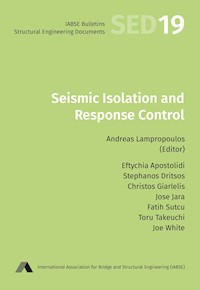
The seismic resilience of new and existing structures is a key priority for the protection of human lives and the reduction of economic losses in earthquake prone areas. The modern seismic codes have focused on the upgrade of the structural performance of the new and existing structures. However, in many cases it is preferrable to mitigate the effects of the earthquakes by reducing the induced loads in the structures using seismic isolation and response control devices. The limited expertise in the selection and design of the appropriate system for new and existing structures is the main challenge for an extensive use of seismic isolation and response control systems in practice.
This document aims to provide a practical guide by presenting a collection of the most commonly used seismic isolation and response control systems and a critical evaluation of the main characteristics of these systems. Comparisons of the key parameters of the design processes for new buildings with seismic isolation are presented, while the application of seismic isolation systems and response control systems for the retrofitting of existing structures is also examined, followed by various case studies from Greece, Japan, Mexico, New Zealand, and Turkey.
Das E-Book können Sie in Legimi-Apps oder einer beliebigen App lesen, die das folgende Format unterstützen:
Seitenzahl: 144
Veröffentlichungsjahr: 2021
Ähnliche




















Structural Engineering Documents
19
Seismic Isolation and
Response Control
Andreas Lampropoulos (Editor)
Authors (alphabetically)
Eftychia Apostolidi
Stephanos Dritsos
Christos Giarlelis
José Jara
Fatih Sutcu
Toru Takeuchi
Joe White
International Association for Bridge and Structural Engineering (IABSE)
Copyright © 2021 by
International Association for Bridge and Structural Engineering
All rights reserved. No part of this book may be reproduced in any form or by any means, electronic or mechanical, including photocopying, recording, or by any infor-mation storage and retrieval system, without permission in writing from the publisher.
ISBN: 978-3-85748-180-2 (print)
eISBN: 978-3-85748-179-6 (PDF), 978-3-85748-182-6 (ePUB)
DOI: https://doi.org/10.2749/sed019
Publisher
IABSE
Jungholzstrasse 28
8050 Zürich
Switzerland
Phone: Int. +41-43-443 9765
E-mail: [email protected]
Web: www.iabse.org
This book was produced in cooperation with Structurae, Dresdener Str. 110, Berlin, Germany (https://structurae.net).
Copyediting: Jens Völker
Layout & typesetting: Florian Hawemann
III
Preface
The seismic resilience of new and existing structures is a key priority for the protection of human lives and the reduction of economic losses in earthquake-prone areas. The implementation of modern seismic codes for the design of new earthquake-resistant buildings and the advances in techniques for the repair and strengthening of existing deficient structures have focused on the upgrade of the structural performance of the new and existing structures. However, in many cases, it is preferable to mitigate the effects of earthquakes by reducing the induced loads in the structures using seismic isolation and response control devices. The main principle is that the use of appropriate seismic isola-tion and response control devices at the base of the structures will offer increased flexibil-ity and energy absorption characteristics preventing resonance and significantly reducing the induced loads and deformations. The reduction of the deformations is also one of the main reasons for using these methods in cases of buildings with special requirements such as limited induced displacements in case of earthquakes (e.g. museums, hospitals, preci-sion instruments and other equipment sensitive to displacements and accelerations etc.).
The use of seismic isolation and response control systems has become a quite popular technique not only for the design of new but also for the upgrade of existing structures. Various systems have been developed, and some limited information is also included in modern seismic codes for the design of new buildings with seismic isolation. However, the limited expertise on the selection of the appropriate system and its design for new and existing structures is the main challenge for practitioners and hinders the exten-sive use of seismic isolation and response control systems in practice. This is even more challenging for the application of these systems in existing structures where additional practical difficulties during the installation process are to be anticipated. The selection of the appropriate system depends on a large number of parameters, including the require-ments and the particular characteristics of the examined structures. The engineers need to consider various possible systems, and the selection of the appropriate technology as well as the design process is in many cases a process with many iterations and alternatives.
The first part of this document is focused on the collection of the most commonly used seismic isolation and response control systems and the critical evaluation of the maincharacteristics of these systems. Then a comparison of the key parameters of the design processes for the design of new buildings with seismic isolation is presented, fol-lowed by four case studies from New Zealand, Greece, and Mexico and one case study on response control systems from Japan. The application of seismic isolation systems and response control systems for the retrofitting of existing structures were also examined. Two case studies on the application of seismic isolation systems in Turkey and Greece are
IV
presented, followed by three case studies on the application of response control systems in existing structures in Japan, Turkey and New Zealand. Finally, post-earthquake survey observations from seismic isolated structures are described to evaluate the efficiency of the application of these systems.
The main aim of this document is to provide a practical guide for the selection of seismic isolation and response control systems and explain the main steps of the design and application process. This work has been conducted as one of the main tasks of IABSE Task Group 1.1 ‘Improving Seismic Resilience of Reinforced Concrete Structures’, which is part of Commission 1 ‘Performance and Requirements’.
This work was coordinated by the IABSE Task Group 1.1 Chairman Dr Andreas Lampropoulos (Editor) and presents a teamwork of the following members (listed in alphabetical order): Dr Eftychia Apostolidi, Professor Stephanos Dritsos, Mr Christos Giarlelis, Professor Jose Jara. Professor Fatih Sutcu, Professor Toru Takeuchi and Dr Joe White.
Chapter 1 (Introduction) was led by Professor Stephanos Dritsos and Chapters 2 (Seismic Isolation and Response Control Systems), 3.1 (Design of New Buildings with Seismic Isolation), and 3.2 (Basics of Seismic Isolation Design) were led by Professor Fatih Sutcu, Professor Toru Takeuchi and Mr Christos Giarlelis. Mr Christos Giarlelis also led the preparation of the three case studies in Greece. Professor Jose Jara led the preparation of the case study in Mexico. Professor Fatih Sutcu led the preparation of the two case studies in Turkey. Professor Toru Takeuchi led the preparation of the two case studies in Japan. Dr Joe White led the preparation of the two case studies in New Zealand. Dr Eftychia Apostolidi worked on the enhancement and completeness of the main part of the document. All the authors of the list contributed to various sections of this document which represents the outcome of a collective effort.
The Editor would like to express his appreciation and sincere thanks to the reviewers, Prof. Fabrizio Palmisano (Chief Reviewer, Editorial Board), Prof. Alberto Pavese and Asst. Prof. Bahadir Sadan, for their comprehensive and valuable comments and suggestions.
Finally, the Editor would like to express his gratitude to the Chair of IABSE Commis-sion 1, Mr Niels Peter Hoj, and the Chair of the Bulletin Board, Dr Harsha Subbarao, for their continuous encouragement and support during the preparation of this document.
Dr Andreas Lampropoulos
(Editor)
V
Table of Contents
List of Abbreviations. . . . . . . . . . . . . . . . . . . . . . . . . . . . . . . . . . . . . . . . . . . . . . . . . . . . . . . . VIII
Chapter 1Introduction. . . . . . . . . . . . . . . . . . . . . . . . . . . . . . . . . . . . . . . . . . . . . . . . . . . . . . . . . . . . . . . . . . 1
Chapter 2Seismic Isolation and Response Control Systems. . . . . . . . . . . . . . . . . . . . . . . . . . . . . . . . 5
2.1 Basic Concepts . . . . . . . . . . . . . . . . . . . . . . . . . . . . . . . . . . . . . . . . . . . . . . . . . . . . . . . . . . . . 6
2.2 Seismic Isolation Systems . . . . . . . . . . . . . . . . . . . . . . . . . . . . . . . . . . . . . . . . . . . . . . . . . . 9
2.2.1 Types of Seismic Isolation Bearings. . . . . . . . . . . . . . . . . . . . . . . . . . . . . . . . . . . . 9
2.2.2 Energy-Dissipating Components for Seismic Isolation. . . . . . . . . . . . . . . . . . 16
2.2.3 Selection of Seismic Isolation Systems. . . . . . . . . . . . . . . . . . . . . . . . . . . . . . . . . 18
2.2.4 Replacement of Bearings. . . . . . . . . . . . . . . . . . . . . . . . . . . . . . . . . . . . . . . . . . . . . 19
2.3 Response Control Systems . . . . . . . . . . . . . . . . . . . . . . . . . . . . . . . . . . . . . . . . . . . . . . . . 19
2.4 Summary / Comparison of the Presented Seismic Isolation and Response Control Systems . . . . . . . . . . . . . . . . . . . . . . . . . . . . . . . . . . . . . . . . . . . . . . . . . . . . . . . . . . 24
Chapter 3Design of New Buildings with Seismic Devices. . . . . . . . . . . . . . . . . . . . . . . . . . . . . . . . . 27
3.1 Design of New Buildings with Seismic Isolation . . . . . . . . . . . . . . . . . . . . . . . . . . . . . 27
3.2 Basics of Seismic Isolation Design . . . . . . . . . . . . . . . . . . . . . . . . . . . . . . . . . . . . . . . . . 29
3.3 Seismic Joints and Flexible Connections for Equipment in Isolated Buildings . . 33
3.4 Design Examples Using Seismic Isolation . . . . . . . . . . . . . . . . . . . . . . . . . . . . . . . . . . . 36
3.4.1 Nine-Storey Residential Building in Christchurch, New Zealand. . . . . . . . . 37
3.4.2 Stavros Niarchos Foundation Cultural Centre in Athens, Greece. . . . . . . . . 40
3.4.3 Infiernillo II Bridge, Balsas River, Mexico. . . . . . . . . . . . . . . . . . . . . . . . . . . . . . 44
3.4.4 Onassis Cultural Center (Stegi), Athens, Greece. . . . . . . . . . . . . . . . . . . . . . . . 48
3.5 Design of New Buildings with Response Control . . . . . . . . . . . . . . . . . . . . . . . . . . . . 51
3.6 Basics of Response Control System Design . . . . . . . . . . . . . . . . . . . . . . . . . . . . . . . . . 52
3.7 Design Example Using Response Control: Environmental Energy Innovation Building, Tokyo Institute of Technology, Tokyo, Japan: Steel Low-Rise Building with BRBs . . . . . . . . . . . . . . . . . . . . . . . . . . . . . . . . . . . . . . . . . . . . . . . . . . . . . . . . . . . . . . . 55
VI
3.7.1 Objective of the Project. . . . . . . . . . . . . . . . . . . . . . . . . . . . . . . . . . . . . . . . . . . . . . 55
3.7.2 Design and Performance Confirmation. . . . . . . . . . . . . . . . . . . . . . . . . . . . . . . . 57
Chapter 4Seismic Retrofit Using Seismic Isolation and Response Control. . . . . . . . . . . . . . . . . . 59
4.1 Retrofit Design Examples Using Seismic Isolation . . . . . . . . . . . . . . . . . . . . . . . . . . . 60
4.1.1 Seismic Isolation Retrofit of an RC Hospital Complex in Istanbul, Turkey. 60
4.1.2 Retrofit Project of a Residential Building Using Seismic Isolation, Athens, Greece . . . . . . . . . . . . . . . . . . . . . . . . . . . . . . . . . . . . . . . . . . . . . . . . . . . . . . . . . . . . . 65
4.2 Retrofit Design Examples Using Response Control . . . . . . . . . . . . . . . . . . . . . . . . . . 70
4.2.1 Retrofit of an RC Building Using BRBs Including an Integrated Façade, Tokyo, Japan. . . . . . . . . . . . . . . . . . . . . . . . . . . . . . . . . . . . . . . . . . . . . . . . . . . . . . . . 70
4.2.2 Full-Scale Tests on Response Control Retrofitfor an RC School Building Using BRBs, Istanbul, Turkey. . . . . . . . . . . . . . . . . . . . . . . . . . . . . . . . . . . . . . . . . 78
4.2.3 Retrofit of an 8 Storey RC Building Using Viscous Dampers, Christchurch, New Zealand. . . . . . . . . . . . . . . . . . . . . . . . . . . . . . . . . . . . . . . . . . . . . . . . . . . . . . . 85
Chapter 5Post-Earthquake Survey Observations. . . . . . . . . . . . . . . . . . . . . . . . . . . . . . . . . . . . . . . . . 91
5.1 Ishinomaki Red Cross Hospital, Seismically Isolated Hospital Building, Ishinomaki, Japan . . . . . . . . . . . . . . . . . . . . . . . . . . . . . . . . . . . . . . . . . . . . . . . . . . . . . . . . 91
5.2 Koriyama Big-Eye Building, High-Rise Building with Viscoelastic Dampers and BRBs, Fukushima, Japan . . . . . . . . . . . . . . . . . . . . . . . . . . . . . . . . . . . . . . . . . . . . . . 95
References. . . . . . . . . . . . . . . . . . . . . . . . . . . . . . . . . . . . . . . . . . . . . . . . . . . . . . . . . . . . . . . . . . . 99
VIII
List of Abbreviations
AIJ
Architectural Institute of Japan
BRB
Buckling-Restrained Braces
CFD
Computational Fluid Dynamics
DBE
Design Basis Earthquake
DCLS
Damage Control Limit State
EEI
Environmental Energy Innovation
ELFM
Equivalent Lateral Force Method
FPS
Friction Pendulum System
FVD
Fluid Viscous Dampers
HDRB
High Damping Rubber Bearings
HVAC
Heating, Ventilation and Air Conditioning
IBC
International Building Code
LDD
Low Damage Design
LDRB
Low Damping Rubber Bearings
LRB
Lead-plug Rubber Bearings
MCE
Maximum Considered Earthquake
MEP
Mechanical, Electrical and Plumbing
NLTHA
Non-Linear Time-History Analysis
NRB
Natural Rubber Bearings
PGA
Peak Ground Acceleration
PRB
Polymer Plug Rubber Bearings
RC
Reinforced Concrete
RSA
Response Spectrum




