


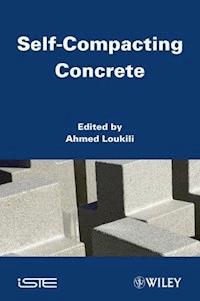
Self-Compacting Concrete E-Book
139,99 €
Mehr erfahren.
- Herausgeber: John Wiley & Sons
- Kategorie: Fachliteratur
- Sprache: Englisch
Self-Compacting Concrete (SCC) is a relatively new building material. Nowadays, its use is progressively changing the method of concrete placement on building sites.
However, the successful use of SCC requires a good understanding of the behavior of this material, which is vastly different from traditional concrete. For this purpose, a lot of research has been conducted on this area all over the world since 10 years.
Intended for both practitioners and scientists, this book provides research results from the rheological behavior of fresh concrete to durability.
Sie lesen das E-Book in den Legimi-Apps auf:
Seitenzahl: 260
Veröffentlichungsjahr: 2013
Ähnliche




















Table of Contents
Introduction
Chapter 1. Design, Rheology and Casting of Self-Compacting Concretes
1.1. Towards a fluid concrete
1.2. SCC formulation basics
1.3. SCC rheology
1.4. Industrial practices
1.5. Forces exerted by SCCs on formworks
1.6. Bibliography
Chapter 2. Early Age Behavior
2.1. Introduction
2.2. Hydration and its consequences
2.3. Early age desiccation and its consequences: different approaches to the problem
2.4. Plastic shrinkage and drop in capillary pressure
2.5. Comparison of plastic shrinkage for SCCs and conventional concretes
2.6. Influence of composition on free plastic shrinkage
2.7. Cracking due to early drying
2.8. Summary
2.9. Bibliography
Chapter 3. Mechanical Properties and Delayed Deformations
3.1. Introduction
3.2. Instantaneous mechanical properties
3.3. Differences in mechanical behavior
3.4. Behavior of steel-concrete bonding
3.5. Bibliography
Chapter 4. Durability of Self-Compacting Concrete
4.1. Introduction
4.2. Properties and parameters that influence durability
4.3. Transport phenomena
4.4. Degradation mechanisms
4.5. Conclusion
4.6. Bibliography
Chapter 5. High Temperature Behavior of Self-Compacting Concretes
5.1. Introduction
5.2. Changes in SCC microstructure and physico-chemical properties with temperature
5.3. Mechanical behavior of SCCs at high temperature
5.4. Thermal stability
5.5. Conclusion
5.6. Bibliography
Glossary
List of Authors
Index
First published 2011 in Great Britain and the United States by ISTE Ltd and John Wiley & Sons, Inc.
Apart from any fair dealing for the purposes of research or private study, or criticism or review, as permitted under the Copyright, Designs and Patents Act 1988, this publication may only be reproduced, stored or transmitted, in any form or by any means, with the prior permission in writing of the publishers, or in the case of reprographic reproduction in accordance with the terms and licenses issued by the CLA. Enquiries concerning reproduction outside these terms should be sent to the publishers at the undermentioned address:
ISTE Ltd 27-37 St George’s Road London SW19 4EU UK
John Wiley & Sons, Inc. 111 River Street Hoboken, NJ 07030 USA
www.iste.co.uk
www.wiley.com
© ISTE Ltd 2011
The rights of Ahmed Loukili to be identified as the author of this work have been asserted by him in accordance with the Copyright, Designs and Patents Act 1988.
Library of Congress Cataloging-in-Publication Data
Self-compacting concrete / edited by Ahmed Loukili.
p. cm.
Includes bibliographical references and index.
ISBN 978-1-84821-290-9
1. Self-consolidating concrete. I. Loukili, Ahmed.
TA442.5.S45 2011
620.1’36--dc23
2011020213
British Library Cataloguing-in-Publication Data
A CIP record for this book is available from the British Library
ISBN 978-1-84821-290-9
Introduction
Self-compacting concretes (SCCs), highly fluid concretes placed without vibration, were introduced into French construction works towards the end of the 1990s. The concept came into being a decade earlier in Prof. Okumara’s laboratory [OKA 00] in Japan. The high seismicity of this geographical region requires the use of high levels of steel reinforcement in construction. The use of “self-compacting” concretes appeared as a solution to improve the filling up of zones which are not very accessible to conventional methods of concrete compaction. This solution also has the advantage of overcoming the gradual decline in the number of workers qualified to handle and place concrete.
In France, SCC was initially of interest to the precast concrete and ready mix concrete industries, and in the construction industry, well before project managers and contracting authorities became interested in it [CIM 03]. The use of SCC enables improvements in productivity through reductions in manpower and placing delays. It also improves quality through a better filling of the formwork, better coating of the steel reinforcement, even a better facing. Finally, and undeniably their best asset, SCCs reduce the difficulty of the work. By preventing vibration, the health effects of concrete construction disappear (white hand syndrome, hearing loss, noise disturbances for the neighbors). Little by little, SCCs have also won over architects by offering them the possibility of playing with complex volumes.
Even though SCCs have established their position in the prefabrication industry (around half of the volume produced), SCCs used in situ are struggling to make an impact on construction sites, in France as well as in other countries [SHA 07]. Despite their numerous advantages, SCCs represent less than 3% of ready mix concrete produced in France [BTP 07]. Several factors lend themselves to explaining this slow expansion of SCCs [CUS 07]. Firstly, making SCCs is somewhat difficult, since the components must be of a good quality and have little variation in their properties. While the properties of fresh vibrated concretes are affected relatively little by normal variations in the components (size distribution, water content, etc.), SCCs, on the other hand, are much more sensitive. Secondly, the production tool is not always precise enough for making concretes which are strongly affected by errors in the mixture proportions. Thirdly, the formworks must be well prepared, properly waterproofed and must, above all, be able to withstand pressures that are a priori higher than those involved in handling vibrated concretes.
However, SCCs have the potential of continuing to expand. To begin with, the standardizing framework, which had previously been vague in Europe, was enforced in June 2010 with the release of the EN 206-9 standard which brought in rules for production, handling, and specific controls for SCC, complementing EN 206-1. SCCs are becoming widespread elsewhere by strengthening the dialog — which is truly indispensable — between construction agents, owners, project managers, architects, businesses and suppliers, and also research laboratories. SCCs, complex and innovating materials, have been the object of a real infatuation by researchers the world over. As a witness to this success, international conferences have been dedicated to SCCs since 1999 [SCC 99]. Today the extent of the research allows us to have a better understanding of the behavior of these concretes.
The objective of this book is therefore to disseminate knowledge acquired by recent research in order to enable the student, the technician, or the engineer who reads it, to develop an understanding of the formulation of these materials. The composition of SCCs must satisfy several criteria. In addition, different authors have endeavored to reply to each of the questions posed in the following chapters, without losing sight of the global objective of techno-economical optimization.
Chapter 1 is dedicated to rheology and concrete casting. Theoretical concepts are presented and useful experimental tools for characterizing the behavior of these complex mixtures are described. Experimental data also shows the range of variability and the influence of the principal formulation parameters.
Chapter 2 enables the reader to understand the specifics of the behavior of SCCs at early ages. This behavior, which is strongly influenced by the particular formulations of SCCs, is characterized by vulnerability to desiccation and the resultant strains.
Chapter 3 focuses on the mechanical and delayed behaviors of SCCs in comparison with ordinary derivative concretes. This aspect is crucial for designing self-compacting concrete pieces.
In Chapter 4, the question of durability is examined. Degradation phenomena linked to environmental events are described, and experimental data on SCC and vibrated concretes are brought together to show which parameters are influential from the point of view of potential durability.
Finally Chapter 5 is dedicated to the thermal stability and fire resistance of self-compacting concretes.
Bibliography
[CIM 03] “CimBéton, Monographie d’ouvrages en BAP”, Collection Technique Cimbéton, B 52, 2003.
[CUS 07] CUSSIGH F., “SCC in practice: opportunities and bottleneck”, Proceedings of the Fifth RILEM Symposium on Self-Compacting Concrete, Ghent, Belgium, 2007.
[FRA 07] France BTP.com, “Le BAP: où en est-on en 2007?”, BTP Matériaux, December 2007.
[OKA 00] OKAMURA H., OZAWA K., OUCHI M., “Self-Compacting Concrete”, Structural Concrete, vol. 1, no. 3, 2000.
[SCC 99] Proceedings of the First International RILEM Symposium on Self-Compacting Concrete, Stockholm, Sweden, 1999.
[SHA 07] SHAH S.P., FERRON R.P., FERRARA L., TREGGER N., KWON S.H., “Research on SCC: some emerging themes”, Proceedings of the Fifth RILEM Symposium on Self-Compacting Concrete, Ghent, Belgium, 2007.
Chapter 1
Design, Rheology and Casting of Self-Compacting Concretes1
1.1. Towards a fluid concrete
Recent decades have witnessed a remarkable evolution in concrete performance, as much in the field of their rheological behavior in the fresh state as in their mechanical behavior in their hardened state. These technical advances are the results of coupling between the formulation principles, coming from a long period of learning by experience and the mastering of physico-chemical principles which govern the behavior of cement-based materials.
Initially made using a simple recipe of water, cement and aggregates (sand and gravel), concrete has since seen its formulation enriched by the inclusion of high quality components such as mineral additives (limestone fillers, silica fumes, etc.), chemical additives such as super-plasticizers and reinforcing materials such as fibers.
The complex formulations thus obtained must satisfy the production specifications in which the obligations often go beyond the conventional output requirements in terms of fluidity during casting, and strength of the hardened concrete. Concrete design can thus be adjusted to suit the working conditions (pumping, vibration, transport time and casting time), hardening (time at which the concrete is removed from the mold, required short-term strength) and service (developing strength, durability, etc.).
Lesen Sie weiter in der vollständigen Ausgabe!
Lesen Sie weiter in der vollständigen Ausgabe!
Lesen Sie weiter in der vollständigen Ausgabe!
Lesen Sie weiter in der vollständigen Ausgabe!
Lesen Sie weiter in der vollständigen Ausgabe!
Lesen Sie weiter in der vollständigen Ausgabe!
Lesen Sie weiter in der vollständigen Ausgabe!




