


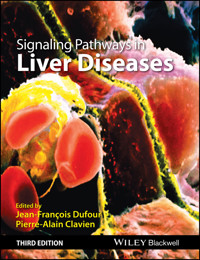
Signaling Pathways in Liver Diseases E-Book
191,99 €
Mehr erfahren.
- Herausgeber: John Wiley & Sons
- Kategorie: Fachliteratur
- Sprache: Englisch
Signaling Pathways in Liver Diseases, Third Edition again provides hepatologists and hepatology researchers with an expert overview of the complex and novel cellular/extracellular signaling pathways in the liver, and their role in liver diseases. The last few years have seen a great number of developments in this field, which in turn have led to new opportunities for innovative treatments; however, the intricacy of these pathways and their interactions continue to provide a real challenge for clinicians. This outstanding book compiles the emerging knowledge into a single expert resource, cataloguing and organizing it into an accessible and understandable format.
With increased focus on the comprehension of cellular mechanisms involved in steatohepatitis, cirrhosis, and liver tumors, which has led to changes in the management of these diseases, this new edition also sees the introduction of exciting new chapters on key emerging areas such as:
- Autophagy
- Notch Pathway
- P13K/PTEN Signaling in Liver Diseases
- Sirtuins
- Hepcidin and Iron
- Epigenetic Regulation of Hepatic Stellate Cells and Liver Fibrosis
- Oxidative Stress and Signaling in the Liver.
Professors Dufour and Clavien have assembled an all-star cast of chapter authors, each of whom has provided clear and appropriate illustrations to reinforce the text, with a key points box offering a concise and handy summary. Self-assessment questions and answers allow the reader to test their own knowledge.
Signaling Pathways in Liver Disease, Third Edition is the perfect educational and reference tool to bridge the information exchange between the laboratory, the clinical ward, and the operating room, and an essential tool for the modern-day hepatologist.
Sie lesen das E-Book in den Legimi-Apps auf:
Seitenzahl: 1660
Veröffentlichungsjahr: 2015
Ähnliche




















Table of Contents
Cover
Title page
List of Contributors
CHAPTER 1: Hepatocytes
Introduction
Liver and hepatocyte development
Phenotype and regeneration of the mature hepatocyte
Metabolic functions of the liver
References
CHAPTER 2: Signaling pathways in biliary epithelial cells
Introduction
Membrane receptors
Cyclic adenosine 3’, 5’-monophosphate (cAMP)
Cytosolic Ca
2+
Protein kinase C
Mitogen-activated protein kinase signaling
Phosphotidylinositol 3-kinase signaling
Notch signaling
Hedgehog signaling
Vascular endothelial growth factor
Pathological conditions
Conclusion
Acknowledgments
References
CHAPTER 3: Stellate cells
Polypeptide growth factor receptors
Transforming growth factor-β receptor superfamily
Seven transmembrane domain receptors
Chemokines
Tumor necrosis factor receptor superfamily
Nuclear receptor family
Other cytokine receptors
Adipokine receptors
Extracellular matrix signaling and hepatic stellate cells
Toll-like receptors
Cannabinoid receptors
Hedgehog pathway
Wnt pathway
Autophagy
Senescence of activated stellate cells
miRNAs and hepatic stellate cells
Conclusion
References
CHAPTER 4: Kupffer cells
Introduction
Markers, origin, and heterogeneity of Kupffer cells
M1 versus M2 polarization in Kupffer cells
Lipopolysaccharide signaling and endotoxin tolerance
Experimental approaches to deplete Kupffer cells
in vivo
Role of Kupffer cells in liver disease
Liver fibrosis and cirrhosis
Clinical applications and future perspectives
Acknowledgment
References
CHAPTER 5: Hepatic sinusoidal endothelial cells
Development and structure
Cellular functions
Pathobiology
Conclusion
References
CHAPTER 6: Extracellular matrix
Introduction
Components of the extracellular matrix in liver (Figure 6.1)
Changes in the extracellular matrix from normal to fibrotic liver
Pathways of cell–matrix interaction
The extracellular matrix and the stem cell niche
Metalloproteinases and their inhibitors
Conclusion
References
CHAPTER 7: Platelets: a new cell type in liver physiology
What are platelets?
Ischemia/reperfusion injury
Liver regeneration
Platelets in chronic liver disease
Conclusion
References
CHAPTER 8: Immune cell communication in liver disease and liver regeneration
Introduction
Adaptive immunity within the liver
Immune cell function in liver disease
References
CHAPTER 9: Extracellular vesicle RNA in liver disease
Introduction
Types of extracellular RNA
Classification of extracellular vesicles
Contents of extracellular vesicles
Assessment of extracellular vesicle RNA
Biological roles of extracellular vesicle RNA
Pathophysiological roles of extracellular vesicle RNA in liver disease
Translational implications
Conclusion
Acknowledgments
References
CHAPTER 10: Endoplasmic reticulum stress in nonalcoholic fatty liver disease
Endoplasmic reticulum
Unfolded protein response
Role of the unfolded protein response in liver physiology and physiopathology
Targeting the unfolded protein response to treat nonalcoholic fatty liver disease
References
CHAPTER 11: Autophagy
Introduction
Autophagy pathways and regulations
Autophagy and liver diseases
Conclusion
References
CHAPTER 12: CXC chemokine receptor signaling in liver repair and regeneration
Introduction
Mediators of liver regeneration
CXC chemokine ligands and receptors
Impact of CXC chemokines on liver repair and regeneration
Conclusion
References
CHAPTER 13: Metabolic regulation of liver regeneration
Introduction
Hepatic insufficiency-induced alterations in metabolism
Metabolic regulation of liver regeneration
A metabolic model of liver regeneration
Clinical implications
Conclusions
Acknowledgments
References
CHAPTER 14: TNF signaling
Introduction
TNF: molecules and structure
TNF signaling pathways
Function of TNF signaling in hepatic pathophysiology
Conclusion
Acknowledgments
References
CHAPTER 15: Fas/FasL
Introduction
Fas (CD95/APO-1) and Fas ligand (FasL/CD95L)
Fas/FasL apoptotic signaling
Fas/FasL noncytotoxic signaling
Fas/FasL in liver diseases
References
CHAPTER 16: Interferon signaling
Interferons
Induction of type I interferons
Interferon signaling through the Jak-STAT pathway
Effects of type I interferons
Interferon signaling in viral hepatitis
References
CHAPTER 17: Endocannabinoid signaling in liver pathologies
Endocannabinoids
The endocannabinoid system
The complex relationships of the endocannabinoid system
Signaling downstream of the CNRs
Nonalcoholic fatty liver disease
Alcoholic fatty liver
Progression to steatohepatitis
Liver fibrosis
Ischemia/reperfusion injury
Regeneration
Hepatitis C
Hepatocellular carcinoma
Conclusion
References
CHAPTER 18: The WNT/β-catenin pathway
Pathway and interactions
Wnt/β-catenin signaling in liver physiology
Wnt/β-catenin signaling in liver pathology
Therapeutic implications
References
CHAPTER 19: Hedgehog signaling in the liver
Introduction
Overview of the Hedgehog pathway
Hedgehog-producing and -responsive cells in the liver
Hedgehog in liver development and regeneration
Hedgehog in chronic liver disease
Hedgehog in liver cancer
Conclusion
Acknowledgments
References
CHAPTER 20: Notch pathway
Introduction
Notch signaling
Notch signaling in the liver
Notch signaling in liver diseases
Conclusion
References
CHAPTER 21: PI3K/PTEN signaling in liver diseases
Introduction
The PI3K signaling node in the liver
The Phosphatase and TENsin homolog on chromosome 10
PI3K/PTEN downstream signaling and function in the liver
Alterations of PI3K/PTEN signaling in hepatic diseases
Pharmaceutical targeting of the PI3K/PTEN signaling pathway
Summary
Acknowledgments
References
CHAPTER 22: mTOR signaling in liver disease
Introduction
mTOR signaling in hepatic metabolism
mTOR signaling in liver cancer
mTOR signaling in circadian rhythm
Conclusion
References
CHAPTER 23: LKB1/AMPK pathway in the control of hepatic energy metabolism
Introduction
Structure and regulation of AMPK
AMPK activation in liver
Regulation of glucose homeostasis
Regulation and management of lipid metabolism
Coordinated control of mitochondrial biogenesis and mitophagy
Regulation of protein synthesis and control of cell growth
Regulation of hepatocyte polarization and bile canicular network formation
Conclusions and perspectives
References
CHAPTER 24: NF-κB
Introduction
Signaling pathway for NF-κB activation
TNF-α-mediated NF-κB activation and liver injury
Ischemia-reperfusion (I/R) liver injury
Role of NF-κB in liver regeneration
NF-κB and liver fibrosis
Nonalcoholic fatty liver disease and NF-κB
IKK-NF-κB and hepatocarcinogenesis
Clinical applications and future perspectives
Acknowledgment
References
CHAPTER 25: c-Jun NH
2
-terminal kinases in liver diseases
Introduction
Functions and targets of JNKs in cell biology
JNKs in liver disease
Conclusion
References
CHAPTER 26: p53
Introduction
The transcription factor p53
Protein structure of p53
Regulation of p53 protein levels
Stress response: arrest of cell cycle and DNA repair
Stress response: apoptosis
Metabolic regulation by p53
p53 function in liver disease
References
CHAPTER 27: Sirtuins
Introduction
SIRT1
SIRT2
SIRT3
SIRT4
SIRT5
SIRT6
SIRT7
Conclusion
Acknowledgments
References
CHAPTER 28: Bile acids and their receptors
Introduction
Role of bile acid-activated nuclear receptors for bile acid metabolism, bile secretion, and cholestasis
Role of bile acid-activated nuclear receptors for lipid and glucose metabolism
G protein-coupled receptor for bile acids
Acknowledgments
References
CHAPTER 29: Hepcidin and iron
Introduction
Hepcidin synthesis and function
Hepcidin regulation
Stimulatory signals and signaling pathways
Inhibitory signals and pathways
Conclusion
References
CHAPTER 30: Gut microbiome and liver diseases
Introduction
Microbiota and nonalcoholic fatty liver disease
Microbiota and alcoholic liver disease
Microbiota and liver cirrhosis
Conclusion
References
CHAPTER 31: Epigenetic regulation of hepatic stellate cells and liver fibrosis
Introduction
What is epigenetics?
Developmental epigenetics
A basic overview of epigenetic mechanisms
The role of epigenetic mechanisms in hepatic stellate cells and liver fibrosis
Cross-talk between DNA methylation and histone modifications
Histone modifications
DNA methylation
MicroRNAs
Conclusion
References
CHAPTER 32: Signaling in hepatocellular carcinoma
Introduction
Mechanisms of pathway deregulation
Deregulated pathways in hepatocellular carcinoma
Pathway-based therapeutics in oncology
Molecular subclasses and network medicine
References
CHAPTER 33: Interplay between hepatitis B virus and innate immune signaling pathways
Lesen Sie weiter in der vollständigen Ausgabe!
Lesen Sie weiter in der vollständigen Ausgabe!
Lesen Sie weiter in der vollständigen Ausgabe!
Lesen Sie weiter in der vollständigen Ausgabe!
Lesen Sie weiter in der vollständigen Ausgabe!
Lesen Sie weiter in der vollständigen Ausgabe!
Lesen Sie weiter in der vollständigen Ausgabe!
Lesen Sie weiter in der vollständigen Ausgabe!
Lesen Sie weiter in der vollständigen Ausgabe!
Lesen Sie weiter in der vollständigen Ausgabe!
Lesen Sie weiter in der vollständigen Ausgabe!
Lesen Sie weiter in der vollständigen Ausgabe!
Lesen Sie weiter in der vollständigen Ausgabe!
Lesen Sie weiter in der vollständigen Ausgabe!
Lesen Sie weiter in der vollständigen Ausgabe!
Lesen Sie weiter in der vollständigen Ausgabe!
Lesen Sie weiter in der vollständigen Ausgabe!
Lesen Sie weiter in der vollständigen Ausgabe!
Lesen Sie weiter in der vollständigen Ausgabe!
Lesen Sie weiter in der vollständigen Ausgabe!
Lesen Sie weiter in der vollständigen Ausgabe!
Lesen Sie weiter in der vollständigen Ausgabe!
Lesen Sie weiter in der vollständigen Ausgabe!
Lesen Sie weiter in der vollständigen Ausgabe!
Lesen Sie weiter in der vollständigen Ausgabe!
Lesen Sie weiter in der vollständigen Ausgabe!
Lesen Sie weiter in der vollständigen Ausgabe!
Lesen Sie weiter in der vollständigen Ausgabe!
Lesen Sie weiter in der vollständigen Ausgabe!
Lesen Sie weiter in der vollständigen Ausgabe!
Lesen Sie weiter in der vollständigen Ausgabe!
Lesen Sie weiter in der vollständigen Ausgabe!
Lesen Sie weiter in der vollständigen Ausgabe!
Lesen Sie weiter in der vollständigen Ausgabe!
Lesen Sie weiter in der vollständigen Ausgabe!
Lesen Sie weiter in der vollständigen Ausgabe!
Lesen Sie weiter in der vollständigen Ausgabe!
Lesen Sie weiter in der vollständigen Ausgabe!
Lesen Sie weiter in der vollständigen Ausgabe!
Lesen Sie weiter in der vollständigen Ausgabe!
Lesen Sie weiter in der vollständigen Ausgabe!




