


0,49 €
Mehr erfahren.
- Herausgeber: Franklindo
- Kategorie: Bildung
- Sprache: Englisch
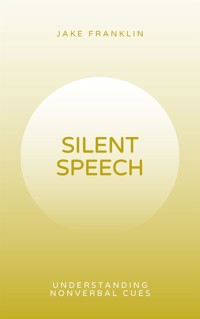
"Silent Speech: Understanding Nonverbal Cues" provides valuable insights into the often-overlooked language of nonverbal communication. Through practical guidance and expert analysis, readers discover how to decode body language, facial expressions, and gestures to gain a deeper understanding of human interactions. This book is an essential resource for enhancing interpersonal skills and fostering better communication in both personal and professional contexts.
Das E-Book können Sie in Legimi-Apps oder einer beliebigen App lesen, die das folgende Format unterstützen:
Veröffentlichungsjahr: 2024
Ähnliche



















SILENT SPEECH
UNDERSTANDING NONVERBAL CUES
JAKE FRANKLIN
Copyright © 2024 by Jake Franklin
All rights reserved.
No part of this book may be reproduced in any form or by any electronic or mechanical means, including information storage and retrieval systems, without written permission from the author, except for the use of brief quotations in a book review.
CONTENTS
1. Basics Of Nonverbal Communication
2. Cultural Variations In Body Language
3. Nonverbal Communication In Relationships
4. Body Language In The Workplace
5. Mastering Nonverbal Cues
BASICS OF NONVERBAL COMMUNICATION
Nonverbal communication, the subtle yet powerful form of interaction that occurs without words, plays an integral role in how we understand each other and build relationships. It's a complex tapestry woven from our gestures, facial expressions, posture, and the space we maintain between ourselves and others. This silent language often speaks louder than words, conveying emotions and intentions that words sometimes fail to capture.
Understanding nonverbal communication begins with recognizing its omnipresence in our daily lives. We are constantly engaged in this silent exchange from the moment we wake up to when we go to sleep. You're participating in a nonverbal exchange when you nod in agreement during a conversation or notice someone's eyes light up with joy. These actions may seem small, but they carry significant meaning.
One of the most fascinating aspects of nonverbal communication is its universal nature, yet it is also uniquely personal. For instance, a smile is recognized worldwide as a sign of happiness or friendliness. However, how people display and interpret smiles can vary significantly across cultures and individuals. This variant increases the level of intricacy in understanding nonverbal cues.
It is impossible to overestimate the significance of nonverbal communication. It is crucial in enhancing our understanding of others, building empathy, and forming strong bonds. Think about a time when words were not enough to express how you felt, yet a simple hug from a friend or a reassuring pat on the back said everything that needed to be said. These moments underscore the power of nonverbal communication in connecting us on a deeper level.
But it's not just about understanding others; it's also about being understood. How we present ourselves, the way we sit, stand, or move, sends messages about our confidence, openness, and attentiveness. Being aware of our nonverbal signals can help us become better communicators. It allows us to convey our true feelings and intentions more effectively, ensuring that our verbal and nonverbal messages are harmonious.
Nonverbal communication also extends into the digital world. Even though we might not see each other face-to-face, the use of emojis, the timing of our replies, and how we format our texts and emails carry nonverbal weight. They help bridge the gap where physical cues are absent, adding tone and emotion to our digital conversations.




