



0,99 €
Niedrigster Preis in 30 Tagen: 1,99 €
Niedrigster Preis in 30 Tagen: 1,99 €
Mehr erfahren.
- Herausgeber: Booksell-Verlag
- Kategorie: Geisteswissenschaft
- Sprache: Englisch
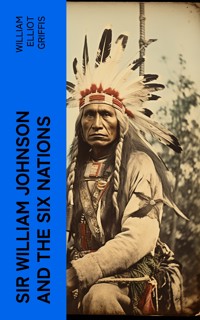
William Elliot Griffis's 'Sir William Johnson and the Six Nations' is a meticulously researched work that delves into the life of Sir William Johnson, a pivotal figure in early American history and a key mediator between European settlers and Native American tribes. Griffis employs a compelling narrative style that intertwines historical accounts with vivid descriptions, offering readers a nuanced portrayal of Johnson's relationships with the Six Nations. The book is set against the backdrop of the colonial struggle for power in North America and examines the complexities of cultural exchange and conflict during the 18th century. Griffis, an accomplished historian and author, was influenced by his deep interest in American history and Indigenous cultures. His background, including his time spent studying in Japan and an enduring fascination with cross-cultural interactions, allowed him to approach Johnson's story with a unique lens. This combination of scholarly rigor and a passion for storytelling informs Griffis's narrative, making this work both informative and engaging. Readers seeking a deeper understanding of colonial America and Native American history will find 'Sir William Johnson and the Six Nations' an indispensable resource. Griffis's ability to blend rigorous research with captivating prose makes this book essential for historians, students, and anyone interested in the rich tapestry of America's past. In this enriched edition, we have carefully created added value for your reading experience: - A succinct Introduction situates the work's timeless appeal and themes. - The Synopsis outlines the central plot, highlighting key developments without spoiling critical twists. - A detailed Historical Context immerses you in the era's events and influences that shaped the writing. - A thorough Analysis dissects symbols, motifs, and character arcs to unearth underlying meanings. - Reflection questions prompt you to engage personally with the work's messages, connecting them to modern life. - Hand‐picked Memorable Quotes shine a spotlight on moments of literary brilliance. - Interactive footnotes clarify unusual references, historical allusions, and archaic phrases for an effortless, more informed read.
Das E-Book können Sie in Legimi-Apps oder einer beliebigen App lesen, die das folgende Format unterstützen:
Veröffentlichungsjahr: 2019
Ähnliche
















Sir William Johnson and the Six Nations
Table of Contents
Introduction
Across the contested borderlands of early America, this book traces how power, persuasion, and cultural fluency could either kindle alliance or ignite conflict, asking what it costs to translate between worlds while serving an empire and engaging a sovereign Native confederacy.
Sir William Johnson and the Six Nations by William Elliot Griffis is a work of nonfiction that blends biography and history, set primarily in the colonial Northeast where diplomacy and frontier life shaped political outcomes. Written by a widely published American historian, it emerged around the turn of the twentieth century, a period when narrative histories sought to make the past accessible to general readers. Within that context, the book situates its subject at the intersection of imperial administration and Indigenous diplomacy, focusing on the relationships, protocols, and negotiations that defined an era and left enduring questions about authority, allegiance, and the uses of power.
The premise is straightforward yet compelling: the author follows Sir William Johnson’s public life in relation to the Six Nations, presenting a portrait of diplomacy conducted in council houses and along wooded waterways rather than in grand salons. Readers can expect a measured narrative voice, attentive to political maneuver and personal character, with a steady emphasis on meetings, speeches, and decisions that shaped regional fortunes. The mood is reflective rather than sensational, designed to clarify events and motives without romanticizing them, and the style favors clear exposition over flourish, guiding the audience through complex exchanges with steady, deliberate pacing.
Themes of mediation, alliance, and mutual contingency run throughout, as the book examines how influence is cultivated across cultural boundaries and how it can be lost through misjudgment or overreach. It explores the tension between local relationships and distant directives, revealing how policy is often forged not only in official decrees but also through incremental trust, ritual, and reciprocity. The narrative underscores the fragility of agreements, the weight of promises, and the perennial challenge of honoring commitments amid shifting priorities, inviting readers to consider how informal power operates alongside formal authority and how individuals can embody, challenge, or complicate larger systems.
For contemporary readers, the book’s relevance lies in its attention to negotiation, consent, and representation—issues that remain central in discussions of sovereignty, governance, and historical memory. By focusing on the dynamics that arise when distinct political communities must coexist, it raises questions about who speaks for whom, how legitimacy is recognized, and what constitutes a fair bargain. It also prompts reflection on the narratives we inherit about the colonial past, encouraging a mindful approach to sources, perspectives, and the ways histories are framed, circulated, and used to justify present choices or to challenge inherited assumptions.
Griffis’s approach offers a guided tour through records and retellings shaped by their time, providing a window into both the eighteenth-century subject and the era of the book’s composition. The presentation favors clarity about proceedings and roles, helping readers parse the rhythms of councils, the stakes of treaties, and the calculus behind shifting alliances without reducing them to simple cause and effect. While the focus remains biographical, the work functions as a study in political culture, tracing how credibility is earned through conduct, how rhetoric and gesture carry diplomatic weight, and how personal reputation can alter institutional trajectories.
Taken as a whole, Sir William Johnson and the Six Nations offers a thoughtful, sober reading experience that foregrounds process over spectacle and mediation over myth. Readers encounter a disciplined reconstruction of encounters that tested the limits of trust and shaped the contours of a region’s future, presented with an eye toward intelligibility rather than dramatization. Without presuming to resolve every ambiguity, the book invites engaged scrutiny and patient inference, making it well suited to those who value careful narration, ethical complexity, and the steady illumination of historical actors navigating between competing imperatives and overlapping sovereignties.
Synopsis
William Elliot Griffis presents the life and work of Sir William Johnson against the backdrop of the Six Nations and the shifting imperial balance in eighteenth-century North America. Opening with the structure of the Iroquois Confederacy and the Covenant Chain with the English, the book establishes geography, trade networks, and council customs in the Mohawk Valley. It traces how diplomacy, kinship, and commerce shaped alliances before open war. Within this context, Johnson appears as a figure who moved between British authority and Haudenosaunee protocols, using language skills, ceremony, and gift-giving to sustain relationships and to manage the frontier where colonial settlement pressed against Indigenous homelands.
Born in County Meath, Ireland, Johnson emigrated in 1738 to oversee his uncle Sir Peter Warren’s estates along the Mohawk. Griffis follows his early years as trader, farmer, and militia officer, noting how he learned Mohawk, cultivated ties with chiefs, and gained influence by respecting council procedures. He built Fort Johnson as residence and redoubt, positioned at a strategic river crossing. The narrative emphasizes his efforts to regulate trade, address abuses such as the rum traffic, and stabilize relations among settlers, soldiers, and Haudenosaunee communities. By mid-century, he was already a trusted intermediary whose standing extended well beyond local boundaries.
As Anglo-French rivalry intensified, the book describes New York’s frontier councils and the broader 1754 Albany discussions to renew the Covenant Chain and coordinate defense. Johnson’s role grows from local agent to imperial mediator. In 1755, the Crown appointed him Superintendent of Indian Affairs for the Northern Department, formalizing responsibilities he had increasingly assumed. Griffis outlines his commission, staff, and methods: regular councils, ritual exchanges, and a system of interpreters and messengers. Johnson also mobilized provincial militia and Native allies, linking military operations with diplomacy. With war imminent, his task became keeping the Six Nations aligned with Britain and limiting French influence.
Griffis recounts the 1755 campaign toward Lake George, where Johnson led provincial forces and Mohawk warriors against Baron Dieskau. The engagement resulted in a defensive victory that stabilized the Lake George-Lake Champlain corridor. Johnson, wounded in action, oversaw the construction of a fort at the lake’s southern end and named the waters Lake George. Parliamentary thanks and a baronetcy followed, marking his ascent in imperial service. The book situates this episode within a wider theater: supply lines from Albany, the connection to Fort Edward, and the need to reassure Haudenosaunee partners through timely gifts and ceremonies while sustaining pressure on French outposts to the north and west.
The narrative continues through the middle years of the French and Indian War. Griffis highlights Johnson’s persistent diplomacy, coordinating scouts, escorts, and councils that maintained Indigenous alliances. In 1759, during the siege of Fort Niagara, General Prideaux’s death placed Johnson in command. He completed the investment and received the fort’s capitulation, severing French communications between Canada and the Ohio. Subsequent operations opened routes toward Montreal, where Johnson’s presence aided negotiations with Indigenous groups as British control expanded. Throughout, the book emphasizes the dual nature of his role: an officer directing campaigns and a superintendent ensuring the Covenant Chain held under conditions of shifting power and supply.
After 1760, focus shifts to administration and boundary making. Griffis explains imperial policies culminating in the Royal Proclamation of 1763, then Johnson’s efforts to stabilize relations amid unrest known as Pontiac’s War. The 1764 Niagara council renewed alliances on a broad scale, using wampum, speeches, and exchanges to reweave ties. Johnson worked to regulate trade, mediate disputes, and reduce violence on the frontier. The 1768 Treaty of Fort Stanwix, negotiated under his authority, pushed a boundary line westward through Iroquois claims, producing vast land cessions and colonial controversy. The book presents these settlements as attempts to balance imperial aims, settler demand, and Haudenosaunee sovereignty.
Parallel to diplomacy, Griffis follows Johnson’s household, estates, and local institutions. He moved from Fort Johnson to Johnson Hall, developed roads and mills, and helped establish Johnstown with courts and a church, anchoring British authority in the Mohawk Valley. His long partnership with Molly Brant connected him to Mohawk leadership networks, while younger figures such as Joseph Brant emerged within these circles. Councils met at his hall, with formal receptions for visiting delegations. The account details everyday administration: distributing presents, licensing traders, hosting emissaries, and maintaining order among diverse populations whose economic fortunes and security depended on the stability of the Covenant Chain.
Griffis then treats the mounting imperial-colonial strain after 1763, from trade grievances to taxation disputes. Johnson sought to keep the Six Nations at peace as tension rose between Britain and its colonies. He convened councils to reaffirm neutrality and to address conflicts spilling from the Ohio. In 1774, during a period of heightened anxiety, Johnson died suddenly at Johnson Hall. The book traces the transfer of responsibilities to relatives and associates, including Guy Johnson and Sir John Johnson, and notes the changing posture of the Six Nations as war loomed. Divisions, migrations, and later alliances are foreshadowed as the Revolutionary era begins.
The closing chapters synthesize Johnson’s career and the Six Nations’ strategic responses across four decades of war, negotiation, and settlement. Griffis underscores procedures that sustained alliances: language, protocol, gifts, and formal wampum records. He presents boundary treaties, especially Fort Stanwix, as central to imperial policy and colonial expansion, with enduring consequences for Haudenosaunee lands. The book’s message emphasizes how intermediary leadership, exercised through councils and military coordination, shaped outcomes on the northern frontier. By following the sequence from early settlement through conquest, policy, and pre-revolutionary crisis, the narrative offers a concise account of diplomacy and power in the Mohawk Valley and beyond.
Historical Context
William Elliot Griffis sets his biography in the mid eighteenth century borderlands of the British Empire, centered on the Mohawk Valley and the greater Iroquois homeland in what is now upstate New York. The period runs roughly from Sir William Johnson’s arrival from Ireland in 1738 to his death in 1774, spanning the British French imperial rivalry, the Seven Years’ War, and the turbulent decade after 1763. Key sites include Fort Johnson on the Mohawk, Johnson Hall at Johnstown, Albany, Oswego, Niagara, the Hudson corridor, and the Great Lakes councils. The book situates Indigenous diplomacy, fur trade economies, and settler expansion as interlocking forces shaping policy and conflict.
The Six Nations, or Haudenosaunee Confederacy, form the political heart of the narrative: Mohawk, Oneida, Onondaga, Cayuga, Seneca, and the Tuscarora, who joined around 1722. Their central council fire at Onondaga, matrilineal clan systems, sachemships, and wampum record keeping underpin a sophisticated diplomacy known to colonists as the Covenant Chain. Griffis presents concrete structures of confederate governance and the geographic reach of Iroquois influence, from the St. Lawrence to the Ohio Country. The book connects Johnson’s ascent to his mastery of this diplomatic world, stressing his alliances with Mohawk leaders, gift distributions, and ceremonial protocols that embedded him in Six Nations politics.
Colonial conferences culminating in the Albany Congress of 1754 highlight the British effort to secure Iroquois alliance or at least neutrality as North America slid toward global war. Representatives from seven colonies debated defense and Indian trade regulation while Haudenosaunee envoys pressed grievances about land frauds and encroachment. Though Johnson’s formal superintendency came in 1755, Griffis situates his rising influence in the early 1750s councils at Albany and along the Mohawk. The book mirrors these encounters by depicting how Johnson’s language skills, kin ties, and credibility with Mohawk figures like Hendrick Theyanoguin made him indispensable in reanimating the Covenant Chain.
The French and Indian War, 1754 to 1763, provides the biography’s central arc. Griffis details the collapse of British diplomacy after Braddock’s defeat in July 1755, then Johnson’s emergence as commander and negotiator. On 8 September 1755, at the Battle of Lake George, Johnson led New England provincials and Mohawk allies, including Hendrick Theyanoguin, against Baron Dieskau. Though Hendrick fell and Johnson was wounded, the Anglo colonial force prevailed; Johnson fortified the south end of the lake, renamed it Lake George, and was created a baronet that year. He helped organize provincial logistics along the Hudson Champlain corridor and maintained Six Nations participation at critical junctures. The book traces the siege of Fort William Henry in 1757, Montcalm’s victory, and the ensuing massacre by French allied warriors, noting the strains this placed on Iroquois relations and colonial morale. It then follows the 1759 Niagara campaign: after Brigadier General John Prideaux was killed by a mortar accident on 20 July, Johnson assumed command, secured Iroquois cooperation, and captured Fort Niagara on 25 July, severing French communications between the St. Lawrence and the Ohio. His diplomacy helped detach many Iroquois and Great Lakes groups from French influence, contributing to the 1760 capitulation of Montreal. Griffis connects battlefield outcomes to council house negotiations, emphasizing that Johnson’s authority as Superintendent of Indian Affairs for the Northern Department (created 1755) rested as much on gifts, interpreters, and wampum councils as on military rank. The biography interprets the war as both a military and a diplomatic contest in which the Six Nations were decisive actors and Johnson a linchpin of British success.
The postwar crisis known as Pontiac’s War, 1763 to 1766, followed the Royal Proclamation of 1763, which attempted to halt colonial settlement west of the Appalachians. Western nations besieged British posts from Detroit to Fort Pitt. Griffis recounts Johnson’s efforts to stabilize the interior through a grand council at Niagara in 1764, where more than two thousand Indigenous delegates renewed alliances under new treaty belts and affirmed peace. Deputy agent George Croghan and other subordinates extended these terms inland. The book ties Johnson’s Niagara diplomacy to the proclamation framework, presenting him as an architect of a reconstituted Covenant Chain after war’s end.
Land policy and imperial boundaries culminate in the 1768 Treaty of Fort Stanwix, which Johnson negotiated with Iroquois representatives at Rome, New York. The agreement pushed the proclamation line westward, with the Six Nations ceding claims to vast tracts south of the Ohio in exchange for goods valued at roughly 10,460 pounds sterling. This opened routes into present day West Virginia and Kentucky, despite the absence and objections of resident Shawnee and other Ohio Valley peoples, setting the stage for later violence, including Lord Dunmore’s War in 1774. Griffis foregrounds Johnson’s central role, framing Stanwix as both a diplomatic triumph and a seedbed of future conflict.
Griffis embeds Johnson in a frontier society of Palatine German farmers, Scots Irish settlers, and Mohawk towns along the Mohawk River. Johnson’s estates grew from his arrival in 1738 to manage his uncle Sir Peter Warren’s lands, through the construction of Fort Johnson in 1749 and Johnson Hall at Johnstown in 1763. His domestic alliance with Molly Brant, sister of Joseph Brant, linked him to powerful Mohawk networks. Administrative reforms created Tryon County in 1772, reflecting his regional dominance. Johnson died suddenly on 11 July 1774 after addressing a council. The book underscores how his kinship web shaped Revolutionary era alignments within the Six Nations and Loyalist circles.
By tracing councils, war, and land deals through Johnson’s career, the book implicitly critiques imperial and colonial power over Indigenous sovereignty. Griffis exposes how gift diplomacy, proclamations, and treaties like Fort Stanwix masked profound asymmetries, enabling speculative expansion at Native expense. He highlights settler violence and racialized panic on the Pennsylvania and New York frontiers, and the way officeholders converted public influence into private estates. The narrative also reveals class divides on the frontier, where magnates, traders, and officials steered policy while smallholders bore military burdens. In depicting the Six Nations’ strategic agency amid encroachment, the work questions British and colonial claims of benevolent governance.
Sir William Johnson and the Six Nations
PREFACE.
The Mohawk Valley in which Sir William Johnson spent his adult life (1738–1774) was the fairest portion of the domain of the Six Nations of the Iroquois Confederacy[1]. In this valley I lived nine years, seeing on every side traces or monuments of the industry, humanity, and powerful personality of its most famous resident in colonial days. From the quaint stone church in Schenectady which he built, and in whose canopied pews he sat, daily before my eyes, to the autograph papers in possession of my neighbours; from sites close at hand and traditionally associated with the lord of Johnson Hall, to the historical relics which multiply at Johnstown, Canajoharie, and westward,—mementos of the baronet were never lacking. His two baronial halls still stand near the Mohawk. I found that local tradition, while in the main generous to his memory, was sometimes unfair and even cruel. The hatreds engendered by the partisan features of the Revolution, and the just detestation of the savage atrocities of Tories and red allies led by Johnson’s son and son-in-law, had done injustice to the great man himself. Yet base and baseless tradition was in no whit more unjust than the sectional opinions and hostile gossip of the New England militia which historians have so freely transferred to their pages.
In the following pages no attempt at either laudation or depreciation has been made. My purpose has been simply to set forth the actions, influence, and personality of Sir William Johnson, to show the character of the people by whom he was surrounded, and to describe and analyze the political movements of his time. I confess I have not depicted New York people in the sectional spirit and subjective manner in which they are so often treated by New England writers. The narrow and purely local view of some of these who have written what is called the history of the United States, greatly vitiates their work in the eyes of those who do not inherit their prejudices. Having no royal charter, the composite people of New York, gathered from many nations, but instinct with the principles of the free republic of Holland, were obliged to study carefully the foundations of government and jurisprudence. It is true that in the evolution of this Commonwealth the people were led by the lawyers rather than by the clergy.[1q] Constantly resisting the invasions of royal prerogative, they formed on an immutable basis of law and right that Empire State which in its construction and general features is, of all those in the Union, the most typically American. Its historical precedents are not found in a monarchy, but in a republic. It is less the fruit of English than of Teutonic civilization.
Living also but a few yards away from the home of Arendt Van Curler[2], the “Brother Corlaer” of Indian tradition, and immediately alongside the site of the old gate opening from the palisades into the Mohawk country, I could from my study windows look daily upon the domain of the Mohawks,—the places of treaties, ceremonies, and battles, of the torture and burning of captives, and upon the old maize-lands, even yet rich after the husbandry of centuries. Besides visiting many of the sites of the Iroquois castles, I have again and again traversed the scenes of Johnson’s exploits in Central New York, at Lake George, in Eastern Pennsylvania, and other places mentioned in the text. With my task is associated the remembrance of many pleasant outings as well as meetings with local historians, antiquarians, and students of Indian lore. I have treated more fully the earlier part of Johnson’s life which is less known, and more briefly the events of the latter part which is comparatively familiar to all. I trust I have not been unfair to the red men while endeavouring to show the tremendous influence exerted over them by Johnson; who, for this alone, deserves to be enrolled among the Makers of America.
My chief sources of information have been the Johnson manuscripts, which have been carefully mounted, bound, and are preserved in the State Library at Albany. They were indexed by my friends, the late Rev. Dr. H. A. Homes, and Mr. George R. Howell, the accomplished secretary of the Albany Institute. To the former I am especially indebted. The printed book to which I owe special obligations is Mr. William L. Stone’s “Life and Times of Sir William Johnson, Bart.” These two superbly written octavo volumes, richly annotated and indexed, make any detailed life of Johnson unnecessary, and form a noble and enduring monument of patient scholarship.
For generous assistance at various points and in details, I have to thank, and hereby do so most heartily, Mr. Edward F. De Lancey, of New York; Mr. William L. Stone, of Jersey City; Prof. A. L. Perry, of Williams College; Mr. Berthold Fernow, keeper of the State Archives, Albany; Rev. J. A. De Baun, D. D., of Fonda; Rev. J. H. Hubbs, of Grand Rapids, Mich.; Rev. Henry R. Swinnerton, of Cherry Valley; Mr. R. A. Grider, the chief American specialist and collector of powder-horns and their art and literature; Mr. A. G. Richmond, archæologist in Indian relics, of Canajoharie, N. Y.; Mrs. I. E. Wells of Johnson Hall at Johnstown; Mr. Ethan Akin, of Fort Johnson at Akin near Fonda; James Fuller, Esq., of Schenectady, N. Y.; and Major J. W. MacMurray, U. S. N.; besides various descendants of the militiamen who served under the illustrious Irishman who is the subject of the following pages.
W. E. G.
Boston, Mass.,
May 21, 1891.
CHRONOLOGICAL OUTLINE.
1400–1600
a. d.
Occupation of the region between
the Niagara and the Hudson
River by the Indian tribes
of the Long House.
{ July 29.
Defeat of the Iroquois near
{
Ticonderoga, N. Y., by
{
Champlain.
1609
,
{ Sept. 1-23.
Hendrick Hudson explores the
{
river as far as the Mohawk.
1613.
Hollanders build on Manhattan and Nassau Islands.
1617.
Iroquois form an alliance with the Dutch.
1623.
Jesse De Forest and the Walloons settle and found New York City.—Fort Orange built.—Settlement at Albany.
1630.
Patroon Kilian Van Rensselaer.—Arrival of Arendt Van Curler.
1642.
Van Curler enters the Mohawk Valley and ransoms Isaac Jogues.
1661.
Van Curler founds the city of Schenectady.
1664.
English Conquest of New Netherlands.
1667.
Kryn leads the Caughnawaga Indians to Canada.
1690.
Massacre at Schenectady.
1710.
Palatine Germans in New York.
1713.
The Tuscaroras join the Iroquois Confederacy.
1715.
Sir William Johnson born.
1722.
Palatines settle in Mohawk Valley.—Oswego founded.
1738.
Johnson settled at Warrensburgh, N. Y.
1740.
Johnson made head of the Indian Department.
1754.
The Congress and Council at Albany.
1755.
Battle of Lake George.
1757.
Massacre at German Flats.
1759.
Surrender of Niagara to Johnson.—Fall of Quebec and the French power in America.
1763.
Conspiracy of Pontiac.—Johnstown founded, and Johnson Hall built.
1768.
Treaty at Fort Stanwix.
1770.
January 18, First bloodshed of the Revolution.
1771.
First battle of the Revolution at Alamance, N. C.
1772.
Division of Albany County.—Johnstown made the county-seat of Tryon County.
1774.
Death of Sir William Johnson.
1777.
Battle of Oriskany.
1778.
Massacre at Cherry Valley.
1779.
Brant at Minnisink.—General Sullivan’s Expedition against the Six Nations.
1782.
New York’s Western lands transferred to the nation.
1783.
Tories banished from the Mohawk Valley.




