


0,49 €
Niedrigster Preis in 30 Tagen: 1,99 €
Niedrigster Preis in 30 Tagen: 1,99 €
Mehr erfahren.
- Herausgeber: Booksell-Verlag
- Kategorie: Fantasy und Science-Fiction
- Sprache: Englisch
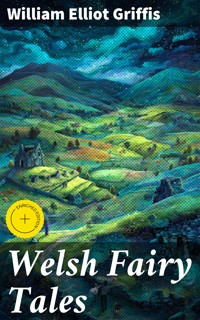
In "Welsh Fairy Tales," William Elliot Griffis presents a curated collection of enchanting stories that delve into the rich tapestry of Welsh folklore. Through a skilled blend of lyrical prose and vibrant storytelling, Griffis captures the essence of these timeless tales, characterized by their vivid imagery and moral undertones. The book not only entertains but also serves as a cultural document, reflecting the unique beliefs and traditions of Welsh society. The narratives range from whimsical adventures to cautionary tales, showcasing the dualities of heroism and folly prevalent in folklore, all while maintaining a structure that invites readers to immerse themselves in the enchanting world of the Welsh highlands. William Elliot Griffis, an American author and historian with a profound interest in folklore, was inspired by his travels and the stories shared with him by the Welsh people. His academic background in cultural studies and his dedication to preserving ethnic narratives led him to compile these tales, emphasizing the significance of myth and tradition in shaping identity. Griffis's perspective as an outsider grants readers a fresh lens through which to view these folklore gems, merging both scholarly insight and accessible storytelling. "Welsh Fairy Tales" is a captivating read for anyone interested in mythology, culture, and the intricate beauty of storytelling. Its timeless themes, replete with heroism, love, and caution, invite readers of all ages to explore the allure of Welsh heritage. This collection is a must-have for folklore enthusiasts and a splendid introduction for those new to the enchanting world of fairy tales. In this enriched edition, we have carefully created added value for your reading experience: - A comprehensive Introduction outlines these selected works' unifying features, themes, or stylistic evolutions. - A Historical Context section situates the works in their broader era—social currents, cultural trends, and key events that underpin their creation. - A concise Synopsis (Selection) offers an accessible overview of the included texts, helping readers navigate plotlines and main ideas without revealing critical twists. - A unified Analysis examines recurring motifs and stylistic hallmarks across the collection, tying the stories together while spotlighting the different work's strengths. - Reflection questions inspire deeper contemplation of the author's overarching message, inviting readers to draw connections among different texts and relate them to modern contexts. - Lastly, our hand‐picked Memorable Quotes distill pivotal lines and turning points, serving as touchstones for the collection's central themes.
Das E-Book können Sie in Legimi-Apps oder einer beliebigen App lesen, die das folgende Format unterstützen:
Veröffentlichungsjahr: 2019
Ähnliche









Welsh Fairy Tales
Table of Contents
Introduction
Welsh Fairy Tales by William Elliot Griffis presents a single-author collection of retold Welsh folk narratives, arranged to offer a broad panorama of the nation’s mythic imagination. Gathering twenty-four tales, the volume moves from homely wit and village pranks to encounters with dragons, witches, giants, lake maidens, and Arthurian echoes. Griffis’ purpose is curatorial and interpretive: to preserve well-known stories and local traditions while rendering them in clear, engaging English for contemporary readers. As a cohesive book rather than a miscellany, it introduces settings, motifs, and figures that reappear across tales, yielding an informal, cumulative portrait of Welsh legend. The collection welcomes newcomers while rewarding readers already curious about Celtic lore.
The contents are prose narratives: brief to mid-length tales shaped in the manner of folk and fairy stories rather than novels, poems, essays, or letters. Within this single mode, the book accommodates a range of subtypes—wonder tales featuring magical objects and tasks; local legends rooted in specific places; humorous anecdotes; mythic adventures drawing on heroic or chivalric matter; and Otherworld journeys in which mortals cross thresholds into fairy domains. Elements from Arthurian tradition and medieval romance appear alongside village traditions and etiological explanations. The result is a varied yet unified set of stories designed for reading aloud and for private enjoyment by both younger and older audiences.
Several themes and images bind the collection together. Human life repeatedly brushes the borders of the Otherworld, especially at liminal sites—caves, fords, forests, mountain passes, and lake shores. Hospitality, promise-keeping, and courtesy are tested, as are courage and resourcefulness when facing the uncanny. Music and craft matter, whether in enchanted harps, smiths’ tools, or the everyday skills that outwit giants. Taboos and materials carry power, with iron and clay playing decisive roles in human–fairy relations. Names and titles shape identity and destiny, while symbols such as the great red dragon carry cultural weight. Humor tempers peril, reinforcing the sense that wit can equal strength.
Griffis’ retellings favor clarity, brisk pacing, and a storytelling cadence that suits oral delivery. Proper names and spellings are often presented in anglicized or accessible forms, easing entry for readers unfamiliar with Welsh orthography while retaining a distinct sense of place. Descriptions are vivid but economical, allowing action and dialogue to lead. The tone shifts nimbly from playful to solemn as the material demands, and a gentle moral pressure sometimes guides the close of a tale without overshadowing wonder. Local color—landscape features, crafts, and customs—is woven in as context rather than exposition, helping the stories feel immediate yet rooted in tradition.
While written as modern retellings, the tales draw on a deep reservoir of Welsh oral lore and medieval narrative, including material associated with the Mabinogion and the broader Arthurian cycle. Figures such as lake maidens, fairy courts, giants, and dragons appear alongside episodes that reflect historical pressures and cultural encounters. Place-lore anchors the supernatural in recognizable geography, suggesting how communities interpret natural features through story. The collection’s adaptations simplify and synthesize variant traditions for general readers, preserving core motifs and cultural resonances. In doing so, it offers a bridge between fragmentary, locally kept narratives and an accessible, cohesive literary form.
Taken together, these stories remain significant for the way they condense a distinctive regional imagination into an approachable whole. They model how folklore can be transmitted without antiquarian obscurity or loss of character, giving readers touchstones—fairies, heroic tests, enchanted tools, and national emblems—that invite further exploration. The collection also illustrates the enduring appeal of narrative patterns in which promises, bargains, and thresholds determine fate. By foregrounding wit, courage, courtesy, and community, the tales speak across generations, making them useful as introductions to Welsh cultural heritage and as enduring examples of how local traditions illuminate universal human concerns.
Readers may approach the book sequentially or by dipping into individual episodes, since each tale stands alone while contributing to a larger mosaic. Tracking recurring motifs—lakes and caverns, iron and clay, music and enchantment—enriches the experience, as does noticing how everyday life meets the marvelous. Familiarity with Welsh geography or legendary cycles is not required; the retellings supply all essential orientation. The range spans playful pieces and weightier legendary matter, from rustic mischief and curious meetings to grander scenes involving emblematic creatures and storied blades. Read aloud or savored quietly, the collection offers both variety and coherence, inviting return visits to its landscapes and figures.
Historical Context
William Elliot Griffis (1843–1928), an American educator, minister, and prolific popular historian, approached folklore as part of a global pedagogy shaped by the late nineteenth century’s comparative method. After teaching in Meiji Japan (1870–1874) and publishing The Mikado’s Empire (1876) and Japanese Fairy World (1880), he turned to European traditions, later issuing Dutch Fairy Tales for Young Folks (1918). His Welsh Fairy Tales belongs to this transnational effort to make regional lore intelligible to Anglophone readers. The Progressive Era’s children’s publishing boom, new school curricula, and lecture circuits in Boston, New York, and Philadelphia created a receptive audience for accessible retellings that linked ancient myth, national character, and moral instruction.
The medieval sources behind many Welsh legends had been reintroduced to modern readers through renewed interest in the Mabinogion and Arthurian lore. Core narratives descend from prose in the White Book of Rhydderch (c. 1350) and the Red Book of Hergest (c. 1382–1410), while Geoffrey of Monmouth’s Historia Regum Britanniae (c. 1136) provided a powerful pseudo-history of Britain and Arthur. Lady Charlotte Guest’s pioneering bilingual edition of the Mabinogion (1838–1849) brought Pwyll, Rhiannon, and Dyfed into the Victorian imagination and into transatlantic circulation. Griffis drew on this revived canon, blending courtly romance, border warfare, and otherworldly encounters into narratives comprehensible to modern children without severing them from medieval settings and names.
Nineteenth-century Romantic nationalism and the Celtic Revival reframed Welsh tradition as a repository of cultural sovereignty. Matthew Arnold’s 1867 lectures On the Study of Celtic Literature urged English readers to value Celtic imagination. Earlier, Iolo Morganwg (1747–1826) had reinvented bardic ceremonies and the Gorsedd associated with the eisteddfod, catalyzing public rituals of Welsh identity. The red dragon (Y Ddraig Goch), linked to the Vortigern prophecy in Nennius and adopted spectacularly by Henry VII at Bosworth (1485), served as emblem and narrative magnet. By the time of the Pan-Celtic Congress in Dublin (1901), motifs of dragons, sacred lakes, and enchanted weapons resonated as symbols of shared Celtic heritage, furnishing Griffis with cohesive national imagery.
Welsh folk belief furnished a dense web of motifs that recur across tales of lakes, mountains, caves, and borderlands. The Tylwyth Teg (the fair folk), their aversion to iron, treasure bestowals and vanishings, changelings, and time distortion in the Otherworld (Annwn) structure many episodes. Names from the first branch of the Mabinogion—Arawn of Annwn, Pwyll of Dyfed, Rhiannon—anchor encounters that pass between the hunt, the court, and the uncanny. Water-wives (gwragedd Annwn) at lakes such as Llyn y Fan Fach, giants on high ridges in Eryri (Snowdonia), and lake monsters like the Afanc near Llyn Barfog (with Carn March Arthur) map myth to terrain. Griffis leverages these durable patterns to unify diverse narratives.
The social history of Wales shaped the preservation and tone of its lore. Rural pastoralism and upland farming fostered night-time storytelling, while the slate quarries of Bethesda and the coal valleys of the Rhondda, emblematic of nineteenth-century industrialization, created new audiences hungry for printed chapbooks and newspapers. Nonconformist religion, Sunday schools, and the Welsh Bible (William Morgan’s 1588 translation) accelerated literacy; by late nineteenth-century censuses, roughly half the population still spoke Welsh, sustaining oral tradition. Figures such as Thomas Charles of Bala (1755–1814), and later publishers in Denbigh and Bala, helped channel vernacular culture into print. Griffis’ adaptations reflect this coexistence of chapel morality, industrial modernity, and inherited supernatural landscapes.
Centuries of frontier struggle supplied a historical backdrop for legends of raiding, outlaws, and contested strongholds. The Anglo-Norman advance into the Marches after 1066, with castles at Montgomery, Chepstow, and Pembroke, created a patchwork of lordships and Welsh principalities. Leaders like Gruffudd ap Llywelyn (d. 1063), Llywelyn ab Iorwerth (the Great, 1173–1240), and Llywelyn ap Gruffudd (d. 1282) fought over territories whose ridges, passes, and river crossings became stages for folk memory. The tension between native custom and feudal imposition echoes in tales of clever ruses, enchanted weapons, and sovereign tests. Griffis’ border episodes inherit this milieu, where the line between law, legend, and local justice is productively porous.
Griffis’ work belongs to a robust Anglo-American folklore network. The Folklore Society (founded 1878) institutionalized collection and debate; Sir John Rhys’ Celtic Folklore, Welsh and Manx (1901), Wirt Sikes’ British Goblins (1880), and Elias Owen’s Welsh Folk-Lore (1896) made materials widely accessible. In popular publishing, Andrew Lang’s colored Fairy Books (1889–1910) and Joseph Jacobs’ English and Celtic collections (1890–1894) normalized curated retellings for young readers. Griffis moved within this ecosystem, adapting scholarly gleanings to narrative pedagogy, smoothing dialect, and providing geographic signposts. His comparative habit—honed in studies of Japan and the Netherlands—encouraged cross-references among dragon-slaying, taboo metals, and lake maidens, aligning Welsh themes with a global repertoire.
Topography underwrites the plausibility and endurance of Welsh legend. Caves on the Wye near Symonds Yat remembered as Arthur’s, promontories above Cardigan Bay, and upland waters like Llyn y Fan Fach create a mythic cartography that readers could trace on maps. Dyfed’s early medieval connections with Irish settlers (attested by ogham stones) enrich Otherworld crossings in south-west Wales, while Glastonbury’s medieval claim to Avalon shaped insular imaginings of swords and lakes. The survival of the Welsh language into the twentieth century and modern eisteddfodau carried this geography into living practice. Griffis exploits these loci—caves, fords, cromlechs, and greenwoods—to frame episodes that move easily among court, chapel, and the hills.
Synopsis (Selection)
WELSH RABBIT AND HUNTED HARES
A comic folk tale intertwines a village prank about ‘Welsh rabbit’ with a chaotic hare hunt, showing how quick wit can upend brute effort.
THE MIGHTY MONSTER AFANG
When a lake monster menaces the countryside, a daring scheme using lure and teamwork attempts to remove the creature and save the land.
THE TWO CAT WITCHES
Two witches in cat form prowl by night until a suspicious farmer forces a confrontation that exposes their secret.
HOW THE CYMRY LAND BECAME INHABITED
A mythic origin story traces how culture heroes led the Cymry into their valleys, mastering floods, beasts, and wilderness to found a nation.
THE BOY THAT WAS NAMED TROUBLE
A mischievous boy lives up to his name, stumbling into scrapes with neighbors and fairies that temper his boldness.
THE GOLDEN HARP
An enchanted harp bound to the fair folk tests the motives of those who would claim its music, rewarding sincerity and exposing greed.
THE GREAT RED DRAGON OF WALES
A king’s failing fortress reveals battling dragons underground, giving rise to a prophecy that seals Wales’s emblem and destiny.
THE TOUCH OF CLAY
A brush with common clay alters a fairy charm, showing how simple earth can bind or break otherworldly spells.
THE TOUCH OF IRON
Cold iron proves a sure defense against enchantment during a perilous encounter with the Tylwyth Teg.
THE MAIDEN OF THE GREEN FOREST
A hunter meets a woodland maiden under enchantment and must balance desire with restraint to honor the rules of the Green.
THE TREASURE STONE OF THE FAIRIES
A countryman discovers a fairy charm-stone said to bring treasure, only to find that secrecy and self-control are the true tests.
GIANT TOM AND GIANT BLUBB
Two giants vie for mastery of the mountains, with rustic cunning and trickery prevailing over sheer size.
A BOY THAT VISITED FAIRYLAND
A curious boy follows the Tylwyth Teg into their bright halls for feast and dance, returning to a world not quite as he left it.
THE WELSHERY AND THE NORMANS
Borderland anecdotes portray clashes, bargains, and stratagems between Welsh villagers and their Norman overlords.
THE WELSH FAIRIES HOLD A MEETING
The fair folk convene to debate how to treat meddlesome mortals and respond to a changing world of iron and churches.
KING ARTHUR'S CAVE
A wanderer discovers a hidden cavern linked to Arthur’s sleeping host and guarded treasure, where strict taboos must be obeyed.
THE LADY OF THE LAKE
A lake maiden weds a mortal under fragile conditions, and the gifts she brings to the land endure beyond the trials of their union.
THE KING'S FOOT HOLDER
A humble youth’s quick thinking while serving as the king’s foot-holder alters his fortunes and draws him into courtly tests.
POWELL, PRINCE OF DYFED
Prince Powell exchanges places with the lord of Annwn to right a wrong, learning hard lessons about honor and rule in the Otherworld.
POWELL AND HIS BRIDE
Rhiannon chooses Powell, but their marriage is tried by cunning rivals and a vanished child whose mystery must be cleared.
WHY THE BACK DOOR WAS FRONT
A wry etiological tale explains why Welsh cottages favor the back door, tracing the custom to practical needs and a memorable visit.
THE RED BANDITS OF MONTGOMERY
Notorious outlaws haunt the roads near Montgomery until a stratagem turns their boldness against them.
THE FAIRY CONGRESS
A grand assembly of fairies gathers on Welsh soil to settle quarrels and decide their path in an age that no longer fears them.
THE SWORD OF AVALON
A quest for a fateful sword tied to Avalon and rightful sovereignty tests the seeker’s worth and the timing of destiny.




