


3,49 €
Mehr erfahren.
- Herausgeber: Xspurts
- Kategorie: Lebensstil
- Sprache: Englisch
Das E-Book können Sie in Legimi-Apps oder einer beliebigen App lesen, die das folgende Format unterstützen:
Veröffentlichungsjahr: 2025
Ähnliche



















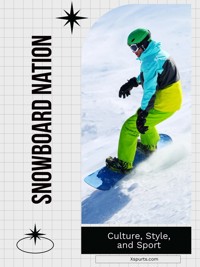
Snowboard Nation
Culture, Style, and Sport
Tavin D. Spicer
Created by Xspurts.com
All rights reserved.
Copyright © 2005 onwards .
By reading this book, you agree to the below Terms and Conditions.
Xspurts.com retains all rights to these products.
No part of this book may be reproduced in any form, by photostat, microfilm, xerography, or any other means, or incorporated into any information retrieval system, electronic or mechanical, without the written permission of Xspurts.com; exceptions are made for brief excerpts used in published reviews.
This publication is designed to provide accurate and authoritative information with regard to the subject matter covered but is for entertainment purposes only. It is sold with the understanding that the publisher is not engaged in rendering legal, accounting, health, relationship or any other professional / personal advice. If legal advice or other expert assistance is required, the services of a competent professional should be sought.
While the publisher and author have used their best efforts in preparing this book, they make no representations or warranties with respect to the accuracy or completeness of the contents of this book and specifically disclaim any implied warranties of merchantability or fitness for a particular purpose. No warranty may be created or extended by sales representatives or written sales materials. The advice and strategies contained herein may not be suitable for your situation. You should consult with a professional when appropriate. Neither the publisher nor the author shall be liable for any loss of profit or any other commercial damages, including but not limited to special, incidental, consequential, personal, or other damages.All trademarks remain the property of their respective owners.
A New Zealand Designed Product
Get A Free Book At: https://free.xspurts.com
Other Versions Available
Whylimityourselfto just one format?
This book is now available in physical, digital, and audiobook options.
Choose the way you love to read and dive into the story today. You won’t regret it!
Digital ISBN:9781779770028Physical ISBN:9781779772268Audio ISBN:
To obtain a different format of this book at a discounted price, please get in touch with us at:
http://isbn.xspurts.com/
Contents
Have Questions / Comments?
This book was designed to cover as much information as possible, but I know I have probably missed something, or some new amazing discovery has just come out.
If you notice something missing or have a question that I failed to answer, please get in touch and let me know. If I can, I will email you an answer and also update the book so others can also benefit from it.
Thanks For Being Awesome :)
Submit Your Questions / Comments At:
https://questions.xspurts.com
Get Free Stuff
Welovewritingand have produced a huge number of books.
For being one of our amazing readers, we would love to offer you more books we have created, 100% free.
To claim this limited time special offer, simply go to the site below and enter your name and email address.
You will then receive loads (as we love our readers so much :) of our great books, content and audio direct to your email account, 100% free!
Get Loads of FREE Stuff at:
https://free.xspurts.com
Snowboarding: An Origin Story
Snowboarding:AnOriginStory
Snowboarding, a thrilling and dynamic winter sport, has captivated the hearts of riders around the world. The sport's roots trace back to the 1960s and 1970s when a group of adventurous individuals sought to create a new way to glide down snowy slopes. This essay delves into the intriguing origin story of snowboarding, exploring its humble beginnings, pioneers, and the evolution that transformed it into the popular sport we know today.
The Early Innovators:
In the 1960s, several innovators began experimenting with ways to ride down snowy hills on a single board. Sherman Poppen, an engineer from Michigan, is often credited with inventing the first commercial snowboard in 196He called it the "Snurfer," a combination of "snow" and "surfing." The Snurfer featured a single board with a rope attached to the front for stability and control.
Jake Burton and the Modern Snowboard:
One of the most influential figures in snowboarding's history is Jake Burton Carpenter. In the late 1970s, Jake Burton, a Vermont native, started developing a snowboard that incorporated bindings to secure the rider's feet. This innovation allowed for greater control and maneuverability. In 1977, Burton founded Burton Snowboards, a company that would play a pivotal role in the growth of the sport.
The First Competitions:
The early 1980s marked the emergence of organized snowboarding competitions. In 1982, the National Snowboarding Championships were held in the United States, bringing together riders from across the country. This event laid the foundation for the competitive aspect of snowboarding, which would later lead to its inclusion in the Winter Olympics.
Snowboarding's Evolution:
Throughout the 1980s and 1990s, snowboarding continued to evolve rapidly. Manufacturers developed specialized snowboards for different disciplines, including alpine, freestyle, and halfpipe. Riders began pushing the boundaries of what was possible, performing tricks and maneuvers that captivated audiences and pushed the sport's progression.
Olympic Recognition:
One of the most significant milestones in snowboarding's history was its inclusion in the Winter Olympics. Snowboarding made its Olympic debut at the Nagano Games in 1998, featuring both halfpipe and giant slalom events. This recognition on the world stage elevated snowboarding's status as a legitimate winter sport.
The Snowboarding Culture:
Beyond its technical aspects, snowboarding has developed a vibrant and distinct culture. Riders often embrace a laid-back, rebellious spirit, celebrating individuality and creativity. The sport's culture encompasses music, fashion, art, and a sense of community that resonates with many enthusiasts.
Sustainability and Eco-Consciousness:
In recent years, there has been a growing emphasis on sustainability and environmental responsibility within the snowboarding community. Recognizing the impact of climate change on snow conditions, many riders and organizations are taking steps to reduce their carbon footprint and raise awareness about environmental issues.
Diversity and Inclusivity:
The snowboarding community has also been working to promote diversity and inclusivity. Efforts are being made to ensure that snowboarding is accessible to individuals of all backgrounds, genders, and abilities. Organizations and initiatives are striving to break down barriers and make the sport more welcoming to everyone.
In conclusion, the origin story of snowboarding is a fascinating journey of innovation, determination, and the pursuit of adventure. From the early days of makeshift boards and backyard experiments to its recognition on the world stage at the Olympics, snowboarding has come a long way. It has evolved not only as a sport but as a culture that celebrates creativity, individuality, and a deep connection to the mountains. As snowboarding continues to grow and adapt, it remains a symbol of the human desire to conquer new challenges and experience the joy of riding down snow-covered slopes.
The Surf-to-Snow Transition
TheSurf-to-SnowTransition:How Surf Culture Influenced Snowboarding
Surfing and snowboarding may seem like distinct sports, with one taking place on the ocean waves and the other on snow-covered mountains. However, there's a fascinating connection between the two that goes beyond their surface differences. This essay explores the surf-to-snow transition, examining how surf culture influenced the development and style of snowboarding.
A Shared Spirit of Adventure:
Surfers and snowboarders share a common spirit of adventure and a love for the natural world. Both sports are deeply rooted in a connection to the elements – water for surfers and snow for snowboarders. This shared appreciation for nature has contributed to the cross-pollination of ideas and techniques between the two communities.
The Pioneers of Surf-Inspired Snowboarding:
In the early days of snowboarding, many of the sport's pioneers were surfers looking for a way to ride waves of a different kind. Surfers like Tom Sims and Jake Burton brought their wave-riding expertise to the snowy slopes. They adapted surfboard shapes and riding styles to create the first snowboards, emphasizing the importance of balance and fluidity on the mountain.
Board Design and Shape:
One of the most significant ways surf culture influenced snowboarding is in board design and shape. Early snowboards borrowed heavily from surfboards, with their wide noses and narrow tails. These designs allowed for better floatation in deep snow and smoother carving, much like riding a wave. Over time, snowboard designers further refined these shapes, resulting in boards optimized for various snow conditions and riding styles.
Fluidity of Movement:
Surfing is known for its graceful and fluid movements, and these qualities found their way into snowboarding. Surfers often emphasize riding the "face" of a wave, and snowboarders adopted a similar approach by riding the fall line of a slope. This emphasis on flow and carving became integral to the sport's identity, leading to the development of the halfpipe and freestyle disciplines.
The Surfer Style:
Surf culture has also influenced the fashion and style of snowboarding. The laid-back, casual attire associated with surfers made its way to the mountain. Baggy pants, beanies, and oversized jackets became signature snowboarding fashion, reflecting the sport's rebellious and carefree attitude.
Music and Art:
Music and art are other aspects of surf culture that have had a significant impact on snowboarding. Both communities share a love for music genres like punk, reggae, and alternative rock. Artistic expression, from board graphics to snowboard film production, draws inspiration from surf culture's creative and countercultural roots.
The Rise of Board Sports:
Surfing and snowboarding are part of a broader trend of board sports gaining popularity. Skateboarding, wakeboarding, and kiteboarding, among others, have all benefited from the cross-pollination of ideas and techniques between surf and snowboard communities. These sports share a sense of freedom and connection with nature that continues to attract enthusiasts.
The Surfer-Snowboarder Connection:
Many individuals are drawn to both surfing and snowboarding, creating a community of "surfer-snowboarders." These enthusiasts split their time between riding waves and carving down mountains, embodying the synergy between the two sports. They often seek out locations where they can surf in the morning and snowboard in the afternoon, capitalizing on the opportunities both activities offer.
In conclusion, the surf-to-snow transition has had a profound influence on the development and culture of snowboarding. From board design and riding style to fashion and music, surf culture's spirit of adventure and creativity has left an indelible mark on the sport. As both surfing and snowboarding continue to evolve, they will likely remain intertwined, with enthusiasts cherishing the connections between these two exciting board sports.
Evolution of the Snowboard
TheEvolutionofthe Snowboard: From Planks to High-Tech Shredders
Snowboarding has come a long way since its humble beginnings in the 1960s. What started as a novel way to slide down snowy slopes has evolved into a dynamic and high-energy sport that captures the hearts of enthusiasts worldwide. This essay traces the evolution of the snowboard, from its early days as a rudimentary plank to the cutting-edge technology that shapes modern snowboards.
The Prototype Era:
The roots of snowboarding can be traced back to the 1960s when pioneers like Sherman Poppen and Tom Sims introduced rudimentary prototypes. Sherman Poppen's "Snurfer" resembled a simple wooden board with a rope for control. These early attempts at snowboards were inspired by surfing and skateboarding, with riders attempting to surf the snow-covered terrain.
The Transition to Single Boards:
In the 1970s, snowboarding began to take on a more recognizable form as single boards with bindings. Jake Burton Carpenter, often regarded as the father of modern snowboarding, played a pivotal role during this period. He introduced the first snowboard with bindings, improving control and maneuverability. The transition from the Snurfer to single boards marked a significant leap forward in the sport's development.
Advancements in Shape and Design:
Throughout the 1980s, snowboard designers experimented with various shapes and materials. They introduced wider noses, narrower tails, and asymmetrical designs to improve performance. Snowboard profiles evolved from traditional camber to rocker and hybrid profiles, offering riders different experiences on the mountain. These advancements in shape and design revolutionized the way snowboards handled in different snow conditions.
The Influence of Freestyle and Halfpipe:
Snowboarding's popularity skyrocketed in the 1990s, largely due to the emergence of freestyle and halfpipe riding. Riders like Shaun White and Terje Haakonsen pushed the boundaries of what could be done on a snowboard. This led to innovations in board shape, flex patterns, and materials to accommodate the demands of these high-flying disciplines.




