


Erhalten Sie Zugang zu diesem und mehr als 300000 Büchern ab EUR 5,99 monatlich.
- Herausgeber: Tilted Axis Press
- Kategorie: Gesellschafts- und Liebesromane
- Sprache: Englisch
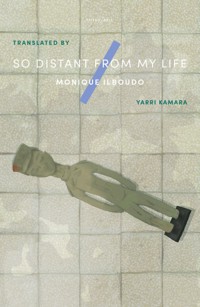
Jeanphi, a young man from the fictional West African city Ouabany, has one obsession that will determine the fate of his life – migration. He scrapes together money to take the illegal route across the Sahara, making it as far as Morocco before being repatriated. Increasingly desperate, Jeanphi meets an elegant French widower who for his part is despairing at the insurmountable bureaucratic hurdles for his charitable endeavour in Jeanphi's country. A window opens to opportunity – but it will also bring tragedy. Burkinabé author Monique Ilboudo's novel offers a compelling and complex portrait of migration, one of the defining global concerns of the twenty-first century, and a sharp critique of both the NGO-isation of African countries and the currents of shame that divide communities and families. Yarri Kamara has rendered Ilboudo's text in an idiom that conveys the sharp humour, lucid descriptions and urgency of the original.
Sie lesen das E-Book in den Legimi-Apps auf:
Seitenzahl: 165
Veröffentlichungsjahr: 2022
Das E-Book (TTS) können Sie hören im Abo „Legimi Premium” in Legimi-Apps auf:
Ähnliche



















So Distant From My Life
Title Page
Interior Title Page
Chapter 1
Chapter 2
Chapter 3
Chapter 4
Chapter 5
Chapter 6
Chapter 7
Chapter 8
Chapter 9
Chapter 10
Chapter 11
Chapter 12
Chapter 13
Epilogue
Copyright
About Tilted Axis Press
1
3
5
6
7
8
9
11
12
13
14
15
16
17
19
20
21
22
23
24
25
26
27
28
29
30
31
32
33
34
35
36
37
39
40
41
42
43
44
45
46
47
49
50
51
52
53
54
55
56
57
58
59
60
61
62
63
64
65
66
67
68
69
70
71
73
74
75
76
77
78
79
80
81
83
84
85
86
87
88
89
91
92
93
94
95
96
97
98
99
100
101
102
103
104
105
106
107
108
109
111
112
113
114
115
116
117
118
119
121
122
123
125
127
Guide
Cover
Table of Contents
Start of Content
SO DISTANT FROM MY LIFE
CHAPTER 1
When I awoke, timid rays of light had penetrated the room. My mind ran off as soon as I opened my eyes. I have always had a vagabond mind. That morning, it ran far, further than normal. It ran back in time, without my consent, leaping like a young goat released from its tether. Rather than fighting against this forced journey, I went along with it. For no reason, my thoughts stopped on that period when the obsession with emigration had taken over my life, my dreams, my desires, my very vision of the future.
My only desire then was to give myself a second chance. Leave. Go anywhere but here. Get far away from this life. Leave, live my dreams. Everybody has a right to that. What wrong had I done then? Our common quest is to try to live a better life. I sought to live better, a place to live better. Just a small corner on this vast earth where I, too, could blossom. To deter me, my uncle spoke to me about roots. A line of argument that I found absurd. Even plants are intelligent enough to grow around stones, seeking the best soil for their roots underground. My roots would grow wherever I found my happiness. That was my dream. Nothing more. They shattered it. I pieced it back together with what I could. Nothing is worse than resignation.
Yet, at the beginning, things had seemed off to a good start for a nice peaceful life where I was born. My parents didn’t even have to stay up all night to secure a spot for me at school. Attending the white man’s school had become the obvious choice for all; there were no longer other options. Like moths drawn to the neon lights of the growing city, our parents deserted the countryside in hordes. Once off the farm, the quest for new knowledge became a necessity. We definitively turned our focus on the science that unlocked doors to nice offices in Tangzugu, the hill where power was concentrated. Our parents dreamed of executive briefcases and diplomatic postings for their sons – for their daughters, it was still too early, that would come later. Everyone wanted to get in, but there were few schools and you had to get up very early to secure a place. Instead of spending a few sleepless hours tossing in their beds, parents would line up the night before registration opened and sleep under the starry sky of the school compound. A distant cousin, who was this little prince’s caretaker, had thus slept in front of my future classroom to make sure that I would secure a spot. Our house was situated about a kilometre from the school. My cousin Nongma was one of the first in the interminable queue.
So, you see, I had not been dealt the worst hand at the beginning. I’ll admit, I made some mistakes. Not in primary school where I was able to blend in with mediocrity. You know, the kind of pupil who is neither a whizz nor an outright dunce. The kind who slips through the cracks, forgotten. I passed my primary education certificate exams without much glory, certainly not well enough to open the doors to a public junior high school, where I could have continued my schooling free of charge. I messed up my entrance to junior high, the most unfair exam in the world, as I explained to my disappointed parents. My parents nonetheless decided to send me to one of the first private junior high schools that had just opened. The state had recently allowed entrepreneurs to invest in education, and schools sprung up like mushrooms. Were they to educate or to make profit? That was the question. And the answer, as is often the case, depended on the individual and how much faith they placed in humans or in capital.
My parents were not very rich. They registered me in an inexpensive school, the Lycée Privé de la Liberté, or LPL. For the uneducated founder of the lycée, the school was just another market in which to diversify his investments. The first friend I made at LPL was Manuel, may his soul rest in peace. Poor Manuel left us more than twenty years ago now. Like a lot of young people, Manuel thought death was an affair for the old. He was only seventeen at the time. Why would death steal from him his dazzling smile, his strapping form and the promise of long years to enjoy these things? The fateful day was the fifteenth of September. We were enjoying our last days of vacation before school opened again. Manuel had borrowed his cousin’s brand-new scooter and come to see me. He wanted me to accompany him to Bonheurville, a new neighbourhood on the outskirts of the city. From the bawdy tone he took on when he told me he had to deal with something urgent, I understood that there was a girl involved. Manuel was already a formidable skirt-chaser, and I would take advantage of his leftovers. The prospect of meeting someone new, especially while on his cousin’s hot new scooter, was tempting, and I accepted his request. At the last minute, however, I had a bad feeling and refused to get on behind Manuel for our planned expedition. I even tried to persuade him not to go, but he didn’t listen and took off with a deafening roar of the bike’s engine. I would only see his body again lifeless, flattened by a lorry, laid out on a stretcher when I rushed to the morgue as soon as I heard the terrible news. That was the day life turned its back on me. Or was it an amicable separation? In front of my friend’s unrecognizable body, I understood just how precarious life was and I decided immediately to grab whatever I could from it. School, the air-conditioned office and all the rest were too long and too complicated.
I started hanging out with a bad crowd and slowly went off the rails. The first few times I ran off, my father moved heaven and earth to find me and march me back home. But he soon tired of this, and I lived on the streets for three years. Only the love and patience of my mother saved me from becoming completely lost.
One day, for at least the hundredth time, she stopped by the abandoned compound where we squatted, and found me still sleeping, groggy from the excesses of the previous evening. With a simple look, no tears or admonishment, she won over three years of futile rebellion. She took me by the hand and brought me back to the family nest. She handed me over to Association Bassawarga – literally, Association ‘Has Left Misery’ – who administered shock therapy. Between prayers for deliverance, corporal punishments and methadone, they managed to drag my head out of the muddy waters of street drugs within two months. I tried to pull myself back together. Going back to school, as my father insisted, quickly proved a complete fiasco. I was already twenty years old. The oldest in the year 10 class I returned to was just sixteen. I only stayed for a week. I tried vocational classes, apprenticeships, internships, but it was too late. You rarely recover from three years of rootlessness and assorted abuses. I could try all I wanted, but the snare around me was too tight. I made my dreams smaller. No more office with air conditioning or even a fan. I was ready to work hard under the burning sun, but nobody wanted the force of my young, vigorous negro arms. Nobody wanted to offer a reasonable price. The vigour of negro arms had been on sale for far too long. Discounted since the colonial days of forced labour, and even before then, since the days of slavery; never put back on the top shelf. Neither did anybody want the little know-how I had as a poorly educated African.
And so, I had to use trickery. And life doesn’t like that. Generally, it tricks you right back, and harder. We had a tacit agreement. Life would open the world to me and I would pay in cash. Life is hardnosed in business. I paid a high price, very high.
CHAPTER 2
Shame doesn’t kill. We would know if it did. And yet, they say he died of shame. When I opened my email yesterday I had at first jumped with joy. An email from Marité after such a long silence. She was the only link I had kept with my earlier life. My younger sister gave me her unconditional love. I knew that my leaving caused her great suffering, yet she never reproached me in the slightest, neither for leaving nor for my life choices. She was the one who gave me news from home every once in a while. On rare occasions, she let me exchange a few words with my mother. That only happened when my mother was able to escape the vigilant eye of her husband and visit Marité. The two conditions necessary for our brief conversations were then in place: an internet connection and distance from my father. For some weeks, I’d had no news from my sister, since she was travelling in remote regions not connected to the worldwide web. I jumped with joy when I saw her email with the subject ‘News’. She should’ve written ‘Bad News’, as I understood from her first sentence: ‘Papa is gone.’ She lay out everything. The sudden death without any apparent cause. The unanimous diagnosis: ‘Died from shame.’
My father was gone, and they say he died of shame. What did they know? Had they done an autopsy? Which organ did shame attack? The heart, the liver or the kidneys? My father was dead and I was not there to bury him.
My father and I had become strangers to each other. I had tried to talk to him, going through my mother, my sister or some compliant visitor whom I would call to pass the phone to my father without success. Toward the end, when news of my betrayal was confirmed, he uttered the ritual words of banishment. Until then, he had given me the benefit of the doubt. He had continued to go the neighbourhood savings and loans union to withdraw the money I sent by rapid transfer. I wasn’t yet married, and he gave little weight to the gossip lashed by sharp tongues. ‘Jealous people!’ thundered my father in his stentorian voice when I called. ‘My son, follow your path. I am telling you this. Your old man has faith in you. Let them braaay!!’ he concluded, stretching out this last word in his inimitable fashion. I never had the courage to tell him he was wrong.
*
My father was the most open man in the world with his booming laugh, his kind air that put people at ease from the first contact. Sometimes he pretended to be angry, rolling his big eyes and serving us with specialities from the south of France, war souvenirs spiced with war-veteran French: Patisangana! Partie sanglante when a situation was particularly difficult, Bougdandouille for Bougre d’andouille to call someone a sausage bugger, or the ultimate insult Estatue de Marseille-là, indicating that the insulted was as frozen as a Marseilles statue!
But when my father closed up, nothing and nobody could soften him. Neither the furtive and contrite glances from my mother, ready to apologize for whatever she had committed or omitted, nor our sad or scared faces, which normally would’ve opened his protective arms.
My father was a war veteran. As a son of the village chief, he could have avoided conscription. Several chiefs had hidden their own sons and offered the colonists the progeny of their subjects as cannon fodder, some even sending cripples to meet the quotas demanded by the colonial administration. Perhaps my grandfather had been tempted to do this, but his two sons left him little choice in the matter. They were just kids, seventeen and fifteen, but they already had well-determined characters. Towering and formidable hunters, they couldn’t imagine for one second remaining seated while the other young men of the village went off to war, even if it was someone else’s war. They both signed up, to the great despair of my grandfather, who feared that his succession would be vacated for lack of a male descendant. Luckily, they came back from this war of ‘Jamani’ and from the other fronts where they were sent for even less legitimate battles. My uncle was sent to Indochina and my father found himself in Algeria combatting former comrades who were now fighting for their independence. My uncle, the eldest, succeeded my grandfather a few years later. After a long while, my father, who had continued gallivanting around the world on his own, came back to his home country and settled in the city.
The two tirailleurs, who had left as Tanga and Tambi, came back with new names acquired on the baptismal fronts of Marseilles and Fréjus. Tanga, my uncle, chose the name Joanny, and my father Raphael. Tambi Raphael was almost forty years old when he came home. ‘What a handsome man,’ people would say of him. He was tall and svelte. True, the features of his face were not all regular: the wings of his nose were further forward than the tip, and the globes of his eyes protruded, but his fleshy lips had undeniable charm, particularly when they opened on his white and impeccably aligned teeth. Moreover, Raphael was always elegantly dressed and rarely took off his black Panama hat, which hid the beginning of a bald spot. Finding a spouse seemed to him the most sensible and the most urgent thing to do, and he undertook a methodical search for the lucky lady. He wanted a love marriage with a distinguished woman, and was satisfied beyond his expectations. A former regiment mate introduced Raphael to his cousin, who was the perfect candidate. Simone was twenty-five years old. She was born into a family that had converted to Catholicism very early on, which opened doors for her at the Catholic School of St Francis of Sales. While she did not study beyond fourth grade, this schooling bestowed her with a prestige that many women of her generation envied. She wasn’t very tall but held herself nobly. Plus, she liked to wear heels and knew better than anyone else how to tie her silk headwraps high up, thus gaining a few precious centimetres. A first boyfriend had induced her to abandon school, only for the relationship to end. Simone then considered becoming a nun. She’d even started her noviciate, but was expelled when the convent’s mother superior got wind of her aborted engagement from ill-intentioned gossips who also made insinuations about the novice’s purity. Simone was forced to renounce her new vocation. Marité and I are eternally grateful for that. Such goes life, as Passektaalé the anonymous would say. Simone had just left the convent when she met Tambi Raphael. They married and settled in town, turning down an invitation from Joanny, who wished to have them close to him in the village. My father always said he’d made this choice for his Simone, who was ‘born two inches from the city cathedral’ and would not have managed the rigours of village life. It was clear that he wouldn’t have relished a return to the countryside either. How could he have given up the daily 11:30 a.m. drink with his friends at Le Trou, the bar that served as their headquarters for reshaping the world, or his Saturday afternoon boules game, to mention just two activities that formed the rhythm of his life in the city. He was not sure that these city habits would have found a place in the village, and thus, the couple settled in the city.
*
We lived in Tangzugu, before the neighbourhood’s inhabitants were evicted and resettled in the southern part of the city that was under construction. Despite Tangzugu meaning ‘on the hill’, you couldn’t really call it a hill. Our city is so flat, and the colonizer found nothing other than this elevation on which to build the governor’s palace. All around the palace, pretty houses, all of them painted white or in the local red stone, made up the European quarter, which became an administrative quarter after independence. The native Tangzugu quarter started beyond this prestigious circle and our house was on its limits. Rather unusually, our house, along with a dozen other houses, found itself in a sort of Bermuda triangle – not a dangerous one, but no less mysterious. The inhabitants of the triangle, my parents included, aspired to a social emancipation that wasn’t always within their financial means. My father hadn’t found a job both prestigious enough for his rank and unskilled enough for his lack of degrees. A blood prince who had lived in France could not be satisfied with a job as an office boy. Yet the only thing the public service offered him was to be an office minion whom everyone could call on to do this or that errand or to make one or the other delivery depending on their whims. My mother had to set up a tailoring shop in the front yard of the house. As her shop faced the prestigious side of the road, she sometimes had lady clients from high circles who crossed over to get adjustments made or dresses stitched for their little girls. My mother’s tailoring business flourished for a while, and her income supplemented my father’s pension, ensuring us a worry-free childhood.




