


181,99 €
Mehr erfahren.
- Herausgeber: John Wiley & Sons
- Kategorie: Wissenschaft und neue Technologien
- Sprache: Englisch
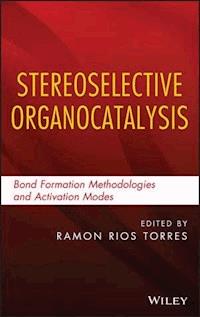
Sets forth an important group of environmentally friendly organic reactions With contributions from leading international experts in organic synthesis, this book presents all the most important methodologies for stereoselective organocatalysis, fully examining both the activation mode as well as the type of bond formed. Clear explanations guide researchers through all the most important methods used to form key chemical bonds, including carbon-carbon (C-C), carbon-nitrogen (C-N), and carbon-halogen (C-X) bonds. Moreover, readers will discover how the use of non-metallic catalysts facilitates a broad range of important reactions that are environmentally friendly and fully meet the standards of green chemistry. Stereoselective Organocatalysis begins with an historical overview and a review of activation modes in asymmetric organocatalysis. The next group of chapters is organized by bond type, making it easy to find bonds according to their applications. The first of these chapters takes a detailed look at the many routes to C-C bond formation. Next, the book covers: * Organocatalytic C-N bond formation * C-O bond formation * C-X bond formation * C-S, C-Se, and C-B bond formation * Enantioselective organocatalytic reductions * Cascade reactions forming both C-C bonds and C-heteroatom bonds The final chapter is devoted to the use of organocatalysis for the synthesis of natural products. All the chapters in the book are extensively referenced, serving as a gateway to the growing body of original research reports and reviews in the field. Based on the most recent findings and practices in organic synthesis, Stereoselective Organocatalysis equips synthetic chemists with a group of organocatalytic reactions that will help them design green reactions and overcome many challenges in organic synthesis.
Sie lesen das E-Book in den Legimi-Apps auf:
Seitenzahl: 853
Veröffentlichungsjahr: 2013
Ähnliche


















Contents
Cover
Title Page
Copyright
Preface
Contributors
Chapter 1: Introduction: A Historical Point of View
References
Chapter 2: Activation Modes in Asymmetric Organocatalysis
2.1 Introduction
2.2 Covalent Organocatalysis
2.3 Noncovalent Organocatalysis
Note Added in Proof
Acknowledgments
References
Chapter 3: C–C Bond Formation by Aldol Reaction
3.1 Introduction
3.2 Intramolecular Aldol Reactions
3.3 Ketones as Donors
3.4 Aldehydes as Donors: Cross–Aldol Reaction
3.5 Ketone–Ketone
3.6 Other Catalysts
3.7 Brønsted Acid-Catalyzed Asymmetric Aldol Reaction
3.8 Conclusions
References
Chapter 4: Examples of Metal-Free Direct Catalytic Asymmetric Mannich-Type Reactions Using Aminocatalysis
4.1 Introduction
4.2 Metal-Free Catalysis
4.3 Conclusion
References and Notes
Chapter 5: C–C Bond Formation by Michael Reaction
5.1 Introduction
5.2 Simple Substrates
5.3 Special Scaffold
5.4 New Approach
5.5 Miscellaneous
5.6 Conclusion
References
Chapter 6: C–C Bond Formation by Diels–Alder and Other Pericyclic Reactions
6.1 Introduction
6.2 Diels–alder Reactions
6.3 Hetero-Diels–alder Reactions
6.4 [3+2] Cycloaddition Reactions
6.5 [2+2] Cycloaddition Reactions
6.6 Electrocyclizations
6.7 Sigmatropic Reactions
6.8 Ene Reactions
6.9 Outlook
References
Chapter 7: N-Heterocyclic Carbene-Catalyzed C–C Bond Formation
7.1 Introduction
7.2 Benzoin Condensation of Aldehydes
7.3 Stetter Reaction of Aldehydes
7.4 Cross-Coupling Reactions of Aldehydes With Activated Halides
7.5 Reaction of Silylated Reagents
7.6 Rearrangement of Enol Esters
7.7 Reactions of Michael Acceptors
7.8 Michael Additions
7.9 Extended Umpolung of Functionalized Aldehydes
7.10 Formal Cycloadditions of Ketenes
7.11 Conclusions and Outlook
Acknowledgments
References
Chapter 8: α-Alkylation of Carbonyl Compounds
8.1 Phase-Transfer Catalysis
8.2 Aminocatalysis
8.3 Bifunctional and Brønsted Acid Catalysis
8.4 Conclusion
Acknowledgments
References
Chapter 9: Other Reactions for C–C Bond Formation
9.1 Friedel–Crafts Alkylation Reactions
9.2 Enantioselective Baylis–hillman Reactions
9.3 Organocatalytic Asymmetric Transformations of Baylis–hillman Carbonate
References
Chapter 10: Cascade Reactions Forming C–C Bonds
10.1 Introduction
10.2 Intramolecular C–C-Bond-Forming Cascade Reactions
10.3 Two-Component C–C-Bond-Forming Organocascade Reactions
10.4 Multicomponent Reactions
10.5 Conclusion
References
Chapter 11: Organocatalytic C–N Bond Formation
11.1 Introduction
11.2 Electrophilic Amination
11.3 Aza-Michael Reaction
11.4 Allylic Amination
11.5 Cycloaddition Reactions
11.6 Aziridination Reactions
11.7 Miscellaneous
References
Chapter 12: C–O Bond Formation
12.1 Introduction
12.2 α-Hydroxylation Reactions
12.3 β-Hydroxylation Reactions
12.4 Asymmetric Epoxidation of Olefins
12.5 Asymmetric Epoxidation of Electron-Deficient Olefins
12.6 Miscellaneous Hydroxylation Reactions
References
Chapter 13: Carbon–Halogen Bond Formation
13.1 Introduction
13.2 Fluorine
13.3 Chlorine
13.4 Bromine
13.5 Iodine
13.6 Cascade Reactions
13.7 Conclusion
References
Chapter 14: C–Other Atom Bond Formation (S, Se, B)
14.1 Introduction
14.2 Conjugate Additions of Sulfur and Selenium Nucleophiles
14.3 Conjugate Additions of Boron Nucleophiles
14.4 α-Sulfenylation of Carbonyl Compounds
14.5 α-Sulfenylation of β-Dicarbonyl Compounds
14.6 α-Selenylation of Carbonyl Compounds
14.7 Desymmetrization of Aziridines with Sulfur and Selenium Reagents
14.8 Oxysulfenylation and Oxyselenylation of Alkenes
14.9 Miscellaneous
References
Chapter 15: Enantioselective Organocatalytic Reductions
15.1 Introduction
15.2 Catalytic Hydrogenation With Frustrated Lewis Pairs
15.3 Enantioselective Reductions Promoted by Trichlorosilane
15.4 Enantioselective Reductions Promoted by Chiral Phosphoric Acids
15.5 Outlook And Perspectives
References
Chapter 16: Cascade Reactions Forming Both C–C Bond and C–Heteroatom Bond
16.1 Introduction
16.2 Cascades Initiated by A C–C Bond Formation
16.3 Cascades Initiated by A C–Heteroatom Bond Formation
16.4 Conclusions
References
Chapter 17: Organocatalysis in the Synthesis of Natural Products
17.1 Introduction
17.2 Enamine Catalysis
17.3 Iminium Catalysis
17.4 Somo Catalysis
17.5 Brønsted Acid Catalysis
17.6 Hydrogen Bond Catalysis
17.7 Brønsted and Lewis Base Catalysis—Bifunctional Catalysis
17.8 Phase-Transfer Catalysis
17.9 Carbene Catalysis
17.10 Organocascade Catalysis
17.11 Conclusions
References
Index
Copyright © 2013 by John Wiley & Sons, Inc. All rights reserved.
Published by John Wiley & Sons, Inc., Hoboken, New Jersey.
Published simultaneously in Canada.
No part of this publication may be reproduced, stored in a retrieval system, or transmitted in any form or by any means, electronic, mechanical, photocopying, recording, scanning, or otherwise, except as permitted under Section 107 or 108 of the 1976 United States Copyright Act, without either the prior written permission of the Publisher, or authorization through payment of the appropriate per-copy fee to the Copyright Clearance Center, Inc., 222 Rosewood Drive, Danvers, MA 01923, (978) 750–8400, fax (978) 750–4470, or on the web at www.copyright.com. Requests to the Publisher for permission should be addressed to the Permissions Department, John Wiley & Sons, Inc., 111 River Street, Hoboken, NJ 07030, (201) 748–6011, fax (201) 748–6008, or online at http://www.wiley.com/go/permission.
Limit of Liability/Disclaimer of Warranty: While the publisher and author have used their best efforts in preparing this book, they make no representations or warranties with respect to the accuracy or completeness of the contents of this book and specifically disclaim any implied warranties of merchantability or fitness for a particular purpose. No warranty may be created or extended by sales representatives or written sales materials. The advice and strategies contained herein may not be suitable for your situation. You should consult with a professional where appropriate. Neither the publisher nor author shall be liable for any loss of profit or any other commercial damages, including but not limited to special, incidental, consequential, or other damages.
For general information on our other products and services or for technical support, please contact our Customer Care Department within the United States at (800) 762–2974, outside the United States at (317) 572–3993 or fax (317) 572–4002.
Wiley also publishes its books in a variety of electronic formats. Some content that appears in print may not be available in electronic formats. For more information about Wiley products, visit our web site at www.wiley.com.
Library of Congress Cataloging-in-Publication Data:
Stereoselective organocatalysis : bond formation methodologies and activation modes / edited by Ramon Rios Torres, University of Southampton, Southampton, United Kingdom.
pages cm
Includes bibliographical references and index.
ISBN 978-1-118-20353-8 (hardback)
1. Catalysis. 2.Chemistry, Organic. 3. Stereochemistry. I. Rios Torres, Ramon, editor of compilation.
QD505.S74 2013
547′.215–dc23
2012050059
Preface
Imagination is more important than knowledge.
—Albert Einstein
This book is intended to provide an overview of organocatalysis from its “renaissance” in 2000 until now, and it focuses on the nature of the bond built rather than on the mode of activation.
The chapters included in the present book deal with the nature of the bond formed by organocatalytic methodologies, ranging from C–C to C–heteroatom, and from the original aldol reaction to the highly enantioselective organocascades that improve reaction outcomes.
It was a pleasure to be the editor of this compendium, since it provided me with the opportunity to survey the field of organocatalysis and to honor the work of so many fine chemists.
I would like to thank all the distinguished scientists and their co-authors for their rewarding and timely contributions. I acknowledge the great work done by the Wiley editorial staff—in particular that of Jonathan Rose, whose help was invaluable.
I also want to thank Professors G. C. Fu, P. Walsh, B. List, and A. Cordóva, who introduced me to the world of chemistry. Particularly, I want to express my deep gratitude to Professors List and Cordóva, who gave me the opportunity to start my work in organocatalysis. They introduce me to that world and guided my first steps; thanks to them I picked up not only knowledge about organocatalysis but also their love for it.
Finally, I want to thank my parents for all their support and help. Without them I could never have carried out this project.
Ramon Rios Torres
Southampton
January 2013
Contributors
José Alemán, Departamento de Quimica Organica (C-I), Universidad Autonoma de Madrid, Cantoblanco, 28049 Madrid, Spain
Maurizio Benaglia, Dipartimento di Chimica Organica e Industriale, Universita degli Studi di Milano, 20133 Milano, Italy
Damien Bonne, Aix-Marseille Universite, iSm2, UMR CNRS 6263, Centre St. Jerome, service 531, 13397 Marseille Cedex 20, France
Martina Bonsignore, Dipartimento di Chimica Organica e Industriale, Universita degli Studi di Milano, 20133 Milano, Italy
Stacey E. Brenner-Moyer, Department of Chemistry, Brooklyn College and the City University of New York, 2900 Bedford Avenue, Brooklyn, New York 11210, United States
Xiang-Yu Chen, Institute of Chemsitry, CAS, Beijing, 100190, China
Xavier Companyó, Universitat de Barcelona, Martí i Franquès 1-11, Barcelona 08028, Spain
Thierry Constantieux, Aix-Marseille Universite, iSm2, UMR CNRS 6263, Centre St. Jerome, service 531, 13397 Marseille Cedex 20, France
Yoann Coquerel, Aix-Marseille Universite, iSm2, UMR CNRS 6263, Centre St. Jerome, service 531, 13397 Marseille Cedex 20, France
Armando Córdova, Department of Organic Chemistry, The Arrhenius Laboratory, Stockholm University, 106 91 Stockholm, Sweden; and Department of Natural Sciences, Engineering and Mathematics, Mid Sweden University, SE-851 70 Sundsvall, Sweden
Giorgio Della Sala, Dipartimento di Chimica, Universita di Salerno, 84084, Fisciano, Italy
Jorge Esteban, Universitat de Barcelona, Martí i Franquès 1-11, Barcelona 08028, Spain
Johan Franzén, Royal Institute of Technology (KTH), Department of Chemistry, Organic Chemistry, S-100 44, Stockholm, Sweden
Andrea Genoni, Dipartimento di Chimica Organica e Industriale, Universita degli Studi di Milano, 20133 Milano, Italy
Dorota Gryko, Institute of Organic Chemistry, Polish Academy of Sciences, Kasprzaka 44/52, 01-224 Warsaw, Poland
Yi-Xia Jia, College of Chemical Engineering and Materials Science, Zhejiang University of Technology, Hangzhou, China
Xuefeng Jiang, Shanghai Key Laboratory of Green Chemistry and Chemical Process, East China Normal University, Shanghai, 200062, People's Republic of China
Aitor Landa, Departamento de Química Orgánica I, Facultad de Química, Universidad del País Vasco, UPV/EHU, Paseo Manuel Lardizabal, 3, 20018, San Sebastián, Spain
Alessandra Lattanzi, Dipartimento di Chimica, Universita di Salerno, 84084, Fisciano, Italy
Rosa López, Departamento de Química Orgánica I Facultad de Química, Universidad del País Vasco, UPV/EHU, 20018, San Sebastián, Spain
Antonia Mielgo, Departamento de Química Orgánica I, Facultad de Química, Universidad del País Vasco, UPV/EHU, 20018, San Sebastián, Spain
Albert Moyano, Universitat de Barcelona, Martí i Franquès 1-11, Barcelona 08028, Spain
Mikel Oiarbide, Departamento de Química Orgánica I, Facultad de Química, Universidad del País Vasco, UPV/EHU, 20018, San Sebastián, Spain
Claudio Palomo, Departamento de Química Orgánica I, Facultad de Química, Universidad del País Vasco, UPV/EHU, 20018, San Sebastián, Spain
Marek Remeš, Charles University in Prague, Hlavova 2030, Prague 12840, Czech Republic
Ramon Rios, University of Southampton, Highfield Campus, SO17 1BJ Southampton, United Kingdom
Jean Rodriguez, Aix-Marseille Universite, iSm2, UMR CNRS 6263, Centre St. Jerome, service 531, 13397 Marseille Cedex 20, France
Mariola Tortosa, Departamento de Quimica Organica (C-I), Universidad Autonoma de Madrid, Cantoblanco, 28049 Madrid, Spain
Jan Veselý, Charles University in Prague, Hlavova 2030, Prague 12840, Czech Republic
Dominika Walaszek, Institute of Organic Chemistry, Polish Academy of Sciences, Kasprzaka 44/52, 01-224 Warsaw, Poland
Wei Wang, State Key Laboratory of Applied Organic Chemistry, Lanzhou University, Lanzhou, Gansu 730000, People's Republic of China
Song Ye, Institute of Chemsitry, CAS, # 2 Zhongguancun Beiyi St., Beijing, 100190, China
Yongcheng Ying, Shanghai Key Laboratory of Green Chemistry and Chemical Process, East China Normal University, Shanghai, 200062, People's Republic of China
Tiexin Zhang, College of Chemical Engineering and Materials Science, Zhejiang University of Technology, Hangzhou, China
Yong Zhang, State Key Laboratory of Applied Organic Chemistry, Lanzhou University, Lanzhou, Gansu 730000, People's Republic of China
Chapter 1
Introduction: A Historical Point of View
Organocatalysis is commonly accepted as the use of small organic molecules to catalyze organic transformations. The term “organocatalysis” was coined by David W. C. MacMillan at the beginning of the twenty-first century and was the starting line for breathtaking progress in this area over the last decade. During recent years, this area has grown into one of the three pillars of asymmetric catalysis, complementing and sometimes improving bio- and metal catalysis. The rapid growth in this area can be easily explained: The field offers several advantages to researchers in academia and industry, such as (a) easy and low-cost reactions and (b) reactions that are insensitive to air or moisture (unlike organometallic chemistry). Furthermore, the small chiral organic molecules used as catalysts can be often be derived from nature; thus, they are accessible and inexpensive to prepare, and often the processes are environmentally friendly. Moreover, the need in industrial large-scale production for removal of impurities related to toxic metal catalysts from the waste stream, which has a huge financial impact, could be avoided with the use of organocatalysts; this has made the field very interesting from the industrial point of view.
The renaissance of organocatalysis was at the beginning of the twenty-first century, but the origins of small organic molecules acting as catalysts can be traced back to the earliest works of Emil Knoevenagel [1]. In these works, Knoevenagel studied the use of primary and secondary amines, as well as their salts as catalysts for the aldol condensation of β-ketoesters or malonates with aldehydes or ketones. Knoevenagel also suggested the same intermediates that Westheimer later proposed in his retro-aldolization studies. Another key development in the history of organocatalysis was the work of Dakin in 1910 regarding the catalytic activity of primary amino acids in the Knoevenagel reaction [2]. Twenty years later, Kuhn and Hoffer found secondary amines that catalyzed not only the Knoevenagel reaction but also the aldol reactions between aldehydes [3].
Another important highlight in organocatalysis was developed by Bredig, who reported the addition of HCN to benzaldehyde in the presence of cinchona alkaloids as catalysts to obtain mandelonitrile with less than 10% ee. However, the importance of this reaction is, from a conceptual point of view, groundbreaking (Scheme 1.1) [4].
Scheme 1.1 Hydrocyanation reported by Bredig in 1913.
Following the earliest works of Bredig, Pracejus developed the first reactions with good levels of enantioselectivity. Pracejus reported the addition of methanol to methyl phenyl ketene catalyzed by O-acetyl quinine (Scheme 1.2) [5].
Scheme 1.2 Addition of methanol to ketenes reported by Pracejus.
Later, Fisher and Marshall used primary amino acids to catalyze aldol and condensation reactions of acetaldehyde [6]. Following these inspiring results, in 1936 Kuhn discovered that carboxylic acid salts of amines effectively catalyze the aldol reaction [7]. Piperidinium acetate was used by Langenbeck and Sauerbier in their studies on the catalytic hydration of crotonaldehyde [8]. Interestingly, Langenbeck suggested a Kuhn–Knoevenagel-type covalent catalysis mechanism and introduced secondary amino acids (sarcosine) as catalysts for aldolization. An important contribution to the field of organocatalysis was made by G. Stork with his work on enamine chemistry. Most of the subsequent work in organocatalysis was first conducted by Stork's research group with preformed enamines (Scheme 1.3) [9]. These studies and findings arguably led to one of the most important highlights in organocatalysis: the Hajos–Parrish–Eder–Sauer–Wiechert reaction.
Scheme 1.3 Reactions developed by Stork with preformed enamines.
As stated above, the studies of Wieland and Miescher, as well as Woodward, on the intramolecular aldol reaction of diketones and dialdehydes were encouraged by this previous work. Wieland, Miescher, and Woodward studied the application of the intramolecular aldol reaction, catalyzed by secondary amine salts, to the synthesis of steroids and believed that their aldolizations proceed via enamine intermediates [10]. This was corroborated by the mechanistic studies carried out by Spencer in 1965 [11]. Based on these works, Hajos and Parrish (1974) and Eder, Sauer, and Wiechert (1971) independently developed the first asymmetric, amine-catalyzed aldolization [12]. They choose proline as a catalyst based on previous work that showed the viability of amino acids as catalysts for aldol reactions (Scheme 1.4). However, neither of these groups proposed the enamine mechanism for the reaction.
Scheme 1.4 Reaction of Hajos and Parrish in 1974.
Woodward probably conducted the most outstanding work on iminium catalysis before its rebirth in 2000. In this work, Woodward applied proline catalysis in a triple organocascade reaction consisting of a deracemization (via a retro-Michael, Michael addition) and an intramolecular aldol reaction that determine the stereochemical outcome of the reaction (Scheme 1.5), leading to the synthesis of erythromycin [13].
Scheme 1.5 Key step for Woodward's synthesis of erythromycin.
Based on Pracejus's previous work with cinchona alkaloids, Bergson and Langstrom developed the Michael addition of β-ketoesters to acrolein catalyzed by 2-(hydroxymethyl)quinuclidine. Soon after, Wynberg developed several organocatalytic reactions using cinchona alkaloids as chiral Lewis base/nucleophilic catalysts [14].
During the period between the late 1970s and early 1980s, a large number of reactions that proceeded via ionic pairs were developed. Inoue conducted remarkable work on the use of chiral diketopiperazines as chiral Brønsted acids in the hydrocyanation of aldehydes [15]. The mechanism of this reaction, which exhibits high levels of autocatalysis, remains elusive despite the work of Schvo that suggests the presence of two molecules of the catalyst in the transition state [16]. This early work is the first example illustrating that a simple peptide-based catalyst could perform asymmetric transformations and was probably the source of inspiration of the later works of Lipton, Jacobsen, and Miller [17].
Another important fact was reported in the 1980s; Agami and co-workers studied the application of proline in an enolendo aldolization reaction. Their mechanistic studies showed nonlinear and dilution effects that suggested the involvement of two molecules of proline in the transition state (Scheme 1.6) [18].
Scheme 1.6 Mechanism suggested by Agami.
Another important highlight in organocatalysis was also developed in the 1980s. Julia and Colonna reported the epoxidation of enones by H2O2 catalyzed by poly-l-leucine. This example is formally the first use of hydrogen-bonding catalysis in asymmetric synthesis (Scheme 1.7) [19].
Scheme 1.7 Julia–Colonna epoxidation.
In middle of the 1980s, efficient asymmetric phase-transfer reactions using catalytic amounts of N-benzylcinchoninium chlorides were developed by researchers at Merck. This catalyst was able to alkylate 2-substituted-2-phenyl indanones with high ee (up to 94% ee) [20].
An important addition was the work by Kagan involving chiral amines in cycloaddition reactions. Kagan showed that chiral bases such as quinidine or prolinol catalyze the cycloaddition between anthrones and maleimides with moderate enantioselectivities [21].
In the 1990s, Yamaguchi and Taguchi used proline derivatives (or lithium or rubidium salts of proline) as catalysts for the enantioselective Michael reactions of enals and suggested iminium ion activation as the catalytic principle [22].
In the late 1990s, several research groups worked on the development of chiral DMAP analogs. The works of Fu [23], Vedejs [24], and Fuji [25] led to the synthesis of powerful catalysts and the development of enantioselective organocatalytic reactions such as Steglich rearrangements, kinetic resolutions of secondary alcohols, kinetic resolution of amines, and so on (Scheme 1.8).
Scheme 1.8 Steglich rearrangement developed by Fu.
In 1996, Shi made a huge development in this area, reporting the asymmetric epoxidation of alkenes using chiral dioxiranes generated in situ. The epoxidation works well for disubstituted trans-olefins, and trisubstituted olefins using a fructose-derived ketone as a catalyst and oxone as an oxidant (Scheme 1.9) [26].
Scheme 1.9 Shi epoxidation of olefins.
However, all of these wonderful contributions had a limited impact in the field of organic chemistry. The “renaissance” of organocatalysis came with the works of List, Barbas, and Lerner [27] in enamine chemistry and the works of D. W. C. MacMillan [28] in iminium chemistry in 2000. Since then, enormous efforts have been made by the chemical community toward the development of new catalysts and methodologies without the use of metals.
Owing to the huge number of reactions and methodologies, it would be difficult to highlight the most important developments. However, some of the most significant achievements in the area of organocatalysis in later years are as follows: the Friedel–Crafts reaction developed by MacMillan in 2001 [29], development of bifunctional base–thiourea catalysts by Takemoto in 2003 [30], reduction of enals developed independently by List and MacMillan in 2005 [31], development of new phosphoric acid derivatives as chiral Brønsted acids by Akyama and Terada in 2004 [32], the first organocascade reaction by MacMillan in 2005 [33], enantioselective reductive amination developed almost simultaneously by Rueping, List, and MacMillan in 2005 [34], epoxidation of enals reported by Jorgensen in 2005 [35], the first aldehyde addition of nitroalkenes developed by Hayashi in 2005 [36], the multicomponent organocatalytic cascade developed by Enders in 2006 [37], development of asymmetric counteranion-directed catalysis (ACDC) by List in 2006 [38], the first amine conjugate addition to enals developed by MacMillan in 2006 [39], the first organocatalytic aziridination of enals developed by Cordova in 2007 [40], development of SOMO catalysis by MacMillan in 2007 [41], and development of photoredox catalysis by MacMillan in 2009 (Figure 1.1) [42].
Figure 1.1 Organocatalysis timeline.
The importance of organocatalysis is clear, owing to the number of studies reported in the literature. In recent years, new avenues have been explored in organocatalysis, providing new activation modes and new powerful methodologies. Moreover, the possibility of joining an organocatalytic reaction and organometallic reaction together in a one-pot procedure has recently increased the scope of this field. For this reason, I envision a great future for organocatalysis in which reactions of increasing complexity, along with new and more active catalysts, will be developed.
In this book, we try to give an overview of the field of organocatalysis with particular emphasis on later developments in the field. First, we will introduce the different activation modes and catalysts. Next, we show a different approach of organocatalysis not based on the different activation modes, but based on the nature of the bond formed. From C–C bond forming reactions to C-heteroatom bond formation through cascade, multicomponent reactions, we will try to give a clear of the state-of-the-art picture of this field.
References
1. For an excellent essay about Emil Knoevenagel see: B. List, Angew. Chem., Int. Ed. 2010, 49, 1730–1734.
2. H. D. Dakin, J. Biol. Chem. 1910, 7, 49.
3. R. Kuhn, M. Hoffer, Ber. Dtsh. Chem. Ges. 1930, 63, 2164.
4. G. Bredig, P. S. Fiske, Biochem. Z. 1913, 46, 7–23.
5. H. Pracejus, Justus Liebigs Ann. Chem. 1960, 634, 9–22.
6. F. G. Fisher, A. Marshall, Ber. Dtsch. Chem. Ges. 1931, 64, 2825.
7. R. Kuhn, W. Badstubner, C. Grundmann, Ber. Dtsch. Chem. Ges. 1937, 70, 1540.
8. W. Langenbeck, G. Borth, Ber. Dtsch. Chem. Ges. 1942, 75, 951.
9. (a) G. Stork, G. Birnbaum, Tetrahedron Lett. 1961, 313–316; (b) G. Stork, I. J. Borowitz, J. Am. Chem. Soc. 1962, 84, 313; (c) G. Stork, A. Brizzolara, H. Landesman, J. Szmuszkovicz, R. Terrell, J. Am. Chem. Soc. 1963, 85, 207–222; (d) G. Stork, S. R. Dowd, J. Am. Chem. Soc. 1963, 85, 2178–2180; (e) G. Stork, H. K. Landesman, J. Am. Chem. Soc. 1956, 78, 5129–5130; (f) G. Stork, H. K. Landesman, J. Am. Chem. Soc. 1956, 78, 5128–5129; (g) G. Stork, R. Terrell, J. Szmuszkovicz, J. Am. Chem. Soc. 1954, 76, 2029–2030.
10. (a) R. B. Woodward, F. Sondheimer, D. Taub, K. Heusler, W. M. MacLamore, J. Am. Chem. Soc. 1952, 74, 4223; (b) P. Wieland, K. Miescher, Helv. Chim. Acta. 1950, 33, 2215.
11. T. A. Spencer, H. S. Neel, T. W. Flechtner, R. A. Zayle, Tetrahedron Lett. 1965, 6, 3889.
12. (a) U. Eder, G. Sauer, R. Wiechert, Angew. Chem. Int. Ed. Engl. 1971, 10, 496; (b) Z. G. Hajos, D. R. Parrish, J. Org. Chem. 1974, 39, 1615.
13. R. B. Woodward, E. Logush, K. P. Nambiar, K. Sakan, D. E. Ward, B. W. Au-Yeung, P. Balaram, L. J. Browne, P. J. Card, C. H. Chen, J. Am. Chem. Soc. 1981, 103, 3210.
14. (a) H. Wynberg, R. Helder, Tetrahedron Lett. 1975, 4057–4060; (b) R. Helder, R. Arends, W. Bolt, H. Hiemstra, H. Wynberg, Tetrahedron Lett. 1977, 2181–2182; (c) S. Colonna, H. Hiemstra, H. Wynberg, J. Chem. Soc., Chem. Commun. 1978, 238–239; (d) J. C. Hummelen, H. Wynberg, Tetrahedron Lett. 1978, 1089–1092; (e) H. Pluim, H. Wynberg, Tetrahedron Lett. 1979, 1251–1254; (f) K. Hermann, H. Wynberg, J. Org. Chem. 1979, 44, 2238–2244; (g) J. Gawronski, K. Gawronska, H. Wynberg, J. Chem. Soc., Chem. Commun. 1981, 307–308; (h) H. Hiemstra, H. Wynberg, J. Am. Chem. Soc. 1981, 103, 417–430; (i) H. Wynberg, Top. Stereochem. 1986, 16, 87–129.
15. J. Oku, S. Inoue, J. Chem. Soc. Chem. Commun. 1981, 229. (a) Asada, S., Kobayshi, Y., Inoue, S., Makromol. Chem., 1985, 186, 1755; (b) Kobayashi, Y., Asada, S., Watanabe, I., Hayashi, H., Motoo, Y., Inoue, S., Bull. Chem. Soc. Jpn., 1986, 59, 893; (c) Matthews, B. R., Jackson, W. R., Jayatilake, G. S., Wilshire, C., Jacobs, H. A., Aust. J. Chem., 1988, 41, 1697.
16. Y. Shvo, M. Gal, Y. Becker, A. Elgavi, Tetrahedron: Asymmetry, 1996, 7, 203.
17. (a) M. S. Iyer, K. M. Gigstad, N. D. Namdev, M. Lipton, J. Am. Chem. Soc. 1998, 120, 4910–4911; (b) M. S. Sigman, E. N. Jacobsen, J. Am. Chem. Soc. 1998, 120, 4901–4902; (c) for an excellent review, see: E. R. Jarvo, S. J. Miller, Tetrahedron, 2002, 59, 2481–2495 and references therein.
18. (a) C. Agami, H. Sevestre, J. Chem. Soc. Chem. Commun. 1984, 1385; (b) C. Agami, N, Platzer, H. Sevestre, Bull. Soc. Chem. Fr. 1987, 2, 358.
19. (a) S. Julia, J. Masana, J. C. Vega, Angew. Chem. Int. Ed. 1980, 19, 929–931; (b) S. Julia, J. Guixer, J. Masana, J. Rocas, S. Colonna, R. Annunziata, H. Molinari, J. Chem. Soc. Perkin Trans.11982, 1317.
20. (a) U.-H. Dolling, P. Davis, E. J. J. Grabowski, J. Am. Chem. Soc. 1987, 106, 446–447; (b) D. L. Hughes, U.-H. Dolling, K. M. Ryan, E. F. Schoenewaldt, E. J. J. Grabowski, J. Org. Chem. 1987, 52, 4745–4752.
21. (a) O. Riant, H. B. Kagan, Tetrahedron Lett. 1989, 30, 7403; (b) O. Riant, H. B. Kagan, Tetrahedron 1994, 50, 4543.
22. (a) M. Yamaguchi, T. Shiraishi, M. Hirama, Angew. Chem. Int. Ed. Engl. 1993, 32, 1176; (b) A. Kawara, T. Taguchi, Tetrahedron Lett. 1994, 35, 8805.
23. J. C. Ruble, G. C. Fu, J. Am. Chem. Soc. 1998, 120, 11532–11533.
24. (a) E. Vedejs, X. Chen, J. Am. Chem. Soc. 1996, 118, 1809; (b) S. A. Shaw, P. Aleman, E. Vedejs, J. Am. Chem. Soc. 2003, 125, 13368–13369.
25. T. Kawabata, M. Nagato, K. Takasu, K. Fuji, J. Am. Chem. Soc. 1997, 119, 3169.
26. Z.-X. Wang, Y. Tu, M. Frohn, J.-R. Zhang, Y. Shi J. Am. Chem. Soc. 1997, 119, 11224–11235.
27. B. List, R. A. Lerner, C. F. Barbas, III, J. Am. Chem. Soc. 2000, 122, 2395–2396.
28. K. A. Ahrendt, C. J. Borths, D. W. C. MacMillan, J. Am. Chem. Soc. 2000, 122, 4243–4244.
29. N. A. Paras, D. W. C. MacMillan, J. Am. Chem. Soc. 2001, 123, 4370–4371.
30. T. Okino, Y. Hoashi, Y. Takemoto, J. Am. Chem. Soc. 2003, 125, 12672–12673.
31. (a) J. W. Yang, F. M. T. Hechavarria, N. Vignola, B. List, Angew. Chem., Int. Ed. 2005, 44, 108–110; (b) S. G. Ouellet, J. B. Tuttle, D. W. C. MacMillan, J. Am. Chem. Soc. 2005, 127, 32–33.
32. (a) T. Akiyama, J. Itoh, K. Yokota, K. Fuchibe, Angew. Chem. 2004, 116, 1592; Angew. Chem. Int. Ed. 2004, 43, 1566; (b) D. Uraguchi, M. Terada, J. Am. Chem. Soc. 2004, 126, 5356.
33. Y. Huang, A. M. Walji, C. H. Larsen, D. W. C. MacMillan, J. Am. Chem. Soc. 2005, 127, 15051–15053.
34. (a) R. I. Storer, D. E. Carrera, Y. Ni, D. W. C. MacMillan, J. Am. Chem. Soc. 2006, 128, 84–86; (b) S. Hoffmann, A. M. Seayad, B. List, Angew. Chem., Int. Ed. 2005, 44, 7424–7427; (c) M. Rueping, C. Azap, E. Sugiono, T. Theissmann, Synlett 2005, 2367–2369.
35. M. Marigo, J. Franzen, T. B. Poulsen, W. Zhuang, K. A. Jorgensen, J. Am. Chem. Soc. 2005, 127, 6964–6965.
36. Y. Hayashi, H. Gotoh, T. Hayashi, M. Shoji, Angew. Chem., Int. Ed. 2005, 44, 4212–4215.
37. D. Enders, M. R. M. Huettl, C. Grondal, G. Raabe, Nature (London, U.K.) 2006, 441, 861–863.
38. S. Mayer, B. List, Angew. Chem., Int. Ed. 2006, 45, 4193–4195.
39. Y. K. Chen, M. Yoshida, D. W. C. MacMillan, J. Am. Chem. Soc. 2006, 128, 9328–9329.
40. J. Vesely, I. Ibrahem, G.-L. Zhao, R. Rios, A. Cordova, Angew. Chem., Int. Ed. 2007, 46, 778–781.
41. T. D. Beeson, A. Mastracchio, J.-B. Hong, K. Ashton, D. W. C. MacMillan, Science 2007, 316, 582–585.
42. D. A. Nagib, M. E. Scott, D. W. C. MacMillan, J. Am. Chem. Soc. 2009, 131, 10875–10877.
Chapter 2
Activation Modes in Asymmetric Organocatalysis
Albert Moyano
Schon das Wesen aller Wissenschaft besteht darin, daβwir das endlos Mannigfaltige der anschaulichen Erscheiningen unter komparativ wenige abstrakte Begriffe zusammenfassen, aus denen wir ein System ordnen, von welchem aus wir alle jene Erscheinungen völlig in der Gewalt unserer Erkenntniβhaben, das Geschehene erklären und das Künftige bestimmen können.
A. Schopenhauer, Die Welt als Wille und Vorstellung, Vol. 1, 3rd ed., 1859, Brockhaus, Leipzig, p. 538.
2.1 Introduction
Asymmetric organocatalysis, in which small chiral organic molecules are used as catalysts for the stereocontrolled assembly of structurally diverse molecules, has emerged in the past 10 years as a powerful tool in contemporary organic synthesis. Due to its associated advantages of easy catalyst availability, and of carrying out asymmetric transformations in a metal-free environment and under mild and simple reaction conditions, asymmetric organocatalysis is now considered as the “third pillar” of enantioselective catalysis and, together with biocatalysis and with metal catalysis, is currently being used in the key steps in the total synthesis of bioactive compounds or of complex natural products [1].
Asymmetric organocatalysis is remarkable both for the variety of its modes of activation and for the structural simplicity of most organocatalysts, a feature that has been crucial for the generation of mechanistic working models that are able to rationalize, and in some cases even predict, the stereochemical outcome of organocatalyzed reactions. From a mechanistic perspective, organocatalytic modes of activation can be classified according to (a) the covalent or noncovalent character of the substrate–atalyst interaction and (b) the chemical nature (Lewis base, Lewis acid, Brønsted base, Brønsted acid) of the organocatalyst [2]. It is important to bear in mind, however, that many organocatalysts (cf. amino acids, phosphoric acids) act through both covalent and noncovalent interactions and/or display a dual acid–base character (“bifunctional catalysts”). In contrast to the enormous body of work devoted to the synthetic applications of asymmetric organocatalysis, there are relatively few studies on the mechanisms of organocatalytic reactions, in particular on the experimental determination of kinetic data, and much of our mechanistic understanding about these processes has arisen from quantum chemical calculations [3]. On the other hand, the number of reports on mechanistic investigations on asymmetric organocatalysis is growing at a breathtaking pace, so that the aim of this chapter is not to cover in depth the detailed mechanisms of individual organocatalytic transformations, but instead to present an overview of the most important, currently accepted mechanistic features of the modes of activation operative in asymmetric organocatalysis.
Lesen Sie weiter in der vollständigen Ausgabe!
Lesen Sie weiter in der vollständigen Ausgabe!
Lesen Sie weiter in der vollständigen Ausgabe!
Lesen Sie weiter in der vollständigen Ausgabe!
Lesen Sie weiter in der vollständigen Ausgabe!
Lesen Sie weiter in der vollständigen Ausgabe!
Lesen Sie weiter in der vollständigen Ausgabe!
Lesen Sie weiter in der vollständigen Ausgabe!
Lesen Sie weiter in der vollständigen Ausgabe!
Lesen Sie weiter in der vollständigen Ausgabe!
Lesen Sie weiter in der vollständigen Ausgabe!
Lesen Sie weiter in der vollständigen Ausgabe!
Lesen Sie weiter in der vollständigen Ausgabe!
Lesen Sie weiter in der vollständigen Ausgabe!
Lesen Sie weiter in der vollständigen Ausgabe!
Lesen Sie weiter in der vollständigen Ausgabe!




