


121,99 €
Mehr erfahren.
- Herausgeber: John Wiley & Sons
- Kategorie: Wissenschaft und neue Technologien
- Sprache: Englisch
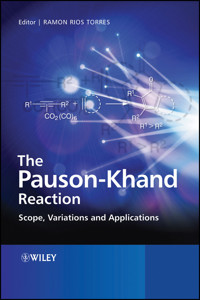
The Pauson-Khand reaction is an important reaction in the field of organic chemistry. It involves the transition-metal catalysed cycloaddition of an alkyne, an alkene and carbon monoxide, to produce cyclopentenones. The importance of this reaction originates from its high value in transforming simple components into the synthetically useful cyclopentenone unit, in which a high degree of molecular complexity can be achieved in a single step, with impressive stereochemical and regiochemical control.
The Pauson-Khand Reaction investigates the nature and many variations of this reaction.
Topics covered include:
- the mechanisms of Pauson‐Khand-type reactions
- non chiral intramolecular and intermolecular versions of Pauson‐Khand reactions
- asymmetric Pauson‐Khand reaction using chiral auxiliaries
- the enantioselective Pauson‐Khand reaction
- Pauson‐Khand reactions catalysed by metals other than cobalt
- unconventional Pauson‐Khand reactions
- the Pauson‐Khand reaction in total synthesis
Presenting a comprehensive overview of this fundamental reaction, The Pauson-Khand Reaction will find a place on the bookshelves of any organic or organometallic chemist.
Sie lesen das E-Book in den Legimi-Apps auf:
Seitenzahl: 406
Veröffentlichungsjahr: 2012
Ähnliche


















Contents
Cover
Title Page
Copyright
List of Contributors
Foreword
Preface
Chapter 1: The Pauson-Khand Reaction – an Introduction
1.1 The Discovery and Early Evolution of the Khand Reaction
1.2 The Intermolecular Pauson-Khand Reaction
1.3 The Intramolecular Pauson-Khand Reaction
1.4 Enhancing the Pauson-Khand Annulation by Reaction Promotion
1.5 Catalytic Pauson-Khand Protocols
1.6 Concluding Remarks
Chapter 2: The Mechanism of the Pauson-Khand Reaction: Hypothesis, Experimental Facts, and Theoretical Investigations
2.1 Introduction
2.2 Stoichiometric Pauson-Khand Reaction
2.3 Catalytic Pauson-Khand Reaction
2.4 Theoretical Studies
2.5 Conclusions
Chapter 3: Non Chiral Pauson-Khand Reaction
3.1 History of Co-Mediated Pauson-Khand Reaction
3.2 Mechanism of the Pauson-Khand Reaction
3.3 An Early Example of Catalytic Reaction
3.4 Catalytic Reactions by Aid of Additives
3.5 Catalytic Reaction Using in-situ Generated Low-Valent Cobalt Complex
3.6 Catalytic Reaction Using Multinuclear Cobalt Carbonyl Catalysts
3.7 Catalytic Reaction Using Heterogeneous Catalysts
3.8 Catalytic Reaction in Other Than Conventional Solvents
3.9 Intramolecular Reaction of Carbodiimides with Alkynes
Chapter 4: Diastereoselective Pauson-Khand Reaction using Chiral Pool Techniques (Chiral Substrates)
4.1 Introduction and Background
4.2 Intramolecular Diastereoselective Pauson-Khand Reaction
4.3 Intermolecular Diastereoselective Pauson-Khand Reaction
4.4 Conclusion
Chapter 5: Asymmetric Intra- and Intermolecular Pauson-Khand Reactions: The Chiral Auxiliary Approach
5.1 Introduction
5.2 Asymmetric Intramolecular PKRs with the Aid of Chiral Auxiliaries
5.3 Asymmetric Intermolecular PKRs with the Aid of Chiral Auxiliaries
5.4 Chiral Reagents for the Kinetic Resolution of PK Cycloadducts
5.5 Conclusion
Chapter 6: The Enantioselective Pauson-Khand Reaction
6.1 Introduction
6.2 Mechanistic Considerations. Topology of Alkyne-Dicobalt Clusters
6.3 Intrinsically Chiral Dicobalt Clusters
6.4 Chiral Promoters
6.5 Chiral Ligands
6.6 Synthetic Applications
6.7 Conclusion
Chapter 7: Recent Advancement of Catalytic Pauson-Khand-type Reactions
7.1 Introduction
7.2 Rhodium-Catalyzed Pauson-Khand-Type Cyclizations
7.3 Iridium-Catalyzed Pauson-Khand-Type Cyclizations
7.4 Titanium-Catalyzed Pauson-Khand-Type Cyclizations
7.5 Ruthenium-Catalyzed Pauson-Khand-Type Cyclizations
7.6 Nickel- and Palladium-Catalyzed Pauson-Khand-Type Cyclizations
7.7 Tandem Reactions and Miscellaneous (other than Co complex)
7.8 Conclusion
Chapter 8: Recent Adventures with the Pauson-Khand Reaction in Total Synthesis
8.1 Introduction
8.2 (+)-Epoxydictymene
8.3 (±)-Pentalenene and (-)-Pentalenene
8.4 The Tandem Pauson-Khand Reaction Directed Towards the Synthesis of Dicyclopentapentalenes
8.5 Enantioselective Total Synthesis of (-)-α-Kainic Acid
8.6 The Total Synthesis of Paecilomycine A
8.7 The Total Synthesis of (+)-Achalensolide
8.8 The Total Synthesis of (-)-Alstonerine
8.9 The Total Synthesis of (±)-8α-Hydroxystreptazolone
8.10 The Formal Total Synthesis of (±)-α- and β-Cedrene
8.11 Additional Applications of the Pauson-Khand Reaction in Total Synthesis
8.12 Conclusions
Chapter 9: Heterogeneous Catalytic Pauson-Khand Reaction
9.1 Introduction
9.2 Development of Heterogeneous Catalysts for PKR
9.3 Transition Metal Nanoparticle Catalyst
9.4 Bimetallic Nanoparticle Catalysts
9.5 Sequential Action of Two Different Catalysts in One-Pot Reactions
9.6 Conclusion
Chapter 10: Other Transition Metal-Mediated Cyclizations Leading to Cyclopentenones
10.1 Introduction and Background
10.2 [4+1] Strategies for the Synthesis of Cyclopentenones
10.3 [3+2] Strategies for the Synthesis of Cyclopentenones
10.4 Nickel(0) and Palladium(0) Synthesis of Cyclopentenones
10.5 Metal Carbine Strategies for the Synthesis of Cyclopentenones
10.6 Other Methodologies
10.7 Conclusions
Index
This edition first published 2012 © 2012 John Wiley & Sons, Ltd
Registered office John Wiley & Sons Ltd, The Atrium, Southern Gate, Chichester, West Sussex, PO19 8SQ, United Kingdom
For details of our global editorial offices, for customer services and for information about how to apply for permission to reuse the copyright material in this book please see our website at www.wiley.com.
The right of the author to be identified as the author of this work has been asserted in accordance with the Copyright, Designs and Patents Act 1988.
All rights reserved. No part of this publication may be reproduced, stored in a retrieval system, or transmitted, in any form or by any means, electronic, mechanical, photocopying, recording or otherwise, except as permitted by the UK Copyright, Designs and Patents Act 1988, without the prior permission of the publisher.
Wiley also publishes its books in a variety of electronic formats. Some content that appears in print may not be available in electronic books.
Designations used by companies to distinguish their products are often claimed as trademarks. All brand names and product names used in this book are trade names, service marks, trademarks or registered trademarks of their respective owners. The publisher is not associated with any product or vendor mentioned in this book. This publication is designed to provide accurate and authoritative information in regard to the subject matter covered. It is sold on the understanding that the publisher is not engaged in rendering professional services. If professional advice or other expert assistance is required, the services of a competent professional should be sought.
The publisher and the author make no representations or warranties with respect to the accuracy or completeness of the contents of this work and specifically disclaim all warranties, including without limitation any implied warranties of fitness for a particular purpose. This work is sold with the understanding that the publisher is not engaged in rendering professional services. The advice and strategies contained herein may not be suitable for every situation. In view of ongoing research, equipment modifications, changes in governmental regulations, and the constant flow of information relating to the use of experimental reagents, equipment, and devices, the reader is urged to review and evaluate the information provided in the package insert or instructions for each chemical, piece of equipment, reagent, or device for, among other things, any changes in the instructions or indication of usage and for added warnings and precautions. The fact that an organization or Website is referred to in this work as a citation and/or a potential source of further information does not mean that the author or the publisher endorses the information the organization or Website may provide or recommendations it may make. Further, readers should be aware that Internet Websites listed in this work may have changed or disappeared between when this work was written and when it is read. No warranty may be created or extended by any promotional statements for this work. Neither the publisher nor the author shall be liable for any damages arising herefrom.
Library of Congress Cataloging-in-Publication Data
The Pauson-Khand reaction : scope, variations, and applications / edited by Ramon Rios Torres. p. cm. Includes bibliographical references and index. ISBN 978-0-470-97076-8 (hardback) 1. Pauson-Khand reaction. I. Rios Torres, Ramon. QD281.R5P38 2012 547′.412–dc23 2011051669
A catalogue record for this book is available from the British Library.
ISBN: 9780470970768 (13 digits)
List of Contributors
Xacobe C. Cambeiro Institute of Chemical Research of Catalonia (ICIQ), Tarragona, Spain
Young Keun Chung Department of Chemistry, College of Natural Sciences, Seoul National University, Seoul, Korea
James M. Cook Department of Chemistry, University of Wisconsin-Milwaukee, Milwaukee, Wisconsin, USA
Sarah Hoerner Department of Natural Science, Concordia University Wisconsin, Mequon, Wisconsin, USA
Martin Kamlar Department of Organic and Nuclear Chemistry, Charles University in Prague, Prague, Czech Republic
William J. Kerr Department of Pure and Applied Chemistry, WestCHEM, Glasgow, Scotland
Fuk Yee Kwong State Key Laboratory of Chirosciences and Department of Applied Biology and Chemical Technology, The Hong Kong Polytechnic University, Hung Hom, Kowloon, Hong Kong
Fuk Loi Lam State Key Laboratory of Chirosciences and Department of Applied Biology and Chemical Technology, The Hong Kong Polytechnic University, Hung Hom, Kowloon, Hong Kong
Hang Wai Lee State Key Laboratory of Chirosciences and Department of Applied Biology and Chemical Technology, The Hong Kong Polytechnic University, Hung Hom, Kowloon, Hong Kong
Agustí Lledó Institute for Research in Biomedicine (IRB) Barcelona, Barcelona, Spain
Albert Moyano Department of Organic Chemistry, University of Barcelona, Barcelona, Spain
Miquel A. Pericàs Institute of Chemical Research of Catalonia (ICIQ), Tarragona, Spain and Department of Organic Chemistry, University of Barcelona, Barcelona, Spain
Antoni Riera Institute for Research in Biomedicine (IRB) Barcelona, and Department of Organic Chemistry, University of Barcelona, Barcelona, Spain
Ramon Rios Torres Department of Organic Chemistry, University of Barcelona, Spain, and Catalan Institute of Research and Advanced Studies (ICREA), Spain
Takanori Shibata Department of Chemistry and Biochemistry, Waseda University, Okubo, Shinjuku, Tokyo, Japan
Jun Wang State Key Laboratory of Chirosciences and Department of Applied Biology and Chemical Technology, The Hong Kong Polytechnic University, Hong Kong
Scott G. Van Ornum Department of Natural Science, Concordia University Wisconsin, Mequon, Wisconsin, USA
Xavier Verdaguer Institute for Research in Biomedicine (IRB) Barcelona, and Department of Organic Chemistry, University of Barcelona, Barcelona, Spain
Jan Vesely Department of Organic and Nuclear Chemistry, Charles University in Prague, Prague, Czech Republic
Foreword
In 1973, Pauson and Khand reported a [2+2+1] reaction between an alkyne, an alkene, and CO, thereby furnishing a cyclopentenone in a highly convergent manner. Because five-membered carbocycles are common sub-units in organic molecules, the potential utility of this new process, the Pauson-Khand reaction, was rapidly appreciated by synthetic chemists.
Since its discovery, the Pauson-Khand reaction has been most frequently applied in the context of reactions between alkenes and pre-formed cobalt–alkyne complexes. However, it is worth noting that, in their original 1973 report, Pauson and Khand recognized the potential advantages of a catalytic variant, and indeed described successful cyclizations that employed Co2(CO)8 as a catalyst.
The power of the Pauson-Khand reaction has been beautifully highlighted in the syntheses of a wide range of bioactive compounds, including pentalenene, hirsutene, epoxydictymene, hydroxymethylacylfulvene, dendrobine, and axinellamines A and B. In general, these applications have either generated the target molecules as racemates, or they have relied upon pre-existing stereogenic centers to guide diastereoselective reactions. The development of catalytic, enantioselective Pauson-Khand reactions is still in its infancy, and therefore remains one of the important frontiers for future investigation.
This monograph provides an excellent summary of the current state-of-the-art for the Pauson-Khand reaction. It will no doubt stimulate further advances in the development of this powerful method for five-membered ring formation.
Professor Gregory C. FuMassachussets Institute of TechnologyDecember 2011
Preface
“Where observation is concerned, chance favors only the prepared mind.”
—Louis Pasteur
This book on the Pauson-Khand reaction, edited for Wiley in 2012, is intended to provide an overview of the Pauson-Khand reaction from its discovery in 1973 up until the present day. No book on the topic is to be found at the time of writing. And yet there is a real need for a work that covers the issue.
The sections included in the present book deal with different aspects of the reaction under study, ranging from the mechanism to the later enantioselective methodologies; from the original cobalt catalyzed reaction to the use of different transition metal catalysts that improve the outcome of the reaction.
It was a pleasure to be the editor of this compendia, I had the chance to revise my PhD work on the topic and to honor the work of so many chemists.
I would like to thank all the distinguished scientists and their coauthors for their rewarding and timely contributions. I acknowledge the great work done by the Wiley editorial staff, in particular that of Sarah Tilley, her help was invaluable.
I also want to thank Professors G.C. Fu, P. Walsh, B. List, and A. Cordova, who introduced me into the world of chemistry. Their example and knowledge has always led me throughout my career.
Finally, I want to thank my parents for all their support and help. Without them I could never have carried out this project.
Ramon Rios Torres, BarcelonaOctober 2011
1
The Pauson-Khand Reaction – an Introduction
William J. Kerr
1.1 The Discovery and Early Evolution of the Khand Reaction
1.2 The Intermolecular Pauson-Khand Reaction
1.2.1 Regioselectivity of Alkyne Insertion
1.2.2 Regioselectivity of Alkene Insertion
1.3 The Intramolecular Pauson-Khand Reaction
1.4 Enhancing the Pauson-Khand Annulation by Reaction Promotion
1.4.1 Dry State Adsorption
1.4.2 Ultrasound Techniques
1.4.3 Microwave Promotion
1.4.4 Amine N-Oxide Additives
1.4.5 Sulfide Promoters
1.5 Catalytic Pauson-Khand Protocols
1.6 Concluding Remarks
Acknowledgements
References
1.1 The Discovery and Early Evolution of the Khand Reaction
Over the period from the 1950s, metal-mediated methods have changed the profile and escalated the preparative potential of organic synthesis well beyond that which was previously possible or imaginable. New organic cyclisation techniques have been at the heart of the developments in this domain. In relation to this, the preparative interconversion now known as the Pauson-Khand reaction is a cyclopentenone-forming [2+2+1] annulation process involving an alkyne, an alkene, and a unit of carbon monoxide, originally supplied as a ligand in the starting hexacarbonylalkynedicobalt complex, as illustrated in Scheme 1.1. Despite many citations to this process having been divulged initially in 1973, the first account of this cobalt-mediated cyclisation was noted within a very short Chemical Communications article from Pauson's laboratory, submitted in November, 1970 and appearing in press in 1971, with the following line, “… the reaction of norbornadiene with complexes (I) [hexacarbonylalkynedicobalt complexes] yields hydrocarbon and ketonic products derived from norbornadiene, acetylene, and carbon monoxide.”1 Pauson and co-workers went on to describe this process in appreciably more detail in 1973.2
Scheme 1.1
As detailed by Pauson and Khand, the formation of cyclopentenones in a single step was a serendipitous discovery.3 Within Pauson's laboratories at the University of Strathclyde, a programme of work had been aiming to establish the preparation of a series of cobalt-containing compounds from accessible cobalt complexes and alkynes, as a method by which to probe, for example, the reaction pathway involved in alkyne trimerisation processes. Believing that sufficiently reactive alkenes could be employed in a similar fashion to alkynes, norbornadiene was reacted with hexacarbonylalkynedicobalt complexes. Surprisingly, the main organic products from these reactions were ketonic in nature and, more specifically, possessed the general cyclopentenone structure, as shown in Scheme 1.2.2a This seminal discovery established the foundations for the study and enhancement of the synthetic transformation that is the subject of this monograph.
Scheme 1.2
Throughout the remainder of the 1970s, the initial scope and generality of this cyclopentannulation process was established through an extensive series of studies by Pauson and his co-workers. In relation to this, these reactions were conveniently performed by typically heating a mixture of the alkyne Co-complex and the alkene in hydrocarbon (or ethereal) solvents. Additionally, even from the initial series of reactions, for example those shown in Scheme 1.2, good levels of regio- and stereoselectivity were achievable within these cyclisation processes, with the larger alkyne substituent being installed in the position α to the cyclopentenone carbonyl unit and the -product predominating in all instances. Despite this, it is worth noting that other workers did not engage in research incorporating this preparative process, in any appreciable sense, until into the 1980s. The reasons for this somewhat delayed engagement by the preparative community may well have their foundations in the only low to moderate cyclopentenone yields delivered in many of the preliminary transformations, coupled with the variety of organometallic by-products formed within a typical reaction process and from which the desired organic compound had to be removed and purified. Having stated all of this and following a series of subsequent enhancements to this general preparative method (), the development and use of the Pauson-Khand reaction escalated considerably. By way of illustration, a simple Web of Science search (using “Khand” as the topic keyword), conducted during the production of this manuscript, delivered some 1,339 publications with this cyclopentenone forming technique cited in the paper abstract or keywords. Notably, over 1,300 of these publications have appeared since 1991 and, to illustrate the level of active and on-going employment of this cyclisation process, almost 6% of all these cited publications appeared in the year 2010 alone. In addition, this key annulation reaction has been the subject of a number of review articles.
Lesen Sie weiter in der vollständigen Ausgabe!
Lesen Sie weiter in der vollständigen Ausgabe!
Lesen Sie weiter in der vollständigen Ausgabe!
Lesen Sie weiter in der vollständigen Ausgabe!
Lesen Sie weiter in der vollständigen Ausgabe!
Lesen Sie weiter in der vollständigen Ausgabe!
Lesen Sie weiter in der vollständigen Ausgabe!
Lesen Sie weiter in der vollständigen Ausgabe!
Lesen Sie weiter in der vollständigen Ausgabe!
Lesen Sie weiter in der vollständigen Ausgabe!




