


Studies in Viral Ecology, Volume 2 E-Book
144,99 €
Mehr erfahren.
- Herausgeber: John Wiley & Sons
- Kategorie: Wissenschaft und neue Technologien
- Sprache: Englisch
This book explains the ecology of viruses by examining their interactive dynamics with their hosting species (in this volume, in animals), including the types of transmission cycles that viruses have evolved encompassing principal and alternate hosts, vehicles and vectoring species. Examining virology from an organismal biology approach and focusing on the concept that viral infections represent areas of overlap in the ecologies of the involved species, Viral Ecology is essential for students and professionals who either may be non-virologists or virologists whose previous familiarity has been very specialized.
Sie lesen das E-Book in den Legimi-Apps auf:
Seitenzahl: 956
Veröffentlichungsjahr: 2011
Ähnliche




















Contents
Cover
Volume 2
Copyright
Dedication
Preface
Contributors
Attribution Credits for Cover and Spine Artwork
Section I: An Introduction to the Structure and Behavior of Viruses
Chapter 1: Defining the Ecology of Viruses
1.1 Introduction
1.2 Surviving the Game: The Virus and it's Host
1.3 Steppin' Out and Taking The A Train: Reaching Out and Touching Someone by Vector or Vehicle
1.4 Why Things Are the Way They Are
1.5 Summary (Can There be Conclusions?)
Acknowledgement
References
Chapter 2: An Introduction to Viral Taxonomy with Emphasis on Animal Hosts and the Proposal of Akamara, a Potential Domain for the Genomic Acellular Agents
2.1 Introduction
2.2 The Existing Viral Families
2.3 The Proposed Domain Akamara
2.4 Conclusions
References
Chapter 3: Virus Morphology, Replication, and Assembly
3.1 Introduction
3.2 Chemical Composition
3.3 Morphology
3.4 Viral Replication Cycle
3.5 Assembly and Morphogenesis of Virus Particles
3.6 Conclusions
Acknowledgments
Abbreviations and Definitions
References
Chapter 4: The (Co)evolutionary Ecology of Viruses
4.1 Vir-olution: Setting the Scene
4.2 The Obsession with Death: Mortality from a Viral Perspective
4.3 A Marriage Made in Hell
4.4 The Numbers Game
4.5 Fight to Death: Genes Are the Weapons
4.6 The Silence of the Viruses
4.7 Giving up the Viral Ghost
4.8 The Makings of Virus–Host Compatibility
4.9 Throwing Light on Virus–Host Evolution
4.10 Sometimes it Takes More than the Odd Gene
References
Section II: Viruses of Macroscopic Animals
Chapter 5: Coral Viruses
5.1 Introduction
5.2 Why Are Viruses Not Given Prevalence in Coral Disease Diagnostics?
5.3 Latent Coral Virus Hypothesis
5.4 Coral Immunity and Antiviral Activity
5.5 Summary
Acknowledgments
References
Chapter 6: Viruses Infecting Marine Molluscs
6.1 Introduction
6.2 Herpes-Like and Herpesviruses Infecting Marine Molluscs
6.3 Herpes-Like Viruses Infecting Marine Gastropods
6.4 Marine Birnaviruses in Molluscs
6.5 Conclusion
Acknowledgments
References
Chapter 7: The Viral Ecology of Aquatic Crustaceans
7.1 Introduction and Approach
7.2 The Penaeid Immune System
7.3 The Viruses Fight Back
7.4 Where do Viruses Come From?
7.5 Orphan Viruses in Crustacea?
7.6 Conclusions
References
Chapter 8: Viruses of Fish
8.1 Introduction
8.2 Fish as Viral Hosts
8.3 The Virus
8.4 The Impact of Environmental Factors
8.5 Impact of Virus for Wild Fish Populations
8.6 The Impact of Viral Diseases for Fish Farming
8.7 Vaccines and Vaccination
8.8 Selected Virus Species from the Various Baltimore Groups
8.9 Summary
References
Chapter 9: Ecology of Viruses Infecting Ectothermic Vertebrates—The Impact of Ranavirus Infections on Amphibians
9.1 Introduction
9.2 Ranavirus Taxonomy
9.3 Ranavirus Morphology and Replication
9.4 Viral Genomes
9.5 The Roles of Innate and Acquired Immunity in Determining the Outcome of Ranavirus Infection
9.6 Ranavirus Infections of Amphibians
9.7 Conservation Issues
Acknowledgments
References
Chapter 10: Viruses of Insects
10.1 Introduction
10.2 Diversity of Insect Viruses
10.3 Ecology of Honeybee Viruses
10.4 Summary
References
Chapter 11: Viruses of Terrestrial Mammals
11.1 Introduction
11.2 Nonarthropod-Borne Viruses
11.3 Arthropod-Borne Viruses
11.4 Summary
Acknowledgment
References
Chapter 12: Viruses of Cetaceans
12.1 Introduction
12.2 DNA Viruses
12.3 RNA Viruses
12.4 Conclusions
Acknowledgments
References
Chapter 13: The Relationship Between Humans, Their Viruses, and Prions
13.1 Introduction
13.2 Achieving the Goal of Viral Reproduction
13.3 Achieving the Goal of Viral Transmission Between Hosts
13.4 Summary of Viral Families that Afflict Humans
13.5 Summary of Prions that Afflict Humans
13.6 Conclusions
Acknowledgement
References
Chapter 14: Ecology of Avian Viruses
14.1 Introduction
14.2 Influenza A Virus
14.3 Highly Pathogenic Avian Influenza Viruses
14.4 Avian Influenza Virus Host Species
14.5 Avian Influenza Virus in Ducks
14.6 Avian Influenza Virus in Gulls and Terns
14.7 Avian Influenza Virus in Waders
14.8 Avian Influenza Virus in Other Wild Bird Species
14.9 Virus Ecology and Host Populations
14.10 Evolutionary Genetics of Avian Influenza Viruses
14.11 Transmission of Avian Influenza Viruses
14.12 Temporal and Spatial Variation in Avian Influenza Prevalence in Relation to Host Ecology
14.13 The Impact of Avian Influenza Virus Infection on Host Ecology
14.14 HPAI Virus and Wild Birds
14.15 Conclusion
References
Color Plates
Index
Copyright © 2011 by Wiley-Blackwell. All rights reserved
Published by John Wiley & Sons, Inc., Hoboken, New Jersey
Published simultaneously in Canada
No part of this publication may be reproduced, stored in a retrieval system, or transmitted in any form or by any means, electronic, mechanical, photocopying, recording, scanning, or otherwise, except as permitted under Section 107 or 108 of the 1976 United States Copyright Act, without either the prior written permission of the Publisher, or authorization through payment of the appropriate per-copy fee to the Copyright Clearance Center, Inc., 222 Rosewood Drive, Danvers, MA 01923, (978) 750-8400, fax (978) 750-4470, or on the web at www.copyright.com. Requests to the Publisher for permission should be addressed to the Permissions Department, John Wiley & Sons, Inc., 111 River Street, Hoboken, NJ 07030, (201) 748-6011, fax (201) 748-6008, or online at www.wiley.com/go/permission.
Limit of Liability/Disclaimer ofWarranty: While the publisher and author have used their best efforts in preparing this book, they make no representations or warranties with respect to the accuracy or completeness of the contents of this book and specifically disclaim any implied warranties of merchantability or fitness for a particular purpose. No warranty may be created or extended by sales representatives or written sales materials. The advice and strategies contained herein may not be suitable for your situation. You should consult with a professional where appropriate. Neither the publisher nor author shall be liable for any loss of profit or any other commercial damages, including but not limited to special, incidental, consequential, or other damages.
For general information on our other products and services or for technical support, please contact our Customer Care Department within the United States at (800) 762-2974, outside the United States at (317) 572-3993 or fax (317) 572-4002.
Wiley also publishes its books in a variety of electronic formats. Some content that appears in print may not be available in electronic formats. For more information about Wiley products, visit our web site at www.wiley.com.
Library of Congress Cataloging-in-Publication Data:
Studies in viral ecology / edited by Christon J. Hurst.
v. cm.
Includes index.
Contents: v.1. Microbial and Botanical Host Systems (ISBN 978-0-470-62396-1)
– v.2. Animal Host Systems (ISBN 978-0-470-62429-6).
ISBN (set) 978-1-118-02458-4 (cloth)
1. Viruses–Ecology. I. Hurst, Christon J.
QR478.A1S78 2011
579.2–dc22
2010046370
Dedication
I dedicate these two volumes to the memory of my brother in spirit, Henry Hanssen. To me, he seemed a hero and I remember him most for his unfailing ability to present a sense of humanity in times of tragedy. We first met while studying together for our doctorates in Houston, Texas.
Henry was born in Colombia near Medellín and tragically orphaned as a young child after which he was lovingly raised by an aunt in Bogotá. Henry may have gained his tremendous sense of humanity from that experience. He had no biological children of his own but helped to raise two daughters. The first of those came into his life by a twist of luck while one day Henry was walking along a street in Colombia and heard what he thought might be a cat trapped inside of a garbage bin. Henry went over to free the cat and discovered instead a crying infant child in a plastic bag, presumably discarded there by a distraught mother. Henry took the baby to the police, and when no one stepped forward as a parent Henry adopted the child and eventually even helped to pay for her college tuition. The second daughter came through Henry's marriage to the love of his life.
When there arose need for representing humanity, Henry was undaunted by circumstance. His accomplishments included establishing an infant vaccination program against poliomyelitis in Angola at the personal request of Jonas Salk. Angola was in a state of civil war at that time and no one else was willing to undertake the necessary but frightening task. Henry showed equal humanitarianism to civilians and military on both sides of that conflict. Subsequently, Henry initiated a similar poliomyelitis vaccination program during a period of civil war in Central America and for his efforts was awarded honorary citizenship by one of the countries there. He then initiated a poliomyelitis vaccination program in his native Colombia, while that country's continuing civil war was in full strength.
I was proud to address Henry by the name of “brother” and always will think of him in that way. He addressed me by that same term of affection and he is lovingly remembered by everyone whom his life touched.
Henry Hanssen Villamizar (1945–2007)
Preface
Virology is a field of study which has grown and expanded greatly since the viruses as a group first received their name in 1898. Many of the people who presently are learning virology have come to perceive these acellular biological entities as being merely trinkets of nucleic acid to be cloned, probed, and spliced. However, the viruses are much more than merely trinkets to be played with in molecular biology laboratories. The viruses are indeed highly evolved biological entities with an organismal biology that is complex and interwoven with the biology of their hosting species. Ecology is defined as the branch of science which addresses the relationships between an organism of interest and the other organisms with which it interacts, the interactions between the organism of interest and its environment, and the geographical distribution of the organism of interest.
The purpose of this book is to help define and explain the ecology of viruses, i.e., to examine what life might seem like from a “virocentric” point of view, as opposed to our normal “anthropocentric” perspective. As we begin our examination of the virocentric life, it is important to realize that in nature both the viruses of macroorganisms and the viruses of microorganisms exist in cycles with their respective hosts. Under normal conditions, the impact of viruses upon their natural host populations may be barely apparent due to factors such as evolutionary coadaptation between the virus and those natural hosts. However, when viruses find access to new types of hosts and alternate transmission cycles, or when they encounter a concentrated population of susceptible genetically similar hosts such as occurs in densely populated human communities, communities of cultivated plants or animals, or algal blooms, then the impact of the virus upon its host population can appear catastrophic. The key to understanding these types of cycles lies in understanding the viruses and how their ecology relates to the ecology of their hosts, their alternate hosts, and any vectors which they utilize, as well as their relationship to the availability of suitable vehicles that can transport the different viral groups.
I hope that you will enjoy the information presented in this book set as much as I and the other authors have enjoyed presenting it to you. The written word is a marvelous thing, able to convey understanding and enthusiasm across unimaginable distances and through time.
Christon J. HurstCincinnati, Ohio
Contributors
Michael J. Allen, Plymouth Marine Laboratory, Plymouth, UK
V. Gregory Chinchar, Department of Microbiology, University of Mississippi Medical Center, Jackson, MS
Ron A.M. Fouchier, Department of Virology, National Influenza Center, Erasmus Medical Center, Rotterdam, The Netherlands
Christon J. Hurst, Departments of Biology and Music, Xavier University, Cincinnati, OH; Engineering Faculty, Universidad del Valle, Ciudad Universitaria Meléndez, Santiago de Cali, Valle, Colombia
Laura D. Kramer, Wadsworth Center, New York State Department of Health, University of Albany, Albany, NY; Department of Biomedical Sciences, School of Public Health, University of Albany, Albany, NY
Vincent J. Munster, Laboratory of Virology, Rocky Mountain Laboratories, Division of Intramural Research, National Institute of Allergy and Infectious Diseases, National Institutes of Health, Hamilton, MT
Debi P. Nayak, Department of Microbiology and Immunology, David Geffen School of Medicine, University of California at Los Angeles, Los Angeles, CA
Audun Helge Nerland, The Gade Institute, University of Bergen, Bergen, Norway; Institute of Marine Research, University of Bergen, Bergen, Norway
Aina-Cathrine Øvergård, The Gade Institute, University of Bergen, Bergen, Norway; Institute of Marine Research, University of Bergen, Bergen, Norway
Leigh Owens, Discipline of Microbiology and Immunology, School of Veterinary and Biomedical Sciences, James Cook University, Townsville, Australia
Sonal Patel, Institute of Marine Research, University of Bergen, Bergen, Norway
Juan A. Raga, Marine Zoology Unit, Cavanilles Institute of Biodiversity and Evolutionary Biology, University of Valencia, Valencia, Spain
Tristan Renault, Laboratoire de Génétique et Pathologie, Ifremer La Tremblade, France
Jacques Robert, Department of Microbiology and Immunology, University of Rochester Medical Center, Rochester, NY
Declan C. Schroeder, Marine Biological Association of the UK, Plymouth, UK
Andrew T. Storfer, School of Biological Sciences, Washington State University, Pullman, WA
Norma P. Tavakoli, Wadsworth Center, New York State Department of Health, University of Albany, Albany, NY; Department of Biomedical Sciences, School of Public Health, University of Albany, Albany, NY
Marie-Françoise Van Bressem, Cetacean Conservation Medicine Group (CMED/CEPEC), Bogota, Colombia; Centro Peruano de Estudios Cetológicos (CEPEC), Museo de Delfines, Pucusana, Lima 20, Peru
Josanne H. Verhagen, Department of Virology, National Influenza Center, Erasmus Medical Center, Rotterdam, The Netherlands
William H. Wilson, Bigelow Laboratory for Ocean Sciences, West Boothbay Harbor, ME
Attribution Credits for Cover and Spine Artwork
Cover credits
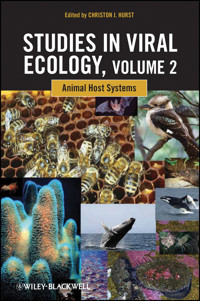
“Montage showing animal hosts”, montage image used with permission of the artist, Christon J. Hurst. Those images incorporated into this montage were: Honeybees - Snapshot of a comb within a husbanded honeybee colony (source: image courtesy of S. J. Martin, provided by Declan C. Schroeder); Big eared townsend bat (Corynorhinus townsendii) - File:Big-eared-townsend-fledermaus.jpg (author unknown; public domain image, Bureau of Land Management, U. S. Federal Government); Laughing Kookaburra - Dacelo novaeguineae waterworks.jpg (author: Wikipedia user name Noodle snacks; Creative Commons Attribution-Share Alike 3.0 Unported license); Cotton Rat - File:Sigmodon hispidus1.jpg (author unknown; Centers for Disease Control and Prevention, U.S. Federal Government, public domain image); Heterocarpus shrimp - File:Heterocarpus ensifer.jpg (author unknown; National Oceanic and Atmospheric Administration, U.S. Federal Government, public domain image); Pillar coral - File:PillarCoral.jpg (author: Commander William Harrigan, NOAA Corps (ret.); National Oceanic and Atmospheric Administration, U.S. Federal Government, public domain image); Zebra striped Gorgonian wrapper, colonial anemone - File:Colonial anemone zebra.jpg (author: Nick Hobgood; Creative Commons Attribution-Share Alike 3.0 Unported license); Humpback whale - File:Humpback stellwagen edit.jpg (author: Whit Welles; Creative Commons Attribution 3.0 Unported license); Killer whales - File:Killerwhales jumping.jpg (author: Pittman; National Oceanic and Atmospheric Administration, U.S. Federal Government, public domain image); School of Goldband Fusilier, Pterocaesio chrysozona - File:School of Pterocaesio chrysozona in Papua New Guinea 1.jpg (author: Mila Zinkova; Creative Commons Attribution-Share Alike 3.0 Unported license); Abalone - File:Abalone OCA.jpg (author: Wikipedia user name Little Mountain 5; Creative Commons Attribution-Share Alike 3.0 Unported license.); and Giant Malaysian prawn Macrobrachium rosenbergii - File:Giant Malaysian Prawn.JPG (author: Wikipedia user name Syrist; Creative Commons Attribution-Share Alike 3.0 Unported license).
Spine credits
“Montage showing animal, botanical and microbial hosts”, montage image used with permission of the artist, Christon J. Hurst. Those images incorporated into this montage were: Calliope Hummingbird - File:Calliope-nest.jpg (author: Wolfgang Wander; Creative Commons Attribution-Share Alike 3.0 Unported license); Cassava - File:Casava.jpg (author: Bob Walker; Creative Commons Attribution-ShareAlike 2.5 License); Tiger Salamander (Ambystoma tigrinum) - File:Salamandra Tigre.png (author: Carla Isabel Ribeiro; Creative Commons Attribution-Share Alike 3.0 Unported license); Volvox tertius (author: Matthew D. Herron; image supplied by and used with author's permission); Volvox aureus (author: Matthew D. Herron; image supplied by and used with author's permission); Molluscs (mostly bivalves) harvested from contaminated water in Zulia, Venezuela (author: Christon J. Hurst; image provided for use in this montage); and giant clam - File:Tridacna crocea.jpg (author: Nick Hobgood; Creative Commons Attribution-Share Alike 3.0 Unported license).
Section I
An Introduction to the Structure and Behavior of Viruses
Chapter 1
Defining the Ecology of Viruses1
Christon J. Hurst
Departments of Biology and Music, Xavier University, Cincinnati, OH
Engineering Faculty, Universidad del Valle, Ciudad Universitaria Meléndez Santiago de Cali, Valle, Colombia
1.1 Introduction
The goal of virology is to understand the viruses and their behavior. Virology is an interesting subject and even has contributed to the concepts of what we consider to represent dieties and art. Sekhmet, an ancient Egyptian goddess, was for a time considered to be the source of both causation and cure for many of the diseases that we now know to be caused by viruses (Figure 1.1). Influenza, a viral-induced disease of vertebrates, was once assumed to be caused by the influence of the stars, and that is represented by the origin of it's name which is derived from Italian. The following was a rhyme which children in the United Sates sang while skipping rope during the influenza pandemic of 1918–1919:
I had a little bird
It's name was Enza
I opened a window
And in-flew-Enza.(Source: The flu of 1918, by Eileen A Lynch, The Pennsylvania Gazette November/December 1998 (http://www.upenn.edu/gazette/1198/lynch.html).
Figure 1.1 Image of Sekhmet, “Bust Fragment from a colossal statue of Sekhmet”, Cincinnati Art Museum, John J. Emery Fund, Accession #1945.65 Cincinnati, Ohio. Originally the warrior goddess of Upper Egypt, Sekhmet was for a time believed to be the bringer of disease. She would inflict pestilence if not properly appeased, and if appeased could cure such illness.
And a bit more recently an interesting poem was written about viruses (Source: Michael Newman, 1984):
“The Virus”
Observe this virus: think how small
Its arsenal, and yet how loud its call;
It took my cell, now takes your cell,
And when it leaves will take our genes as well.
Genes that are master keys to growth
That turn it on, or turn it off, or both;
Should it return to me or you
It will own the skeleton keys to do
A number on our tumblers; stage a coup.
But would you kill the us in it,
The sequence that it carries, bit by bit?
The virus was the first to live,
Or lean in that direction; now we give
Attention to its way with locks,
And how its tickings influence our clocks;
Its gears fit in our clockworking,
Its habits of expression have a ring
That makes our carburetors start to ping.
This happens when cells start to choke
As red cells must in monoxic smoke,
When membranes get the guest list wrong
And single-file becomes a teeming throng,
And growth exists for its own sake;
Then soon enough the healthy genes must break;
If we permit this with our cells,
With molecules abet the clanging bells;
Lend our particular tone to our death knells.
The purpose of this book is to define the ecology of viruses and, in so doing, try to approach the question of what life is like from a “virocentric” (as opposed to our normal anthropocentric) point of view. Ecology is defined as the branch of science which addresses the relationships between an organism of interest and the other organisms with which it interacts, the interactions between the organism of interest and its environment, and the geographic distribution of the organism of interest. The objective of this chapter is to introduce the main concepts of viral ecology. The remaining chapters of this book set, Studies in Viral Ecology volumes 1 and 2, will then address those concepts in greater detail and illustrate the way in which those concepts apply to various host systems.
1.1.1 What is a Virus?
Viruses are biological entities which possess a genome composed of either ribonucleic acid (RNA) or deoxyribonucleic acid (DNA). Viruses are infectious agents which do not possess a cellular structure of their own, and hence are “acellular infectious agents”. Furthermore, the viruses are obligate intracellular parasites, meaning that they live (if that can be said of viruses) and replicate within living host cells at the expense of those host cells. Viruses accomplish their replication by usurping control of the host cell's biomolecular machinery. Those which are termed “classical viruses” will form a physical structure termed a “virion” that consists of their RNA or DNA genome surrounded by a layer of proteins (termed “capsid proteins”) which form a shell or “capsid” that protects the genomic material. Together, this capsid structure and its enclosed genomic material are often referred to as being a “nucleocapsid”. The genetic coding for the capsid proteins generally is carried by the viral genome. Most of the presently known virus types code for their own capsid proteins. However, there are some viruses which are termed as being “satellite viruses”. The satellite viruses encapsidate with proteins that are coded for by the genome of another virus which coinfects (simultaneously infects) that same host cell. That virus which loans its help by giving its capsid proteins to the satellite virus is termed as being a “helper virus”. The capsid or nucleocapsid is, in the case of some groups of viruses, surrounded in turn by one or more concentric lipid bilayer membranes which are obtained from the host cell. There exist many other types of acellular infectious agents which have commonalities with the classical viruses in terms of their ecology. Two of these other types of acellular infectious agents, the viroids and prions, are included in this book set and are addressed within their own respective chapters (Volume 1, chapters 10 and 12). Viroids are biological entities akin to the classical viruses and likewise can replicate only within host cells. The viroids possess RNA genomes but lack capsid proteins. The agents which we refer to as prions were once considered to be nonclassical viruses. However, we now know that the prions appear to be aberrant cellular protein products which, at least in the case of those afflicting mammals, have acquired the potential to be environmentally transmitted. The natural environmental acquisition of a prion infection occurs when a susceptible host mammal ingests the bodily material of an infected host mammal. The reproduction of prions is not a replication, but rather seems to result from a conversion of a normal host protein into an abnormal form (Volume 1, chapter 10). The Acidianus two-tailed virus, currently the sole member of the viral family Bicaudaviridae, undergoes a morphological maturation following its release from host cells and this is unique among all of the biological entities now considered to be viruses suggesting that this species may represent the initial discovery of an entirely new category of biological entities.
Lesen Sie weiter in der vollständigen Ausgabe!
Lesen Sie weiter in der vollständigen Ausgabe!
Lesen Sie weiter in der vollständigen Ausgabe!
Lesen Sie weiter in der vollständigen Ausgabe!
Lesen Sie weiter in der vollständigen Ausgabe!
Lesen Sie weiter in der vollständigen Ausgabe!
Lesen Sie weiter in der vollständigen Ausgabe!
Lesen Sie weiter in der vollständigen Ausgabe!
Lesen Sie weiter in der vollständigen Ausgabe!
Lesen Sie weiter in der vollständigen Ausgabe!
Lesen Sie weiter in der vollständigen Ausgabe!
Lesen Sie weiter in der vollständigen Ausgabe!
Lesen Sie weiter in der vollständigen Ausgabe!
Lesen Sie weiter in der vollständigen Ausgabe!
Lesen Sie weiter in der vollständigen Ausgabe!
Lesen Sie weiter in der vollständigen Ausgabe!




