


Surface Ocean E-Book
119,99 €
Mehr erfahren.
- Herausgeber: John Wiley & Sons
- Kategorie: Wissenschaft und neue Technologien
- Serie: Geophysical Monograph Series
- Sprache: Englisch
Published by the American Geophysical Union as part of the Geophysical Monograph Series, Volume 187.
The focus of Surface Ocean: Lower Atmosphere Processes is biogeochemical interactions between the surface ocean and the lower atmosphere. This volume is an outgrowth of the Surface Ocean-Lower Atmosphere Study (SOLAS) Summer School. The volume is designed to provide graduate students, postdoctoral fellows, and researchers from a wide range of academic backgrounds with a basis for understanding the nature of ocean-atmosphere interactions and the current research issues in this area.
The volume highlights include the following:
- Background material on ocean and atmosphere structure, circulation, and chemistry and on marine ecosystems
- Integrative chapters on the global carbon cycle and ocean biogeochemistry
- Issue-oriented chapters on the iron cycle and dimethylsulfide
- Tool-oriented chapters on biogeochemical modeling and remote sensing
- A framework of underlying physical/chemical/biological principles, as well as perspectives on current research issues in the field.
The readership for this book will include graduate students and/or advanced undergraduate students, postdoctoral researchers, and researchers in the fields of oceanography and atmospheric science. It will also be useful for experienced researchers in specific other disciplines who wish to broaden their perspectives on the complex biogeochemical coupling between ocean and atmosphere and the importance of this coupling to understanding global change.
Sie lesen das E-Book in den Legimi-Apps auf:
Seitenzahl: 1069
Veröffentlichungsjahr: 2013
Ähnliche




















CONTENTS
PREFACE
Introduction to Surface Ocean–Lower Atmosphere Processes
SOCIETAL IMPORTANCE
THE RESEARCH CHALLENGE
SUMMARY
Atmospheric Gas Phase Reactions
1. ATMOSPHERIC GAS PHASE CHEMISTRY
2. GAS-PHASE REACTION KINETICS
3. REACTION ORDER
4. REACTION RATES
5. KINETIC THEORY OF CHEMICAL REACTIONS
6. PHOTOCHEMICAL REACTIONS
7. TROPOSPHERIC CHEMISTRY AND SELF-CLEANING OF THE ATMOSPHERE
8. FREE RADICALS
9. NITROGEN AND OTHER TRACE GAS CYCLES
10. TROPOSPHERIC OZONE
11. STRATOSPHERIC OZONE
Marine Aerosols
1. INTRODUCTION
2. AEROSOL BASICS
3. TYPES OF MARINE AEROSOLS
4. NUCLEATION AND THE FORMATION OF NEW PARTICLES IN MARINE AIR
5. LARGE-SCALE CHARACTERIZATION OF THE MARINE AEROSOL
6. CONCLUDING REMARKS
Global Dust Cycle
1. INTRODUCTION: DUST IN THE EARTH SYSTEM
2. PRESENT-DAY SOURCES AND CONTROLS ON DUST
3. PAST CONTROLS ON DUST: A TEST OF OUR UNDERSTANDING(?)
4. FUTURE CHANGES IN DUST AND THE ROLE OF HUMANS
5. SUMMARY
Marine Boundary Layer Clouds
1. INTRODUCTION
2. METEOROLOGICAL CONDITIONS REQUIRED FOR MBL CLOUDS
3. MICROPHYSICAL ASPECTS OF CLOUD FORMATION
4. RADIATIVE PROPERTIES OF MBL CLOUDS
5. CONCLUSIONS
Air-Sea Gas Exchange
1. INTRODUCTION
2. AIR-SEA GAS EXCHANGE MODELS AND THEORY
3. LABORATORY STUDIES OF AIR-WATER GAS EXCHANGE
4. LARGE-SCALE ESTIMATES OF AIR-SEA GAS TRANSFER
5. LOCAL TECHNIQUES AND MEASUREMENTS
6. MICROMETEOROLOGICAL TECHNIQUES AND MEASUREMENTS
7. PARAMETERIZATIONS OF AIR-SEA GAS TRANSFER
8. FUTURE WORK
Ocean Circulation
1. INTRODUCTION
2. PHYSICAL PROCESSES IN THE PRESENT CLIMATE
3. ABRUPT CLIMATE CHANGE IN PAST CLIMATES
4. FUTURE CHANGES IN THE TWENTY-FIRST CENTURY AND BEYOND
5. CONCLUSIONS
Marine Pelagic Ecosystems
1. INTRODUCTION
2. MODES OF NUTRITION
3. PHYTOPLANKTON
4. BACTERIOPLANKTON AND ARCHAEOPLANKTO
5. ZOOPLANKTON
6. PRIMARY PRODUCTION
7. RESPIRATION
8. THE REDFIELD RATIO, NEW PRODUCTION, EXPORT PRODUCTION, AND THE BIOLOGICAL PUMP
9. GLOBAL BIOGEOCHEMICAL CYCLES AND CLIMATE CHANGE
Ocean Nutrients
1. INTRODUCTION
2. MACRONUTRIENTS AND PHYTOPLANKTON
3. NUTRIENT SUPPLY VERSUS DEMAND IN THE MODERN OCEAN
4. THE BIOGEOCHEMICAL CYCLE OF NITROGEN
5. FLEXING THE REDFIELD RATIO: FROM CULTURES TO THE OLIGOTROPHIC OCEAN
6. SILICA: THE BODYBUILDER
7. MACRONUTRIENTS IN THE OCEAN: FUTURE TRENDS
Ocean Iron Cycle
1. INTRODUCTION
2. IRON CHEMISTRY
3. OCEANIC SOURCES OF IRON
4. THE BIOGEOCHEMICAL CYCLE OF IRON: A CASE STUDY, FECYCLE
5. MESOSCALE IRON-ENRICHMENT EXPERIMENTS
Ocean Carbon Cycle
1. INTRODUCTION
2. THE NATURAL OCEAN CARBON CYCLE
3. OCEANIC UPTAKE OF ANTHROPOGENIC CARBON
4. PROJECTED CHANGES IN THE TWENTY-FIRST CENTURY
5. CONCLUSION
Dimethylsulfide and Climate
1. MOTIVATION AND CONTEXT
2. DMS AND THE GLOBAL SULFUR CYCLE
3. THE MARINE DMS CYCLE
4. ATMOSPHERIC DMS CYCLING
5. MODELING MARINE DMS DYNAMICS
6. DMS AND CLIMATE: GLOBAL PERSPECTIVES
7. SUMMARY AND FUTURE DIRECTIONS
Hydrography and Biogeochemistry of the Coastal Ocean
1. INTRODUCTION
2. CIRCULATION
3. BIOGEOCHEMISTRY
4. HUMAN IMPACT ON COASTAL OCEAN
5. SUMMARY AND CONCLUSIONS
Glacial-Interglacial Variability in Atmospheric CO2
1. INTRODUCTION: USING THE PAST TO CONSTRAIN THE FUTURE
2. THE GLACIAL-INTERGLACIAL CO2 PROBLEM
3. HOW IT WORKS: A HITCHHIKER’S GUIDE TO THE MARINE CARBON CYCLE
4. HELP FROM OCEAN MUDS: PALEOCEANOGRAPHIC PROXIES
5. WHAT CAUSED THE ~70- TO 90-PPM GLACIAL-TO -INTERGLACIAL CHANGE IN ATMOSPHERIC CO2?
6. SUMMARY AND OUTLOOK
Remote Sensing
1. INTRODUCTION
2. PHYSICAL BACKGROUND
3. SATELLITE AND SENSOR CHARACTERISTICS
4. EXAMPLES OF REMOTE SENSING PRODUCTS
5. CONCLUDING REMARKS
Data Assimilation Methods
1. INTRODUCTION
2. BASIC CONCEPTS
3. THE GENERAL CONCEPT: BAYESIAN APPROACH
4. STATIONARY METHODS
5. EVOLUTIONARY METHODS
6. APPLICATIONS
7. CONCLUSION
Biogeochemical Modeling
1. INTRODUCTION
2. PHYSICAL PROCESSES
3. CHEMICAL PROCESSES
4. BIOLOGICAL PROCESSES
5. TUNING, EVALUATION, AND BENCHMARKING
6. CONCLUSIONS
Index
Geophysical Monograph Series
Published under the aegis of the AGU Books Board
Kenneth R. Minschwaner, Chair; Gray E. Bebout, Joseph E. Borovsky, Kenneth H. Brink, RalfR. Haese, Robert B. Jackson, W. Berry Lyons, Thomas Nicholson, Andrew Nyblade, Nancy N. Rabalais, A. Surjalal Sharma, Darrell Strobel, Chunzai Wang, and Paul David Williams, members.
Library of Congress Cataloging-in-Publication Data
Surface ocean-lower atmosphere processes / Corinne Le Quéré and Eric S. Saltzman, editors.
p. cm. -- (Geophysical monograph ; 187)
Includes bibliographical references and index.
ISBN 978-0-87590-477-1 (alk. paper)
1. Ocean-atmosphere interaction. 2. Atmospheric chemistry. 3. Climatic changes. I.
Le Quéré, Corinne . II. Saltzman, Eric S., 1955-
GCI90.2.S872010
551.5′246--dc22
2009045024
ISBN: 978-0-87590-477-1
ISSN: 0065-8448
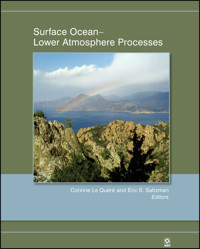
Cover Photo: Coastal Mediterranean waters surrounding the Cargese Institute of Scientific Studies (Corsica, France)/ which hosted the summer schools of the Surface Ocean-Lower Atmosphere Study during 2001-2009. Photo courtesy of Georgia Bayliss-Brown.
Copyright 2009 by the American Geophysical Union
2000 Florida Avenue, N.W.
Washington, DC 20009
Figures, tables and short excerpts may be reprinted in scientific books and journals if the source is properly cited.
Authorization to photocopy items for internal or personal use, or the internal or personal use of specific clients, is granted by the American Geophysical Union for libraries and other users registered with the Copyright Clearance Center (CCC) Transactional Reporting Service, provided that the base fee of $1.50 per copy plus $0.35 per page is paid directly to CCC, 222 Rosewood Dr., Danvers, MA 01923.0065-8448/09/$01.50+0.35.
This consent does not extend to other kinds of copying, such as copying for creating new collective works or for resale. The reproduction of multiple copies and the use of full articles or the use of extracts, including figures and tables, for commercial purposes requires permission from the American Geophysical Union.
PREFACE
The need to understand global climate change and to predict climate on long time scales has focused increasing attention on the ocean-atmosphere system. Recent research on the biogeochemical linkages between the atmosphere and ocean has led to new insights about the sensitivity of the climate system to air-sea fluxes, and the potential for climate feedbacks involving atmospheric chemistry, ocean biogeochemistry, and physical climate. At the same time, there is clearly a long way to go to fully understand the nature of these feedbacks and to quantify their effects on climate.
Perhaps the most important lesson learned from several decades of research in this area is that it requires a highly multidisciplinary approach. The SOLAS (Surface Ocean–Lower Atmosphere Study, a project of the IGBP, SCOR, iCACGP, and WCRP) research program was initiated in 2004 to facilitate international research in ocean-atmosphere biogeochemical interactions. One of the goals of SOLAS was to help equip the next generation of climate scientists with broad understanding of ocean-atmosphere processes. It was recognized that many young scientists entering graduate school have strong disciplinary (chemistry, physics, biology) backgrounds but little knowledge of ocean-atmosphere processes, and little exposure to the questions driving SOLAS research or the tools needed to carry it out. The SOLAS Summer School (held in Cargése, France, in 2003, 2005, 2007, and 2009) has helped fill this gap for about 300 postgraduate students from a wide range of backgrounds. This volume was based loosely on the SOLAS Summer School lectures. It is not intended as either a state-of-the-art review of the literature or a standard textbook. Rather, it is meant as a starting point for researchers interested in ocean-atmosphere biogeochemical exchange to obtain background in areas with which they may not be familiar and to obtain a broad perspective on the issues driving research in this challenging field. We hope it will also provide a means for experts in traditional environmental sciences to learn about SOLAS research problems and find new ways in which their expertise can contribute.
This volume consists of three types of chapters: overviews, research issues, and tools. The overview chapters provide basic concepts in the areas of atmospheric gas-phase chemistry, aerosols and cloud processes, ocean circulation, coastal zone processes, marine ecosystems, and nutrient dynamics. The research issues chapters focus on issues of contemporary research in biogeochemistry and climate. These tend to be highly interdisciplinary, cutting across the ocean-atmosphere boundary. The topics addressed are dimethyl-sulfide, atmospheric dust, air-sea gas exchange, and oceanic iron and carbon cycles. A chapter on the glacial-interglacial changes in atmospheric CO2 provides some perspective on biogeochemical cycles on longer time scales. Finally, three chapters focus on tools (remote sensing, data assimilation, and biogeochemical modeling) that are playing an increasingly important role in ocean-atmosphere research.
The editors wish to thank everyone who helped envision, organize, fund, and carry out the SOLAS Summer Schools, particularly Véronique Garçon, Peter Liss, the lecturers and Scientific Steering committees of the schools, Emilie Brévière, Georgia Bayliss-Brown and the SOLAS International Project Office, and the staff of the Cargèse Institute of Scientific Studies. The editors also wish to express their thanks to the AGU Books staff for their work in support of this project, in particular Telicia Collick and Virgina Marcum, and to the many anonymous reviewers who greatly improved the text. We wish to acknowledge financial support from more than a dozen national and international agencies, especially the support from SCOR (Scientific Committee on Oceanic Research), APN (Asia–Pacific Network for Global Change Research), CNES (Centre National d’Études Spatiales), CNRS (Centre National de la Recherche Scientifique), NASA (National Aeronautics and Space Administration), NOAA (National Oceanic and Atmospheric Administration), NERC (Natural Environment Research Council), NSF (National Science Foundation), DFG (Deutsche Forschungsgemeinschaft), IAI (Inter-American Institute for Global Change Research), and the European Union.
Corinne Le QuéréUniversity of East Anglia and the British Antarctica Survey, UK
Eric S. SaltzmanUniversity of California, Irvine, USAEditors
Introduction to Surface Ocean–Lower Atmosphere Processes
Corinne Le Quéré
School of Environmental Sciences, University of East Anglia, Norwich, UK
The British Antarctica Survey, Cambridge, UK
Eric S. Saltzman
Department of Earth System Science, University of California, Irvine, Irvine, California, USA
This introductory chapter discusses the rationale for studying the role of surface ocean–lower atmosphere processes in the context of the climate system, with an integrated, multidisciplinary approach. Accurately predicting climate change on multidecadal or centennial time scales requires an understanding of a wide range of ocean-atmosphere interactions that influence the atmospheric abundance of greenhouse gases, aerosols, and clouds. Examples of such interactions include the uptake of fossil fuel CO2 by the oceans, perturbation of ocean ecosystems by atmospheric deposition of nutrients, and the influence of oceanic phytoplankton on cloud properties and climate by way of the ocean-atmosphere cycling of dimethylsulfide. Progress in such areas requires the understanding of processes on both sides of the ocean/atmosphere interface.
SOCIETAL IMPORTANCE
Many important science questions in climate research involve the surface ocean and the lower atmosphere. These require understanding not only the physical exchange of heat, water, and momentum between the atmosphere and ocean but also the exchange of a wide range of gases and aerosol-borne chemicals. Some of these issues, such as the idea that the oceans play an important role in the uptake of fossil fuel-derived carbon dioxide (CO2), were first raised more than a century ago [Arrhenius, 1896]. Others are much more recent, such as the idea that aerosols generated from oceanic sulfur gases may participate in climate regulation [Shaw, 1983; Charlson et al., 1987], or the recognition that deposition of iron-containing desert dust could influence the uptake of CO2 by oceanic ecosystems [Martin, 1990]. These types of biogeochemical exchanges can indirectly impact the Earth’s radiative balance in many different ways, on a wide range of time scales, influencing not only the global climate but also regional climate and air and water quality. One of the lessons of research in this area is that the climate system can be very sensitive to small changes in the composition of the atmosphere. Even very low levels of aerosols and trace gases can exert strong leverage on climate through their effects on ocean biology, clouds, atmospheric reactivity, and stratospheric ozone.
One of the major challenges facing climate science today is developing the capability to deliver accurate predictions about future climate change on time scales of a century or more. This requires models that capture the interactions between human activities (energy consumption; use of land, ground water, and surface water; pollution of atmosphere and oceans, and so forth) and the atmosphere, terrestrial biosphere, and the oceans. Such models will be an increasingly important tool for evaluating the long-term impacts of environmental policy options already adopted or under consideration. Another, equally important scientific challenge is to develop the observational capability to detect changes in the ocean-atmosphere system, to be able to validate models, advance our understanding of environmental processes, and provide early warning of unanticipated events.
The imprint of human activities on the surface ocean and lower atmosphere is increasingly evident, as demonstrated by changes in atmospheric gases and aerosols, ocean acidification, ocean de-oxygenation, changing nutrients in coastal regions, surface warming, changes in sea ice distributions, and the like. At the same time, there are numerous proposals for deliberate manipulation of atmospheric and oceanic composition in order to mitigate predicted future climate change. The feasibility and wisdom of geoengineering on a global scale is a controversial topic both among scientists and among the general public [Royal Society of London, 2009]. What is clear, however, is the increasing societal need for a detailed and accurate understanding of the processes regulating the surface ocean and lower atmosphere and their interaction with the climate system.
THE RESEARCH CHALLENGE
The major goals of research on Surface Ocean–Lower Atmosphere processes are summarized in the following statement [SOLAS Science and Implementation Plan, 2004]:
To achieve quantitative understanding of the key biogeochemical-physical interactions and feedbacks between the ocean and atmosphere, and of how this coupled system affects and is affected by climate and environmental change.
Surface Ocean–Lower Atmosphere Study (SOLAS) is an international research initiative that was formed in response to the need to better understand this key region. The SOLAS initiative stemmed from the recognition that the surface ocean–lower atmosphere region is one of the keys to understanding how the Earth works, to understanding Earth’s climate history, and to predicting future changes in climate. The challenges of studying the SOLAS region are formidable, because the surface ocean and lower atmosphere consist of dynamic fluids of extraordinary chemical and biological complexity. The cartoon in Plate 1 illustrates some of the many processes and factors involved in understanding the ocean/atmosphere exchange and its impacts. These phenomena span the disciplines of physics, chemistry, and biology. They also involve an enormous range of physical dimensions, from the nanometer scales of molecules and colloids, to the micrometer scale of phytoplankton, to the kilometer scale of vertical mixing on both sides of the interface, to thousands of kilometer scales of horizontal mixing across ocean basins. The time scales involved are equally diverse, ranging from nanosecond time scales of energy transfer in photochemical reactions to millisecond time scales of near surface turbulence; to days or weeks for ecosystem dynamics; and to months, years, decades, and longer in the case of climate feedbacks (Figure 1).
Plate 1. The SOLAS domain. An idealized cartoon illustrating the wide range of physical, chemical, and biological processes involved in ocean /atmosphere exchange (from the SOLAS Science and Implementation Plan [2004]). The climate system is sensitive to the abundance and types of greenhouse gases, aerosols, and clouds. These are, in turn, related to a variety of ocean processes. The exchanges between the oceans and atmosphere occur via the air/sea interface, a complex membrane whose physical, chemical, and biological properties are not well understood. Ocean/atmosphere exchanges can lead to a variety of potential climate feedbacks.
Figure 1. Spatial and temporal scales associated with physical processes in air-sea exchange and surface ocean–lower atmosphere interactions (modified from the SOLAS Science Plan and Implementation Strategy).
The scientific challenges are magnified by the fact the research community has rather limited access to this critical environment. Scientists can access the marine environment through ships and aircraft, but these provide limited spatial and temporal coverage at great expense. Buoys can provide distributed observations, but only of a very limited set of parameters. Satellite-based instruments provide near-continuous spatial/ temporal coverage, but with limited sensing capabilities. For all these reasons, it is evident that progress in this area requires a highly collaborative, multidisciplinary, multinational effort.
Ongoing research in this field can be grouped into three main areas:
Atmospheric Chemistry, Aerosols, and Clouds
The SOLAS challenge in atmospheric chemistry is to understand how the oceans influence the composition, reactivity, and radiative properties of the atmosphere. This requires a knowledge of the basic photochemistry of the atmosphere, air-sea fluxes of a wide range of chemicals (both as gases and as particles), and interactions between these chemicals and the Earth’s radiation field. Trace gases can interact with the atmosphere in ways that influence tropospheric and stratospheric ozone, both of which are important to the climate system. In this volume, several chapters address the basic features of the atmosphere that are important to SOLAS research. Atmospheric Gas Phase Reactions, by U. Platt, outlines the fundamental processes behind our understanding of atmospheric photochemistry. This chapter lays out the basic reactions responsible for the formation and destruction of ozone and explains the key differences between stratospheric and tropospheric chemistry. The approach emphasizes the important role of gas kinetics in the field of atmospheric chemistry, which may be unfamiliar to students and researchers in oceanography. This chapter also explains the factors controlling the hydroxyl radical in the troposphere, which controls the lifetime of many climate-active gases. Marine Aerosols, by E. S. Saltzman, is an overview of the characteristics of principal types of aerosol over the oceans, origins of these aerosols, and some of the natural and anthropogenic processes that influence them. The chapter emphasizes the dynamic nature of the marine aerosols and the importance of both chemistry and physics in understanding their behavior. The input of terrestrially derived dust-borne iron to the oceans, and its impact on ocean productivity, is emerging as one of the most exciting and important aspects of SOLAS research. The chapter Global Dust Cycle, by A. Ridgwell, is an overview of the origin, transport, deposition, and climate impacts of dust. The role of humans in the dust cycle and the historical relationship between dust and climate change through the Ice Ages are explored. Marine clouds, as a result of their interactions with incoming solar and outgoing terrestrial radiation, are an extremely important part of the climate system. The radiative properties of marine clouds are intimately connected to cloud droplet microphysics, which is in turn connected to the marine aerosol. Marine Boundary Layer Clouds, by U. Lohmann, describes the processes controlling the behavior and climate effects of low-level clouds over the oceans. This chapter also presents the evidence for the influence of anthropogenic emissions on marine clouds.
Air-Sea Gas Exchange
The exchange of gases across the air-sea interface is a major flux in the biogeochemical cycles of many, if not most, elements. Developing accurate gas exchange models has proven to be a considerable challenge. Two major aspects of this challenge are (1) a lack of fundamental understanding of dynamics at the interface of two turbulent fluids of very different densities, and (2) the turbulent conditions occurring in the open ocean cannot be replicated in the laboratory in a scalable way. Despite these issues, considerable progress has been made in quantifying air-sea fluxes in the oceans through use of a variety of innovative micrometeorological and geochemical approaches and then integrating these in situ approaches with satellite observations of physical surface ocean properties. Air-Sea Gas Exchange, by P. D. Nightingale, provides a summary of the current state of research and points out directions for future research.
Oceanic Physical and Biogeochemical Systems
The large-scale circulation of the ocean provides the backdrop for virtually all oceanographic processes; it exerts a major control on the distribution of chemicals and biota in the oceans. In the chapter Ocean Circulation, A. F. Thompson and S. Rahmstorf describe how ocean circulation is controlled by exchanges with the atmosphere. Special attention is given to the meridional ocean circulation, which affects the climate of the entire planet and which is projected to slow down under global warming. The chapter presents the evidence for past abrupt changes in meridional overturning circulation and explores the possible transient and equilibrium states of the global ocean circulation in the future.
Marine ecosystems play a central role in ocean biogeochemistry, dramatically influencing the rates and pathways of chemical transfers, and controlling the biological pump transporting atmospheric CO2 into the deep ocean and sediments. In Marine Pelagic Ecosystems, O. Ulloa and C. Grob outline the diversity of marine microbial life and explain the basic mechanisms by which organisms influence biogeochemical cycles and climate. The availability of nutrients in the ocean exerts the strongest control on the composition and activity of marine ecosystems. In Ocean Nutrients, P. W. Boyd and C. L. Hurd present the marine biogeochemical cycles from the perspective of the major nutrient budgets of nitrogen, silica, and phosphorus. This chapter explains the connection between ocean physics, nutrient availability, and marine ecosystems, and ends with thoughts on future trends in nutrients, based on the authors’ analysis of observed recent trends.
One of the most exciting developments in ocean biogeochemistry has been the realization that the abundance of iron can limit biological productivity over wide regions of the ocean. As noted earlier, airborne dust is a major source of iron to remote regions of the ocean. In the chapter Ocean Iron Cycle, P. W. Boyd explores the importance of iron as a key limiting micronutrient that indirectly influences all of the marine biogeochemical cycles. The iron cycle is extremely complex and, in fact, not very well understood. The chapter explains our current understanding of the complex relationships that regulate the iron cycle in the ocean and presents an up-to-date estimate of the sources and sinks of surface ocean iron for all regions of the ocean. Finally, the latest information from iron fertilization experiments is presented. This chapter also explains the interest in iron fertilization as a geoengineering strategy to lower atmospheric CO2 and presents the current position of the scientific community on this issue.
Understanding the oceanic carbon cycle is one of the major goals of climate research. It requires integrating all of our knowledge about air-sea exchange, ocean circulation, ocean biology, and biogeochemistry into a self-consistent framework. In Ocean Carbon Cycle, L. Bopp and C. Le Quéré examine how the interactions between physical, chemical, and biological processes influence the marine carbon cycle and discuss the implications of this cycle for the regulation of atmospheric CO2 on time scales of thousands of years. The chapter explains very simply how the expected global climate and environmental changes may affect the natural carbon cycle in the next century and highlights the difficulties in providing quantitative numbers for the evolution of the global ocean CO2 sink.
DMS, Clouds, and Climate
The ocean-atmosphere cycling of dimethylsulfide (DMS) is one of the classic examples of the interconnectedness of the surface ocean and atmosphere. This trace sulfur gas, produced in the surface ocean as a result of phytoplankton and bacterial metabolism, is emitted into the atmosphere, where it undergoes oxidation and conversion to sulfate aerosols. These aerosols can act as cloud condensation nuclei, affecting the extent, lifetime, and radiative properties of marine clouds. The potential of a DMS-mediated climate feedback loop between phytoplankton and clouds has inspired a considerable amount of research and controversy. Despite the considerable efforts of many scientists, the importance of this feedback is still uncertain. Dimethylsulfide and Climate, by M. Vogt and P. S. Liss, summarizes the current state of scientific knowledge on this issue. These authors also explore the state of knowledge of past DMS variations, of the future impact of DMS associated with climate change, and the interactions between the DMS cycle, the iron cycle, and ocean acidification.
Coastal Ocean Processes
The coastal ocean is a very active interface between the land and the open ocean, and the place where most humans are directly affected by ocean processes. Coastal ocean processes (nutrient and carbon cycling, trace gas emissions, and so forth) are significant on a global basis, but the temporal and spatial variability in these regions makes it challenging to quantify their global impacts. In Hydrography and Biogeochemistry of the Coastal Ocean, S. W. A. Naqvi and A. S. Unnikrishnan describe the processes that influence coastal ocean biogeochemistry, from the physical currents specific to the coast and continental margins, to the river sources of nutrients, and the deposition and resuspension of marine sediments. The chapter compares the fluxes of CO2, O2, and N (in various forms) between the coast and the open ocean, thereby providing quantitative evidence of coastal activity. The chapter addresses the problems of eutrophication and hypoxia and discusses potential future changes in physical transport and biogeochemical cycles.
Lessons From the Past
The current state of the ocean-atmosphere system offers only a snapshot of the full range of possible behaviour of the system. If we want to make robust predictions about future change, we need to test our understanding of biogeochemical processes over a wider range of climatic conditions. One way to do that is to examine past changes. A remarkable wealth of information about past conditions has been extracted from polar ice cores and marine sediments. In Glacial-Interglacial Variability in Atmospheric CO2, K. E. Kohfeld and A. Ridgwell use the paleoclimate archive to assess our knowledge and understanding of the processes that have controlled the concentration of atmospheric CO2 during the glacial-interglacial cycles.
Tools of the Trade
The challenges of studying physical and biogeochemical ocean-atmosphere processes on a large scale have led to the development and refinement of a variety of research tools. These tools help us discover new phenomena, observe variability on a variety of scales of time and space, extrapolate what we know to regions and time periods that we cannot observe, and test conceptual ideas about interactions in a physically realistic way. In this volume, we present introductions to three types of research tools that are becoming increasingly important: remote sensing, data assimilation, and biogeochemical modeling. These tools were once the exclusive domain of experts, but they are becoming increasingly available to researchers at all levels. It is important that any user have a basic understanding of the underlying principles and the strengths and limitations of the approaches they are using. Remote Sensing, by H. Loisel, C. Jamet, and J. Riedi, outlines the basic principles behind satellite-based observations of the oceans and atmosphere with examples showing cloud properties, sea surface temperature, ocean color, and sea surface height. In the chapter Data Assimilation Methods, C. Jamet and H. Loisel explain the goals, approach, and mathematical framework used to integrate diverse data sets, in ways that both minimize and quantify uncertainties. In Biogeochemical Modeling, by C. Le Quéré, L. Bopp, and P. Suntharalingam, the elements of a numerical ocean-atmosphere biogeochemical model are explained. Such models encapsulate into a physically consistent numerical framework our knowledge of physical transport and mixing, air-sea exchange, chemical production and destruction, and ecosystems. Some such models have become an essential tool for hypothesis testing, guiding the design of observational experiments, and predicting the direction and magnitude of future changes in the ocean-atmosphere system.
SUMMARY
This is a brief introduction to the motivation and scope of ongoing research in the area of surface ocean–lower atmosphere processes. This broad and multidisciplinary research agenda clearly requires the involvement of scientists with a diverse range of backgrounds, expertise, and interests. This chapter is intended to provide some perspective on the need for such research. We hope that the accompanying contents of this volume will serve to inform and inspire the next generation of researchers to help tackle the challenge.
REFERENCES
Arrhenius, S. (1896), On the influence of carbonic acid in the air upon the temperature of the ground. Philos. Mag., 41, 237–276.
Charlson, R. J., J. E. Lovelock, M. O. Andreae, and S. G. Warren (1987). Oceanic phytoplankton, atmospheric sulphur, cloud albedo and climate, Nature, 326, 655–661.
Geoengineering the Climate: Science, Governance and Uncertainty (2009), RS 1636, The Royal Society, London.
Martin, J. M. (1990), Glacial-interglacial CO2 change: The iron hypothesis, Paleoceanography, 5, 1–13.
Shaw, G. E. (1983), Bio-controlled thermostasis involving the sulfur cycle, Climate Change, 5, 297–303.
The Surface Ocean–Lower Atmosphere Study: Science and Implementation Plan (2004), IGBP Report 50, IGBP Secretariat, Stockholm.
C. Le Quéré, School of Environmental Sciences, University of East Anglia, Norwich NR4 7TJ, and The British Antarctic Survey, Cambridge, UK. ([email protected])
E. S. Saltzman, Department of Earth System Science, University of California, Irvine, Irvine, CA 92697-3100, USA. (esaltzman@ uci.edu)
Atmospheric Gas Phase Reactions
Ulrich Platt
Institute for Environmental Physics, University of Heidelberg, Heidelberg, Germany
This chapter introduces the underlying physicochemical principles and the relevance of atmospheric gas phase reactions. In particular, reaction orders, the concept of elementary reactions, definition of and factors determining reaction rates (kinetic theory of chemical reactions), and photochemical reactions are discussed. Sample applications of the pertinent reaction pathways in tropospheric chemistry are presented, particularly reactions involving free radicals (OH, NO3, halogen oxides) and their roles in the self-cleaning of the troposphere. The cycles of nitrogen and sulfur species as well as the principles of tropospheric ozone formation are introduced. Finally, the processes governing the stratospheric ozone layer (Chapman Cycle and extensions) are discussed.
1. ATMOSPHERIC GAS PHASE CHEMISTRY
Chemical reactions in the atmosphere are relevant for understanding of any chemical process in the atmosphere. Particular questions include the ozone formation in the troposphere, the origin of the stratospheric ozone layer, the degradation of air pollutants, and the degradation of climate gases. The latter two groups of processes facilitate the self-cleaning of the atmosphere and influence the global climate. We categorize chemical reactions in (1) homogeneous reactions, where the reactants are all in the same phase (in the atmosphere usually in the gas phase); (2) heterogeneous reactions, where the reactants are in different phases (e.g., reactions of gas molecules at aerosol surfaces, cloud droplets or ice crystals); and (3) photochemical reactions, i.e., the chemical transformation of gas molecules by solar radiation.
2. GAS-PHASE REACTION KINETICS
Gas-phase reaction kinetics explains which reactions actually proceed in the gas phase and which do not and why. Also, it gives quantitative answers about the evolution of the concentrations of the reactants as a function of time, i.e., the reaction rate (or reaction velocity). It forms the basis of incorporating the thousands of chemical reactions simultaneously occurring in the atmosphere in a numerical model. Moreover, the thermodynamics of chemical reactions allows us to determine under which conditions chemical reactions will occur spontaneously and which concentrations will prevail in equilibrium.
3. REACTION ORDER
Depending on the number of molecules interacting in an elementary reaction process, we define the “reaction order.”
Reactions of zeroth order:
(R1)
A reactant (or educt) A decays with constant reaction rate. We define the reaction rate as
(1)
with the reaction rate constant k in units of molecule/(cm3 s). Reactions of first order (unimolecular reactions):
(R1)
with the reaction rate constant k in 1/s,
(2)
[A] denotes the concentration, i.e., amount of matter per unit volume of the atom or molecular species A. Units are molecule/cm3 or mol/L.
Reactions of second order (bimolecular reactions):
(R2)
A collides with B: (1) reactions can only occur during collisions, and (2) usually, only a small fraction of the collisions leads to reactions. Reaction rate:
(3)
4. REACTION RATES
In simple cases, the temporal evolution of reactants can be calculated. For instance, a first-order reaction follows by integration of equation (2):
(4)
yielding (after some rearrangements)
(5)
It should be noted that many bimolecular reactions of the type
(R3)
are usually pressure-dependent reactions. In reactions that have only one product, the required conservation of momentum and energy is difficult, or, in other words, the energy released by the reaction is largely stored in the excited molecule C* and is likely to cause C* to break up into its constituents A + B. However C* may be stabilized by collision with another molecule M. At increasing concentration of M (or increasing pressure), the probability of stabilizing C* increases up to the point where [M] is so high that all C* are stabilized.
5. KINETIC THEORY OF CHEMICAL REACTIONS
In almost all cases, only reactions of second order of the type
(6)
are elementary reactions (note that this includes photochemical reactions, where the second reactant is a photon).
In the overwhelming number of cases any other types of reactions (in particular, the unimolecular decay and reactions of the type A + B → C) are complex reactions, i.e., reactions that do not occur within a single collision but rather proceed in a series of steps. Understanding a reaction system (e.g., the formation of ozone in the atmosphere) means identifying the series of elementary reactions converting the educts into the observed products.
The velocity distribution function, i.e., the number of gas molecules in the velocity interval (v, v + dv), in turn, is given by the Maxwell-Boltzmann distribution:
(7)
where kB denotes Boltzmann’s constant, T is the absolute temperature, and m is the mass of the molecule (or atom). With some simplifications from (7), the fraction of molecules with E > Ea is
(8)
Thus, the reaction rate constant k should be proportional to n(E > Ea). In 1889 Svante Arrhenius derived the following expression for the reaction rate constant:
(9)
(10)
Thus,
(11)
Figure 2. The energy barrier in an elementary chemical reaction.
6. PHOTOCHEMICAL REACTIONS
Absorption of a photon with frequency v by a molecule can lead to a chemical reaction, e.g., breakup of the molecule (photolysis).
where hv symbolizes a photon with frequency v and thus energy hv (h is Planck’s constant). As with first-order reactions (equation (2)), we can describe the reaction rate of photolysis as
(12)
The reaction rate constant J (in s–1) is called photolysis frequency. The absolute value of the photolysis frequency J depends on three factors.
1. The first factor is the property of the molecule to absorb radiation dI of a given frequency v (or wavelength λ). Quantitatively, I(v) is the intensity of the radiation field, σ(v) is the absorption cross section of A at the frequency v, and ds is the thickness of the absorbing layer.
(13)
Note that equation (13) is the differential form of Lambert-Beer’s law.
2. The second factor is the probability that the absorption of a photon will lead to a reaction (e.g., to the dissociation) of the molecule. A prerequisite is that photon energy + internal energy exceeds the binding energy of the molecule (or the activation energy Ea). The internal energy is supplied by thermal excitation of rotational and vibrational states of the molecule; it is normally small compared to the photon energy. This probability is called quantum efficiency (quantum yield) ϕ. Frequently (when the internal energy is small), ϕ can be approximated by a step function:
(14)
The magnitude of the F(λ) as a function of wavelength in the UV range and for different altitudes is given in Figure 3.
(15)
The photolysis frequency J is then derived as
(16)
Figure 3. Solar flux F(λ) as a function of wavelength for different altitudes (given in km). Adapted from Brasseur etal. [1999].
Figure 4. Solar flux F(λ) as a function of wavelength (first panel), ozone absorption cross section (second panel), ozone quantum efficiency for formation of O(1D) atoms (third panel), and photolysis frequency (fourth panel).
For an example, see Figure 4, which illustrates the conditions for the photolysis of ozone leading to electronically excited oxygen atoms O(1D).
(17)
(18)
7. TROPOSPHERIC CHEMISTRY AND SELF- CLEANING OF THE ATMOSPHERE
The capability of the atmosphere to oxidize (or otherwise degrade) trace species emitted into it is crucial for the removal of trace species, such as oxides of nitrogen, volatile organic compounds (VOCs), or the greenhouse gas methane, and it is thus often also called the “self-cleaning” capacity of the atmosphere. Although there is no general definition, the self-cleaning capacity (or oxidation capacity [Geyer et al., 2001; Platt et al., 2002]) is frequently associated with the abundance of OH. However, as explained above, many other oxidants (including O2 and O3), as well as free radicals other than OH, can contribute to the oxidation capacity of the atmosphere. A useful concept in this context is the lifetime τX of a compound A against reaction with a particular degrading agent X; it is given by
(19)
where kX+A denotes the reaction rate constant for reaction of radical X with species A.
8. FREE RADICALS
Free radicals are the driving force for most chemical processes in the atmosphere. Since the pioneering work of Weinstock [1969] and Levy [1971], photochemically generated HOX radicals (hydrogen radicals are OH plus HO2) have been recognized to play a key role in tropospheric chemistry. In particular, hydrogen radicals (1) initiate the degradation and thus the removal of most oxidizable trace gases emitted into the atmosphere, (2) give rise to the formation of strongly oxidizing agents (mostly in the troposphere), such as ozone or hydrogen peroxide, (3) catalytically destroy stratospheric ozone (see section 11), and (4) are difficult to remove once they are generated since radical-molecule reactions tend to regenerate radicals.
Today, we have an enormous amount of direct and indirect evidence of the presence of HOX radicals [see, e.g., Ehhalt, 1999; Platt et al., 2002], and the importance of HOX for atmospheric chemistry can be assumed to be proven beyond reasonable doubt. Nevertheless, the possible role of other radicals, beginning with the (historical) idea of the impact of oxygen atoms O(3P) or excited oxygen molecules O2(1Δ), has been the topic of past and current investigations. In particular, the nitrate radical, NO3 (see section 9), and the halogen atoms and halogen oxide radicals, BrO, IO, and ClO, can make a considerable contribution to the oxidizing capacity of the troposphere. For instance, a reaction with NO3 or BrO can be an important sink of dimethylsulfide (DMS) in marine environments. Also, nighttime reactions of nitrate radicals with organic species and NOX play an important role for the removal of these species. In addition, NO3 chemistry can be a source of peroxy radicals (such as HO2 or CH3O2) and even OH radicals. Table 1 shows an overview over the most important radical species in the troposphere and their significance for atmospheric chemistry. The details of the chemistry of NO3 and halogen oxides will be discussed in following sections. Here we will concentrate on the tropospheric chemistry of hydroxyl radicals.
Table 1. Free Radical Cycles Pertinent to Tropospheric Chemistry and Key Processes Influenced or Driven by Reaction of Those Radicals
9. NITROGEN AND OTHER TRACE GAS CYCLES
The oxides of nitrogen NO and NO2 (= NOX) are key species in atmospheric chemistry. They regulate many trace gas cycles and influence the degradation of most pollutants in clean air as well as in polluted regions. The NOX concentration has a strong influence on the atmospheric level of hydroxyl radicals, which, in turn, are responsible for the oxidation processes of most trace gases. In addition, NOX is a catalyst for tropospheric ozone production (see section 10). Oxides of nitrogen (or acids formed from them) can also react with hydrocarbon degradation products to form organic nitrates or nitrites (e.g., peroxy acetyl nitrate (PAN) or methyl nitrite), as well as nitrosamines. These species can be much more detrimental to human health than the primary oxides of nitrogen. Finally, nitric acid, the most thermodynamically stable and ultimate degradation product of all atmospheric oxides of nitrogen, is (besides sulfuric acid) the main acidic component in “acid rain.”
Figure 5. Simplified overview of the NOX reaction scheme in the atmosphere. Arrows indicate main reaction pathways.
An overview of the most important oxidized nitrogen species in the atmosphere is given in Figure 5. The main reaction pathways between the various species are indicated by arrows. Oxides of nitrogen are primarily emitted in the form of NO (plus some NO2) and N2O. While N2O is a very inert species and therefore plays no role for the chemical processes in the troposphere, NO reacts rapidly with natural ozone to form NO2(R9). Nitrogen dioxide then further reacts with OH radicals forming nitric acid. Alternatively, the reaction of NO2 with O3 will form NO3 radicals (see section 8), which act as oxidizing agents or can react with NO2 to form N2O5. The latter species is the anhydride of nitric acid and thus forms HNO3 (or nitrate aerosol) upon contact with liquid water, e.g., at the surface of the ocean of aerosol particles or of cloud droplets.
Another important species, particularly for marine chemistry, is DMS (CH3SCH3), which is produced by biological processes in the ocean [e.g., Andreae et al., 1985]. Besides sporadic releases by volcanic eruptions, oceanic DMS emissions are the largest natural source of sulfur to the atmosphere. Because of the important role of sulfur in the formation of aerosol particles and cloud condensation nuclei, DMS has received considerable attention. While the degradation mechanisms of DMS are not fully elucidated to date, free radical reactions are probably the dominating degrading agent. The first step in OH-initiated degradation of DMS is OH abstraction from one of the methyl groups, or OH addition to the sulfur atom.
(R4)
(R5)
Intermediate products in this reaction chain are dimethylsulfoxide (DMSO), CH3SOCH3, and CH3SO2CH3. Stable end-products are sulfuric acid and methane sulfonic acid (CH3SO3H). The involvement of NO3 radicals has also been suggested [Winer et al., 1984; Platt and Le Bras, 1997], where the H abstraction channel appears to be predominant. In addition, there are several reports of a possible role of halogen oxide radicals, in particular BrO [Toumi, 1994]. The product of the BrO-DMS reaction is DMSO:
(R6)
While sulfuric acid and methane sulfonic acid form particles, DMSO does not. Thus, the fraction of DMS degraded by BrO may determine the efficiency of particle formation in marine areas, as discussed by von Glasow and Crutzen [2004].
10. TROPOSPHERIC OZONE
Ozone is a key compound in the chemistry of the atmosphere. In the troposphere it is a component of smog, which is poisonous to humans, animals, and plants, and it is a precursor to cleansing agents (such as the OH radical; see section 8). Tropospheric O3 is also an important greenhouse gas.
Ozone is formed by two distinctly different mechanisms in the troposphere and stratosphere. In the stratosphere, O2 molecules are split by shortwave UV radiation into O atoms, which combine with O2 to form O3. This process is the core of the Chapman Cycle [Chapman, 1930]. As explained in section 11, it requires shortwave UV radiation (with wavelengths shorter than about 242 nm, the threshold wavelength for O2 photolysis). Until the late 1960s, it was believed that tropospheric ozone originated from the stratosphere. Today, we know that large amounts of O3 are formed and destroyed in the troposphere, while influx of O3 from the stratosphere is only a minor contribution to the tropospheric ozone budget. Recent model calculations [World Meteorological Organization, 2002] put the cross-tropopause flux of O3 at 390–1440 Mt /a (very recent investigations indicate that values near the lower boundary of the range are more likely), while they derive ozone formation rates in the troposphere at 2830–4320 Mt /a. The formation is largely balanced by photochemical destruction in the troposphere amounting to 2510–4070 Mt /a. Another, relatively small, contribution to the O3 loss is deposition to the ground, modeled at 530–900 Mt /a.
(R7)
This reaction is followed by the rapid recombination of O with O2:
(R8)
At high pressure (and thus M and O2 concentrations) in the troposphere, other reactions of O(3P), in particular, reaction with O3, are negligible. Therefore, for each photolyzed NO2 molecule, an ozone molecule is formed. Reactions (R7) and (R8) are the only relevant source of ozone in the troposphere. However, ozone is often rapidly oxidized by NO to back NO2:
(R9)
Reactions (R7)–(R9) lead to a “photostationary” state between O3, NO, and NO2. The relation between the three species can be expressed by the Leighton relationship [Leighton, 1961]:
(20)
where j7 denotes the photolysis frequency of NO2 and k9 is the rate constant for the reaction of ozone with NO. For typical ozone mixing ratios of 30 ppb (1 ppb ≈ 10−9 mixing ratio) the [NO]/[NO2] ratio during daytime near the ground is on the order of unity. The reaction cycle formed by (R7)–(R9) does not lead to a net formation of ozone. However, any reaction that converts NO into NO2 without converting an O3 molecule interferes with this cycle and leads to net ozone production. The key factor in tropospheric O3 formation is thus the chemical conversion of NO to NO2.
In the troposphere the conversion of NO to NO2 without O3 occurs through a combination of the reaction cycles of hydroxyl HOX (= OH + HO2), peroxy radicals, and NOX (Figure 6). In these cycles, OH radicals are converted to HO2 or RO2 radicals through their reaction with CO or hydrocarbons. The peroxy radicals HO2 and RO2, on the other hand, react with NO to reform OH, thus closing the HOX/ROX cycle. This reaction also converts NO to NO2 (see also section 9), which is then photolyzed back to NO (R7). The oxygen atom formed in the NO2 photolysis then reacts with O2 to form ozone (R8). The process shown in Figure 6 therefore acts like a chemical reactor that in the presence of NOX and sunlight, converts the “fuel” CO and hydrocarbons into CO2, water, and ozone. Because HOX and NOX are recycled, this catalytic ozone formation can be quite efficient. The cycles are only interrupted if either a NOX or a HOX is removed from the respective cycles, for example, by the reaction of OH with NO2 or the self-reactions of HO2 and RO2. Even in background air (e.g., remote marine areas), fuel for ozone formation is always present in the form of methane (mixing ratio of ≈1.8 ppm) and CO, which is formed as a degradation product of CH4. However, in clean air the NOX level might be very low and thus insufficient to act as catalyst.
In fact, at very low NO2 levels destruction of ozone by the reaction with HO2 radicals
(R10)
can become faster than the production of O3 by the reaction sequence described above (and shown in Figure 6). Since the rate constant of the reaction NO + HO2 is about 3000 times higher than k1.10, the rates of both reactions (the former leading to O3 production, the latter destroying O3) become about equal at 3000[NO] < [O3]. For a typical O3 level around 30 ppb, this corresponds to NO mixing ratios of about 10 ppt (NOX about 30 ppt); higher NOX levels lead to net O3 production, and lower NOX levels lead to net O3 destruction. This explains the sometimes very low O3 levels in the remote marine atmosphere.
11. STRATOSPHERIC OZONE
The first chemical cycle in the atmosphere was discovered by Sidney Chapman in the late 1920s; it explained the observed vertical profile of ozone, with relatively low mixing ratios in the troposphere and a maximum around 25 km altitude, which is known as the “Chapman mechanism.” The initial process is the photolysis of O2 to form two oxygen atoms in their ground state (indicated by the spectroscopic notation 3P). In the stratosphere, sufficiently energetic UV light (i.e., light with wavelengths below 242 nm) is available to photolyze oxygen molecules:
(R11)
The oxygen atoms can react in three ways: (1) they can recombine with an oxygen molecule to form ozone (R8). Since two particles (O and O2) combine to make one (O3), collision with a third body (M, likely N2 or O2,) is required to facilitate simultaneous conservation of energy and momentum. The reaction is therefore pressure dependent. (2) Alternatively, the oxygen atom can react with an existing ozone molecule:
(R12)
(3) Finally, the recombination of two oxygen atoms to form molecular oxygen is possible but largely unimportant in the stratosphere:
(R13)
In addition to the “primary” production of O atoms by the photolysis of O2, the photolysis of O3 also provides “secondary” O atoms. In fact, photolysis of ozone molecules occurs at a much higher rate than that of oxygen molecules:
(R14)
Note this photolytic reaction leading to a ground state oxygen atom and molecule should not be confused with the ozone photolysis shown in Figure 4 leading to excited oxygen atoms (O1D), which requires photons of much higher energy (shorter wavelength). In summary, the above reactions, also known as the “Chapman reactions,” lead to a steady-state O3 level in the stratosphere, in which the O atom production via reactions (R11) and (R14) is in balance with their destruction via recombination with O2 and reaction with O3.
The above set of reactions explains the formation of a layer of ozone with a maximum concentration in the lower stratosphere. In the lower stratosphere the rate of O2 photolysis, and thus the ozone formation rate, becomes extremely low (despite the much higher O2 concentration there). However, O3 destruction still occurs via O3 photolysis, which takes place at much longer wavelengths, and the reaction of O + O3. This explains why the ozone concentration should increase with height (in fact, the Chapman mechanism predicts zero O3 formation in the troposphere). On the other hand, in the upper part of the stratosphere the recombination of O + O2(R8) becomes slower since the concentration of air molecules necessary as a “third body” (M) in the recombination of O + O2(R8) reduces proportionally to the atmospheric pressure. Thus, despite increasing levels of UV radiation, the O3 concentration (and also the mixing ratio) will eventually decrease with altitude. Figure 7 depicts the ozone profile predicted by the Chapman cycle.
Figure 7. The stratospheric ozone profile according to the Chapman mechanism (solid line). In the lower stratosphere the rate of O2 photolysis, and thus ozone formation, becomes extremely low. Since O3 destruction occurs via O3 photolysis (which takes place at much longer wavelengths) and subsequent reaction of O + O3, the ozone concentration increases strongly with height. In the upper part of the stratosphere the recombination of O + O2(R8) becomes slower since the concentration of air molecules necessary as “third body” (M) in the recombination of O + O2 reduces with atmospheric pressure. Thus, despite increasing levels of UV radiation, the O3 concentration (and also the mixing ratio) will eventually decrease with altitude. The measurements (hatched area) are considerably lower than the predictions by the Chapman mechanism, which is due to additional ozone destruction reactions. Adapted from Röth [1994].
As can also be seen in Figure 7, actual measurements show the same shape of the ozone profile but much less ozone than predicted by the Chapman mechanism. Detailed investigation during the 1960s of the elementary reactions and photolysis processes involved revealed that, quantitatively, the mechanism overestimates the O3 levels by about a factor of three. It subsequently became clear that there are many other trace gas cycles affecting stratospheric O3 levels. In particular, a group of reactions were found to catalyze the elementary reaction of O + O3(R12). These reaction sequences follow the general scheme
(R15)
(R16)
with the net result
(R17)
where Z (and ZO) denotes a species acting as catalyst for (R12). The main pairs of catalytic species Z (ZO) are Cl (ClO), Br (BrO), NO (NO2), or OH (HO2). The individual cycles vary in relative importance with altitude. Inclusion of these reactions brings observations and model calculations in very good agreement.
REFERENCES
Andreae, M. O., R. J. Ferek, F. Bermond, K. P. Byrd, R. B. Chat-field, R. T. Engstrom, S. Hardin, P. D. Houmere, F. LeMarrec, and H. Raemdonck (1985), Dimethylsulfide in the marine atmosphere, J. Geophys. Res., 90, 12,891–12,900.
Brasseur, G., J. J. Orlando, and G. S. Tyndall (1999), Atmospheric Chemistry and Global Change, 654 pp., Oxford Univ. Press, New York.
Chapman, S. (1930), On ozone and atomic oxygen in the upper atmosphere, Philos. Mag., Ser.7, 10, 369–383.
Crutzen, P. J. (1970), The influence of nitrogen oxides on the atmospheric ozone content, Q. J. R. Meteorol. Soc., 96, 320–325.
Ehhalt, D. H. (1999) in Global Aspects of Atmospheric Chemistry, edited by R. Zellner, Springer, New York, ISBN 3-7985-1127-6, pp. 21–109.
Geyer, A., B. Alicke, S. Konrad, T. Schmitz, J. Stutz, and U. Platt (2001), Chemistry and oxidation capacity of the nitrate radical in the continental boundary layer near Berlin, J. Geophys. Res.,106(D8), 8013–8025.
Leighton, P. A. (1961), Photochemistry of Air Pollution, Academic, New York.
Levy, H. (1971), Normal atmosphere: Large radical and formaldehyde concentrations predicted, Science, 173, 141–143.
Platt, U., and G. Le Bras (1997), Influence of DMS on the NOX-NOY partitioning and the NOX distribution in the marine background atmosphere, Geophys. Res. Lett., 24, 1935–1938.
Platt, U., et al. (2002), Free radicals and fast photochemistry during BERLIOZ, J. Atmos. Chem., 42, 359–394.
Röth, E. P. (1994), Ozonloch, Ozonsmog: Grundlagen der Ozonchemie, Meyers Forum Ser., vol. 26, 127 pp., BI-Taschenbuchverlag, Mannheim, Germany.
Toumi, R. (1994), BrO as a sink for dimethysulphide in the marine atmosphere, Geophys. Res. Lett., 21, 117–120.
von Glasow, R., and P. J. Crutzen (2004), Model study of multiphase DMS oxidation with a focus on halogens, Atmos. Chem. Phys.,4, 589–608.
Weinstock, B. (1969), Carbon monoxide: Residence time in the atmosphere, Science, 166, 224–225.
Winer, A. M., R. Atkinson, and J. N. Pitts (1984), Gaseous nitrate radical: Possible night-time atmospheric sink for biogenic organic compounds, Science, 224, 156–159.
World Meteorological Organization (2002), Scientific assessment of ozone depletion,




