


63,99 €
Mehr erfahren.
- Herausgeber: John Wiley & Sons
- Kategorie: Wissenschaft und neue Technologien
- Sprache: Englisch
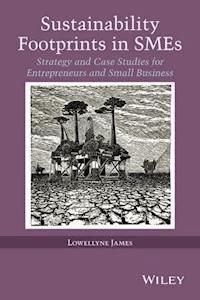
Reviews the evolution and theory of Sustainability Footprints e.g. carbon footprint and examines the critical success factors and contributions to small to medium sized enterprises (SME) growth
• Assist firms in achieving sustainable growth in four key areas Innovation Impact, Cost Impact, Environmental Impact, and Stakeholder Impact
• Identifies the challenges and Critical Success Factors (CSFs) in the use of sustainability footprint methodology within small businesses by the use of case studies
• Proposes a strategic model suitable for the deployment of sustainability strategy and initiatives within business
Sie lesen das E-Book in den Legimi-Apps auf:
Seitenzahl: 439
Veröffentlichungsjahr: 2014
Ähnliche



















CONTENTS
Cover
Title page
Copyright page
Dedication page
Foreword
Acknowledgments
Glossary of abbreviated terms
1 Introduction
1.1 The Concept of Customer Satisfaction
1.2 The Decoupling of Quality from Sustainable Development
1.3 The Inability to Respond to the Dilemma Inherent in the Principal–Agent Relationship
References
2 Sustainability and Corporate Social Responsibility—Context and Definition
2.1 Introduction
2.2 Definitions and Historical Context
2.3 Defining Sustainability…
2.4 Embedding Sustainability…
2.5 CSR Definitions…
References
3 The Dilemma of Sustainability and Corporate Social Responsibility
3.1 Introduction
3.2 The Philosophical Challenge
3.3 Corporate Citizen or Friedman Logic
3.4 The Transition
3.5 The Cultural Challenge
3.6 The Strategic Challenge
3.7 Strategic Frameworks
References
4 Sustainability Footprints
4.1 Introduction
4.2 Conceptual Framework
4.3 Kyoto Protocol and GHG
4.4 Emission Trading
4.5 CDM
4.6 JI
4.7 Carbon Footprint Reporting and GHG Accounting
4.8 Types of Carbon Footprints
4.9 Carbon Footprint Standards
4.10 DEFRA Guidelines
4.11 U.K. Policy Landscape
4.12 Water Footprint and Water Accounting
4.13 Social Footprint
4.14 Social Standards, Social Accounting, and the Social Fingerprint
4.15 Ecological Footprint Analysis
4.16 Criticisms of Footprint Methodologies
References
5 Sustainable Strategic Growth Model
5.1 Introduction
5.2 Sustainable Strategic Growth Model
References
6 The Politics of Sustainability
6.1 Introduction
6.2 Background
6.3 Challenges: Transitioning to a Low-Carbon Economy
6.4 Contributions to Growth
6.5 Critical Success Factors
6.6 Summary
References
7 Capital Cooling
7.1 Introduction
7.2 Context
7.3 Environmental and Legal Challenges
7.4 Contributions to Growth
7.5 Sustainable Performance
7.6 Critical Success Factors
7.7 Sustainability/CSR Charter: Setting the Course with Subcontractors and Suppliers
7.8 Summary
References
8 The Log House People:Low-Carbon Construction
8.1 Introduction
8.2 Context
8.3 Contribution to Growth
8.4 Critical Success Factors
8.5 Summary
References
9 Moffat Golf Club
9.1 Introduction
9.2 Context
9.3 Contributions to Growth
9.4 Critical Success Factors
9.5 Summary
References
10 Rabbie’s Trail Burners
10.1 Introduction
10.2 Context
10.3 Contributions to Growth
10.4 Critical Success Factors
10.5 Summary
References
11 Conclusion
References
Index
End User License Agreement
List of Tables
Chapter 07
Table 7.1 Greenhouse gas emissions and utility consumption Quinton
Table 7.2 Greenhouse gas emissions and utility consumption Quinton
Table 7.3 Potential savings from the adoption of various carbon reduction initiatives
Chapter 08
Table 8.1 The Log House People carbon emission data.
Chapter 09
Table 9.1 Moffat Golf Club carbon emissions
List of Illustrations
Chapter 01
Figure 1.1 Philosophical position of sustainability footprint methodology within existing management theory.
Chapter 02
Figure 2.1 Sustainability/CSR best practice timeline.
Figure 2.2 Sustainability/CSR evolutionary model.
Chapter 03
Figure 3.1 Sustainability/CSR conceptualization diagram.
Figure 3.2 Sustainability perceptual orientation diagram.
Figure 3.3 Integrative sustainability triangle.
Figure 3.4 Sustainable value framework.
Figure 3.5 Six levels of value creation.
Figure 3.6 Carbon-informed complexity management model.
Figure 3.7 Transformation of enterprise systems on entry to a low-carbon economy.
Figure 3.8 Seven steps of the SME carbon management framework.
Figure 3.9 Ecoenterprise strategy model.
Figure 3.10 Examples of balanced scorecard measures of sustainability.
Figure 3.11 Process of formulating an SBSC.
Figure 3.12 Matrix to determine the strategic relevance of environmental and social aspects.
Figure 3.13 SBSC as a strategy map for a sample company.
Chapter 04
Figure 4.1 Carbon accounting definition.
Figure 4.2 Four distinct phases in water footprint assessment.
Chapter 05
Figure 5.1 Sustainable Strategic Growth Model.
Figure 5.2 Sustainability pyramid.
Chapter 07
Figure 7.1 Competitive analysis of the U.K. commercial refrigeration sector.
Figure 7.2 Capital Cooling greenhouse gas analysis by DEFRA scope 2008–2009.
Figure 7.3 Capital Cooling greenhouse gas analysis by type 2008–2009.
Figure 7.4 Polystyrene compactor.
Figure 7.5 Polystyrene briquette.
Figure 7.6 Polystyrene briquettes ready for recycling.
Figure 7.7 Diagram of “teardrop” design delivery vehicle with aerodynamic features.
Figure 7.8 New design vehicles as part of Capital Cooling’s green fleet.
Figure 7.9 Greenhouse gas emissions and utility consumption in Broxburn.
Figure 7.10 Schematic of Troy 26 integral multideck refrigerator.
Figure 7.11 Energy and cost comparison between comparable multideck and Capital Cooling Troy 26.
Figure 7.12 Capital Cooling waste recycling and carbon reduction data.
Figure 7.13 Carbon emission reduction as a result of recycling and ecoefficiency measures.
Figure 7.14 Capital Cooling environmental cost and revenue 2011.
Figure 7.15 Capital Cooling customer satisfaction key indicators 2010 and 2011.
Figure 7.16 Proposed operational structure for sustainability.
Figure 7.17 Benefits and challenges of product carbon labeling.
Figure 7.18 Using the sustainable strategic growth model Capital Cooling case study.
Chapter 08
Figure 8.1 “No. 2 River Park” design extracted from a carbon footprint assessment for The Log House People.
Figure 8.2 Using the sustainable strategic growth model—The Log House People Case Study.
Chapter 09
Figure 9.1 Moffat Golf Club carbon emissions by DEFRA scope.
Figure 9.2 Using the sustainable strategic growth model—Moffat Golf Club case study.
Chapter 10
Figure 10.1 Rabbies total GHG emissions, March 2009–February 2010.
Figure 10.2 Rabbie’s Trail Burners fuel economy, March 2009–February 2010.
Figure 10.3 Annual electricity consumption, 2007–2010.
Figure 10.4 Using the Sustainable Strategic Growth Model—Rabbie’s Trail Burners case study
.
Chapter 11
Figure 11.1 Sustainability footprint cycle.
Guide
Cover
Table of Contents
Begin Reading
Pages
iii
iv
v
xi
xii
xiii
xiv
xv
xvii
xviii
xix
1
2
3
4
5
6
7
8
9
10
11
12
13
14
15
16
17
18
19
20
21
22
23
24
25
26
27
28
29
30
31
32
33
34
35
36
37
38
39
40
41
42
43
44
45
46
47
48
49
50
51
52
53
54
55
56
57
58
59
60
61
62
63
64
65
66
67
68
69
70
71
72
73
74
75
76
77
78
79
80
81
82
83
84
85
86
87
88
89
90
91
92
93
94
95
96
97
98
99
100
101
102
103
104
105
106
107
108
109
110
111
112
113
114
115
116
117
118
119
120
121
122
123
124
125
126
127
128
129
130
131
132
133
134
135
136
137
138
139
140
141
142
143
144
145
146
147
148
149
150
151
152
153
154
155
156
157
158
159
160
161
162
163
164
165
166
167
168
169
170
171
172
173
174
175
176
177
178
179
180
181
182
183
184
185
186
187
188
189
190
191
192
193
194
195
196
197
198
199
200
201
202
203
204
205
206
207
208
209
210
211
212
213
214
215
216
217
218
219
220
221
222
223
224
225
226
227
228
Sustainability Footprints in SMEs
Strategy and case studies for entrepreneurs and small business
LOWELLYNE JAMES
Copyright © 2015 by John Wiley & Sons, Inc. All rights reserved
Published by John Wiley & Sons, Inc., Hoboken, New JerseyPublished simultaneously in Canada
No part of this publication may be reproduced, stored in a retrieval system, or transmitted in any form or by any means, electronic, mechanical, photocopying, recording, scanning, or otherwise, except as permitted under Section 107 or 108 of the 1976 United States Copyright Act, without either the prior written permission of the Publisher, or authorization through payment of the appropriate per-copy fee to the Copyright Clearance Center, Inc., 222 Rosewood Drive, Danvers, MA 01923, (978) 750-8400, fax (978) 750-4470, or on the web at www.copyright.com. Requests to the Publisher for permission should be addressed to the Permissions Department, John Wiley & Sons, Inc., 111 River Street, Hoboken, NJ 07030, (201) 748-6011, fax (201) 748-6008, or online at http://www.wiley.com/go/permission.
Limit of Liability/Disclaimer of Warranty: While the publisher and author have used their best efforts in preparing this book, they make no representations or warranties with respect to the accuracy or completeness of the contents of this book and specifically disclaim any implied warranties of merchantability or fitness for a particular purpose. No warranty may be created or extended by sales representatives or written sales materials. The advice and strategies contained herein may not be suitable for your situation. You should consult with a professional where appropriate. Neither the publisher nor author shall be liable for any loss of profit or any other commercial damages, including but not limited to special, incidental, consequential, or other damages.
For general information on our other products and services or for technical support, please contact our Customer Care Department within the United States at (800) 762-2974, outside the United States at (317) 572-3993 or fax (317) 572-4002.
Wiley also publishes its books in a variety of electronic formats. Some content that appears in print may not be available in electronic formats. For more information about Wiley products, visit our web site at www.wiley.com.
Library of Congress Cataloging-in-Publication Data:
James, Lowellyne.Sustainability footprints in SMEs : strategy and case studies for entrepreneurs and small business / Lowellyne James. pages cm Includes index.
ISBN 978-1-118-77943-9 (cloth)1. Small business–Environmental aspects. 2. Sustainable development–Environmental aspects. 3. Social responsibility of business. I. Title. HD2341.J36 2014 658.4′083–dc23
2014018625
Cover Artwork by Ade Adesina
To my son Cameron and the hope of a more sustainable future
Foreword
Sustainability is the single most important issue facing business and society today. In the 1980s and 1990s, the hot topic for discussion was sustainable competitive advantage. Today, the focus is on creating businesses that are both sustainably competitive and sustainable in an environmental context.
Most organizations have recognized that the two concepts are not, as many assumed, incompatible. The customer is increasingly environmentally aware and is signaling to producers that they would prefer to consume goods and services that are produced and supplied by means that protect the environment. In other words, it is becoming simply good business to produce in a way that is environmentally sustainable.
If we add to this the increasing number of government policies and pieces of legislation that are forcing businesses to behave in a way that is environmentally friendly so as to stem the tide of global warming, which is now scientifically undeniable, then the pressure to operate in an environmentally friendly manner is unstoppable.
In these circumstances, the main question becomes not one of should we operate our business in an environmentally friendly way but how do we develop environmentally friendly business practices? This book, grounded in extensive research, seeks to provide some of the answers to the question of “how.”
The research underpinning the book sought to identify best practice among SMEs, which could be regarded as environmental champions, and then produce practical tools to aid businesses in achieving environmental and business sustainability. The book is among the leaders in its field in identifying practical actions that can be taken by business to achieve these twin goals, which for many years were seen as dichotomous. I would strongly recommend the book to business leaders in organizations of any size or in any sector that are seeking to achieve these twin goals. I would also recommend the book to academics who are interested in sustainability from both the business and the environmental perspective.
Professor George Stonehouse
Dean of the Business School,Edinburgh Napier University,Scotland
Acknowledgments
As a quality, safety, and environmental practitioner implementing management systems within a small and medium sized enterprise (SME) operational context, I was unable to source case studies that presented the business case for carbon footprint measurement. Existing case studies and research literature focused on success stories in large multinationals with access to considerable human resources and financial capital. Undeterred, I began measuring and managing the carbon footprint for Capital Cooling utilizing a free software tool from Best Footprint Forward as part of an ISO 14001 Environmental Management Certification project that indicated results that, to my delight, not only reduced carbon emissions but also generated income from waste streams such as plastic. The ability to receive payment for materials that were previously destined for landfill for a minimal investment cost, for example, the purchase of a baling machine, inspired management to embrace other sustainability initiatives such as facilitating with stakeholder engagement through support for employee volunteer activities. Although participation in voluntary schemes assisted with greenhouse gas performance benchmarking, there was limited feedback on best practices and tools required to improve sustainable performance.
Therefore, I conducted research into SMEs that were recognized environmental champions and had implemented carbon footprint measurement to understand the critical success factors necessary for sustainable growth. First initially as a benchmarking exercise and second to observe if there were similarities in the methods by which these SMEs embed sustainability within their organization from which a practical model can be developed that will assist entrepreneurs, managers, and employees. As businesses react to external stimuli, it was essential that I also examine the policymaking context of which the United Kingdom was an ideal crucible being influenced by EU policy and as a global leader in the fight against climate change through its enactment of groundbreaking climate change legislation.
Creative endeavors have no prescribed format, so I started writing these acknowledgments during the latter phases of the book project. Firstly, I thank God for giving me the opportunity to realize a boyhood dream of writing a book.
This book would not have been possible without the guidance of unsung heroes, my teachers Marva Marcano, Eldon Braithwaite, and Juliana Alexander, who inspired me to love learning and strive for excellence. The patience of mentors like Dennis Nurse, who provided me with an in-depth understanding of the application of management systems as a young professional, and the encouragement of friends, family, and colleagues such as Professor Mike Bonaventura, CEO of Crichton Carbon Centre, and Lisa Gibson, who were both invaluable in soliciting support from the Log House People Ltd and Moffat Golf Club.
So on one rainy Edinburgh evening at the Edinburgh Napier Business School, I began my interviews with our first SME Director Hugh Gourlay of the Log House People, a sustainability enthusiast and keen entrepreneur. In my journey to capture best practice, I traveled from Edinburgh to Dumfries and Galloway seeking to identify if sustainability can be implemented even within the traditional Scottish pastime of golf and was pleasantly surprised by the approaches adopted by Ken Humphreys, Dick Ibbotson, and Michael Wilson at the Moffat Golf Club. I am forever thankful to Matthew Aitken of Underwood Consultants for sharing their midday meal and the prayer of blessing from Minister Norman Hutcheson of Dalbeattie Church, all those many months ago at the Aitken’s family farm.
As a sustainability practitioner, I was indeed envious of the numerous environmental awards and sterling commitment of Hazel Rickett and her team at Rabbie’s Trail Burners, so I was quite pleased that she accepted my offer to participate in our research. The insight into the operations of Rabbie’s Trail Burners provided useful techniques that can be adopted by SMEs to reduce the environmental impact of their operations and contribute to social causes.
This book project may never have materialized without the direct encouragement and guidance from Alister McLean, Chief Executive Officer of Capital Cooling Ltd, whose vision to pursue ISO 14001 certification influenced my search for sustainable development best practice among SMEs. In particular, I am thankful to Stephen Ayr, Technical Manager at Capital Cooling Ltd, for taking a chance in hiring an armed forces veteran and also my colleagues at Capital Cooling Ltd, Pamela Murray, Ian McGill, Nick McCracken, Brian Duncan, Craig Kerr, Darren Henderson, Frank Little, Graham Frew, Fraser Scotcher, and Rob McLennan, who sacrificed time from their busy schedules to document their contributions and were instrumental in my quest to develop the Sustainable Strategic Growth Model.
Instrumental to the success of the ISO 14001 implementation program at Capital Cooling was the technical support provided by Allan and Roseanne Tye in the design and initial development of the environmental management system as well as the timely advice provided by John Bathgate, Quality, Health and Safety, Environmental Manager, Mainetti (UK) Ltd, and Thomas Neilson, Occupational Health and Safety Advisor, National Health Service, UK.
I am grateful for the support of the Scottish Government and one of its key institutions the Scottish Environmental Protection Agency in providing access to information on Scotland’s environmental performance. It would be amiss if special mention is not given to Jane Wood, CEO, Scottish Business in the Community, and Andrew Millson, Chief Development Officer at Social Development Scotland, for their candid views on sustainability and the application of carbon footprint methodologies.
I am thankful to Dr Sajjad Haider and Dr Maneesh Kumar for their career advice and guidance by identifying sustainability as a research area without whom this book may not have been possible; Dr Eleni Theodoraki for her critique of my writing style, although at times I know I exhausted her patience; and Professor George Stonehouse, Dean of Edinburgh Napier Business School, for his encouragement and kindness in contributing the foreword that sets the tone for the book. Heartfelt gratitude is also extended to Professor Alex Scott for supporting a Heriot-Watt MBA alumnus career aspirations.
Despite his reservations regarding the development of this book project, I would also like to thank Professor Alex Russell, Head of the School of Management, Aberdeen Business School, for providing the space to develop my research.
A special thank you is offered to all of the staff of Edinburgh Napier University and Robert Gordon University who provided administrative support that allowed me to pursue my writing, as well as the financial support provided by the Soldiers, Sailors, Airmen and Families Association, Royal Naval Benevolent Trust, Poppyscotland, and the Institute of Chartered Accountants of Scotland is also acknowledged.
It would be amiss if I did not extend my warmest appreciation to Pauline for taking care of our son to whom this book is dedicated, which is a responsibility we both share. I am thankful always for the continued love provided by my parents Winston and Annabella as well as my sisters Avanella and Annesia whose timely advice focused my decision making during the many months of reflection and writing.
Lowellyne James
Course Leader, MSc Quality Management,Aberdeen Business School, Robert Gordon UniversityChair of the Chartered Quality Institute, North of Scotland
Glossary of abbreviated terms
AA1000
Accountability 1000
AAU
Assigned Amount Unit
ASQ
American Society for Quality
BRE
Building Research Establishment
BREEAM
Building Research Establishment Environmental Assessment Method
Lesen Sie weiter in der vollständigen Ausgabe!
Lesen Sie weiter in der vollständigen Ausgabe!
Lesen Sie weiter in der vollständigen Ausgabe!
Lesen Sie weiter in der vollständigen Ausgabe!
Lesen Sie weiter in der vollständigen Ausgabe!
Lesen Sie weiter in der vollständigen Ausgabe!
Lesen Sie weiter in der vollständigen Ausgabe!
Lesen Sie weiter in der vollständigen Ausgabe!
Lesen Sie weiter in der vollständigen Ausgabe!
Lesen Sie weiter in der vollständigen Ausgabe!
Lesen Sie weiter in der vollständigen Ausgabe!
Lesen Sie weiter in der vollständigen Ausgabe!
Lesen Sie weiter in der vollständigen Ausgabe!




