


0,49 €
Niedrigster Preis in 30 Tagen: 0,00 €
Niedrigster Preis in 30 Tagen: 0,00 €
Mehr erfahren.
- Herausgeber: DigiCat
- Kategorie: Geisteswissenschaft
- Sprache: Englisch
Xenophon's "Symposion," commonly translated as "The Banquet," is a rich philosophical dialogue set within the confines of a convivial gathering, showcasing the social and intellectual dynamics of classical Athenian society. Written with a distinctive blend of elegance and accessibility, the text captures the nuanced interplay of friendship, virtue, and the pursuit of wisdom through a series of speeches by renowned figures of the time, including Socrates. The stylistic elements reflect both the humor and seriousness of the discussions, offering a vivid portrayal of aristocratic life while simultaneously engaging with profound ethical inquiries, a hallmark of Socratic thought. Xenophon, a student of Socrates and a significant figure in his own right, provides a unique historical perspective shaped by his experiences as a soldier, historian, and philosopher. His writings often reflect a practical wisdom, steeped in the Socratic method of inquiry. This dual identity, as both an observer and participant in the shifts of Greek intellectual thought, informs his approach in "Symposion," where he examines themes of identity, community, and the essence of a good life amidst societal challenges. Recommended for readers interested in the intersections of philosophy and social discourse, "Symposion" serves not only as a window into ancient Greek culture but as a timeless exploration of the human condition. Its dialogue format encourages reflection on contemporary issues of ethics and relationship, making it indispensable for students of philosophy, history, and literature. In this enriched edition, we have carefully created added value for your reading experience: - A succinct Introduction situates the work's timeless appeal and themes. - The Synopsis outlines the central plot, highlighting key developments without spoiling critical twists. - A detailed Historical Context immerses you in the era's events and influences that shaped the writing. - An Author Biography reveals milestones in the author's life, illuminating the personal insights behind the text. - A thorough Analysis dissects symbols, motifs, and character arcs to unearth underlying meanings. - Reflection questions prompt you to engage personally with the work's messages, connecting them to modern life. - Hand‐picked Memorable Quotes shine a spotlight on moments of literary brilliance. - Interactive footnotes clarify unusual references, historical allusions, and archaic phrases for an effortless, more informed read.
Das E-Book können Sie in Legimi-Apps oder einer beliebigen App lesen, die das folgende Format unterstützen:
Veröffentlichungsjahr: 2022
Ähnliche
















Symposion or The Banquet
Table of Contents
Introduction
At a table bright with wine and music, the contest is not of fists or votes but of wit, character, and love. Xenophon’s Symposion, also translated as The Banquet, invites readers to watch convivial play turn into moral examination. The scene is intimate and public at once, where reputation is tested by laughter no less than by argument. Here, delight is not the opposite of seriousness; it is the avenue by which questions of virtue and desire come gently to the surface. The result is a portrait of philosophy at ease, alert to pleasures yet committed to discipline.
This dialogue holds classic status because it demonstrates how literature can make ethics feel lively, accessible, and human-scaled. Xenophon’s art is to make philosophy walk and talk among friends, compressing large questions into small, vivid encounters. The book’s reach extends beyond antiquity’s dining rooms: later storytellers and moralists took from it a model for placing big ideas within familiar scenes. Its balance of irony and clarity allowed successive generations to see Socratic thought not only in the courtroom or academy, but at the banquet table, where shared pleasures become the proving ground of character.
The author, Xenophon of Athens, was a soldier, historian, and admirer of Socrates, active in the fourth century BCE. Known for works such as Anabasis and Memorabilia, he wrote clear, unadorned Attic prose and favored practical ethical concerns. Symposion belongs to that milieu, offering a companionable glimpse of Socrates outside formal instruction. The period of composition is generally placed in the fourth century BCE, within Xenophon’s mature career. As its Greek title indicates, the setting is a drinking party, a social institution central to elite Athenian life, where conversation, music, and performance accompanied measured rounds of wine.
The work’s premise is disarmingly simple: a wealthy host, Callias, gathers Socrates and a circle of companions for an evening of dinner, entertainment, and exchange. Professional performers enliven the room, but the most memorable acts are verbal, as the guests test one another with playful challenges and reflective speeches. Themes emerge organically from the setting: beauty wins admiration, but self-control claims authority; desire presses forward, and virtue replies. Without breaking the convivial mood, the dialogue turns gradually from spectacle to soul, asking what kind of love elevates, and what training produces the finest human excellence.
As literature, Symposion is a study in mixed tones. It uses the loose frame of a party to carry a series of set pieces, interludes, and lightly staged debates. Xenophon manages pace with the ease of a practiced storyteller, shifting from jest to earnestness without strain. Music, dance, and acrobatics provide a visible rhythm that the speeches mirror. The result feels at once theatrical and conversational, a hybrid of miniature scenes and reflective discourse. Through this interplay, the book dramatizes a truth central to sympotic life: pleasure and instruction can be companions rather than rivals.
Readers familiar with Plato’s dialogue on the same social institution will find a different Socrates here. Xenophon’s Socrates is emphatically practical, attentive to everyday virtues such as moderation, friendship, generosity, and self-mastery. He delights in play but reads play as a test of character. His questions aim less at metaphysical ascent than at the education of desire within civic life. That difference has long attracted scholars: taken together, the two Symposia reveal complementary images of Socrates. Xenophon’s contribution is a grounded portrait of ethical tact, showing how philosophy can inhabit ordinary occasions without losing its edge.
The book’s enduring themes are unmistakable. Eros becomes a lens for education: what we love shapes what we become, and the worthy beloved teaches the lover to refine taste and conduct. Beauty is praised, but the highest form of admiration is aspiration toward virtue. Friendship is not sentimental, but forged through shared discipline and tested by banter. Athletic grace appears alongside musical skill, suggesting that true excellence harmonizes body, mind, and civic habit. The dialogue asks whether delight distracts from nobility or can be trained to support it, a question that remains as pressing now as then.
Xenophon’s style is a large part of the work’s appeal. His Greek is plain without being flat, and his scenes are economical. Characters reveal themselves in brief exchanges—through a boast deflected, a compliment redirected, a joke that shows judgment. He excels at letting values appear in action rather than exposition. The narrative voice rarely intrudes; instead, small details about seating, serving, and sequence guide the reader through the evening. Because the prose is limpid, the ethical stakes stand out sharply, and the wit never feels ornamental. Clarity becomes a form of hospitality extended to the audience.
Symposion also serves as cultural witness. It preserves details of Athenian sympotic custom: the ritual of mixing wine with water, the role of entertainers, the etiquette of conversation, and the social choreography of praise and rivalry. These elements are not antiquarian ornaments; they are the very mechanisms by which the dialogue explores virtue. In a city famed for contests, even a dinner can become a measured competition in grace and generosity. The book thus provides both a literary pleasure and an historical window into how Athenians imagined the formation of character amid leisure.
The dialogue’s influence travels along the sympotic tradition that followed. Ancient readers set Xenophon’s version alongside Plato’s, comparing their aims and tones. Later authors such as Plutarch in Table Talk and Athenaeus in Deipnosophistae adapted the convivial conversation to new purposes, blending anecdote, debate, and display. Lucian’s comic banquet likewise echoes the form’s possibilities. Through this lineage, Xenophon helped to establish the banquet as a stage for ethical and intellectual play, a flexible frame that could carry philosophy, satire, or encyclopedic learning without losing the warmth of shared table talk.
Because Xenophon anchors argument in entertainment, his dialogue invites many ways of reading. One may follow the playful contests as games of self-knowledge, watch the entertainers as mirrors for the guests, or trace how each speaker’s values shape his praise and teasing. The work rewards attention to tone: when humor sharpens, a lesson is near; when admiration softens, discipline often steps in. Even the order of speeches carries meaning, guiding the company toward greater clarity without straining the mood. The form remains light, yet the cumulative effect is a serious education in choice and character.
In our own time, Symposion feels fresh because it models civil disagreement and joyful inquiry. It shows how social pleasure can host moral reflection, and how wit can refine rather than corrode seriousness. In an age hungry for public conversation that is both spirited and responsible, Xenophon offers an image of discourse grounded in courtesy, measure, and shared delight. The questions he stages—about love, aspiration, friendship, and the uses of leisure—are enduring. That is why this modest book continues to speak: it turns a night of festivity into a lasting invitation to live gracefully and well.
Synopsis
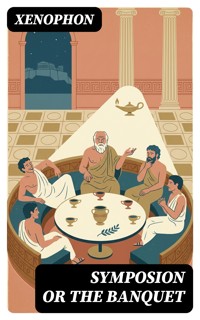
Xenophon’s Symposium (or The Banquet) is a Socratic dialogue set at a convivial dinner in classical Athens. The wealthy Callias hosts the gathering to honor the young athlete Autolycus after a recent victory, assembling Socrates and a circle of acquaintances for food, music, and conversation. Xenophon presents a social occasion where entertainment and philosophy mingle, using the setting to explore love, beauty, self-control, and the ideal of the gentleman. The dialogue unfolds episodically as the wine flows, alternating between performances provided by a professional showman and speeches by the guests. The mood is playful yet reflective, revealing character through banter and ethical inquiry.
The narrative opens with the arrival of the company. Autolycus attends with his father, Lycon, whose presence keeps admiration within bounds, while Callias presides carefully as host. Among the guests are Socrates, Critobulus, Hermogenes, Antisthenes, Charmides, Niceratus, and the jester Philippus. A Syracusan entertainer brings a troupe comprising a boy and a girl trained in dance, along with an acrobat. After the meal, libations and music signal the move to symposium proper. Xenophon sketches the room’s shifting energies: deference toward Autolycus, curiosity about the performers, and a shared expectation that talk and spectacle will supply both pleasure and insight.
Initial performances showcase skill and discipline. The acrobat’s feats and the dancers’ coordinated movements elicit admiration, while Socrates uses their precision to comment on training and harmony. He notes how ordered motion, whether in dance or drill, can cultivate strength and grace, and he draws the company’s attention to the interplay between body and character. The Syracusan, eager to prove his troupe’s versatility, offers sequences that alternate between lighthearted mimicry and displays of technical control. This mixture sets a rhythm the dialogue keeps: amusement providing images that prompt ethical reflection, with Socrates repeatedly turning spectacle into a lesson about practice and purpose.
Seeking to channel the merriment into conversation, the guests adopt a friendly contest: each will declare the quality in which he takes special pride. The exercise is half-game, half-examination. Critobulus claims beauty as an advantage in civic and private life, prompting Socrates to probe what beauty accomplishes and whether it belongs chiefly to the body or the soul. The exchange introduces a recurring question: is attractiveness a power that serves virtue, or a distraction that undermines self-command? By framing the boasts as arguments to be tested, Xenophon sets Socratic inquiry in motion without turning the symposium into a solemn debate.
Other guests likewise advance their strengths. Hermogenes commends piety and trust in the gods as a stabilizing guide. Niceratus praises his thorough knowledge of Homer, offering epic verse as a storehouse of instruction. Antisthenes argues for self-sufficiency and frankness, while Charmides highlights moderation amid scarcity. Philippus interjects with jokes that tease each speaker’s pretensions, keeping the tone buoyant. Socrates routes these claims toward the composite ideal of the kalos kagathos, the noble and good person, suggesting that excellence lies less in a single gift than in an order of mind that uses talents rightly and serves friends and city.
Love becomes the central theme as the companions weigh the claims of Eros. The dancers’ partnership stands as a visible emblem of attraction, yet Socrates distinguishes kinds of love: one that chases fleeting pleasures and one that seeks the shaping of character. He argues that affection that honors restraint and aims at mutual improvement fosters courage, loyalty, and public usefulness. In this vein, he treats beauty as a summons to discipline rather than indulgence. The discussion includes the customs of companionship between older and younger men and the claims of household affection, asking how desire can be governed so it benefits rather than harms.
The Syracusan stages a pantomime of courtship and reconciliation, sharpening the contrast between passion’s charm and its risks. Spectators alternately delight in the skill and grow wary of its seductive pull. Socrates turns the scene into instruction about the uses of art: imitation can either inflame appetite or educate perception, depending on the viewer’s disposition. He also stresses the trainability of all human capacities, including female skill and virtue, when given guidance and practice. This prompts wider reflection on the role of habit, exercise, and example in making citizens capable of friendship, fidelity, and measured pleasure within a well-ordered life.
As the evening advances, the boasts and replies converge on a practical picture of the gentleman. True advantage, Socrates suggests, lies in the power to benefit companions, to endure hardship for worthy aims, and to choose what is fitting amid competing attractions. Wealth, wit, and beauty find their right measure when directed to useful ends. The company returns to their playful contest with a renewed sense that victory consists less in dazzling the room than in elevating it. Even the jester’s quips contribute, reminding the group that laughter can expose vanity and teach modesty without extinguishing good cheer.
The gathering closes with customary libations and farewells, leaving the impressions of a night in which performance and philosophy educated one another. Xenophon’s Symposium preserves Socrates in a social key: genial, probing, and attentive to how ethics works in ordinary pleasures. Without building to a single thesis, the dialogue threads questions about love, beauty, training, and civic virtue through scenes of companionship. Its enduring significance lies in showing that moral formation is not only a matter of doctrine, but of shared habits, amusements, and conversation—an invitation to align delight with discipline, and to make friendship a school for the good.




