


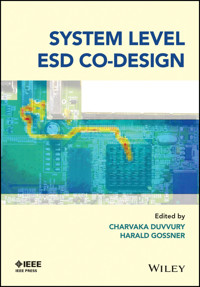
System Level ESD Co-Design E-Book
101,99 €
Mehr erfahren.
- Herausgeber: John Wiley & Sons
- Kategorie: Wissenschaft und neue Technologien
- Serie: Wiley - IEEE
- Sprache: Englisch
An effective and cost efficient protection of electronic system against ESD stress pulses specified by IEC 61000-4-2 is paramount for any system design. This pioneering book presents the collective knowledge of system designers and system testing experts and state-of-the-art techniques for achieving efficient system-level ESD protection, with minimum impact on the system performance. All categories of system failures ranging from 'hard' to 'soft' types are considered to review simulation and tool applications that can be used.
The principal focus of System Level ESD Co-Design is defining and establishing the importance of co-design efforts from both IC supplier and system builder perspectives. ESD designers often face challenges in meeting customers' system-level ESD requirements and, therefore, a clear understanding of the techniques presented here will facilitate effective simulation approaches leading to better solutions without compromising system performance.
With contributions from Robert Ashton, Jeffrey Dunnihoo, Micheal Hopkins, Pratik Maheshwari, David Pomerenke, Wolfgang Reinprecht, and Matti Usumaki, readers benefit from hands-on experience and in-depth knowledge in topics ranging from ESD design and the physics of system ESD phenomena to tools and techniques to address soft failures and strategies to design ESD-robust systems that include mobile and automotive applications.
The first dedicated resource to system-level ESD co-design, this is an essential reference for industry ESD designers, system builders, IC suppliers and customers and also Original Equipment Manufacturers (OEMs).
Key features:
- Clarifies the concept of system level ESD protection.
- Introduces a co-design approach for ESD robust systems.
- Details soft and hard ESD fail mechanisms.
- Detailed protection strategies for both mobile and automotive applications.
- Explains simulation tools and methodology for system level ESD co-design and overviews available test methods and standards.
- Highlights economic benefits of system ESD co-design.
Sie lesen das E-Book in den Legimi-Apps auf:
Seitenzahl: 801
Veröffentlichungsjahr: 2015
Ähnliche




















Table of Contents
Cover
Title Page
Copyright
List of Contributors
Preface
Acronyms
About the Book
Chapter 1: Introduction
1.1 Definition of Co-Design
1.2 Overview of the Book
1.3 Challenges of System Level ESD Protection
1.4 Importance of System Level Protection
1.5 Industry-Wide Perception
1.6 Purpose and Motivation
1.7 Organization and Approach
1.8 Outcome for the Reader
Acknowledgments
References
Chapter 2: Component versus System Level ESD
2.1 ESD Threat in the Real World
2.2 Component ESD Qualification
2.3 System Level ESD Tests
2.4 ISO 10605
2.5 IEC 61000-4-5
2.6 Soft Failures Due to IEC Testing
Acknowledgments
References
Chapter 3: System Level Testing for ESD Susceptibility
3.1 Introduction
3.2 Objectives of System Level Testing
3.3 Compliance to ESD Standards
3.4 Testing for Product Reliability
3.5 Standards Requirements for System Level Testing
3.6 Using the IEC Simulator for Device Testing
3.7 Cable Discharge (CDE) Testing
3.8 Evaluation of Test Results
3.9 The Quick Fix vs Root Cause Determination
3.10 Determining Root Cause of System Level ESD
3.11 Reproducibility of System Level ESD Tests
Acknowledgments
References
Chapter 4: PCB/IC Co-Design Concepts for SEED
4.1 On-Chip System ESD Protection
4.2 Off-Chip ESD Protection
4.3 Concept of PCB/IC Co-Design
4.4 Introduction to System Efficient ESD Design
4.5 Characterization for Hard Failures
4.6 Simulation of System Level ESD Discharge Paths
4.7 Characterization of Soft Failures
4.8 Summary of SEED Characterization
Acknowledgments
References
Chapter 5: Hard Failures and PCB Protection Devices
5.1 Introduction
5.2 ESD Damage to ICs
5.3 Protection Methods
5.4 Characteristics of Protection Devices
5.5 Types of Protection Devices for ESD
5.6 Primary and Secondary Protection
5.7 Evaluating IC Pins
5.8 Choosing ESD Protection Devices
5.9 Summary
References
Chapter 6: Soft Failure Mechanisms and PCB Design Measures
6.1 Introduction
6.2 Are HBM, CDM, MM, and Latch-Up Results Meaningful Soft Failures?
6.3 Classification of Soft Failure Modes
6.4 Optimized System Level Testing
6.5 Soft Failure Characterization Methods
6.6 Soft Failure Examples
6.7 Countermeasure Examples
6.8 The Way Forward
Acknowledgment
References
Chapter 7: ESD in Mobile Devices
7.1 Introduction
7.2 ESD Energy Path in Mobile Device
7.3 ESD Generation Examples on a Large Scale
7.4 Relation between Electrostatic Discharge Immunity Test and Real-World Discharge Waveforms
7.5 Laboratory Test Methods
7.6 Fast ESD and Slow ESD Concepts
7.7 Fast-ESD and Slow-ESD in a Mobile Device
7.8 Isolating a Mobile Device
7.9 Shielding a Mobile Device
7.10 Orientation Effects on ESD Path
7.11 ESD Design in Practice
7.12 PCB Layout Considerations of Metal Shielding “Cans”
7.13 ESD Protection for Cable Interfaces
7.14 Common Mode Impedance Concerns for Layout
7.15 ESD and Software Considerations in Mobile Devices
7.16 Software Versions Utilized in Early ESD Immunity Testing
7.17 Conclusion
References
Chapter 8: ESD for Automotive Applications
8.1 Introduction and Historical Aspects
8.2 Automotive Components
8.3 Design Constraints, Operating Voltage, and Overvoltage Tolerance
8.4 On-Board ESD Protection and Internal ESD Protection
8.5 Verification and Qualification
8.6 Conclusion
References
Chapter 9: Future Applications of SEED Methodology
9.1 Refinement of Models
9.2 Limitations of Simulation and Beyond
9.3 Advances toward High-Speed Systems
9.4 Issues and Challenges of System Protection
9.5 Benefits for Next Generation Systems
Acknowledgments
References
Chapter 10: Co-Design Trade-Offs: Balancing Robustness, Performance, and Cost
10.1 Co-Designing across Functional and Corporate Boundaries
10.2 ESD Goals and Constraints
10.3 Costs of System and Component ESD Susceptibility
10.4 Costs of Improving System and Component ESD Robustness
10.5 Defining the Interaction and Trade-off Matrix
10.6 Assigning the Costs of Failure Criteria
10.7 System Development Triangle Co-Design Contributions
10.8 Product Planning Guidelines
10.9 Validating Co-Design Trade-off Decisions
10.10 Conclusions on Co-Design Economics
References
Glossary
Index
End User License Agreement
Pages
xiii
xv
xvi
xvii
xviii
xix
xx
xxi
1
2
3
4
5
6
7
8
9
10
11
12
13
14
15
16
17
18
19
20
21
22
23
24
25
26
27
28
29
30
31
32
33
34
35
36
37
38
39
40
41
42
43
44
45
46
47
48
49
50
51
52
53
54
55
56
57
58
59
60
61
62
63
64
65
66
67
68
69
70
71
72
73
74
75
76
77
78
79
80
81
82
83
84
85
86
87
88
89
90
91
92
93
94
95
96
97
98
99
100
101
102
103
104
105
106
107
108
109
110
111
112
113
114
115
116
117
118
119
120
121
122
123
124
125
126
127
128
129
130
131
132
133
134
135
136
137
138
139
140
141
142
143
144
145
146
147
148
149
150
151
152
153
154
155
156
157
158
159
160
161
162
163
164
165
166
167
168
169
170
171
172
173
174
175
176
177
178
179
180
181
182
183
184
185
186
187
188
189
190
191
192
193
194
195
196
197
198
199
200
201
202
203
204
205
206
207
208
209
210
211
212
213
214
215
216
217
218
219
220
221
222
223
224
225
226
227
228
229
230
231
232
233
234
235
236
237
238
239
240
241
242
243
244
245
246
247
248
249
250
251
252
253
254
255
256
257
258
259
260
261
262
263
264
265
266
267
268
269
270
271
272
273
274
275
276
277
278
279
280
281
282
283
284
285
286
287
288
289
290
291
292
293
294
295
296
297
298
299
300
301
302
303
304
305
306
307
308
309
310
311
312
313
314
315
316
317
318
319
320
321
322
323
324
325
326
327
328
329
330
331
332
333
334
335
336
337
338
339
340
341
342
343
344
345
346
347
348
349
350
351
352
353
354
355
356
357
358
359
360
361
362
363
364
365
366
367
368
369
370
371
372
373
374
375
376
377
378
379
380
381
382
383
384
385
386
387
388
389
390
391
392
393
394
395
396
397
398
399
400
Guide
Cover
Table of Contents
Preface
Begin Reading
List of Illustrations
Chapter 1: Introduction
Figure 1.1 Overview of the component and system level ESD event scenarios. With proper ESD controls as required, the IC devices do not see higher than 1 kV at the most, while in the external environments the ESD pulses can be much higher in magnitude and thus require a good system level ESD strategy
Figure 1.2 Comparison of different ESD events. HBM and CDM are component ESD pulses; cable discharge and EOS are other types of ESD events; and system level ESD is represented by the IEC standard. Note that the x-axis is not to scale
Figure 1.3 Failure levels for products characterized with both HBM and IEC pulses. Six case studies performed by the Industry Council on ESD Target Levels (WP3PI) are shown here. In all cases the failures were hard failures (Industry Council on ESD Target Levels, 2010)
Figure 1.4 Schematic of an effective system protection method involves two-stage protection to absorb the predominant energy at the TVS device and board components to protect the internal IC pin
Figure 1.5 The concept of “residual pulse” as described in Marum
et al
. (2009). A TVS device alone cannot protect the interfacing IC pin since the voltage build-up of this device at high currents can still damage the internal pin (S. Marum, J. Watson, C. Duvvury, “Effects of Low Level IEC 61000-4-2 Stress on Integrated Circuits,” International ESD Workshop, Lake Tahoe, CA, May 2007.)
Figure 1.6 Simulated waveforms from (Bertonnaud
et al
., 2012) showing the IEC pulse shape with and without the TVS device. Note that TVS alone still has a large peak that would not protect the internal IC pin. Adding the parasitics of the PCB will mitigate this pulse shape (S. Bertonaud, C. Duvvury, and A. Jahanzeb, “IEC System Level ESD Challenges and Effective Protection Strategy for USB Interface,” ESD Symposium Proceedings 2012.)
Chapter 2: Component versus System Level ESD
Figure 2.1 The TVS Zener diode provides positive transient overvoltage protection from supply to ground and the Schottky diode provides negative supply protection for reverse overshoots
Figure 2.2 ESD strategies from wafer to end-customer applications. In many cases the PCB assembly and test are aslo included in the ESD protected areas.
Figure 2.3 Comparison of measured current versus time waveforms for (a) HBM and (b) CDM
Figure 2.4 Impact of advanced technologies and improved ESD controls on HBM/CDM target levels
Figure 2.5 Various ESD control programs
Figure 2.6 Roadmap for HBM target levels
Figure 2.7 Roadmap for CDM target levels
Figure 2.8 HBM levels requiring ESD control programs (Industry Council on ESD Target Levels, 2007)
Figure 2.9 CDM levels requiring ESD control programs (Industry Council on ESD Target Levels, 2010a)
Lesen Sie weiter in der vollständigen Ausgabe!
Lesen Sie weiter in der vollständigen Ausgabe!
Lesen Sie weiter in der vollständigen Ausgabe!
Lesen Sie weiter in der vollständigen Ausgabe!
Lesen Sie weiter in der vollständigen Ausgabe!
Lesen Sie weiter in der vollständigen Ausgabe!
Lesen Sie weiter in der vollständigen Ausgabe!
Lesen Sie weiter in der vollständigen Ausgabe!
Lesen Sie weiter in der vollständigen Ausgabe!
Lesen Sie weiter in der vollständigen Ausgabe!
Lesen Sie weiter in der vollständigen Ausgabe!
Lesen Sie weiter in der vollständigen Ausgabe!
Lesen Sie weiter in der vollständigen Ausgabe!
Lesen Sie weiter in der vollständigen Ausgabe!
Lesen Sie weiter in der vollständigen Ausgabe!
Lesen Sie weiter in der vollständigen Ausgabe!
Lesen Sie weiter in der vollständigen Ausgabe!
Lesen Sie weiter in der vollständigen Ausgabe!
Lesen Sie weiter in der vollständigen Ausgabe!




