


127,99 €
Mehr erfahren.
- Herausgeber: John Wiley & Sons
- Kategorie: Wissenschaft und neue Technologien
- Serie: Wiley Series in Systems Engineering and Management
- Sprache: Englisch
A comprehensive and interdisciplinary guide to systems engineering
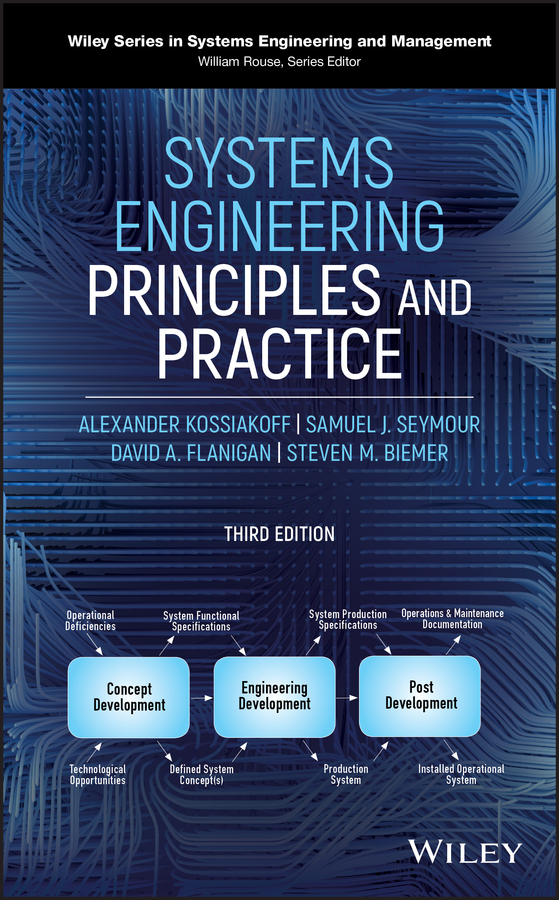
Systems Engineering: Principles and Practice, 3rd Edition is the leading interdisciplinary reference for systems engineers. The up-to-date third edition provides readers with discussions of model-based systems engineering, requirements analysis, engineering design, and software design. Freshly updated governmental and commercial standards, architectures, and processes are covered in-depth. The book includes newly updated topics on:
- Risk
- Prototyping
- Modeling and simulation
- Software/computer systems engineering
Examples and exercises appear throughout the text, allowing the reader to gauge their level of retention and learning. Systems Engineering: Principles and Practice was and remains the standard textbook used worldwide for the study of traditional systems engineering. The material is organized in a manner that allows for quick absorption of industry best practices and methods.
Systems Engineering Principles and Practice continues to be a national standard textbook for the study of traditional systems engineering for advanced undergraduate and graduate students. It addresses the need for an introductory overview, first-text for the development and acquisition of complex technical systems. The material is organized in a way that teaches the reader how to think like a systems engineer and carry out best practices in the field.
Sie lesen das E-Book in den Legimi-Apps auf:
Seitenzahl: 1186
Veröffentlichungsjahr: 2020
Ähnliche




















Table of Contents
COVER
LIST OF ILLUSTRATIONS
LIST OF TABLES
PREFACE TO THE THIRD EDITION
PREFACE TO THE SECOND EDITION
ALEXANDER KOSSIAKOFF, 1914–2005
OBJECTIVES OF THE SECOND EDITION
CONTENT DESCRIPTION
ACKNOWLEDGMENTS
PREFACE TO THE FIRST EDITION
1.1 OBJECTIVES
1.2 ORIGIN AND CONTENTS
ACKNOWLEDGMENTS
PART I: FOUNDATIONS OF SYSTEMS ENGINEERING
1 SYSTEMS ENGINEERING AND THE WORLDOF MODERN SYSTEMS
1.1 WHAT IS SYSTEMS ENGINEERING?
1.2 THE SYSTEMS ENGINEERING LANDSCAPE
1.3 SYSTEMS ENGINEERING VIEWPOINT
1.4 PERSPECTIVES OF SYSTEMS ENGINEERING
1.5 EXAMPLES OF SYSTEMS REQUIRING SYSTEMS ENGINEERING
1.6 SYSTEMS ENGINEERING ACTIVITIES AND PRODUCTS
1.7 SYSTEMS ENGINEERING AS A PROFESSION
1.8 SYSTEMS ENGINEER CAREER DEVELOPMENT MODEL
1.9 SUMMARY
PROBLEMS
REFERENCES
FURTHER READING
2 STRUCTURE OF COMPLEX SYSTEMS
2.1 SYSTEM ELEMENTS AND INTERFACES
2.2 HIERARCHY OF COMPLEX SYSTEMS
2.3 SYSTEM BUILDING BLOCKS
2.4 THE SYSTEM ENVIRONMENT
2.5 INTERFACES AND INTERACTIONS
2.6 COMPLEXITY IN MODERN SYSTEMS
2.7 SUMMARY
PROBLEMS
REFERENCE
FURTHER READING
3 THE SYSTEM DEVELOPMENT PROCESS
3.1 SYSTEMS ENGINEERING THROUGH THE SYSTEM LIFE CYCLE
3.2 SYSTEM LIFE CYCLE
3.3 EVOLUTIONARY CHARACTERISTICS OF THE DEVELOPMENT PROCESS
3.4 THE SYSTEMS ENGINEERING METHOD
3.5 TESTING THROUGHOUT SYSTEM DEVELOPMENT
3.6 SUMMARY
PROBLEMS
REFERENCE
FURTHER READING
4 SYSTEMS ENGINEERING MANAGEMENT
4.1 MANAGING SYSTEM DEVELOPMENT
4.2 WORK BREAKDOWN STRUCTURE
4.3 SYSTEMS ENGINEERING MANAGEMENT PLAN
4.4 ORGANIZATION OF SYSTEMS ENGINEERING
4.5 SUMMARY
PROBLEMS
FURTHER READING
PART II: CONCEPT DEVELOPMENT STAGE
5 NEEDS ANALYSIS
5.1 ORIGINATING A NEW SYSTEM
5.2 SYSTEMS THINKING
5.3 OPERATIONS ANALYSIS
5.4 FEASIBILITY DEFINITION
5.5 NEEDS VALIDATION
5.6 SUMMARY
PROBLEMS
REFERENCES
FURTHER READING
6 REQUIREMENTS ANALYSIS
6.1 DEVELOPING THE SYSTEM REQUIREMENTS
6.2 REQUIREMENTS DEVELOPMENT AND SOURCES
6.3 REQUIREMENTS FEATURES AND ATTRIBUTES
6.4 REQUIREMENTS DEVELOPMENT PROCESS
6.5 REQUIREMENTS HIERARCHY
6.6 REQUIREMENTS METRICS
6.7 REQUIREMENTS VERIFICATION AND VALIDATION
6.8 REQUIREMENTS DEVELOPMENT: TSE VS. AGILE
6.9 SUMMARY
PROBLEMS
FURTHER READING
7 FUNCTIONAL ANALYSIS
7.1 SELECTING THE SYSTEM CONCEPT
7.2 FUNCTIONAL ANALYSIS AND FORMULATION
7.3 FUNCTIONAL ALLOCATION
7.4 FUNCTIONAL ANALYSIS PRODUCTS
7.5 TRACEABILITY TO REQUIREMENTS
7.6 CONCEPT DEVELOPMENT SPACE
7.7 SUMMARY
PROBLEMS
FURTHER READING
8 EVALUATION AND SELECTION
8.1 EVALUATING AND SELECTING THE SYSTEM CONCEPT
8.2 ALTERNATIVES ANALYSIS
8.3 OPERATIONS RESEARCH TECHNIQUES
8.4 ECONOMICS AND AFFORDABILITY
8.5 EVENTS AND DECISIONS FOR CONSIDERATION
8.6 ALTERNATIVE CONCEPT DEVELOPMENT AND CONCEPT SELECTION
8.7 CONCEPT VALIDATION
8.8 TRADITIONAL VS. AGILE SE APPROACH TO CONCEPT EVALUATION
8.9 SUMMARY
PROBLEMS
REFERENCES
FURTHER READING
9 SYSTEMS ARCHITECTING
9.1 ARCHITECTURE INTRODUCTION
9.2 TYPES OF ARCHITECTURE
9.3 ARCHITECTURE FRAMEWORKS
9.4 ARCHITECTURAL VIEWS
9.5 ARCHITECTURE DEVELOPMENT
9.6 ARCHITECTURE TRACEABILITY
9.7 ARCHITECTURE VALIDATION
9.8 SUMMARY
PROBLEMS
FURTHER READING
10 MODEL‐BASED SYSTEMS ENGINEERING (MBSE)
10.1 MBSE INTRODUCTION
10.2 MBSE LANGUAGES
10.3 MBSE TOOLS
10.4 MBSE USED IN THE SE LIFE CYCLE
10.5 EXAMPLES
10.6 SUMMARY
PROBLEMS
REFERENCES
FURTHER READING
11 DECISION ANALYSIS AND SUPPORT
11.1 DECISION MAKING
11.2 MODELING THROUGHOUT SYSTEM DEVELOPMENT
11.3 MODELING FOR DECISIONS
11.4 SIMULATION
11.5 TRADE‐OFF ANALYSIS
11.6 EVALUATION METHODS
11.7 SUMMARY
PROBLEMS
REFERENCES
FURTHER READING
12 RISK MANAGEMENT
12.1 RISK MANAGEMENT IN THE SE LIFE CYCLE
12.2 RISK MANAGEMENT
12.3 RISK TRACEABILITY/ALLOCATION
12.4 RISK ANALYSIS TECHNIQUES
12.5 SUMMARY
PROBLEMS
REFERENCE
FURTHER READING
PART III: ENGINEERING DEVELOPMENT PHASE
13 ADVANCED DEVELOPMENT
13.1 REDUCING UNCERTAINTIES
13.2 REQUIREMENTS ANALYSIS
13.3 FUNCTIONAL ANALYSIS AND DESIGN
13.4 PROTOTYPE DEVELOPMENT AS A RISK MITIGATION TECHNIQUE
13.5 DEVELOPMENT TESTING
13.6 RISK REDUCTION
13.7 SUMMARY
PROBLEMS
REFERENCES
FURTHER READING
14 SOFTWARE SYSTEMS ENGINEERING
14.1 COMPONENTS OF SOFTWARE
14.2 COPING WITH COMPLEXITY AND ABSTRACTION
14.3 NATURE OF SOFTWARE DEVELOPMENT
14.4 SOFTWARE DEVELOPMENT LIFE CYCLE MODELS
14.5 SOFTWARE CONCEPT DEVELOPMENT: ANALYSIS AND DESIGN
14.6 SOFTWARE ENGINEERING DEVELOPMENT: CODING AND UNIT TEST
14.7 SOFTWARE INTEGRATION AND TEST
14.8 SOFTWARE ENGINEERING MANAGEMENT
14.9 SUMMARY
PROBLEMS
REFERENCES
FURTHER READING
15 ENGINEERING DESIGN
15.1 IMPLEMENTING THE SYSTEM BUILDING BLOCKS
15.2 REQUIREMENTS ANALYSIS
15.3 FUNCTIONAL ANALYSIS AND DESIGN
15.4 COMPONENT DESIGN
15.5 DESIGN VALIDATION
15.6 CONFIGURATION MANAGEMENT
15.7 SUMMARY
PROBLEMS
FURTHER READING
16 SYSTEMS INTEGRATION
16.1 INTEGRATING THE TOTAL SYSTEM
16.2 SYSTEM INTEGRATION HIERARCHY
16.3 TYPES OF INTEGRATION
16.4 INTEGRATION PLANNING
16.5 INTEGRATION FACILITIES
16.6 SUMMARY
PROBLEMS
REFERENCES
FURTHER READING
17 TEST AND EVALUATION
17.1 TESTING AND EVALUATING THE TOTAL SYSTEM
17.2 DEVELOPMENTAL SYSTEM TESTING
17.3 OPERATIONAL TEST AND EVALUATION
17.4 HUMAN FACTORS TESTING
17.5 TEST PLANNING AND PREPARATION
17.6 TEST TRACEABILITY
17.7 SYSTEM OF SYSTEMS TESTING
17.8 SUMMARY
PROBLEMS
REFERENCES
FURTHER READING
PART IV: POST-DEVELOPMENT STAGE
18 PRODUCTION
18.1 SYSTEMS ENGINEERING IN THE FACTORY
18.2 ENGINEERING FOR PRODUCTION
18.3 TRANSITION FROM DEVELOPMENT TO PRODUCTION
18.4 PRODUCTION OPERATIONS
18.5 ACQUIRING A PRODUCTION KNOWLEDGE BASE
18.6 SUMMARY
PROBLEMS
REFERENCES
FURTHER READING
19 OPERATION AND SUPPORT
19.1 INSTALLING, MAINTAINING, AND UPGRADING THE SYSTEM
19.2 INSTALLATION AND TEST
19.3 IN‐SERVICE SUPPORT
19.4 MAJOR SYSTEM UPGRADES: MODERNIZATION
19.5 OPERATIONAL FACTORS IN SYSTEM DEVELOPMENT
19.6 SUMMARY
PROBLEMS
REFERENCE
FURTHER READING
20 SYSTEM OF SYSTEMS ENGINEERING
20.1 SYSTEM OF SYSTEMS ENGINEERING
20.2 DIFFERENCES BETWEEN SOS AND TSE
20.3 TYPES OF SOS
20.4 ATTRIBUTES OF SOS
20.5 CHALLENGES TO SYSTEM OF SYSTEMS ENGINEERING
20.6 SUMMARY
PROBLEMS
REFERENCES
FURTHER READING
PART V: SYSTEMS DOMAINS
21 ENTERPRISE SYSTEMS ENGINEERING
21.1 ENTERPRISE SYSTEMS ENGINEERING
21.2 DEFINITIONS OF ENTERPRISE SYSTEMS ENGINEERING
21.3 PROCESSES AND COMPONENTS OF ENTERPRISE SYSTEMS ENGINEERING
21.4 ENTERPRISE SYSTEMS ENGINEERING APPLICATIONS TO DOMAINS
21.5 CHALLENGES TO ENTERPRISE SYSTEMS ENGINEERING
21.6 SUMMARY
PROBLEMS
REFERENCES
FURTHER READING
22 SYSTEMS SECURITY ENGINEERING
22.1 SYSTEMS SECURITY ENGINEERING
22.2 TYPES OF SECURITY
22.3 SECURITY APPLICATIONS TO SYSTEMS ENGINEERING
22.4 SECURITY APPLICATIONS TO DOMAINS
22.5 SECURITY VALIDATION AND ANALYSIS
22.6 SUMMARY
PROBLEMS
FURTHER READING
23 THE FUTURE OF SYSTEMS ENGINEERING
23.1 INTRODUCTION AND MOTIVATION
23.2 AREAS TO APPLY THE SYSTEMS ENGINEERING APPROACH
23.3 EDUCATION FOR THE FUTURE SYSTEMS ENGINEER
23.4 CONCLUDING REMARKS
23.5 SUMMARY
PROBLEMS
FURTHER READING
INDEX
WILEY SERIES IN SYSTEMS ENGINEERING AND MANAGEMENT
END USER LICENSE AGREEMENT
List of Tables
Chapter 1
TABLE 1.1. Comparison of Systems Perspectives
TABLE 1.2. Examples of Engineered Complex Systems: Signal and Data Systems
TABLE 1.3. Examples of Engineered Complex Systems: Material and Energy System...
TABLE 1.4. Systems Engineering Activities and Documents
Chapter 2
TABLE 2.1. System Design Hierarchy
TABLE 2.2. System Functional Elements
TABLE 2.3. Component Design Elements
TABLE 2.4. Examples of Interface Elements
Chapter 3
TABLE 3.1. Evolution of System Materialization Through System Life Cycle
TABLE 3.2. Evolution of System Representation
TABLE 3.3. Systems Engineering Method over Life Cycle
Chapter 5
TABLE 5.1. Status of System Materialization at Needs Analysis Phase
Chapter 6
TABLE 6.1. Status of System Materialization of Concept Exploration Phase
Chapter 7
TABLE 7.1. Status of System Materialization of Concept Definition Phase
TABLE 7.2. Functional to Requirements Allocation Example
TABLE 7.3. Coffee Maker Morphological Box
Chapter 8
TABLE 8.1. System Decision Questions
Chapter 9
TABLE 9.1 Glucose Meter Example Allocated Architecture List
Chapter 11
TABLE 11.1. Decision framework
TABLE 11.2. Weighted Sum Integration of Selection Criteria
TABLE 11.3. Technical Criteria Pair‐Wise Comparison
TABLE 11.4. Technical Criteria Pair‐Wise Reasoning
TABLE 11.5. Trade Study Conversion of Raw Data to Utility Scores
TABLE 11.6. Trade Study Final Scoring
TABLE 11.7. Trade Study Sensitivity Analysis
Chapter 12
TABLE 12.1. Risk Likelihood
TABLE 12.2. Risk Criticality
TABLE 12.3. Patient Processing Quantification Based on Functions and Componen...
TABLE 12.4. Patient Processing Quantification Based on Functions and Componen...
TABLE 12.5. Patient Processing Mitigation Example (Before Mitigation)
TABLE 12.6. Patient Processing Mitigation Example (After Mitigation)
Chapter 13
TABLE 13.1. Status of System Materialization at Advanced Development Phase
TABLE 13.2. Development of New Components
TABLE 13.3. Selected Critical Characteristics of System Functional Elements
TABLE 13.4. Some Examples of Special Materials
Chapter 14
TABLE 14.1. Software Types
TABLE 14.2. Categories of Software‐Dominated Systems
TABLE 14.3. Differences Between Hardware and Software
TABLE 14.4. Systems Engineering Life Cycle and the Waterfall Model
TABLE 14.5. Commonly Used Computer Languages
TABLE 14.6. Some Special‐Purpose Computer Languages
TABLE 14.7. Characteristics of Prototypes
TABLE 14.8. Comparison of Computer Interface Modes
TABLE 14.9. Capability Levels
TABLE 14.10. Maturity Levels
Chapter 15
TABLE 15.1. Status of System Materialization at Engineering Design Phase
TABLE 15.2. Configuration Baselines
Chapter 17
TABLE 17.1. Status of System Materialization at Integration and Evaluation Ph...
TABLE 17.2. System Integration and Evaluation Process
TABLE 17.3. Parallels Between System Development and T&E Planning
Chapter 20
TABLE 20.1 Traditional Systems Engineering vs. System of Systems Engineering
TABLE 20.2 System of Systems Engineering Examples
Chapter 21
TABLE 21.1. Traditional Systems Engineering vs. Enterprise Systems Engineerin...
Chapter 22
TABLE 22.1. SSE Interfaces with SE Team
List of Illustrations
Chapter 1
Figure 1.1. The ideal missile design from the viewpoint of various specialis...
Figure 1.2. Systems engineering principles and practice.
Figure 1.3. Systems engineering.
Figure 1.4. Examples of systems engineering components.
Figure 1.5. Examples of systems engineering approaches.
Figure 1.6. Career opportunities and growth.
Figure 1.7. Systems engineering career elements derived from quality work ex...
Figure 1.8. Components of employer development of systems engineers.
Figure 1.9. “T” model for systems engineer career development.
Chapter 2
Figure 2.1. Knowledge domains of systems engineer and design specialist.
Figure 2.2. Context diagram.
Figure 2.3. Context diagram for an automobile.
Figure 2.4. Environments of a passenger airliner.
Figure 2.5. Functional interactions and physical interfaces.
Figure 2.6. Pyramid of system hierarchy.
Chapter 3
Figure 3.1. DoD system life cycle model.
Figure 3.2. System life cycle model.
Figure 3.3. Principal stages in system life cycle.
Figure 3.4. Concept development phases of system life cycle.
Figure 3.5. Engineering development phases in system life cycle.
Figure 3.6. Principal Participants in Typical Aerospace System Development
Figure 3.7. Systems engineering method's top‐level flow diagram.
Figure 3.8. Systems engineering method flow diagram.
Figure 3.9. Spiral model of the system life cycle.
Chapter 4
Figure 4.1. Systems engineering as a part of project management.
Figure 4.2. System product WBS partial breakdown structure.
Figure 4.3. Place of SEMP in program management plans.
Chapter 5
Figure 5.1. Needs analysis phase in the system life cycle.
Figure 5.2. Needs analysis phase flow diagram.
Figure 5.3. Objectives tree structure.
Figure 5.4. Example objectives tree for an automobile.
Figure 5.5. Triumvirate of conceptual design.
Figure 5.6. Hierarchy of scenarios.
Figure 5.7. Analysis pyramid.
Chapter 6
Figure 6.1. Concept exploration phase in system life cycle.
Figure 6.2. Concept exploration phase flow diagram.
Figure 6.3. Simple requirements development process.
Chapter 7
Figure 7.1. Concept definition phase in system life cycle.
Figure 7.2. Concept definition phase flow diagram.
Figure 7.3. IDEF0 functional model structure.
Figure 7.4. Functional block diagram of a standard coffee maker.
Figure 7.5. Example functional to subsystem allocation matrix.
Figure 7.6. Function category vs. functional media.
Figure 7.7. Functional block diagram development from internal view first.
Figure 7.8. Functional block diagram development from external view first.
Figure 7.9. Functional flow diagram example.
Figure 7.10. Coffee maker functional flow diagram.
Figure 7.11. Coffee maker sequence diagram.
Chapter 8
Figure 8.1. Assignment problem to minimize number of machines used.
Figure 8.2. Decision tree example.
Figure 8.3. Decision path.
Figure 8.4. Decision tree solved.
Figure 8.5. Nonmonetary benefits example.
Figure 8.6. Scatterplot of performance and cost comparison.
Figure 8.7. Example context diagram of healthcare costs.
Chapter 9
Figure 9.1. Glucose meter example functional architecture.
Figure 9.2. Glucose meter example physical architecture.
Figure 9.3. Glucose meter example allocated architecture.
Figure 9.4. DODAF Version 2.0.2 viewpoints.
Chapter 10
Figure 10.1. SysML block definition diagram of NASA's Apollo spacecraft.
Figure 10.2. Relation map of NASA's Apollo spacecraft.
Figure 10.3. Apollo part decomposition matrix.
Figure 10.4. Apollo launch vehicle part properties.
Figure 10.5. Internal block diagram.
Figure 10.6. Satellite command and data‐handling state machine diagram.
Figure 10.7. Flight computer SysML state machine.
Figure 10.8. SysML parametric diagram.
Figure 10.9. Driveline parametric diagram.
Chapter 11
Figure 11.1. Basic decision process.
Figure 11.2. Decision process.
Figure 11.3. Virtual reality simulation.
Figure 11.4. Candidate utility functions.
Figure 11.5. Example utility function for waiting times.
Figure 11.6. Criteria profile.
Figure 11.7. Queuing alternatives.
Figure 11.8. Trade study utility functions.
Figure 11.9. Trade study analysis examples.
Figure 11.10. MAUT analysis example.
Figure 11.11. MAUT final analysis example plot.
Figure 11.12. Example cost‐effectiveness integration.
Figure 11.13. Example scatterplot of performance cost quadrants.
Figure 11.14. QFD House of Quality.
Chapter 12
Figure 12.1. Variation of program risk and effort throughout system developm...
Figure 12.2. Example of a risk mitigation waterfall chart.
Figure 12.3. An example of a risk cube display.
Figure 12.4. Sample risk plan work sheet.
Figure 12.5. Computer failure risk cube plot.
Chapter 13
Figure 13.1. Advanced development phase in system life cycle.
Figure 13.2. Advanced development phase flow diagram.
Figure 13.3. Test and evaluation process of a system element.
Chapter 14
Figure 14.1. IEEE software systems engineering process.
Figure 14.2. Software hierarchy.
Figure 14.3. Notional three‐tier architecture.
Figure 14.4. Classical waterfall software development cycle.
Figure 14.5. Software incremental model.
Figure 14.6. Spiral model.
Figure 14.7. State transition diagram in concurrent development model.
Figure 14.8. User needs, software requirements, and specifications.
Figure 14.9. Software generation process.
Figure 14.10. Principles of modular partitioning.
Figure 14.11. Functional flow block diagram example.
Figure 14.12. Data flow diagram: library checkout.
Figure 14.13. Robustness diagram: library checkout.
Chapter 15
Figure 15.1. Engineering design phase in system life cycle.
Figure 15.2. Engineering design phase in relation to integration and evaluat...
Figure 15.3. Engineering design phase flow diagram.
Chapter 16
Figure 16.1. Integration and evaluation phase in system life cycle.
Figure 16.2. Subsystems configuration.
Figure 16.3. Top‐down integration process.
Figure 16.4. Bottom‐up integration process.
Chapter 17
Figure 17.1. Evaluation phase in relation to engineering design.
Figure 17.2. System test and evaluation team.
Figure 17.3. System element test configuration.
Figure 17.4. (a) Operation of a passenger airliner. (b) Operational testing ...
Figure 17.5. Test realism vs. cost.
Chapter 18
Figure 18.1. Production phase in system life cycle.
Figure 18.2. Production phase overlap with adjacent phases.
Figure 18.3. Production operations system.
Chapter 19
Figure 19.1. Operation and support phase in system life cycle.
Figure 19.2. System operation history.
Figure 19.3. Non‐disruptive installation via simulation.
Figure 19.4. Non‐disruptive installation via a duplicate system.
Chapter 20
Figure 20.1. System of system requirements context.
Figure 20.2. System of systems architecture example.
Figure 20.3. Directed SoS attributes.
Figure 20.4. Acknowledged SoS attributes.
Figure 20.5. Collaborative SoS attributes.
Figure 20.6. Virtual SoS attributes.
Chapter 21
Figure 21.1. Enterprise systems engineering context diagram.
Chapter 22
Figure 22.1. Systems security engineering context diagram.
Figure 22.2. Systems security engineering overlay on the systems engineering...
Figure 22.3. Systems security engineering applications.
Guide
Cover
Table of Contents
Begin Reading
Pages
ii
iii
iv
xv
xvi
xvii
xviii
xix
xix
xx
xxi
xxiii
xxii
xxiv
xxv
xxvi
xxvii
xxviii
xxix
xxx
xxxi
1
3
4
5
6
7
8
9
10
11
12
13
14
15
16
17
18
19
20
21
22
23
24
25
26
27
28
29
30
31
33
34
35
36
37
38
39
40
41
42
43
44
45
46
47
48
49
50
51
52
53
54
55
56
57
58
59
60
61
62
63
64
65
66
67
68
69
70
71
72
73
74
75
76
77
78
79
80
81
82
83
84
85
86
87
88
89
90
91
92
93
94
95
96
97
98
99
101
102
103
104
105
106
107
108
109
110
111
112
113
114
115
116
117
119
121
122
123
124
125
126
127
128
129
130
131
132
133
134
135
136
137
138
139
140
141
142
143
144
145
146
147
148
149
150
151
153
154
155
156
157
158
159
160
161
162
163
164
165
166
167
168
169
170
171
172
173
174
175
176
177
178
179
180
181
182
183
184
185
186
187
188
189
190
191
192
193
194
195
196
197
198
199
200
201
202
203
204
205
206
207
208
209
210
211
212
213
214
215
216
217
218
219
220
221
222
223
224
225
226
227
228
229
230
231
232
233
234
235
236
237
238
239
240
241
242
243
244
245
246
247
248
249
250
251
252
253
254
255
256
257
258
259
260
261
262
263
264
265
266
267
268
269
270
271
272
273
275
276
277
278
279
280
281
282
283
284
285
286
287
288
289
290
291
292
293
294
295
296
297
298
299
300
301
302
303
304
305
306
307
308
309
310
311
312
313
314
315
316
317
318
319
320
321
322
323
324
325
327
328
329
330
331
332
333
334
335
336
337
338
339
340
341
342
343
344
345
346
347
349
351
352
353
354
355
356
357
358
359
360
361
362
363
364
365
366
367
368
369
370
371
372
373
374
375
376
377
378
379
380
381
382
383
384
385
386
387
388
389
390
391
393
394
395
396
397
398
399
400
401
402
403
404
405
406
407
408
409
410
411
412
413
414
415
416
417
418
419
420
421
422
423
424
425
426
427
428
429
430
431
432
433
434
435
436
437
438
439
440
441
442
443
444
445
446
447
449
450
451
452
453
454
455
456
457
458
459
460
461
462
463
464
465
466
467
468
469
470
471
472
473
474
475
476
477
478
479
480
481
482
483
484
485
486
487
488
489
490
491
492
493
494
495
496
497
498
499
500
501
502
503
504
505
506
507
508
509
510
511
512
513
514
515
516
517
518
519
520
521
522
523
524
525
526
527
528
529
530
531
532
533
534
535
537
539
540
541
542
543
544
545
546
547
548
549
550
551
552
553
554
555
556
557
558
559
560
561
562
563
564
565
566
567
568
569
570
571
572
573
574
575
576
577
578
579
580
581
582
583
584
585
586
587
588
589
590
591
592
593
594
595
596
597
599
600
601
602
603
604
605
606
607
608
609
611
612
613
614
615
616
617
618
619
620
621
622
623
624
625
627
628
629
630
631
632
633
634
635
636
637
639
640
641
642
643
644
645
646
647
648
WILEY SERIES IN SYSTEMS ENGINEERING AND MANAGEMENT
William Rouse, Series EditorAndrew P. Sage, Founding Editor
A complete list of the titles in this series appears at the end of this volume.
SYSTEMS ENGINEERING PRINCIPLES AND PRACTICE
THIRD EDITION
Alexander Kossiakoff†Samuel J. SeymourDavid A. FlaniganSteven M. Biemer
This third edition first published 2020© 2020 John Wiley & Sons, Inc.
Edition HistoryJohn Wiley & Sons, Inc. (1e, 2003)John Wiley & Sons, Inc. (2e, 2011)
All rights reserved. No part of this publication may be reproduced, stored in a retrieval system, or transmitted, in any form or by any means, electronic, mechanical, photocopying, recording or otherwise, except as permitted by law. Advice on how to obtain permission to reuse material from this title is available at http://www.wiley.com/go/permissions.
The right of Alexander Kossiakoff, Samuel J. Seymour, David A. Flanigan, and Steven M. Biemer to be identified as the authors of this work has been asserted in accordance with law.
Registered OfficeJohn Wiley & Sons, Inc., 111 River Street, Hoboken, NJ 07030, USA
Editorial Office111 River Street, Hoboken, NJ 07030, USA
For details of our global editorial offices, customer services, and more information about Wiley products visit us at www.wiley.com.
Wiley also publishes its books in a variety of electronic formats and by print-on-demand. Some content that appears in standard print versions of this book may not be available in other formats.
Limit of Liability/Disclaimer of WarrantyWhile the publisher and authors have used their best efforts in preparing this work, they make no representations or warranties with respect to the accuracy or completeness of the contents of this work and specifically disclaim all warranties, including without limitation any implied warranties of merchantability or fitness for a particular purpose. No warranty may be created or extended by sales representatives, written sales materials or promotional statements for this work. The fact that an organization, website, or product is referred to in this work as a citation and/or potential source of further information does not mean that the publisher and authors endorse the information or services the organization, website, or product may provide or recommendations it may make. This work is sold with the understanding that the publisher is not engaged in rendering professional services. The advice and strategies contained herein may not be suitable for your situation. You should consult with a specialist where appropriate. Further, readers should be aware that websites listed in this work may have changed or disappeared between when this work was written and when it is read. Neither the publisher nor authors shall be liable for any loss of profit or any other commercial damages, including but not limited to special, incidental, consequential, or other damages.
Library of Congress Cataloging-in-Publication Data
Names: Kossiakoff, Alexander, 1914–2005, author. | Biemer, Steven M., author. | Seymour, Samuel J., author. | Flanigan, David A., author.Title: Systems engineering : principles and practice / Alexander Kossiakoff, Steven M. Biemer, Samuel J. Seymour, David A. Flanigan.Description: Third edition. | Hoboken, NJ : John Wiley & Sons, Inc., 2020. | Series: Wiley series in systems engineering and management | Revised edition of: Systems engineering : principles and practice / Alexander Kossiakoff … [et al.]. 2011. | Includes bibliographical references.Identifiers: LCCN 2020002852 (print) | LCCN 2020002853 (ebook) | ISBN 9781119516668 (hardback) | ISBN 9781119516675 (adobe pdf) | ISBN 9781119516705 (epub)Subjects: LCSH: Systems engineering.Classification: LCC TA168 .K68 2020 (print) | LCC TA168 (ebook) | DDC 620.001/171–dc23LC record available at https://lccn.loc.gov/2020002852LC ebook record available at https://lccn.loc.gov/2020002853
Cover Design: WileyCover Images: Blue geometric lines © Westend61/Getty Images, chart © John Wiley & Sons, Inc.
To Alexander Kossiakoff
who never took “no” for an answer and refused to believe that anything was impossible. He was an extraordinary problem solver, instructor, mentor, and friend.
Samuel J. SeymourDavid A. FlaniganSteven M. Biemer
LIST OF ILLUSTRATIONS
1‐1
The ideal missile design from the viewpoint of various specialists
1‐2
Systems engineering principles and practice
1‐3
Systems engineering
1‐4
Examples of systems engineering components
1‐5
Examples of systems engineering approaches
1‐6
Career opportunities and growth
1‐7
Systems engineering career elements derived from quality work experiences
1‐8
Components of employer development of systems engineers
1‐9
“T” model for systems engineer career development
2‐1
Knowledge domains of systems engineer and design specialist
2‐2
Context diagram
2‐3
Context diagram for an automobile
2‐4
Environments of a passenger airliner
2‐5
Functional interactions and physical interfaces
2‐6
Pyramid of system hierarchy
3‐1
DoD system life cycle model
3‐2
System life cycle model
3‐3
Principal stages in system life cycle
3‐4
Concept development phases of system life cycle
3‐5
Engineering development phases in system life cycle
3‐6
Principal Participants in Typical Aerospace System Development
3‐7
Systems engineering method’s top‐level flow diagram
3‐8
Systems engineering method flow diagram
3‐9
Spiral model of the system life cycle
4‐1
Systems engineering as a part of project management
4‐2
System product WBS partial breakdown structure
4‐3
Place of SEMP in program management plans
5‐1
Needs analysis phase in the system life cycle
5‐2
Needs analysis phase flow diagram
5‐3
Objectives tree structure
5‐4
Example objectives tree for an automobile
5‐5
Triumvirate of conceptual design
5‐6
Hierarchy of scenarios
5‐7
Analysis pyramid
6‐1
Concept exploration phase in system life cycle
6‐2
Concept exploration phase flow diagram
6‐3
Simple requirements development process
7‐1
Concept definition phase in system life cycle
7‐2
Concept definition phase flow diagram
7‐3
IDEF0 functional model structure
7‐4
Functional block diagram of a standard coffee maker
7‐5
Example functional to subsystem allocation matrix
7‐6
Function category vs. functional media
7‐7
Functional block diagram development from internal view first
7‐8
Functional block diagram development from external view first
7‐9
Functional flow diagram example
7‐10
Coffee maker functional flow diagram
7‐11
Coffee maker sequence diagram
8‐1
Assignment problem to minimize number of machines used
8‐2
Decision tree example
8‐3
Decision path
8‐4
Decision tree solved
8‐5
Nonmonetary benefits example
8‐6
Scatterplot of performance and cost comparison
8‐7
Example context diagram of healthcare costs
9‐1
Glucose meter example functional architecture
9‐2
Glucose meter example physical architecture
9‐3
Glucose meter example allocated architecture
9‐4
DODAF Version 2.0.2 viewpoints
10‐1
SysML block definition diagram of NASA’s Apollo spacecraft
10‐2
Relation map of NASA’s Apollo spacecraft
10‐3
Apollo part decomposition matrix
10‐4
Apollo launch vehicle part properties
10‐5
Internal block diagram
10‐6
Satellite command and data‐handling state machine diagram
10‐7
Flight computer SysML state machine
10‐8
SysML parametric diagram
10‐9
Driveline parametric diagram
11‐1
Basic decision process
11‐2
Decision process
11‐3
Virtual reality simulation
11‐4
Candidate utility functions
11‐5
Example utility function for waiting times
11‐6
Criteria profile
11‐7
Queuing alternatives
11‐8
Trade study utility functions
11‐9
Trade study analysis examples
11‐10
MAUT analysis example
11‐11
MAUT final analysis example plot
11‐12
Example cost‐effectiveness integration
11‐13
Example scatterplot of performance cost quadrants
11‐14
QFD House of Quality
12‐1
Variation of program risk and effort throughout systems development
12‐2
Example of a risk mitigation waterfall chart
12‐3
An example of a risk cube display
12‐4
Sample risk plan work sheet
12‐5
Computer failure risk cube plot
13‐1
Advanced development phase in system life cycle
13‐2
Advanced development phase flow diagram
13‐3
Test and evaluation process of a system element
14‐1
IEEE software systems engineering process
14‐2
Software hierarchy
14‐3
Notional three‐tier architecture
14‐4
Classical waterfall software development cycle
14‐5
Software incremental model
14‐6
Spiral model
14‐7
State transition diagram in concurrent development model
14‐8
User needs, software requirements, and specifications
14‐9
Software generation process
14‐10
Principles of modular partitioning
14‐11
Functional flow block diagram example
14‐12
Data flow diagram: library checkout
14‐13
Robustness diagram: library checkout
15‐1
Engineering design phase in system life cycle
15‐2
Engineering design phase in relation to integration and evaluation
15‐3
Engineering design phase flow diagram
16‐1
Integration and evaluation phase in system life cycle
16‐2
Subsystem configuration
16‐3
Top‐down integration process
16‐4
Bottom‐up integration process
17‐1
Evaluation phase in relation to engineering design
17‐2
System test and evaluation team
17‐3
System element test configuration
17‐4a
Operation of a passenger airliner
17‐4b
Operational testing of an airliner
17‐5
Test realism vs. cost
18‐1
Production phase in system life cycle
18‐2
Production phase overlap with adjacent phases
18‐3
Production operations system
19‐1
Operation and support phase in system life cycle
19‐2
System operation history
19‐3
Non‐disruptive installation via simulation
19‐4
Non‐disruptive installation via a duplicate system
20‐1
System of system requirements context
20‐2
System of systems architecture example
20‐3
Directed SoS attributes
20‐4
Acknowledged SoS attributes
20‐5
Collaborative SoS attributes
20‐6
Virtual SoS attributes
21‐1
Enterprise systems engineering context diagram
22‐1
Systems security engineering context diagram
22‐2
Systems security engineering overlay on the systems engineering process
22‐3
Systems security engineering applications
LIST OF TABLES
1‐1
Comparison of Systems Perspectives
1‐2
Examples of Engineered Complex Systems: Signal and Data Systems
1‐3
Examples of Engineered Complex Systems: Material and Energy Systems
1‐4
Systems Engineering Activities and Documents
2‐1
System design hierarchy
2‐2
System Functional Elements
2‐3
Component Design Elements
2‐4
Examples of Interface Elements
3‐1
Evolution of System Materialization Through System Life Cycle
3‐2
Evolution of System Representation
3‐3
Systems Engineering Method over Life Cycle
5‐1
Status of System Materialization at Needs Analysis Phase
6‐1
Status of System Materialization of Concept Exploration Phase
7‐1
Status of System Materialization of Concept Definition Phase
7‐2
Functional to Requirements Allocation Example
7‐3
Coffee Maker Morphological Box
8‐1
System Decision Questions
9‐1
Glucose Meter Example Allocated Architecture List
11‐1
Decision framework
11‐2
Weighted Sum Integration of Selection Criteria
11‐3
Technical Criteria Pair‐Wise Comparison
11‐4
Technical Criteria Pair‐Wise Reasoning
11‐5
Trade Study Conversion of Raw Data to Utility Scores
11‐6
Trade Study Final Scoring
11‐7
Trade Study Sensitivity Analysis
12‐1
Risk Likelihood
12‐2
Risk Criticality
12‐3
Patient Processing Quantification Based on Functions and Components
12‐4
Patient Processing Quantification Based on Functions and Components (Degraded)
12‐5
Patient Processing Mitigation Example (Before Mitigation)
12‐6
Patient Processing Mitigation Example (After Mitigation)
13‐1
Status of System Materialization at Advanced Development Phase
13‐2
Development of New Components
13‐3
Selected Critical Characteristics of System Functional Elements
13‐4
Some Examples of Special Materials
14‐1
Software Types
14‐2
Categories of Software‐Dominated Systems
14‐3
Differences Between Hardware and Software
14‐4
Systems Engineering Life Cycle and the Waterfall Model
14‐5
Commonly Used Computer Languages
14‐6
Some Special‐Purpose Computer Languages
14‐7
Characteristics of Prototypes
14‐8
Comparison of Computer Interface Modes
14‐9
Capability Levels
14‐10
Maturity Levels
15‐1
Status of System Materialization at Engineering Design Phase
15‐2
Configuration Baselines
17‐1
Status of System Materialization at Integration and Evaluation Phase
17‐2
Systems Integration and Evaluation Process
17‐3
Parallels Between System Development and T&E Planning
20‐1
Traditional Systems Engineering vs. Systems of Systems Engineering
20‐2
System of Systems Engineering Examples
21‐1
Traditional Systems Engineering vs. Enterprise Systems Engineering
22‐1
SSE Interfaces with SE Team
PREFACE TO THE THIRD EDITION
It is an incredible honor and privilege to again dedicate this edition to one of the authors of the first edition, the late Alexander Kossiakoff, whose vision and principles remain as driving forces in the field of systems engineering. The field continues to mature and make significant advances and this edition is intended to prepare successful systems engineers for the decades to come. Systems Engineering Principles and Practice is designed to help students and developers learn the best approaches to develop and deploy complex systems. The advocacy of the systems engineering viewpoint and goal for the practitioners to think like a systems engineer are still the major premises of this book.
Learning how to be a successful systems engineer is entirely different from learning how to excel at a traditional engineering discipline. It requires developing the ability to think in a special way and to make the central objective the system as a whole and the success of its mission. The systems engineer faces in three directions: the system users' and stakeholders needs and concerns, the enterprise and project managers' financial and schedule constraints, and the capabilities and ambitions of the specialists who have to develop, build, test, and deploy the elements of the system. This requires learning enough of the language and basic principles of each of the three constituencies to understand their requirements and negotiate balanced solutions acceptable to all.
The role of interdisciplinary leadership is the key contribution and principal challenge of systems engineering, and it is absolutely indispensable to the successful development of modern complex systems. While the book describes the necessary processes that systems engineers must know and execute, it stresses the leadership, problem‐solving, and innovative skills necessary for success, as well as being systematic and disciplined.
In the future, societies, industries, and governments will be seeking products, services, and systems that are more innovative and economically feasible and will meet mission effectiveness and improve the quality of life. Continuing change offered by advancing technologies offers opportunities and challenges where systems engineering will take a leadership role in integrating a wide variety of disciplines to create and deploy systems that have global impact. This text continues to lay the foundation for the principles and practices in the development of systems.
As the systems engineering field matures and accommodates the complexity of world domains, we provide time‐tested approaches and advanced methods to be successful. Entrepreneurs and technologists, executives and managers, designers and engineers, hardware and software developers, stakeholders and users, marketing and sales – all will find the wisdom outlined here to be the path for problem solving and development success. Whether dealing with nanosystems, microsystems, large‐scale systems, mega‐systems, global systems, or enterprise systems, approaches and solutions are offered for the full cycle of product creation, management, and deployment. Examples are given in fields of transportation, communications, networks, healthcare, social, climate, natural, space, defense, manufacturing, and many others.
The third edition has five parts:
Part I
. Foundations of Systems Engineering describes the origins and structure of modern systems, the current field of systems engineering, the structured development process of complex systems, and the organization of system development projects.
Part II
. Concept Development Stage describes the early stages of the system life cycle in which a need for a new system is demonstrated, its requirements are identified, alternative implementations are developed, and key program and technical decisions are made.
Part III
. Engineering Development Phase describes the later stages of the system life cycle, in which the system building blocks are engineered (to include both software and hardware subsystems) and the total system is integrated and evaluated in an operational environment.
Part IV
. Post‐development Stage describes the roles of systems in the production, operation, and support phases of the system life cycle and what domain knowledge of these phases a systems engineer should acquire.
Part V
. System Domains outlines numerous areas of challenges for system engineering development.
Each chapter contains a summary, homework problems, references, and bibliography. The length of the book has grown with the updates and new material reflecting the expansion of the field itself.
In addition, sections have been expanded in:
Risk
Software
Modeling
Needs analysis
Systems thinking
System complexity
System architecture
Systems integration
In addition, new sections and chapters have been added to include:
Agile
Security
Systems of systems
Enterprise systems engineering
Model‐based systems engineering
Future Domains
The systems engineering program at Johns Hopkins University founded by Dr. Kossiakoff is the largest part‐time graduate program in the United States, with students enrolled from around the world in classroom, distance, and organizational partnership venues, and it continues to evolve as the field expands and teaching venues embrace new technologies, setting the standard for graduate programs in systems engineering. This is the foundational systems engineering textbook for colleges and universities worldwide.
The authors of the third edition gratefully thank our families for their support. As with the prior editions, the authors gratefully acknowledge the many contributions made by the present and past faculty of the Johns Hopkins University Systems Engineering graduate program. Their sharp insight and recommendations on improvements to the second edition have been invaluable in framing this publication. A special thanks is given to Michael Vinarcik, who is the primary author of the MBSE chapter.
Samuel J. SeymourDavid A. FlaniganSteven M. Biemer
PREFACE TO THE SECOND EDITION
It is an incredible honor and privilege to follow in the footsteps of an individual who had a profound influence on the course of history and the field of systems engineering. Since publication of the first edition of this book, the field of systems engineering has seen significant advances, including a significant increase in recognition of the discipline, as measured by the number of conferences, symposia, journals, articles, and books available on this crucial subject. Clearly, the field has reached a high level of maturity and is destined for continued growth. Unfortunately, the field has also seen some sorrowful losses, including one of the original authors, Alexander Kossiakoff, who passed away just two years after the publication of the book. His vision, innovation, excitement, and perseverance were contagious to all who worked with him, and he is missed by the community. Fortunately, his vision remains and continues to be the driving force behind this book. It is with great pride that we dedicate this second edition to the enduring legacy of Alexander Ivanovich Kossiakoff.
ALEXANDER KOSSIAKOFF, 1914–2005
Alexander Kossiakoff, known to so many as “Kossy,” gave shape and direction to the Johns Hopkins University Applied Physics Laboratory as its director from 1969 to 1980. His work helped defend our nation, enhance the capabilities of our military, pushed technology in new and exciting directions, and bring successive new generations to an understanding of the unique challenges and opportunities of systems engineering. In 1980, recognizing the need to improve the training and education of technical professionals, he started the master of science degree program at Johns Hopkins University in technical management and later expanded it to systems engineering, one of the first programs of its kind. Today, the systems engineering program he founded is the largest part‐time graduate program in the United States, with students enrolled from around the world in classroom, distance, and organizational partnership venues; it continues to evolve as the field expands and teaching venues embrace new technologies, setting the standard for graduate programs in systems engineering. The first edition of the book is the foundational systems engineering textbook for colleges and universities worldwide.
OBJECTIVES OF THE SECOND EDITION
Traditional engineering disciplines do not provide the training, education, and experience necessary to ensure the successful development of a large complex system program from inception to operational use. The advocacy of the systems engineering viewpoint and the goal for the practitioners to think like a systems engineer are still the major premises of this book. This second edition of Systems Engineering Principles and Practice continues to be intended as a graduate‐level textbook for courses introducing the field and practice of systems engineering. We continue the tradition of utilizing models to assist students in grasping abstract concepts presented in the book. The five basic models of the first edition are retained, with only minor refinements to reflect current thinking. Additionally, the emphasis on application and practice is retained throughout and focuses on students pursuing their educational careers in parallel with their professional careers. Detailed mathematics and other technical fields are not explored in depth, providing the greatest range of students who may benefit, nor are traditional engineering disciplines provided in detail, which would violate the book's intended scope. The updates and additions to the first edition revolve around the changes occurring in the field of systems engineering since the original publication. Special attention was made in the following areas:
The systems engineer's career. An expanded discussion is presented on the career of the systems engineer. In recent years, systems engineering has been recognized by many companies and organizations as a separate field, and the position of “systems engineer” has been formalized. Therefore, we present a model of the systems engineer's career to help guide prospective professionals.
The systems engineering landscape. The only new chapter introduced in the second edition is titled by the same name and reinforces the concept of the systems engineering viewpoint. Expanded discussions of the implications of this viewpoint have been offered.
System boundaries. Supplemental material has been introduced defining and expanding our discussion on the concept of the system boundary. Through the use of the book in graduate‐level education, the authors recognized an inherent misunderstanding of this concept – students in general have been unable to recognize the boundary between the system and its environment. This area has been strengthened throughout the book.
System complexity. Significant research in the area of system complexity is now available and has been addressed. Concepts such as system of systems engineering, complex systems management, and enterprise systems engineering are introduced to the student as a hierarchy of complexity, of which systems engineering forms the foundation.
Systems architecting. Since the original publication, the field of systems architecting has expanded significantly, and the tools, techniques, and practices of this field have been incorporated into the concept exploration and definition chapters. New models and frameworks for both traditional structured analysis and object‐oriented analysis techniques are described, and examples are provided, including an expanded description of the Unified Modeling Language and the Systems Modeling Language. Finally, the extension of these new methodologies, model‐based systems engineering, is introduced.
Decision making and support. The chapter on systems engineering decision tools has been updated and expanded to introduce the systems engineering student to the variety of decisions required in this field and the modern processes, tools, and techniques that are available for use. The chapter has also been moved from the original special topics part of the book.
Software systems engineering. The chapter on software systems engineering has been extensively revised to incorporate modern software engineering techniques, principles, and concepts. Descriptions of modern software development life cycle models, such as the Agile development model, have been expanded to reflect current practices. Moreover, the section on capability maturity models has been updated to reflect the current integrated model. This chapter has also been moved out of the special topics part and introduced as a full partner of advanced development and engineering design.
In addition to the topics mentioned above, the chapter summaries have been reformatted for easier understanding, and the lists of problems and references have been updated and expanded. Lastly, feedback, opinions, and recommendations from graduate students have been incorporated where the wording or presentation was awkward or unclear.
CONTENT DESCRIPTION
This book continues to be used to support the core courses of the Johns Hopkins University Master of Science in Systems Engineering program and is now a primary textbook used throughout the United States and in several other countries. Many programs have transitioned to online or distance instruction; the second edition was written with distance teaching in mind and offers additional examples.
The length of the book has grown, with the updates and new material reflecting the expansion of the field itself.
The second edition now has four parts:
Part I
. The Foundation of Systems Engineering, consisting of
Chapters 1
–
5
, describes the origins and structure of modern systems, the current field of systems engineering, the structured development process of complex systems, and the organization of system development projects.
Part II
. Concept Development, consisting of
Chapters 6
–
9
, describes the early stages of the system life cycle in which a need for a new system is demonstrated, its requirements are identified, alternative implementations are developed, and key program and technical decisions are made.
Part III
. Engineering Development, consisting of
Chapters 10
–
13
, describes the later stages of the system life cycle, in which the system building blocks are engineered (to include both software and hardware subsystems) and the total system is integrated and evaluated in an operational environment.
Part IV
. Post‐development, consisting of
Chapters 14
and
15
, describes the roles of systems in the production, operation, and support phases of the system life cycle and what domain knowledge of these phases a systems engineer should acquire.
Each chapter contains a summary, homework problems, and bibliography.
ACKNOWLEDGMENTS
The authors of the second edition gratefully acknowledge the family of Dr. Kossiakoff and Mr. William Sweet for their encouragement and support of a second edition to the original book. As with the first edition, the authors gratefully acknowledge the many contributions made by the present and past faculties of the Johns Hopkins University Systems Engineering graduate program. Their sharp insight and recommendations on improvements to the first edition have been invaluable in framing this publication. Particular thanks are due to E. A. Smyth for his insightful review of the manuscript. Finally, we are exceedingly grateful to our families – Judy Seymour and Michele and August Biemer – for their encouragement, patience, and unfailing support, even when they were continually asked to sacrifice and the end never seemed to be within reach. Much of the work in preparing this book was supported as part of the educational mission of the Johns Hopkins University Applied Physics Laboratory.
Samuel J. SeymourSteven M. Biemer2010
PREFACE TO THE FIRST EDITION
Learning how to be a successful systems engineer is entirely different from learning how to excel at a traditional engineering discipline. It requires developing the ability to think in a special way, to acquire the “systems engineering viewpoint,” and to make the central objective the system as a whole and the success of its mission. The systems engineer faces three directions: the system user's needs and concerns, the project manager's financial and schedule constraints, and the capabilities and ambitions of the engineering specialists who have to develop and build the elements of the system. This requires learning enough of the language and basic principles of each of the three constituencies to understand their requirements and to negotiate balanced solutions acceptable to all. The role of interdisciplinary leadership is the key contribution and principal challenge of systems engineering, and it is absolutely indispensable to the successful development of modern complex systems.
1.1 OBJECTIVES
Systems Engineering Principles and Practice is a textbook designed to help students learn to think like systems engineers. Students seeking to learn systems engineering after mastering a traditional engineering discipline often find the subject highly abstract and ambiguous. To help make systems engineering more tangible and easier to grasp, the book provides several models: (i) a hierarchical model of complex systems, showing them to be composed of a set of commonly occurring building blocks or components; (ii) a system life cycle model derived from existing models but more explicitly related to evolving engineering activities and participants; (iii) a model of the steps in the systems engineering method and their iterative application to each phase of the life cycle; (iv) a concept of “materialization” that represents the stepwise evolution of an abstract concept to an engineered, integrated, and validated system; and (v) repeated references to the specific responsibilities of systems engineers as they evolve during the system life cycle and to the scope of what a systems engineer must know to perform these effectively. The book's significantly different approach is intended to complement the several excellent existing textbooks that concentrate on the quantitative and analytical aspects of systems engineering.
Particular attention is devoted to systems engineers as professionals, their responsibilities as part of a major system development project, and the knowledge, skills, and mindset they must acquire to be successful. The book stresses that they must be innovative and resourceful, as well as systematic and disciplined. It describes the special functions and responsibilities of systems engineers in comparison with those of systems analysts, design specialists, test engineers, project managers, and other members of the system development team. While the book describes the necessary processes that systems engineers must know and execute, it stresses the leadership, problem‐solving, and innovative skills necessary for success. The function of systems engineering as defined here is to “guide the engineering of complex systems.” To learn how to be a good guide requires years of practice and the help and advice of a more experienced guide who knows “the way.” The purpose of this book is to provide a significant measure of such help and advice through the organized collective experience of the authors and other contributors. This book is intended for graduate engineers or scientists who aspire to or are already engaged in careers in systems engineering, project management, or engineering management. Its main audience is expected to be engineers educated in a single discipline, either hardware or software, who wish to broaden their knowledge so as to deal with systems problems. It is written with a minimum of mathematics and specialized jargon so that it should also be useful to managers of technical projects or organizations, as well as to senior undergraduates.
1.2 ORIGIN AND CONTENTS
The main portion of the book has been used for the past five years to support the five core courses of the Johns Hopkins University Master of Science in Systems Engineering program and is thoroughly class tested. It has also been used successfully as a text for distance course offerings. In addition, the book is well suited to support short courses and in‐house training.
The book consists of 14 chapters grouped into 5 parts:
Part I
. The Foundations of Systems Engineering, consisting of
Chapters 1
–
4
, describes the origin and structure of modern systems, the stepwise development process of complex systems, and the organization of system development projects.
Part II
. Concept Development, consisting of
Chapters 5
–
7
, describes the first stage of the system life cycle in which a need for a new system is demonstrated, its requirements are developed, and a specific preferred implementation concept is selected.
Part III
. Engineering Development, consisting of
Chapters 8
–
10
, describes the second stage of the system life cycle, in which the system building blocks are engineered and the total system is integrated and evaluated in an operational environment.
Part IV
. Post‐development, consisting of
Chapters 11
and
12
, describes the role of systems engineering in the production, operation, and support phases of the system life cycle and what domain knowledge of these phases in the system life cycle a systems engineer should acquire.
Part V
. Special Topics consists of
Chapters 13
and
14
.
Chapter 13
describes the pervasive role of software throughout system development, and
Chapter 14
addresses the application of modeling, simulation, and trade‐off analysis as systems engineering decision tools.
Each chapter also contains a summary, homework problems, and a bibliography. A glossary of important terms is also included. The chapter summaries are formatted to facilitate their use in lecture viewgraphs.
ACKNOWLEDGMENTS
The authors gratefully acknowledge the many contributions made by the present and past faculties of the Johns Hopkins University Systems Engineering program. Particular thanks are due to S. M. Biemer, J. B. Chism, R.S. Grossman, D.C. Mitchell, J.W. Schneider, R.M. Schulmeyer, T.P. Sleight, G.D. Smith, R. J. Thompson, and S. P. Yanek for their astute criticism of passages that may have been dear to our hearts but are in need of repairs. An even larger debt is owed to Ben E. Amster, who was one of the originators and the initial faculty of the Johns Hopkins University Systems Engineering program. Though not directly involved in the original writing, he enhanced the text and diagrams by adding many of his own insights and fine‐tuned the entire text for meaning and clarity, applying his 30 years' experience as a systems engineer to great advantage. We especially want to thank H. J. Gravagna for her outstanding expertise and inexhaustible patience in typing and editing the innumerable rewrites of the drafts of the manuscript. These were issued to successive classes of systems engineering students as the book evolved over the past three years. It was she who kept the focus on the final product and provided invaluable assistance with the production of this work. Finally, we are eternally grateful to our wives, Arabelle and Kathleen, for their encouragement, patience, and unfailing support, especially when the written words came hard and the end seemed beyond our reach. Much of the work in preparing this book was supported as part of the educational mission of the Johns Hopkins University Applied Physics Laboratory.
Alexander KossiakoffWilliam N. Sweet2002
PART IFOUNDATIONS OF SYSTEMS ENGINEERING
1SYSTEMS ENGINEERING AND THE WORLDOF MODERN SYSTEMS
1.1 WHAT IS SYSTEMS ENGINEERING?
There are many ways in which to define systems engineering. We will use the following definition:
The function of systems engineering is to guide the engineering and development of complex systems.
To guide is defined as “to lead, manage, or direct, usually based on the superior experience in pursuing a given course” and “to show the way.” This characterization emphasizes the process of selecting the path for others to follow from among many possible courses – a primary function of systems engineering. A dictionary definition of engineering is “the application of scientific principles to practical ends; as the design, construction and operation of efficient and economical structures, equipment, and systems.” In this definition, the terms “efficient” and “economical” are particular contributions of good systems engineering. “Development” includes the identification, coordination, and management of diverse field of expertise in many domain applications.
The word “system,” as is the case with most common English words, has a very broad meaning. A frequently used definition of a system is “a set of interrelated components working together toward some common objective.” This definition implies a multiplicity of interacting parts that collectively perform a significant function. The term complex restricts this definition to systems in which the elements are diverse and have intricate relationships with one another. Thus, a home appliance such as a washing machine would not be considered sufficiently diverse and complex to require systems engineering, even though it may have some modern automated attachments. On the other hand, the context of an engineered




