


4,99 €
Mehr erfahren.
- Herausgeber: BookRix
- Kategorie: Lebensstil
- Sprache: Englisch
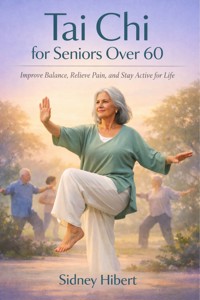
Transform Your Golden Years with the Ancient Art of Tai Chi
Discover how slow, mindful movement can dramatically improve your balance, ease chronic pain, and restore your confidence in just minutes a day.
"Tai Chi for Seniors Over 60" is your complete step-by-step guide to mastering this gentle yet powerful practice—no prior experience needed.
Inside, you'll find:
• Essential tai chi forms broken down into simple, easy-to-follow movements
• Fall prevention techniques clinically proven to enhance stability and coordination
• Pain relief strategies for arthritis, joint stiffness, and chronic discomfort
•Balance and strength exercises specifically designed for the 60+ body
• Breathing and meditation practices to reduce stress and calm the mind
• Safety modifications for all fitness levels and physical limitations • Progressive programs that grow with you at your own pace
Whether you're dealing with balance issues, seeking natural pain management, or simply want to feel stronger and more flexible, this comprehensive guide meets you exactly where you are. No gym required. No special equipment. Just you, your breath, and gentle movements that heal from the inside out.
Buy your copy now and take the first step toward greater stability, less pain, and vibrant aging!
Das E-Book können Sie in Legimi-Apps oder einer beliebigen App lesen, die das folgende Format unterstützen:
Veröffentlichungsjahr: 2026
Ähnliche















Tai Chi for Seniors Over 60
Front Matter
🧘♀️ A New Beginning: The Journey into Tai Chi
🧘♀️ Chapter 1: The Gentle Path to Wellness: Introducing Tai Chi
🌳 Chapter 2: Building the Foundation: Essential Postures and Principles
🦢 Chapter 3: The Beginner's Form: Learning the Core Movements
⚖️ Chapter 4: Enhancing Balance and Stability: A Focus on Fall Prevention
🩹 Chapter 5: Relieving Pain and Improving Flexibility: The Therapeutic Applications
✨ Chapter 6: Deepening the Practice: The Role of the Mind and Spirit
🐉 Chapter 7: Expanding Your Practice: Exploring Different Styles and Tools
🌅 Chapter 8: Integrating Tai Chi into Your Daily Life: A Lifestyle of Harmony
📚 Appendix
All rights reserved. This book or any portion thereof may not be reproduced or used in any manner whatsoever without the express written permission of the publisher, except for the use of brief quotations in a book review or scholarly journal.
IMPORTANT: READ THIS DISCLAIMER CAREFULLY BEFORE BEGINNING PRACTICE
The techniques, exercises, and advice presented in this book, Tai Chi for Seniors Over 60, are for educational and informational purposes only. The information contained herein is not intended to be a substitute for professional medical advice, diagnosis, or treatment.
Always consult with your physician, primary healthcare provider, or a physical therapist before beginning any new exercise regimen, especially if you are over the age of 60 or if you have any pre-existing health conditions, including but not limited to:
Chronic pain, severe arthritis, or joint instability (especially in the knees, hips, or spine).
Cardiovascular conditions (e.g., high blood pressure, heart disease).
Balance disorders or a history of frequent falls.
Neurological conditions (e.g., Parkinson’s disease, vertigo).
Diabetes or osteoporosis.
2. Assumption of Risk
The practice of Tai Chi, although low-impact, carries inherent risks, particularly concerning balance and posture. The reader accepts full responsibility for their actions and acknowledges that engaging in the exercises described in this book is undertaken at their own risk.
🧘♀️ A New Beginning: The Journey into Tai Chi
Welcome to Your Path of Gentle Strength
Imagine a morning where you wake up feeling refreshed, your joints loose, and your mind clear. Picture yourself walking across the room with a sense of unshakeable balance and confidence, no longer worried about a misplaced step. Think about moving through your day with an inner calm that allows small frustrations to simply drift away. This isn’t a fantasy reserved for the young; this is the profound, yet entirely attainable, promise of Tai Chi, and it is the journey we are about to begin together.
This book, Tai Chi for Seniors Over 60, is more than just an instruction manual; it is your personal guide to reclaiming vitality, rediscovering ease of movement, and nurturing a deep sense of peace that is often overlooked in the rush of modern life. For decades, you have given your energy, time, and focus to your family, your career, and the many demands of the world. Now, in this wonderful and richly deserved stage of life, it is time to dedicate that energy back to yourself. This practice, ancient and wise, offers a way to move not against the passage of time, but with it—to harness your body’s inherent wisdom and cultivate graceful longevity. If you have ever felt limited by stiffness, worried about falling, or simply sought a more meaningful way to care for your well-being, you have picked up the perfect book at the perfect time.
Tai Chi Chuan (often simply called Tai Chi or Taiji) translates roughly to “Supreme Ultimate Fist” or “Grand Ultimate Boxing,” a name that hints at its origins as a martial art. But rest assured, the slow, beautiful, and deliberate movements you will learn bear little resemblance to modern, high-impact combat. Instead, it is practiced today by millions around the world as an elegant system of mind-body wellness. It is a unique blend of gentle exercise, deep breathing, and focused meditation. You may have seen groups of people practicing it slowly and deliberately in parks, moving with a fluid, almost dreamlike coordination. This isn’t just for show; this fluidity is the very essence of the practice—a way to teach the body how to move continuously and without unnecessary tension. Unlike aerobics or heavy weightlifting, Tai Chi meets you exactly where you are, regardless of your current physical condition, and offers a path of consistent, incremental improvement.
The beauty of Tai Chi lies in its non-judgmental approach to the physical body. It does not ask you to push past pain or contort yourself into impossible poses. Instead, it invites you to listen deeply. Every movement, from the simplest “Beginning” to the complex “Grasping the Sparrow’s Tail,” is designed to enhance your awareness of your own body, its limitations, and its immense potential. This is particularly crucial as we enter our senior years. The muscles and joints that once moved instinctively may now require conscious attention. Tai Chi provides the perfect framework for this attention, emphasizing proper alignment, slow weight transference, and the concept of "rooting"—feeling strongly connected to the earth. These principles are not just theoretical; they translate directly into practical benefits, making everyday activities like climbing stairs or carrying groceries feel easier and safer.
In the chapters that follow, we will methodically break down this ancient art, ensuring that every movement is accessible, safe, and deeply beneficial for readers over the age of sixty. We will move beyond the mystery and into the practical, step-by-step application. We’ll explore everything from the philosophical backbone of Yin and Yang to the specific physical mechanisms that boost your balance and strengthen your bones. Our goal is not just to teach you a series of movements, but to integrate the feeling and spirit of Tai Chi into your daily life. It is an art that rewards patience and consistency above all else, and you will find that the rewards—a clearer mind, a stronger body, and a quieter spirit—are well worth the dedication. Welcome to your practice. Welcome to your strength.
Why Tai Chi is the Gold Standard for Senior Health
For decades, the medical and wellness communities have searched for the "perfect" exercise for seniors—one that provides cardiovascular benefits without stressing the joints, builds strength without risking injury, and improves mental acuity without requiring intense focus. In the slow, circular motions of Tai Chi, they found it. Clinical research, published in top medical journals around the world, has consistently confirmed that this gentle practice is uniquely suited to address the primary health concerns of individuals over 60, making it an evidence-based powerhouse for graceful aging.
The most widely researched and lauded benefit of Tai Chi is its dramatic effect on balance and fall prevention. According to the Centers for Disease Control and Prevention (CDC), one out of every four adults aged 65 and older falls each year, and these falls are the leading cause of injury and death from injury in this age group. Tai Chi directly combats this risk through multiple mechanisms. First, the practice systematically requires slow, conscious weight shifting from one foot to the other. This action strengthens the muscles in the legs, hips, and core, but more importantly, it trains the body’s proprioception—the sense that allows you to know where your body parts are in space without looking. By moving in a continuous sequence, the nervous system learns to make tiny, immediate adjustments to maintain equilibrium, translating directly into a reduced risk of stumbling during daily activities. It is this neuromuscular retraining, not just muscle strengthening, that makes the difference.
Beyond stability, Tai Chi is a powerful tool for cardiovascular health and stress reduction. Although the movements are slow, the continuous nature of the form, coupled with the deep, controlled breathing, provides a moderate cardiovascular workout. This gentle increase in heart rate improves circulation without the high-impact jarring of running or vigorous sports. More significantly, the mindful component of the practice—the intentional focus on movement and breath—activates the parasympathetic nervous system (the "rest and digest" system). This activation lowers blood pressure, decreases the heart rate, and reduces the levels of the stress hormone cortisol. Many practitioners report a profound sense of calm that lasts long after the session is over, providing a natural, non-pharmacological way to manage stress and anxiety, which often contribute to other health issues.
The benefits extend deep into the skeletal system. Tai Chi is a weight-bearing exercise, meaning you are supporting your own body weight throughout the movements, which is essential for stimulating bone growth and maintenance. This is crucial for combating osteoporosis, a common concern for seniors, especially women. However, unlike high-impact exercise that can jar fragile joints, Tai Chi works by generating gentle tension against the bones through muscular pull, which promotes bone density safely. Furthermore, the slow, deliberate rotation and extension of the limbs encourage the production of synovial fluid—the body's natural lubricant—within the joints. This consistent, low-impact lubrication is a primary reason Tai Chi is highly recommended for individuals managing arthritis and chronic joint pain, helping to reduce stiffness and improve the overall range of motion without inflammation.
Finally, and perhaps most beautifully, Tai Chi nourishes the brain. It demands intense concentration, requiring you to memorize sequences, coordinate your breath with your hands and feet, and constantly adjust your balance. This simultaneous physical and mental load is a powerful cognitive workout. Studies suggest that this complex engagement may help improve executive function, working memory, and focus, and may even play a role in delaying the onset of cognitive decline. It’s an elegant synergy: what strengthens the body also sharpens the mind. This makes Tai Chi not just an exercise for the body, but a comprehensive practice for mindful aging.
The Wisdom of the Ancients: A Brief History and Philosophy
To fully appreciate Tai Chi, it helps to understand the deep philosophical well from which it draws its water. Its roots are complex and sometimes shrouded in myth, but its essence lies in classical Chinese thought, particularly Taoism (or Daoism). The practice is believed to have originated in the mountains of China, evolving over centuries from various forms of internal martial arts. The most famous legend attributes its creation to the Taoist hermit Zhang Sanfeng during the 13th century, who was supposedly inspired by observing a fight between a snake and a crane—an observation that emphasized the power of yielding, softness, and circularity over rigid force.
The guiding principles of Tai Chi are fundamentally rooted in the Taoist concept of the Tao (The Way)—the underlying natural order of the universe. Taoism emphasizes living in harmony with nature and finding power not in resistance, but in yielding. Think of water: it is soft, yet it can wear away stone; it flows around obstacles rather than fighting them. This philosophy is directly expressed in the Tai Chi movements, where practitioners are taught to remain relaxed (song), use minimal muscular force, and deflect incoming force rather than meeting it head-on. This principle of softness translates to health by teaching the body to release chronic tension—the silent thief of energy and flexibility in senior years.
The most critical philosophical concept embedded in Tai Chi is Yin and Yang—the duality that describes how seemingly opposite or contrary forces are actually complementary, interconnected, and interdependent in the natural world.
Yin represents the soft, dark, yielding, feminine, and passive elements (like the moon, the inside, or stillness).
Yang represents the hard, light, assertive, masculine, and active elements (like the sun, the outside, or movement).
In the Tai Chi form, every movement is a perfect dance between Yin and Yang. When one arm extends (Yang), the other may retract (Yin). When one leg is weighted and solid (Yang), the other is empty and ready to move (Yin). When you inhale (Yin), you prepare for the next action (Yang). The practice of Tai Chi is the conscious attempt to bring these forces into dynamic balance within your body. For the senior practitioner, this means finding the balance between activity and rest, between challenge and comfort, and ultimately, between the physical body and the surrounding world. This conscious quest for balance is what separates Tai Chi from mere calisthenics—it’s a living, breathing philosophy.
Another vital concept is Qi (Chi), often translated as vital life energy or breath. In Chinese medicine and philosophy, Qi is the circulating life force whose balance and flow are essential for health. Stagnant Qi is believed to be the root of pain and illness. Tai Chi is, at its heart, a form of Qigong (Qi Cultivation), designed to gently stretch the body’s connective tissues and open the energy pathways (meridians) to ensure the smooth, unimpeded flow of Qi throughout the body. The deep, controlled breathing from the Dantian (the energy center a few inches below the navel) is the primary engine for moving this internal energy. By practicing Tai Chi, you are, in essence, becoming a conduit, tuning your body to the rhythms of nature and ensuring your internal systems are running efficiently. The pursuit of health through Qi cultivation provides a profound, deeper purpose to the gentle movements, making the practice much more than just a physical activity.
Understanding the Learning Curve: Patience and Practice
One of the most common reasons people quit Tai Chi early is that they expect immediate mastery. They see an instructor or advanced student moving with effortless grace and then feel frustrated by their own initial stiffness or inability to remember the sequence of movements. It is absolutely essential to approach Tai Chi with patience and compassion for yourself. This is not a race, and the goal is not perfection; the goal is continuous, gentle progression.
Think of the learning process as a series of concentric circles, deepening with each repetition.
Stage 1: The Mechanical Phase (The Beginner): When you first start, your primary focus will be on the external, mechanical steps: Where do I put my foot? Which way does my hand turn? This phase requires intense concentration, and you may feel stiff or awkward. This is completely normal and means you are establishing the foundational muscle memory. The movements are disjointed and often require constant conscious correction. Don’t be discouraged by the number of repetitions required to memorize even the simplest movements.
Stage 2: The Coordinated Phase (The Intermediate): After weeks or months of practice, the movements start to flow into one another. You no longer need to consciously think about every single step; your body begins to recognize the sequence. Your focus shifts from what to do to how to do it. You begin to integrate the breath into the movement, and your body starts to relax, allowing for softer transitions. You are moving with coordination, though you still feel effort in the transitions.
Stage 3: The Internal Phase (The Advanced): At this stage, the external form becomes automatic, allowing your mind to focus entirely on the internal experience. You are now feeling the flow of Qi, consciously connecting the movement from the ground up through the legs, hips, and hands. The mind is calm and meditative. This is where the true power of Tai Chi lies, where physical movement becomes a moving meditation and the greatest health benefits are unlocked.
For the senior practitioner, the mechanical phase is particularly vital because it’s where safety is established. We prioritize correct posture and alignment above all else to protect your joints and prevent strain. We encourage slowing down the movements to the point where they are deliberately meditative. Going slow allows you to detect errors in balance before they lead to a fall and gives your body's proprioceptive system time to register and correct the movement. The slower you go, the more you learn, and the stronger your foundation becomes. Never rush. The true master of Tai Chi is the one who can move the slowest while maintaining perfect integrity and flow.
Consistency truly is the secret ingredient. Ten minutes of focused practice every day is vastly superior to one ninety-minute class a week. Tai Chi is meant to be a daily ritual, like brushing your teeth or enjoying your morning coffee. This book provides the structure for that ritual, offering clear instructions and encouragement to make the practice a natural, joyful part of your daily routine.
🧘♀️ Chapter 1: The Gentle Path to Wellness: Introducing Tai Chi
The moment we enter our senior years, the world seems to change its expectations of our physical abilities. We are often told to "take it easy," to "slow down," and to be perpetually cautious. While prudence is certainly wise, this narrative of inevitable decline often overshadows the possibility of re-engagement and rediscovery. Many of the activities that brought us joy in the past—vigorous sports, long runs, or intense aerobics—may now feel taxing, risky, or simply impossible due to the natural stiffness that accompanies aging. This is where the profound, gentle wisdom of Tai Chi steps onto the stage, not as a concession to age, but as a celebration of movement in its purest form.
For many, the idea of beginning a new physical discipline later in life can be daunting. You might look at the fluid, synchronized movements of experienced practitioners and think, That is far too complex for me. Or perhaps you believe that true strength and wellness must involve sweat, strain, and rapid, high-impact movements. This book is here to gently dismantle those preconceptions. Tai Chi is unique precisely because its power is found not in force, but in softness, not in speed, but in slowness, and not in rigid muscular effort, but in relaxed flow. It is an art form designed for the entire lifespan, and in many ways, it is most perfectly suited for the mature body, which possesses the patience and wisdom to truly appreciate its subtleties.
We begin this journey by looking beyond the surface. Tai Chi is often categorized simply as an exercise, but this definition is far too limited. It is, in fact, a holistic system that simultaneously addresses the physical body, the cognitive mind, and the emotional spirit.1 It is a moving meditation—a term that perfectly encapsulates the dual focus required: the body is gently moving, while the mind remains quiet, focused, and present.2 This integration is what provides the extraordinary benefits that extend far beyond simple physical fitness, helping to sharpen memory, regulate mood, and cultivate a sense of inner peace even amidst daily chaos.




