


8,99 €
Mehr erfahren.
- Herausgeber: Frieling-Verlag Berlin
- Kategorie: Gesellschafts- und Liebesromane
- Sprache: Englisch
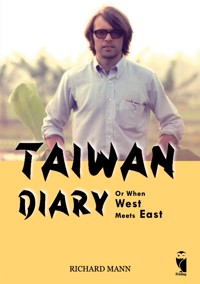
Having received his M.A. from the Free University of West-Berlin, the author won a scholarship from the Volkswagen Foundation for two intensive Chinese language courses which strengthen his already growing interest in China. Finally realizing he'd never learn Chinese in a German environment, he decided to study on Taiwan. After traveling through the Soviet Union and Japan, he arrived in Taipei, ready and willing to accept the challenge of living in a totally different culture. His various experiences as a student and teacher slowly enlarged his awareness of the differing beliefs and values separating East and West and through this, becoming painfully conscience of his biases and limitations, thus also gaining critical insights as to both Chinese and his own culture. While this journey included manifold misunderstandings leading to very embarrassing situation, it eventually evolved into a worthwhile experience in cross-cultural learning.
Das E-Book können Sie in Legimi-Apps oder einer beliebigen App lesen, die das folgende Format unterstützen:
Seitenzahl: 245
Veröffentlichungsjahr: 2023
Ähnliche



















In Gratitude
First of all I would like to give hearty thanks to the citizens of Taiwan who were, for the most part, gracious and forgiving to the young, culturally half-blind student who lived among them during the unforgettable experiences described in detail in this book. Through the kindness of my Chinese language teachers, plus lengthly conversations with newly made friends, all of which provided further knowledge as to the Chinese language, history, customs and beliefs through everyday life, I was truly blessed. Perhaps most important was the opportunity of seeing the first, if tender, blossoms of the country’s gradual development into a full-blown democratic system of government. May it, despite all threats, remain a beacon of liberty.
Thanks too, to a longtime friendship with Dr. Helmut Franz, who as sinologist, provided me with further insights to Chinese politics and culture. Despite occasional contretemps he has remained a true and trusted friend.
Contents
Russia Redux
Tough Times On Taiwan
Venturing South
Springtime in Taipei
The Barbershop Girls
A Labyrinth of Unexpected Insights
Blindsided!
Ten Months On
Le Grand Voyage
At Trail’s End
and Home Again
Russia Redux
Gracefully the Russian Illyushin -62, With its thick red stripe running the full length of the fuselage like a sash, lifted off the runway on the Interflug flight from Berlin-Schönefeld to Шереметьево in Moscow. Peacefully peering out at the puffy cumulus clouds basking in the early afternoon sunshine, Dick found himself wistfully reminiscing over his five plus years hiatus in West Berlin, causing a virtual cascade of events to engulfed his mind, shocking him by their clarity. Arriving in West Berlin at the first of April 1968, he witnessed live the beginnings of the so-called student revolution following the shooting of the left-wing radical Rudi Dutschke on the Kurfürstendamm, which had followed the assassination of Martin Luther King, and, unfortunately too, was a precursor of the murder of Bobby Kennedy two months later. Topping things off, there followed the Soviet-led invasion of Czechoslovakia in August which put an abrupt end to Dubcek’s inchoate experiment in transforming his country’s political system into a „socialism with a human face“, thus smothering this attempt at realizing a new, pristine form of democratic socialism.
Working part-time various jobs during the long semester breaks, he was able to earn enough money (plus the GI Bill) to allow him to undertake visits to Czechoslovakia, Poland and Soviet Union. Then, in the fall of 1971 he participated with a group of students embarking on a two-week trip to Israel, with the trip being subsidized by the West Berlin Senate, a sojourn which, despite his pro-Israel sentiments, led him to the conclusion that there was a definite discrimination against the Arab population, or as he later put it, a type of “apartheid light”. Continuing his travels, in the next spring he visited England and Northern Ireland, where, in Belfast and Londonderry, he witnessed how the suppression of peaceful protests could quickly morph into physical violence, making him ever more critical of religious fanaticism.
His own native country, being mired in the seemingly endless war in Vietnam, one which he had turned against in October 1967 with the so-called march on the Pentagon, had left him with grave doubts as to if the game was really worth the very expensive candle. Subsequently, when the local national guard unit in Ohio opened fire on unarmed anti-war demonstrators on the Kent State campus, killing two students, Dick organized a small demonstration protesting the war across the street from the US consulate not far from the FU campus in May of 1970. In the political frenzy of that time he let himself become involved in smuggling a young East German steelworker across the Czech-Austrian border in the following year - a very harrowing experience.
Originally intending to spend merely two semesters at the Freie Universität, following the election of Nixon as president, he summarily decided to lengthen his sojourn a few semesters. At the behest of a friend, who had convinced him that he should attempt to get his Master’s degree at the Otto-Suhr-Institut for political science, he reluctantly agreed, realizing that the written and oral exams would be in German, not to mention the fact that he’d have to write his thesis in German too. Later, in one way, he was proud to have obtained his Diploma from the Institut, however, he was greatly disappointed in merely receiving a satisfactory as a final grade instead of the “good" he had aimed for. Of course, this meant no hope for a scholarship toward a PhD, leaving him in limbo as to his future academic progress. Then a deus ex machina arrived in the form of him being chosen to participate in an intensive course in the Chinese language being sponsored by the VW Foundation in the coming summer. A four week course at the Ruhr-University in Bochum with free room and board. Moreover, there would be a follow-up course in March of 1973. This was being undertaken because VW wisely foresaw great long-term possibilities for building cars in China with its huge population and, furthermore, seeking to get the jump on any possible other competitors interested in gaining a foothold in the Chinese market, which, at least theoretically, promised great dividends to those willing enough to get their foot-in-the-door in a country staring to reform its state-run economic system.
Uncertain of how to fill the time in-between, he enrolled in an intensive Russian language course at the Osteuropa Institut in order to keep the funds from the GI Bill flowing. And now here he was returning to Moscow as in the fall of 1970, but this time with a basic knowledge of Russian.
His jaunt down memory lane was interrupted by the young, swarthy man sitting next to him. He introduced himself as Kemal and was a student of mechanical engineering in East Germany. First flying to Moscow, he would fly out the next day to his hometown in Kasachstan with his family eagerly awaiting the return of their prodigal son who was studying abroad. Dick vaguely remembered Kasachstan as being a part of those „virgin lands“ where, against the advice of his own agronomists, Khrushchev had attempted to grow crops in the early sixties ,only to have failed because of drought. Of course he was too civil to mention this to Kemal, who was busy touting his hometown. Dick know that the capital city was Alma-Ata, with Alma meaning apple and Ata standing for grandfather. Ergo, some said it actually meant the grandfather of the apple, said Kemal laughingly. When Dick mentioned that he was going to China, Kemal gave him a puzzled look of surprise. Why travel to that crazy, backward country when the socialist system in Soviet Union and eastern Europe was so successful? Dick gamely countered that he wanted to go himself and see what the situation was really like. His answer seemed to mollify his neighbor somewhat, who was then silent the remainder of the flight.
Upon his arrival at the airport he perfunctorily presented his passport and then, now allowed legal entrance to the country, went down to the baggage claim area to wait for his luggage. When it finally arrived he picked it up and went to the custom control, where, unexpectedly, the troubles began. First off he was required to fill out a form as to how much money he was bringing into the country. Dick thought he knew exactly how many German DMs he had, plus the mount of travelers checks. After handing the paper over to the stern -looking official, Dick was suddenly asked to show proof of his honesty by simply opening his wallet. Eager to please, he fished out the bills only to be shocked by the appearance of the fresh $50 bill, which his girl friend Hildegard had forced him to take, and which he had entirely forgotten. „Что вы!“ (You’re not serious!), roared the man, obviously angry for haven been tricked and demanding that Dick immediately open his luggage for inspection:“ Откри вам багаж.“ A loose roll of his Agfa film was found and impounded. Worse still, he had brought along a new book, just published by the Yugoslav Svetozar Stojanovic entitled Kritik and Zukunft des Sozialismus. „Что вам еретичка книга! (Is that your heretical book?)“, said the official, now eying him suspiciously. Begging for clemency, Dick pleaded that the book dealt with socialism. “Нет, критика!!” (No, criticism!), barked the man, now fed up with this recalcitrant American. „Я вымекю ваша книга“, he added tersely indicating he was confiscating the book.
So, there he stood dejectedly, his only book having just been confiscated with no other reading material available for his two-week journey. Moreover, after an hour of waiting the official to finish processing him, he was told that a taxi had been arranged to drive him to his hotel. Despite Dick’s attempt to converse with the driver, the surly man continued to ignore him, leading to Dick’s conviction that he was being punished for some trespass committed - perhaps the tainted book. Adding insult to injury, just as he stepped out of the taxi, an errant bee landed on his forehead, stinging him before he could brush it away. Damn! What a miserable start for his long-awaited visit. Having been banished to the outskirts of Moscow, he thought it advisable to return to spend the evening hours in his hotel room, only leaving it to eat a heavy Russian supper. The hotel reminded him of the one he had stayed in some three years ago during his first trip to the Soviet Union with those long, bare, dimly-lit corridors and broad-beam woman who almost never spoke a word, eying him suspiciously, as if asking themselves what this young man was doing in their hotel. Since his room did possess a radio, he turned it on hoping to be able to understand some of the swiftly spoken Russian, but soon, able to pick out just certain words, finally ended up listening to a program of classical music, thinking that this hotel, if situated further into town, could have resembled the infamous Hotel Lux, where many a communist exile fleeing Nazi Germany had met their fate.
While starting to digest the meal, he lay on his bed trying to relax, the bee’s sting having long since faded away. Being an avid supporter of Willy Brandt’s so-called Ostpolitik, serving to lessen East-West tensions, finding itself in tune with the West’s policy of increasing détente, and seeking a greater understanding between the US and Soviet Union, thus, in a way, he felt himself as a type of unofficial goodwill ambassador, always eager to tout the blessings of a gradual rapprochement between East and West through a series of treaties, confidence building measures and cultural exchange. And now here he was, beginning his own trip straight across the country on a train ride of some 9,000 kilometers with overnight stays in новосибириск, иркутск и кабаровскright through the heart of the country (Novosibirsk, Irkutsk and Khabarosk) from Moscow, through Siberia, all the way to the Sea of Japan! This heartened him greatly and eased his gentle glide into a deep sleep.
So this was the vaunted Trans-Siberian Express which would carry him across the Ural Mountains and the steppes of Russia. Its long line of dark-green cars aligned along the station tracks were slowly being boarded by groups of passengers toting all sorts of luggage, packages and sundry items for the lengthly trip ahead. Realizing that it would entail some 11 days of travel, Dick had omnisciently splurged and reserved a bed in a four-room, rather than a six-room compartment. Giddy with the feeling of his adventure finally beginning, he quickly found his future quarters, a nondescript compartment with two beds on each side plus little tables below the windows which could be used for holding bottled drinks. Slightly above the tables he noticed metal rings jutting out, raising his curiosity as to their possible use. Much to his liking he also discovered that he had an upper berth. No sooner had he finished stowing his luggage than the other passengers appeared; a middle-aged woman seemingly of Asian background along with her daughter. Rapidly he surmised that they would be his traveling companions for the coming days because of their large suit cases.
Within minutes they were engaged in a conversation, introducing themselves, also explaining as to why they were traveling with the Trans-Siberian Express. It turned out that the woman was a Japanese who had married an American serviceman in late 1950’s and was returning to her native land with her 12 year old daughter to visit the grandparents and receive a taste of Japanese culture. Dick was unsure of how the young girl felt about all this, because during the whole trip she was still and withdrawn, merely talking to her mother in a very soft voice. Her mother was just the opposite, going off like a pinwheel, particularly when she discovered that Dick was going to Japan. In the space of a few hours he learned that she had been born close to Nagoya, with her family barely escaping the fire-bombing of the city in World War II. She said that life in the US was so different than her youth in Japan, but that she enjoyed the freedom of living in California plus the chances for her daughter to lead her own life, finally concluding with some pride that she had taken „the long route“ via Europe, instead of just flying back over the Pacific since this gave them an opportunity to visit London and Paris. Pausing, she turned toward Dick, inquiring as to why he was taking the train instead of flying.
This, of course, led Dick off on a long, extensive litany of his studies and travels in West Berlin and Europe, in particular his interest in the Far East and China, not forgetting to add the fact that he’d be spending some three weeks in Japan before flying to Taiwan. When it was mentioned that in Tokyo he*d be staying with a Japanese student whom he’d become friends with in the Studentendorf, the woman’s eyes started to glisten, forcing him to quickly underline the fact that they were just friends, nothing more. When asked about his opinion of the Japanese, Dick promptly admitted that, being born in 1942, he had very little memories of the war. In fact his Mom told him that she didn’t even know where Pearl Harbor was when it was bombed, However, he could remember bits of a song he had heard as a young child, which went like this:
Goodbye Mama, I’m off to Yokohama, just to teach all those Japs, the Yanks are no saps. A million sons of Uncle Sam, if you please, will soon have all those Japs right down on their Japan-knees. So goodbye Mama, I’m off to Yokohama,for my country, my flag and you.
Surprisingly, this sufficed to evince a guffaw from the daughter, while her mother just smiled gently, telling him that she had seen enough of war for a lifetime, describing some of the fire storms she had witnessed as a small child. With a jolt Dick remembered being told of the Allied bombings of Hamburg and Dresden and realizing he was treading on an emotional minefield, started to switch to a more palatable subject when they were all amazed to see the compartment door open, whereby a woman appeared with a small tray on which stood three glasses of dark tea nestled in what seemed to be some sort of pewter holders. They discovered that this was a regular occurrence taking place every morning and evening. Soon they were all asleep as the train rattled through the night with only one or two stops.
Once the train had crossed the Ural Mountains , passengers were greeted by the wide expanse of the treeless Russian steppes reaching all the way to the horizon. One definitely felt locked into a scene which constantly repeated itself hour for hour as the train rolled along at the speed of some 60 mph, the rails singing their clank-calunk melody to an almost hypnotizing rhythm. Bereft of his book, Dick stared out the window at the flat, empty panorama passing by. On further reflection he remembered the book he had read in junior high school of Napoleon’s disastrous campaign to conquer Russia. Then too, later as a student in West Berlin, he had spoken with a Wehrmacht veteran, who recounted the difference between the swift victory over France in 1940, where the scale of battle covered some 600 to 700 kilometers, whereas the campaign against the Soviet Union saw the German army marching further and further into the depth of the country, seeking in the summer and fall of 1941/42 a final Endsieg, a victory which would clinch the war. The further they went, the stronger the resistance grew, the longer and more tenuous their supply lines. The veteran had shaken his head, repeating that the horizon never seemed to end.
Later that same day, he mustered up enough courage to stop the conductor who filed by in the car’s narrow passageway. Pointing out the window at the vast landscape, Dick said, „Эта болша страна“ (What a big country). In squeezing past Dick, he casually replied with a deadpan face, „Конечно“ (Of course). Now was this patriotic pride or was he just stating a natural fact? Hmmmm, he*d better carefully think this over, it now dawning on him that he still had so much to learn.
Startled by a sharp jolt he awoke to feeling the train slowing down, then coming to a complete stop. He was used to this by now; the train halting at many a small station for a few minutes. However, as time passed by, he began to realized that this must be a major stop and peered inquisitively out the window. Vis-à-vis, across the railroad tracks he saw a large station with the letters ОМСК in white glowing letters upon the top of the building. Омск! My God he thought, , way past Cверловск (Sverdlosk) where the US high-altitude spy plane, the U 2, had been bought down by a Soviet missile in 1960, torpedoing a planned summit meeting between Eisenhower and Khrushchev. In retrospect he wondered what would have happened had a Soviet spy plane been shot down over Colorado. Then, looking down the length of the train, he saw shadowy figures moving beside a car further down, loading something aboard. Quickly he figured out what is was. Of course, they were busy restocking the dining car with food and drink since the next stop would be hours away. He wondered if they’d be switching the engines, aware that the Silver Meteor on its run between New York and Miami always changed its diesel engines halfway through the trip, in Hamlet, North Carolina. Secure in the knowledge that they’d soon beyond their way again, he rolled over and went to sleep.
Новосибирск, honestly said, was a bit of a letdown with him being lodged again in one of those nondescript hotels, which, as far as he was concerned, had little to offer to the passing tourists. Long, wide streets with an occasional statue of Lenin or some other noted Soviet person. In the late afternoon, after becoming lost, he asked a local youth for directions to the hotel and, after a short, understandable reply, Dick gave him two sticks of spearmint chewing gum as a reward for his service. Man, did his face ever light up!
Upon his return he ran into the Japanese mother and daughter who surprised him with the unexpected news that Intourist had agreed to offer them a special tour of a academic community situated on the outskirts of the city with the fitting name of Академгородок (academic city). While on the one hand this would entail spending more of his carefully husbanded funds, he leaped at this opportunity to gain some new insights regarding this special community,
The small bus took the trio to a settlement some twenty minutes away, which contained a more or less suburban look, very green with many small houses and interspersed between occasional buildings, nothing too spectacular. Therefore Dick was amazed to hear that, according to their young guide, here was a nationally known center for Soviet scientists engaged in basic research in this quiet, bucolic atmosphere, with schools, shops and medical facilities available for their families. It was in this relaxed setting that the government hoped to engender a fruitful exchange of information between the various fields of research. In fact, the guide told them that many an invention or new theory had originated in the this small, but intellectual, very vibrant community. After the tour, ended, they paused for a short tea break in one of the larger buildings, where the following conversation ensued:
Tour guide (looking at Dick): „You’re from the United States, right?“
Dick: „Well, I’ve been studying in West Berlin for the past five years, but to answer your question, yes I’m a US citizen.“
Tour guide: „Then tell me what you think about this Watergate thing. What’s it all about? I’ve read in the press where certain people are acting against President Nixon?“
Dick: „Did the article explain as to why the scandal occurred, I mean the reason behind all this?“
Tour guide: „It just mentioned that certain forces, I think the Democratic party is trying to weaken him, destroy him politically.“
Dick: „No, it’s not that at all. It’s just an investigation into a burglary at the Democrats national headquarters in Washington. There could be a link to the White House, so they’re checking on this.“
Tour guide (upset): Well, over here we don’t understand this at all. Why, Nixon is a man of peace. Didn’t he sign the SALT treaty for limiting armaments? Didn’t he invite Leonid Brezhnev to visit the US? Didn’t the two meet at the White House? We Russians support Nixon’s attempt to reduce tension between our two countries. Don’t you?!“
Dick (thoughtfully): „I do support these efforts and I’ve seen a real relaxation of tension between the two German states, but this Watergate scandal is purely domestic and has nothing to do with foreign policy.“
Tour guide (worriedly): „Well, I hope you’re right. Many of us are concerned with the Chinese. They killed dozens of our soldiers a few years ago; we need to concentrate on them.“
Dick: „Right now the US is trying to extricate itself from Vietnam because the war is very unpopular - particularly among the young.“
Tour guide: „Thanks for the frank talk. I do wish, however, that this, this conspiracy against Nixon doesn’t succeed!
Dick: „Well, we’ll just have to see how the investigation turns out.“
Being tactful, he didn’t mention the invasion of Czechoslovakia, for which Brezhnev was responsible. Later that evening back at the hotel he asked himself what would be the future of this land where there was state control of the mass media, critical voices being muffled or simply denied access to the means of communication.
Upon leaving the station for the next stage of his journey he got the distinct impression that the train had added quite a few new passengers. For example, the dining car seemed suddenly full of soldiers, young, loud, many inebriated. Examining those men at the table across from him, he estimated that many were new recruits, merely in their late teens. When he attempted to converse with them, they just ignored him, giving him the feeling that he was seen as an intruder. On the other hand, he swiftly fell in love with the fresh, dark bread available with each meal. This surprised him, not having expected such a good quality bread on a train. On the other, he found out one should buy bottles of beer as soon as the train left a major station because within hours the boisterous soldiers would have drunken all the beer
His daily lesson concerning the physiognomy of Slavs drew a brief chuckle in going to the bathroom at the end of the car. Dick’s eyes widened as he inspected the toilet. The ring of the toilet, to him, was immense. He wondered if small children ran the danger of falling in.
During the trip he checked the toilets in other cars - all of them possessed the same huge toilet rings.
Gradually the scenery began to change, shifting away from the drab steppes into a greener, hillier landscape, far more pleasing to the eye. Ever since they had left Moscow behind, he would take occasional photos, always holding the camera unobtrusively, so as not to attract attention, With the little film he had, Dick had to make sure none of his last two rolls were confiscated, thus he ended up taking photos surreptitiously like a spy, hoping that no one seeing him snap these pictures in such a mysterious manner would begin to think that maybe he was a foreign agent working under cover as a student.
That afternoon there was a rap on the compartment door. Expecting the conductor, Dick opened the door only to find a stranger, a man in his late 40’s with a small box in his hands. The man quickly explained that he was bored with the long train ride and was seeking someone who knew how to play chess, willing to play some games with him. Now this was right down Dick’s alley, for he too, burdened by the tedium of having no literature to read, was pleased to accept this unexpected offer. Moreover, the guest had an inventive plastic chess set with small figures which could be stuck into holes to avoid being jostled when the train lurched. Very keen, thought Dick, who had spent two semesters at the University of Florida chess club and thus fancied himself as a good chess player - although he hadn’t played a match in years. His opponent graciously opted to begin with the black pieces giving Dick the white. Perhaps, he later surmised, the better tactic would have been to first discover the man’s ability, then adapt to it, not being too brazen from the start. But he was. Cocksure of himself, he began offensively with the Ruy López opening, only within minutes to find himself bogged down, his offense stymied, with his opponent now in command. Having lost the first game, he settled down, chasing a more defensive strategy, something which simply prolonged the looming agony of defeat. In the third game he came close to gaining a stalemate, but couldn’t quite pull it off. So, tic tac toe, three defeats in a row. Somewhere he had read where chess was a popular pastime in the Soviet Union. He should have heeded the warning.
During the long haul to the next city on the route, there appeared a series of events which were unique in his memory. Whenever the Tran-Siberian Express made a local stop in order to discharge or add passengers, sometimes in off-the-way, small communities even lacking a real station, the train was instantly surrounded by groups, mainly consisting of women, who came up to the car windows, hawking the wares they had brought along to sell. There was a whole panoply of items offered: baked goods, all kinds of liquid refreshment, wooden gewgaws of all sorts, strings of colored beads, crystals of various shapes and sizes, icons, all hawked feverishly on account of the train’s brief stop. Some of the women reminded him of American Indians, with their brown faces and dark hair. Then, two minutes later, the trains horn gave a blast, sending the crowds reeling backwards as the cars started to flash by. He’d never seen the likes of that which he had just experienced, now trying to wrap is mind around it, seeking possible causes. One might have been the lack of modern highways, for it seemed that almost all the roads he had spied from the train window were dirt, often muddy or dusty, a far cry from the system of interstate highways in the US. Ergo, he thought it possible that these Siberian towns and villages were de facto cut off from the metropolitan economy, thus forced to sell their goods directly to those train passengers, who appeared on a daily basis.
In Иркутск the Intourist had, against all expectations, housed those passengers staying in the city in a rather modern hotel. Bigger, cleaner rooms, telephones and radios, plus a bird’s eye view of the town. After a tasty evening meal, Dick went back to his room, to lay on the bed, letting the days pass in review. Suddenly it occurred to him that, geographical seen, he found himself almost exactly 180° longitude from Florida. Yes, on the other side of the world! While he would soon be getting ready to go to sleep, his brothers in sundry parts of Florida would be eating breakfast, ready to leave for work. Just the thought of this alone made him realize how far away from home he really was. That also included a touch of pride, seeing as had rounded half the globe.




