


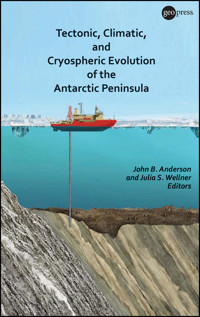
Tectonic, Climatic, and Cryospheric Evolution of the Antarctic Peninsula E-Book
56,99 €
Mehr erfahren.
- Herausgeber: John Wiley & Sons
- Kategorie: Wissenschaft und neue Technologien
- Serie: Special Publications
- Sprache: Englisch
Published by the American Geophysical Union as part of the Special Publications Series.
Tectonic, Climatic, and Cryospheric Evolution of the Antarctic Peninsula presents the analysis of data collected during the SHALDRIL program, which sampled the most complete Cenozoic stratigraphic section in the Antarctic Peninsula. The stratigraphic intervals sampled fill major gaps in the existing stratigraphic record in the region, which is believed to have been the last place in Antarctica to become fully glaciated and, as such, the last refugium for plants and animals living on the continent. Providing previously unpublished results from studies aimed at improving our understanding of the changes in climate, glacial setting, and fauna and flora that took place over the past 30 million years, the volume highlights include discussions of marine seismic and drill core records documenting the initial growth and expansion of an ice sheet across the northernmost Antarctic Peninsula continental shelf in the northwestern Weddell Sea.The book features:
- Detailed vegetation and phytoplankton evolution from greenhouse through icehouse conditions in Antarctica's last refugium
- Sand grain texture and micromorphology indicating ice sheet control of weathering style
- Exhumational history around the Drake Passage margins from thermochronology and sediment provenance
- Comprehensive review of the opening of the ocean passageway between Antarctica and South America and the associated regional tectonics.
Tectonic, Climatic, and Cryospheric Evolution of the Antarctic Peninsula will be of interest to geologists, climatologists, and glaciologists interested in climate and cryosphere evolution and those factors that regulate it.
Sie lesen das E-Book in den Legimi-Apps auf:
Seitenzahl: 456
Veröffentlichungsjahr: 2013
Ähnliche




















CONTENTS
PREFACE
Introduction
A Different Look at Gateways: Drake Passage and Australia/Antarctica
1. INTRODUCTION
2. METHODOLOGY
3. RECONSTRUCTION OF AUSTRALIA WITH EAST ANTARCTICA
4. SOUTH TASMAN SADDLE
5. HOT SPOT ACTIVITY
6. MIDDLE EOCENE
7. LATE EOCENE
8. EARLY OLIGOCENE
9. KERGUELEN PLATEAU-BROKEN RIDGE
10. OPENING OF DRAKE PASSAGE
11. CONCLUSIONS
Exhumational History of the Margins of Drake Passage From Thermochronology and Sediment Provenance
1. INTRODUCTION
2. THERMOCHRONOLOGY
3. SEDIMENT PROVENANCE
4. DISCUSSION
Seismic Stratigraphy of the Joinville Plateau: Implications for Regional Climate Evolution
1. INTRODUCTION
2. BACKGROUND
3. DATA AND METHODS
4. RESULTS
5. DISCUSSION
6. CONCLUSIONS
Age Assessment of Eocene–Pliocene Drill Cores Recovered During the SHALDRIL II Expedition, Antarctic Peninsula
1. INTRODUCTION
2. MATERIALS AND METHODS
3. RESULTS
4. BIOSTRATIGRAPHIC AND STRONTIUM ISOTOPE AGE ASSESSMENTS
5. AGE SUMMARIES
6. DISCUSSION
7. CONCLUSIONS
APPENDIX A: LIST OF TAXA AND TAXONOMIC NOTES
Magnetic Properties of Oligocene-Eocene Cores From SHALDRIL II, Antarctica
1. INTRODUCTION
2. AGES OF SAMPLED SEDIMENT
3. SAMPLES METHODOLOGY
4. NATURAL REMANENT MAGNETIZATION
5. RESULTS
6. DISCUSSION
7. CONCLUSION
History of an Evolving Ice Sheet as Recorded in SHALDRIL Cores From the Northwestern Weddell Sea, Antarctica
1. INTRODUCTION
2. BACKGROUND
3. METHODS
4. LITHOFACIES DESCRIPTIONS
5. DISCUSSION
6. CONCLUSIONS
Cenozoic Glacial History of the Northern Antarctic Peninsula: A Micromorphological Investigation of Quartz Sand Grains
1. INTRODUCTION
2. GEOLOGIC SETTING
3. METHODS
4. RESULTS
5. DISCUSSION
6. CONCLUSION
Last Remnants of Cenozoic Vegetation and Organic-Walled Phytoplankton in the Antarctic Peninsula’s Icehouse World
1. INTRODUCTION
2. OLIGOCENE SAMPLED BETWEEN 28.6 AND 24.0 MA (CORE NBP0602A-12A)
3. THE MIOCENE SAMPLED BETWEEN 12.8 TO 11.8 MA (CORE NBP0602A-5D)
4. PLIOCENE SAMPLED BETWEEN 5.1 AND 3.8 MA (CORES NBP0602A-5D, 6C, AND 6D)
5. CONCLUSIONS
Vegetation and Organic-Walled Phytoplankton at the End of the Antarctic Greenhouse World: Latest Eocene Cooling Events
1. INTRODUCTION
2. MATERIAL AND METHODS
3. PALYNOLOGICAL RESULTS
4. DISCUSSION
5. CONCLUSIONS
AGU Category Index
Index
Kenneth R. Minschwaner, Chair; Gray E. Bebout, Kenneth H. Brink, Jiasong Fang, Ralf R. Haese, Yonggang Liu, W. Berry Lyons, Laurent Montési, Nancy N. Rabalais, Todd C. Rasmussen, A. Surjalal Sharma, David E. Siskind, Rigobert Tibi, and Peter E. van Keken, members.
Library of Congress Cataloging-in-Publication Data
Tectonic, climatic, and cryospheric evolution of the Antarctic Peninsula / John B. Anderson and Julia S. Wellner, editors.
p. cm. — (Special publication ; 63)
Includes bibliographical references and index.
ISBN 978-0-87590-734-5
1. Antarctica. 2. Geology—Antarctica. 3. Geology, Stratigraphic—Cenozoic. 4. Morphotectonics—Antarctica. 5. Climatic changes—Antarctica. I. Anderson, John B., 1944- II. Wellner, Julia S.
QE350.T42 2011
559.89—dc23
2011040153
ISBN: 978-0-87590-734-5
Book doi: 10.1029/SP063
Copyright 2011 by the American Geophysical Union
2000 Florida Avenue, NW
Washington, DC 20009
Front cover: Schematic diagram of the Nathaniel B. Palmer with the drill rig mounted during SHALDRIL.
Figures, tables, and short excerpts may be reprinted in scientific books and journals if the source is properly cited.
Authorization to photocopy items for internal or personal use, or the internal or personal use of specific clients, is granted by the American Geophysical Union for libraries and other users registered with the Copyright Clearance Center (CCC). This consent does not extend to other kinds of copying, such as copying for creating new collective works or for resale. The reproduction of multiple copies and the use of full articles or the use of extracts, including figures and tables, for commercial purposes requires permission from the American Geophysical Union. geopress is an imprint of the American Geophysical Union.
PREFACE
SHALDRIL I and SHALDRIL II presented some formidable logistical challenges. However, thanks to the hard work of many people, we were able to sample strata from key time intervals and obtain a record of climate change and associated changes in plants living on and near the continent. This volume contains detailed results from analyses of the drill core, but it also contains papers that present the seismic stratigraphic approach to drilling and papers that focus on the tectonic evolution of the Antarctic Peninsula, which strongly influenced climate change. It represents a synthesis of research by 20 scientists, and we are grateful to all of the authors for their contributions to this volume. We also thank those individuals who provided constructive and timely reviews of the papers. Finally, we wish to thank those people who helped with the logistics, participated on the cruises, and assisted with the research and publication of results. There are too many to name all, but we greatly appreciate their hard work and positive attitudes during the best and the worst of times. We would especially like to thank those people that did so much to make these first drilling legs happen: Leon Holloway, Jim Holik, Ashley Lowe Ager, and Andy Frazer.
John B. AndersonRice University
Julia S. WellnerUniversity of Houston
Introduction
John B. Anderson
J. B. Anderson, Department of Earth Science, Rice University, Houston, TX 77005, USA. ([email protected])
Department of Earth Science, Rice University, Houston, Texas, USA
Julia S. Wellner
J. S. Wellner, Department of Earth and Atmospheric Sciences, University of Houston, Houston, TX 77204, USA.
Department of Earth and Atmospheric Sciences, University of Houston, Houston, Texas, USA
Antarctica’s climate and glacial history remain shrouded due largely to a paucity of outcrops and drill cores; in particular, the Neogene record is fragmentary. Most outcrops of this age have been studied at some level of detail, so the greatest opportunity for expanding our knowledge of this time interval is through acquisition of drill cores. Drill cores from the deep-sea floor around Antarctica have provided a proxy record of climate change and ice sheet evolution but do not allow us to address questions concerning regional variability in ice sheet development or the response of organisms living on the continent to climate change. The continental shelf contains a rich and virtually unsampled stratigraphic record, but sea ice and icebergs limit access to these areas by conventional drill ships. This has prompted efforts to drill the continental shelf using unconventional methods, including drilling from the sea ice (ANDRILL) and from ice-breaking research vessels (SHALDRIL).
An understanding of the Cenozoic history of the Antarctic continent and its ice sheets has been hindered by a scarcity of outcrops that are not covered by thick ice, deep water, stiff till, or some combination of those three. Great advances have been made in recent decades in studies of the current Antarctic Ice Sheet both on the ice and from space and the Holocene records around the Antarctic margin, as well the oceans and biota that surround the continent. Despite the many advances, the older history of the continent has remained a relative mystery because of the difficulty in accessing the rocks that hold the record. The few records that are obtained are key inputs to modeling studies of the Antarctic Ice Sheet history [e.g., Pollard and DeConto, 2009]. The lack of other long-term records of ice and climate fluctuations around the Antarctic margin hinders the development and accuracy of such ice sheet models and our ability to look toward the future behavior of the ice sheet.
Around the Antarctic continent are a series of seaward dipping strata, many of which have been deeply eroded during advances of the Antarctic ice sheets. Pre-Pleistocene strata lie just beneath the seafloor, and their distribution can be mapped by high-resolution seismic methods [cf. Anderson, 1999]. The concept behind SHALDRIL (shallow drilling) is to drill through surficial glacial deposits and sample older strata where they come close to the seafloor. SHALDRIL was never meant for obtaining long cores but, rather, to collect a series of relatively short cores (~100 m) that can be pieced together using seismic records and detailed chronostratigraphy and combined with seismic stratigraphic information to reconstruct climatic and cryospheric history.
SHALDRIL began in earnest in 1994 with a workshop sponsored by the U.S. National Science Foundation (NSF) and held at Rice University. At that time, the prevailing conclusion was that the technology was not yet ready for putting a drilling system onto a U.S. Antarctic Program (USAP) icebreaker: certainly, there were systems that could have been employed but not with a reasonable chance of success under the harsh conditions expected. Any drilling on the Antarctic shelf had to contend with pebbly glacial tills, which are notoriously difficult to drill anywhere, freezing conditions, drifting icebergs, and substantial sea ice cover, as well as the fact that any icebreaker brought to the task had not been designed for drilling. A committee was formed to monitor the technology, and in 2001 a proposal was sent to the NSF for a demonstration drilling cruise. This proposal became SHALDRIL I and SHALDRIL II.
The research vessel icebreaker Nathaniel B. Palmer (NBP), the primary scientific icebreaker used by USAP at the time, was chosen as the vessel to be used for the drilling legs. The vessel was modified by the installation of a moon pool, through which drilling operations could take place and, later, the introduction of additional ballast in order to accommodate the weight of the drill rig. These were permanent changes to the vessel, and the moon pool was subsequently used by a variety of other scientific programs. Seacore (later Fugro Seacore) of Cornwall, United Kingdom, was hired to perform drilling operations. A drilling rig was custom-designed to fit on the NBP, and this rig was leased for the duration of two drilling seasons, cruises of about 5 weeks duration each during the austral falls of 2005 and 2006.
SHALDRIL I had its first drilling target in Maxwell Bay in the South Shetland Islands and quickly recovered a long (108 m) core in soft Holocene sediments with high recovery percentages. Unfortunately, this quick success would prove to be one of the only scientific successes of the first SHALDRIL season. The drilling tools employed during the first season of SHALDRIL made very slow progress when drilling through the glacial till, which, in varying thicknesses, covered all of the older targets in the area east of James Ross Island in the northwestern Weddell Sea. Drifting icebergs made it impossible to stay on station long enough for the tools to penetrate the till, and no pre-Pleistocene material was recovered during SHALDRIL I. Nonetheless, two additional Holocene cores were recovered: one each from Herbert Sound and Lapeyrère Bay. The three Holocene cores obtained during 2005 plus the Firth of Tay core collected in 2006 together make up the most detailed record of Holocene glacial and climate history around the Antarctic Peninsula; they are documented in several papers [e.g., Michalchuk et al., 2009; Milliken et al., 2009] and are parts of other ongoing studies. SHALDRIL I had technical successes also, reported in the cruise report (http://www.arf.fsu.edu/projects/shaldril.php) and short articles in Scientific Drilling and other reports [e.g., Wellner et al., 2005], as well as a great success obtaining Holocene records. The knowledge base built during SHALDRIL I allowed modifications to the drilling equipment and to the general approach employed while drilling and thus set the stage for the 2006 drilling leg.
In the 12 months between SHALDRIL I and SHALDRIL II, substantial changes were made to the drill bits and downhole sampling tools used by the program. The modifications improved the ability of the drill to penetrate through glacial sediment and to obtain samples below it. The sea ice in the Weddell Sea during early 2006, though, proved to be thicker and much more extensive than normal. Even worse, the sea ice and the abundant icebergs were moving rapidly. One core, Site 3, sampled Eocene sediments off of James Ross Island at the targeted site. This and other cores were made possible not only by the new equipment and quick actions of the drillers but also by flexibility to move sites based on ice conditions. Further reductions in the time needed at any one site were made by moving the ship with the drill pipe hanging below; drill pipe was assembled to a length just several meters above the seafloor as the vessel continued to maneuver around ice, thus eliminating the time needed to trip the pipe from the window of ice conditions at any one site. Despite such flexibility, the ice conditions around the primary targets in the James Ross Basin were so severe that plans for the remaining drill targets had to be aborted. However, backup sites along the southern margin of the Joinville Plateau yielded Oligocene, Miocene, Pliocene, and Pleistocene strata. Selection of these new targets was made possible by collecting and interpreting additional seismic data during the cruise. The cores recovered during this second leg have provided a record of climatic change and cryospheric evolution that spans the latest Eocene through the Pleistocene, although there are significant gaps between each core.
This volume represents the summary of the scientific results of the SHALDRIL II program as well as contributions from other authors studying the tectonic history of the region, particularly as it relates to the establishment of ocean gateways and mountain building. These results, along with those from ANDRILL and the few Integrated Ocean Drilling Program legs that have made it to the Antarctic shelf, are bringing the stratigraphic history of the Antarctic to light. It is hoped that these results are just the start, and now that the efficacy of the SHALDRIL approach has been demonstrated, there will be more drill cores recovered in the near future, including a more complete record from the James Ross Basin, of which SHALDRIL II has provided just a tantalizing glimpse.
REFERENCES
Anderson, J. B. (1999), Antarctic Marine Geology, 289 pp., Cambridge Univ. Press, Cambridge, U. K.
Michalchuk, B., J. B. Anderson, J. S. Wellner, P. L. Manley, S. Bohaty, and W. Majewski (2009), Holocene climate and glacial history of the northeastern Antarctic Peninsula: The marine sedimentary record from a long SHALDRIL core, Quat. Sci. Rev., 28, 3049–3065, doi:10.1016/j.quascirev.2009.08.012.
Milliken, K. T., J. B. Anderson, J. S. Wellner, S. Bohaty, and P. Manley (2009), High-resolution Holocene climate record from Maxwell Bay, South Shetland Islands, Antarctica, Geol. Soc. Am. Bull., 121(11–12), 1711–1725, doi:10.1130/B26478.1.
Pollard, D., and R. M. DeConto (2009), Modeling West Antarctic Ice Sheet growth and collapse through the past five million years, Nature, 458, 329–332.
Wellner, J. S., J. B. Anderson, and S. W. Wise (2005), The inaugural SHALDRIL expedition to the Weddell Sea, Antarctica, Sci. Drill., 1, 40–43.
A Different Look at Gateways: Drake Passage and Australia/Antarctica
Lawrence A. Lawver, Lisa M. Gahagan, and Ian W. D. Dalziel
I. W. D. Dalziel, L. M. Gahagan, and L. A. Lawver, Institute for Geophysics, University of Texas at Austin, 10100 Burnet Rd.-R2200, Austin, TX 78758–4445, USA. ([email protected])
Institute for Geophysics, University of Texas at Austin, Austin, Texas, USA
The time of the opening of Drake Passage between South America and the Antarctic Peninsula is problematic. Mammals were able to migrate between South America and Antarctica until sometime in the early Eocene. Various continental fragments may have formed an effective barrier to substantial deepwater circulation through Drake Passage until at least 28 Ma. Alternatively, a medium-depth to deep water passage may have existed through Powell Basin to the south of the present Drake Passage as early as 33 Ma, but it is difficult to constrain the time of opening of Powell Basin. Simple opening of a shallow seaway between southern South America and the Antarctic Peninsula does not produce a vigorous Antarctic Circumpolar Current (ACC). Other gateways must be open to medium-depth to deepwater circulation such as one between the South Tasman Rise and East Antarctica. Even mid-ocean plateaus may play a role in the ultimate development of a circum-Antarctic current. The most probable southern ocean feature that may have affected global circulation was the opening of a deep seaway between the Kerguelen Plateau and Broken Ridge at about the Eocene-Oligocene boundary. While a complete deepwater (>2000 m) circuit was certainly developed by the end of the early Oligocene, it may have been the closure of a major deep seaway north of Australia in the middle Miocene that finally produced the environment for the development of a vigorous ACC.
1. INTRODUCTION
The opening of southern ocean gateways has long been considered a significant factor in not only the initiation of the Antarctic Circumpolar Current (ACC) but also in the development of the Cenozoic East Antarctic Ice Sheet [Kennett, 1977]. The Eocene-Oligocene boundary step in the ∂O18 anomaly history [Zachoset al., 2001, 2008] at 33.7 Ma (timescale from Berggren et al. [1995]) is taken as a proxy to represent the onset of Antarctic bottom water formation at temperatures close to freezing [Kennett and Shackleton, 1976] and, in turn, the final opening of a circum-Antarctic seaway that isolated Antarctica. Lyle et al. [2007] support a late Oligocene to early Miocene initiation of an ACC based on sedimentation in the South Pacific backed by grain size evidence from the Tasman Gateway [Pfuhl and McCave, 2005]. Based on neodymium isotope ratios at Agulhas Ridge, Scher and Martin [2004] support an initial opening of Drake Passage as early as middle Eocene, although Livermore et al. [2005] suggest only a possible shallow seaway development at Drake Passage perhaps as early as middle Eocene with a deep seaway only developing between 34 to 30 Ma coincident with the increase in the high latitude ∂O18 values at the Eocene-Oligocene boundary. The ACC shown in Figure 1 is presently the largest ocean current with an eastward flow rate through the Drake Passage region of 136.7 ± 7.8 Sv based on the baroclinic transport relative to the deepest common level [Cunningham et al., 2003]. In the region of the Scotia Sea shown in Figure 2, they found that the ACC transport is principally carried in two jets, the Subantarctic Front (SAF), which accounts for 53 ± 10 Sv, and the Polar Front (PF), which accounts for 57.5 ± 5.7 Sv. Southward of the main ACC, they calculated that the Southern Antarctic Circumpolar Current Front (SACCF) transports 9.3 ± 2.4 Sv.
Figure 1. Polar stereographic location map showing the Antarctic Circumpolar Current (ACC) derived from the work of Sandwell and Zhang [1989] as black arrows. Deep Sea Drilling Project and Ocean Drilling Project sites are shown as numbers. The present-day plate boundary is shown as a thin gray line, while large igneous provinces are shown in a dark gray. Magnetic anomaly picks are shown as crosses, while magnetic isochrons are shown as lines parallel or subparallel to the plate boundaries. Lines orthogonal to the plate boundaries are fracture zone lineations picked from bathymetry derived from satellite altimetry data [Smith and Sandwell, 1997]. Abbreviations are BR, Broken Ridge; DP, Drake Passage region; KP, Kerguelen Plateau; PB, Prdyz Bay; LG, Lambert Graben; STR, South Tasman Rise; TAS, Tasmania.
Figure 2. The ACC fronts for the Scotia Sea region, digitized from Figure 1 of the work of Naveira Garabato et al. [2002], superimposed on the bathymetry of the region taken from the most recent online version (August, 2010) of the work of Sandwell and Smith [1997]. Fronts are labeled in white: PF, Polar Front; SACCF, Southern ACC Front; SAF, Subantarctic Front; SB, Southern Boundary of the ACC. Geographical features are labeled in black: BB, Burdwood Bank; Br, Bruce Bank; DB, Discovery Bank; FI, Falkland Islands; MEB, Maurice Ewing Bank; PB, Pirie Bank; SAM, South America; SG, South Georgia Island; SO, South Orkney block; SRP, Shag Rocks Passage; SSA, South Sandwich Arc.
The locations of the fronts that define the ACC in the Scotia Sea region (Figure 2) are taken from the work of Naveira-Garabato et al. [2002], who have the SAF curling around the eastern end of Burdwood Bank before heading north across the eastern end of the Falkland Plateau and show the PF exiting the central Scotia Sea at a gap in the north Scotia Ridge west of Aurora Bank at about 48°W (labeled the Shag Rocks Passage). Consequently, the majority of transport of the ACC exits across the north Scotia Ridge to the west of 48°W, well west of South Georgia Island. The SACCF curls around the eastern tip of South Georgia to flow westward through the Northeast Georgia Passage of Naveira-Garabato et al. [2002]. The remainder of the ACC current flow is bounded to the south and east by the Southern Boundary of the ACC and does not flow directly eastward across the South Sandwich Arc (SSA) as might be expected; rather, it exits the Scotia Sea at the deepest point along the northern margin of the east Scotia Sea at about 30°E. It is clear that substantial ACC transport is dependent on medium-depth to deepwater passageways, seemingly those at least 2700 m deep. An analog to the ACC may be the interocean exchange of thermocline water [Gordon, 1986], which runs into a choke point in the Lombok Strait of the Sunda Arc where only 1.7 Sv out of the 7 to 18.6 Sv Indonesian Throughflow [Gordon and Fine, 1996; Gordon et al., 2003] passes through the strait which has a sill depth of ~300 m. The remainder of the throughflow is diverted over 1000 km to the east to enter the Indian Ocean via the Timor Trough where a sill depth of 1300 to 1500 m is found. Consequently, the impact of the opening of Drake Passage to deep water flow is critical to understanding its impact on Cenozoic climate. While a shallow Drake Passage may have opened during the Eocene, its impact on the Cenozoic climate may have only become significant when a deepwater passage finally opened.
As shown in the ∂O18 compilation of Zachos et al. [2008], the world’s oceans began to cool after the early Eocene Climatic Optimum (EECO) (equal to ~53 to 51 Ma), well before the Eocene-Oligocene boundary. It is important to determine both when a Cenozoic land barrier first disappeared in the Drake Passage region and when a deep seaway finally developed. With respect to the development of a seaway or conversely, the elimination of a “land bridge” between South America and the Antarctic Peninsula, the best indication may be when mammals were no longer able to disperse between the two continents. Woodburne and Zinsmeister [1984] suggested that the origin of the Seymour Island polydolopid mammals based on the endemism and specialization they observed in the two Antarctic genera of Polydolopidae, Antarctodolops and Eurydolops, as opposed to the Patagonian members of this extinct family occurred roughly 10 million years prior to the fossils they found in TELM5 bed. That bed has been recently redated to be 48 to 51 Ma by Ivany et al. [2009] so the age from the work of Woodburne and Zinsmeister [1984] would be middle to late Paleocene, and they concluded that the vicariant isolation of the land mammal fauna of the Antarctic Peninsula took place prior to the early Eocene. Reguero and Marenssi [2010] inferred that the last mammal dispersal between South America and the Antarctic Peninsula had to have been at the end of Paleocene or during the earliest Eocene based on consideration of marsupials and other mammals. While mammals survived on the Antarctic Peninsula until the very end of the Eocene, ~34.2 Ma [Bond et al., 2006], the 12-fossil mammal taxa found there represent a bimodal size distribution unlike the similar Eocene fauna from Patagonia, suggesting isolation. In addition, the sudamericid Sudamerica ameghinoi became extinct in South America by the late Paleocene but survived in Antarctica until the middle Eocene [Goin et al., 2006]. Reguero and Marenssi [2010] suggest that the last South American mammals dispersed to Antarctica during the onset of a late Paleocene to early Eocene thermal warming (58.5 to 56.5 Ma) during a time of major regressive events recorded either on the Antarctic Peninsula or southernmost Patagonia. The Antarctic mammal populations became isolated, with the survivors remaining as endemic species. This timing fits with the known migration of marsupials between South America and Australia with the first Australian marsupials, Djarthia murgonensis, found in the early Eocene Tingamarra fauna in southeastern Queensland [Godthelp et al., 1999]. They are dated with a minimum age of 54.6 Ma and presumably reached Australia from South America via Antarctica [Goin et al., 2007]. There is no evidence that Australian mammals were able to return to South America [Nilsson et al., 2010] after this time, so initiation of an early Eocene shallow seaway between South America and Antarctica is consistent with an earlier, one-way dispersal of the marsupials to Australia and the probable Late Cretaceous movement of monotremes from Australia to South America [Pascual et al., 2002].
The opening of Drake Passage as an Eocene gateway has been suggested on plate tectonic grounds by both Livermore et al. [2005] and by Eagles et al. [2006] and on neodymium isotope ratios at Agulhas Ridge [Scher and Martin, 2004]. Livermore et al. [2005] believe a major change in motion between South America and Antarctica at about 50 Ma led to an early seaway, while Eagles et al. [2006] describe two small basins in the southern part of the Scotia Sea, the Protector and Dove basins, which they believe may have opened in the middle or late Eocene and may have been the first seaway to develop between South America and Antarctica. Based on the fact that early Cenozoic Pacific eNd values (143Nd/144Nd ratios) are more radiogenic (i.e., εNd values –3 to –5) [Ling et al., 1997] than Atlantic values (εNd ~ –9) [Thomas et al., 2003], there was a steep Pacific-Atlantic gradient [Goldstein and Hemming, 2003] at that time. Scher and Martin [2004] found a significant increase (from ~–9 to ~–6.4) in the Atlantic values beginning about 41 Ma. They used both ferromanganese (Fe-Mn) crusts and fossil fish teeth to determine εNd values for Eocene bottom water and interpret the increase to represent the first influx of Pacific water into the Atlantic at Agulhas Ridge. An even earlier seaway between East and West Antarctica, one that connected Pacific and Atlantic waters, has been suggested by Casadio et al. [2010] to be as old as early Cretaceous. Dalziel and Lawver [2001] show a Ross Sea/Weddell Sea connection to be as old as Late Cretaceous, formed after the extension in the Ross Sea region ended about 90 Ma. Ghiglione et al. [2009] present evidence for the presence of a latest Paleocene-early Eocene extensional basin (i.e., lateral rift) in Tierra del Fuego with a postrift unconformity that indicates extensional faulting ending ~49 Ma. They suggested this basin as a possible early seaway that crossed southern South America. Such an age fits with the increase in South America-Antarctica separation rate found by Livermore et al. [2005] and would be immediately prior to the proposed rifting found in the Protector and Dove basins by Eagles et al. [2006].
Since there is now reasonable evidence for at least a shallow seaway between southern South America and the Antarctic Peninsula as early as ~50 Ma, based on mammal migration and the isolation of the endemic mammals found in the La Meseta Formation on Seymour Island [Reguero and Marenssi, 2010], the timing of the development of a seaway between the South Tasman Rise (STR) and East Antarctica may be the critical factor in the thermal isolation of Antarctica and the eventual development of the ACC as Kennett [1977] suggested. Reconstructions of major plate motions indicate that the STR cleared the Oates Coast margin (158°E) of East Antarctica sometime between 34 and 32 Ma [Lawver and Gahagan, 2003; Cande and Stock, 2004a, 2004b] although Brown et al. [2006] show the Tasman Gateway still closed at 32 Ma. The timing suggested by Lawver and Gahagan [2003] was based on the assumption that the wide continental shelf off the Wilkes Subglacial Basin of East Antarctica between 145°E and 158°E was in place prior to the development of the East Antarctic Ice Sheet. If, in fact, the outer margin as defined by the Antarctic Margin Gravity High (AMGH) is the product of Cenozoic glaciation on East Antarctica, then opening of a seaway between the STR and East Antarctica may have occurred prior to the Eocene-Oligocene boundary, perhaps as early as 40 Ma. Such an age is in good agreement with the time of opening cited by Exon et al. [1995]. In addition to the possibility of a deep water passage south of the STR, there is also a submarine trough, the South Tasman Saddle [Exon et al., 1995; Exon and Crawford, 1997, p. 539] between Tasmania and the STR. The present South Tasman Saddle is deepest in a narrow 3000 m deep trough, but the present-day 2000 m contour between Tasmania and the STR defines a seaway almost 100 km wide. At the 3000 m isobath, the South Tasman Saddle is only a few kilometers wide and may have always been very narrow at its deepest part. The South Tasman Saddle may be the result of seafloor spreading or continental extension in the late Cretaceous and would have allowed significant water transport even if it was shallower in the past. The present-day ACC shown in Figure 1 is diverted south and around the Campbell Plateau [Sandwell and Zhang, 1989; Neil et al., 2004] even though the plateau is between 700 and 1000 m deep just as it is diverted north around the SSA as shown in Figure 2. A relatively narrow, 1000 m deep trough between Tasmania and the STR might not have allowed major water circulation or the initiation of an early ACC but a 100 km wide, 2000 m deep trough would have.
2. METHODOLOGY
The plate reconstructions used to constrain the opening times of various seaways are derived from a global database, which consists of marine magnetic anomalies tied to the Gee and Kent [2007] timescale, paleomagnetic poles, seafloor age dates based on drilling results, and fracture zone and transform fault lineations [Gahagan et al., 1988] picked from ship track and satellite altimetry data [Sandwell and Smith, 1997; Smith and Sandwell, 1997]. We define continental block outlines based on our own digitization of the satellite altimetry data. Off Namibia, there is a close correlation between the steep gradient in the satellite altimetry data picked by Lawver et al. [1998] and the ocean-continent boundary deduced from seismic refraction and reflection data [Gladczenko et al., 1997; Bauer et al., 2000]. In other regions, there may be some stretched continental crust oceanward of the steep gradient that we picked, but for reconstruction purposes, we assume the crust to be predominantly continental landward of the boundary and oceanic, seaward of the line.
The same steep gradient in the satellite altimetry data was used by Royer and Sandwell [1989] to determine a limit to the continental shelves in the eastern Indian Ocean. They referred to this limit as the continental shelf break (CSB) and found a tight fit at 160 Ma between conjugate CSBs for parts of the southern margin of Australia with East Antarctica. Given the precedence established by Royer and Sandwell [1989], we adopt their nomenclature and use the term CSB. The BEDMAP sub-ice topography of East Antarctica [Lythe et al., 2000] is shown in Figure 3 in the tight-fit Gondwanide reconstruction of Lawver et al. [1998] with East Antarctica held fixed in its present-day position. Lawver et al. [1998] used the CSBs determined from the satellite gravity data of Sandwell and Smith [1997] and the fit pole of rotation of Royer and Sandwell [1989] for Australia with East Antarctica. The reconstruction of Australia, Tasmania, and East Antarctica shown in Figure 3 is remarkably similar to the empirical fit of Foster and Gleadow [1992]. It is also very close to the fit of the reconstructed aeromagnetic data of Finn et al. [1999] who matched the magnetic signature between the Gleneig and Stawell zones of southeastern Australia with the magnetic signature of the Bowers zone of North Victoria Land, East Antarctica.
Figure 3. The BEDMAP sub-ice topography of Lythe et al. [2000] is shown in the tight-fit reconstruction of Gondwana [Lawveret al, 1998], The CSBs are shown as thick red lines. Note the excellent match between East Antarctica (EANT) and Australia (AUS) between 120°E and 135°E and the large overlap shown hatched between 135°E and 158°E. Numbered contours on EANT are crustal thickness contours in km (based on the work of Ritzwolleret al. [2001]). Abbreviations are A, Aurora Subglacial Basin; B, Belgica Subglacial Highlands; G, Gamburtsev Subglacial Highlands; GAB, Great Australian Bight; KI, Kangaroo Island; MAD, Madagascar; NEM, Northeast Mozambique; SL, Sri Lanka; T, Transantarctic Mountains; V, Vostok Subglacial Highlands; W, Wilkes Land Subglacial Basin.
Figure 4. Free-air gravity anomalies derived from satellite altimetry data [Sandwell and Smith, 1997] shown. Antarctica is shown in gray. The CSB for Antarctica is shown as a black line or a dashed black line. The rotated Australian coastline is shown as a thicker white line, while the Australian CSB is shown as the thick gray line. KI is shown inboard of the dashed black line and overlapping what might be considered the Antarctic continental margin. TAFZ indicates the Tasman-Australian fracture zone shown as a dotted, black line. It appears to disappear under the gravity high off the Oates Coast. The Balleny Islands (BI) are to the east of the Balleny fracture zone. TAS is the rotated and reconstructed position of TAS shown as a dashed white line, while the STR is shown reconstructed to the west of TAS as a dotted white line.
In Figure 3, good matches of the conjugate CSBs are found where continental East Antarctica is bordered by a sub-ice topographic high. This occurs along the margins of East Antarctica with respect to, NE Mozambique, Sri Lanka, the southern half of the eastern margin of India, and in particular, the region of Australia between 124°E and 133°E along the Great Australian Bight (GAB), shown in Figure 3 rotated against the Belgica Subglacial Highlands margin of East Antarctica between 120°E and 137°E. There are minor overlaps of the reconstructed conjugate CSBs, with one between India and East Antarctica (70°E to 85°E) and another between East Antarctica and the western section of the GAB (105°E to 120°E). These two minor overlaps are coincident with the Lambert Graben-Prdyz Bay Basin and the Aurora Subglacial Basin, respectively. Based on ODP Leg 119 drilling off Prdyz Bay [Cooper et al., 1991], it is known that there are substantial glacially derived sediments prograded off the continental margin onto oceanic crust at Prdyz Bay. There may be as much as 200 km of Eocene? and younger sediments outboard of the original CSB in the Prydz Bay region. Along some Arctic margins are similar positive satellite gravity anomalies that Vogt et al. [1998] call Arctic marginal gravity highs. They related these gravity highs to recent Plio-Pleistocene North American glacial deposition on older oceanic crust that is not in isostatic equilibrium. The overlap found between the CSBs for closure of the South Atlantic in the region of the Niger delta has long been recognized [Bullard et al., 1965], a case where deposition of riverine deposits are not in isostatic equilibrium with the oceanic crust and produce positive gravity highs. With the late Eocene to present timeframe for glacially derived deposition along the East Antarctic margin, lack of immediate isostatic equilibrium is a reasonable explanation for the overlap of the satellite gravity-derived CSBs where shown.
Figure 5. Polar stereographic plot of the reconstruction of AUS to EANT at the time of magnetic anomaly chron C24o (53.3 Ma). Location of a fixed BI hot spot is shown as a star. It may have produced the Eocene volcanics seen on the northeastern margin of the STR [Exon et al., 2004; Hill et al., 2001]. White is the region oceanward of the CSBs, taken as oceanic crust. Lighter gray crosses are magnetic anomaly chrons on the AUS plate, darker gray crosses are magnetic anomaly chrons on the Antarctic plate, and lightest gray crosses are picks from the Lord Howe Rise plate. Deep Sea Drilling Project (DSDP) and Ocean Drilling Program (ODP) sites are shown numbered. The present-day George Vand Oates coasts margin is shown as a gray line west of the STR. The South Tasman Saddle immediately south of TAS may have been open to shallow to medium-depth water movement at early Eocene time. Abbreviations are ET, East Tasman Rise; L’A D, L’Atalante Depression. Basins shown along the southeastern Australian margin include BB, Bass Basin; DB, Duntroon Basin; OB, Otway Basin; RT, Robe Trough; SB, Sorrell Basin. There was no seaway south of the STR at this time although a few C24 anomaly picks are observed just south of the STR.
In contrast to the good match of the CSBs for the Antarctic margin from 120°E to 137°E with the western part of the (GAB) (124°E to 132°E for present-day Australian coordinates), there is a substantial and unacceptable overlap of the apparent Antarctic “continental margin” with the Australian margin from 132°E to 141.5°E. The overlap on the Australian side consists in part of cratonic material, particularly in the region of Kangaroo Island. In Figure 4, the overlap of the rotated Australia outline is shown overlaid on the Sandwell and Smith [1997] satellite gravity data with Antarctica in its present-day position. If the “excess” Antarctic continental margin as defined by the satellite gravity gradient is removed from Antarctica off the Wilkes Land Basin region between 138°E and 158°E, then the amount of ocean crust formed between Australia and East Antarctica is compatible from the western edge of Australia at 115°E to the western margin of Tasmania at 144°E (Australia coordinates). Removal of the excess CSB as defined by the AMGH off the George V and Oates land coasts of East Antarctica leaves no need to surmise a radical change in plate geometry after breakup south of Australia. Simple closure works well west to east until the STR is reached (~150°E) where there appears to be less oceanic crust developed south of the STR than between central Australia and East Antarctica (Figure 5).
Table 1. Euler Poles of Rotation for Australia to a Fixed East Antarctica
The STR continental fragments used in the paleoreconstruction figures are similar to the ones used by Royer andRollet [1997] but reflect our own digitization of the steep gradient observed in the Smith and Sandwell [1997] satellite gravity data. The seismic refraction and reflection data of Hinz et al. [1990] suggest that much of the northern part of the STR has been stretched and extended by formation of Mesozoic and Cenozoic basins. We do not reduce the footprint of the STR to reflect the Mesozoic or possibly Cenozoic stretching, although a smaller, early Cenozoic footprint for the STR would affect the timing of the opening of any pre-Eocene seaway between the STR and East Antarctica. Hinz et al. [1990] suggested that the seismic reflection data show wrench faulting that affected the rift fill and transgressive strata up to the middle Eocene when they infer that early Cenozoic deformation stopped. They equated the end of wrench faulting with the final break between Australia and Antarctica, which supports a medium to deep passageway having formed between Australia and Antarctica as early as 40 Ma.
Major plate motions between Australia and East Antarctica are relatively well constrained for the Cenozoic [Mülleret al., 1997]. Royer andRollet [1997] and Cande and Stock [2004a] found that seafloor spreading between Australia and East Antarctica started very slowly from the late Cretaceous (<5 mm yr–1, half rate) until the middle Eocene, increased to about 15 mm yr–1 from magnetic reversal chron C20 (~43 Ma) to the beginning of C18 (~39 Ma) then increased to 24 mm yr–1 until ~33 Ma when the half-spreading rate increased again to 34 mm yr–1. The change at C18 is consistent with other major plate reorganizations in the central Indian Ocean [Royer, 1992]. Royer andRollet [1997] found slightly slower rates for the equivalent time periods between the STR and East Antarctica than at 142°E, immediately to the west of the STR. Since Müller et al. [1998] found an average of 3.1% asymmetric spreading between Antarctica and Australia with most of the asymmetry prior to 40 Ma, the difference in rates may simply be due to changing rates of asymmetry eastward along the ridge combined with some ridge jumps. The results of Candeet al. [2000], concerning possible Cenozoic extension in the Adare Trough, does not affect the time of opening of a Cenozoic seaway between Australia and Antarctica because the possible motion discussed in their paper is east of a seaway between the STR and East Antarctica.
The Royer andSandwell [1989] pole for a tight-fit closure of Australia with a fixed East Antarctica is taken to be valid at ~160 Ma. In Table 1, the early poles of opening for Australia with respect to Antarctica until anomaly C13 (33.1 Ma) have been modified from the work of Royer andRollet [1997] using the magnetic anomaly picks of Tikku and Cande [2000]. The Markset al. [1999] poles of rotation for C6 (~19.0 Ma) to present are used as published and are similar to the poles in the work of Cande and Stock [2004b]. Other than the question of what constitutes the continental crust of East Antarctica between 138°E and 158°E, there is little controversy about the precise positions of East Antarctica with respect to Australia for the Cenozoic.
3. RECONSTRUCTION OF AUSTRALIA WITH EAST ANTARCTICA
The most significant overlap for a tight-fit between the CSBs of East Antarctica and Australia is shown hatched in Figure 3 between 138°E and 158°E for Antarctic longitudes. This overlap includes the area of Kangaroo Island off Australia (Figure 4) where the geology is well known [Fodenet al., 2002]. The excellent match of the CSBs to the west implies that the overlap is real. We assume that the problem lies on the relatively unknown Antarctic plate and not on the Australian plate since there is no known postbreakup extension on the continental portion of either plate between the area of good agreement (120° to 135°E) and the area of substantial overlap. The conjugate Antarctic region to Kangaroo Island is offshore of the Wilkes Land Basin (Figure 3) and lies between the Belgica Subglacial Highlands (B on Figure 3) and the Transantarctic Mountains (T on Figure 3). The apparent protuberance along the Antarctic coast at 145°E is the Mertz Glacier Tongue and hence not indicative of continental material. The deposition of glacial material that occurred outboard of the shelf break, producing the extended CSB, came from the Cook, Ninnis, and Mertz glaciers (see Rignotet al. [2008] for locations of the glacial drainage basins). The western edge of this overlap zone was drilled by IODP Leg 318 [Expedition 318 Scientists, 2010], where they found as much as 602 m of middle Miocene and younger sediments at a seafloor depth of 4002 m.
If the overlap zone of the margins of George V Land and Oates Land between 138°E to 158°E is post-Eocene in age, then determination of the seaward extant of the true continental crust has tremendous implications for the timing of the opening of a seaway south of the STR. In Figure 4, the East Antarctic CSB anomaly appears to overlie the southern end of the Tasman-Antarctic fracture zone (TAFZ), which seems to disappear beneath the CSB, leaving an irregular margin that between 66°S and 68°S should be roughly subparallel to the Balleny Fracture Zone to the east (Figure 4). The rotated, present-day coastline of Australia (shown as thicker white line in Figure 4) overprints the CSB of the Oates Land margin between 154°E and 158°E. On the left side of Figure 4, west of 138°E, the rotated Australian CSB overlies precisely the CSB of East Antarctica (shown as solid black line). This excellent match extends westward to 120°E as seen on Figure 3. A rotated Kangaroo Island (KI on Figure 4) overlies the black-dashed CSB of East Antarctica and nearly overlies the Merz Glacial tongue. Therefore, we assume that the rotated Australian CSB might be taken as a proxy for the actual East Antarctic CSB between 138°E and 158°E. Consequently, the space between the rotated Australian CSB and the dashed black line is assumed to be the outline of the glacially derived material transported by the East Antarctic Ice Sheet.
The apparent narrowing of oceanic crust formed eastward along the Australian-Antarctic ridge from 130°E to 160°E has led some to surmise a complicated eastward propagating rift between Australia and Antarctica, first suggested by Mutter et al. [1985]. Removal of the excess, apparent continental shelf off the George V Land and Oates Land coasts eliminates the need for the presumption of an eastward propagating spreading center since the space shown in the reconstruction at 53.3 Ma (Figure 5) indicates little need for differential spreading south of western Australia versus immediately west of Tasmania. The 53.3 Ma reconstruction does suggest that there was a northward ridge jump shortly before the Eocene in the area immediately to the south of Kangaroo Island.
Wilcox and Stagg [1990] suggested initiation of extension in the GAB as early as 153 Ma. How spreading occurred between the tight-fit shown in Figure 3 and the early Eocene reconstruction shown in Figure 5 is not germane to the opening of a seaway between the STR and East Antarctica but will be noted here briefly. The initial extension in the GAB extended to the east [Wilcox and Stagg, 1990] and ran first into the Duntroon Basin and Robe Trough with transtension in the Otway Basin northwest of Tasmania (for locations, see Figure 5). At ~120 Ma, the initial NW-SE extension changed to NE-SW extension with opening in the Otway, Sorell, and Bass basins until ~95 Ma. Wilcox and Stagg [1990] suggest that true seafloor spreading commenced between Australia and East Antarctica sometime after 95 Ma. The Quiet Zone Boundary (QZB) represents the first true oceanic crust [Wilcox and Stagg, 1990]. Tikku and Cande [2000] also picked a magnetic trough or “MT” anomaly and suggest that some seafloor spreading may have occurred between the QZB and the MT. Tikku and Cande [2000] make the point that the QZB is not necessarily the Ocean-Continent boundary since there is clearly a mixture of oceanic and continental crust in this zone based on the seismic refraction results of Talwani et al. [1979]. Talwani et al. [1979] used the term Magnetic Quiet Zone or MQZ on which the QZB is based because they thought that C33/34 was actually C22 and that the anomalies older than C22 were missing and therefore abnormally “quiet,” hence MQZ. Cande and Mutter [1982] revised the magnetic anomaly picks south of Australia and reidentified C22 as C33/34. Veevers [1986] then calculated the age of 95 Ma for the QZB based on the very slow spreading rate determined by Cande and Mutter [1982] for anomalies C20 through C34. In fact, as illustrated by Tikku and Cande [2000], the MQZ is not particularly quiet except on their easternmost profile at 130°E. Stagg et al. [1999] leave open the possibility that the period of slow seafloor spreading between Australia and Antarctica commenced much earlier than the Cenomanian as suggested by Cande and Mutter [1982] and suggest that seafloor spreading may have commenced in the Neocomian or Late Jurassic and was active along much of the southern margin of Australia at the earlier time.
4. SOUTH TASMAN SADDLE
For purposes of timing the opening of a seaway south of Australia, it is important to determine the age of seafloor spreading or extension in the South Tasman Saddle. If the magnetic anomalies, tentatively identified by Royer and Rollet [1997] as chrons C33 to C30 (79 to 66 Ma) [Gee and Kent, 2007], to the east of the South Tasman Saddle in the L’Atalante Depression (Figure 5) are correct, and can be taken as the time of stretching and seafloor spreading between Tasmania and the STR, then the South Tasman Saddle developed during the Campanian to Maastrictian. By early Eocene, seafloor spreading in the Tasman Sea had ceased [Gaina et al., 1998] and the magnetic anomalies, C24 and younger created at the Australia-Antarctic ridge can be clearly identified; see the picks from Tikku and Cande [2000] shown as the C24 (53.3 Ma) picks in Figure 5. Boreham et al. [2002] note that there was an accelerated rate of oil generation at ~48 Ma in the Sorell Basin, in response to the maximum burial heating rate in the early Eocene which coincides with the passage of the nearby spreading center as shown in Figure 5. Chron 33/34 is perhaps the only clearly identifiable anomaly on the Australian side older than C24 and is seen on four of the five lines that Tikku and Cande [2000]) highlight in their Figure 4. While we use the picks from Tikku and Cande [2000], we have calculated our own poles of rotation (Table 1) based on interactively matching the picks for each identified magnetic anomaly. We interpolate between those times and assume steady state spreading between anomaly picks in order to create the reconstructions shown.
From 40 to 30 Ma, the active Australia-Antarctic spreading center migrated past the western end of the South Tasman Saddle. The increased thermal input may have elevated the Saddle such that a significantly deep seaway between the STR and Tasmania was precluded. Prior to any influence of the spreading center, the South Tasman Saddle may have been a shallow to medium-depth seaway between Australia and East Antarctica in the late Paleocene to early Eocene. If the George V/Oates Coast shelf break was substantially closer to the present East Antarctic shoreline, then a deep seaway to the south of the STR may have existed as early as 40 Ma. Only if the wider George V/Oates Coast margin was in place prior to the late Eocene and the South Tasman Saddle was not sufficiently deep to allow substantial circulation, would a medium-depth to deepwater, Australian-Antarctic seaway, have developed only after late Eocene as suggested by Lawver and Gahagan [2003]. Whenever a passage opened between Australia and East Antarctica, vigorous, clockwise-circumpolar transport of water masses may not have begun until a deepwater opening south of South America completed the high latitude, circum-Antarctic seaway or even later depending on global ocean circulation paths. The initial, gradual increase in ∂O18 immediately after the EECO, and the presumed cooling of ocean temperatures, was most probably caused by the closure of the Tethyan seaway north of India. The initial collision of greater India with Eurasia diverted the circumtropical worldwide circulation that went north of Africa at ~30°N, to a circumtemperate circulation to the south of Africa at ~45°S [Lawver and Gahagan, 1998]. Major transport of water by a true ACC may not have developed until the Miocene closure of equatorial and tropical seaways increased anticyclonic gyres in the temperate zones which, in turn, increased forcing of the ACC [Lawver and Gahagan, 1998].
From the reconstruction shown in Figure 5, it is apparent that the South Tasman Saddle cleared East Antarctica well before the early Eocene, whether or not the CSB off the George V/Oates Coast of East Antarctica is the dotted line or the solid line. If the stretching and seafloor spreading in the South Tasman Saddle formed between C33y (73.6 Ma) and C30y (65.6 Ma) as suggested by Royer and Rollet [1997], then the seafloor there would have been approximately 20 Myr old by the beginning of the Eocene and perhaps at least 1000 m deep. The asymmetric position of C24 (53.3 Ma) between 130°E and 140°E (Figure 5) to the west of Tasmania and south of Kangaroo Island indicates that a northward ridge jump occurred in this area just prior to the Eocene or at least by C24 time. The northward jump left most of the older, pre-C24 seafloor on the Antarctic plate for the region immediately to the west of Tasmania. There is a slight suggestion in the satellite-derived gravity data off the East Antarctic margin (Figure 4) of what may be an abandoned spreading center at 63°S between 133°E and 141°E off the Adélie Coast. If the AMGH region is eliminated from both the George V and Oates coasts, then the hypothesized, late Cretaceous magnetic anomalies under the George V Coast AMGH would nearly align with the proposed C33? to C30? magnetic anomalies in the L’Atalante Depression immediately to the east of the South Tasman Saddle.
Willcox and Stagg [1990, Figure 9] show an initial 300 km of NW-SE extension between Australia and East Antarctica transformed to the south of the STR along the western margin of the STR. This initial extension was followed by later seafloor spreading between Australia and East Antarctica to the west of Tasmania. To the east, Cretaceous stretching began first between Tasmania and Australia initiating the Otway and Bass basins and later by the stretching between Tasmania and the STR producing the South Tasman Saddle. Finally, the plate boundary switched to seafloor spreading south of the STR.
5. HOT SPOT ACTIVITY
An active, late Cretaceous Balleny Islands hot spot [Duncan and MacDougall, 1989; Lanyonet al., 1993] may have had a major influence on the region of the East and South Tasman rises. In an absolute plate motion framework based on “fixed” Indo-Atlantic hot spots [Müller etal., 1993], plate reconstructions indicate that a fixed Balleny Islands hot spot may have initiated opening of the Tasman Sea as postulated by Lanyonet al. [1993]. The start of the opening of the Tasman Sea is dated at 87 Ma by Gainaet al. [1998] and may mark the beginning of the hot spot activity. The East Tasman Rise would have been above a fixed Balleny Islands hot spot only from 85 to 80 Ma. The hot spot would have been between the East Tasman Rise and Tasmania from 82 to 70 Ma and beneath the L’Atalante Depression from 70 to ~53 Ma. It may have produced the numerous small volcanoes shown on the southeast margin of Tasmania [Crawfordet al., 1997, Figure 2] and is a good explanation for the prominent seamounts in the L’Atalante Depression shown in Figure 6 of the work of Exonet al. [1997a, 1997b] and in Figure 1 of the work of Hill et al. [2001]. The suggested motion of the East Tasman Rise, with respect to Tasmania and the opening of the South Tasman Saddle between the STR and Tasmania, generally follow the scenario suggested by Exonet al. [1997a, Figure 6]. If the hot spot initiated the opening between the East and South Tasman rises, then its track would also support the magnetic anomaly identifications of C33y? to C30y? that Royer and Rollet [1997] identified in the L’Atalante Depression.
Figure 6. Polar stereographic plot of the reconstruction of AUS to EANT at the time of chron C18o (40.1 Ma). Location of a fixed BI hot spot is shown as a star. White region is oceanward of the CSBs. Medium gray crosses are magnetic anomaly chrons on the AUS plate, darker gray crosses are magnetic anomaly chrons on the Antarctic plate, and lightest gray crosses are picks from the Lord Howe Rise plate. DSDP and ODP sites are shown numbered. If the Oates Coast shelf was the dashed line shown to the west of the STR, then the first seaway to the south of the STR may have begun open to deep water transport at this time.
Figure 7. Polar stereographic plot of the reconstruction of AUS to EANT at the time of chron C17o (38.1 Ma). Symbols and abbreviations as in Figures 5 and 6. The active AUS-Antarctica spreading center would have just begun to affect the western end of the South Tasman Saddle. The Balleny hot spot may have been active during this period and may have produced the southern third of the STR as a strictly Cenozoic construction.
Figure 8.




