


4,49 €
Mehr erfahren.
- Herausgeber: Rasana Atreya
- Kategorie: Gesellschafts- und Liebesromane
- Sprache: Englisch
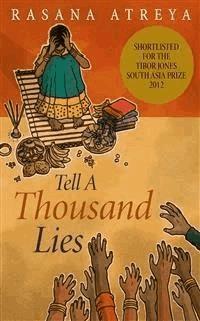
Shortlisted for the 2012 Tibor Jones South Asia prize *** In a land where skin colour can determine one's destiny, fraternal twins PULLAMMA and LATA are about to embark on a journey that will tear their lives apart. Dark skinned Pullamma dreams of being a wife. With three girls in her family, the sixteen year old is aware there isn't enough dowry to secure suitable husbands for them all. But a girl can hope. She's well versed in cooking, pickle making, cow washing -- you name it. She's also obliged her old-fashioned grandmother by not doing well in school. Fair skinned and pretty, her twin sister Lata would rather study medicine than get married. Unable to grasp the depth of Lata's desire, the twins' Grandmother formalizes a wedding alliance for the girl. Distraught, Lata rebels, with devastating consequences. As Pullamma helps ready the house for her older sister Malli's bride viewing, she prays for a positive outcome to the event. What happens next is so inconceivable that it will shape Pullamma's future in ways she couldn't have foreseen. TELL A THOUSAND LIES is a sometimes wry, sometimes sad, but ultimately realistic look at how superstition and the colour of a girl's skin rules India's hinterlands.
Das E-Book können Sie in Legimi-Apps oder einer beliebigen App lesen, die das folgende Format unterstützen:
Veröffentlichungsjahr: 2016
Ähnliche

















Table of Contents
Title Page
Synopsis of Tell A Thousand Lies
Prologue
Chapter 1
Chapter 2
Chapter 3
Chapter 4
Chapter 5
Chapter 6
Chapter 7
Chapter 8
Chapter 9
Chapter 10
Chapter 11
Chapter 12
Chapter 13
Chapter 14
Chapter 15
Chapter 16
Chapter 17
Chapter 18
Chapter 19
Chapter 20
Chapter 21
Chapter 22
Chapter 23
Chapter 24
Chapter 25
Chapter 26
Chapter 27
Chapter 28
Chapter 29
Chapter 30
Chapter 31
Chapter 32
Chapter 33
Chapter 34
Chapter 35
Chapter 36
Chapter 37
Chapter 38
Chapter 39
Chapter 40
Chapter 41
Chapter 42
Chapter 43
Chapter 44
Chapter 45
Chapter 46
Chapter 47
Chapter 48
Chapter 49
Chapter 50
Chapter 51
Chapter 52
Chapter 53
Chapter 54
Chapter 55
Chapter 56
Chapter 57
Chapter 58
Chapter 59
Chapter 60
Chapter 61
Chapter 62
Chapter 63
Epilogue
Copyright 2012 Rasana Atreya
Acknowledgements and Thanks
TELL A THOUSAND LIES
by
RASANA ATREYA
Copyright 2012 Rasana Atreya
Synopsis of Tell A Thousand Lies
[Shortlisted for the 2012 Tibor Jones South Asia Prize]
In a land where skin colour can determine one's destiny, fraternal twins PULLAMMA and LATA are about to embark on a journey that will tear their lives apart.Dark skinned Pullamma dreams of being a wife. With three girls in her family, the sixteen year old is aware there isn't enough dowry to secure suitable husbands for them all. But a girl can hope. She's well versed in cooking, pickle making, cow washing -- you name it. She's also obliged her old-fashioned grandmother by not doing well in school. Fair skinned and pretty, her twin sister Lata would rather study medicine than get married. Unable to grasp the depth of Lata’s desire, the twins’ Grandmother formalizes a wedding alliance for the girl. Distraught, Lata rebels, with devastating consequences.As Pullamma helps ready the house for her older sister Malli's bride-viewing, she prays for a positive outcome to the event. What happens next is so inconceivable that it will shape Pullamma's future in ways she couldn't have foreseen.Tell A Thousand Lies is a sometimes wry, sometimes sad, but ultimately realistic look at how superstition and the colour of a girl's skin rules India's hinterlands.
Prologue
Mallepalli Village, June 1995
Iam not my husband’s wife, nor my child’s mother. Who, then, am I?
Chapter 1
Mallepalli Village, Dec 1986
“Good thing you aren’t pretty, Pullamma,” Lakshmi garu said with a laugh. “Can you imagine the headache if we had to hide you, too?”
I bit the inside of my cheek. Lakshmi garu was here to lend moral support for my older sister’s bride-viewing, and I mustn’t forget it.
“Towering like a palm tree, you are,” she said, “and skin dark like anything.”
I wondered if ‘garu,’ as a term of respect, was wasted on this friend of my grandmother’s. Still. I was sixteen now. Couldn’t let words escape my mouth without proper consideration.
Lakshmi garu studied me for a long moment, the wide slash of her mouth disappearing into the flat rectangle of her face. Shaking her head, she turned back to my grandmother.
It couldn’t be easy for our Ammamma, saddled as she was with three orphaned granddaughters and no male support, to marry us off. If today’s alliance for Malli fell through, where would we find another family willing to accept the limited dowry we had to offer?
Of the three of us, Malli was the most beautiful. But my fraternal twin, Lata, was pretty, too; it was for this reason she’d been packed off to a relative’s house, out of sight of the groom’s family. For, if they got it into their heads to take Lata home as their daughter-in-law, it would be hard for us to refuse them. Given that Malli was the best-looking, it was unlikely, but why take the risk? If they chose Lata over Malli, forever people would think there was some defect in Malli that had caused the groom’s family to reject her. Who would marry her then?
Now, as Ammamma, Lakshmi garu and I waited for the prospective bridegroom’s family to grace us with their presence and decide if our Malli was good enough for them, I surveyed our walled-off rectangular courtyard. Our house was a series of rooms lining the back of our courtyard, one opening into the next, like the compartments of a train. A veranda separated the rooms from the courtyard. Perpendicular to it was our cowshed. On either side of the cowshed were a tamarind tree and a sampangi tree. A coconut tree drooped against the far end.
Lakshmi garu was settled next to the sampangi tree, on a straw mat laid out on the mud floor. It was against this tree I sat, as I made my promise toGoddess Durga – if this alliance went through, I’d break coconuts at her altar.
That got me thinking. How many coconuts would it take to appease the Goddess? Two? Five? Twenty? Two seemed a little . . . miserly. This was bride-viewing, not some silly plea to have a cute boy smile at me. But, if I promised too much and couldn’t deliver, the wrath of the Goddess would surely befall me. Even more important, if Ammamma were forced to pay for twenty coconuts out of our meagre household income, she would strike me dead. Five seemed safer all around.
“Pullamma,” Ammamma said, interrupting my internal debate. “They should have been here twenty minutes ago. Go over to the post office and keep a watch for them.”
The only way into the village was past the post office, so I sprang to my feet.
“Let the girl be,” Lakshmi garu said. “How can they come here so soon? That, too, after travelling all night? They need time to freshen up, don’t they?”
I flopped back on the ground.
“Pullamma!” Ammamma said reprovingly.
I sighed, carefully arranging my half-sari over my feet. Remembering to be ladylike wasn’t as easy as it sounded.
Lakshmi garu’s sons were to pick the groom’s family up at the railway station and take them to their relatives’ house. There the visitors would take their baths, have breakfast, and don their finery before coming over to view the bride.
Ammamma face’s reflected the tensions of the past few days. She stood, hands on hips, eyes locked on the narrow courtyard gate built into our compound wall.
“Oh, for goodness’ sake, sit down.” Lakshmi garu patted the straw mat. “It is hurting my neck to look up at you.”
Ammamma sighed. She sank onto the mat, taking care not to wrinkle her orange silk sari. She fanned herself with a palm-leaf, despite the chill of the winter morning. Her eyes remained on the gate.
“At least the walls appear new,” I said, proud that I’d helped make the house so festive.
Ammamma gave me a distracted smile. She had done her part by getting the vegetable seller to whitewash the walls of our house in return for a whole year’s worth of homemade mango pickle. But I’d been the one to make the intricate muggu pattern on the courtyard floor, blending white rice flour with coloured chalk. I’d also been the one to apply a fresh coat of cow dung to the courtyard walls in an effort to gloss over the cracks. Now the walls looked almost new. But what I was most proud of were the flowers strung across our doorways – bright orange marigolds and pure white jasmines.
I’d risen before dawn to visit the wholesale flower market with Murty garu, husband of Lakshmi garu. Women were already streaming into the tight lanes, huge wicker baskets balanced on their heads and hips, the overflowing flowers a stunning contrast to the dusty by-lanes.
After the women settled alongside the road, squatting next to their baskets, Murty garu and I walked past, picking a small basket of flowers here, a length of woven flowers – measured from finger-tip to elbow – there.
If my efforts helped Ammamma get a granddaughter married off, I’d be forever grateful to Goddess Durga. I felt a pang at the thought of sweet Malli getting married and going off to her in-laws’ home. Then it would be Lata’s turn. Soon, I’d be the only one left. Oh well, at least I’d have Ammamma.
A fragrant yellow-green flower floated down in the gentle breeze. Ammamma reached for it and shredded its rubbery petals, her eyes fixed on the gate. The cow mooed, startling her. “Where are these people?” she asked again.
This event was all we had talked about, planned for and worked around for two whole weeks; actually all our lives. Ammamma had high hopes for this alliance. The marriage broker had assured her the groom’s family was more concerned about the colour of Malli’s skin than the size of her dowry.
This lack of interest in dowry was of particular worry to Ammamma. “My Malli is a gem, no doubt, but why are they settling for less?”
For Lakshmi garu, the most suspicious part was the marriage broker’s assurance that the dowry demands would be quite reasonable. “I just hope the boy doesn’t have some disease they’re hiding,” she said.
Lakshmi garu was a great one at being supportive.
“If he limps or something, I’m okay,” Ammamma said. “But anything more serious…”
Impatient at the delay, I jumped to my feet.
“Pullamma,” Ammamma said sharply, “don’t forget to be ladylike.”
Nodding, I hurried through the gate to the post office on the other side of the village square.
The post office was a tiny, airless room which the postmaster rarely used; most days, he was to be found at his desk under the tamarind tree. Today, Murty garu was seated on a metal folding chair next to the postmaster, facing a line of squatting villagers. Letter reading was, of course, the job of the postmaster, but Murty garu pitched in whenever he could.
While Murty garu read a letter out loud to an elderly man, the postmaster was busy writing a letter on behalf of Lakshmi garu’s neighbour, a young woman whose husband had migrated to the city in search of work. He leaned forward, his ink-stained fingers tapping on the sun-dappled desk. “Do you want to tell your husband that your Chitti lost her first tooth?”
The woman nodded.
The postmaster bent forward and scribbled.
“About your mother-in-law’s fainting spell?”
She nodded again.
“What about the child that is coming? You haven’t given him the news, have you?”
The woman covered the lower half of her face with her sari and giggled.
“They’re coming, they’re coming,” a hoarse voice shouted.
I flushed with excitement.
A couple of labourers, cotton towels wound around their heads to prevent sweat from dripping into their eyes, ran up the dusty road, heralding the arrival of the groom’s family.
Murty garu looked up from the letter he was reading out loud and smiled apologetically at the old man squatting across from him. “I’m an elder at the bride-viewing for Pullamma’s sister.”
“Please, do go,” the old man said, reaching for his letter. “This can wait.” He went over to squat in the line awaiting the postmaster’s attention.
I ran back to the house, trying not to trip over my half-sari. “They’re coming, they’re coming!”
Ammamma didn’t even scold me for my unladylike haste. She hurried to the gate with Lakshmi garu, just as Lakshmi garu’s two sons drove up in their shiny new tractor. An older man, most likely the groom’s father, sat in the front, a child in his arms. A couple of men stood on the sideboards, clinging wherever they could get a hold. The rest of the groom’s party was squashed up on the rug laid on the floor of the trailer. The tractor belched fumes of diesel and shuddered to a halt.
Across the road, all activity stopped. People turned to inspect the commotion. I puffed with pride.
Murty garu greeted our honoured guests, palms of his hands joined together. “Namaskaram! I hope your travel was comfortable.”
“The train was late,” the groom’s mother said, as Murty garu helped her down. Being the mother of the groom, this was her chance to complain, and she did. “On top of it, we couldn’t get seats in Second Class. So we had to travel like some low class people, no reservation, no nothing. Had to sit up all night on a suitcase. Now my back is paining me and my leg is swollen.” Her voice quavered. “My head is pounding so hard, I might have to cancel today’s bride-viewing.”
Ammamma clapped her mouth in dismay. “Please, I beg you, don’t even think such a thing. What will people say if the bride-viewing party turns back? They’ll blame my Malli’s bad fate, is what they will do. Who will marry her, then?”
“I’m at your command,” Murty garu said. “Anything to help.”
“Can you arrange for medicine?” the groom’s father said.
“Right away.” Murty garu flicked a finger at his younger son, who took off at a run in the direction of the xerox-cum-medical shop.
“These trains,” the groom’s father said, “they should have a lot more compartments. So many people travelling, no? The Railway Minister should do more for the interior villages. We travelled all night, no rest, no place to sit. General Compartment. Just imagine!” He nodded at the child in his arms. “And with my grandson, too.”
“So much headache merely to view the bride?” Murty garu shook his head in tandem with his raised hand, a what-is-this-world-coming-to look on his face.
The next to alight had to be the groom. In his early twenties, he seemed an agreeable fellow, of medium height and complexion, though on the skinny side. He bent at the waist to touch Ammamma’s feet, then touched his fingers to his eyes in respect.
Well brought up, too. I hoped things worked out today. Malliand he would make a cute couple.
Kondal Rao garu, husband of Ammamma’s friend Suseela garu, and honoured guest, was due anytime now, so our party of twenty waited by the courtyard gate. Murty garu’s son, back from the medical shop, handed the medicine and a glass of water to the groom’s mother. She drank the water, and dropped the medicine in her purse.
Since the groom’s family was from Kondal Rao garu’s village, my grandmother had sought him out to make inquiries about the family. Before we could allow our Malli to be married into their family, we had to ensure that the groom was of good character, and his clan respectable, hadn’t we? We were lucky that Kondal Rao garu had personally vouched for the groom’s family.
Weren’t we?
I felt a frisson of fear. What if Jhampaiah, the day labourer, were right? What then?
That day, from two months ago, was still clear in my mind.
When the marriage broker brought news about this alliance, Jhampaiah was perched high up on the coconut tree in our courtyard.
“Welcome,” Ammamma said, smiling. The marriage broker was a most favoured visitor. “Please freshen up. So hot, isn’t it?”
To me, Ammamma said, “Pullamma, pour out some buttermilk.”
The marriage broker, a skinny woman with bulging eyes and sloped chin, slipped out of her footwear and walked over to the three-foot cemented square in one corner of the courtyard. Pumping the hand-pump till water gushed out, she washed her face first, then her feet. Wiping her face with the free end of her sari, she settled on the straw mat. “I have just the alliance for you,” she said.
I handed her a glass of buttermilk.
“Who is the family?”
“You won’t believe it.” The broker’s tone held reverence.
“Who?”
“The father of the groom is the right hand man of Kondal Rao garu himself.”
“My Malli is favoured, indeed!” Ammamma raised her joined palms above her head, eyes shining. “Kondal Rao garu’s wife is my childhood friend. We couldn’t get a better alliance if we tried.”
Crash! A semi-circular knife buried itself at the base of the coconut tree.
Ammamma jerked her head up at Jhampaiah, balanced high up our tree, legs wrapped around the skinny trunk.
He looked down at the fallen knife in dismay.
Ammamma shook a fist at him. “What if someone had been standing below?”
Jhampiah shimmied down the tree and shuffled up to Ammamma, head hanging.
“What is done, is done,” Ammamma said. “Just be more careful the next time.”
He nodded vigorously.
“Did you pluck the coconuts?”
Jhampiah nodded again and started to shove the coconuts into a gunny bag. He had been hired to strip the tree of the coconuts. He’d sell them for Ammamma and take a commission for himself. After the coconuts were put away, he squatted next to the gunny bag, focussing his unblinking gaze on Ammamma.
“What?” Ammamma said.
Jhampiah shook his head.
The marriage broker laughed. “Must be waiting for me to leave so he can discuss his petty little issues with you.” She pointed her sloped chin at Jhampaiah, the hairs on it glistening. “Peetha kashtalu peethavi,” she quoted in our native Telugu, reducing his concerns to those of a mere crab.
The broker drained her glass, walked to the cemented square which also served as a wash area, and put the buttermilk glass down. “I will set up the bride-viewing, then.”
Ammamma joined her palms together in farewell. “That would be good.”
The marriage broker let herself out of the courtyard.
As soon as the woman closed the gate behind her, Jhampaiah joined the palms of his hands in entreaty. “Please don’t take offence. I am talking out of turn.” Sweat beaded his upper lip.
“Speak freely.”
“Don’t go with the alliance.”
I was startled. “But why?”
Ignoring me, he leaned forward, the cords in his neck straining. “There is lot of talk about Kondal Rao garu. Bad talk.”
“Bah!” Ammamma reached for a coconut frond broom. “For this you made so much drama? Go to the market and sell your coconuts. Leave the thinking to me.”
He got to his feet and slung the gunny bag over his shoulder. At the gate, he turned. “Amma garu, I beg you, don’t dismiss this so casually.”
Ammamma waved him away.
He scurried out, a frightened look on his face.
“These people,” Ammamma said, sweeping the debris from the coconuts. “They have no education, no understanding. With my fifth class education, I’ll need him to tell me right from wrong? I’ll be scared of my own friend’s husband, or what?”
Chapter 2
Almost everything in my past foretold my ordinariness in a family of extraordinary beauties – my unspectacular horoscope, the positioning of the stars at the time of my birth, even the inauspicious start to my life.
“How could a child so . . . ordinary-looking possibly be mine?” my father is said to have exclaimed moments after my birth, a frown marring his extraordinarily handsome face.
“Donkey’s egg,” Ammamma said with uncharacteristic rudeness towards a son-in-law of the family. “Whoever heard of a newborn being beautiful?”
But this was exactly the excuse he was looking for. Our mother had died in childbirth minutes after delivering us twin girls. This, after she’d already burdened our father with an older daughter. Had any of us been born the right gender, with the consequent ability to take care of our father in his old age, this question of paternity would have never come up. With no son and no wife, he felt justified in discarding us and taking on a new life.
Ammamma stepped in after the abandonment, not that she had much of a choice; my father had no family. Who else would take on the headache of raising, and marrying off, three girls? Other than a grandmother, that is.
My twin and I remained nameless for almost a year after our birth, a period of intense agonizing for my grandmother. She finally settled on Pullamma – twig girl – for me, the older twin. To bestow a fancier name would be to risk the wrath of the Gods, the current misfortunes being more than she could bear. She debated on Pichamma – mad girl – for my twin; the Gods must have been smiling on my sister because they intervened in the form of Ammamma’s mother-in-law. The old lady decreed that it was only proper that such a fair and pretty child be named after her. So my twin ended up being named Lata.
Fair-skinned Lata was as delicate as the creeper she was named for, while our older sister Malli, with her pinkish-white complexion, couldn’t be more flower-like if she tried.
All through childhood, I was teased mercilessly for my name. I was more a branch than a twig; a stump really, and the other children never let me forget it. They called me Nalla Pulla – black twig – for the colour of my skin. I swore when I had children of my own, I would give them the most beautiful names possible.
Many years later, when I did have my child, that choice would not be mine to make.
><
My grandmother was an elegant lady. Not very tall, but of fair skin. In her youth, she’d been as slender as Lata, though over the years gravity had caused her body to settle mainly around her hips. So renowned were her dowry, and her beauty, that her hand in marriage was sought far and wide. After great consideration, Ammamma’s father settled on an alliance with my grandfather.
“The only bad decision my father ever made in his life,” Ammamma said with a shake of the head. “Such a good man my father was, with complexion like fresh fruit, and on top of it – honourable like anything.”
Everything my grandfather wasn’t. Post-wedding, he gave up his prestigious tahsildar job; none of that tax collection business for him. Instead, he efficiently worked his way through Ammamma’s not insubstantial dowry, along with most of his own inheritance before he passed on from drinking country liquor. Ammamma was forced to sell off much of her jewellery to marry off her four daughters, and would have been living on some Brahmin’s charity, but for the fact my grandfather hadn’t been able to sell his ancestral home from under her before he joined his ancestors in the heavens above. Then our mother died, and our father departed to find God in the Himalayas.
Losing her daughter to childbirth, and her son-in-law to irresponsibility, Ammamma had tough decisions to make.
A few years after she inherited us, the village elders stepped in to counsel. “Your oldest and youngest granddaughters are pleasing to the eye,” they told Ammamma. “It will be easy enough to find good matches for them, even considering your limited dowry giving ability.”
“What about my Pullamma?” Ammamma asked, distressed.
“You need to be practical, Seetamma,” the elders said. “She has neither the looks, nor the dowry. Keep her at home. After all, you will need someone to tend to you in your old age.”
“But who will provide for her when I am gone? Who will help her in her old age, I ask you?”
But the village elders had done their duty by the poor widow. They had dispensed the best possible advice. Having no answers to Ammamma’s questions, they joined the palms of their hands in farewell and took leave.
Ammamma was angry, but Lakshmi garu believed their advice to be sound. “Pullamma is like a palm tree, bending over with her height. Hurts my neck to look up at her. That mole below her nose. And dark like anything. Be realistic. Where will you get a groom tall enough for her? And more importantly, how will you find enough dowry to take her off your hands?”
After daily discourses by Lakshmi garu on the rightness of this course of action, this began to make perfect sense to all concerned – me included. There was no question that Lata and Malli stood better chances of making good matches than I. Lata had inherited our mother’s delicate build and flashing cat eyes, while Malli was blessed with a combination of Ammamma’s and our father’s best features.
I got the leftovers.
I resigned myself to my fate.
><
Though the village elders and Lakshmi garu had given up on my marital prospects, Ammamma hadn’t. Not until the day of Malli’s bride-viewing, anyway.
Ammamma worried about what would happen to me after she passed away. What protection would I have in society without a husband? What respect? Without the sanctity of the wedding pustela taadu around my neck, I would be excluded from everything a married woman was entitled to – the festivals, the social functions, the right to hold my head high in society.
I shuddered to think I might end up like Shantamma, that old hag who squatted by her front door all day, shaking clenched fists at the children who giggled at her as they passed by.
The village elders had told Ammamma often enough that a girl was someone else’s property, her father’s home being a transitional place for her. Tradition decreed the role of a girl’s birth family was to nurture her, get her married, and send her off to her husband’s home. It would be many years before it occurred to me that if my birth home was not mine, and my married home was my in-laws’, which was the house I could expect to claim?
><
“Malli, I don’t worry about,” Ammamma said to her friend, Lakshmi garu, as she oiled my hair under the warm winter sun. She sat behind me on a straw mat in the middle of our courtyard. “Lata is also pretty enough. It is only this one.” She thumped the back of my head with the flat of her palm, causing my head to hit my upraised knee.
“Ammamma!” It made me weary, this endless marriage-prospects discussion in our women-only household.
Ammamma massaged my head so vigorously, my teeth rattled.
“Like the other problems in my cursed life weren’t enough, I made the blunder of sending this one and Lata to school all the way to 12th class. Just because that fool of a headmaster was after my blood.”
“And look where it got you,” Lakshmi garu said.
“Fanciful notions,” Ammamma said. “He isn’t the one with overeducated, unmarried girls on his hands.”
I tried to keep my sigh inaudible.
Lata looked up from her book.
Malli continued weaving the jasmines into a garland.
Lakshmi garu settled on another mat, straw tray in hand. She peered intently at the rice, picking out stones. “These ration shop fellows, such cheats they are, Seetamma. Must be adding at least a quarter kilo of stones to each bag of rice.”
I leaned back against Ammamma’s knee and slowly closed my eyes, breathing in the odour of Parachute coconut hair oil. I must have lurched forward because it caused Ammamma to pull hard on my hair.
“Ow,” I yelped.
Ammamma was too steamed to notice my distress. “Lata passed her 12th class in distinction,” she said, stressing the word ‘distinction’ like it was deserving of particular disgust. “Can you believe it?”
Lata made a face.
I felt a tug of satisfaction. I might have passed 12th class, too, but at least I had the good sense not to do well.
Ammamma continued, “With such good marks, how am I to find her a suitable groom, I ask you?”
“At least Malli was smart enough not to study too much,” Lakshmi garu said.
A smile hovered on Malli’s perfectly shaped lips.
Ammamma nodded with grim satisfaction. Malli had failed her 6th class, then refused to return to school. That suited Ammamma just fine.
“Maybe I can hide Lata’s education,” Ammamma said. From the family of the prospective groom, she meant.
“But you can’t hide Pullamma’s appearance.”
Ammamma dropped her head in her hands. “True enough.”
I considered Lakshmi garu’s boxy face and protruding eyes, trying to ignore the hurt. Would marriage make my lack of looks irrelevant, too?
“A little dowry will get the other two good enough grooms,” Lakshmi garu said. “They are pretty enough. But this one…” She inspected my face, one feature at a time, face devoid of hope.
In spite of myself, I laughed. Lakshmi garu could be such a drama queen.
Ammamma set aside the bottle of hair oil and nudged me to a sitting position. She started to braid, each pull on the hair jerking my head backward.
Lakshmi garu went back to her rice picking. “If you had a husband or a son, even a grandson to support you . . .”
“Such is my fate, Lakshmi,” Ammamma said, slapping her forehead with the palm of her hand. “People are already asking me to give Lata in marriage. If I can’t get this one married off” – thump on my back for emphasis – “how long will I be able to keep a younger granddaughter at home?”
My sister, Lata, was a whole minute younger than me.
“Who will accept her then, hanh?” Ammamma continued in agitation. “Headmaster garu keeps reminding me gov’ment has set eighteen years as legal marriage age for girls. Already past puberty, my granddaughters are. Is gov’ment going to pay the larger dowries if I delay their marriages, I ask you?”
The women shared a look of commiseration.
Shaking my head, I turned my face to the sun.
Ammamma whacked the side of my head. “The winter sun will make you darker.” She bent down and kissed my forehead in remorse, her pale cheeks pink from the warming rays of the sun.
Lakshmi garu cocked her head and considered me for a moment, winter sun glinting off the powered smoothness of her mud brown face. Pursing her lips she said, “Nothing will make this one pretty. But at least use one of those fairness creams. I saw on TV if you use it regularly, the girl will become fair and marriage proposals will start pouring in like anything.”
Ammamma snorted as she put a rubber band at the end of my braid. “Looting people is what they are doing. I tried and tried with that cream, but did it make her fair? On the Lord of the Seven Hills, I tell you, we’ve had to watch every paisa because of that cursed cream. Not to mention the money wasted on all those concoctions that quack in the village palmed off on me.” For having taken the Lord’s name in vain, Ammamma turned eastward and raised the joined palms of her hands in supplication. Not wanting to take chances, she also crossed her hands at her wrists and gave her cheeks gentle slaps. Then she held my face in her hands and sighed. “Oh Child! Why were you cursed with the colour of your wretched grandfather?”
Our grandfather, the wretched one, had been as dark as the underside of my best friend’s sooty kerosene stove. For him, skin colour wasn’t an issue; he had been able to marry the fair-skinned Ammamma, hadn’t he?
Ammamma continued, “Why couldn’t you have been fair like me, or pretty like your sisters? By now you would have been married off into a family with one tractor and two motorcycles, and lording over ten cows.”
“And heavy with your first child, too,” Lakshmi garu added.
Wearying of this dog-chase-tail discussion, I threaded my fingers through the looped string in my hands and pushed it up for my grandmother to see. “Look Ammamma! I made a bridge.”
Ammamma bent down and kissed my cheek. “How I shudder to think of this foolish child’s future.”
Chapter 3
I might have shared parents with Malli and Lata, but Chinni was the sister of my heart.
The twinkly-eyed Chinni, short, plump and pretty, her skin the colour of rice husk – and I dark, and tall like a bent-over palm tree – were fondly referred to as milk and coffee, both for the fact that we were always together, as well for the contrasting colours of our skin.
Chinni, Lata and I were in the same class, but it was my best friend I walked to school with, in our matching uniforms of blue pinafores, almost-white shirts and red-ribbons braided into our pigtails. Chinni and I sat cross-legged on the cemented floor of our classroom, sharing a slate, alternating the use of a slim piece of chalk and dreaming up ways to distract our Master.
“I am convinced you have a usable brain tucked away somewhere, Pullamma,” our Master said on a daily basis, clutching at his head in despair, causing Chinni and me to burst into giggles. “Always dreaming up some mischief or the other. If only you would dust it out, and put it to good use.”
But who cared? Of what use was education to girls? Would it help with cooking, or getting up to fill municipal water in the middle of the night, or dealing with mothers-in-law? We giggled and gossiped in the back row, while Lata settled up front and worked her way to the top of the class.
Lesen Sie weiter in der vollständigen Ausgabe!
Lesen Sie weiter in der vollständigen Ausgabe!
Lesen Sie weiter in der vollständigen Ausgabe!
Lesen Sie weiter in der vollständigen Ausgabe!
Lesen Sie weiter in der vollständigen Ausgabe!
Lesen Sie weiter in der vollständigen Ausgabe!
Lesen Sie weiter in der vollständigen Ausgabe!
Lesen Sie weiter in der vollständigen Ausgabe!
Lesen Sie weiter in der vollständigen Ausgabe!
Lesen Sie weiter in der vollständigen Ausgabe!
Lesen Sie weiter in der vollständigen Ausgabe!
Lesen Sie weiter in der vollständigen Ausgabe!
Lesen Sie weiter in der vollständigen Ausgabe!
Lesen Sie weiter in der vollständigen Ausgabe!
Lesen Sie weiter in der vollständigen Ausgabe!
Lesen Sie weiter in der vollständigen Ausgabe!
Lesen Sie weiter in der vollständigen Ausgabe!
Lesen Sie weiter in der vollständigen Ausgabe!
Lesen Sie weiter in der vollständigen Ausgabe!
Lesen Sie weiter in der vollständigen Ausgabe!
Lesen Sie weiter in der vollständigen Ausgabe!
Lesen Sie weiter in der vollständigen Ausgabe!
Lesen Sie weiter in der vollständigen Ausgabe!
Lesen Sie weiter in der vollständigen Ausgabe!
Lesen Sie weiter in der vollständigen Ausgabe!
Lesen Sie weiter in der vollständigen Ausgabe!
Lesen Sie weiter in der vollständigen Ausgabe!
Lesen Sie weiter in der vollständigen Ausgabe!
Lesen Sie weiter in der vollständigen Ausgabe!
Lesen Sie weiter in der vollständigen Ausgabe!
Lesen Sie weiter in der vollständigen Ausgabe!
Lesen Sie weiter in der vollständigen Ausgabe!
Lesen Sie weiter in der vollständigen Ausgabe!
Lesen Sie weiter in der vollständigen Ausgabe!
Lesen Sie weiter in der vollständigen Ausgabe!
Lesen Sie weiter in der vollständigen Ausgabe!
Lesen Sie weiter in der vollständigen Ausgabe!
Lesen Sie weiter in der vollständigen Ausgabe!
Lesen Sie weiter in der vollständigen Ausgabe!
Lesen Sie weiter in der vollständigen Ausgabe!
Lesen Sie weiter in der vollständigen Ausgabe!
Lesen Sie weiter in der vollständigen Ausgabe!
Lesen Sie weiter in der vollständigen Ausgabe!
Lesen Sie weiter in der vollständigen Ausgabe!
Lesen Sie weiter in der vollständigen Ausgabe!
Lesen Sie weiter in der vollständigen Ausgabe!
Lesen Sie weiter in der vollständigen Ausgabe!
Lesen Sie weiter in der vollständigen Ausgabe!
Lesen Sie weiter in der vollständigen Ausgabe!
Lesen Sie weiter in der vollständigen Ausgabe!
Lesen Sie weiter in der vollständigen Ausgabe!
Lesen Sie weiter in der vollständigen Ausgabe!
Lesen Sie weiter in der vollständigen Ausgabe!
Lesen Sie weiter in der vollständigen Ausgabe!
Lesen Sie weiter in der vollständigen Ausgabe!
Lesen Sie weiter in der vollständigen Ausgabe!
Lesen Sie weiter in der vollständigen Ausgabe!
Lesen Sie weiter in der vollständigen Ausgabe!
Lesen Sie weiter in der vollständigen Ausgabe!
Lesen Sie weiter in der vollständigen Ausgabe!
Lesen Sie weiter in der vollständigen Ausgabe!
Lesen Sie weiter in der vollständigen Ausgabe!
Lesen Sie weiter in der vollständigen Ausgabe!




