


Erhalten Sie Zugang zu diesem und mehr als 300000 Büchern ab EUR 5,99 monatlich.
- Herausgeber: Nine Arches Press
- Kategorie: Poesie und Drama
- Sprache: Englisch
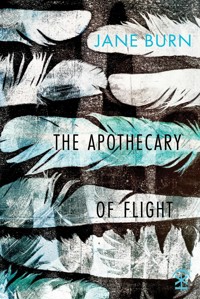
The Apothecary of Flight by Jane Burn is a heady flight into the art of poetry itself: its vital importance as a tool for expression; for understanding and translating the self; for articulating the sheer force and joy of poetry and the way, for a person with autism, it can hold, identify and celebrate both the smallest and weightiest of life's experiences and concepts. These unfettered and exquisite poems pulse with the details of both the wild and tame, the sacred and the humane – observing nature and animals with an artist's eye, capturing the ways in which place and time can hold the experiences of the body, memory and identity. This ongoing dialogue with poetry itself sets a visionary path towards discovery – the page as a place to root oneself, a place of deep creative freedom, self-permission, belonging and defiance. Ultimately, the form, presence and physicality of Burn's extraordinary poems move us with compassion towards the happiest solitude of words, and of love.
Sie lesen das E-Book in den Legimi-Apps auf:
Seitenzahl: 106
Veröffentlichungsjahr: 2024
Das E-Book (TTS) können Sie hören im Abo „Legimi Premium” in Legimi-Apps auf:
Ähnliche













The Apothecary of Flight
The Apothecary of Flight
Jane Burn
ISBN: 978-1-913437-96-1
eISBN: 978-1-913437-97-8
Copyright © Jane Burn, 2024.
Cover artwork: © Jane Burn, 2024.
All rights reserved. No part of this work may be reproduced, stored or transmitted in any form or by any means, graphic, electronic, recorded or mechanical, without the prior written permission of the publisher.
Jane Burn has asserted her right under Section 77 of the Copyright, Designs and Patents Act 1988 to be identified as the author of this work.
First published July 2024 by:
Nine Arches Press
Unit 14, Sir Frank Whittle Business Centre,
Great Central Way, Rugby.
CV21 3XH
United Kingdom
www.ninearchespress.com
Printed in the UK on recycled paper by Imprint Digital.
Nine Arches Press is supported using public funding by Arts Council England.
Contents
The Apothecary of Flight
This poem must be about
An Imaginary Residency Inside an 18th Century Stoneware Jar
Too many dawns are grinding you down
When I was sent to Coventry for real
Translation / Acts
Revelations 01/01/2022
Augury
when I balanced who I am upon the turning of a book
The National Trust Cannot Charge You To Come In
Epiphany / Turning 50
Bear i Bear Bear Bear
On Hawkburn Head
Natural Occurrence (Driving Home from The Lakes)
Aisling to Dún a Rí
At High Force
The Effects of Rage
where tulips fade and tongues are put to rest
Mother Crow, Mother Bee, Mother Stone, Mother Sky, Mother Tree
Rose, Redacted
Taraxacum
An Evanescent Garden
Ocular Map Life as a Series of Roses
The Bones and the Sky
The Women who are Dead
The Unknown Women
Going To Town With An Imaginary Friend
I was a woman today
At The Laing
To sonnets and my best friend / horse
Marsh Angels
As the horse made one slow orbit of its land
Ceridwen
Thwarted Belongingness (A Pandemic Funeral)
I’m afraid of the ghost of Egas Moniz
I see you | hold the secrets of myself
Jeanne, Visions, Trousers, Flames
In November 2021
metapoem / iteration (Dickinson, 568)
Bear ii sometimes bear, sometimes poems, sometimes love
I hadn’t heard poetry read out loud before, or talked about as if it was a Real & Important Thing until a brilliant teacher made it so
Pantoum to Maud’s Absolutely Brilliant Door
Imagined Letters Between Emily Dickinson / Joseph Cornell / Myself About 405 /
Ocular Map To Mary’s Paper Garden
Elizabeth’s Fish
On Writing an Acceptance to the Self
How to Write a Competition Poem
Strophe/Antistrophe/Epode/to being all the parts of me inside a poem
Interoception
I am Road, I am Mother, I am a Better Person Now, I am Failed
Eliza save yourself from Higgins run
Hare cannot stop looking at a photograph of E.R. Fightmaster in a meadow
Ocular Map Three Interpretations
Afterwinter
if I was the tiny seahorse clung
A long, long story of the dark
When Pauline Sings Big River
Tree Breathe Leaf Shade Fruit Home Branch Wood Bird
All day, it rained
To the Kilburn Horse, seen from the Leeds to Newcastle train
Miracles
Always Make Friends with a Cloud
Me and the Goldsworthy, Alone
Notes
Note on How & Why I Invented the Ocular Map
Acknowledgements
About the author and this book
“Hope” is the thing with feathers—
That perches in the soul—
And sings the tune without the words—
And never stops—at all—
– Emily Dickinson
The Apothecary of Flight
After ‘Our sweetest songs are those that tell of saddest thought’, Percy Bysshe Shelley
I am clearing the page of birds Beneath the thought of feathers
is a person who writes
I will do this
away from the apothecary of flight and this next work will be
a recantation of wings
I will ask who are you, poet? What if you could not write the sky?
If all the shades of blue are denied?
I will strip away your weight and guide you away
from your bones
You must not whisper or mutter or skein but stand
with your poem loud and like a beacon in your hand
I see you washing words in water
throwing yourself upon the elucidation of the sea
Is it possible to write yourself clean? Refrain
from the solution of puddles Step away from the stream
(except a stream of consciousness)
I see you peeping out between the trees! See how you run
straight back to your ornate autarky!
How do you see immortality? Will you fall
and be devoured by the ground? Are you the fate of leaves?
Wear your sonnets like a crown and leave the bosky
to the forest Our sweetest songs are those that tell
of saddest thought (how full doth that line make
thy plain heart feel!) so name things (without shame things!)
Say it strong
Make them know that every day
is a precipice
Taste instead the tongue’s deliverance
Raise your voice Speak the clarity of ice
This poem must be about
something of unbearable consequence something massive, like
the abscission of daffodils (in a green glass vase on a windowsill)
and the way they embody a matter of great importance possibly
the sadness of the ageing process beauty’s brief skin or
our inevitable deaths otherwise
it runs the risk of being just another poem about flowers Just
another poem about their overwhelming scent their dust
spent for no reason impotent on the sill’s embroidered cloth
The water’s false hope of life everlasting The unquenchable thirst
that their poor yellow heads will never understand This must not be
just another poem about wilting or confusion at the absence
of rain that they somehow still sense their petals slanted
toward the day, politely asking for light My mother
hated me, I tell them They answer yes, my dearwe know
An Imaginary Residency Inside an 18th Century Stoneware Jar
For the last month, this jar has been more than home. It has been
lonelier than I ever imagined but I have made a friend of echoes —
have lined this space with song. I must react and interact, inhabit
this vessel until it becomes my second skin. I wrote about durability,
longevity. How the outside is speckled like a tree sparrow’s egg —
the pretty daubs of petal, crude and bold. I wrote about each change
to the circle of light, or dusk, or dark above my head. Sometimes,
the air cools to dew point and the glazed inside cries. It was odd
at first to see something so cold and hard weep but I think it best
to let it have its grief. Come within — for you may read, if you wish,
my ledger of scents. Being alone for so long has sharpened my sense
of this cavity’s past, its bearing of oil, wine, water, vinegar, milk —
the people that have borne it in their arms, against their chests
like a heavy child. I smell their breath, for they have held their faces
above, like peculiar moons. I write in the language of kilns —
dunt and fettling, greenware, sintering. I have measured this place
for sound — for the trace of every voice that has echoed down.
The jar’s body is ringed, in memory of the potter who raised it
on their wheel. Sometimes dizziness sets in. I have learned the peril
of corners — how they try to send you straight, how they attract
the shadows. I live without them happily now, forever in the round.
I must tend the hairline crack, threading from the base and feeding upon
an old weakness. The jar no longer rings true. It returns the noise
of faulty bone. You are welcome to join a workshop here but
take care; clay has a way of drawing impurities out. I am eager
for stories — the jar’s destiny is to swallow whatever we give. Please
fill me with your words. I ask you all this same question,
after you climb in — sotell me: what did you once hold?
Too many dawns are grinding you down
Each of them fingered under the door, like a rankling note
from enemy hands; sly and meant to leave a bitter edge — time
today will wear all shapes of mean. Start and intend to go on. Start
by lapping at dirty words. Fail to speak in skylarks. The night
has never been enough. You do not savour morning as you should.
Shift your unreadiness — you must rise, unassembled and scarecrow
the mattress on broomstick bones; beware the sham of half-light clinging
round your bed. Raise your skin and flail its ballast of unkempt sleep.
You have been disrupted, fouled aware by a clock’s meddling bleat.
Sometimes you have come. Sometimes you have cried—
you know this from the salt, scribbled upon your cheeks. The air still
claims you have no kin. You are not loved. These are the curses
that coil inside your unsuspecting head—
the breaths that you take from the dark.
When I was sent to Coventry for real
Coventry is a shithole, the posh bloke from up the road said.
My son will not be going to university there. I want to unpack everything
about his comment — it’s a real onion of a thing to say.
There are so many layers of privilege, I don’t know where to begin.
When I was sent to Coventry for real, everyone made that same joke.
What did you do to deserve that?
It’s an unkind fate, to be cut from the herd —
to be marked with shame, to be shunned. Coventry
is one of the best places I have ever been.
So many excuses to stop, spend some moments in wonder.
In the Precinct, a poem is carved into rills — the water weaves
with words; history speaks from beneath its shallow shine.
Lady Godiva was sent to Coventry too. In Broadgate, she is skinned
with verdigris bronze, written into the signs of local shops.
In the ’50s clock tower, she is chimed out every hour
from automatic doors. She says nothing.
I went out early so I could be alone with the Cathedral’s stones.
In the bombed part, I cried for the broken blooms of glass that cling
the blitzed tracery like lozenges of multi-coloured fruit.
Just like this place, I thought that I was broken once — we are stories
of ruin yet built ourselves brand-new. How amazing
that the skeleton remains — its scars are truth and truth is
the most wonderful thing. Heaven is limitless. Prayers are birds
and snow, sun, stars, and sky. Its psalms were honest, rough, and wild.
I didn’t go there for perfect — I did not mind the yellow hazard sign
in front of the Baptistery Window, nor the other folk wandering about.
This place told me its pain. The window wall of light is etched
with gorgeous ghosts. The tapestry’s green is the Elysian Fields.
If this is Coventry, I thought, then I’ll stay.
The silence here is beautiful.
Translation / Acts
Sperm and egg translate [sometimes] to flesh, wet womb to dry air,
water’s peace to screams. Need translates to milk — to a gum’s burden
of invading teeth / bone to longer bone,
dense to brittle. Night is traded for day,
sensations / perceptions of dark / interpretations of light — asleep
for awake, insomniac to agony, unconsciousness to consciousness,
fatigue to [maybe] less fatigue, [brief] solace
to overwhelming fear — prone to an image
of wings / of the risen Christ / prone to stay the fuck right here / need help.
Bladder empties out to shame / relief, thirst to slake [should there be supply],
sour breath to minty fresh — [if possible]
dirty to clean, hungry [if food exists] to fed,
energy to attempt, journey [in inches or miles] to arrival, travail
to frustration / pleasing ourselves / clocking in to [hopefully] some reward.
Deadlines become procrastination / achievement.
Skill turns to product / catastrophe. Potential
is fulfilled / morphs into waste, the future to futility / infamy / discovery /
erasure / regret. Laundry into angels pegged to a line / an undefeatable pile.
Time present submits to time past, and
years are rewritten / written off / unwritten.
You live / you hope / pain or fail — illness to illness / wellness to illness,
broken to fixed, fixed to broken, to more broken [plus all the shapes of health
between]. Love translates to loved in return /
loving [or not loving] oneself / unloved / to feeling
[being made to feel] unlovable / used to love [and don’t, any longer]. Need
into compromise / intransigence, differences into solutions / a massive row.
Trust into confidence / faith / gaslighting /
violence/ [in]security / doubt. Friend
to community / support / misunderstanding / loneliness. Hearts turn to stone,
grief to marrow, found to lost / rediscovered / Tears to tantrums / relief / futility.




