


144,99 €
Mehr erfahren.
- Herausgeber: John Wiley & Sons
- Kategorie: Wissenschaft und neue Technologien
- Sprache: Englisch
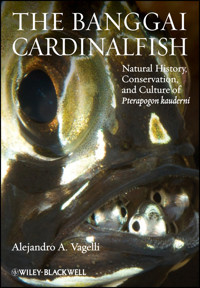
The Banggai cardinalfish, Pterapogon kauderni, is a fascinating species that possesses a series of remarkable biological characteristics making it unique among coral reef fishes. It has been the focus of studies in reproduction, ecology, population genetics and evolution. In addition, since its rediscovery in the late 1990s, it has become tremendously popular in the international ornamental fish trade, and indiscriminate collecting has led to its inclusion in the 2007 IUCN Red List as an endangered species.
This book is divided into three main parts: a general introduction to the fish, including a historical synopsis with an overview of the Banggai Archipelago; a comprehensive treatment of the species’ natural history (distribution, morphology, reproduction, embryology, ecology, genetics, systematics and evolution); an account of the conservation of the species, including descriptions of its fishery, attempts to protect it under CITES, and introduction programmes. The book also includes an appendix offering information on captive breeding, juvenile mortality reduction, and common diseases.
This book is a unique resource for ichthyology students and researchers working on fish biology, ecology and conservation, and for marine ornamental fish hobbyists and aquarium professionals.
Visit www.wiley.com/go/vagelli/cardinalfish to access the figures and tables from the book.
Sie lesen das E-Book in den Legimi-Apps auf:
Seitenzahl: 428
Veröffentlichungsjahr: 2011
Ähnliche



















Contents
Preface
Acknowledgments
Part I Introduction
1 Introduction
1.1 The Banggai cardinalfish and a long rewarding experience
2 Historic Review
2.1 The improbable first encounter
2.2 Rediscovering the “King of the Cardinalfishes,” and a prophecy realized
2.3 Other field studies
3 The Banggai Archipelago
4 Field Research in the Banggai Islands
4.1 Introduction
4.2 A challenging first expedition
Part II Natural History
5 Geographic Distribution
5.1 Introduction
5.2 The geographic distribution of Pterapogon kauderni within its natural range
5.3 The Luwuk population
5.4 The north Sulawesi populations
5.5 Other exotic populations
5.6 Discussion
6 General Survey of Morphology
6.1 Introduction and some particulars of the soft anatomy
6.2 Main osteological characteristics (Figure 6.2a, see Tables 6.1, 6.2 for selected body proportions and counts)
7 Reproductive Biology
7.1 General aspects of reproduction in Apogonidae
7.2 The reproductive biology of Pterapogon kauderni
8 Ecology
8.1 Main ecological aspects of Apogonidae
8.2 Habitat and microhabitat preference of Pterapogon kauderni
8.3 Common fish assemblages including Pterapogon kauderni
8.4 Group structure
8.5 Reproductive ecology
8.6 Trophic habits
8.7 Likely predators of Pterapogon kauderni
8.8 Natural occurrence of parasites in Pterapogon kauderni
9 Genetics
9.1 Introduction
9.2 Genetic structure in Pterapogon kauderni
9.3 Possible spot polymorphism
10 Systematics and Evolution
10.1 Introduction
10.2 Taxonomy of Pterapogon kauderni
10.3 Recent phylogenetic studies and intergeneric relationships of Pterapogon
10.4 Direct development and the Banggai-Australian connection: Could ontogeny and paleogeography provide hints about the origin and intergeneric relationships of Pterapogon?
10.5 Evolution of Apogonidae. The case for a freshwater-origin of the family
Part III Conservation
11 The Fishery of Pterapogon kauderni
11.1 Introduction: Pterapogon kauderni, a species particularly susceptible to high collection pressure
11.2 The history of the trade
11.3 Field surveys and a bleak conservation situation
11.4 The capture, handling and shipping of Pterapogon kauderni: high mortality explained
12 Conservation of Pterapogon kauderni, a Challenge Still Ahead
12.1 The unsuccessful proposal for regulating the capture and trade of Pterapogon kauderni
12.2 The real significance of Pterapogon kauderni in the local economy. Why the livelihood of the Banggai people should not be used as an excuse to prevaricate the protection of this species
12.3 The potential benefits of and resistance to regulate the capture and trade of Pterapogon kauderni
13 The Lembeh Conundrum, from a Careless Action to a Grave Conservation Situation
13.1 The “Lembeh population” and its impact in the Lembeh Strait
13.2 A word for the hobbyists
Part IV Appendix
14 Captive Breeding and Rearing of Pterapogon kauderni
14.1 Introduction
14.2 Reproduction
14.3 Nutritional aspects
14.4 Diseases: a new viral infection
References
Plates
Index
This edition first published 2011 © 2011 by John Wiley & Sons, Ltd.
Wiley-Blackwell is an imprint of John Wiley & Sons, formed by the merger of Wiley’s global Scientific, Technical and Medical business with Blackwell Publishing.
Registered OfficeJohn Wiley & Sons, Ltd, The Atrium, Southern Gate, Chichester, West Sussex, PO19 8SQ, UK
Editorial Offices9600 Garsington Road, Oxford, OX4 2DQ, UKThe Atrium, Southern Gate, Chichester, West Sussex, PO19 8SQ, UK111 River Street, Hoboken, NJ 07030-5774, USA
For details of our global editorial offices, for customer services and for information about how to apply for permission to reuse the copyright material in this book please see our website at www.wiley.com/wiley-blackwell.
The right of the author to be identified as the author of this work has been asserted in accordance with the UK Copyright, Designs and Patents Act 1988.
All rights reserved. No part of this publication may be reproduced, stored in a retrieval system, or transmitted, in any form or by any means, electronic, mechanical, photocopying, recording or otherwise, except as permitted by the UK Copyright, Designs and Patents Act 1988, without the prior permission of the publisher.
Designations used by companies to distinguish their products are often claimed as trademarks. All brand names and product names used in this book are trade names, service marks, trademarks or registered trademarks of their respective owners. The publisher is not associated with any product or vendor mentioned in this book. This publication is designed to provide accurate and authoritative information in regard to the subject matter covered. It is sold on the understanding that the publisher is not engaged in rendering professional services. If professional advice or other expert assistance is required, the services of a competent professional should be sought.
Library of Congress Cataloging-in-Publication Data
Vagelli, Alejandro A.The Banggai cardinalfish : natural history, conservation, and culture of Pterapogon kauderni / Alejandro A. Vagelli. p. cm. Includes bibliographical references and index.
ISBN 978-0-470-65499-6 (cloth)1. Banggai cardinalfish. I. Title. QL638.A7V34 2011 597.177′89–dc22
2011012198
A catalogue record for this book is available from the British Library.
This book is published in the following electronic formats: ePDF 9781119950356; Wiley Online Library 9781119950387; ePub 9781119950363; Mobi 9781119950370
To my wife, Gloria, and my daughters,Michelle and Adriana. Your love, enormous tolerance,and continuous support made this possible.
COMPANION WEBSITE
This book has a companion website:
www.wiley.com/go/vagelli/cardinalfish
with Figures and Tables from the book for downloading
Preface
This book was undertaken in an attempt to compile all of that is known about the natural history and conservation of the Banggai cardinalfish (Pterapogon kauderni). This fascinating species uniquely combines a series of remarkable biological characteristics, making it of particular interest in studies on reproduction, ecology, population genetics, and evolution of coral reef fishes. In addition, it is very popular with ornamental fish hobbyists, and its conservation status has been debated frequently. However, this debate has often been based upon assumptions and misinformation.
It is hoped this book will become the primary reference for P. kauderni, and may become a useful resource to college graduate students and researchers working on coral reef fish ecology and marine conservation. It is hoped that it will also provide a resource to aquarium biologists and fish hobbyists.
This book is not intended to be the main reference for the family Apogonidae. However, on several subjects efforts were made to summarize the published work on other apogonid species, and to compare various biological and ecological characteristics with P. kauderni. For instance, a comprehensive survey of the reproductive biology of Apogonidae was undertaken. In addition, the sections dealing with morphological aspects, growth, general ecology, and trophic habits include information on other apogonids.
The book is divided into three parts followed by one appendix. Part I is a general introduction where the author describes his involvement with this species, and offers a historical synopsis of the research conducted on P. kauderni since it was first discovered and collected. In addition, an overview of the Banggai Archipelago’s geography, ecology, and socio-economy is provided. Finally, the author describes the logistical difficulties associated with conducting field research in the Banggai Islands, and relates some of the challenges he faced during his fieldwork.
Part II describes most aspects of the natural history of P. kauderni. It is based on the results of laboratory and field studies conducted largely by the author, particularly those on biogeography, reproductive biology, and ecology. In addition to information previously published, this part contains new data, including a morphological survey of the species, a detailed analysis of its trophic habits, parasitism, behavior, and the description of a putative color pattern polymorphism. This part is comprised of six chapters. Chapter 5 consists of a comprehensive description of the geographic distribution of P. kauderni. It includes a suggested explanation of its current distribution based on paleogeographic reconstructions of the region. Chapter 6 consists of a general survey of P. kauderni morphology. It is not intended to be a complete description. Instead, it focuses on some osteological characters, otolith morphology, as well as some aspects of the soft anatomy, that may be useful on taxonomic and ecological studies. Chapter 7 describes the reproductive biology in detail, including gonad morphology, gonad cycle, reproductive behaviors, and embryology. In addition, it analyzes the various proposed mating systems for Apogonidae and provides a synopsis of reproductive data of all apogonids. It also contains a section describing various aspects of the reproductive ecology of P. kauderni, including a possible synchronization of its reproduction with the lunar cycle, growth, and recruitment. Chapter 8 is dedicated to the main ecological aspects, and is largely based on the author’s field observations. It includes sections on habitat and microhabitat preference, as well as a description of group structure, predators, parasites, and the remarkable association of P. kauderni with anemones. Chapter 9 is dedicated to genetics. It focuses on population genetic structure and describes the possible presence of a spot polymorphism recently uncovered. Chapter10 is the systematics and evolution section, which provides a characterization of the family Apogonidae, current molecular phylogenetic hypotheses, and a short review of the taxonomic status of Pterapogon kauderni. Additionally, it describes the author’s suggestion that the use of ontogenetic data (in particular the presence of direct development in P. kauderni and in a few other genera investigated by the author) may help to clarify the intergeneric relationships within Apogonidae. Finally, in this section the author discusses the possibility of a freshwater origin of Apogonidae.
Part III of this book, consisting of three chapters, is dedicated to the conservation status of Pterapogon kauderni. Chapter 11 explains why this species is particularly susceptible to high collection pressure, and describes the capture, handling and shipping methods of the species. In addition, it deals with the fishery of this species, and includes a brief description of the history of the trade, identifies the main collection centers, shipping routes, as well as the principal buyers and exporters’ locations. Moreover, it provides the latest known data on the harvest volumes and an overall assessment of the species. Chapter 12 describes the failed attempt to include P. kauderni under Appendix II of CITES during the CoP 14, and the potential benefits of and current resistance to regulate the capture and trade in the species. Moreover, it details the actual significance of its trade in the local economy. Chapter 13 describes the artificial introduction of P. kauderni in the Lembeh Strait (north Sulawesi), its potential impact on the local ecosystems, and the detrimental effect that it is having on the efforts to protect this species in its natural habitat.
The Appendix (consisting of Chapter 14) offers general guidance in captive breeding of this species. It is aimed primarily at hobbyists or researchers aspiring to breed P. kauderni, who may not have had prior experience of fish reproduction. Therefore, it is not intended to provide a method for producing large quantities of P. kauderni in an aquaculture facility setting or for raising large numbers of individual fish on a regular basis, both of which would require significant investment in equipment, space, and time. The first section includes advice on acquisition and handling of broodstock, and a description of the appropriate environmental requirements for a successful mating and raising of juveniles. The second section discusses nutritional aspects important for reducing juvenile mortality, and the occurrence of a viral disease that is currently affecting this species.
Acknowledgments
This book is based on a project that began well over a decade ago. During this time, numerous people have generously helped me, shared their tremendous expertise, enthusiastically collaborated, and provided me with advice and encouragement. I am especially indebted to Gerald Allen, Tom Fraser, Eugene Balon, Giacomo Bernardi, Eugenie Clark, Robert Hall, and Jacky Webb. Thanks to Tim Berra, Eric Borerman, Eugène Bruins, Patricia Ford, Joachim Frische, Mochamad Indrawan, Daniel Knop, Niclas Kolm, Kristin Lunn, Alistair MacDonald, Frank Marini, Carlotta Mazzoldi, Marie-Annick Moreau, Francisco Neira, Bart De Ridder, Laura Rodmann, Noah Des Rosiers, and Denise Tackett for sharing valuable information, unpublished data, and productive discussions. Thanks to Alejandra Volpedo, and Fabiana Lo Nostro for helping with various aspects of the reproductive ecology and gonads study. Thanks go to Niel Bruce, Richard Brusca, María Cristina Daponte, Graciela Esnal, Frank Ferrari, Slava Ivanenko, Brian Kensley, Gregory Kolbasov, Estela Lopretto, Silvina Menu Marque, Samuel Gomez Noguera, and James Thomas for investing time in identifying microinvertebrates, and to Ernest Williams for studying the endoparasite isopods. Thanks also go to Scott Weber and Salvatore Frasca for making the identification of the Megalocityvirus possible. Thanks to Martien van Oijen for giving access to the P. kauderni syntypes at such short notice. I am in debt to all who contributed to making my fieldwork in Indonesia possible and successful. In particular, I would like to thank Mark Erdmann, who played an essential role in the logistical organization and for his help during the first two trips. Thanks to Christine Dufeau for helping me during the second trip. Thanks also to Murex Dive Resort, in particular Danny Charlton for his concern about our safety during the expeditions to the Banggai Islands, as well as his assistance at the Lembeh Strait. I especially want to thank Junico Seba “Opo,” for his hard work during all the trips. I owe him much of what I learned about P. kauderni. Special thanks to Suryani Mile for her support to the conservation projects, and continuous assistance in Luwuk, Banggai, and Jakarta. Thanks to the owners of the oyster-pearl farm in Banggai Island for allowing the surveys and tagging work. Thanks to D.J. Schubert for his efforts to protect the Banggai cardinalfish and for facilitating my attendance to the CITES CoP 14 meeting. Special thanks to the Conservation Endowment Fund (Association of Zoos and Aquariums) and the National Geographic Society that made the fieldwork in Indonesia possible. I am grateful to William Packer Jr., Sue Morrison, Barry Hutchins, Lyle Squire Jr., and especially Jonathan Potter for making the fieldwork in Australia possible and for the successful collection and shipping of Quinca mirifica. I am grateful to the staff and volunteers of the New Jersey Academy for Aquatic Sciences who have collaborated with the Banggai project, especially to Frank Steslow and Angela Wenger for their trust and support. Thanks also to Kim Akers, Mark Kind, Kevin Pang, Jim Kupper, Lee Tokonitz, and Jennifer Warholak. Thanks to Alexander Egiazarov for helping with the manuscript. I want especially to thank Rebecca Bacheler and Katalin Malcolm for their thoughtful review, and for transforming what would have been an obscure and difficult book into a comprehensible text. The dark passages that remain are the product of my stubbornness in not following their suggestions. Finally, I want to express my gratitude to Brian Duvall for his trust over the years, helpful advice, draft corrections, and for many productive discussions. Without his support, neither the project nor this book would have been possible.
Part I
Introduction
1
Introduction
1.1 The Banggai cardinalfish and a long rewarding experience
It was late 1996 when I first encountered Pterapogon kauderni. My employer, the New Jersey Academy for Aquatic Sciences, was at that time in charge of managing the former New Jersey State Aquarium. I was occupied with a project aiming to see if the reproductive and ontogenetic characters of the Gobiosomini gobies would be useful in understanding their phylogenetic relationships, when a peculiar fish was brought to my lab. I was told that it was a Banggai cardinalfish, part of a shipment of Indopacific fishes acquired several weeks before, and that it seemed to be holding eggs in its mouth. I was asked if I would look at it. I had never heard of this species and it certainly did not look like the typical cardinalfish with which I was familiar. It was a beautiful fish and evidently was holding something in its much-enlarged oral cavity. It was very difficult to see inside its mouth, even using a flashlight. I was curious but I did not want to disturb the fish too much because I was afraid it would spit out the eggs. Gently I kept trying to view the eggs, and a few times, for a split second, I was able to discern an orange mass inside. It was difficult to distinguish the eggs clearly, but it appeared that they were unusually big. I was aware that only a few groups of marine teleosts produce large eggs, but as far as I knew, apogonids were not one of them. Although I immediately realized that I had something special in my hands, I did not know how well studied this species was.
Surprisingly, I found that virtually nothing was known about its natural history, and there were only three published works on the species: its brief original description, which was based on two specimens found at a museum, an osteological and taxonomic analysis of the specimens, and a more recent paper describing some general aspects of the habitat where it was found, mentioning the presence of large eggs and even free embryos being brood by some specimens (see Section 2.1).
I decided that studying the reproductive biology of Pterapogon kauderni would be a worthy undertaking and would contribute to the knowledge of marine fish reproduction. Progressively, it took on more and more significance until it became the main project in the lab. Meanwhile, accounts of indiscriminate captures of P. kauderni were heard frequently, and specimens became easily available in the USA and Europe. At the time, its known geographic distribution was five sites in the Banggai region, Eastern Indonesia, indicating that even if its actual distribution turned out to be broader, it would still be one of the most restricted distributions ever documented for a marine fish. Therefore, significant captures would impose a serious risk on its survival. Thus, I began a captive breeding project aimed at developing culture techniques that could later be passed on to the hobbyists and the aquaculture industry with the hope of decreasing the demand for wild-caught specimens. During this process, juvenile mortalities led me to conduct a nutritional study that demonstrated the species’ requirement of polyunsaturated fatty acids (PUFA) for normal development and high levels of survival (see the Appendix).
Still, there was virtually no information on any ecological aspect of P. kauderni. I could only speculate about its trophic habits, group structure, population dynamics, recruitment patterns, geographic distribution, populations size, community relationships, and population genetics. These and other unknown biological attributes kept hounding me.
In 1998, after presenting the results of the study on reproduction and embryology of this species at the American Society of Ichthyologists and Herpetologists (ASIH) meeting, renowned fish embryologist Eugene Balon encouraged me to appreciate the species’ significance, i.e., the extremely unusual case of a coral-reef fish possessing direct development (no larva period). This had very interesting ecological, biogeographical and evolutionary implications; hence, learning about the natural history of P. kauderni became much more pressing.
With no contacts in Indonesia, scarce available information about the Banggai region, and difficult communications, the intended fieldwork looked daunting. Fortunately, in 2000, I met Mark Erdmann at the ASIH meeting where he was giving a special presentation on the new species of coelacanth (Latimeria menadodensis) that he and his wife Arnaz had recently discovered in north Sulawesi. Mark, a stomatopod (mantis shrimps) researcher who had been working in coral reef conservation in Indonesia for several years, readily accepted my request for advice. Mark was fundamental in the organization of my fieldwork. He joined me for some time during my first two trips and suggested I hire Junico Seba (Opo), a dive guide from a north Sulawesi dive-resort, whom he had worked with on previous occasions. Opo turned out to be my right hand in all the trips to the Banggai Archipelago and Sulawesi. We faced storms, pirates and uncooperative crews. Although Opo never traveled to the Archipelago before, his innate sense of orientation, knowledge of the Indonesian underwater fauna, and communication skills were key to the achievements of the fieldwork objectives, and for returning safely.
In January 2001, I traveled for the first time to the Banggai region and finally met “Kaudern’s cardinalfish” in its natural environment, and in all its grandeur. Each field trip was undertaken as if it were the last; hence, it was imperative to gather as much data as possible. Thus, we dove up to seven times a day; we began at first light and finished at dusk, and sometimes, we dove at night. The reward was great. We learned about the ecology, geographic distribution, and conservation status of Pterapogon kauderni. We discovered a remarkable species that combines a series of fascinating traits, most of which, unfortunately, make it especially vulnerable to overfishing.
The excitement of exploring the Banggai Archipelago (an area harboring such an incredible diversity of species), and of learning about Pterapogon kauderni soon was replaced, however, with a somber feeling, as the widespread use of destructive fishing became apparent. We witnessed the use of cyanide and dynamite fishing, along with the resulting habitat degradation and loss of substrates, which are essential to the survival of P. kauderni. We tracked its populations over the years and documented their decline due to its indiscriminate capture, which we observed along with its poor handling.
We discovered the presence of P. kauderni in central Sulawesi (inside the Luwuk harbor), as well as tracked the population that inhabits the Lembeh Strait (north Sulawesi) since shortly after its artificial introduction in 2000, when it consisted of only a few dozens of individuals.
Today, looking back at that moment when I was trying to discern what that little fish was guarding so zealously in his mouth, I remember feeling the excitement of, perhaps, witnessing something new. However, at that moment I never could have anticipated that the Banggai cardinalfish would become the focus of my research for the next 15 years, and that, in this process, it would lead me to discover the presence of direct development in several apogonid species, clarify aspects of the mating process in Apogonidae, and to suggest a possible evolutionary path for the family. Nor could I have foreseen that this shy little fish, reluctant to show me its well-guarded brood, would take me on four expeditions to the Banggai Archipelago to explore over 60 islands, some of which had never seen a naturalist before. While there, I would encounter risky situations, but also incredibly beautiful bays, reefs, and mangroves full with an amazing diversity of life.
Nor could I have imagined that within a few years, I would have witnessed the indiscriminate capture of this fish, the destruction of its habitats, and the difficulties of protecting a species that was being unnecessarily decimated due to the desire of individuals to keep specimens in a glass tank.
2
Historic Review
2.1 The improbable first encounter
At the end of his remarkable 1917–1920 expedition to the Celebes Islands (Sulawesi), Swedish zoologist Walter A. Kaudern collected two juvenile specimens of a beautiful silver and black striped fish at the shore of Banggai Island, and sent them to the Leiden Museum of Natural History (Figure 2.1). These were the first two specimens of Pterapogon kauderni ever collected, but as we will see, this collection was an unlikely event.
Although Kaudern earned his Ph.D. in zoology, he was a naturalist with ample knowledge and training in geology, botany, geography and anthropology. He traveled to Celebes with the idea of conducting zoological studies, and to a lesser extent, to carry out anthropological surveys. He wrote, “in order to contribute to the solving of the zoo-geographical questions connected with the island of Celebes in the Dutch East Indies, I went in December 1916 to this island.” “Besides the zoological work, I intended to study the natives of the country as far as time would allow,” and “I preferably intended to go to districts not yet visited by any naturalist, or to which some naturalist or other had only paid a short visit” (Kaudern, 1925). However, he ended up focusing mainly on ethnographical research: “We took more and more interest in the natives, and at last the study of them became the principal part of our work” (Kaudern, 1925).
Lesen Sie weiter in der vollständigen Ausgabe!
Lesen Sie weiter in der vollständigen Ausgabe!
Lesen Sie weiter in der vollständigen Ausgabe!
Lesen Sie weiter in der vollständigen Ausgabe!
Lesen Sie weiter in der vollständigen Ausgabe!
Lesen Sie weiter in der vollständigen Ausgabe!
Lesen Sie weiter in der vollständigen Ausgabe!
Lesen Sie weiter in der vollständigen Ausgabe!
Lesen Sie weiter in der vollständigen Ausgabe!
Lesen Sie weiter in der vollständigen Ausgabe!
Lesen Sie weiter in der vollständigen Ausgabe!
Lesen Sie weiter in der vollständigen Ausgabe!
Lesen Sie weiter in der vollständigen Ausgabe!
Lesen Sie weiter in der vollständigen Ausgabe!
Lesen Sie weiter in der vollständigen Ausgabe!
Lesen Sie weiter in der vollständigen Ausgabe!
Lesen Sie weiter in der vollständigen Ausgabe!
Lesen Sie weiter in der vollständigen Ausgabe!




