


12,99 €
Mehr erfahren.
- Herausgeber: Allen & Unwin
- Kategorie: Ratgeber
- Sprache: Englisch
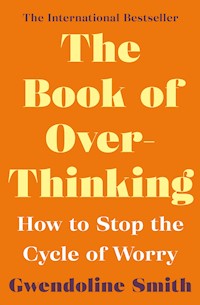
FREE YOURSELF FROM THE CYCLE OF WORRY Are you someone who suffers from overthinking: a form of worry and anxiety? Do you sometimes spiral into negative thought patterns? It's time to break the cycle of worry and start trusting yourself. Psychologist and bestselling author Gwendoline Smith shows you the concepts of positive and negative overthinking, the truth about worry and how to deal with 'thought viruses' that are holding you back. Based on cognitive behavioural therapy, this book will help you in all the key areas of your life: from your personal life to relationships and work.
Das E-Book können Sie in Legimi-Apps oder einer beliebigen App lesen, die das folgende Format unterstützen:
Veröffentlichungsjahr: 2021
Ähnliche
















Gwendoline Smith is a clinical psychologist, speaker, blogger and the author of the books The Book of Knowing, Depression Explained and Sharing the Load. She also goes by the name Dr Know. Born and raised in Chatham, Kent, she now lives in Auckland, New Zealand.
First published in Australia and New Zealand in 2020 by Allen & Unwin.
First published in Great Britain in 2021 by Allen & Unwin, an imprint of Atlantic Books Ltd.
Copyright © Gwendoline Smith, 2020
The moral right of Gwendoline Smith to be identified as the author of this work has been asserted by her in accordance with the Copyright, Designs and Patents Act of 1988.
All rights reserved. No part of this publication may be reproduced, stored in a retrieval system, or transmitted in any form or by any means, electronic, mechanical, photocopying, recording, or otherwise, without the prior permission of both the copyright owner and the above publisher of this book.
10 9 8 7 6 5 4 3 2 1
A CIP catalogue record for this book is available from the British Library.
Paperback ISBN: 978 1 83895 278 5
E-book ISBN: 978 1 83895 279 2
Text design by Megan van Staden
Illustrations by Georgia Arnold, Gabrielle Maffey and Megan van Staden
Printed in Great Britain
Allen & Unwin
An imprint of Atlantic Books Ltd
Ormond House
26–27 Boswell Street
London
WC1N 3JZ
www.allenandunwin.com/uk
Dedicated to the brain— for without mine, I couldn’t help yours
CONTENTS
AUTHOR’S NOTE
PART 1: What is overthinking?
CHAPTER ONEOverthinking: a definition
CHAPTER TWOThe harmful aspects of overthinking
CHAPTER THREEA closer look at the mechanics of worrisome overthinking
CHAPTER FOURWorrisome overthinking (AKA worry)
PART 2: Overcoming overthinking
CHAPTER FIVEWhat to do about overthinking: the therapeutic model
CHAPTER SIXStarting the therapy
CHAPTER SEVENAn introduction to thought viruses
CHAPTER EIGHTThe shoulds, musts and have tos
CHAPTER NINEThe thought diary
CHAPTER TENStarting to see results
CHAPTER ELEVENTime to review
IMPORTANT STUFF TO REMEMBER
APPENDIX 1:Flashcards
APPENDIX 2:Thought viruses
APPENDIX 3:Thought records
FURTHER READING
If you’ve just picked up this book, I’m working on the assumption that overthinking is causing you a few problems.
If it is, then you’re in exactly the right place.
AUTHOR’S NOTE
The Book of Overthinking is essentially a sequel to my earlier book, The Book of Knowing. Both books are grounded in the theory of cognitive behavioural therapy (CBT), recognised as the state-of-the-art treatment methodology for mood and anxiety conditions.
The most important emphasis of this approach is to teach people about how they think, and in doing so provide tools and strategies to better manage how they feel. The focus of The Book of Knowing was to address the needs of teens and young adults, struggling with the overwhelming feelings which we know have a direct link to ever-increasing youth mental health problems. Although it was pitched to younger people, the content was, and still is, helpful to people of all ages.
In my clinic I have seen the magic of The Book of Knowing change the lives of many young people for the better. What I have also become aware of in my clinical life is that the majority of adult clients I see are struggling with worry or, as it is commonly known, ‘overthinking’.
Hence, The Book of Overthinking is geared more to adult readers, though, as was the case with Knowing, the knowledge and practical techniques are ageless.
I enticed my lovely illustrators Gabi and Georgia and designer Megan into doing another book with me, as I believe grown-ups love comic books as much as kids do. So have a laugh and learn along the way.
CHAPTER ONE
OVERTHINKING: A DEFINITION
overthink (verb) to think too much about (something): to put too much time into thinking about or analysing (something) in a way that is more harmful than helpful. (Merriam-Webster online dictionary)
Out of the many definitions I found of overthinking, I warmed to this one the most, because it describes the act in very simple terms. It also highlights the potential to be harmful that overthinking has.
Everyone overthinks things once in a while. However, there are those individuals—perhaps you are one of them—who find it quite impossible to shut down the constant onslaught of unwanted thoughts. There are two distinct forms of this type of inner monologue:
1. Ruminating, which involves rehashing the past.
• I shouldn’t have made that comment in the meeting last week.
• I shouldn’t have left my last job. If I had stayed, I would be much happier than I am now.
• I shouldn’t have eaten that piece of cake at the party yesterday. Now I am going to be fat forever.
These thought patterns are closely associated with regret and guilt.
2. Worrying, which is when you consistently make negative, catastrophic predictions about the future.
• When I hand in my report to the boss, she will think it is hopeless and then I will be handed my notice. Then I won’t be able to pay my mortgage, I’ll lose the house and won’t be able to provide for my family.
• And so on, and so forth.
Worrying about potential future disasters creates fear and anxiety.
Being plagued by either or both of these types of overthinking can leave you in a state of constant anguish.
On a lighter note, it is our ability to think that makes us human. It is natural to get absorbed by what we are doing and think about those things. However, if overthinking leads you into a downward spiral of negative, destructive thoughts then, ‘Houston, we have a problem.’
Once this process occurs, you begin to create problems that aren’t there. Subsequently, you begin to believe and feel that those problems are real and valid. As a result of these beliefs, you then begin to worry and feel anxious. The thoughts then become paralysing, and impede your ability to problem-solve.
The other definition of overthinking which I like comes from the online Urban Dictionary:
overthinking a great way to f@ck everything up. #complicated #bullshit #hard #f@ck #hate it
Not too far off the mark, I say!
All jokes aside, however, I believe that the more knowledge you have about what you are experiencing, the closer you are to managing those unwanted thoughts and experiences.
SHOULD I BE CONCERNED ABOUT MY OVERTHINKING?
People often ask me if all overthinking is harmful. In my opinion, no. Sometimes we can become engrossed in thought, and be stimulated by that experience—like we have been hypnotised, losing track of time in an almost trance-like state. I guess we could liken this to daydreaming or mind-wandering.
Here are a few examples:
You have just fallen in love, and you find yourself thinking about that person all day. You may even dream about them at night. (I guess that’s day- and night-dreaming.)
Is that problematic? No. Most people love that experience and find it enjoyable and exciting, not anxiety-provoking.
Your wedding is coming up. You want your hair and dress to be just right, so you think about options and colours all day.
Is that a problem? It can’t be that bad—a lot of people appear to keep getting married, and surviving it!
You’re training for a swimming competition, and you think about your strokes and your breathing constantly.
Problem? Sounds more like a desire to succeed. Athletes live in this psychological domain throughout their careers. It is only when this thought pattern is driven by a fear of failure (and turns into worry) that sports psychologists intervene.
You find yourself constantly thinking about your golf swing or the new recipe you are going to try when your friends come for dinner. Thinking and planning, thinking and planning.
Problem or excitement? I suggest the latter.
The answer lies in how you are thinking. If your thinking goes like this:
OMG I’ve chosen the wrong colours for the bridesmaids. I’m going to look fat in my dress. I should have got the A-line vintage dress and not the chiffon meringue. People are going to think ‘Why is he marrying that fat cow with no dress sense?’
These are the types of thoughts that will create fear and produce toxic over-stimulation.
But if the thinking goes like this:
I am so looking forward to my wedding day. My girls are going to look gorgeous, and so will my hubby-to-be. I love my dress, I love the invites, the venue is perfect . . .
This kind of thinking is pleasurably stimulating, even though you may think about the same topic throughout the day and into the night. Over-thinking, yes—but a problem? I don’t think so.
One of the things about overthinking that clinicians get concerned about is if it is disturbing your sleep. If you spend all night thinking about your bridesmaids’ dresses, does that make it a problem? Not necessarily. You will probably be exhausted the following night and drift off to sleep with ease, so you have not established a pattern of poor sleep. But fear-based overthinking can create chemicals in the brain that are unhelpful to the system, and result in disturbed sleep.
What I will refer to as positive overthinking activates chemicals in the brain such as dopamine, oxytocin, serotonin and endorphins—all associated with happiness. This means we desire them and, in the extreme, will repeat behaviours that assure access to them. Humans seek endorphin stimulation via exercise, watching comedy, listening to music, engaging in creative pursuits and so on.
However, when the pursuit of pleasure involves behaviours that provide a means to avoid life’s daily problems—e.g. gambling, watching screens, using gaming machines and drinking alcohol—it is not so harmless. (At a conference on compulsive gambling I went to many years ago, the keynote speaker said that the difference between a recreational gambler and a compulsive gambler is that the addict is looking to solve problems through their gambling. This is in contrast to the recreational punter, who is looking for a flutter, a bit of excitement and a night out.)
As you can see from the examples above, not all overthinking is positive. Now let’s take a look at negative overthinking. Studies show that getting stuck in your head, focusing on negative events (and therefore experiencing feelings of regret, self-blame), can be the biggest predictor of some of todays’ most common mental-health problems, such as anxiety and depression. These studies— of which there are millions—introduce us to and educate us on the detrimental health impacts of negative overthinking.
So, the question ‘Should I be concerned about my overthinking?’ has a simple answer:
‘Yes, if it is thinking that gets in the way of your ability to function.’—DR ROBERT SHIEFF, PSYCHIATRIST AND COGNITIVE BEHAVIOURAL THERAPIST




