


0,49 €
Niedrigster Preis in 30 Tagen: 1,99 €
Niedrigster Preis in 30 Tagen: 1,99 €
Mehr erfahren.
- Herausgeber: Booksell-Verlag
- Kategorie: Religion und Spiritualität
- Sprache: Englisch
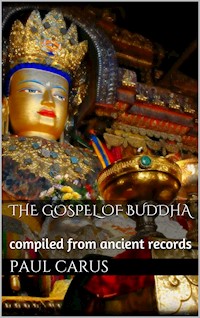
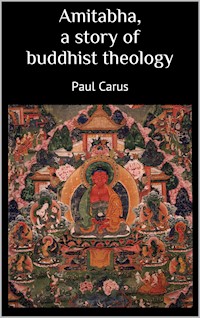
In "The Buddha," Paul Carus delves into the life and teachings of Siddhartha Gautama, exploring the philosophical and spiritual underpinnings of Buddhism. Carus employs a clear and accessible literary style, blending scholarly rigor with an engaging narrative that seeks to demystify the core tenets of Buddhism for a Western audience. The book is situated within the context of early 20th-century interest in Eastern philosophies, reflecting the growing fascination with non-Western spiritual traditions during a time of increasing globalization and cultural exchange. Carus's integration of historical context and philosophical analysis provides readers with a well-rounded understanding of the impact of Buddhist thought on both individual lives and broader cultural dialogues. Paul Carus was a German-American philosopher, scholar, and a key figure in the dissemination of Eastern philosophies in the West. His deep interest in comparative religion and his role as an editor of the influential journal "The Open Court" allowed him to engage with a diverse range of spiritual ideas. Carus's meticulously researched perspective is influenced by his own philosophical inquiries and his commitment to fostering understanding between cultures. For readers interested in exploring the intricacies of Buddhist philosophy and the life of its founder, "The Buddha" serves as an illuminating resource. Carus's thoughtful analysis not only enriches one's understanding of Buddhism but also invites reflection on the universal themes of suffering, compassion, and enlightenment that resonate across cultures.
Das E-Book können Sie in Legimi-Apps oder einer beliebigen App lesen, die das folgende Format unterstützen:
Veröffentlichungsjahr: 2019
Ähnliche






The Buddha
Table of Contents
DIRECTIONS TO THE STAGE MANAGER.
The scenery can be made very attractive by both historical accuracy and a display of Oriental luxury, but the drama may easily be performed with simple means at a small cost without losing its dramatic effect. Some of the changes, however, should be very rapid. The interludes can be replaced by lantern slide pictures, or may be omitted.
If the interludes are retained there need not be any intermission in the whole drama.
The music for the Buddha's Hymn of Victory, pages 5 and 39 (see The Open Court, XIX, 49); the dirge on page 19, (Open Court, XIX, 567); Yasōdhara's Song, page 37 (Open Court, XVIII, 625); and the Doxology, page 63 and at the end (Open Court, XVIII, 627), may be found in a collection entitled Buddhist Hymns (Chicago, Open Court Publishing Co., 1911).
THE OPEN COURT PUBLISHING CO.
1913
CAST OF CHARACTERS.
All vowels to be pronounced as in Italian.
Siddháttha Gótama, Prince of the Sakyas, later on the Buddha
B
Suddhōdana, King of the Sakyas, father of Siddháttha
S
Pajāpati, Queen of the Sakyas, aunt and stepmother of Siddháttha
P
Princess Yasōdhara, Siddháttha's wife
Y
Rāhula, Yasōdhara's son
R
Devadatta, brother of Yasōdhara
Dd
Kāla Udāyin, a gardener's son
K
Gopa, Yasōdhara's maid
G
Visākha, a Brahman, Prime Minister of Suddhōdana
V
Dēvala, a Sakya Captain
D
Bimbisara, King of Magadha
Bb
Ambapali, King Bimbisara's favorite
Ap
Nāgadēva, Prime Minister of Mágadha, leader of an embassy
N
General Siha, in the service of King Bimbisara
GS
Jēta, Prince of Northern Kosala
J
Anātha Pindika, a wealthy man of Sāvattha
A
Māra, the Evil One
M
Channa, Prince Siddháttha's groom
Ch
Master of Ceremonies at Magadha
Mc
General Siha's Captain
C
A Brahman Priest
Pr
A Farmer
F
Servant
St
Ministers, Officers, Soldiers, Trumpeters, Villagers, A Shepherd. Singers: Māra's Daughters, Angels, Brahma, Vishnu, Shiva.
GLOSSARY OF FOREIGN TERMS.
Buddha, the Enlightened One, the Saviour. Bodhi, enlightenment or wisdom. Bodhisatta, a seeker of the bodhi, one who endeavors to become a Buddha. Bodhi tree, the tree under which Buddha acquires enlightenment. Muni, thinker or sage. Sakyamuni, the Sage of the Sakyas, the Buddha. Tathāgata, a title of Buddha, which probably means "The Perfect One," or "he who has reached completion." Nirvāna (in Pali, "Nibbana") eternal bliss. Kapilavatthu, capital of the Sakyas. Kōsala, an Indian state divided into Northern and Southern Kōsala. Sāvátthi, capital of Northern Kōsala. Jētavana, the pleasure garden of Prince Jēta at Sāvátthi. Mágadha, a large kingdom in the Ganges Valley. Rājagáha, capital of Magadha. Uruvēla, a place near Benares. Arāda and U'draka, two philosophers. Licchávi, a princely house of Vesali. Nirgrántha (lit. "liberated from bonds"), a name adopted by the adherents of the Jaina sect. Indra, in the time of Buddha worshiped by the people as the most powerful god. Issara, the Lord, a name of God Indra. Yama, the god of death. Káli, a Brahman goddess, called also Durga.
ACT I.
FIRST SCENE.
[A tropical garden in Kapilavatthu, in the background mountains, at a distance the snow-capped peaks of the Himalayas. On the right near the front a marble bench surrounded with bushes. Further back the palace entrance of the Raja's residence. Above the entrance a balcony. On the left a fortified gate with a guard house; all built luxuriously in antique Indian style.]
Present: Suddhodana, the king (S); Pajapati, the queen (P), and the minister of stateVisakha (V).




