


33,99 €
Mehr erfahren.
- Herausgeber: John Wiley & Sons
- Kategorie: Wissenschaft und neue Technologien
- Sprache: Englisch
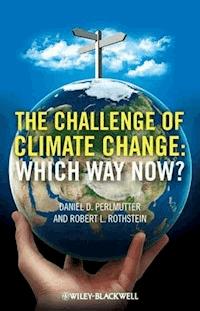
Global warming and climate change present complex interlocking issues of public policy, multilateral negotiation, and technological advancement. This book explores both the problems and the opportunities presented by international agreements, and examines the technological developments and policy goals that can be pursued to effect the changes necessary. Specific steps are proposed in the form of a list of priorities. This book represents a cooperative enterprise between two authors of different backgrounds - engineering and international relations - and is directed to an educated but non-professional lay audience without any formal training in either science or international relations. The points of view of negotiators from both developed and developing nations are presented and compared. Each topic is presented from both technical and policy perspectives as a means to evaluate the variety of proposals that have been offered as remedies to global warming. The text is supported by illustrations and tables where appropriate, including a list of References at the end of each chapter.
Sie lesen das E-Book in den Legimi-Apps auf:
Seitenzahl: 436
Veröffentlichungsjahr: 2011
Ähnliche



















Contents
Preface
Acknowledgement
1 In the Beginning
1.1 The Viewpoint Taken
1.2 What is Your Problem?
1.3 The Challenges We Face
Notes and References
2 A View of Geopolitics
2.1 Are There Limits to Growth?
2.2 Public Goods and Public “Bads”
2.3 Policymaking and Negotiations
Notes and References
3 Surveying the Field
3.1 A History of Change
3.2 Measuring Energy
3.3 Supply: Where Do We Get It?
3.4 Demand: How Do We Use It?
3.5 Will We Run Out of Oil? Or Gas?
3.6 Forms of Energy
Notes and References
4 Global Warming
4.1 Temperature of the Planet
4.2 Greenhouse Gases
4.3 Is Global Warming Our Fault?
4.4 The RF Index
4.5 Air Pollution Revisited
4.6 Immediate or Short-Term Remedies
4.7 Limits to Growth and the Commons Revisited
4.8 Sequestration
Notes and References
5 Renewable Energy
5.1 Hydroelectric Power
5.2 Biofuels
5.3 Wind Power
5.4 Power from Tides and Waves
5.5 Direct Use of Solar Energy
5.6 Nuclear Energy
5.7 Geothermal Energy
5.8 Indirect Emissions and Hidden Costs
Notes and References
6 Energy Storage
6.1 Batteries and Fuel Cells
6.2 Syngas and Liquid Fuels
6.3 Hydrogen Gas
6.4 Pumped Water or Compressed Air
6.5 Hot Water or Molten Salt
6.6 Flywheels
Notes and References
7 The Negotiating Process
7.1 A Period of Transition
7.2 Our Worst Fears
7.3 Guidance from a Theory of Bargaining
7.4 Useful Lessons from the Past
7.5 What Should a Treaty Accomplish?
7.6 Where We are Heading
Notes and References
8 From Theory to Practice
8.1 Different Regimes and Perspectives
8.2 Improving the Prospects
8.3 The Debate on Venues
8.4 Bargaining Strategies: Domestic and International
8.5 Big Bang or Accelerated Incrementalism?
8.6 Choices in the Context of Risk
Notes and References
9 Where Do We Go from Here?
9.1 Is the Feasible Insufficient?
9.2 Fiscal Measures
9.3 A Complicated Question
9.4 An Overall Assessment
9.5 Choices and Priorities
9.6 Caveats
9.7 A To-Do List
Notes and References
10 A List of Priorities
10.1 Short-Term Gains: Less than 10 Years
10.2 Medium-Term Improvements: 10–20 Years
10.3 Long-Term Solutions: More than 20 Years
10.4 Plan A and Plan B, Simultaneously
Notes and References
11 Prospects After Copenhagen
11.1 Costly Failure or Small Success?
11.2 Reframing the Debate
11.3 The Good News and the Bad News
11.4 The China Problem
11.5 Third World Dilemmas
11.6 Polarized Politics
Notes and References
Index
This edition first published 2011, © 2011 by John Wiley & Sons Ltd
Blackwell Publishing was acquired by John Wiley & Sons in February 2007. Blackwell’s publishing program has been merged with Wiley’s global Scientific, Technical and Medical business to form Wiley-Blackwell.
Registered office: John Wiley & Sons Ltd, The Atrium, Southern Gate, Chichester, West Sussex, PO19 8SQ, UK
Editorial offices: 9600 Garsington Road, Oxford, OX4 2DQ, UK
The Atrium, Southern Gate, Chichester, West Sussex, PO19 8SQ, UK 111 River Street, Hoboken, NJ 07030–5774, USA
For details of our global editorial offices, for customer services and for information about how to apply for permission to reuse the copyright material in this book please see our website at www.wiley.com/wiley-blackwell
The right of the author to be identified as the author of this work has been asserted in accordance with the Copyright, Designs and Patents Act 1988.
All rights reserved. No part of this publication may be reproduced, stored in a retrieval system, or transmitted, in any form or by any means, electronic, mechanical, photocopying, recording or otherwise, except as permitted by the UK Copyright, Designs and Patents Act 1988, without the prior permission of the publisher.
Wiley also publishes its books in a variety of electronic formats. Some content that appears in print may not be available in electronic books.
Designations used by companies to distinguish their products are often claimed as trademarks. All brand names and product names used in this book are trade names, service marks, trademarks or registered trademarks of their respective owners. The publisher is not associated with any product or vendor mentioned in this book. This publication is designed to provide accurate and authoritative information in regard to the subject matter covered. It is sold on the understanding that the publisher is not engaged in rendering professional services. If professional advice or other expert assistance is required, the services of a competent professional should be sought.
Library of Congress Cataloging-in-Publication Data
Perlmutter, Daniel D.
The challenge of climate change: which way now?/by Daniel D. Perlmutter and Robert L. Rothstein.
p. cm.
Includes bibliographical references and index.
ISBN 978-0-470-65498-9 - ISBN 978-0-470-65497-2 1. Climatic changes. 2. Global warming. I. Rothstein, Robert L. II. Title.
QC903.P445 2010
363.738'74-dc22
2010022400
ISBN: 978-0-4706-5498-9 (hbk) 978-0-4706-5497-2 (pbk)
A catalogue record for this book is available from the British Library.
This book is published in the following electronic formats: eBook 9781444328530; Wiley Online Library 9781444328523
1 2011
Daniel D. Perlmutter
To my wife, Felice, and to my grandchildren Seamus, Noa, and Lev, with hope for a better future for all grandchildren.
Robert L. Rothstein
To my Beloved wife Jane - an inspiration to all environmentalists!
Preface
There is a recurrent theme that appears in science fiction stories concerning how humans might respond to an invasion by aliens from some extraterrestrial source. The men and women in the tales are usually divided in their responses, siding as might be expected with their particular national or ethnic identities, their economic interests, or the degree of their xenophobic tendencies. This remains the case as long as the invaders are friendly or perhaps even indifferent to human aspirations; however, the scenario changes radically if it is found that the extraterrestrials are hostile to Homo sapiens.
It then transpires that all humanity unites in the face of danger from the outside. The serious threat to us all redefines what we understand to be the “other.” Given this new attitude among earthlings, the stories usually have a happy ending. By cooperative resistance from humanity the enemy is defeated, or at the very least gives up its idea of conquest and leaves us in peace, planning for an optimistic future.
As a suitable allegory, this story might be useful in considering the threats to our planet that arise from global warming, as well as our responses. As the scientific evidence for the effects of greenhouse gas emissions to the atmosphere becomes increasing undeniable, it is clear that the damages from global warming will be widespread over the planet, rather than confined to a few locations at the poles. At this moment in our relatively short history of dealing with this “invasion,” each nation and each economic interest group is looking for ways to come out ahead. The developing nations, especially China and India, do not want to accept any policy that would slow down their economic development. The economic interests that benefit in a big way from combustion of fossil fuels initially denied that there was any problem at all, arguing that the scientific evidence was not convincing; later, when total denial was no longer an acceptable posture, they began to invest some of their vast resources in alternative energy sources. The result is confusion in the public mind, uncertainty on the extent of the threat, and a lack of unity that might otherwise pressure governments to take stronger action. With rather few exceptions, voters are not prepared to sacrifice any significant part of their comforts to counter some as yet invisible hazard.
When will the story change? In our allegoric tale it was necessary to wait until the threat was clearly visible to all, when intergenerational survival seemed more important than short-term gain, and when it was universally recognized that the threat could only be handled by immediate world-wide cooperative action. It is our hope that by contributing to a process of wider consciousness raising, this book will contribute to making possible the same recognition with respect to global climate change.
But is another book on the problems of global warming really necessary? We are inundated virtually every day by a mountain of books, articles, and reports seeking to enlighten us about the dangers of global warming and what we - all of us, individuals, states, international institutions - need to do to avert the worst dangers and to adapt to what we cannot avert. Indeed many of these works are first - rate endeavors by eminent scientists and environmental activists. Is this book merely bringing more coals to Newcastle, or do we have something of value to contribute?
We do believe our cooperative enterprise has produced something of value, something that is different from the usual analyses or exhortations to the unconvinced. We started out with a common interest in environmental issues - how could one not be interested? - but with two completely different disciplinary backgrounds, one of us a Professor of Chemical Engineering, the other a Professor of International Relations. Initially each of us focused on what we knew best, then we sought convergence on a range of policy choices in different time periods. An easy fit emerged from the melding of our individual experiences, perspectives, and emphases.
The results are presented in the concluding chapters to provide a list of possible policies, choices based on characteristics that are scientifically, politically, and morally sustainable. More importantly, specific priorities are suggested for the short term, the medium period, and the long run. This is not intended to be an original scholarly contribution to either engineering technology or international relations, but rather a set of recommended approaches for non - expert readers that might help them find their own positions on some of the most vital issues of the day.
Finally, it should be noted that we write in the aftermath of the Copenhagen conference of December, 2009. Some have billed this conference in nearly apocalyptic terms, as mankind’ s last (or best) chance to keep global temperatures from rising to unsustainable levels. We have a different perspective. We believe global conferences are not the best setting to establish meaningful targets and timetables for rapid and resolute policy initiatives by the major contributors to global warming. But more to the point, what came out of Copenhagen - a weak compromise document lacking essential details on implementation - left unchanged the need for sustained and increasingly demanding policy actions by all states and by the international community. It would be a great mistake to throw up our hands in despair and say: Copenhagen has been a disappointment, all is lost. In fact all is not yet lost, and there still are technological changes and/or important policies to pursue that can make a difference, that can avert a descent into a Hobbesian world of conflict and destitution. It is such policies and adaptations that provide our ultimate focus.
Daniel D. Perlmutter
University of Pennsylvania
Robert L. Rothstein
Colgate University
Acknowledgments
We would like to thank S. M. (Mike) Miller and Ivan Krakowsky for helpful comments on Chapter 11. The anonymous reviewers for Wiley-Blackwell also provided useful criticism.
Daniel Perlmutter wants to recognize his wife Felice and his children Shira, Saul, and Tova, all of whom deserve grateful acknowledgments for their encouragement and constructive comments at all stages of manuscript preparation. Thanks also to Marshall S. Levine for suggestions and productive conversations.
Robert Rothstein would like to thank John Boulton in London not only for helpful comments on his contributions to this book but also for his encouragement and support throughout. He would also like to thank Marion LindbladGoldberg for her very useful comments on Chapters 1 and 11. Finally, he would like to thank Emily Benson of Stakeholder Forum for comments on Chapters 1 and 2 and for the provision of some useful material on the Copenhagen Conference.
Any errors of commission or omission that remain are entirely our responsibility.
Daniel D. Perlmutter and Robert L. Rothstein
1
In the Beginning
Introduction
1.1 The Viewpoint Taken
1.2 What is Your Problem?
1.3 The Challenges We Face
Notes and References
The reader will want to know what this book is about, that is how it will deal with the difficult questions about energy and the environment, and specifically with global warming. The plan is to address these matters from two interlocking points of view, considering the technical options that are avail- able, but in the context of the policy decisions and negotiations with which they are intimately linked. In both these arenas, we address an intelligent layperson without requiring any prior expertise on the part of the reader. We outline important policies to pursue that can make a difference and propose specific steps and a list of priorities.
1.1 The Viewpoint Taken
This is a book that seeks to navigate between extremes. We believe that global warming is occurring and that human actions are a major factor in that warming, but we are not persuaded that all will be lost if massive policy changes and massive changes in lifestyles are not implemented immediately and everywhere. We have by our reckoning a 10–20 - year “window of opportunity” to develop policies that will be effective in facilitating adaptation to existing levels of global warming and mitigating the worst effects of a long- term and very dangerous increase in global temperatures. These policies will be costly, they will require increasingly difficult adaptations as a new energy economy is put in place, and there will be policy “shocks” and costly mistakes along the way, but the changes will not be too costly or too demanding or too surprising if we do not use uncertainty and ideological warfare as excuses to procrastinate. We shall discuss all these matters in greater detail in the chapters that follow.
Because many forecasts of climate change have already proved to be too optimistic, that is to underestimate the magnitudes of actual events, it is possible that the window of opportunity could close more rapidly than we now expect. Recognizing the chance that such an unhappy situation could develop, we need to be prepared to implement very rapidly some more extreme and in some cases controversial responses to global warming. For this reason, our policy suggestions in Chapters 9, 10, and 11 follow a two-track strategy: a “normal” track in the next two decades that seeks to establish and sustain a policy process that deepens our ability to deal with and lessen the effects of the warming that has occurred and will continue to occur; and an “abnormal” track, focused initially on enhanced research expenditures, that seeks to avert the worst and to limit the damages from what cannot be averted. There is a loose analogy here with the Obama administration’ s response to the danger that recently threatened the US financial system as well as those around the globe. In that case massive multidimensional policy responses were called upon to prevent a devastating implosion. A similar emergency response might be needed if the abnormal track becomes a reality, but there are reasonable prospects to avoid such an end.
Lesen Sie weiter in der vollständigen Ausgabe!
Lesen Sie weiter in der vollständigen Ausgabe!
Lesen Sie weiter in der vollständigen Ausgabe!
Lesen Sie weiter in der vollständigen Ausgabe!
Lesen Sie weiter in der vollständigen Ausgabe!
Lesen Sie weiter in der vollständigen Ausgabe!
Lesen Sie weiter in der vollständigen Ausgabe!
Lesen Sie weiter in der vollständigen Ausgabe!
Lesen Sie weiter in der vollständigen Ausgabe!
Lesen Sie weiter in der vollständigen Ausgabe!
Lesen Sie weiter in der vollständigen Ausgabe!




