


14,99 €
Mehr erfahren.
- Herausgeber: novum pro Verlag
- Kategorie: Gesellschafts- und Liebesromane
- Sprache: Englisch
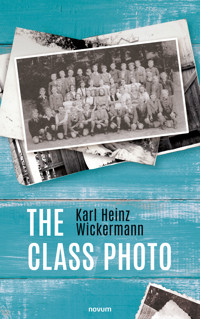
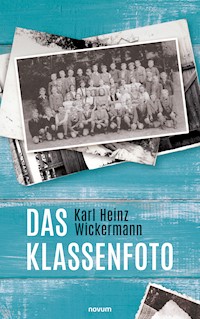
A class photo can tell more than a thousand words - this is what Karl Heinz Wickermann and his son discover when they find one during a move. Wickermann immediately recalls the countless adventures he had with his classmates. It was not only the time when students were at the absolute mercy of the teachers, it was also the last days of the war, when it was often about very different things than learning. Regardless of the difficult time, the usual pranks and teasing as well as the harassment of the teachers happened in the grammar school, but always under the impression of the immediate end of the war. How do the children experience this deprived, yet adventurous time?
Das E-Book können Sie in Legimi-Apps oder einer beliebigen App lesen, die das folgende Format unterstützen:
Seitenzahl: 204
Veröffentlichungsjahr: 2023
Ähnliche



















The class photo
Last days of war - a new beginning
Chapter - Page 1-4
2. Chapter - page 5-28
4. Chapter page 78-81
6. - Back to reality
- In 1978 - the move -
(A new beginning - back to the present)
Chapter 7 Pages 142-147
- (The 1978 move) What happened to the friends?
Last days of war - a new beginning
In the last years of the war, when things were getting worse with the bombing raids in the big cities, I moved to the countryside with my mother.
My grandmother moved with us; she had left her apartment in Bochum to my aunt, who had been bombed out. My father was in Russia on the Eastern Front during the war.
In the cities, schools had been closed because of the constant bombing raids. Many children were evacuated to the countryside, to Pomerania or Baden.
In the countryside, the schools still functioned at first, but after the war the classes were overcrowded because of the many refugees and there was a lack of teachers. Many had remained in the war - fallen or in captivity.
Through a war buddy of my father, whose parents had a farm in the Münsterland, we got two rooms with toilet and washing facilities in an annex. Quite a makeshift, as my mother said, but here we were "safe" from the bombs and we were spared the evacuation.
Besides, it was only supposed to last until the end of the war, then they wanted to go back to their old apartment in the city, if it wasn't bombed out by then. But when would the war end and would we win it? It was said behind closed doors that the war was as good as lost. It was just not allowed to say it out loud. The 6th Army had been surrounded and crushed. The German troops were retreating, but on the Volksempfänger, also called Göbbelsschnauze (that was the radio), the Nazis were still announcing the final victory.
We were glad that my father had not fought in Stalingrad. His last field letter came from the Volkhov region, which was near Leningrad.
In the spring of 1945 German troops passed through our village, they were in retreat. Some scattered and wounded German soldiers were bandaged and supplied with food at our farmer's threshing floor. In a village, three kilometers north of our village, an SS unit had taken hold and was still offering considerable resistance. South of us were already the British, advancing with tanks and foot troops. The artillery fire went back and forth. When the shells howled overhead, we ducked our heads and waited for the impact. Back then, during the bombing raids, it had been similar. Some shells hit nearby and set fire to a farm and a field barn.
Then we saw them moving down the country road, English troops, tanks, jeeps and rows of riflemen. Many peasants had white sheets hanging out. - We surrender, there are no German soldiers here, spare us!
Now there were English soldiers on the threshing floor, being supplied with milk and food, and one played the bagpipes. "Ne, wat 'ne Quäkerigge!"
In May 1945, Germany surrendered, the war was over. No more bombs, no more fighting. Germany was divided into occupation zones. We were lucky, we were in the British occupation zone.
The population had to endure hard times after the lost war. Food was hard to come by, available only on ration cards - only a few grams per capita, which was too little to live on and too much to die on. Especially in the cities, people were starving. Here in the countryside we managed to get by to some extent. My grandmother went over the villages to hoard. She knew a farmer where we could sometimes get a liter of milk or a small piece of butter. At some other farmers she traded trinkets for eggs, sausage or potatoes. For my godfather's gold pocket watch, which I was to inherit one day, there were four pounds of bacon, a mettwurst and half a hundredweight of potatoes, which was literally worth its weight in gold.
On September 9, 1945, I was sitting at the kitchen table kneading new candles from candle scraps and woolen threads. My grandmother was stirring the milk soup and my mother was on her way to the laundry room to wash some potatoes when someone came up the creaking wooden stairs to our apartment. My mother looked over the railing to see who was coming in the evening. She saw a man in a military coat without epaulets with a haversack over his shoulder slowly climbing the stairs. When the man looked up, she recognized my father. A jubilant cry from my mother made me jump up and run for the door. At first I didn't recognize him, I hadn't seen him in almost two years, then I ran to him and the three of us hugged.
My grandma stood in the kitchen doorway with the wooden stirring spoon and said, "Well, come on in, you've come at the right time."
Because my father had believed that we had nothing to eat, he had saved a fist-sized piece of bread for us from his iron ration.
We did not know whether he was still alive or had perhaps fallen into Russian captivity. He told us that he had been wounded at the end of the war and had sailed from East Prussia on a last refugee ship to northern Germany, where he was then taken prisoner by the British. The wounding was his good fortune. He had known that we lived in a village in the Münsterland and had found us here after some searching.
A few months later, my father got a job at the district administration after he had gone through the denazification formalities. That happened very quickly, because he had never had anything to do with the Nazis and the discharge papers from captivity were important proof that he had a "clean slate," as they said back then.
Soon we moved to the neighboring town, which was not far from the county seat. We had given up our old apartment in the city, which had been damaged by bombs. We had been able to save some furniture.
From the fall of 1946, I went to the "Graf-Adolf-Schule" - Aufbaugymnasium for boys - as it was called at the time. Lower third (class U/II b). I was a driving student and went to school in the district town by train with many others.
Chapter 1
A move with memories in 1973
Our apartment was getting too cramped for us. The children were growing up and wanted their own room. We needed more space for our own needs. We had decided to build, our own house. We did the math: "We just need to tighten our financial belts a little. It'll work out."
In the spring of 1973, the time had come. We moved into our new house. A terraced house with a small garden on the outskirts of the city in the green belt, easy to get to, stores nearby. Perfect.
"Everything is ideal," my wife said.
Punctually at seven o'clock the moving truck was in front of the door. By noon, a lot had already been accomplished.
"Meal time!" said the man in the leather apron, discarding the risers with the hooks, sitting down broadly on a groaning harness box and spreading out his buttered bread package. With pointed fingers, he pulled out one of the folded-up slices of bread, carefully bent it upward with his thumb, and checked the toppings. "Liverwurst again - uh."
He packed up the paper and reached behind him for a beer bottle. He expertly placed the crown cork on the edge of the crate and struck it hard with the heel of his hand. The small metal cap bounced across the floor and, after a short circuit around the room, came to rest next to the armchair into which I had dropped, exhausted. The man put the bottle to his slightly pointed mouth, put his head back and let the contents slowly gurgle into him. His Adam's apple jumped up and down with each sip.
For days we had been wrapping glasses, cups and plates in newspaper, moving cupboards, cleaning out drawers and retrieving long forgotten and missing things. "Nothing is lost in a tidy household," said the mother, pulling the sock out of the pea soup.
Bright rectangles on the walls indicated where pictures had hung and cabinets had stood. Oh yes - the hole in the PVC flooring, in the corner where the electric stove had stood. - What a commotion when Mucki, the golden hamster, had disappeared without a trace for days. Frank had finally pulled him out from behind the living room cabinet.
"The animal gets out of my house."
Four weeks later we had buried Mucki in the front yard behind the firethorn bush. Britta had made a wooden cross and put daisies on his grave.
The padded furniture truck in front of the door was already almost packed. "The things you drag along!"
Britta had insisted that the box in which Mucki had lived and in which he had gnawed holes should definitely be taken - as a souvenir.
Frank said that the old folding bike was still quite good, one could use the wheels for tinkering if necessary. He has no firm plans yet, but it must be taken at any price.
"Just stuffing all the corners again. It's the purest collection of bulky waste."
For once, both agreed. There was enough room in the new house and, what's more, they had their own room where they could do whatever they wanted. "Finally your own four walls," my wife said. The small garden with flowers and bushes, the lawn in between - and this peace. "But the high load!"
Frank had reclined crosswise in the large wing chair, his legs dangling over the armrest. On his stomach he had placed the shoebox with the old photos.
"Is that you in the front row with the ears sticking out and the traditional jacket?"
"How disrespectfully do you speak of your father? - Let me see!"
With a broad grin, he handed me the yellowed postcard-sized photo with the bent corner.
"As a father, however, you still look very young on it." On the back I had written at that time in pencil "20.5.1947" and "Untertertia (class U/III b)".
"Let me do the math - I think I was almost fourteen, the same age as you are today. As for my ears, they don't stick out, that was because of the hairstyle - short was fashionable. My father insisted long hair was lui. And nothing against the traditional jacket - my mother had sewn it herself, from father's old military coat. Dark green oak leaves on the lapels, the pockets lined with red fabric - I was proud as an oskar. You couldn't buy anything after the war.
28 boys in shorts framed 15 girls in class photo pose: kneeling, sitting on chairs, and standing (the tall ones toward the back).
"That was our class teacher, Hermann Blömeke. Still a bit skinny. He had just come out of captivity - two years in Russia. He had been an officer, a first lieutenant. He often told me that they had knocked out his incisors with the butt of a rifle while he was a prisoner of war. Old Blömeke was a great man, tough but fair.
I looked at the photo for a long time. Names connected with the faces. - Ulli Getberg, Helmut Steinke, Herbert Galewski, we had called him Bull. - Count Bobby, what was his real name? - Yes, Walter Jakobi - Walter, when he pops, he pops.
And the girls - Christel Müller and Ingrid Schöne (the beautiful Ingrid), they immediately come to mind. They must have made a big impression on me back then.
Memories became clear, good and not so good. Suddenly I had the smell of the pea flour soup that was served at the school lunch in my nose - disgusting.
Chapter 2
In 1947 - the penne
The war had left no trace on the small county town with its old castle ruins, its fine half-timbered and patrician houses, and its medieval marketplace. Even as the seat of the district administrator and the Gauleiter, the spot on the map had probably been so insignificant that German and Allied troops had passed it by, ignoring it. Or perhaps they had not noticed it at all. If the olive-green jeeps and trucks of the British occupation troops had not been standing in front of the district administration office and the confiscated villa of the former local group leader, one might have expected Count Adolf to have ridden through the large gatehouse at the end of the market with his entourage in the next moment.
The boys' high school, which Landrat Schnettker had built in 1906, towered high above the Landratsamt with its two oriel towers and red clinker facade. The small hilltop on which it stood, however, contributed significantly. It was claimed that the high altitude helped the school to be called "Höhere Lehranstalt".
Every morning, columns of schoolchildren would pull up the hill from the small local train station. Some preferred to rely on their bicycles, which were more reliable than the little steam locomotive. To the chagrin of some tradition-conscious teachers, parents from the upper middle class now also sent their daughters to this school, which had been dominated by boys for decades.
The absolute ruler of this dynasty of teachers was Director Braunkötter, known to everyone only as "Iron Gustav". Over broad shoulders, a beer belly that could not be overlooked, on which a golden watch chain usually dangled, was enthroned the huge bald skull. The ice-gray mustache gave him the appearance of a Bismarck monument cast in bronze.
"Attention! - Gustav is standing there again. V. d. A. - Watch out, the old man!"
Almost every morning, the message went like wildfire through the ranks of the bums heading for school. "Good morning, Principal." The tots from the sexta and quinta politely doffed their hats. (Do you have sparrows under your hat?).
The primans nodded distinguishedly, some bowed almost courtly (nerd - ass kisser).
Iron Gustav inspected the passing students with a stern look and a grumpy "Moin".
Here and there he called one to him.
"Do you want to travel that you have already packed the hands? - Name? Class? - You report to Dr. Baker."
With drooping ears, the boy trotted after his classmates to catch up with them again.
(Well, got shit?)
Ulli Getberg must have been a thorn in the side of Iron Gustav. No one got the "scolding" as often as he did. It might have been because Ulli was always grinning, even in situations in which he really had nothing to laugh about, and Ulli got into them remarkably often.
"That still seems ridiculous to you, doesn't it?"
"I'm not laughing at all," Ulli grinned back undeterred. His round glasses twinkled desperately at the "iron man.
"Get sassy too - we'll talk later, laddie!"
The big head of the "Iron One" apparently swelled even more. His mustache began to vibrate, and that was not a good sign.
The fight in the physics room for the best seats in the benches rising to the back was abruptly interrupted by the call "Zille is coming! The occasional fight for position ended with the weaker one rumbling out of the bench and quickly taking refuge in one of the unloved vacant seats in the front rows.
Ulli Getberg thought he was already safely in the next-to-last bench, but Bulle Galewski had unceremoniously pulled his jacket over the head of the desperately kicking student and dragged him out of the bench. Ulli stumbled, fell and rolled down the wooden steps, right at the feet of Studienrat Zillig, who was just entering the classroom.
"Getberg again, of course ..."
"It was Galewski," Ulli smiled at him with his inevitable grin. His glasses sat at an angle on his nose.
Zillig took a swing. His flat right landed on Ulli's left cheek (port is red). The glasses had returned to their original position.
"Sit down in your seat. Until the next hour, four pages in beautiful handwriting: 'Peter's mother-in-law'." But Zille had forgotten that by then, as usual. Empty threat.
Ulli was desperately looking for a place.
"Sit down there so I can keep a better eye on you," Zillig snarled.
"Note out!"
An affected silence spread. People slid back and forth in the benches in anticipation of unpleasant things, because Zille was unpredictable in his choice of topics. He often dug up things from long-forgotten eras of physics and dressed them up with extraneous accessories.
"We don't have any paper." This excuse was still valid in the post-war period.
"Use wallpaper or toilet paper for all I care, I'm sure you can find that."
Wood-free paper was available at the Pelzer bookstore. Twenty sheets per head. (Nix there, you were already here).
Some searched for paper in their pockets for a conspicuously long time.
"Give me a hand!"
"Topic: The free fall - and how it came about. Time: thirty minutes - starting now!"
While twenty-five boys and ten girls sweated over blank sheets of paper, chewed pencils, scribbled on benches, and smeared themselves with ink, Zille prepared his next experiment: Light Scattering and Focusing. He had enriched the physics fund, which had been greatly reduced by bomb damage, with devices and objects he had made himself.
"He's stealing what he can get, isn't he?"
Before Studienrat Zillig went into the adjoining room to fetch experimental equipment, he glanced punitively over his nickel glasses at the group.
"I'm asking for peace of mind - and no cheating."
As soon as he was out of sight, however, a rumbling and whispering began that could not be ignored. Notes flew around the room, pressed together. Hastily, books were flipped through under the bench, pages torn out.
"Quiet I had said! - Getberg, don't try to cheat me!"
Zille appeared unexpectedly in the doorway to the next room, but disappeared just as quickly to look for his utensils.
Finally, a few sentences about the free fall had been put down on paper in a joint effort, but question marks shrouded in clouds spread over the "and how it came to be".
Finally, the relieving recess bell rang through the wide school hallway.
"Pass - Go, Bergmann, Reger, Breitenbach - Collect slips of paper! - Nothing works anymore!"
Hastily scribbled core and doctrinal sentences, thought processes that had been crossed out and discarded again, attempts to depict the "free fall" graphically were handed in next to virgin blank sheets of paper.
Bull Galewski had only written "Everything sucks" with three big exclamation points on his sheet.
During the big break, Miss Sperling distributed hot school meals in the paved courtyard, in front of the sports equipment basement. When it rained, the soup distribution was moved to the anteroom of the gymnasium.
(Line up at the back!)
Miss Sperling, who otherwise taught biology, stood behind the steaming zinc kettle in a colorful smock. She made a point of addressing her as F r ä u l e i n , even though she was at least over the sixties. She swung the soup ladle with a mild gleam in her eye.
"What do you think we're having today?" she crowed.
The haze of pea flour soup or gruel with raisins had long since reached the upper floors of the school building and crept through class door cracks. Thus the secret was indiscreetly revealed. Depending on the taste, the haze caused anticipation or nausea. - But we were always hungry. One had to line up one after the other (first come, first served).
Studienrat Kern had to make sure that everything was in order and that no one jumped the queue. In the case of powdered milk soup, the last ones almost never got any more, but in the case of pea flour soup, there was usually still plenty to be had.
Some held out deep tin plates, not much went in there, but the soup tended to get cold before the break was over. Others brought handle men or cookware from Wehrmacht stocks.
(Wisse, another hit?)
Karlchen Bäcker from the parallel class carried the steaming soup in front of him like a winner's trophy.
"Watch out - heiiii hot!"
Ulli Getberg was once again knocked out of line and staggered against Karlchen's plate. The steaming stream of gruel with raisins poured down Ulli's back and dripped tenaciously onto shoes and stockings.
"Watch it, you dumbass!"
Studienrat Kern ran up and down the queue excitedly like a sheepdog.
"Who was that? Come forward at once!"
Ulli squinted anxiously over at Bulle Galewski, but he didn't dare report him to Kern, because for Bulle, revenge was sweet as gruel with raisins.
Count Bobby, as we called the long Walter Jacobi, had once again preferred to have a fag in the "Dom". The boys' toilets were located at the end of the schoolyard in a small brick house with a pointed, tin-clad tower on top, which is why it was generally called "the cathedral. A kind of spiral staircase led to the actual toilet facility, which had been decorated by generations of pupils with all kinds of names, drawings and sayings, about which it is better to remain silent.
Smoking in the school area was strictly forbidden. Iron Gustav usually supervised this school order himself. Woe to the one who was caught!
Cigarettes could not be bought without a ration card, except on the black market - ten Reichsmarks a piece. For a handful of cigarettes, which were found particularly often in the area where British soldiers had taken up quarters, there was a packet of cookies from care packages or perhaps a few stamps (Hindenburg - funeral substitute) or they were traded for good relations in the next Latin paper in the form of valuable information. Sometimes also "'ne active" fell off with the Tommis.
(Have you a cigarette for me - please?)
Count Bobby not only had actives (Lucky Strike), in exchange for all kinds of natural goods or other benefits, you could even buy chocolate and coffee from him. It was said that his older sister "went with a Tommy".
(That she is not ashamed - as a German girl!)
Count Bobby had retreated to the lower regions of the cathedral together with the fat Beckmann. Soon, bluish smoke drifted up the spiral staircase.
The "iron one" had been lured to the vicinity of the cathedral by the brawl of two sextans. The otherwise familiar smell was interspersed with a distinct scent of cigarettes, which made him suspicious.
Someone had yelled "Van-de-A!" into the restroom. Downstairs, two doors were hastily heard to slam hard into the lock. Escape from there was only possible via the spiral staircase, and that was hopelessly blocked by the "iron man.
"Open up, get out! Get out, now!" Gustav was heard yelling angrily.
(There your heart falls inne Büx!)
But nothing moved behind the cell doors.
Gloating faces had formed a bunch at the exit of the cathedral, because first of all they had gotten away with it and secondly, Count Bobby, that conceited fop, had deserved it for a long time. The school bell urgently announced the end of the big break. The students hurriedly headed for the entrance of the school building and their classes. Only a small group, mainly Lower Tertians, remained near the cathedral (man, you have to see this). Kater in front of the mouse hole, while Walter Jacobi and the fat Beckmann squatted shivering in their involuntary prisons.
"Get away from there!" hissed Bulle Galewski, pulling a shiny metallic object out of his pants pocket, yanking on some kind of string, and throwing the thing down the stairs.
"Go on, get out of here - tear gas!"




