


Erhalten Sie Zugang zu diesem und mehr als 300000 Büchern ab EUR 5,99 monatlich.
- Herausgeber: Allen & Unwin
- Kategorie: Gesellschafts- und Liebesromane
- Serie: Fiskardo's War
- Sprache: Englisch
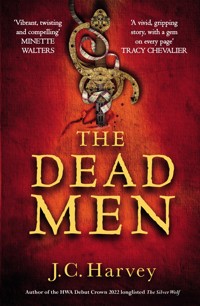
'A vivid, gripping story, beautifully handled, with a gem on every page' - Tracy Chevalier 'Once again J.C. Harvey has cleared the high bar in historical fiction by a mile.' - S. W. Perry 'Vibrant, twisting and compelling' - Minette Walters 'Excellent writing, intricate plotting and masterful senses of place and time make Harvey's books compulsive reads.' - Historia Summer 1630. The Swedish army is fighting its way down through Germany, with Jack Fiskardo and his company of scouts, or 'discoverers', fighting the guerrilla war ahead of the main advance. There are new allies to be made, new perils to overcome, new enemies to outwit and new adventures to pursue; but there is also a fortune for the taking, a mystery to be solved, and a destiny to fulfil - one that will see Jack brought face-to-face at last with his sworn enemy, Carlo Fantom. And in the wintry forests of Bohemia, that destiny will present Jack with an almost impossible choice - does he pursue his final vengeance, or does he turn aside, to help a child as helpless as he once was himself?
Sie lesen das E-Book in den Legimi-Apps auf:
Seitenzahl: 1074
Veröffentlichungsjahr: 2023
Das E-Book (TTS) können Sie hören im Abo „Legimi Premium” in Legimi-Apps auf:
Ähnliche

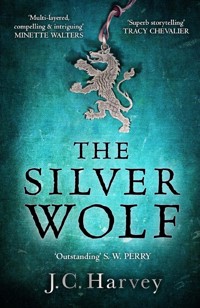

















J. C. Harvey is the fiction pen-name for Jacky Colliss Harvey. After studying English at Cambridge, and History of Art at the Courtauld Institute of Art, Jacky worked in museum publishing for twenty years, first at the National Portrait Gallery and then at the Royal Collection Trust, where she set up the Trust’s first commercial publishing programme. The extraordinary history of the Thirty Years War (1618–48) and of seventeenth-century Europe has been an obsession of hers for as long as she can remember, and was the inspiration behind the story of Jack Fiskardo’s adventures, which begins with The Silver Wolf, and continues here with The Dead Men.
@JCollissHarvey
The Dead Men first published in Great Britain in 2023 by Allen & Unwin, an imprint of Atlantic Books Ltd.
Peace and Love first published in Great Britain in 2023
Copyright © Jacky Colliss Harvey, 2023
The moral right of Jacky Colliss Harvey to be identified as the author of this work has been asserted by her in accordance with the Copyright, Designs and Patents Act of 1988.
All rights reserved. No part of this publication may be reproduced, stored in a retrieval system, or transmitted in any form or by any means, electronic, mechanical, photocopying, recording, or otherwise, without the prior permission of both the copyright owner and the above publisher of this book.
This novel is entirely a work of fiction. The names, characters and incidents portrayed in it are the work of the author’s imagination. Any resemblance to actual persons, living or dead, events or localities, is entirely coincidental.
10 9 8 7 6 5 4 3 2 1
A CIP catalogue record for this book is available from the British Library.
E-book ISBN: 978 1 83895 346 1
Printed in Great Britain
Allen & Unwin
An imprint of Atlantic Books Ltd
Ormond House
26–27 Boswell Street
London
WC1N 3JZ
www.atlantic-books.co.uk
Contents
The Dead Men
Peace and Love
This one is for Jenny.
Contents
Author’s Note
Map of Europe
Cast of Characters
PROLOGUE: Osnabrück, 1644
PART I: July 1630
Chapter One: Ghostland
Chapter Two: This House Where Nothing Moves
Chapter Three: The Letter-Lock
Chapter Four: The Correspondent
Chapter Five: A Baptism
Chapter Six: The Men Who Write the Rules
Chapter Seven: The Knight Errant
Chapter Eight: A Little Bird
Chapter Nine: Between the Lion and the Eagle
Chapter Ten: Here We Are
Chapter Eleven: The Dunqerqer
PART II: October 1630
Chapter One: Dear Mr Watts
Chapter Two: Ripeness Is All
Chapter Three: A Hero Lies Here
Chapter Four: My Lady Soap-Bubble
Chapter Five: M’sieu
Chapter Six: The Salamander
Chapter Seven: Two Days in November
Chapter Eight: A King of Snow
PART III: March 1631
Chapter One: Hoffstein
Chapter Two: Maria
Chapter Three: Weights and Measures
Chapter Four: Ways and Means
Chapter Five: Magdeburg
Chapter Six: Be Ready
Chapter Seven: The Traveller’s Tale
Chapter Eight: All Together
Chapter Nine: Ça Va?
Chapter Ten: Gefroren
PART IV: November 1631
Chapter One: Pilgrims
Chapter Two: Sir Subplot
Chapter Three: A Turn of Events
Chapter Four: The Dead Men
Chapter Five: Vainglory
Chapter Six: The Pigboy…
Chapter Seven: … And the Warlord
Chapter Eight: The Lord of the Mountains
Chapter Nine: His Eminence
Chapter Ten: Ça Va
Acknowledgements
Author’s Note
Some years ago I found myself on holiday in Sweden. I had very little ownership of the arrangements for this; I was simply a part of them, and went along with them in the same spirit with which one might approach a buffet table that someone else has laid out and done all the hard work for, with an attitude of ‘I might like this, or I might not.’
Sweden is shamingly beautiful – clean and green and sharp and chill. And big. Its roads are long and empty; its forests run to the horizon. You understand very swiftly why there should be so many giants in Norse folklore. I remember in particular a lake so huge, I swear I could see the curve of the earth at the line of its offing. And its castles, correspondingly, are immense. After days gorging myself on a landscape that demanded physical effort to take it in, I found myself in Stockholm, where there was a visit to a museum. Its exhibits included a tricorn hat with a large bullet hole through the front of its brim, and a silvery masquerade costume bearing thick driblets of blood from the assassination of its royal wearer. Beside it, in a handsomely mounted glass vessel similar to a medieval reliquary, were the pathetic, maggot-white remains of the stomach of an assassin who had lost his nerve, and taken poison. It gave powerful inflection to the idea that some of Sweden’s many wars were fought out at home.
As is so often the way in a new place and after much travel, I couldn’t sleep. I had this line of words running through my head: Once upon another time, and in another place than this, there was a man… so I got up, and started writing. Insomnia: the writer’s friend. One pen ran out, then another; the sky began to lighten; I had used up my notepad, and was scribbling on paper napkins I found in a drawer. I heard my partner wake, and move around in the bedroom; outside, church bells began to ring. I had written right through the night and had 30,000 words in front of me.
This was the kind of concatenation of time and place and inspiration and wordage that writers beg and pray for, when they start off, and naively trust will be there for them when they sit down to write again more often than not. Not so. Not ever so. It took a long, long time learning that before I had any idea what I was going to do with my 30,000 words, or where they had come from, or what they were urging me toward. I kept turning the tale and the other tales I was working on round and around in my head, and then in that utterly maddening way that stories have, everything lined up and it all fell into place, like a writerly Rubik’s cube.
So, Peace and Love, which you have here, is a pendant to the story of Jack Fiskardo and The Dead Men, even if first scribbled down so long ago. It picks up, like a thread that has run all this time behind the tapestry, the story of Karl-Christian von Lindeborg, Jack Fiskardo’s high-born youthful Swedish ensign, and that of Karl-Christian’s grandson, Magnus von Lindeborg, a man indeed born in another time and in another place, and it ponders a question that must be there somewhere for every soldier: how is a warrior to live his life, once all the wars are done?
For Jack Fiskardo’s own answer to this, there will be the upcoming The Wanton Road. Although there are one or two small clues in this, as well….
I do hope you enjoy this. And I look forward very much to seeing you then.
Cast of Characters
PART I
On the island of Usedom, off the coast of north Germany
The invading Swedish army, including:
Jack Fiskardo, captain of a troop of military scouts, or ‘discoverers’
Zoltan, his lieutenant
Ilya, ‘The Executioner’, his sergeant
Sigismund, ‘Ziggy’, his horse-master
The Gemini
Karl-Christian von Lindeborg, ‘Kai’, his ensign
The scouts themselves, including:
Ulf, Elias, Sten, Thor, Luka, Ansfrid and Ulrik; then Per, Jens, Alaric and Magnus
Milano, Jack Fiskardo’s horse
In the great camp, or ‘Camp Royal’ at Stettin
Gustavus Adolphus, King of Sweden
Quinto del Ponte, a messenger and double-agent
Somewhere among the ruined farms and villages along the Oder
Carlo Fantom, ‘Charles the Ghost’, a Croat one-time hired assassin, now a mercenary in the army of General Torquato Conti
Salvatore, his sergeant
In Paris, at the Palais du Louvre
Armand du Plessis, Cardinal Richelieu
Tino Ravello, intelligencer, messenger, fixer in the service of Cardinal Richelieu
In London
Nathaniel Butter, bookseller and entrepreneur
Nicholas Bourne, his business partner
Mrs Butter, his wife
Belinda, ‘Belle’, his daughter
Rafe Endicott, his assistant
Mr William Watts, a clergyman, writer and editor
Cornelius Vanderhoof, a Dutchman
Clayton Proctor, landlord of the Mitre Tavern
Miguel Domingo, a Thames waterman, native of Capo Verde
Mungo Sant, a Scottish mariner, captain of the Guid Marie
Encamped with General Åke Tott, on the Swedish front line
General (later Field Marshal) Åke Tott, ‘The Snowplough’
Achille de la Tour, a Frenchman. One of General Tott’s aides-de-camp
Colonel Ancrum, a Scot
Edvin, his ensign
Rosa, a washerwoman
Roxandra, Pernilla and Kizzy, three old women
In the town of Forbach, on the border between France and Germany
Rufus, a headsman of the Roma
Yuna, his wife
Emilian, his son
Benedicte, his brother, a seer
In the town of Schwerin, in the Duchy of Mecklenburg, north Germany
Emmanuel Vincent, a writer and researcher
Henricus Anderman, of Antwerp, and Theodore Brunner, of Brussels: proto-foreign correspondents
Hauptmann Erlach and his men, soldiers in the pay of the Prince-Bishop of Prague
Viktor Lopov, their prisoner, the Prince-Bishop’s archivist
At the Dunqerqer, an ancient tavern east of London on the River Lea
Aaron Holland, youngest member of the Holland crime family of London
Josh Arden, one-time mariner and pirate, now retired
PART II
Also in the Camp Royal at Stettin
Felix Stromberg, Physician Royal
In the town of Wolgast, on the coast
Herr Gruber, an innkeeper
Frau Klara, his neighbour, madam of a modest brothel
Sophie and Katya, her whores
August von Hoch, a horse-dealer
M’sieu, a stallion, reputedly worth one thousand thalers
With Rafe Endicott
Dart, his dog
PART III
In Hoffstein, on the Elbe, ancestral seat of the Prince-Bishop of Prague, now deserted. A place of dark secrets
Leo Franka, the Prince-Bishop’s disgraced gunsmith, sent into exile here
Ava, his daughter
Otto, his son
At the sack of the city of Magdeburg
Dr Silvestris, Kai’s old tutor, and Frau Silvestris, his wife
The households of the Brandts and the Hannemanns, their neighbours
The Imperial armies of General Tilly and of General Pappenheim
In the village of St-Etienne-des-Champs, Picardy
Robert, landlord of the Écu de France
Mirelle, his sister
‘Cou-Cou’ Marin, Robert’s intended
PART IV
In Amsterdam
Yosha Silbergeld, a wealthy merchant, part owner of the Guid Marie
Zoot Vanderhoof, his housekeeper
On the road to Prague
The Pilgrim Players, a group of travelling players from the Red Bull Theatre, London, including:
Henry Kempwick, leader of the players
Andrew Frye, their dramatist
Alembert, their leading man
Martin, a child actor
Lucy, a musician
Blanche, their wardrobe mistress
Saul, a handyman of sorts
In Prague itself
Stefan Safran, a printer, brother to Ziggy
Danushka, his young daughter
Matz, an old soldier and trickster
Frau Viki, his partner, a seller of trinkets at the Charles Bridge
The Prince-Bishop of Prague
Magister Ieronymus, Steward to the Prince-Bishop
Vainglory, an immense bronze cannon
In the Giant Mountains, on the border between Bohemia and Poland
Pyotri, a pigboy
Egan, his brother
Lenka, his brother’s wife
Christina, ‘Tink’, an orphan
Josuf, Marcus and Hendrick, children of the village
Boris, Pyotri’s prize boar
And finally… in Crossbones graveyard, in London
Bess Holland, matriarch of the Holland crime family
Abigail Skinner, her maid
PROLOGUE
Osnabrück, 1644
CHILLY OUT HERE, nicht wahr?
Through that door there, you’d find it rather different. Through that door there is light, and warmth, and a continual bustle back and forth, despite the lateness of the hour. Round-shouldered secretaries scurrying along, satchels of documents clutched to their hearts. Messengers, heads bobbing and one hand held perpetually aloft as they search for the swiftest way through. Lawyers and jurists, deep in their secrets, stalking in pairs as if tied at the foot. Mapmakers too – board gripped in one hand, compasses and rule in the other. And in those warm and well-lit rooms beyond, ambassadors and delegates from every court in Europe, from Utrecht to Madrid. Oh, full of strangers, this city, and full of strange new words as well: Peace, there’s one not been heard from in a long, long while. Negotiations, there’s another. It’s an exciting place to be, through that door there.
Not this one, though. The secretaries and messengers, they pass this door without a glance. Nothing behind this one but a guardroom – thick pamment tiles on the floor, bare plaster walls (much rubbed at what is shoulder-height, if one were sitting down), and no better furniture than a pair of joint-stools and a lopsided table, on which sit two squirrel-size, curly handled, lidded steins of soft dark beer, a draughts board, and the heavy elbows of a pair of thick-set veterans: Münster and Munich.
Munich can tell where Münster comes from because Münster’s accent is as solid as a cabbage, and the ubiquitous buff-coat, as worn by Münster, appears to be of the type of good Russian leather that won’t let in the wet, supplies of which have not been seen in further parts of Germany in years. Münster can place Munich because Munich’s accent is fierce as popping fat, and he wears show-off breeches with ribbons of Bavarian white and blue laced down the sides. Time, playing with both, has pocked Munich’s nose and broken the veins in Münster’s cheeks. No better company than these, and every bit as chilly in the room as out. No, nothing of interest here.
Münster leans forward; the leather of his buff-coat creaks. He cups the bowl of a clay pipe in one hand as delicately as if it were a bird’s egg. A puff of the pipe, an eye across the board. There are any number of counters Munich’s side of the table, rather fewer his, and on Munich’s side, a scatter of coins as well. Münster lets his eye glide across the coins, drains the last of his beer, then, reversing the pipe, uses its stem to indicate the square of dark beyond the door. ‘A night like this, it was,’ he remarks. ‘Puts me in mind. Just like to this, in fact. Stars in the sky, and frost in the air, and clear up to heaven.’
‘What night?’ Munich replies, still studying the board.
‘The night I saw the Dead Men.’
Munich takes two of the four legs of his stool off the floor, leaning back to survey his opponent at arm’s length. ‘You’re telling me you saw the Dead Men?’
Oh. A story.
‘It was spring of thirty-two,’ Münster says. He takes a long pull of his pipe.
Munich, arms folded, has all four legs of his stool back on the floor. ‘Was it indeed?’
‘Spring of thirty-two, and my company, we’d set our camp, and we were hoping as we’re not so far from Gottingen, though where we were on the map, God knows. It felt a damned long way from any other living soul, I tell you that. And bitter cold. Clear cold. Stars bright as diamonds,’ Münster continues, using his pipe-stem to point out the stars, as if they are there on the guardroom ceiling. Slowly, the arms unfold, like a knot coming undone. ‘I been to that part of the world. I’ve marched them roads in Saxony. Go on.’
‘And a small world it is, my friend. Maybe you might have marched along the very road of which I speak. For that road is where I find myself, taking my watch. Twenty paces one way, twenty paces back, counting ’em off, as you do. I make my turn – I see a mist is rising up behind me.’
‘You saw that?’ Munich exclaims. ‘Then it’s true?’ He nudges his stool up close to the table, drops his voice. ‘How they would raise a mist, and travel through it?’ The voice drops lower; there’s a nervy glance over one shoulder before he speaks again. ‘The Dead Men?’
‘All I can tell you, friend, is what I saw,’ says Münster. ‘But this same mist – it had a strange odd way to it, that’s sure. It starts to gather round me. It rises to my waist, and then my face, then it closes right over my head. I look down and I’ve disappeared, and the stars above, they’re fading too. And I do think, I ought to get me out of this, I ought to call out to my company – when through the mist I hear a sound.’
‘What sound?’ Munich asks, in a whisper.
‘A little sound. Klingel-klingel, we would say, where I come from. Tinkling, like frost in the twigs on a tree. A little dainty sound. But not from one tree shivering on its own. This is like a forest. And under the tinkling, I hear this.’ And Münster hooks his mug from off the table and starts knocking out a rhythm on the tabletop: one-two, one-two.
‘Horses,’ comes the response. ‘God above.’
‘Horses,’ says Münster. ‘And every minute getting louder. I can’t tell if they’re behind me, or in front. If I’ll see ’em now, or next. I’m stretching my eyes and my ears to make out anything at all, and the mist is coiling all around me, when of a sudden it gives this mighty swirl in front of me, like water – and there they are. Coming down the road in double file.’
‘And it was…?’ says Munich, in the tones of one who hardly dares to breathe, let alone speak.
‘The Dead Men? I am sure of it, my friend. Sure as I’m sitting here,’ says Münster, sitting back. ‘I knew it at once. One, there’s the mist. And two, it’s the silence. Sure, there’s the tinkling of the harness, and every so often one of the horses, it ’ud blow a snort, but the men? Not a sound from ’em. Not a word. I’m stood there in the road, goggling, like this, d’you see –’ (and Münster rounds mouth and eyes and drops his arms to his sides, slack) ‘– I’m turned to stone I am, that terrified, and all the while they’re going round me like I wasn’t even there. And the horses – they have wings. Oh yes,’ Münster continues, in response to his audience’s gasp, ‘that’s true and all. Wings. May God strike off this hand if it’s a lie. Tall as angels. Cleaved the mist. When they went past I saw the stars again. And right in their midst, I see this one horse, with its ears curved up like the horns of the Devil, and the way it was weaving its head about, I knew that one weren’t making place for me nor any man, so I give way. And it passes by me, close as I am to you, and snaps its teeth. And the rider glances down at me, and that is when I know,’ Münster ends, triumphantly, ‘that’s when I know for sure. That’s him, the Dead Man. I could have reached out, touched his stirrup. There.’
‘Saints and angels!’ Munich exclaims. ‘You look in his face?’
‘I did. I couldn’t stop myself.’
‘God in his heaven!’ says Munich, with his stool once more reared up off the floor. ‘So what did he do?’
Münster is tapping out his pipe against his boot. ‘What d’you mean, what did he do?’
‘To you,’ Munich replies. He sounds baffled. ‘The Dead Man. What did he do to you?’
‘To me? Why, nothing. What should he have done? He passed by, him and his, back into their world, and the mist cleared, and I found my legs, and staggered back to camp and into mine. And lived to tell the tale,’ says Münster, digging his tobacco pouch out from his pocket. ‘Someone has to. Else where would all the stories come from, eh?’
There’s a silence. Then: ‘Let me be sure I have this right,’ Munich begins, slowly and heavily. ‘This here’s the spring of thirty-two.’
Münster inclines his head.
‘So this was after Prague, and all that they did in Prague…’
‘That would be so,’ Münster agrees.
‘You’ve got your green lads and your drummer boys, they’re seeing his shadow in the crack of every door – by God, if but half a word gets out as he’s nearby, half your company hightail it for the hills, and you expect me to believe as they rode past you—’
‘Round me,’ Münster corrects him, mildly, as he repacks his pipe.
‘—round you, on the road, the Dead Man, the Dead Men, all of them, and they do NOTHING to you? NOTHING? And you expect me to believe you? God help us,’ says Munich, striking the table, so the counters jump across the board, ‘nearly thirty years of war, and that’s as much as any of us has to show for it, tall tales and tobacco smoke and that’s it. Hogwash, my friend. Hogwash!’
‘He did do something, point of fact,’ Münster replies. ‘Now you do put me in mind.’
‘WHAT?’ Munich bellows, rising from his seat. ‘WHAT? WHAT DID HE DO?’
Münster flicks a few shreds of tobacco from his coat. ‘He winked.’
PART I
July 1630
CHAPTER ONE
Ghostland
‘It seems we have another little enemy to fight.’
Ferdinand II, Holy Roman Emperor
NOW – WHERE WERE WE?
On an island, it turns out, though one so lightly separated from the rest of Germany and by tides so low and amiable, there are places a man might ride from island to mainland with his horse hardly wetting its belly. Amongst the new recruits tumbled out here, out the great galleons and the flat-bottomed transports, the sackful tumbled into his tender care reveal themselves as the sons of fisher-folk from the Stockholm archipelago, who seem delighted to find the country they have just invaded so very similar to home.
Two hundred transports, all told. Thirty-six galleons; thirteen thousand men. The island of Usedom has been overrun. It takes two days for all thirteen thousand to come ashore, by which time the supplies unloaded with the first have already been consumed, but what would an army be without the odd little oversight such as that?
Forage, he tells them. Use what you know. If you lads are fishermen, you go fish. He feels himself inhabiting this new role as he says it: Jack Fiskardo, Kapten, who says, now, listen, lesson number one: God help you, from here on in you are discoverers, army scouts (or you will be before I’m through with you), which means you’ll spend your life up country, miles ahead of the rest of the army, with no-one to count on but the man wearing your boots.
A moment while they work that out. A moment while those who work it out the fastest explain it to the rest.
We look after ourselves, he says. Start getting used to that here. To add to the unreality of it all, they’ve made this landing in July, so it’s past midnight, yet everything – his hands, the lads chasing fish through the shallows, the water itself, the sky above – is all the same fluttering, pulsing cornflower blue.
On the far side of the channel separating Usedom from the mainland, dark and spiky as a crown of thorns, the town of Wolgast, in silhouette.
He holds his hands out before him, into the indigo light. The whole story of his life is there, inked into his skin: the criss-cross for each battlefield; the trio of waving lines for each crossing of the seas; around the thumb the narrow black band for his old commander, Torsten the Bear, tied with its inky bow. I am this war made flesh, he thinks. And then turning his left hand over, there, burned into the pads of the palm:
G F R N
GFRN. Gefroren. Frozen. Hard. Don’t waste your bullets. Many, many years ago he had his fortune told, his entire life, supposedly, laid out for him by a man who was blind as a stone and almost mute, but the only soul, he thinks, of all those he has known who might be entirely unsurprised to find him sat here now.
A little cough, for politeness’ sake, and the boy, Kai, sits down beside him (it being an ensign’s duty to be as constantly about his captain as a shadow), in that splendid suit of blue and gold, now so sadly watermarked from its adventures on arrival here (and shrunk too, he notes, about the boy’s limbs), and starts some tale of childhood days and long white nights at some summer house in the archipelago, and how his nurse would bring him treats from the table of those banqueting out on the terrace below. The sons of the fishermen gawp at him as if he had just fallen from the moon, and snigger behind their hands. Kai, gamely attempting to emulate the other officers amongst Fiskardo’s scouts, had gone plunging straight over the rail of the galleon, just as they had done, and the weight of gold thread on his clothes had nigh-on drowned him. The episode has already become one of the favourite tales of this company and its landing, embroidered and embellished at each handing-on. Now one of the fisher-lads, deftly throwing a fish onto the sand, calls out mockingly, ‘Has ’e brung ’is little golden spoon?’ and, in some presumption of agreement, slides his own gaze up to that of his captain, sat there on the bank with Kai beside him.
He thinks, Not this company, mine. He takes a narrow prospect of the josher. Yes, that little bit of varnish to this one: cock of the walk outside the house, the favoured child at home; best fed, best loved, no doubt, as well. Some mother’s hand put that embroidery on the lad’s shirt, at neck and wrists. How it must have hurt her heart to see him sail away.
He’s sentimental where mothers are concerned.
But because this is his company, because he is its captain, and because years back, there had been another boy – younger, bullied, also loyal – now he gets to his feet and calls out, ‘You – name?’
The answer comes back, ‘Ulf. Ulf of Torsby!’
He crooks a finger. The lad approaches, splashing up the bank.
He lowers his head, and as he does so, Ulf of Torsby shrinks into himself a little. Kai is not the only one about whom tales are told. ‘You use that tone to any of your fellows in this company again,’ he says, ‘you will regret it. Is that clear?’
Ulf of Torsby hangs his head. ‘Yes, Kapten. Sir.’
Little bastard. All the same, it’s Ulf of Torsby had the balls to crack the joke, to catch his eye, and on returning to those others in the stream, it’s Ulf of Torsby is being given the commiserating pats on the back.
Meantime, Kai – Karl-Christian von Lindeborg, of Castle Lindeborg in the county of Uppsala, no less – gets stiffly to his feet, as one does when one is young as this and one’s pride is tender. ‘I too can forage,’ he announces, and off he goes, those shrunken breeches rising up above his kneecaps at each step.
A shout of laughter from behind him. His officers – Zoltan, Ziggy, the Gemini, the Executioner – are hunkered in the dip there, and Zoltan, it transpires, has been composing his will. Now Ziggy has taken it over. ‘Item,’ he hears Ziggy declaim, at full pitch, ‘item, my boots. Which I leave to the cheese-makers. Item, my fine moustache, which is to be put upon a string and made into a diversion for the cat. Item, my cock and balls, which are to be stuffed and varnished, and given to the artists, to use when next they must depict a god!’
They are all of them still half-deaf from the thump of those Baltic rollers on the island’s eastern side. His hair feels thick with salt, the skin on his face made tight with it. Here though, facing the lagoon, the thump and boom is distant. There are cottages; there are little farms, although all deserted now, of course. The population of Usedom, such as it was, has taken to its boats and fled. In its place, scattered across this open landscape, there are regimental flags and battle standards, snapping in the wind. Messengers, galloping back and forth. The peep of bugles. Encampments, gatherings. Thirteen thousand men. And this one small band amongst so many others, his.
He folds himself back down again, there on the bank amongst the salt-grass. Over there, the future awaits, cunningly masquerading in the shape of Wolgast and, more to the point, raised up on its sconce, its fort. Either it has one more day to live, or they do. His hand goes to the pendant at his breastbone, the silver wolf, scratched and niello’ed now with age, but still the only compass he has ever had, or ever needed, come to that. Grace alone, faith alone. Gott mitt uns. We’ll see.
This war, this German war, is twelve years old. It has already swallowed the armies of Duke Christian of Brunswick, and of the Danes. It has drained Bohemia of blood and blackened it with smoke; down on the Rhine it has turned the Palatine and all about it to a wasteland. It has given birth to tales of horrors and marvels, of prodigies and portents not heard since the time of the Norse. It has chewed its way through the troops sent by the Dutch and English. It has sucked in regiment after regiment of Emperor Ferdinand’s soldiers, and those of his cousin the King of Spain, picked its teeth with their bones; and every one of those armies, Catholic, Calvinist, Lutheran, claimed God was with them too. And now us, he thinks. This army: this army of the Lion of the North, His Majesty Gustavus Adolphus of Sweden.
He keeps it to himself, but it seems to him God is an unreliable ally.
Kai returns. He returns with a round flat basket over one arm, and with a little old man and a little old woman, like the figures on a weathervane, bringing up the rear. There being a lady now present, Zoltan and Ziggy get to their feet. The Gemini and the Executioner also being present, the little old woman tucks herself in behind her husband at once. He hears Kai telling them, in flawless German, ‘Don’t be afraid. Here is my company, those are its officers. This is our captain.’
He goes forward. ‘Kai, who are these?’
‘Herr Tessmann, Domini,’ the boy replies. ‘And his wife Frau Tessmann. Bette.’
He sees Frau Tessmann give the boy a fond quiet glance.
‘They have a little house and farm,’ the boy continues, pointing through the trees. And then, swopping back to Swedish, They wished to see us. He lowers his voice, glances at the Gemini, adding, They had heard all the Swedish had white hair. They wished to see if it was true.
And indeed Frau Tessmann, from behind her husband’s shoulder, is now peering at the Gemini, with their candle-flame white hair, and tittering softly to herself.
And tails and horns, Kai continues, abashed.
‘Tails and horns?’ He laughs, swopping to Deutsch now himself, holds out his hand. ‘That would be me. Fiskardo, Herr Tessmann. Jack Fiskardo.’
Herr Tessmann takes the hand in both his own, which are soft and dry with age, and pumps it, as farmers do. Frau Tessmann removes the cloth from the top of the basket. Inside, there are duck eggs, layer upon layer, nested on straw. Astonishing bounty. ‘Kai!’ he says, amazed, and the boy’s face flushes up with pleasure.
I said that we would pay, he admits.
‘Indeed we will pay. Herr Tessmann, how much for these fine eggs of yours?’
Herr Tessmann removes his cap, scratches his head, squints upward from this daring angle, and announces that these eggs will be four pfennig the dozen.
Pay him five, he tells Kai. Five a dozen, and we’ll take them all, and we want sweet butter to cook them in too.
He raises an arm. This may be the one and only time anyone went foraging equipped only with good manners, and returned with such a result. This army, even with its thirteen thousand, might be ludicrously short of men, they may be almost out of cash (so rumour has it), they may, in fact, be marching on nothing but faith and earnest promises, but this morning, his company at least has—
‘Breakfast!’
Clams, flounder, shrimp, the odd dozy perch, all chopped and fried together; a certain amount, it must be said, of seaweed and sand; the eggs piled on top, yellow as the butter and as soft. ‘I must admit,’ says Zoltan, ‘this is by no means as revolting as I feared.’ He raises his spoon in acknowledgement to the Tessmanns – still watching, still apparently fascinated that these men from the frozen north should do anything as commonplace as eat. ‘But it is a strange thing,’ Zoltan continues, lowering his voice, ‘all their neighbours are fled. Why are they not gone too?’
‘Herr Tessmann says they are too old,’ Kai answers, seriously. ‘He says they fled before, but not again. And Frau Tessmann fears to leave their animals.’
‘You speak good German, Kai,’ his Kapten hears himself say, and the boy flushes up again.
‘My tutor was from Heidelberg.’
‘Your tutor!’ Zoltan exclaims, with a bellow of laughter. ‘Of course!’ Anywhere else in the world, the status of Kai’s birth would have doors being opened, bows being swept; here, however, it is everyone’s favourite jest.
But Kai continues. ‘It is the greatest shame we must make war against his people.’
Puzzlement on Zoltan’s part. ‘Your tutor, he was a Catholic?’
‘No indeed!’ The boy sounds shocked to his core. ‘No, he was of God’s true faith, of course.’
‘Then we make war for him, not against him,’ Zoltan points out.
‘I think we make war on him,’ Kai says, quietly. ‘On all these people. They will be lost beneath our boots.’
Now Kai’s captain hears himself ask, ‘Where is your tutor now?’
‘Magdeburg. He and his family, they are in Magdeburg.’
Magdeburg is one of the few cities to have made those earnest promises of support. It is surrounded, unluckily, by many that have not.
He looks at the Tessmanns, how they hold onto each other in the wind, the little old woman with her hand in her husband’s, like a bride. Ask the men who write the rules, and there is no pillaging nor plunder in the Swedish army. Yes, he thinks, and I’m the Queen of Spain. He stands up. ‘Ulf!’
‘Yes, Kapten!’
‘Take five of your friends, put a guard upon the Tessmanns’ farm, and if any other company comes sniffing round, you tell ’em Fiskardo got there first.’
A mighty grin. ‘Yes, Kapten. Yes, Domini!’
Domini. These names keep attaching themselves to him. Domini, master, is one; Fransman, the Frenchie, is another, ’shtiana, a third. Why do they call you that? Kai had asked. He’d sounded as if he were contemplating taking offence, that perhaps being part of an ensign’s duties too. (Don’t ask me, he’d told the boy. I was older than you before I knew such a thing as an ensign even existed, and I never in my life imagined I’d end up with one.)
‘Tr-cz-iana,’ he’d explained, spelling the word out, saying it slow. ‘In Poland. A battle, a year ago. It’s where I was made captain. By your king.’
And the boy’s eyes grew wide.
‘Your king has a habit of hazarding himself,’ he’d continued, explaining. ‘Getting too close to the fire. He had four Cossacks after him, but I had Milano.’ And he points to where the horses wait in their usual patient line, heads down, doing whatever a horse does to get some sleep under the midnight sun; Milano, with his ringleted mane, standing out amongst them even from here. ‘And I was first, and he was fastest.’
They say Gustavus Adolphus lost his footing as he came ashore. Stood up, clutching handfuls of Germany in each fist, gave thanks to God for putting it so easily within his grasp. It’s a good job Lutherans do not believe in omens.
Wolgast. Jack Fiskardo and his discoverers, they take its measure, report back: There’s the fort, up on its sconce, another little channel of water, then a castle on a tiny island of its own, then the town. Upon sight of the Swedish cavalry, the men defending Wolgast pour down the sides of the sconce and out through the earthwork like ants when you kick their nest, but it’s not excess of fighting spirit, this, no, it’s utter terror, it’s Let’s get it over with. You can feel the entire army take in its breath before it falls upon them, and then the men defending Wolgast, God help them, then they die – they die upon the field, they drown within the river, they are shot within the boats in which they try to flee. When the world is calm again, ’shtiana’s new recruits edge down to the water and look upon the bodies swilling about in the shallows; venture out to inspect those left on the field. One or two of them throw up, but only one or two. The rest crouch down, peer and marvel, just as he once did himself. It’s no soft nor easy life, that of a fisherman, and just as well.
This is how fast it comes upon you, he tells them. Life to death. Do they have a little more the measure of it now?
Next up is Wollin, and a march of forty miles along the Baltic coast, and if they take Wollin they will have strongholds either side the lagoon of the Oder. Jack finds himself and Zoltan picking their way around a field of tangled grain, sprung from last year’s unharvested crop, through a forest of green bracken as high as their heads. On the far side of the field, the Gemini do the same. The sun pours down its heat; insects criss-cross lazy lines in and out the green shade above them. Jack takes a pause, points to the two white-blond heads on the far side of the field, bobbing in and out of sight, unmissable as signal flares. ‘D’you think we should have them stop bleaching their hair?’
Zoltan is elbowing aside stems of bracken sturdy as an officer’s baton. ‘I think we should have left them where we found them, that pair of freaks,’ Jack hears him mutter in reply.
‘What, in a pit, in Poland?’ In a pit in Poland, villagers gathered round it, stones in their hands. Neither of the Gemini has ever offered an explanation as to why, but it don’t take much to work one out. ‘The dew falls on us all,’ Jack says, piously, and gets as expected a snort in reply, and then Zoltan comes to a dead stop, pointing down.
There is a corpse laid at their feet. What was once a man: the skin now no more than human parchment, the bones at wrists and legs protruding, white as chalk.
‘Germany,’ says Zoltan, under his breath, as if no more need be said.
Jack crouches down. The front of this one’s skull is blackened, the face consumed. Whoever this was, he was killed by having his head put into a fire. He tries to remember the last time a corpse – any corpse – made him do more than speculate who might have killed it, but small chance of an answer to that here. This part of Germany has had armies marching through it ever since the war began. This same war in which he did his growing. Now here he is again; a veteran at twenty-four.
He holds his left hand over the skull, where the nose would have been, over the cracked and yellowed teeth, the cheekbones burned away, the mournful void of the sockets from which a man once viewed the world. He thinks of silent Benedicte, with his blindly rolling pebble-white eyes, and he feels in his hand, with its message of scars, something… some urgent thing. He looks at the skull again, its blackened emptiness. Why are you shouting at me?
‘You think we know what breed of man it was did this?’ Zoltan asks.
‘I would be very surprised if we did not.’
Zoltan straightens up. ‘Germany,’ he says again.
And then a shout in earnest from the far side of the field. He stands. The Gemini are pointing toward Wollin, from which smoke is now rising, and there is Wollin’s garrison, racing away, taking flight like game.
Well. That was easy.
NOW SOUTH TO Stettin, at the mouth of the Oder proper, another thirty miles, and once again it’s Fiskardo and his discoverers are ordered to go ahead, check out the lie of the land. Where do these orders come from? Kai wants to know. ‘Ultimately, Åke Tott,’ Jack replies, as Åke Tott’s messenger turns his horse about, departs. ‘General Åke Tott. In the wars in Poland he knew my old commander, Torsten the Bear.’ Below Tott, there is General Baner; and between them and Baner, Colonel Ancrum, a Scot, one of many in this salmagundi of an army; below Ancrum his lieutenant colonels, majors, other captains; the regiment’s quartermaster, its provost, clerk; its standardbearer, chaplain, blacksmith, trumpeters and the not entirely reassuringly named barber-surgeon. An entire farmyard full of both cockerels and pecks. The first regiment he ever found a place in, back in Germany, all those years ago, could muster a scant five hundred at its strongest; now, Ancrum’s alone is double that. Everything in this war grows bigger, or grows worse, and if it can, does both.
‘They put us at the front because they know how good we are,’ Ulf of Torsby declares. According to Ziggy, Ulf rides like a sack of cabbages; according to the Executioner (after Zoltan, third-in-command) the lad is too full of himself by half, but the life of an army scout seems to be suiting him. Face by face the new recruits have begun acquiring names. There’s a front row coming into being: along with Ulf, there’s an Elias (one of those quick-to-it lads); a Sten (the joker of the company); and a Per (lanky as Jack is himself). There’s Jens (freckled, top to toe); there’s an Alaric (earnestly intense); there’s a Magnus (a great blonde bullock of a lad); there’s an Ansfrid. Ansfrid? ‘’Cos ’is mum’s a Norge.’ There’s even a Thor, who (his Kapten notes) keeps himself to himself, perhaps in consequence of the fact that God sent him out into the world with one eye so much smaller than the other; and then there’s Luka, who looks just the same as the rest – too fresh of face and soft of cheek, you would think, for any of the deeds that will be asked of him – except that he must have been hatched from an egg half the size of all the rest. Last of all, there’s Ulrik; last because he’s the lumberer, walrus-size, and always at the back.
Ulf has developed the habit of starting the day by leading his comrades in an enthusiastic drill: whirling his sword above his head as if he were casting a net; not a few times, his comrades have started the day diving to the ground to save their necks. Jack knows he is unusual in bothering to drill his recruits at all; most of the army takes the attitude that natural wastage is what hones a fighting force, but he was trained, taught and tended as a scout, and by one of the best, and would not be here now (ungrateful little sod that he was) without. So yes, he makes them drill. They set fire to their hair with lengths of smoking match-cord; try to free sword from scabbard too fast and at the wrong angle and get the blade stuck; get their thumbnails caught between flint and frizzen on their muskets and hold their powder flasks upside down and trail black powder all over their feet; but he makes them drill. I will have you loading and reloading in the dark, he tells them, before I’m through with you. Because as Kapten he suspects the likelier reason to make such active use of them is that, with the possible exception of Kai (and even he is a younger son), their loss would be a nothing: if you can believe the rumours, there are another forty thousand conscripts waiting back in Stockholm, while Zoltan is Hungarian, the Executioner by birth a Muscovite; Ziggy’s family are Bohemian refugees and, as for the Gemini, God knows where they call home. And Colonel Ancrum, he suspects, knows, likes, trusts none of them. Torsten the Bear had a reputation, a wild man of the woods; and then—
Then if you were Ancrum, and found yourself with this oddity amongst your captains, this man who by repute is gefroren, frozen, proof against any weapon made of iron or lead or steel, who wears the token of a hard man about his neck, wouldn’t you put him at the front too, just to see what happens?
Stettin is in sight. He sends Luka, who is agile as a weasel, up a tree with their spyglass. ‘I see the castle,’ comes the report, shouted back down, and then, ‘By Christ, they’re off again! That’s the garrison! On the run! The people are on the walls!’
He thinks of some of those little places he fought through in Poland. He asks, before he can stop himself, ‘Are they alive?’
They are indeed. There is a pretty little meeting outside the walls between Gustavus Adolphus of Sweden and the Duke of Pomerania. Duke Bogislaw looks sick and tired, King Gustavus buoyant as ever. Meantime, Fiskardo and his discoverers are sent in through the city’s gates to flush out any mad-for-glory snipers that might by some chance have been left behind.
They come into the city from the east, Stettin’s castle rearing up before them like a land-berg. The walls behind them may be full of folk and noise, but the streets before them are as empty as if the world had come to its end. Over the rooftops an Imperial flag, the Habsburg eagle, trapped on its broken pole, flaps and beats above them, as if bewailing how it has been forsook. Faces bright with excitement, and with the Executioner hissing orders and imprecations behind them, the sons of the fisher-folk make a more than creditable stab at it, the chequerboard game of feints and darts down the streets, and now there’s a gatehouse, so they ease the gate open, wary, and there beyond is a courtyard, and there within it an entire commissary-worth of supplies: half-laden wagons packed with barrels of beef, crates full of bottles, chickens hanging from a rack, sacks of bread, wheels of cheese, hams, garlands of dried herring, all of it abandoned in confusion. Ulf and his fellows stand at its centre, turning round and round, somewhere between delight and disbelief: Food! Forage! Rations! ‘Take every crumb,’ their Kapten tells them, ‘fill your packs and fill your pockets, do it now,’ then out the corner of his eye sees Kai approach something the size and shape of a catafalque, shrouded in canvas; sees the boy lift the canvas back, spring away, and go straight down on his arse, skittering back across the ground on heels and elbows, with a cry of ‘Holy GOD!’
Two animals: huge, spotted, snarling; prowling left to right. A pair of leopards in a cage. His men surround them, all amazed. The Executioner hunkers down, peering in, those warts and whiskers pressed to the bars of the cage, and one of the animals backs up, squats down, pisses itself. It’s the male. The female, hackles in a crest, swipes at the bars of the cage with a paw that makes the metal ring. There’s a moral there, thinks Jack.
And then behind the cage, there’s movement; there’s a man, crouching down, seeking to hide himself behind the barrels and crates, then scurrying for the gate. The Gemini catch him with ease; lift him up under the arms and pin him against the wall. The man wears a buff-coat like theirs, but the strangest pair of breeches in harlequins of yellow, green and red. ‘Quinto del Ponte!’ the man shrieks, pointing at his breast. ‘Quinto del Ponte, Quinto del Ponte!’ He seems to think he will need dumb-show before they understand this is his name.
‘E chi o che cazzo è Quinto del Ponte?’ he asks, and the man does a splendid job of apparently going limp with relief, and replies, ‘Sono il servitore del generale Wallenstein.’ I am the servant of General Wallenstein. These beasts were a gift from him, to the Emperor.
He finds he still remembers enough Italian to ask, You are their keeper?
Del Ponte nods.
He looks across to the animals’ cage. There is a bowl in it, broken, dry; a single bone, licked down as smooth as the sea licks a stone. Their keeper my arse. He turns back to Del Ponte and says, So now you can join us, and make them a gift to a king.
Del Ponte demurs. No, no, I am nothing. No soldier. I am – I am a trader, only. Please, you may keep the creatures, but please, you will let me go.
He leans forward. Del Ponte quails. The rare occasions Jack Fiskardo finds himself before a looking-glass, he is amazed at the man who glowers back. That cold pale gaze, blank as a wall, as if whatever lives behind it isn’t him at all, but is instead this Myrmidon, this thing that, if it ceased to fight, would surely sink and die, the way it’s said a shark will do, should it cease to swim. Not so many years ago he was pretty enough to seduce his colonel’s whore – now look at him. Yes, and look at his conscience too – the aches, the tender spots, the bruises that never fade. He can remember, when he was younger, when it wasn’t this face stared back at him but something so much softer and more hopeful, joking that he’d end up a big ugly bastard; it’s still a shock to see how true, in every way, that has turned out to be. Then again, every veteran in every company knows the value of making themselves look as alarming as possible: they stud their buff-coats, wax their hair into whipcords, plait it into strings; the Executioner grows out his side-whiskers and nourishes warts the size of gooseberries; the Gemini make themselves this crazy mirror-image of each other; Ziggy, as horse-master, dyes his horse’s tail with carmine and his own topknot the same. If nothing else, it has encouraged Death, so far, to find easier prey, and judging by the terror on Del Ponte’s face, the effect certainly works on him. But does Del Ponte speak German? Soon find out.
‘You know what His Majesty Gustavus Adolphus of Sweden would say to that?’
Del Ponte, glancing from him to the Gemini and back, shakes his head again.
‘He’d say, you’re with us, or against us, friend. So which is it to be?’
Night falls, only of course it don’t. The leopards, sated on chicken, with a bucket of water let gingerly into their cage through its cunning little door, lie on their sides, bellies heaving with content. And Jack Fiskardo and his ensign Kai lean over the cage and chat.
‘Why do they keep running away?’ the boy asks. ‘The Emperor’s army – why do they not stand and fight?’
‘They’re stretching our lines,’ Jack replies. ‘The only place we have where we can reinforce or resupply is the beachhead back on Usedom. The further we get from it, the faster, the better for them. Their commander, General Wallenstein, is no fool. His field marshal, Torquato Conti, even less. He will harrow the earth ahead of us. He’d sooner have his own troops starve than leave us as much as a peapod.’
The leopardess, beneath them, extends all four of those mighty paws, toe by taloned toe, and opens her eyes as if their conversation is of interest.
Kai, looking down at her, asks, ‘What will become of them?’
‘They will go to Stockholm,’ he says. ‘To the Djurgården, I would think. A whole island for them to range about on.’
Kai looks mournful. ‘Poor beasts,’ he says. ‘They are so far from home.’
As are we all.
‘Signor del Ponte says they are worth five hundred thaler,’ the boy continues, in a marvelling tone. And lo, at the boy’s words, there is the man himself, still in that outlandish costume, sidling into view. Something prompts him: extend the conversation. Let Signor del Ponte come up if he will.
‘When I was much the same age as you,’ he begins, ‘I helped disembark a horse worth all of that.’
The boy’s eyes widen once again. Everything is new to Kai, the boy spends his days agog. ‘A horse worth so much?’
‘So I was told. The Buckingham mare. She was being shipped to Stockholm too.’
And here is Signor del Ponte himself, ducking his head in greeting, steepling his hands. ‘Buona sera, buona sera.’ And then in German, ‘My friends.’ He comes closer. ‘I am intrigued,’ he begins. ‘You speak Italian, Captain. Excellently, if I may say so.’ An ingratiating smile. ‘A man who speaks Italian is as rare in these climes as – well, these.’ A hand waved over the cage.
It comes to him that Quinto del Ponte’s costume is exactly what a man would wear if he wished not to be taken seriously. ‘Yet you are here,’ Jack replies.
‘Ah, yes. My business takes me everywhere. Il mondo è il mio mercato, as they say.’
‘Sadly you are at the limits of my Italian, Signor del Ponte,’ he says, ‘as you are at the limits of your own range.’
‘Ah, so.’ Hands in the pockets of those harlequin breeches. ‘But yet I am intrigued. How is it that you speak Italian at all?’
‘An old acquaintance. When I was first a-soldiering.’ And then just to see, he adds, ‘Another trader, like yourself. One Tino Ravello.’
Quinto del Ponte’s face congeals instantly, a response so swift even a dissembler as practised as this one can’t hide it. The boy, Kai, eyes darting from one man to the other, aware something has happened here, but nothing like fast enough to work out what.
‘Well then!’ Del Ponte declares. ‘I believe I know the man. Or I have heard the name, at least.’
‘Indeed? How small this great world can be.’
Del Ponte waits a moment, rocking on his toes. ‘Then my curiosity is sated. Captain, I bid you buona notte.’
The leopardess watches him go.
‘He is a little strange,’ says Kai, uncertainly.
‘He is a lot strange. I think we keep a careful eye upon him.’
‘But he knew your friend,’ Kai points out, as if this must be proof of good character.
‘He knew the name, sure enough. But the Tino Ravello I knew was an intelligencer, a spy. I wonder quite what our Signor del Ponte may prove to be.’
The leopardess is on her feet. She lifts her head – her head that is both chamfered and square, and as if pulled from the mass of her body between the finger and thumb of her creator. Jack lays his hand to the top of the cage, feels the heat of her breath, her whiskers stiff as salt-grass. The blood and ivory of the inside of her mouth. Then she yawns, and the yawn extends into a yodel of complaint, of feline huff; with just enough of a growl to it so you know to pay it due heed. You remind me of someone, he thinks.
All these shades, all these echoes, all these ghosts, a whole land full of them. And only one that matters.
His hand lifts to the silver wolf. Where are you, you son of a bitch? Where do you wait for me? What stone are you hiding under now?
CHAPTER TWO
This House Where Nothing Moves
‘… a country unpeopled, and rendered waste…’
Count Galeazzo Gualdo Priorato, An History of the Late Warres
IT’S A COMMONPLACE with all those who meet him, all (rather fewer) who live to tell the tale; how insignificant his appearance is. Nothing about him stands out, nothing whatsoever – middling height, middling build; stronger than he looks, but you could say that of any cavalryman. In the old days, before the war, there were plenty who forgot meeting him altogether, in the panic of some inexplicable fever, or the tiny wound that suppurates, turns black. All that has ever made him memorable is his lard-white pallor, yes, as if he is himself recovering from illness, and the scarf knotted Croat-fashion at his throat, and when he shows them, which is but rarely, his tiny, wide-spaced teeth, like a lizard’s, like pips, within the pinkness of his gums. And of course the silver wolf, the token affixed to the front of his coat. Here he sits: Carlo Fantom, Charles the Ghost, here in this house where nothing, any longer, moves – not the dog in its kennel, the man at the door, the boy on the stairs, the woman in her bed, the infant in its cot, the maid in the attic. Not even the bird at the window in its cage. In the houses on either side he can hear his men, working through them, room by room – the stoving-in of doors, the clatter up those wooden cottage stairs, the shriek or scream of capture, or more rarely the shots and shouts of resistance. But here in this humble room, all is peace. Because this is what he does, this is how he thinks of it: he brings peace.
He moves his boot across the floor a little, left to right. The liquid on the floor is sufficient for the movement to create a ripple, as across a pond. Tumult to left and right, but in here only silence, order, calm. It comes to him, on this small rise of feeling, almost of nostalgia, that this is how it used to be when he earned his bread the other way. When he had served the great, the mighty thing all on his own, when he watched its passage through so many, when its power had been such that sometimes he had almost felt it pass through him, as well. His men will never understand that, the respect that it deserves, but he does, he, Carlo Fantom, and he never took a life, not as soldier or assassin, without acknowledging it, that moment when he—
Call it what it is. That moment when he is God.
He moves his boot again. The formless waters.
No, it is gone. It has passed.
He gets to his feet. To be honest, they depress him when they’re dead. All that struggle, all that desperation, that vitality, to simply disappear? The eyes no more than marbles, the body slack. Something gone from it; the hand pulled from the glove. Puppets, cut from their strings. It seems a sort of cheating.




